Systems Expert Mike Michalowicz: How to Run Your Business Like Clockwork
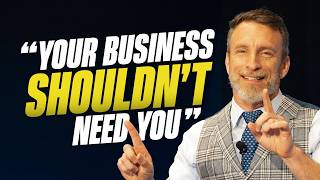
Mike Michalowicz explains how business owners trap themselves in endless work and how to escape it. He describes the 4-D framework that moves you from doing everything yourself to designing systems, and shares how he took a four-week vacation to test whether his team could run without him. The key: delegate outcomes, not tasks, and video-capture your processes so employees can teach them back.
Chapters
So how do we grow a business by actually doing less? That was the question I asked.
Most business owners would love to grow a business that makes more money, but in practice they often fear that will lead to more work and stress for them. So they tend to sabotage their own success. Now tune into today's episode where I interview best selling author and business thinker Mike Michalowicz, who's written a number of books on the subject. Now, we've had Mike talk to our members several times and his insights are powerful and life changing. Don't miss this episode if you want to create a business that no longer relies on you to do everything.
I started a business for financial freedom. You know, I don't want to worry about bills. I started for personal freedom. I want to do what I want, when I want. And the third reason is I want to be of service or have impact. How's that going? And they're like, well, I'm not making any money, I'm working my ass off. And impact, forget it. I just try to put food on the table and I'm like, oh, this is a real problem. So I wrote this book to explore this concept of personal freedom.
Hi, I'm Tony Fraser Jones, your host of the Profitable Trading podcast. I've got something special today. Really excited. I've ditched my co host Phil Smith and we have a special guest on the podcast. So my guest is best selling author and business expert Mike Michalowicz. Now Mike has published several books including Profit first, the Toilet Paper Entrepreneur, the Pumpkin Plan, Fix this Next, Clockwork and his latest book is titled all in which is about leadership and teams. Now Mike is a sought after speaker and consultant. He founded the Profit First Professionals organization which is a global organization. Super lucky to have Mike here. I'm excited today, mate. How are you doing?
I'm doing well, Tony. Thanks for having me back. It's good to see you.
Yeah, it's fantastic to catch up again. And where are you today?
In my home office, which is outside New York city by about 30km.
Lovely. Yeah, good stuff. Good stuff, mate. Let's just start with the start. I want to talk about Clockwork, which is one of the books that you've written. And we've found it's been incredibly helpful for the people that we help that have read it. So the start of that book, what's the problem you were trying to solve for business owners when you actually wrote Clockwork?
It's funny, Tony, when I travel, I actually was down your way. I was outside Melbourne, down in Geelong just a few weeks ago. And I'm talking with entrepreneurs throughout the world in Australia in this particular case, I said, why'd you start your business? And there's always the same three reasons and it does get ranked this way. I started a business for financial freedom. You know, I don't want to worry about bills. The second thing was I started for personal freedom. I want to do what I want, when I want. And the third reason is I want to be of service or have impact. And I'm like, oh, well, how's that going? And they're like, well, I'm not making any money, I'm working my ass off. And impact, forget it. I just try to put food on the table. And I'm like, oh, this is a real problem. So I wrote this book to explore this concept of personal freedom. We started a business not to be doing a job. We started a business because we have an idea that we can implement and that can transform a small community or big. It can be of great service to our community in certain size and certain scale. But what it predicates its success is that we're not doing the work ourselves. Otherwise we will only be able to grow by working harder. So how do we grow a business by actually doing less? That was the question I asked and I spent in this case, I think, about four or five years of research and then implementations in my own businesses. I have a few and found some ideas that I think are contrary to what we typically hear.
How did you find that desire to actually create something that gives you freedom and be your own person and sort of bust out of working for the man, as it were, when that doesn't happen for business owners? And I think you've seen it a lot and obviously we've seen it a lot with the people we help. How did you see that affecting business owners?
People start to hate their business, like they resent it. This sucks. And I'll tell you the worst thing is you got a couple guys that work for you, they're doing some work and they're making more money than you are. And you're like, what the hell? I've also seen what I call the nine to five syndrome. Now, the nine to five syndrome. Most people think you work from 9am till 5pm Reality in many businesses, from 9am to 5pm you're putting out fires, answering questions, panic. The real work is the five to nine job where you start working at five o' clock at night and you work till nine o' clock the next morning when you can actually get some stuff done and it's exhausting. And the compromises are, can be your health, your friendships, your family, everything to support this business. And the return is squat. It doesn't have to be that way. But that's what I see manifest most often.
That's incredibly true. And I think a lot of entrepreneurs and you know, trading, contracting, business owners actually, they're actually awake a lot of that time from, from 5 to 9 as well, when, when everyone else is sleeping and recharging. And it's not that you can ever put it down, is it? Because it's always on your mind.
Yeah.
And so that's very taxing, particularly if you know that you've got to be across everything all of the time.
It's exhausting. It's exhausting. It's not that way. I found an interesting statistic and this, this changed my whole perspective and actually was part of the impetus behind clockwork. There's been studies around people that start businesses and then sustain them and I can't remember the exact numbers, but at the end of the day it was around 3% of the global population. Ever starts a business and then sustains it long enough working higher employees and stuff. Well, when I went to kindergarten class, I had 25, 20 or 25 kids in my class. As reflecting on that, well, 3% of even 25 individuals, one person. And that does seem to be statistic. If you look back to your very first day of school, there's one kid from your class that actually is pulling this off. And here's the irony. It's, it's, it's you. If you're listening to this podcast, you're the entrepreneur who's actually sticking this out and making it work. Functions to be done by other people and it may take you a year to get there. Now the other thing is when you go to this for vacation, it's not like things will be perfect. There will be bumps and bruises. And this is a true story. The very first one I did for myself. Now, seven or eight years ago, I went to Perth. That's why by default when we were talking, I was like, oh, are you in Perth? First place I went and the reason I picked Perth, it was a 12 hour time difference from New York. So I said if it's 2 o' clock in the afternoon, it's 2 o' clock in THE MORNING, I can't interrupt the business. And when it's 8 o' clock when I'm waking up there that they're going to bed. Here I will never interrupt the business. When I left, I was terrified. The first week was excruciating because I had to kind of unwind myself from, from always being in the business. And I'm like, the business is probably burned down by now. But by week two, I just gave into. I said, there's nothing I can do. It's. I'm coming back to a train wreck by three weeks. I actually started leaning to the vacation. And the fourth week I was, I was kind of myself. I then came back to the office. It didn't burn down. It wasn't perfect, but it was moving along. I went to my colleagues, I have a few employees, and I said, hey, on a 1 to 10, how badly do you need me? Back 10, stop talking, start working. 1. You don't need me. And they gave me a 1.1. They said, we like you enough that we want you around, but we don't need you. Which was another ego blow. But then I said, well, why don't you need me? They said, for the first time, we're empowered. Gave us the keys to the kingdom. And I was able to step up into what is a good job, doing good things for good people and living a good life. I've had a chance to express myself further. So I was afraid that if I left, they would think Mike's vacationing, drinking Coronas on the beach, and I have to work in a sweatshop for him. And the reality was I was no longer interrupting their ability to expand and grow in their business. I was empowering as opposed to formerly by being in the business as dispowering them.
And I have to thank you for that four week vacation. I was a little bit of a. I'm a bit of an insecure overachiever. So I aimed for six weeks the first time, and it was very profound. And I do it every year now.
Oh, I love it.
And it's amazing. And I think it does force you to change the way you look at your business. And also, as you said, your business needs a break from you sometimes because if you're there and you pick up every ball that drops, no one ever realizes which balls are actually falling off the table.
And.
And if you're not there, they fall and sometimes they break. And that's actually, that's a, that's a good thing. Sounds weird. And I know for a lot of our listeners they'll be like, oh, bloody hell, I can't let anything go bad. But actually, if you want to grow your business and these principles, we're talking about today, some things have to break because you know what's not working then and then you can fix it. And that, that was very profound for me.
That's exactly. I consider it like two kind of thermometers that we have. One is the business's performance if we weren't there. And the second one is our performance when we are there. And what we see is our thermometer is higher. And so what most entrepreneurs do is they say, well, this is my setting. My business needs performance level. I'm going to keep swooping in and pulling up the business to perform my level. When you leave, in most cases, the business will settle in on its natural level. But that the key word here is natural. This is where your business is. And now when you return, some balls will break and so forth. Your job isn't to pull it up again, it's to build infrastructure to build it up. But without that breakage, without seeing what the natural setting is for your business, we'll never know what's not working, therefore we'll never know what to fix.
I might jump into the four days there because I think that's, that's quite. Fits in quite nicely. And in Clockwork, you highlight. And I've got. Got a copy of the book here. It's a great book. Everyone needs to. Yeah, it is a beaut. It's a fantastic book. In the book, you talk about the 4D mix, which is deciding, doing, deciding, delegating and designing. So can you talk us what that means, why it's important, and how business owners can actually find the right balance?
Of course. And I'll start with a little story. I met with Michael Gerber, who wrote such an extraordinary book called the E Myth Revisited. And we did a speaking event and we shared the stage. And afterwards we went out to dinner together. And I said, michael, your book has been transformed in my life. His core thesis is, don't work in the business, work on the business. I said, how is it an implementation? And he said, you know what? It's shocking and is so many people think that there is a switch that flips magically one day if you work in your business hard enough and long enough, that one day magically a switch pops and now you're the king of the world and the business is operating itself and you're working on the business. And he goes, it's not that case. It's a throttle. I wrote Clockwork in part to complement this concept, is that we have to have a slow and surgical extraction of Ourselves from working in to getting to the on. And I found there's these four distinct phases. So the first phase of an owner is the doing phase. And it is mandatory. Particularly when you start a business, you yourself have to do the work, whatever generates revenue, installing, you know, outlets or fixing the plumbing. All those things are doing activities that are necessary. There's administrative work, you got to get the bills out and so forth. Doing work is any work that keeps the business humming along in its operations. And if it fails to get done, your business is over. Then the owner needs to start shifting themselves from doing to the next level, which is called deciding. This is when you have some other colleagues doing the doing work. But deciding itself is a trap. Deciding is what's called task rabbiting. So if I worked for you, Tony, and Tony, you're moving to deciding, you would say, hey, Mike, install an outlet. And I'd say, okay, I start doing it. I come back to you and say, hey, the voltage may be off. What do I do? And you sit and you make a decision, oh, make this adjustment and you send me out and. And I do it. The trap here is you become the brain for the organization. I become the hands for the organization. All decisions go back to you, which therefore is a trap. And it triggers the 9 to 5, 5 to 9 syndrome. Putting out fires all the time. Most tradies are stuck in the deciding phase. That's why we can't hire more than two or three people, because you can't make decisions for anybody else. So you have to move to the next level, which is delegation. And delegating is. Is different than deciding. Deciding is where I give you the task. Delegation is where we agree to the outcome. So instead of saying, mike, install an outlet, you say, we have to install outlets. Your job is to get it done. We have a best practice to get there. But find your pathway to get there. When I go and start installing an outlet and come back and say, hey, what voltage should it be? The response now is not, well, do this. It's, well, what's your decision? I hired you for that thing on your heads there. How are you going to figure it out? How are you leveraging our best practices? So we move from directing to questioning and advising. That's what delegation is.
I think that's. That's a very powerful thing. Because what, what business owners, I think probably don't understand because they're inside the glass so much is. It's obvious when you have to go and do the work, you have to plumb the house Wire the house, build the, build the garden, whatever it is in your particular contracting or trading business, that's, that's kind of obvious. But it's the decision making fatigue that really gets you, kills. It absolutely kills you in every decision. Whether it's, you know, when you're going to clean the vans out to the stock that you need to buy to how to price something to every little fire that happens out on the field. When you have to do all of that, it literally sucks your will to live.
It's true. It's pure exhaustion. Yeah. And the symptom is if you are going home exhausted, that's probably decision fatigue. If you are worrying about clients in the worry state or any kind of emotion that's negative about the business, usually it's because you're in the decision state. Delegation. Here's what's interesting about delegation is what we assign outcomes and say, here's what I expect from you and what we allow the person is we give them enough rope to have failures. And this is actually the hardest part of delegation. Install the outlet. When they come back and ask how do I do it? We have to be disciplined, saying, I'm not going to tell you, you're going to find your way. If the employee makes a mistake, it's actually allowing that mistake to happen so they can find a way to correct the course. If we intercept and say, oh, don't do that way, now we're actually taking back control of decisions. We say this is the way we do it and we think we're training but we're actually pulling back the decisions. So allow people make mistakes and when they are making mistakes, also set up systems for them to follow. But don't become the teacher or the instigator. Say, here's the model. Improve your model. Don't teach more aggressively. Once you're delegating, you should be able get to the point where you're just assigning outcomes. But the system is moving along itself. And anytime problems you work on the system. The highest level is designing. It's the architectural elements of a business. And what designing is, is a vision of where we want to take the business. Maybe it's a revenue number, maybe it's impact on clients, maybe it's a certain kind of client profile. And then it's considering the tactical moves to make during any period of time that gets you there the quickest and avoids barriers. Competition will appear, economies will shift. We have to then comprehend those things and allow the business to navigate around it. Here's the greatest Irony. Once you get to the design level you have people doing. Some people say to me, they go, mike, but I love doing the trading work myself. To get to being able to do the trading work first mandates that you're not needed to do the trading work. Because if you're needed, you're the crutch. But if we can extract you from the business needing you, then you do have the right as a business owner to reinsert yourself in a way that gives you joy. And if you want to get your hands dirty, amazing. Just don't do that in the process of building the business. Do that only when the business doesn't need you. Then you can be an employee again.
And so how do we transition and what's sort of an ideal mix, I guess, of those of those tasks? I guess it's different at the start, obviously, but as you grow a business, how do we actually. What's a good breakdown of a successful business that has the principles of clockwork?
Yeah, generally the mix is the business. And this generally never shifts is 80 to maybe 90% of the activities that's happening within an organization is the doing work. We have to be delivering. We have to be doing the administrative work. When it's just me, 100% of my time, or I should say 80 or 90% of my time is devoted to that doing activity. And the remainder time is spread out designing, architecting, the future. There's not much designer delegating. When I'm the only person once I make that first hire and it's me and one of their trading now maybe that one treaty hired spends 100% of their time doing work. But now I'm spending maybe 50% of my time also doing but 50% of my time designing and managing them to some capacity. As we grow, the organizational shift never happens. It's the shift of the owner. So we stay in the 89 to 80 to 9% delivering of our resources are delivering by doing work. And the rest of our resources initially just me is doing the delegation and designing. If an organization gets very large, there's a trading business down the road from here. They do 25 million US annually. There's a whole C suite executives that are doing the designing. They have 230, 240 employees. 200 are in the doing stage, but 30 are in the deciding delegation and designing.
Time management sits under a lot of this. I don't like the term time management because you can't manage time. You can manage yourself. But yeah, yeah, getting stuff done is a challenge. Obviously for traders and contractors. And we find our listeners are often just really overwhelmed. So can you talk us through this concept of trim, transfer and trash which is in the book. I really like that and how that helps people be more effective with their time.
Yeah, we call that the three T's. And what we do is any individual responsibility in the business is a list of different tasks. So many of us assume that person does a title I'm a Sparky or I'm a whatever the term is and therefore it must do things. But the reality for small business is we wear multiple hats with multiple tasks. So you write down all your tasks. When we then evaluate is what is the time consumption on it. And we evaluate each one and say is it even necessary in the first place? If it's not necessary, trash it. It's interesting. There's a behavioral thing called lies lost or sunk. Cost fallacy is a behavioral tendency that once I've made an effort towards something, I retain it even if it's valueless. It's in stock. Someone buys a stock expecting to go up, it goes down. They don't sell a stock, they actually buy more saying well, it's going to go up in the future until it tanks and then they're out of money. We made an effort writing a newsletter and say well clearly that's our marketing source and I'm going to keep doing it. Even though no one's reading it, I'm going to keep doing the newsletter. There's stuff on that list when you look at the micro level that you can trash. The transfer is stuff that you are doing, but it doesn't. It's necessary, necessary that you do it. So as you have virtual help or contractors or part time labor or full time, what are the tasks you're doing that you don't need to be doing, you've just been doing because habitually get that off your plate. That's a really difficult thing for many entrepreneurs because we feel that I need to represent the organization through demonstration of effort. If I work hard, they'll work hard. And the reality is everyone needs to move toward their talent, space and. And you have to be disciplined enough to get rid of those things. And you're training your organization to assign tasks to the right talent. The last thing is trim. There are certain things by nature you have to do. Maybe you are the most skilled sparky for now or whatever it may be. And there's certain things that only you can do. How do we do less of that? How do we funnel you into the things that you have elite capability no one else has, that you have to do for now. And ultimately, how do we start replacing those components? Because you've become a linchpin. So always look, what can you trash first? If you can't trash it, can you transfer off your plate? If you can't transfer, can you trim it down? At least this will avail. Time for you to design.
It's killer. And then you can get on with the delegating as well.
Correct.
Processes and systems love this. And this is a central part of Clockwork and the principles. So when building systems and processes, it is a challenge for business owners who are already overwhelmed. How do you think people find the time to do that and how do they build the systems as they go? I guess what we find is our listeners and our members. Often even if they hire someone, they want to build all the systems before they hire someone, which is a recipe for disaster. So I'd love to know your thoughts on that.
Yeah, the classic approach, Tony, was I got to build the suite of things we do called SOPs or standard operating Procedures, and I can give this manual to someone. And first of all, the time necessary to develop that is extraordinary. And a small business can't afford that time. Secondly, things are changing so quickly that whatever you create today is probably not relevant tomorrow. I mean, think about advancements in AI and how it's influencing even the trading space already. And it's only been around for a short period. So there is a new way to create systems and transfer that knowledge. And there's one component that almost no one's doing, which is actually the most important. So here's what it is. As you do the work, or when your colleagues does the work that you want others to do, capture it. So instead of documenting a checklist or whatever, videotape yourself doing it. There's only three forms of action in business. It's speaking like we're doing now. It's communicating via computer typing, so forth, or it's actions, movement. So if you're installing that outlet, a receptacle, film it, and as you do the process, talk over and say, here's what I'm doing is the first step. And second step. The beauty is you're getting the job done. You could be at a client site doing this, but you're also capturing a recording as you do it. Admittedly, it'll take longer. You could race through it without talking. Maybe it takes 25% longer because you're explaining, but now it's captured, you can give to the next Person, you say, here is the process. Watch this video and replicate it. So that's called capturing what we do. You know, we're a small business here. Collectively, there's 20 of us, so we're pretty small in the big scheme of things. We have a Google Drive with all these different videos walking through a process. Invoicing is done on computer. So we use a screen capture and explain it. And so people can pull it very quickly. That's the way to do it. Now, here's the thing that no one does, which is the most important thing. The greatest student in the room is inevitably the teacher. Meaning if someone's teaching something, they know it inside now. But this realization is when you want someone to master a process that you've given to them, that you've delegated. Show them your best practice, the video captured, have them repeat it, but then have them teach it. They got to make the next video. So if it's installing a receptacle, have them do it four or five times. And then say after the second week, you got to film a video explaining how to install a receptacle. And if there's any improvements in this process, you got to show in this video the ability to teach means you've mastered it. So it'll actually elevate their skillset. But the beautiful thing too is if that person chooses to leave and goes on to some other opportunity, their knowledge hasn't walked out the door. This is how you capture their skill set and mitigate the risk of losing that when they leave.
Yeah, there's a principle in the book. I think it's edit, don't author in terms of the owner. Can you talk us through that? Because that was very profound for me.
Yeah. So it just reminds me of this particular story. So I'll give you one example. I had an assistant here, her name was Jackie. She's moved on. She wanted to start a family and is raising amazing three children and full time. That's her job now. But she worked here and I used to be telling her what to do when it came to invoicing. We had a best practice and she would come to me and say, well, at one point we were growing pretty rapidly. She goes, there's so many customers. We have this system we were following, which was alphabetical. Listing is confusing. There's a lot of people that share the same name. It's not working. She goes, what should we do? And trying to get out of the deciding phase. I said, well, what's your decision? So I delegated. And she came back and said, oh, I've come up with a system like, oh, that's fantastic. What is? It goes, we're going to use their middle initial as the distinguishing code. And remember this, always bite your tongue. I was like, that makes no sense to me. But I bit my tongue. I said, it's amazing. Try it out. Well, she came back a few days later and said, this is even worse. People have a lot of the same last names. Everyone shares one of those 26 letters of the middle initial. She goes, this isn't working. I've created a new system. That was 10 years ago and we still use that new system today. She made this interesting coding system to easily distinguish customers and pick them up quickly with very few letters and numbers. And like, oh, that's smart. The lesson here is when people are empowered to create systems, they're not going to do it perfectly, nor do we do it as business owners, ourselves. And we don't fire ourselves, we make a mistake, we don't correct ourselves. We make a mistake and say, that wasn't the way. I'll do it a different way. So give your colleagues the rope. It's actually the ultimate form of empowerment. What you're saying through your actions is, I trust you and I don't expect you to hit out of the park, particularly when you're creating something new, but I expect you to be relentless in finding the right solution. And that's how you assign out ownership throughout the organization.
Yeah. And it has the positive effect of spreading the workload of building these systems, because I think that's something we find with our members is it's just overwhelming. If they try and build everything and if they let their team author it, they have the first crack at it and then they can edit it. Often the team does it 80% good. If you give them a template or an example as well, is the way to go. The creation of processes is so much.
Quicker, so much quicker. And the innovation too, like, interestingly, it's a fear for entrepreneurs. It's like, oh, this was created in a way that's not consistent with me, therefore it's not right because it's not my way. It's a very myopic tunnel vision. What I found in my own business. We were actually just looking at some website design stuff and I was given opportunity to give some feedback, but it's already been pretty taken pretty far down the road. I'm like, oh, this is interesting. It's not what I've done, but I've come to realize this is actually Better than what I've done. It's broadened us because there's the flavor of other people in it. And if you want to move to a. I shouldn't say bigger brand, but a stronger brand, it can't be dependent on one person's myopic vantage point, One person's myopic feelings and emotions, one myopic set of values. It's got to be a collective effort, and it actually rounds the edges of a sharp, cornered business.
That sort of fits into to another question that I have, and I think this underlies it. We've touched on some of this, is what are the key mindset shifts that owners need to make to successfully build a business that. That runs like clockwork? And when we say it runs like clockwork, it means it makes great profit. It gives you freedom and flexibility to enjoy a great life.
Yeah, yeah, yeah. The first mindset is superheroes suck. That's the first thing. And here's what I mean. When I was growing up, there was a show called Batman with Adam West. I watch all the time. Batman and Robin.
Yep.
You know what I'm talking about.
I do, yeah.
Yeah. So you remember the commissioner Pick up that red bat bone. What was happening in that show is the commissioner says, the joker or the penguin is here. We can't beat him. We need you. And Batman will come racing out of the cave with Robin and bang, pow, they're in a fight. And Batman wins for now. But what was interesting is every time Batman defeated the penguin or Joker, the commissioner in the police force became weaker. They couldn't beat him, so they actually became more dependent on the superhero. It became this very odd, dysfunctional relationship. That's what most business owners do. We get dysfunctional. We think we're swooping in and saving the day. We actually call ourselves a superhero because we've saved the day. And yeah, in the moment, you won one fight, but you left a wake of destruction in the past. And behind you and your team, who's the police force and commissioner is actually weaker as a result and more dependent upon you. So what we have to realize is the superhero is the commissioner and the police force. Our job is to give support, to be a cheerleader, to let them fight from afar. Could you imagine if Batman, the commissioner calls and says, hey, that's why, you know, we got a fight going on, but don't worry about. We're going to take care of this one ourselves. Batman and hangs up. Batman like, okay. And sit in his cave. And now the commissioner police force have to figure out how to beat the Penguin. And they would find a way, but there would only be one episode and be over. So that's why they keep doing it. Don't be the superhero. Superheroes suck. Be the super visionary. See where you want to take the business. Extract yourself from the battle. That's the biggest mindset thing you got to do.
Yeah, it's massive. And it's realizing that other people are smart and they need you to give them the opportunity to show that. Yeah.
And people want to do their best, Tony.
They do.
I was just meeting with Amy. She's one of my colleagues. Yesterday, we were doing a podcast in house together. I said, amy, I got to ask you a question. I want you to be brutally honest. When you come to work, do you come here with the intention to do your best or not? She said, yeah, I want to do my best. I said, everyone that works at our offices here, do you think most people or everyone wants to come here and do their best? She goes, yeah, people want to do their best. Unless they feel compromised. If they think we're trying to milk them or take advantage of them or force them to do something they don't want to do, then resentment kicks in. That's like, you know what? I am going to give my worst, so I burn you. But when people are given opportunities to flourish, we want to flourish. The people that work in your trading business want to crush it. That's the wiring of human nature. It's only when we start inserting ourselves and encapsulating them, controlling them, that actually resistance kicks in. So if people aren't doing their best, it's more often a result because you're trying to control them as opposed to release them.
Yeah, and there's something quite profound under that too, because a big frustration for a lot of contractors and tradie business owners is that their team doesn't perform the way they want, they don't show initiative, or they take a shortcut. And the sad reality is often that is self fulfilling prophecy because we haven't given them the space to actually express themselves and do their best work. And so they don't do it. And we get this kind of weird codependency, as you talked about, of we need to fix them up all the time. And then they feel disempowered and we're kind of cutting their legs off them all the time and making them shorter rather than making them taller.
Yeah, we become Batman and Robin. Where go, we'll swoop in again and the commissioner's like, we need you. We need you. Stop that.
Yeah, for sure. So, Mike, is there anything else you think that we should discuss from Clockwork that would be really helpful for the listeners?
Yeah. So I want you to know that your clients want this from you desperately. They don't say that. They want you having an efficient and profitable business. Now, a client will never come to you and say, hey, can you charge me a little more? How's the efficiencies behind the scenes? Are you actually really doing well financially? Um, are. Are you getting the vacation you need? Business owner, they will never say those things, but here's what they will say. I want the best of you. I want your undivided attention. I want to be treated as your number one customer. And you know the only way to do that is if you don't have that emotional weight of a business that's dragging you down. As long as you're ma. If you're making good money, you don't have that weight. So your clients actually are starving for you to be efficient, to be profitable. I'll give you another scenario if you don't believe me yet. I'm. Imagine you have a life threatening situation. You have a heart attack, you get rushed to the hospital. Doctor One comes out and he's like, I am the most inefficient business ever. I gotta do everything. I'm doing my own billing. I'm doing everything. Oh, God, I'm going crazy. I'm not even making any money. Are you ready to start the procedure or. Dr. Tu comes out and she's like, super efficient. In fact, I only have to do one job a day to make tons of money. Your project, your heart, is my one job today. And by the way, I charge 100 times more what the other guy charges. Who do you pick? Doctor, too. And I realize you're charging a lot more. And maybe you don't even have the money in your pocket. But by hook or crook, we'll find that money because it matters. Our life is on the line. Now, as a tradie, maybe you're not saving lives, but you're altering lives. You are definitely impacting lives. And a large portion of your customer base is saying that plumbing matters a lot to me because that's the quality of my life. That electric service matters a lot to me. My garden matters to me. It may not be life saving, it's life altering. And so they want efficiency, they want profitability. They just won't say that. So they want it for you, perhaps even more than you do.
And the rub here is, as a business owner, we often think that they need us to do everything to make sure that it's right for them. And we buy into this kind of false belief that we're the only ones who can provide that. And as you said, as our business grows, the service we provide actually degrades and the profitability of our business as well, because we can't stay across everything. And so we create the very thing that we didn't want to create.
That's right.
Which is super frustrating. I know a lot of people listening have been in that situation. So your clients want it as well, and they actually don't want you. They just want a great result.
That's exactly right. They're hiring the outcome. And listen, they like the interface. Maybe it feels nice to know the bossy boss. And the nice thing is, in a clockworked business, you can do that. You're the one who can just show up on the job and say, hey, just want to make sure you're doing okay, because you matter a lot. You can sit down and have a cup of tea with them while the job is getting done. And now the customer feels really served. So if you think they want that, and maybe they do, they want the celebrity ship of you. You gotta have a business that runs without you, so you can actually be that celebrity to them.
Yeah. So, new book, latest book. Orland, can you tell us about what that is, what you're looking to solve with that book?
Yeah. So the subtitle is how great leaders build unstoppable teams. I wrote this because I too lead a small team here, and admittedly, I'm not the greatest leader on the planet, but I aspire to be great. I'm meh and I want to get a lot better. So this is pre Covid. I started researching what makes great leadership, and sure enough, I found it's not what most leadership books teach. Leadership books often say, what's the corporate mission? I found that's actually contrarian to the health of an organization. It works against the mission. If I. If I work for my A company, I don't care what the corporate mission is. Shareholder wealth. I care I'm trying to buy my first house. I care that I'm enjoying my hobby of riding motorcycles. Like, that's what matters to me. So I found is great leaders don't set corporate missions. They set collective missions. What was everyone looking to achieve here? And how do we lock arms in the progress of the organization? So everyone's checking off their list and A lot of other contrarian ideas that I've discovered. We started deploying it in my business. I actually am an investor in about 15 businesses now too. And we're deploying it and sure enough, it. It elevates the team. We're recruiting better people, meaning people that are desirous of working in our organization. We are raising the bar, the people that work here and they're staying longer because we're caring for them. That tip of a collective vision is just one of about two dozen strategies that make good leaders go to great leaders.
Yeah, and leadership is very important for our listeners, traders and contractors. And it's a challenge because often we're not taught about leadership. We do apprenticeships and, and trade school and, and all that sort of thing. So that's going to be goodie. I think people really appreciate that. Mike, it's been great hanging out today, man. I've really appreciated your. Your wisdom and love the way you tell stories that make. Make things simple, which I think is the key and is. Is very helpful. So how can, how can listeners get in touch and. And get a copy of Clockwork or All in or, or find out about your other other books?
Option 1 hop on a plane, fly all the way to New York City, drive over. But that's the expense of. Here's the shortcut. Go to my website. So it's mikemicalitz.com but Michalowicz is impossible to spell. So I'll give you a shortcut. It's Mike Motorbike, as in the motorcycle. And just a quick story. I bought the domain mikemotorbike.com because it was my nickname from grade school. My only safe nickname. There's other ones that are very inappropriate. Inappropriate and I have a hundred of those. But mikemotorbike.com and that'll bring it to my site. What's interesting I think is I used to write for the Wall Street Journal for many years sharing these tips. And there's a catalog of articles there you can get totally free@mikemotorbike.com additionally get chapter downloads for my books so you can experience the books without having to buy them. And I also have a podcast@mikemotorbike.com yeah.
Look, I encourage you if you're listening. Mike is exceptionally gifted speaker and thought leader in small and medium businesses and insights are really profound. And if you haven't read Profit first as well, we should do a podcast on that at some stage because that's an incredible book. It's very powerful book. So man, appreciate you take good care and we'll catch up again real soon.
Tony, I appreciate you. Thanks for having me on the show, mate.
Congratulations on being part of a select group of savvy businesses owners who are taking their businesses to the next level and to help you on your journey. Don't forget to check out our show notes for a copy of our free book, the Profitable Tradie and other valuable resources. Thanks for being a part of this special group and we'll see you in the next episode of the Profitable Tradie podcast.










