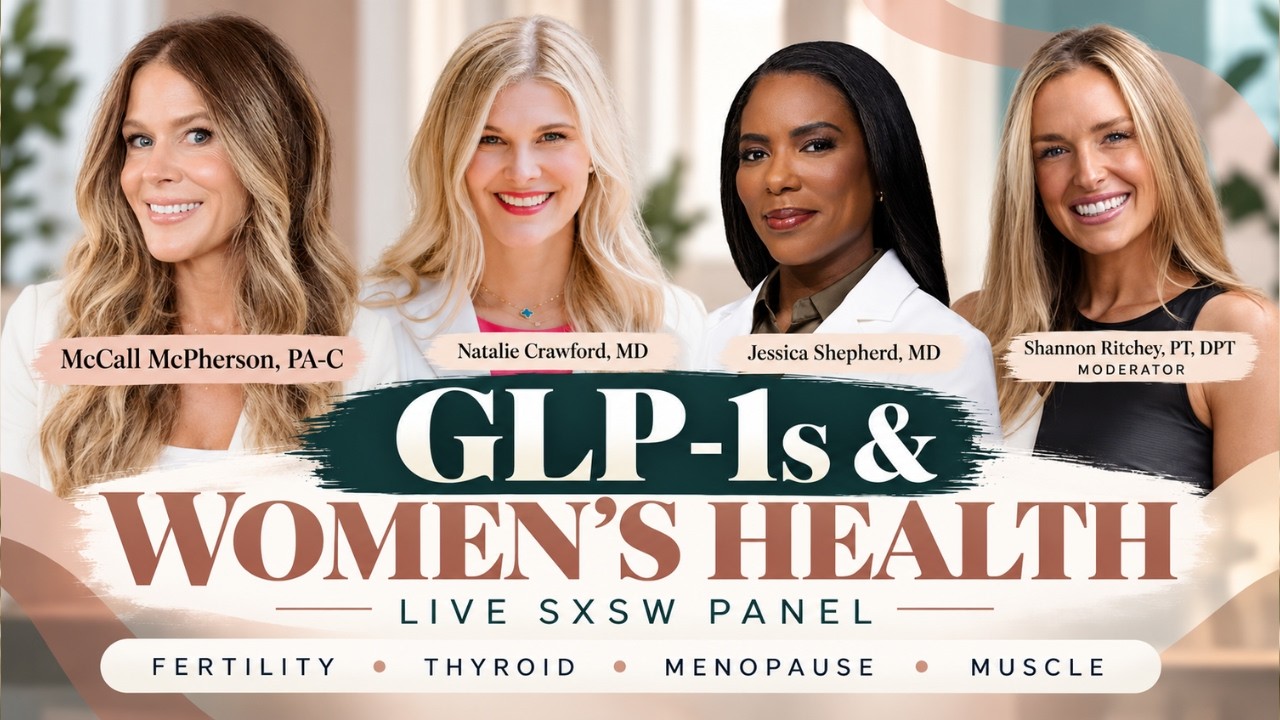
In this YouTube short, McCall McPherson and three other clinicians discuss how GLP (glucagon‑like peptide‑1 receptor agonist) therapy need not be a permanent, lifelong prescription. They explore three main approaches: (1) using GLPs temporarily while patients adopt lifestyle changes, (2) micro‑dosing GLPs for metabolic longevity with regular annual reassessment, and (3) employing GLPs for specific reproductive conditions such as fertility planning and endometriosis. Throughout the conversation, the speakers stress the importance of monitoring key biomarkers—hemoglobin A1c, ApoB, lipoprotein and lipid panels—to gauge therapeutic impact and decide whether to continue, taper, or stop the medication. McPherson cites Crawford’s stance that prescribing GLPs to patients unwilling to invest in lifestyle changes is counter‑productive and may lead to muscle loss. The overall message is a nuanced, patient‑centered framework that balances pharmacology, lifestyle, and individualized lab‑driven decision‑making.
Chapters
The biggest thing I'd like to highlight in this conversation is you don't always have to be on these forever,
right? Do we see GLPs as a long-term lifetime— I know it's different for fertility because if you're getting pregnant, then you're getting off of it. Aside from that, do we see this as a lifetime medication, or do we see this as you microdose or do the dose for a certain amount of time, get some lifestyle habits changed, and then eventually eventually taper off?
I will always fundamentally say first, lifestyle is key. Because you can take a GLP all day, but if you don't correct your lifestyle, when you come off the GLP, you're going right back to baseline of what you started with. But I always say it's choose your own adventure. Microdosing of a GLP, there are some people who use it for longevity benefit of metabolic function and can decide, I'm going to stay on this until maybe I don't want to come off of it, or I do. And I think that should be a guided conversation as someone is going through it that they should, like an annual, every year you're addressing, I'm on a microdose of a GLP, are we staying on it, are we not? Making sure that you're also looking at what it's doing for you internally at your labs. I'm very big on your hemoglobin A1c, your ApoB, your lipoprotein, your lipid panel, and seeing what those are to make sure that you're also, like, looking at it cumulatively and not just, I'm on a microdose for a GLP. But I have people who are like, I'm just going to stay on it. I think with a guided approach, it can be done.
I'll just add, I know we're coming off it if we're getting pregnant, but I deal with a lot of patients with reproductive disease who maybe are not looking for fertility, notably endometriosis. I see it making the biggest difference in disease. We have a really hard time with treatment opportunities and long-term options because so many of them traditionally have just made you hormonally plateau into that low estrogen state. Estrogen feeds endometriosis. So if I can damper the inflammation and make you feel better and resume your quality of life with long-term use of a GLP with endo, that I think is going to be again one of those new frontiers for this autoimmune population that has for so long struggled.
Crawford said, and I'm not interested personally in giving people GLPs that don't want to invest in their lifestyle. Like, that's just not it for me because I think that is a path to destruction, a path to muscle loss.