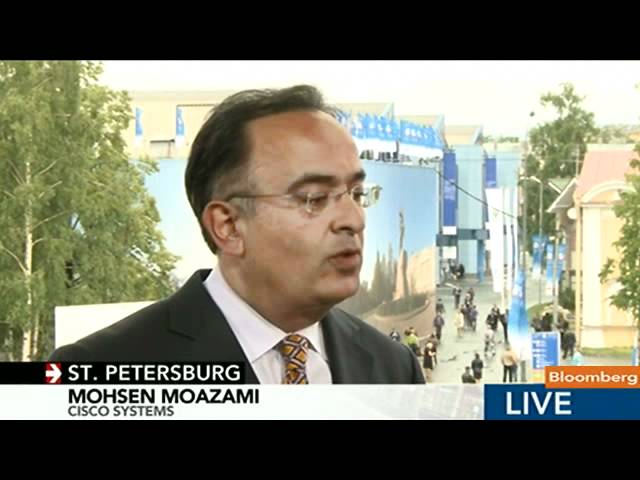
Pars Talk with Mohsen Moazami

Mohsen Moazami shares his path from losing his father at seven during Iran's revolution to building Stanford Business Systems, running a $6.5 billion division at Cisco across 132 countries, and becoming a venture investor. He discusses angel investing versus VC, his early bet on Webs before its Vistaprint acquisition, and why immigrant entrepreneurs have a competitive edge.
Chapters
We are delighted to have you, and we are honored to have Mr. Moazami. I remember I read about Mr. Moazami when I was in high school, and I was so inspired. So thank you for coming today. For those of you that don't know about our entrepreneurship program, we meet biweekly. We have 19 startups, and we bring in speakers, some of which are in the crowd. And the second announcement is that we're going to have our first pitch day of 2018, which will be on Plug and Play on March 1st, so next Thursday at 6 PM. And we'll have a few angel investors and we'll have 6 of our companies presenting. So there is a 60-people capacity there, so if you'd like to attend, please do RSVP. With that being said, I'll read a quick introduction to Mr. Moazami and we'll get started. Mr. Mohsen Moazami is the Managing Director at Columbus Nova Technology Partners, a novel global tech investment firm combining the best attributes of venture capital and private equity business model. Mr. Moazami has invested in more than a dozen companies and currently serves on the board of ZoomData, Aerospike, VRMore, Frame, and Kazing. Previously, Mr. Moazami was a member of the Cisco executive staff from 2000 to 2011. Most recently, he was on the senior leadership team of the Emerging Market and Globalization Center in Bangalore, India, responsible for strategy, operation, financial results across emerging markets. Mr. Moazami also led Cisco strategic consulting across emerging markets. Mr. Moazami and his team worked with senior government and business leaders to help drive digital broadband-based country transformation, improve national competitiveness and standard of living. Mr. Moazami was a member of the Investment Advisory Council of the Turkish Prime Minister and served as a member of the Strategy Council of the Global Alliance for ICT and the development of the UN Department of Economic and Social Affairs. Before joining Cisco, Mr. Moazami was a managing partner at Kurt Salmon Associates, KSA, a division of Accenture, in charge of the global e-business practice. Prior to KSA, Mr. Moazami founded and oversaw the growth of Stanford Business System, a software and system integration firm acquired by Accenture. Mr. Moazami recently received the Ellis Island Medal of Honor for outstanding achievements and noteworthy U.S. citizenship. Mr. Moazami has a graduate degree from Stanford University and has been regularly featured on Bloomberg TV, CNBC, Wall Street Journal, and Financial Times. Please help me in welcoming Mr. Moazami.
I really want to acknowledge the great work that this Pars Equality Center is doing at all levels and the real contribution and and impact that they've had across our community for people that truly need it. So I want to thank, you know, of course, Kooria and everybody else who was involved in getting me invited here. I'm honored and humbled to be here, but I acknowledge the platform based on which we're all now benefiting from, this Parsa Equality Centre. It's just— I know how much work they do across how many different fields, and again, for people that need the help and need the assistance. So Thank you for that. Before I start my comments, I just wanted to know by a show of hands, how many of you have been in the United States more than 10 years?
Approximately one-third.
How many do we have who've been here in the United States between, let's say, 1 to 5 years? Another one-third. I expected that, you know, in a sense that I've been here for 37 years. I was fortunate when I came here to school, I came to California to attend college, and I was in my first year of college when the Iranian Revolution started. And obviously unanticipated, you know, there was no option B. We had to make option A work and stayed here. So what I'm going to do here, I have 3 or 4 slides to just give you a a perspective of my personal journey. I have no prescription for how to do things and how to, you know, operate your lives. We all have different stories. Every one of us have very different stories, but unique to ourselves and unique to the circumstances that we grew up in and so on. And what I'm going to do is share with you in an authentic fashion my story and my behavior. And again, Puria was kind enough to say that, you know, he was in high school, he read a news— some news piece about me and he was inspired. I was in high school. I'm humbled. But again, these things, articles that we read about people and so on, may misrepresent the fact that at the end of the day, we're all human beings and we are at best vulnerable. And there are many, you know, points of ups and downs in everybody's life, even people that we deem as successful or are inspired by and so on. So, and I know, and Especially for people who've been here, you know, between 1 to 3 years or 1 to 5 years, this transition is massive. And often, you know, we may face disappointment, discouragement, despair. And I'm here to say, you know, despite those moments, good things can happen. And I just share with you my personal journey from childhood to here. Sort of from— that's why I call it Sort of from Tehran to Silicon Valley. You know, this is not a political speech, I promise you. I know we all have political factions, but this is Dr. Mossadegh. For the young people who don't know him, he was Prime Minister of Iran, Time Magazine Man of the Year in 1952, and he basically is acknowledged as the person who nationalized the Iranian oil industry. Very prominent. Some people call him the Iranian Mahatma Gandhi. or whatever. He was a very prominent figure. And why I bring him up is because it's a personal relationship. And this is my father. This is my father, who was his Minister of Communications. This is Dr. Mossadegh. This is my father. And he was Minister of Communications and Minister of Agriculture all the way to 1953, when the coup of 1953 took place. And pretty much most of these people you see here ended up either in exile or in jail. My father served in political prison for about a year and a half. And actually, Dr. Mossadegh was arrested in my grandmother's house because my father was the youngest member, although he doesn't look like it, was the youngest cabinet member. And as the basically armed resistance started in 1953, my father plus 4 other ministers helped take him Over four basically set of walls from his house in Koch Avenue in Iran to my grandmother's house, who was four or five houses away, and they hid there for more than 24 hours until basically they surrendered and were captured and taken to the Basra prison. But this is again not a political story, but I just wanted to set the context. And then you fast forward. And by the way, I didn't exist. My brother was born, the older brother was born when he was in jail. And this is me and him. And the unfortunate thing is that this is a picture that we took in Berlin in Germany. This is exactly 6 months prior to his death. So at this tender age of 7, I lost my father. And I was seven years old, and you know lost a father. And it was you know big father figure. You know it was a very he had a presence. He had a prominent, his very charismatic presence, and it was a huge loss, huge loss. And to me as a seven-year-old child, it created an enormous amount of insecurity that to this date. age 56, as I'm standing right in front of you, that insecurity remains with me and it hasn't been resolved. So what I have tried to do over my life is channel it towards something that, you know, would yield at least some degree of positive outcome. But if I tell you right now I'm sitting here, then, you know, some of you deem me as successful, and trust me, I'm at least at best moderately successful. depending on how you define success, and we all have different definitions of success. That sense of insecurity has never left me. I remember when he died, I was there at home, basically at 8:30 PM. I remember it like last night. It's amazing, certain pictures that never fade from your mind. And suddenly all the family members in Iran, you know, we make a big deal of this, all family members started converging on our house and so on. And by around 10 PM, they said, hey, let this kid— get this kid out of the way. They sent me to my aunt's house, which was 10 minutes away, to sleep at her house and be away from all the commotion. And I remember I woke up at 4 AM, and as a 7-year-old child, you know, I loved soccer. I've always— I grew up on football and soccer. The first thought that came to my mind is, am I ever, ever— I knew that my father is dead, but am I ever going to be able to afford soccer shoes ever again. And so, you know, you just tie your— basically the father and the father figure to financial security and sense of security. And right there, that sense of security was cut for me, a 7-year-old boy. And in life, again, all of us go through ups and downs, peaks and valleys for all of us. It is critical for all of us to have anchors. What I call these emotional anchors. I've been fortunate. I have a phenomenal mother who was 39 when I lost my father. And my brother was in boarding school in England and away from us. So it was me and her basically. Pretty much I spent all my time with her growing up. And now I've been blessed with a great wife and 3 kids, 2 girls and a boy. Obviously, she's been my wife for 32 years and—
Congratulations.
a true partner throughout life. And this brother of mine who's 7, 7 and a half years older than me, who also, a poor guy, not only was a brother but also was a father figure for me. And in life, success is this, is having these emotional anchors. Success is not being on CNBC. Success is not being on Bloomberg. It's not to have a lot of money in your bank, but to have at the end of the day these set of people around you Where you can rely on, and especially in times of need. And all of us, trust me, every one of us, we have those moments of need, and we better make sure not to undermine and deter. Let me tell you, for example, I have 3 kids: oldest one, Laili; middle one, Yasmin; the youngest one, Amir Taimour, my youngest boy. When I was— when Layla was born, I was like 29 and so much into me and myself and my career and so on. And I was always traveling around the world, trying to make the next deal, make a career, make it outside. So I spent the least amount of time with this child. Because you think you're immortal, you're never gonna die, you're always gonna be young and vibrant and so on. And I spent the least amount of time, and to this moment, it's one of my biggest regrets. And, you know, my relationship with her is not as strong as the other 2, because by the time the other 2 were born, I was more older, wiser, and I realized, you know, we all die, and you better have work on these sort of relationships that are very important in life over the lifetime, not just one point in time. So again, as a regret, I wish I knew that when the first one was born, not doing 250,000-300,000 miles a year on air travel and spending more quality time with her. So again, all personal elements, attributes that is very unique to me, but you can extend and extrapolate and it applies to all of us, boys and girls, men and women, any age. I think this advice to all of us. So I told you about that insecurity, and I tried to channel this throughout my life into positive outcomes, things that, you know, would drive and ultimately address that in a sense of insecurity. Whether it was in my high school, I used to go to Iranzamin, you know, and I told you I love soccer, and I made it all the way to being the high school captain. back then in the good old days. This is probably a picture from 1976. All the way to my education at Stanford, then starting my own business, Stanford Business Systems. This is a very interesting letter. If you read it, it's June 1994 and it's from Bill Gates to me. To Mohsen Moazami, CEO of Stanford Business Systems. We were very instrumental in Microsoft coming up with their database strategy and so on at Stanford Business. It's a strong partnership, very good. But all of this, I put the $27 here, why? Because the day I got my master's degree at Stanford, God is my witness and my wife, the mother of my 3 children, that I had $27 in cash and one MasterCard with $900 credit limit. credit limit. And one car, a Chevrolet, that was hardly worth maybe $3,000, $4,000. That was all I had with a funny name from a funny country. And back then we had held, you know, 50 Americans hostages and so on. So from a hostile country with a funny name, good luck. You're on your own and you basically start life. I had to go and work for somebody because I didn't have a green card. They had to sponsor me to get, you know, in order for me to get my green card. And after exactly, you know, almost 3 years working at that company, I was fired. I was let go. And then when I was fired, I— some event happened right here related to, you know, Steve Jobs came up with the Macintosh. And the Macintosh those days, we used to have computer stores, Computerland, Businessland, and so on. You would leave an ID, you would take a Macintosh home for 24 hours, and it had 2 programs, MacDraw and MacWrite. And again, a lot of you are young people and take this for granted. Back then computing was no drag and drop. There was no mouse. There was no graphical user interface. For 24 hours in our, you know, small little apartment, I didn't go to sleep. After 24 hours, when my wife woke up the next day, I said, I want to make a living using this machine. I got— for the first time, I had fallen in love with a machine. And I was making about $32,000 or so a year back then. And I said, I'm going to start a business. I'm going to go and make I had no business plan, I had no venture capital backing, I had no rich uncle, rich daddy, nothing. And all the way to this, and then 7 and a half years later, 3, 4 bidders showed up at the door. I had no idea. Again, I was— it was about 28, 29. Why do these people want to buy my company? What have I done? And so on. And March 1995, My company was acquired and for the first time in my life, you know, by definition I became a multimillionaire. And it all again started with a lot of sleepless nights, a lot of anxiety. Let me tell you, as I started this company Stanford Business Systems, I remember one incident. Bristol Farms grocery store. I went, I had $50 US. on me, complete, you know, cash holdings was about $50. I picked up a whole bunch of stuff and the lady, and there were 3, 4 other people behind me, said it's $56.75. And while these people were watching me in the back, I had to go and put— I was so embarrassed, I started almost sweating. I had to put some of these items back because I only had $50. Okay? I couldn't afford the other $7 extra. So if you don't think that that causes anxiety or bad mood or depression at some times, you're wrong. So what I am here to say is, if God forbid, if any of you, because of this massive transition, coming to a new country, going through a new system, learning a new setup, and so on, going through these tough moments, go through it because absolutely there is light at the end of the tunnel. It was in my case and it's sheer hard work and just believing in the fact that you can do it. Then all the way to Cisco, which Cisco then became a rocket ship. It became sort of— I joined Cisco in the late '90s and Cisco became the Facebook and Google of its time. The most valuable company on the planet. An amazing ride, an amazing ride that lasted me for about 12 years. The last 4 as the leadership of emerging markets where my wife, my kids, and I, we moved to London and operated across 132 countries, responsible for a $6.5 billion P&L, was just the ride of my life. Once again, What the theme here is, not to highlight the successes and so on, a source of a lot of whatever small or big I accomplished was that insecurity which started happening, you know, emerged on me on that Tuesday night at 8:30 PM when I lost my father. So now, what do I do today? I'm a venture capitalist, a rookie one at best. I'm a rookie one at best. And as a venture capitalist, again, we've been lucky with some, you know, positive outcomes and positive coverage. Forbes did an interview and, you know, and, you know, some of our companies and holdings, some people think that, you know, they're unicorns and, you know, worthy of a lot of money and so on. And I'm once again, just again to give you a context of where I started and where I am today. And even today, even with this environment, with this setting, with hundreds of millions of dollars under management that we have at our firm, there are some very tough days and there are some very good days and you just take the good with the bad. So with that context, background and so on, I hope it wasn't a sort of a gloomy story, but whatever it was, it was my story and it's authentic and it's true. It's not— I didn't, you know, brush it up, or I didn't try to present a different story. With that, I want to say again, thank you for listening to me, and open it up to Q&A and discussions and conversations. I can answer any question that you want, you have on your mind, that I'm capable of answering. So with that, thank you very much for listening. Thank you. Who's going to be the first daring person to ask the question? Yes, sir, my good friend of 35 years, Saeed Hamidi. So is there anything you wanted to do different? Again, looking at it now, looking at Stanford business, or now that you became VC, would you do anything different? If you had to advise one of your friends or if you needed to mentor someone? You know, again, the only thing that I would want to do differently is that I told you spending more time at the childhood of my first child. That's the— if you have, if you know, I regret not doing. That is a regret that I still carry with me. But otherwise, on the business side and so on, it just— everything connected, you know. One dot connected. If I didn't do the emerging— you know, when I was moving to London, you remember this very vividly, my entire family was against it. My kids hated it. I didn't want to do it. If I didn't do the emerging market, I couldn't have the current job of mine. The current job of mine would be impossible. The current job of mine was made possible strictly because of that 4-year experience, plus my, you know, background and so on. So everything connected, all the dots started connecting, and you don't know that in retrospect. It's Monday morning quarterbacking. But the thing that is irreplaceable is those personal relationships, the relationships with your spouse, with your parents, with your kids, and so on. That's one thing. Yes, sir. How much of that funny name you mentioned, you came from Iran, funny country, was also part of the drive you had? Well, you know, again, we are— a lot of us have this thing where the immigrant mindset is a competitive advantage. You know, as an immigrant, you don't, you know, look at Saeed, look at all of you guys, many of you guys in this room, You can't fail. You don't have— failure is not an option. And you know, in life, always you receive breaks. Some people believe in you and give you a break. You know, when I started Stanford Business Systems, and by the way, I still see him, and the most powerful agent in Hollywood was a guy by the name of Michael Ovitz, who was a Founder of this top talent agency called Creative Artists Agency in Beverly Hills. I mean, they represent the cream of the crop—the top athletes, the top singers, the top performers, the top. Michael Ovis is an American Jew, and I went and solicited the solicited business from him, and he looked at me in the eye and he. He shook my hand and said, I give this business to you, but don't mess it up. He gave me a contract for $120,000. I had never seen a check for $120,000 in my life. And here I was. And I told Michael, I mean, he now spends 3, 4 days a week here at St. Regis in San Francisco and the rest of the time back in Los Angeles because he also does a lot of tech investments and so on. I said, Michael, you know, the stereotypical and so on, all these things we hear between Iran, Israel, and so on. The break that I got with that funny name from that funny country came from Michael Ovitz, an American Jewish. God bless him and his family. You know, that led to millions and millions of contracts for Stanford Business Systems from CIA over time. But the first handshake was $120,000. I have a picture of that check framed, a yellow check for $120,000. I remember when I closed that deal with him, on the one hand, I'm acting as a CEO of a company that he thinks is much bigger than me and 3 other people. And the other day, we had to deliver a bunch of laser printers to CIA. Their headquarters was in Beverly Hills. And laser printers used to be really heavy. They had to order— deliver about 60 of them. 7 That's a lot of money. or 8 of them. And here I was in the delivery room pushing the cart. I was saying, God, I hope that he or anybody from the senior management doesn't see me, the Chief Executive Officer of Stanford Business School, pushing carts and pushing the laser printers into their building and so on. Luckily, nobody saw me and I went through the mailroom and the delivery room and delivered the laser printers and so on. Immigrant mindset for us, I would, you know, by the way, I feel very sorry for my kids who don't have that mindset. I think they have a disadvantage that they grew up in this environment, that none of this stuff that suddenly every night you're watching TV, you know, your country is on fire, people are in the streets, and the system that you grew up under and it's just turning upside down. We were just clueless. Clueless. And especially, again, coming from a comfortable lifestyle and then not knowing whether you're going to make rent next month or be able to pay Stanford's tuition next quarter, just a lot of anxiety. But that mindset truly, truly drove not only me but many other friends that I know. And even today, as a venture capitalist, 7 out of 10 founders I see are immigrants, and we fought our immigrants from all over the place. So I think it's a competitive advantage. Yes, sir. What did Stanford Business System do? You know, I told you I fell in love with them. So I fell in love with graphical user interface, the Macintosh. It became a— you know, I rode 2 waves. One was the wave, the migration, and this Microsoft came with Windows and suddenly, you know, real men did not use mouse. I think you're old enough to remember that time. And suddenly using the mouse and so on became okay. You could be a man and use a mouse and so on. And then relational databases at the backend, things like MySQL Server and Oracle relational databases and so on. So we did a lot of custom systems. And then thanks to relationships with Microsoft, with the likes of JP Morgan, 60 Wall Street, Investcorp in London, and Bahrain, Hughes Aircraft, Walt Disney, and so on. So at the time, the day that I got acquired, we were 60 people. But it was predominantly doing a lot of information system, custom information systems with relational database backends and— What was the name of the company? graphical user interface content, which is— some of the young people here will laugh. It's now, who cares? That was what Stanford Business Systems was. Yes, ma'am. I have a question about 4 things, 4 acquisitions, but one in particular, and it's Webs acquired by Vistaprint.
Yes, ma'am.
You might have, I'm sure, interesting stories about all 4 that are listed in the write-up that Houria put on the page. But I'm interested in that one in particular. What was WEBS? Yes. WEBS, I was an angel investor. I was the first money in. And the guy, I think my friend Saeed also was an investor. with us, Shervin Pishevar. You might have heard of his name. He was living in DC and he asked me to come and see me. He was not as much of a celebrity as he is today and so on. And he came to see me in our house and it was basically you could go and design websites for your business at a very low cost. And again, today easy, back then not so easy. And it used to be called FreeWebs and then changed, the free was gone because they started charging money. And they become really prominent. They became a tool for creating people's websites for businesses and people and so on. And they just got a lot of market share and Vistaprint got interested. and bought them. It was a great outcome for us. It took about 7 years, but it was a great outcome. What year was that? You know, I think I invested around 2001, if my memory is— and then plus 7, so 2008 or '09 was when Vistaprint acquired Webs.com. And but Shervin Pishevar was a co-founder of that, and he brought— but the real work was done by Muhtar and a lot of these other guys who are of Afghani origin, Harvard-educated kids, really smart, who did a lot of the work and ended up working for Vista for 3, 4 years after. Great entrepreneurs. What else? Well, you could tell us the other 3 stories. Which one do you—
There we go.
Think Big Analytics. You know, I want to make a distinction. You know, when I sold my company for the first time, I had some money to spare and I became a very active angel investor in technology. Angel investing is different than what I do today, VC. Angel investing, you give somebody a $200,000 check, $150,000, you don't hear from them for 5 years. They call you and say, okay, your money is now 10x, come and pick it up, or your money is zero, take a write-off. So you don't— there's not much personal energy that goes into that situation. Now we put, you know, $20 million, $25 million checks to play, and then we take 20% ownership and I joined the board. And the— this one is contact sport. This one, we got to be engaged with the companies every day. There is drama. Co-founders get into a war with each other. They don't get along. The board members get into fights with each other. Ups and downs. Angel investing, luck, roulette. You just look at the people, you like them. In this case, Webs, Mohtar, and his brother were very impressive people. Again, Harvard-educated kids and so on. You just put— you believe in those guys, you put money, and you wish for the best. You pray. The VC thing is not. VC is very, very hard, very competitive landscape. and truly a contact sport. So I want to make sure that the audience differentiates between the two. Yes, sir. Thank you so much for sharing your story. Thank you for listening. As a VC, do you have to have a sense of, you know, sensing the trends early on or being a contrarian? Do you think that's necessary for that? And would you consider yourself a contrarian or an early detector of trends? You know, first and foremost, you need to be lucky. Luck has a lot to do with it. But domain knowledge and expertise is really important. You know, right now, to this day, I personally do not understand the B2C models. And having partners or other people in the firm that understand that and can complement your skills that you don't have is very critical. I'm an enterprise guy. If you know anything B2B from a technology, because I've sold it, I've been in that, Stanford Business Systems was a B2B, Cisco was B2B, I know a lot about B2B. I know nothing about B2C. And again, as you get older like me, knowing what you're not good at is very important and not dabbling in things you're not good at. But if you really— what I really fall for is when people are solving very complex engineering problems and undertakings. And every time I've done that, it has led to a win. We just signed a term sheet. Obviously I cannot divulge because— but you will read in the press in the next 2 weeks or so with a large public company that is buying our company. These engineers have been working working on solving a very hairy complex problem in the field of security for the past 6, 7 years. And it took a long time to get commercial traction. In cases that when you have this much IP and people solving a genuinely real problem for people, the chances and probability of success goes up. Okay. Do you also need the knack to recognize hype with real trend? And we do that. We constantly look at data. We have— I have people that we hired out of JP Morgan, Goldman Sachs that sit down and just devour data all day. Industry data, trends, and so on. And you know, there are firms that we have co-investments with which strictly go and do this based on data. They look at set of parameters that are publicly or privately available, and they run algorithms to say your company is going to be hot before the market knows your company is going to be hot. And we're going to see a lot more of this discipline into VCs where they have also developed a data-driven— but at the end of the day, at the end of the day, when somebody comes and tells you, you know, you're going to end up renting your house your room in your house to strangers. 9 out of 10 people laughed Brian out of their office and said, are you crazy? I'm going to let strangers— look at Airbnb now, $20 billion market cap.
$40 billion.
$40 billion market cap, whatever. It's north of $10 billion. And maybe 1 group out of 20 believed. And they funded them. And those are very unique group of people, the Benchmarks, the Sequoias, there's many of those guys. For us, we try to stick to our knitting, to things that we know. And also, you know, with Fund 1, CNTV was my Fund 1, you try to be a little bit more conservative. You don't want to shoot yourself in the leg, you know, in a sense that we do with Fund 2 or Fund 3 as things come together. You can be less conservative and take bigger risks and with bigger rewards. Thank you. Yes, yes, Aristotle. So, so you talk about the past, let's talk about the future.
Yes.
So Silicon Valley is changing, right? So the laws on immigrants and so on is getting tougher, right? So we may not have as many foreigners now coming to this city as they were when you and I started, right? So what do you see happening? And also, what do you see happening? Is Silicon Valley going to be Silicon Valley that we know today, let's say 10 years from now, or the next Silicon Valley is going to be in Bangalore or is going to be in Dubai or whatnot? You know, this 4 years— my last 4 years at Cisco emerging markets, where we would go and sell this basically broadband, national broadband programs across countries from Brazil to Russia to India. My first layer of interaction was with the heads of state, prime ministers, presidents, and so on. And there was not a prime minister, a governor, a mayor who did not want to replicate Silicon Valley for their country. The Silicon Valley of Buenos Aires, the Silicon Valley of Moscow, the Silicon Valley of, you know, Pune, the Silicon Valley of Mumbai. And guess what? You know, our friend Saeed Al-Midi here at Plug and Play is the best exemplification of the fact that everybody wants a Silicon Valley in a box, hence a very successful business and businessman represented by Plug and Play and Saeed sitting right here where you have the promise. So there was not a country in the world who didn't want to replicate Silicon Valley, but I dare say that there is no nobody who can replicate Silicon Valley at the end of the day. And there's historical data to prove it. How many years has the world tried to replace or displace Los Angeles as the center of motion picture industry? Toronto has tried. Vancouver has tried. Miami has tried. New York has tried. London has tried. To this day, if you want to be anybody in motion picture, you can be a British actor, In London, living in London, but you need to have a house and presence in Los Angeles as well. Why? Because the decision makers and the center of money and the money flow is in Los Angeles. So at the end of the day, when the company in England becomes Autonomy, $11 billion market cap, who buys Autonomy? HP on Page Mill Road in Palo Alto. Who buys HP? So as long as this trend in my lifetime, I doubt if Silicon Valley can be displaced or replaced. Okay? And this trend around immigrants, you know, presidents come and go and so on. You know, you go to Semiconductor Association Awards. Actually, you know, I was invited by a bunch of Iranian CEOs where all the top awards were the Iranian CEOs. The entire room of 2,000 people, you know, Faraj Alaei is the CEO in Semiconductor. Sam Haydari is a CEO of a semiconductor company. They both received awards and so on. The entire 2,000 people in the room were non-Americans, non-Native Americans. No way anybody, Washington, D.C. or otherwise, can stop this. Now, having said that, smart people are everywhere. Innovation can happen everywhere. But ultimately the innovation that happens in Ukraine or in London has to connect back and bridge back to here. And this is companies like Plug and Play, you know, help facilitate and do. And that connection is in my lifetime undisplaced, irreplaceable. Yes, sir. Mohsen, thank you for sharing your story. Very inspiring. Thank you, sir. I have a question. What do you think is the effect of initial coin offerings, ICOs, on the landscape of VCs? I am a huge believer in blockchain because, again, talking about complex engineering problems, the concept of distributed trust is a very hard computer science problem to solve. The fact that you and I can do a transaction without an intermediary And without knowing each other and without necessarily having to trust each other, but you can trust each other because of blockchain. Wow, I mean, the concept of smart contracts and so on. This cryptocurrencies and so on, you know, my daughter is into it, my wife is into it. I have zero holding and they make fun of me every day because they've ridden it up from, I don't know, $600 all the way to whatever it is today. $10,000. But ultimately, you know, look at where e-commerce started. E-business and e-commerce, you know, late '90s. I remember people at Walmart, Procter Gamble, JP Morgan, they would take the entire board, put them in a plane, bring them to Cisco, bring them to our executive briefing centers. Oh, Cisco, wow, how do you guys do e-business? How do you do EHR? You close your books in one day. All of them wanted to talk about it. Nobody knew how to do it. But here today, we're sitting on 2018. Who doesn't do e-business? Everybody does. It's mainstream, it's commoditized, and so on. Therefore, I think as e-commerce and e-business started very messy and became mainstream, these things— ICO, the concept of digital money, digital currency— makes a lot of sense. And it has a lot of intrinsic value, you know, it has value, it's a value store, all of the things that gold has, this has as well. But if I tell you right now if I know whether Bitcoin is good or Ethereum is good, I'm totally incompetent to answer that question. But I believe we are at the beginning, at the first inning of a very important development as far as technology and computer science is concerned. and specifically on the blockchain, I'm hugely bullish. Yes, sir. Oh, sorry. You mentioned about where you were and where you are now. So when you were 29, did you have any idea this is gonna be your journey? Absolutely not. And remember, when we grew up, there was no internet, there was no Google, there was nothing. We were— I mean, I was— I looked at my kid, the oldest one, 26, or my They know so much more when I was 23. I'm just not even in the same league. I was clueless. If you— I tell you that I plotted everything, I planned everything chapter by chapter. That is baloney. I didn't know jack. Everything happened by luck and by hustle and luck. So how, like, what was your drive then? How did you know what is the next 100? I had no idea when people started knocking on my door, do we want to buy your company? I asked why. I didn't know what is an M&A. I didn't understand why do you want to buy my business. PwC came to us. Accenture came to us. Ultimately, we decided on Accenture because it was the best package overall. But I had no idea why we are attractive. Because I was riding those waves. The client-server computing, became vogue. And all these firms needed to have that skill set. And we had 60 people, minus me, 59 people who had that skill set. And they wanted to have it. And it would accelerate their time to market and so on. They came and bought us because everybody needed to migrate to the client-server model of computing. Exactly like how fashionable it is today to talk about big data and big data analytics. is just the same thing. Back then it was client-server computing. I promised this young man I'll come back to you. Yes, sir. How did you deal with the sense of disappointment along your journey? I'm sure it hit you. Very hard. Very hard. Sometimes really despair. But again, the emotional components, the support system. You know, my wife who's not here gets a lot of credit. She has been a true partner. Throughout, thick and thin, and having that person that, you know, is always there irrespective. You know, when we met, I had a bicycle and she was in a much better shape than I, and so on. So we can go back to a bicycle tomorrow and nothing would change. That is, that is, that is an important point, I think, in my life. It also True, that's the value of life. So that partner helps you through those tough times. But I'll tell you, there were some very tough times. And we all have it. If you're facing it, it shall pass. You just power through it. Power through it. It's cliché, but they say what doesn't kill you makes you stronger. It's very cliché, but it's true. Yes, now you will go back. Hello. My co-founder is Turkish. She has, as an immigrant, she has access to Turkish market, to Turkish VCs, angel, and all of that. But as Iranians, we don't have that access. We don't have access to Iranian companies, Iranian money, or anything like that. What can we do to change that for maybe Future generations? Very, very hot. I was very, very optimistic pre-JCPOA. Actually, I went to Iran for 2 and a half weeks to see my family, but also to do a lot of studies around this because I was very bullish about Iranian potential. And, you know, the president of Iran came here and invited a bunch of us, 12, 13 of us, to a private meeting, Rouhani, in New York City where we sat sat and he said, we need you guys, VIP red carpet. Very foolish. I'm totally the opposite right now because in the foreseeable future, I don't think the country of our residence and our country of our origin will not see eye to eye. But again, this is not a political discussion and so on. But it's just such a shame. So much talent there. You know, I went and saw startups. I saw, you know, petrochemical industry. So much talent. So much. And they're thirsty and hungry for connection, bridge, knowledge, finance, money, all of the above. But hey, you get too cozy, you're going to hear from FBI on this side. Or you get to go see the other side, they're going to accuse you of being American spy and put you in jail or whatever, as it happens now on a weekly basis. So very tough situation, very unfortunate, but at least as far as I'm concerned, not an accessible market. Yes, sir. Thank you very much for the great talk. Thank you, sir. Enterprise businesses, you mentioned, they're very hard, much harder to get the first win. So when you started Stanford Business Systems, how were you able to get the first customer and entry into the enterprise space, which is considered to be much harder? And the consumer? No, I deal with that on a daily basis. It's, you know, and really, really now I shy away from companies that are hard to explain and hard to sell. You know, I have, you know, 38 companies right now in the portfolio and I see companies that gain traction fast and I see companies that takes a long time to gain traction. Truly, being able to articulate the value proposition in an easy, concise, and precise fashion so that anybody can understand and they— and solves a problem on the receiving end is critical in the early traction of the thing. You know, I told you our business, Stanford Business Systems, nobody knew how to do graphical user interfaces. Client-server computing was vogue. Not too many people knew how to do client-server computing. The combination of the two, very few people knew. So we really dabbled in something that had a very strong value proposition that could be articulated and people saw the need for problem in terms of reduction of cost, time to market, all of that capabilities that are easily explainable. So sometimes we all see as VCs and so on, some people come in with these very esoteric ways of explaining themselves that you need 2 PhDs to understand. And by the way, a lot of the money that I've lost is on those bunch of people. I would get, you know, impressed by the guys, 2 PhDs from Caltech and so on. The problem is that guy, you know, with 2 PhDs from Caltech has to go and sell to somebody who wears a polyester suit in the middle of Cleveland, Ohio with a bachelor's degree from Tulane University. If they cannot communicate, he cannot make the sale. And they would end up intimidating the buyer and so on. Value proposition, easy to understand, and you're solving a real problem. Right now you've seen in the market, if you know about networking software, defined wide area networking, In the last 3 months, there has been 2 $600 million plus transactions. Viptela was acquired by Cisco for $600 million. VMware acquired VeloCloud. Software-defined wide area networking. Easy to understand. You're solving a real problem by reducing significant cost without compromising performance. Done.
More from Mohsen

All-In Liquidity: DDN Vice Chair Mohsen Moazami Highlights its Data Intelligence
AI Compute & Infrastructure Inference, Training, and the Next Wave of Architectures | AI Rush