10 Financial Blunders Doctors Can't Afford to Make
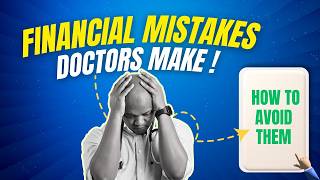
YouTube presentation by Dr. Ndubuisi 'Andy' Egwim outlining 10 common financial mistakes doctors make and concrete rules to avoid them (e.g., be your own CFO; invest in financial education; emergency fund; save 15–20% for retirement; insure properly; passive investing; build a financial team; tax planning; manage debt; estate planning). The video uses case examples (Dr. Lena/Dr. Rose) and promotes Money Wise Doctor resources (quiz, newsletter) as follow-up.
Chapters
Many doctors are heading towards an uncomfortable retirement. They'll be unable to retire comfortably and early. And it's not because we didn't work extremely hard. It's because of 10 big financial mistakes that doctors and healthcare professionals make. Sadly, medical school just doesn't teach us these things and we don't get to learn them. I'll give you an example with Dr. Lena, an NHS consultant, dedicated consultant, earning over £100,000 annually. But despite her decent income, she made several costly mistakes. Poor investments, wrong life insurance and income protection and didn't have an emergency fund. Unfortunately, this led her to a lot of financial anxiety and burnout and she had actually taken advice from the wrong financial advisor, who is really a financial salesperson. Now, if you're new here, I'm Dr. Andy Gwim. I'm a former salary GP and I've been an investor for 20 years. I also founded moneywisedoctor.com to help doctors and healthcare professionals make smarter financial decisions. In this video, I'm going to take you through those 10 mistakes that doctors make and how you can avoid them. My goal is to help doctors and healthcare professionals avoid these common financial mistakes and take control of their financial future. Let's dive in. Now. Rule 1. Be your own chief financial officer. Think of life, your financial life, like a business. You are the chief Financial officer, the cfo. No one cares about your family and your financial future more than you do. Yes, you may hire advisors, accountants or tax specialists, but you are still the boss. You need to know where your money is going and what your investments look like and how your taxes work. Dr. Alina made the mistake of leaving everything to a financial advisor, who obviously turned out to be a financial salesperson working for a restricted financial advisory firm disguised as an advisor. And it cost her dearly. Of course, the advisor took a fat commission, but she lost her money eventually. And remember, don't abdicate responsibility for your financial future. Make sure you're getting the right advice. Rule 2. Invest in your financial education. Now, as a doctor, you can get financially smarter without wasting all your time on junk advice. I mean, doctors and medics can spread keep 99% of the financial noise and focus on one simple approach. Now, we spent years learning medicine, but no one taught us how to manage money. That doesn't mean you can't learn. Doctors are learning machines. We are smart people. So start by treating your financial education like your cpd, your continuous professional development. So CPD for your money. The more you know, the more informed decisions you make. You can learn about taxes, your isa, your pensions and basic investing. And that can save you thousands, if not hundreds of thousands and millions over your working career. As both a doctor and an Investor for over 20 years, I've learned that medics don't have the time to wade through every piece of financial content. I mean, most of it doesn't even apply to us. A lot of it is, quite frankly, junk. Some are good, but a lot of junk. But just like your CPD keeps you sharp in medicine, your money needs its own CPD plan to secure your financial future here's a simple three step action plan already helping over 2,500 doctors and healthcare professionals on money wise doctor to get high quality financial education without getting overwhelmed with all the financial jargon out there. Number one Follow one podcast or blog or weekly newsletter, whichever you prefer. That is Finance content made for doctors. Example Money Wise Doctor Weekly of course, Shameless plug. It's perfect for listening during your commute or working. And you can just read it in five minutes without having to worry about time to read it. Number two Attend one financial seminar every year. So just like those hours you spend, that financial seminar is your financial future you're investing in. It can save you a lot of headache. Number three Read one good financial book yearly. Now you don't need to read 50 books yearly like I've done, or read books on random business stuff. You can start with simple books like the Psychology of Money or Rich Dad, Poor Dad. They will shift your mindset and get you on the right path. Actually, I've made A list of 12 top financial books I recommend. You can start with them if you read just one good financial book a year for the next 20 years of your career as a doctor healthcare professional, that's 20 solid financial reads under your belt. That's more than most doctors will ever read in their lifetime. And and if you're that knowledgeable, it's harder for a financial advisor to pull wool over your eyes. Now if you're finding this useful, head over to moneywisedoctor.com subscribe and join over 2000 doctors who are getting this free weekly financial insight. Rule 3 have an emergency Fund now think of your emergency fund as your financial safety net. Life is unpredictable. Illness, job loss, sudden expenses can happen. In the example I gave, Dr. Elena didn't have an emergency fund and when life took a downturn, she had to go into debt. Set aside three to six months worth of your living expense in a low risk, easily accessible account. This is not an investing account, it's a saving account. If something goes wrong, you don't have to rely on loans or high credit card expenses for your long or even have to sell your long term investments. Now rule four save 15 to 20% of your income for retirement. I mean including NHS pension or self invested personal pension like sleep. You can't just save your way out of this, you have to invest. Inflation can eat deep into your retirement saving. So start saving at least 15% to 20% of your income into tax efficient accounts like ISAs and SIBs. So lifetime ISA stock and shares ISA. We've made several videos about ISAs. You can check out the channel here to get them. This will give you a head start. Now Rule five Ensure against disaster. Ensure against catastrophe. Life can throw curve balls and when it does, you need to be ready again. Like I mentioned, Dr. Lena, who kindly shared her story with us, didn't have the right income protection in place or life insurance and thankfully she she lived through it all. But that would have left her family vulnerable and her life insurance was not put into a trust. That means that it's open to inheritance tax now. You need to think carefully about having a life insurance, income protection and having all that in the right place. Rule 6 embrace passive investing. Skip the high fee, overly complicated investment. Passive investing through low cost index funds allows your money to grow steadily without the high fees that often eat into your gains. It's a simple low effort strategy that works for busy doctors and healthcare professionals who who don't have the sort of time I have to actually start analyzing investment and actually 99% of active managers don't outperform passive funds like S&P 500. Number seven build your financial dream team. You need competent professionals. You need a specialist accountant, a good legal advisor, a financial planner, I mean who truly has your best interests at heart. Make sure they're working for you, not just for their commissions or for their large firm, even when they've been recommended by massive medical associations. Prioritize your own financial health. Make sure that their fees are reasonable. I always suggest an independent financial advisor that has specialist understanding of how doctors and healthcare professionals work. Number eight Taxes. You need to keep a good close eye on your taxes. Utilize tax efficient accounts like ISAs, self invested personal pensions. Learn how to avoid the 60% tax trap. We've got an article that has been read by thousands of doctors on how to avoid the 60% tax trap for doctors. If you Google it will come up as one of the first articles and I'll put the link in the description. So make sure you're taking care of your taxes so that you're not overpaying. Rule 9 Manage debt wisely. I mean debt can be a massive financial bondage. It's a good servant for a bad master. Don't try getting into debt, just impress people who don't even care about you. So focus on paying off high interest debts like credit cards or loans. I mean, once you have a handle on your debt, avoid accumulating more. It's unnecessary. I mean Dr. Alina shared with us how she struggled with debt after her marriage ended and it took several years for her to recover. She made a six month plan which helped her now to free up your money to invest, you need to pay off your debt that will allow you to achieve financial freedom. Rule 10 Plan your tax and exit carefully. It's a crucial point that most of us as doctors ignore. Make sure you have a will in place, have your life insurance in a trust to avoid inheritance tax. Do proper estate planning. Ensure that your family is taken care of and your assets are distributed according to your wishes. Make sure your bank account you notified them who will be the beneficiary so that your your loved ones don't end up in a bit of a mess when you pass now. Six months ago Dr. Lina came across money wise doctor through her article on how to avoid the 60% tax trap. As a doctor she said, I'm so grateful that the algorithm brought it my way. Thank you algo. Now after implementing the term money wise Dr. Rose, she completely transformed her finances. She paid off her debt within six months and built a three month emergency fund, then started investing wisely for her long term future. She says her stress levels have reduced significantly and she feels more confident about her financial situation despite having now missed the lifetime answer because she's cross faulty now. Her story is a powerful reminder that it's never too late to turn things around. With the right guidance, you can avoid these costly financial mistakes and start planning towards your long term financial security. It's not something you can leave for the government or your employer. If you're ready to take control of your financial future, don't wait until it's too late. You can take the Financial Health quiz below and to check your financial health score and find out areas and gaps that you can fill. And it's all free. You can join over 2,500 doctors who are subscribed to the Money Wise Doctor Newsletter weekly so that you can receive these weekly tips to give you updates and help you get insight on how to avoid costly financial mistakes. And make smarter financial decisions for your future. Excellent. Now I don't know which of the 10 rules have you found the most beneficial? Which of the 10 rules are you applying? Do you disagree with any of them? I want to hear from you in the comments. Tell me in the comments which of the rules have you actually found really useful? And of course if you want to get the link to the quiz, head over to moneywisedoctor.com to get the quiz or check the links in the descriptions or on the comments and that can help you find out if you're at risk of financial sepsis. Well, it's lovely to talk to you again and next week we'll be sharing more insights and and also we'll be looking into the upcoming budget announcements by the labor party which has a lot of doctors and healthcare professionals worrying about their financial future. All right then, thank you for joining me and have a lovely weekend.







