22 Years a Doctor, First Time Her Investments Actually Worked (NHS Doctor's Story)
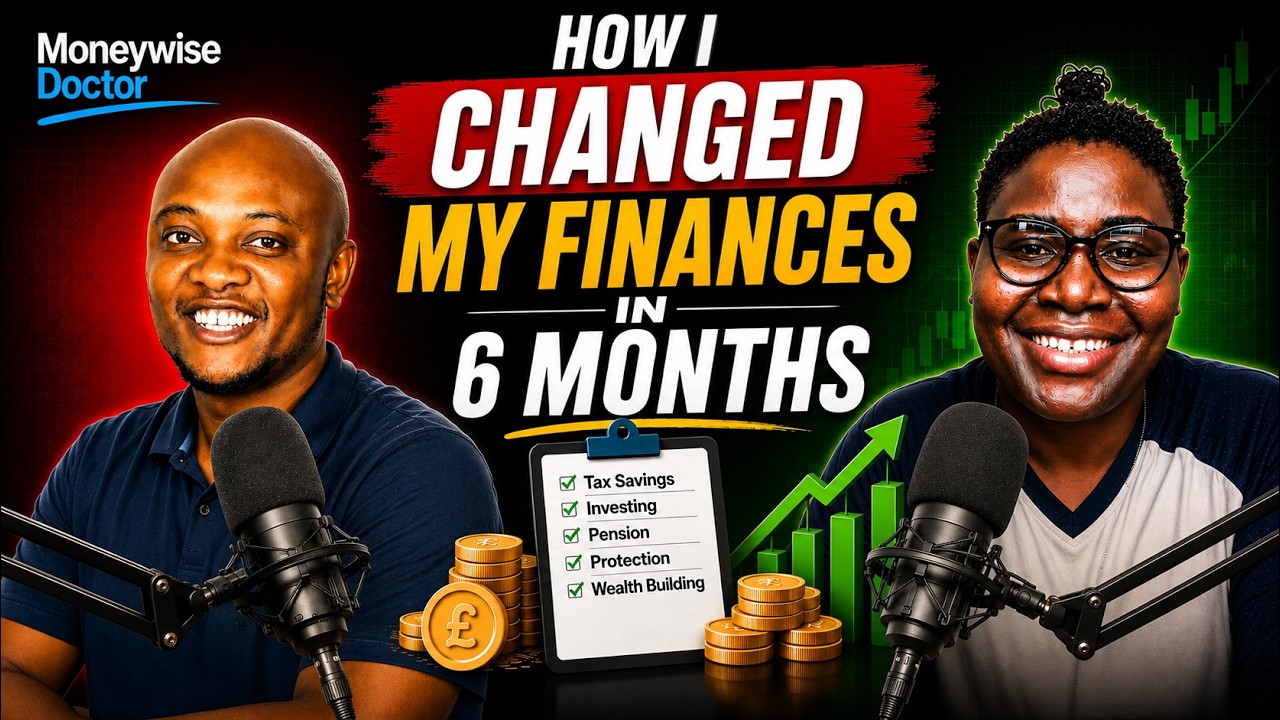
Dr. Bumi Audu, an NHS doctor of 22 years, explains how a limited company structure, SIPPs, and tax-free allowances transformed her finances. She pays her teenage children up to the tax-free personal allowance and invests it in Junior ISAs, and claims capital allowances for an electric car and other business expenses.
Chapters
So I sold my bond and I bought more of Xrata, something about artificial intelligence, which at that time had given me a 24% profit.
Wow.
So I sold off the bond, it wasn't too much, maybe 1,000 plus, but I sold off the bond and then used it to buy that. If you're an investor, you never go broke. That was the first thing I realized, you never go broke. There's always some form of insurance from that investment that will come forth. At some point. So I started investing when I was in 200 or 300 level medicine.
Wow, how old are you back then?
I think I was probably 20, 21.
So before you joined the Mastermind, you made some investments, but those investments, you didn't know to structure them in a way that to be tax efficient. But now going forward, you obviously understand those things.
Oh, I've adjusted all of them. It was really worth it, but obviously one thing I would say is that now I'm not investing blindly. Yes, have an understanding of what to look out for, what to have an interest in, and exactly what to do.
Wow, Dr. Bame. It's been an amazing 1 hour just talking with you on this podcast. Lots of insights, lots of nuggets. And if someone were to come across this now and they wanted to say, hmm, this podcast, should I go into it? What am I going to learn from listening to this podcast? What would you say?
Well, I would just tell the individual that if you would spend the next 60 seconds, what's important to you to, for you to understand? Is to know exactly what your goals are. The important thing is setting goals, okay? Understanding your financial status, where you are at this point in time and where you want to get to. Having an understanding of how you are going to get to that goal. Now, because you're in the United Kingdom, you must have a very good understanding of the tax system and make sure that you are very tax efficient. And finally, do your investments right. Wow. If you can do those things, I'm very sure you are going to sail through. But if you then want to go at the aeronautic speed— yes, like, you need, need a bit of hand-holding at the beginning.
You need a flight instructor.
Exactly. And that's when Moneywise, you know, core training comes in. But the important thing is first make up your mind what you want to do, know where you are now, set your goals, get a structure, have an understanding of the UK tax system, and then hit the ground running.
Wow, that's powerful. Summarize it in a nutshell. So if you want to invest the next 60 minutes in getting insights on how Dr. Bumi has done it and how we help doctors do it, go ahead and dive into this podcast, understand how to set a structure, become tax efficient, get on top of your finances. And then if you want to go at aeronautic speed, you want to fly, then you get insights on how to do that as well inside the podcast. So welcome back to the Moneywise Doctor podcast. And a lot of times, just me sitting here and giving you lots of tips on finances and all that. Every now and then I bring in a great guest, a special guest. And today is one of those days. I've got like Dr. Ndubuisi 'Andy' Ndubuisi Dr. Ndubuisi 'Andy' is an excellent doctor, experienced, confident doctor. She's an emergency physician who has worked in multiple countries, currently working in the UK. And, uh, very interestingly, she's been through my Moneywise Doctor Mastermind, my 6-month financial coaching. And then I'm here today to talk with her about her finances, her background, her experience, and I'm sure she will have some tips to share for doctors in the UK about their finances and career if possible. As well, especially doctors who are like us, IMG doctors who have moved from different countries and come into the system. Welcome, Dr. Ndubuisi 'Andy.' Delighted to have you.
Yeah, thank you so much, Andy. I'm really, really glad to be here. I, I would say it's really mind-blowing from where I started and where I am today, and I would encourage a lot of people to just come on board.
You can see me grinning from ear to ear. I'm delighted to hear that. You sent me a message showing me all the things you've achieved in the last 6 months. I'm like, wow, how did she do all of that? Before you make any investment decision this starts here. Start by understanding exactly where you currently stand. Most doctors have never had a proper financial health check, not because they're not interested, but because nobody had ever designed a tool that helps to make sense for the specific complexity of doctor's financial life. So I made one. It's called the MedScan Financial Health Score. So it takes about 3 minutes. It helps you to look at your overall financial position across 7 key areas, including tax efficiency, pension, investing, debt management, and financial protection. It gives you a clear score, a breakdown of exactly where you are, where the gaps are, and it's completely free. Takes 3 minutes. So if you head over to moneywise.com/medscan, or you can check the link in the description to get it. It's 3 minutes, real clarity, free. One thing I've seen about you, like, you seem to me like if I was to describe someone as an action lady That's exactly the picture you fit because you always seem to be moving. One. Two, during when we started the Mastermind, even during the Investment Academy, some people weren't able to, you know, start because they felt like, oh yeah, I'm busy. I noticed that you somehow were able to just carry everything along. On some occasions I saw you on scrubs, some occasions I saw you like on a train or on a bus or in a car going with your son or your child to a game or something like that, and you were somehow plugged in, and I saw how you crushed the program because at the end of the day you went back and you went through the recordings and you asked questions in the community and all that. So could you tell me a little bit more what made you feel like, okay, I don't have to wait, I can just go ahead and get this thing sorted right now?
Okay, thank you very much, Andy. So, well, I'm not too young and I've done a few investments which I think I did wrong. But one thing about me is that I will always believe that you can always lose money. It's not that I have so much, but I'm not going to cry over spilled milk. Yes, it was another opportunity to see— the worst that will happen is this would be another wrong investment. That's it. But sometimes if you close your eyes and say everything is wrong, you probably would miss the right one. So I decided to try, and I could remember the very first, um, conversation I had which encouraged me to go for the investing masterclass was because you said, look, I know you've done some wrong investments, but I can guarantee you, give you a full refund if you have not gotten your money back after a few weeks. And I said, okay, that's fine. This is, this is the first time I'm having a guarantee. And you know, the full refund wasn't like you're going to get your money from Moneywise Doctor back into your account, but if you are able to look at how you strategize your, your funds to get your money back. And I said, okay, fine, let's, let's give it a go. Fortunately, I have a company, so I, um, paid for the mastermind through my company. And, you know, the first thing I realized was understanding tax and understanding expenses. So there are some things, a lot of things that you would have done, or I used to do during using my personal accounts, that I realized that I can easily do using my company accounts, and it was legit. It wasn't like you're trying to defraud anyone, which is one thing I don't do. I prefer to do it right than do it wrong. So he gave me those understandings and those leverage. In addition, he helped me to also encourage my children to, to learn to save and to invest. It may be very little, but at least they now start have a bit of understanding that, oh, Mommy, every month if I have £250 in this account, by next 10 years, how much will it be? So those questions are coming up. And I just tell them, look, stop bothering me. The important thing is that you should have an understanding that it's not every money you have that you should spend. And, and looking at all of these, you know, some of the few things is— it's true, I'm a very busy person.
Very— yes, you are.
One thing I believe is that once you set your mind on something and you have a goal, you have a target, you can always accomplish that thing. You may stretch yourself one way or the other. Of course, I didn't attend all the masterminds. Some of them I went back, and it's not everything I would tell you. I'm still not great at individual shares. But ETF, I would say, I think I've nailed it. And I, I, I was fortunate because Trump came in, the, the ETFs crashed and all of that, and then Trump negotiated and they all went above where I— when I came in in January, because I came into the mastermind in January and I was more or less starting off as we're doing the masterclass, setting off the, the— what's it called— those accounts, SIP accounts, you know.
Yes, ISA account.
Yeah, the stock and shares ISA. And I just said, okay, let's go and gamble with the S&P 500. Even if I don't know much, let's go. After all, after all, it's not going to be a failure if, um, what's that very wealthy man that, um, what's his name, Warren Buffett, said in 20 years it would be fine. So I, the first thing I did was to get S&P 500 before I even had any significant understanding. And then sometimes mistakes also help. While I was picking my individual ETFs also into my portfolio, I didn't know there was something called, um, auto-invest on margin. I didn't switch that off, so I saw some AI things that looked nice, you know, by name and all of that, and I just picked about 2 of them also in the portfolio, and I, I bought them just looking. Obviously, they really crashed during the first time from end of February when the market really went down. But now that has been my maximum, you know, percentage profit if I would look at the ETF. So it was really worth it. But obviously one thing I would say is that now I'm not investing blindly. Yes, I have an understanding of what to look out for, what to have an interest in, and exactly what to do. And if I really don't have the time, I have done a lot of, you know, auto deductions, auto investments. As long as the money goes there every, every month, I don't mind how much it is. At the end of 10, 20 years, it would always go higher. It's not going to be a loss. So that's what I would say I've gained.
Wow, it seems like a quick mini masterclass here. Um, so if I, if I do a quick recap, when you join the mastermind, you were, you were already— I think, how did you even find me? You found me online or something? You found— was that like—
I found, I found, uh, I think it was a YouTube video, and then I, I went, I searched up, and I saw that you were doing a tax hack Yes, I joined the Tax Hack and I was like, this looks a little bit informative and interesting.
Yes.
And then at the end of the Tax Hack, you advertise the masterclass and I said, well, it's quite expensive but it's not as bad as what I have lost. Let's, let's, let's, let's just make more inquiries and see what this person has got to offer. So that was how I got to know you. And then after the first meeting, the Moneywise book came out I was part of those that were privileged to get 3 copies, and I gave my friends. You know, trust doctors, books that are not medical, they don't often read it quickly. But when you now go back and tell them, I know you don't have a company yet, but you know, this is— even if my tax alone this year compared to last year, I've saved ₦6,500 minus expenses. The difference between my tax this year and last year was ₦6,500. And the general overhead, although this year was a little less, but maybe about ₦10,000 less. But that tax difference is huge. It's really huge.
6,500. And that's just basically the same money you are earning. But now you just have a different tax structure. You just become more tax efficient.
January. So I've done some investments or some expenses that I couldn't really claim because of the way I did it before January, because my year ends in May.
All right.
So before you joined—
Yeah, so before you join the mastermind, you made some investments, but those investments, you didn't know to structure them in a way that you— to be tax efficient. But now going forward, you obviously understand those things.
Oh, I've adjusted all of them.
I know, because from our last call, um, you, you showed a very clear understanding of where the tax leaks are. And one thing I really loved about it through the program was how quick, you were to take action, you know, you were sort of like ready, fire, aim. Ready, fire, aim. Then you sort of like adjust as you go. Um, one thing you mentioned that I found very interesting is going from just guesswork. Yeah, I think, you know, I'm just gonna invest here, invest blindly. Um, because you mentioned this to just before I joined Mastermind, I said you're not going to cry over spilled milk. That was you, you said it previously. Um, but you've switched from just investing blindly and randomly choosing random ETFs, I switched to having a very considered approach. You have your own asset allocation, you have your personal investment goals. Um, but very interestingly, you've also brought in your children, you've also explained to them how things work, and they've started thinking in that dimension. So I want to explore a little bit about that, your own childhood, like growing up, sort of like before you started looking into, became a doctor and started thinking about investing, because I understand that that influences a lot of people's attitude to money. Growing up sort of like as Bumi before you became like the emergency physician.
Yeah. So I would say that obviously my parents were both Nigerian. My father was a chemical engineer, a typical academic engineer. Yeah. You go to work, you have a good paying job and you're fine.
Yeah.
My mom was an agriculturalist. She was working in the ministry, but she's from— well, it may not make so much meaning to every other person in other parts of the world, but for those that come from Nigeria, when they say someone is Ijebu, you know, yeah, the two things, they're either enterprising and they have love parties.
Yes, yes, yes, yes.
My mom had a side hustle, so she always had a side— right from when I knew her, she always had a side hustle. So she, she had a shop that evolved over time, and that's— and when we left secondary school, we always went to the shop to support her. And that, you know, helped me to make me understand that if you're an investor, you never go broke. That was the first thing I realized. You never go broke. There's always some form of insurance from that investment that will come forth. At some point. Okay, and it can also be used for insurance when you are really bad. Okay, I'll give you this, I'll get the money when I'm done, and I'll get— refund the money and then get my investment back or whatever. But that was one thing I learned from her.
Yes.
And so I started investing when I was in 200 or 300 level medicine, just a little bit from whatever money I get and everything. I just buy a little bit of maybe, you know, things like Nestlé shares. I just bought them by name, they were nice.
Wow, how old are you back then?
I think I was probably 20, 21.
Okay, that's fairly— I mean, many people didn't start today in their 30s, so that's 2021.
You know, even up till now I'm struggling to have to— I have to go back and get my name changed and get all those dividends back and all of that, which I've really not fully been able to do. But I did all of that and, and I just put the money there. I didn't know anything about trading, I didn't know anything about— but I just put the money there and left it there. So when I came into the UK, I knew about ISA. Well, the first time I came into the UK, because initially when I came into the UK in 2016, all through 2018, I was so adamant that I was going back, so I could do anything. But when I finally came back in 2018 and I knew I was staying, I decided to look at how I could just try and get things sorted. In 2020, I, I would say I started, which was COVID. But of course I fall— I, I, I was more or less scammed doing, doing, doing, um, trying to do, um, is it, um, rent on rent or some other funny kind of stuff? And then after that went into Bitcoin and all of that. I lost a bit of money, but I didn't lose all my money because I still have those coins or whatever. But you know, I, I got discouraged, so I said, okay, I'll leave my money in savings and see if I can save to buy another house at Yeah, you're going to pay more, more interest and all of that buying a second house. And one way or the other, a friend of mine said, I really need money, would you just loan me some money? So I decided to borrow the person quite a huge amount of money. Obviously the person has returned part of it, not all, but that was what prevented me from actually leaping into a second property.
Yes.
And in between that, at about November last year, I got to find out about Moneywise.com. And then I joined the program. So it's, it's, it's been a rough road, I would say, but I think I would— I was just adamant on saying I'll keep doing until I get it right, and I've gotten it right. Wow, I've gotten it right.
Wow.
I would, I would say that I'm so happy that I joined because if I look at all my portfolio at the moment, I am—
is that what you're doing now? You're looking at your position?
I'm trying to open them on my phone. Okay, I'm really, really happy because this is the first time I will do anything, one that is consistently improving.
I'm not saying that not jiggles up and down, but markets go up, markets go down, but you know what is happening.
Exactly, I know what is happening. I know that no matter how bad it goes, it will not go to a loss, and it has a very good foresight. And you know, things for retirement, most of these things are done for retirement, and it is very good.
So I'm really looking at— you're looking at the long-term return, not just what happens between today, tomorrow, next, because markets could crash.
Sure, just like what happened at the end of February.
Yes, markets dropped. Yeah, wow, this is quite interesting. I like, um, your general attitude. You seem to be like a force of optimism. Okay, I'm gonna go try again, I'm gonna go try again, right? Okay, now as a doctor, Because you obviously, like, you've been a doctor for how many years now?
Uh, 20, 22 years.
You've been a doctor for 22 years. You're very experienced, and then obviously you're very comfortable in the emergency room. Um, as a doctor, what are some experiences you had as a doctor that affected the way you think about money? If you had to go back now to medical school 22 years ago, or like to talk to Bumi just finishing medical school, what are some sort of like things you say to them in terms of advice or suggestion to say, look, when it comes to money, these are the things I'll do differently, this is what I've experienced, this is what I'll do differently?
Lovely, that's very good. You know, I do a bit of teaching, so we teach medical students, and I remember the last teaching I told them that I hope you're in medicine for the passion but not for—
yes, not for the money, because medicine is not like millionaire's playground.
Well, maybe, maybe if you're in America, you may probably do something a little bit better. But the truth is, you are in medicine for the passion, you'll be very good, fulfilled, happy, but you are not in it for the money. But because you can actually go to the medical syllabus, you can go through money syllabus as well and be fine.
I love that, I love that.
So I told them that, and I said, start thinking now. If you can pass the final MBBS exam, start thinking now of what is going to bring in money for Doctors are privileged because no matter where they are trained, they would get a job somehow. When your colleagues are still moving around trying to get— make ends meet, you have already started working. Yeah, a lot of times, and I like this culture one way or the other because they push you out technically, they push you out and you then need to understand how to manage your finances, but you still have a lot of money as an FY1, FY2 most of the time, if you go through the system, you are too young to get married, in quotes. You know, you still want to explore life. So you have a lot of, you know, change after you've bought a small car that moves you around. You have a lot of money. So instead of, you know, just taking the money and just going on holiday— and I'm not saying going on holiday is bad— but you, you set aside a percentage of your salary. And I'm emphasizing a percentage because I learned that when I was in medical school. My parents were not so— my dad lost his job. My parents were not so wealthy. It was really tight. But I always believe that if I give God 10% as tithe, I must tithe myself.
Wow.
So that has always been powerful. Yeah. So every year I will always have 120% of my earning. I mean, per monthly earning, I will always have that no matter how terrible things are.
Let me, let me pause you there for a moment because this is something powerful as one of the foundational things in the Moneywise Doctor program, right? Is the pay yourself first. Yeah, through AMAS, Automated Monthly Allocation System. So you've already been doing this anyway. So you put aside 10% of your income. Obviously we teach 20% because by the time you're adults, you're in your 30s and 40s and 50s, we're looking for speed. But you started in 10%, which obviously compounds over time. So you were putting aside 10%. Obviously you're a Christian just as I am, and you believed in tithing, so you're giving 10% just as living, and then you were giving it happily. I thought, I've got to give myself a swell. Yeah, because that's what happens a lot. I've met doctors who have earned hundreds of thousands, millions over their career. They've got nothing left. Why? Because there wasn't anything being kept aside.
That's it.
So, so you started practicing that right back when you were in medical school. What sort of inspired you to even do that?
I think one of the issues I had was that, um, As I said, my background was very meager. I can't go back home after I've been told, you've taken your pocket money, you can't wait till the next month. And some months are relatively better than the others. You know, when it's time for exams, you can't really afford— you don't have time to cook, you tend to buy more food. So you have to fall back on some of the, you know, little savings you've got. So I just believe that, look, the pocket money I have, if it's £1,000, for example— of course I'm just explaining— I have £800, so I live on the £800. Okay, but it doesn't mean I don't have a miscellaneous savings or miscellaneous expenses which shouldn't be spent out of the 800, but I'll just live on the 800. And so I work by ratio, so I just decapitate the money by 20% Titan Savings. It doesn't really exist. Yes, so, so it's not something that anything happened and then I can get there.
I love it.
It doesn't really exist, although I didn't know about AMAS then, but I had another account that the money goes to. Yes, you know, this kind of accounts that you don't deliberately collect a card on it. Yes, really, it's a bit difficult to, to, to withdraw from it. So I just did that over the years. Of course, from there I did a few investments, and from there, most of it, for years I was just saving.
I love it.
I was just saving it. But it was— the saving wasn't a good strategy, but the advantage was that when I needed my money, I was able to get it.
You get it. Yeah, because you have to start from somewhere, right? Sometimes some people have to pay off debt and then save and then invest. So you start saving.
I avoided debt as much as I could.
As much as possible. Okay, let me ask you a question now. You've mentioned AMASS a couple of times. I will talk about it. Could you just explain it for someone who is watching and they're saying, what's this AMASS? Is it just to amass money? I mean, it's one of the frameworks in my book, in chapter 2 of my book, but could you explain it in your own language in a way someone starts it.
So I think in a nutshell, the important thing is that we believe that you may not be employed, you may be self-employed, but you have a means of livelihood. Yes, it may not even be salary, you know. If you are self-employed, it's when you get the contract. So you have a means of livelihood. Just like I said initially, before I joined Moneywise.com, I had this belief that I should tithe myself. So you, whatever you earn, especially for those that do not earn salary, whatever you earn, just automate a particular percentage. I think the younger you are, the more you can, you know, give yourself a lower pay. The older you are, the more aggressive you are because you think that time is gone, and then you have some other responsibilities. You may increase the percentage.
Yes.
And that's why I always say if you work in ratio or percentage, it's very easy, because if you are fixed in numbers and the numbers change, it may be quite difficult for you to start adjusting. So you have a means of livelihood, you have a fixed percentage that goes into some form of savings or investment. It's an amount of money that doesn't belong to you today.
Yes, it belongs to your future.
It belongs to your future. So when you, when you then start like that, from the day you have decided to start, you have to structure things. The first thing is you have to look at what your finances are at that point in time you are starting. Do you have any debts? Do you have— you, um, do you have any unnecessary expenses?
Okay.
What is the average earning you you get every month. Okay, what are your outgoings? Okay, your regular outgoings, which is a must, you don't have a choice. And then what is left? What is the extra? So if you, if you've got any debt, especially the credit card debt— yes, the most ridiculous debt because the interest rate on it is enormous, it's crazy. If you take a direct loan from your bank, maybe you get a 6.9%, 7%. If you take a credit card and you, and you own it, they'll give you 25%, 27, some 40%. I wonder that, what type of business am I going to do that will give me that kind of money?
I have a card that's 102%. Do you think I'll ever let it cross?
I won't even use those kind of taxes.
It's my business card.
Okay, so the funniest thing was that, you know, When I first came into the UK and I opened my account and they told me, do I need a credit card? I said no, because I'm not going to use it. And the funniest thing was that up till today, that's my account, I didn't use the credit card because I never activated it, and then I lost the card. Okay, that's the truth, because I just made up my mind I'm not going to live on something I cannot really afford to pay. And if I ever get a card, just make sure at the end of the month you withdraw everything and pay it off. So going back to Amass, you know, You've got all of those things in place, you've got a structure, and then you can now look at it. Now I want to start, I want to go, I want to edge high. If I've got any debts, do I have any way of paying it back? So instead of saving money, it's better you clear your debts. Even if it is possible, go to your bank, go and get a proper loan and pay off your credit card debts so you have a narrower percentage you have to fulfill. And then automate— don't save if you have debt, just automate and clear the debt. Then you then have a structure from— you have moved out of the valley to the, to the flatland.
You've gone from the valley to the flatland, now let's get to the mountain. I love that. I love that.
You can then set, you know, set the structure. If you've taken— if we, if we're working on 100% and your compulsory outgoings, which are your expenses, is about 55-60%, you have a 40% left. For me, I have said it, I tithe myself, I tithe God, I have 20% left. The 20%, I, I always have a minimum of 5% miscellaneous expenses. So if you are going for a course, you have something else, you fall into that miscellaneous expenses because they are not regular routine things, but it may be, it may be once every 2 months, it may change and all of that. So, so you have 15%. Now that 15%, you can then think about it and say, do I want to put the all of this 15% in addition to my 10% of tithing? In investments. Or if I'm young, I, I want to enjoy myself a bit more. I don't have the, you know, responsibility of children and things like that. So that's fine, you can, you can make yourself a bit happy and all of that. But you know, one important thing is once you then put all those things in place, you then decide what investment do I want to do? What am I happy doing? So for example, moneywise.com has come and told you that you can invest with your two eyes closed. Because that was the problem I had with the Bitcoin, with those things. It was almost making me go crazy, and I just—
let me just say, investing with your two eyes closed, I, I suppose you mean if you're— if you have financial education and you're trained and you have your risk management in place, in place, and you're a passive investor, correct, then you don't necessarily need to be checking every day what's going on. Yeah, so I understand that. Compared to investing in, or rather putting your money in something like random crypto or some type of investment, even individual stocks.
Any volatile business, it's not only even stocks, because some of these, um, rents will do something, something today, government will change the rule and all of that. They're also quite volatile, they are also quite difficult. But you know, if you, if you look at it, that I put my money in an ETF and it will swing. Just I said, February wasn't a very good time, but I learned because I made some few investments in January. And when I realized February wasn't a good time, I was slow. By middle of March, I said, let me put a little bit more money, at least it would cushion the loss. So I put in a bit money, and then by April, everything just soared. And I said, wow, maybe I should have put a lot, lot, lot more. But you know, it's, it's important because At that time I had automated, you know, the systems. So every month, every month, you know, I have my own personal ISA. Yes, from my regular job, which is not from my company.
Okay.
I have also made up my mind that because I earn, I must put my 10% into my ISA. The maximum you can do for my personal ISA from what I earn is 20,000.
So 20,000 per tax year?
Yes, per tax year. So what I do is I've made up my mind that I will leave 500 as cash ISA, and then which will end up, end up 6,000, and remaining 14,000 will be stock. So every, in case I just need cash at any point in time, I can withdraw from that cash ISA. The interest is not going to be taxed. So I don't have a savings account. I don't have it. That is my savings account. Exactly. I need, I need any other minimal cash I want to put, I'll put in that account as long as it's no more than 20,000. So if I save 6,000 this year, 6,000 next year, in the next 10 years it will be 60,000. I won't, I won't move it out of that account because obviously I'll probably have maxed my SIP, we'll get there anyway and all of that. So I'll leave that money there. So in case I need cash for anything, I will go to that account and I'm very comfortable with it because it's accumulated over time. It doesn't look like, you know, you are trying to waste money or anything. So that, that gives me some form of interest. The stocks ISA, the stocks and shares ISA, is already invested. Some of them, they do some individual stocks. I, I could remember that up to now Adobe is still, you know, messing up, doing all of that. But I use the same, the same system. I bought it when it was about 260-something, and when it got to 175 or 179, I bought a bit again just to cushion the difference. But Adobe is a company that I doubt will really, really crash. So We'll wait for it and give it another couple of years and see what happens to it.
Let me, let me, let me tell you, I'm very proud. I feel very proud the way you're breaking down all the systems. Um, these are kind of like the things we dealt with in the mastermind, right? About first of all, build your foundation, pay off expensive debt, and then, but don't try to do it and then starve your life. You can do it by setting aside, that's the whole amass. Automated Monthly Allocated Savings System. So you have a direct debit standing order, it's setting that money away. 20%, it goes out. You've got 80%. Somehow your life fits into it. Sure. And after working with hundreds of doctors so far, I've never seen anyone who said, I set aside 20%, then I was— I became homeless because I couldn't pay my council tax bill or my rent. I'll say, okay, experiment the first 2 months. Let the cash still be available for you. You can still go back. Now, after you've saved up that, you've saved up some money, let's say you've set up an emergency fund, at least 3 to 6 months for most people, then you can start thinking about investing. So let's talk a little bit about investing because I see that you're doing both passive and active investing. Um, nothing wrong with that because obviously for active investing, I know you've been through the Investing Academy, you've learned how to read balance sheet, you know, cash flow statements, income statement. So you're not just blindly thinking, hmm, that company sounds nice. You're able to do a discounted cash flow analysis and all that. So if you were sort of like investing, what percentage of your investable— because you were in the class about asset allocation— what percentage of your investable assets would you usually allocate to index funds and ETFs? And what sort of like, because you do individual stock, what percentage of your investable assets in terms of stocks do you put into individual stocks. We're not talking about property now, we're just talking about stocks and shares.
So, so if you look at this, when I first joined the Mastermind, I did 10% bond, I did 30% individual stock, and 60% ETFs.
Okay, okay, let me pause you there. 10% in funds, that's index fund. Bonds, okay, bonds, 10% bonds. Yes, so that's some stability because bonds don't have that volatility.
Exactly.
So 10% bonds, um, 10% individual stocks, and, um, 60% in ETFs, like index fund. Good, because that was week 2, wasn't it? Was it week, week 1 that we did asset allocation, where you do your decide in terms of your investment game plan? Good. So how did that change over time?
So, um, by the end of I was privileged to go through the mastermind, I think, 2 or 3 times in the 6 months.
Yeah, you came, came to the Investment Academy a couple of times. Yeah, exactly.
So I was previous. So at the end of the second investment, which was about early May or thereabouts, yes, I tweaked my portfolio. I sold off all my bonds.
You sold up?
I sold off all my bonds because the interest, the interest on the bonds from when I invested it was about 1.8%.
The premium was 1.8%?
Yes, what I had on it.
Sorry, the coupon rate was 1.8%.
Okay. The, the, um, profits I had was about 3.4%.
3.4%?
Yes.
That's just on cash or on the cash? On the cash. I just sitting down.
So I felt that why do I need to keep this bond? So I sold my bond and I bought more of X-Rater, something about artificial intelligence, which at that time had given me a 24% profit. Wow. So I sold off the bond. It wasn't too much, maybe 1,000 plus, but I sold off the bond and then used it to buy that. Obviously it was a lot more expensive, but by the time I still looked at it, that particular ETF is still going up. So that means I've made some more profits, which is more than what I had made in 5 months of the bond. So now my bond is zero. So I've gone to ETF, I've added that 10% to ETF.
Yes.
And then I did a little tweaking on my shares as well. I think I brought the shares itself to 25%. So it's now ETF 75, individual shares 25.
Hmm, let me, let me, let me unpick that because this is really very good. One thing I've noticed about you is that for your investing approach. Obviously, we are in week 4 when we did the personal investing game plan. You are not just sort of like photocopying what everyone is doing. You are doing things based on your risk tolerance, your capacity to bear risk, and your long-term horizons. Because one of the challenges I've seen a lot of times in the financial industry is that they just ask you, Bumi, so what's your risk tolerance? And most people say medium, because most— you don't even know what your risk tolerance is. Most people just say medium or low. And then you find something— they do something called 100 minus X. They say, okay, since you are 40 years, we just do 100 minus 40, so 60% to be in stocks, 40% will be in bonds. And you've got like 20 years to invest, you've got like a job, you've got like capacity to bear risk, and you think, maybe I should have more exposure to stocks, which has a higher upside, right?
Yeah.
And of course it has volatility up and down, but if you are like buying a broad, well-diversified diversified index fund, like you said, the chances of sort of like the whole market collapsing forever is quite low. And even if that happens, okay, maybe we'll not be worried about investments, we'll be worried about a zombie apocalypse or something if the whole— all the global markets collapse at the same time. Yeah, so, so that's quite impressive. You ain't just sort of like photocopying exactly, I'm just going to go 100% on this. You are doing things based on your own understanding, your risk tolerance, your capacity to bear risk and your long-term horizon. Because most people say, oh, it's good to have bonds. Bonds are great, but the coupon rate, the return on the bonds— let's say for instance, if you were 65 and you didn't want to work one day in your life, you didn't want to hear anything about work or something, and you just bought all bonds. If you wanted to do that— that's not what I'll do— but if you had all bonds, then you know that there is no volatility. Let's say you bought gilts, UK government bonds, there's no volatility. And you're not going to have a high return, but then you're going to have like a steady return. But in your case, you are thinking long term, right?
I still, I still have a couple of decades, at least I have about 2 decades, 2 decades. And I think 20 years is massive when you look at investments, it's massive. And so if I'm somebody that can do without working, but you know, sometimes you don't want to love— you love working, you emergency medicine, you're not working You're not working because of the money, it just gives you pleasure. Whatever is going to give me, you know, the financial backup that will make me happy, I think that should be another thing structured aside that would always run itself, or, you know, run and, you know, supply every need that I need. And that's, that's what I did. And when I looked at it, and, you know, at a point in time in March when the markets were still dancing around, yeah, we realized that Nvidia, you know, the The Nvidia as a stock was cheap, and, um, the chipmaker—
when you say it was cheap, what do you mean?
The price wasn't so much then in March. I think the volatility affected it a bit. So I said, okay, the way they are talking about these semiconductors and things like that, I decided to buy a bit of Nvidia.
Okay.
And then I went to the ETFs and I bought— is it VanEck or something? Yeah, Van Dyck. Something sounds German, sounds dosh like that. So I bought that as an ETF as a backup.
Okay.
And then I did, I did, you know, a little of Amazon, very little, you know, things like £500.
Again, this is asset allocation, right? You're not overexposing yourself in one area. Because I say to people, I invest in startups, right? I've invested in startups, but they're like 10% or less of my portfolio. Yeah, so you sort of like, you're saying, well, I'm going to take a bet on Nvidia or Amazon.
So I did, I did Nvidia, I did Amazon, and, um, I did, um, Broadcom and, and, uh, that's Google. They were all very minimum. Okay, so that was those, those ones summed up to about 20% of my stocks. You know, I said I'd already done, um Adobe. So all of them summed up to about 25%, you know. But subsequently I just automated it that it wouldn't do much of individual. So I'm going to do an individual stock every month, maybe just £500 for all the individual stocks, all of them. Okay. For every other thing, we then come into the ETFs.
Yes.
And the VanEck Semiconductor, which is SMGB, I'm looking at it now, has given me a 39% percent profit from January.
That is January.
So which—
that is quite a healthy, decent return. That's almost 40%, isn't it?
That's it. Yeah, initially it was 40%. I think it's come down a little bit. And then, you know, when I bought a bit more, it would bring down the margin. You can compare that to my Invesco FTSE All-World, which has given me 13%. Okay, Vanguard S&P 500, which has given me 13%.
Okay, so basically you're seeing a pattern here. Yeah, the broad, well-diversified funds which you are planning to hold long-term, which you hold a lot of your funds, are giving you 13%, which is a decent return, especially when you compound over time. And then this other sort of like, will I say thematic ETF, is giving you a massive 40%. So now here's the danger where people make mistake. People who don't understand asset allocation like you understood it, having been through our whole program. Why wouldn't you just take everything and put it inside this other thematic ETF since it's giving you 40%? Why don't you just take everything? Like, why you—
you know, when we started this conversation, I said it, that in February everything crashed. When they crashed, the funniest thing, that the semiconductor really crashed worse than the S&P 500.
Yes.
But now it's really gone higher, far. So it's going to be the swing, the swing is is really significant. So it's also going to— in fact, it has come down a little. So the swing is significant. If you know you can't tolerate the amount of swing, just avoid giving yourself— yes, blood pressure. So risk-reward is minimal to an extent, but it's almost assured and guaranteed at the end of the year, probably get to about 15-20%, which is, which is good enough.
Yeah, the way I look at it, and you've, you've sort of hit the nail on the head, risk and reward, they are two sides of a coin. So obviously when people say, oh, this is going to give me 120% returns, okay, what was the risk? You know, you have to check risk versus return. That means, for instance, if I'm going to buy gilt, so UK government bonds, for 10-year gilt, and it's going to give me 4.95%, and someone else is offering me— I gave this example in class, if you remember. Do you remember the country?
Argentina.
Argentina. I have nothing against Messi, but let's say Argentina government 7-year bond is going to give me 49%, almost 50%, I'll still go ahead and go with— if I was sort of comparing them. Why? Because we look at risk-adjusted return. We're not just looking at the returns and all that. So if you have that cap on your head when you're making investment decisions, it's hard to make really, um, poor decisions because you have a framework, you have a written-down plan, you have your own investment policy, how you approach You've already said it here, 70% ETF and a broad, well-diversified ETF. 20% is for you to play around. And now you're putting £500 out of your £20K into individual stocks that you've actually selected and considered the company. That way you're sort of like getting the upside, but you've also capped the downside.
Yeah.
So yeah, things might go— individual stock could go— I've owned some stocks for 100, for of— no, not 100 years, for 20 years that have done 100x. I have some stocks I bought like back then, Vitafoam, some of those things, some of them have done 100x. But the downside is that I might lose all the money there, so it's limited. So by limiting to 500, and what is 500 as a percentage? So 500 is basically like—
it's about between 15, about 15% of my monthly investment. %.
Okay, let's not do public maths, but, but let's say if you do 500 times 12, that's 6K, right?
Yeah.
So that would be 6,000 divided by 20,000, so roughly I'll say about a third, a little bit more than a third.
Yeah.
Okay, so it's, it's quite a bit anyway, but you've limited the downside, that worst case scenario. Okay, this is what, you know, 6K, 500 times 12, 6K, and in the whole year you've got like 20K. So you've limited the downside, you spread your risk, and you're calculating it carefully based on your own understanding. Because for someone who has no idea of how to analyze companies, hasn't got any experience— I've been doing this for 20 years— some people haven't got any, even one day training in it, but they just buy a stock before because they had someone say on a Facebook group or WhatsApp group that this is really good. They're likely to lose money during the approach. Okay, now let's look a little bit at tax efficiency. Because one of the, one of the reasons why when people join the mastermind they tend to get like quick results, um, it's not because we invent anything or there's any magic money, it's because we just sort of like shine the light, we go in deep into like leaking areas. Oh, you're not using this one properly, look at what you've left here on the table. So let's look at tax efficiency. Could you, for someone watching who feels they're overpaying taxes and they're making mistakes, let's say someone in your position emergency medicine physician, working very hard, has a family. What are some areas of tax efficiency that you've made in the last 6 months? What are some of the moves that you make that you could recommend to someone?
I'm going to talk in two phases. One, I'm going to talk as a regular salary earner in the NHS, one, and then I will flip back and talk about the company. So even if you don't have a company and you're a regular salary earner in the NHS, As I said initially that I pay tithes. Yes, you can claim 20% back on your tithes, and normally the HMRC will not give you that money because you are giving to charity.
So it's charity. So if it's a UK registered charity, correct.
So you are not going to be taxed on that money. They're not going to give you the money back, but what they will do is that they will push your 20% margin from— is it £24,000?
It's from £12,570.
No, no, so no, the £12,570 is 0% tax. When do we pay 20%? What's the cutoff?
Okay, £50,271.
That's, that's when you pay 20%. Yeah, so they move that £50,271 depending on how much you have contributed as tithes.
Yes, so just, just a quick, just a quick recap. You already know this, for someone listening. So in the UK, the tax system basically for PAYE, from £0 to £12,570 is 0% tax. From £25,700 to £50,270 is 20% tax, and then from £50,271 all the way to £150K is 45% tax. We know that in between somewhere there's a hidden 60% tax trap. That's above £100K adjusted net income up to £125,140. Yeah, Scotland, if you're watching from Scotland, yours is slightly different but basically moving in the same direction. So yes, So let's get back.
So when you pay your tithe, if that is the only thing you do, it pushes up your 20% margin from ₦50,000 to whatever you have paid as, um, as, um, your tithe contribution. In a particular year, I think it moved it up about ₦10K extra, and that gives me a bit of cushioning because at the end of the year when you do some bank shifts, those people are always ready to send you the brown envelope.
Yes.
They can't send you a brown envelope.
Yes.
Okay, so for those that just do the regular PAYE job, you can claim that. You can also claim expenses on uniform, you can claim expenses on courses, you can claim expenses on GMC registration, a Royal College registration, things, equipment you bought, stethoscopes, you know, anything. You can also claim on that, provided that your employer has not reimbursed those things for you. So That's there on its own. And then obviously you can also then— you've paid tax on these, but you can also then use your ISA. Yeah, forever investment you are doing and you do it under the blanket of the ISA, the government is not going to penetrate. There is now a little bit of change because you can only keep it, um, 8,000 cash, a maximum of 12,000.
That will be from April 2027.
So So that's, that's for those that do the PAYE job and that is all you do, that your money starts from source. Now for those that are self-employed or have it—
sorry, before you go off, because you're downloading a lot of nuggets here, want to digest them. So now you're talking about someone doing PAYE, let's say a consultant, you're working in the hospital, or you're a GP, or you're, let's say, even a resident doctor, trust grade, or SAS. You don't have any sort like, um, work that is like in a limited company, you don't have a business and all that. So you said one, you can claim— I know you started from charitable giving, whether it's, um, St. John's Ambulance or your church or mosque, as long as they're registered charity in the UK. Now when you do that giving, you can claim tax relief on it. That's number one, because it could either be gift aid, which you allow the charity to claim on your behalf, or you can claim it. Okay, that's number one. Number 2, you said you can claim tax relief for your professional expenses. GMC, MDU, MDDU. I've got like videos on this on, on YouTube already. You can claim all those professional expenses and that's a way to save tax. Number 3, you said, um, you can uniforms, uniform equipment like stethoscope. So, so those are all professional expenses you can claim. Um, number— this is— that's till number 2. Number 3, talked about ISAs.
Yes.
If you're going to invest or save, do it in a tax-efficient way. For instance, the cash ISA for savings so that you don't end up paying tax on your interest on your cash, and you're already doing that. Your stock and shares ISA for investment so that you don't end up paying tax on your capital gains, which can be quite painful, isn't it? Like 24%. So that's in a nutshell. I think one more probably would, which I know you already know, is your 60% tax credit.
Yes, so I want you to talk to us about that. Obviously this affects the senior doctors. Yes, that is for those that earn more than 100,000. Yes, the long and short of it is that just open a SIP, a pension, pension, yeah, self-invested pension, put the difference above the 100,000 in that SIP. Okay, you go home smiling. Okay, unfortunately you may not be able to spend that money until you are retired but at least HMRC is not sending you a brown envelope to come and pay extra. Because every time you leave that money at that point, they will always send you a brown envelope to come and pay extra £6,000, extra £8,000. So why don't you just compulsorily save it until you are retired?
Okay, this is sound. I'm just going to highlight here that Dr. Bumi and I, none of us are giving this out as financial or legal advice. Um, we're just chatting, isn't it? Two doctors who are interested in personal finance. But it's very clear and straightforward. If you hit up to £100K in adjusted net income, for every £2 you go above that £100K, you lose £1 from your tax-free allowance, that £12,570. So you just keep losing it, and by the time you hit £125,140, you've lost the entire £12,570 because basically £25,140 divided by 2 will give you £12,570. And so your effective tax rate is is 60% at that point, which feels like you're being punished for working hard, right? And your approach, which is basically what we discuss as well in the Mastermind, is that, no, I'm not going to do that. Well, if I can't get that money right now, I also don't want HMRC to take it. So what I can do would be I'll pay it into my pension, and then I'll invest— self-invested personal pension. Of course, you could also decide to pay a little bit more into your work pension. But a lot of people find that there's a limitation to how much you can put in your work pension, um, that is allowed. And also, you think about it, some people want control, right? Your SIP money, your personal pension, by 55 you're eligible to access it. My NHS pension is 68. Let's see, from 2028, SIP is going up to 57, which is a far cry from 68. That's like 11 years. So I love that. I'm just going to also highlight here, basically, I'm sure you also know this, um, you have to watch the £60K allowance, the pension allowance, not to cross it because you don't want to sort of like get like a payout from HMRC. So there's a £60K pension allowance, right? Now we've tied that with a ribbon.
Can I just emphasize something?
Of course.
That £60K allowance we're talking about as your pension is the total pension you have for the year. So you have to consider your contribution, your employer contribution, and the amounts that accumulates, accrues over the year. A lot of times we don't get that particular absolute value because the pension board will never send you, no matter how much you request. Maybe it takes them a year to send you whatever you have requested for. But I think with just minimal calculation, you can have an idea. You put in your SIP, you just make sure that you clear that. And the advantage As you've told us that the SIP can go back 3 years.
Yes, you can do your carry forward where you use any unused allowance from the previous taxes. That's brilliant. Obviously from personal, if you're like a consultant or GP or something and, uh, you need any support with getting these things done, just check out our stuff at Moneywise Doctor. You can email support@moneywisedoctor.com or check out our videos to help you get it done properly so that you don't make a cost costly mistake because they are— apart from ISA, SIP, and all that, there are many other ways you can actually be tax efficient. And that's part of what we'll cover in the tax hack, which is how you find those. Now let's shift from Dr. Bumi who is a PAYE to Dr. Bumi who owns a company, a limited company. How will a limited company help you save money? Does it help you save tax? Could you tell us a little bit?
Oh, the, the limited company is now very good because you actually are not limited.
That's it, you're not limited. So you are unlimited. Okay, tell me about it.
You are legitimately unlimited.
Unlimited. I think I remember the tax hack ABCDE of tax efficiency. Limited company is the B.
B.
So let's dive into B.
So, so, you know, initially I was paying— so for, for me, there are some— the main difference between both is that one, you can pay in your pensions from your limited company and you are doing it legitimately. In fact, I spoke with my accountant a few days ago and he said, oh, the SIP can be an expense because expense means you have saved the money, but the SIP is going to come under the balance sheet, something something, but it can't be taxed. I said, whatever it is called, it's legit. Yes, it's— I'm not going to pay tax on it. Yes, once when I withdraw it, whatever book you want to put it in, I'm okay with that. So, so it gives you an opportunity to, for you to work in your company and also to put some aside, something aside for you to say, okay, I'm paying myself some form of pension. And because it's self-invested pension, you can put it in a stock and shares and trade it and make it also get some profit. So that is one, okay. You can do a lot of expenses on your— in your— in a tax-efficient way in your company, from your company account. You know, things like your fuel, okay, you're fueling your car, even your vehicle itself, you can do it on the, you know, higher purchase, whatever they call it.
That's if it's an electric car. Yeah, you can also get 100% capital allowance. So, so basically, for company, running a company allows you to draw money through One, you can pay yourself a salary if you want. Um, and obviously if you're self-employed alone, pay yourself a salary, you have to check the tax implications. If you already work in the NHS or you have another job, paying yourself a salary could also push you into a higher tax zone. So that's one. Number two, you said you can do stuff like pay into your pension. So now your self-invested personal pension, or we call it employer SIP or director's pension, which which you have and I have. We set it up, you put in money there and you invest it, and the taxman says, okay, it's fine, there's no tax on that. Basically, at the moment, the money that goes out from there into your pension is an allowable expense. That's number 2. Number 3, you talk about other allowable expenses. So there could be 37 of them, so we will not be able to go into each one individually, but one of the big ones obviously is like you can buy an electric car as long as it's wholly exclusively for your business. So HMRC wants it to be wholly for your business, exclusively for your business, and it has to be reasonable. And the example I gave in the Tax Hack X-ray workshop was that I could buy a horse, a nice white horse, it's wholly for me to sort of ride and gallop to my locums, and it's exclusively— I don't use it to go to any parties, okay? But it's not reasonable, so HMRC might say no, no. So I'm not going to go go off and buy a private jet or something like that for my work, except my job required me to fly around from place to place. So, so the expenses you mentioned could— it could be like a car, it could be like, um, you know, sort of like, um, equipment, even GMC, some medical expenses, some training, directors training, coaching, and all that. And sometimes people miss one— life insurance.
Yes, life insurance.
Relevant life plan.
Yes. And even the, um, is it salary protection or pay protection, which is okay, the executive one. Yeah, protection for yourself as well. And then the other thing you can also do is also have, um, a payroll. So you can employ, you can employ your relatively teenage children, you can employ your husband if he doesn't have a job, you can employ staff.
And if that staff happens to be your 18-year-old child, or it happens to be your husband or wife or sister, the most important thing that they do work. Yeah, they must do some work, and you people agree on the work, and then you pay them. Okay, that's payroll. Okay, that's one way to extract money from your company. And let me ask you a scenario. Let's say you've got like, um, your 18 or 19 18-year-old and they're helping your company, maybe they're a video editor or they are helping you as your personal assistant or executive assistant, and you pay them £12,570. Okay, so that means that £12,570 is deducted from your company.
Sure.
And you don't have to pay tax on it. So how much tax would they pay?
Nothing.
Zero. Why? Because zero to £12,570. Yes. See why? Sort of like, and what if they take the same money and invest is it?
Let's say put 9,000 in there, Junior ISA, or divide it into two and put some in Junior SIP, Junior SIP, Junior ISA, 25% on it in the investment, and then you put the remaining, you know, 50% in Junior ISA.
And these are sort of like avenues available legitimately, like you're not breaking any law by putting in money, your Junior SIP or Junior ISA for your child and you get like the government boost when you put in up to £2,000, as much as £2,808, you can get up to 25% sort of like gross up, up to £3,600. And in a way like that, you're becoming more tax efficient. Even any pound you spend or any pound you make does a lot of work. Your money is working hard for you before it goes out and leaks away. Right. Okay.
Right.
So this has been such such, such. I feel like we could go like 2, 3 hours, but it's— if you unpack all that you learn in 6 months on the podcast, might need to do the podcast for a whole day. Yes. So if you look back, like when you started in January and now we're in July, so you've completed your 6 months, and I know you sort of like extended as an alumni now, um, what are the top 3 lessons you've learned and sort of like— but I don't mean just learning it to be in your head. You learned it and you applied it and it impacted your finances, whether it impacted your financial well-being, being able to sleep well, or it actually put money in your pocket or blocked the leak. So if you were to think, okay, this last 6 months, what are the top 3 things you got from the Mastermind?
Yeah, so the first thing is that just like medicine is a profession, investment is technically a profession. You must learn it so you don't keep losing money. You must learn the art of investing so that you don't keep losing money, which is one thing I learned from the mastermind. The second thing is that, um, when you, when you have someone that knows the way and you follow the person, you will not miss food. Okay, and I would— I'm using deliberately making it a little colloquial because, yes, tax Tax is one headache in the UK that everybody tries to manage.
Yes.
And obviously nobody wants to fall behind in taxes because it's going to be, you know, become a legal issue. You're going to pay interest on it. But if you have a tax hack that is legit, yes, wow, you will sleep and snore. And even when the HMRC is dwindling, he still, he said, come to my house, I will give you a cup of tea and whatever. We are going nowhere except to give me money. So which is the other thing, which is one other thing that is good. And I would say finally, it's, it's helping me to breed, you know, another generation of people that understand, begin to understand the value for money. My children will come and say, oh, Mommy, give me money this moment. I'm not giving money. Henceforth, this is this what I'm going to give you in a month. If you spend this the first week, you wait to the next month. This other part of your money is going here.
Wow, this is—
it's helped so much because they also now, you know, initially every Sunday, let's branch back. Now when they have the money, say, are we branches? They know we are going home. Okay, good, I don't mind.
Let me get this straight. Previously they will say, oh, let's go by this.
But now they've got their own money to manage, but I'm not ready to spend it, and I'm not ready to buy them from my money anymore since I've given them the money. So it's okay, that has really helped.
This is, this is, this has been so amazing. I'm just going to summarize it. So number 1, the lessons you've learned from Mastermind that you're applying. 1, because you're not, you weren't brand new to investing when you came to the Mastermind. You've done some things that workout. But you learn one, the art of investing. And I love that you didn't say the science of investing, the art. Just like medicine is a science, is an art. Like investing, not just science, is this— you can read the numbers, but sometimes learning sort of like risk management, asset allocation, understanding your own personal risk tolerance, capacity to bear risk, and horizon. So the art of investing Number 2, tax efficiency, which is another big block that we deal with in the mastermind. We have like 2 tax hack workshops in a year, which is basically all looking at how to make sure they are not leaking. In fact, my book, chapter 5 of my book, I called it How to Clamp the Tax Bleed. So a lot of people are bleeding gradually without knowing. Yeah, so that's number 2. And number 3, you are transferring this because I That's it. Another— that's it. That's what I call the real success, right? You're now transferring— because how do they say, success without a successor is like failure in disguise. Yeah, so you, you're now transferring those same lessons because it's not just about giving them money or leaving them stuff. We didn't even have time to go into inheritance tax. That would be a different discussion because we have like part of the tax hack is diving deep into inheritance tax, trust, and all this type of stuff. Yeah. But, but basically you're now letting them learn that money can be made, it can be saved, it can be invested, and it can be enjoyed, it can be spent, and hopefully it can also be given away because you're giving them the example with how you give tithe and support and all that. I think that's really, really so powerful. Um, now this is the final bit we do. If you again, you to look Someone is watching all through, they've sort of like been a fly on the wall listening to Dr. Ndubuisi 'Andy' Egwim and, you know, and the Moneywise Dr. Ndubuisi 'Andy' talk about. If you had to look now to someone who's been watching so far and they feel overwhelmed, they feel confused, um, might even be a doctor has been working for so many years, like our Scrubs investing workshop this weekend. The doctor said, I've been in the UK for 23 years, I've been confused about all these things This is the first day, and he wrote the date. He said, today, 11th of July, 2026, is the first day. He's very interesting chap, consultant psychiatrist. It's the first day I've actually learned this, and he gave a testimonial which maybe my editor will share on the screen. Yeah, so if you have someone like that who has been overwhelmed, they've been confused, they're working hard, and it just feels like, oh, I'm gonna work hard, I'm going to do extra shifts, and it all feels like they ends never even starts coming together. Talk about meeting. Um, what one advice— where should they start? What should they do? What, what would you suggest?
Well, you know, when we were starting, we talked about AMAS. You need to understand yourself and set your goals. Yes, you need to understand who you are and set your financial goals. I don't care your age, if you're in your 20s or your 50s or your 60s. Just set your goals. Once your goals are set, obviously if you are sincere with yourself, you are going to set achievable SMART goals.
SMART goals.
SMART goals. And once you set SMART goals and you've looked at the ways in which you can achieve those goals, the sky is the limit. It's the first steps, it's the very first step, you understand, that starts the movement. I've made up my mind, I am going to go this. You don't know at the beginning if you are going all the way, but you know you are starting off. So if you find it difficult, I would be very sincere to say that Moneywise Doctor is a place in which your hands are held all the way. You may not start, you may not start and say, oh, I want to join the mastermind, but you just start and get convinced with the tax Ndubuisi 'Andy' and then read the book. Yes, because by the time you do those two things, you don't have a hand-holding, you know, a hand-holding opportunity, but you actually have an idea of what it is like.
Yes.
And then decide to say, okay, if I'm through all this, at least I've gone out of the valley to the, you know, to the flatland. Now I need to know how to invest. It may take you almost a year to save the money for the mastermind. I would, I would say so for those that do the PAYY. But once you get there and you have a structure, believe you me, you will realize that the years you have lost, it's like you decided to reverse to fly, and you would so much gain so much speed that you feel so confidence in doing a lot of things. You know, sometimes when you have a bit of money, you accomplish some high-end goals that would have been frightening to you. Yes, I said it initially that you, you have a structure, you have a bit of business. Yes, not because that business is running so much, but that business collateral for something else.
Yes, like a fallback.
Fallback, exactly. So that, that's what it's going to give you. So if you are just looking and say, oh, are people just trying to deceive you. Maybe they know each other and they're just trying to sell this thing. I have never met Andy one-to-one before.
Till today.
I just got through this just like every other person probably would. But the important thing is that I would tell you it is not a gamble. But if you feel that, oh, it's too much going to— just pick it a little at a time, one step at a time. The last thing is please don't join the class without absolutely practicing. You are going to— if you're a doctor, whatever is going to make you pass an exam, you know that kind of time you invest, you're going to invest that amount of time at the beginning. You need to read and reread, watch and rewatch, and have a better understanding, have a good grasp. Then you can now begin to leap. Please don't begin to say— and I will tell you the truth, you can't just watch, you can't just watch YouTube videos and say, oh, I'm going to become a master. No, there's so many things that is not in that YouTube video.
I'm going to watch YouTube video and pass a chest drain. Well, I'm not a doctor.
He may be, he may be, he may be fortunate not to have a complication, but nobody will sign off that chest drain for him as done. That's the difference. So it's important for you to know that for you to get money, you must invest some money. There's no businessman that does not invest money to be able to get better. So if that is what it's going to cost you, set out your goals and just realize that, okay, 2026, I'm using it to get better, to make my foundation, to get myself out of the valley to the flatland. By 2027, this year, next year, I'm hitting the ground running. And I would say that would be possible.
I love this. I feel like we need to bring you back because you sound like a motivational speaker, right? And this, your Valley to the Flatland. I suspect that that may be the only thing many people remember from this podcast, from the Valley to the Flatland. But there's something you dropped that I think we need to highlight. You said if you are leaving an advice to someone who's overwhelmed, they're not sure where to start, you said, first of all, don't be quick to run out to get into another scheme or invest in another thing. Understand yourself, do a personal financial audit, check your financial health. And if you check on this, on the link in the descriptions, we have our Med Scam, which is basically allows you to do a 3-minute audit, find out where you are financially, your scorecard. So that's the first step. And the next thing you said is to invest in education, invest in yourself, invest in growing, invest in confidence. And sometimes it doesn't require money. Like, we've got over 800 videos for free on the YouTube, and you can start from there. And some people go ahead and then get the book, and sometimes that's enough. But for some people who want to go with speed, they want clarity, they want sort of that confidence, they want to avoid costly mistakes, sometimes you need a bit of handholding. The question will now be, is this the right person to help you do it? Can they help get you there? And will it be worth it, right? Like if you spend a bit of money to do something, what is the real return? That's what we learn about investing. It's not just about laying out money. What is the real return in terms of avoiding costly mistakes, in in terms of learning how to invest, in terms of passing on that knowledge to the next generation, in terms of sleeping well at night. Some people are not sleeping well at night because of brown envelope. You had that lady, uh, the GP partner shared this in the mastermind, how for many years she wasn't sleeping properly. So these are all powerful lessons because I gave an example once. I was driving in Cornwall, um, some years ago and there was a bit of a fog and then the 70 road, I think I was driving at 20 because I wasn't seeing So when people don't have clarity, there's no confidence.
That's true.
If you have clarity, you can see clearly the direction you want, you're going to, at what age you want to retire. If it's financial independence and retire early, what age you're heading for, your investment approach, what your goals are. With that clarity, you have more confidence. And what happens with confidence? You pick up your speed. From 20, you're going 70. Because why some doctors invest 50% £50 a month, £100 a month. Sometimes it's not because they don't have a bit more to invest, um, because someone is like, oh, I'm going to invest £100 a month, but I'm going to put down £5,000 for this other random thing. It's because they didn't have that clarity and they're not confident, they can't move with speed. Wow, Dr. Bumi, thank you so much for, for sharing all these nuggets. It's been really, really much fun. I can't believe we've gone more than an hour and just chatting. And for anyone who's been listening so far, um, if you want to get help with sort of checking your financial clarity, check the MedScan Scorecard. It's right there in the description. And of course, if you enjoy this conversation, go ahead and hit the subscribe button and go ahead and share it with another doctor, someone you think might find it useful. And Dr. Ndubuisi, what if someone wanted to connect with you? What did they do? Did they come to your emergency room, or—
well, if anybody wants to connect with me, they can just send me an email.
What's your email then?
It's olugomedaudu@gmail.com. It's spelled D-A-U-D-U.
All right, we'll put it in the description. Yeah, please, we don't want random— she's a busy person, so you don't want random email from random people. But if someone wants to share some insights or needs your, your you, you, you train doctors as well in emergency medicine. So if someone wanted some insights or just wanted to say, look, I, I enjoy this podcast, we'll drop your email and they can also email you, right? Lovely to have you. Thank you so much. All right then, bye-bye.
Bye to the team. Bye. Thank you so much. Bye.







