7 Bank Accounts You Need to Achieve Financial Independence (2025)
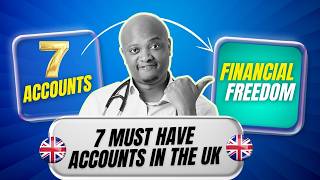
A UK-focused personal-finance video by Dr. Ndubuisi 'Andy' Egwim arguing that using seven dedicated accounts (current, savings/emergency fund, Lifetime ISA, investment account, pension, credit card, and a YOLO/splurge fund) makes achieving financial independence simpler and more tax-efficient. The presenter explains the purpose of each account, gives UK-specific tax and product guidance (e.g., use cash ISAs for savings, Stocks & Shares ISAs for investing, consider SIPP/SIP for pensions), and recommends automating transfers (e.g., allocating a portion of salary) to reduce decision friction.
Questions this video answers
Three to six months of living expenses.
£1,000 for basic-rate taxpayers; £500 for higher-rate taxpayers; £0 for additional-rate taxpayers.
Save up to £4,000 per tax year; government adds a 25% bonus up to £1,000 annually.
The first home must not cost more than £450,000.
Age 60.
Chapters
If you're trying to achieve financial freedom with only just one or two accounts, it's a bit like trying to run a marathon in these flip flops or even cook a seven course meal with just one pan. It feels a bit like trying to win a football match with only one player. I think you get the point now, even if you're Messi, Ronaldo or even Gordon Ramsay, it's stressful, it will be inefficient and it's bound to fail. Here's the truth. You need at least seven accounts. Seven accounts to set yourself up for financial freedom. And in this video I'll show you how I use them on my journey to financial independence. And most importantly, how to automate them so that it doesn't stress you out. And if you're new here, I'm Dr. Andy Gwim. I'm a UK based GP. I'm a former salary GP and investor with over 20 years of experience as an investor. I. I'm also the founder of moneywisedoctor.com and over the past couple of years more than 10,000 medics have used my guides and resources to learn how to save, invest and avoid overpaying taxes. Generally, just learn how to manage your money intentionally, all while avoiding costly financial mistakes that will set you back on your journey to financial freedom. But I wasn't always financially independent. I mean, I used to rely on just one, one or two accounts, which left me stressed. I was overwhelmed and on one occasion I paid thousands in unnecessary taxes. I invested through the wrong account. I mean, it was the account most people were using, but it wasn't the most tax efficient account. I made a profit, but then I had to hand a chunk of it back to the government as taxes. If I had used one of the tax efficient accounts I'm about to share with you in this video, I could have kept all my money, profits and all that experience taught me a lesson. Setting up the right accounts is critical to grow your wealth. And once I implemented this seven account system, managing my finances became effortless and I started seeing real results that supercharged my journey to financial independence. So if you're ready to take charge of your finances, hit that subscribe button so you never miss a video. And hey, subscribing helps me reach even more people like you, doctors, healthcare professionals or people interested in investing who want to make smarter financial decisions. So let's dive in. Now, the first account is your current account. This is the foundation. This is the starting point. This is where your salary or your wage or your Income lands and that's where bills gets paid. Think of it as your midfield player in football, directing the funds to other accounts. But here is the thing, the pro tip here is choose a current account with budgeting tools. There are many online apps now offer insights into spending habits and help you keep track. Right, so that's number one. Number two, you need a savings account, not just a piggy bank, a proper savings account. It's like your safety net, it's like your emergency fund will live there. So your emergency fund lives in your savings account. Emergency fund is basically three to six months worth of your living expenses that is set aside untouched. It's only for emergencies like a broken boiler or unexpected bills. I live in the uk, so in the uk I recommend a cash ISA for saving due to its tax benefits. Here's why. Interest on regular accounts is taxable. If it exceeds your Personal savings allowance, you have to pay tax on it. Now, if you don't understand the Personal Savings Allowance, let me explain. So your Personal savings allowance, or psa, is the total amount of of interest you can earn each year. And by each, I mean each tax here, across all your bank accounts, of course, except your ISA without paying tax. So if you earn more than that in interest, you have to pay tax on it. And it is £1,000 for basic rate taxpayers, £500 for higher rate taxpayers, and of course it's 0 pound for additional rate taxpayers. So most senior doctors, GPs consultants are higher rate taxpayers. So you have to watch out for this. You might be saving money and accruing extra tax without knowing it. For example, if you are Saving up to £20,000 at 5% interest rate, a higher rate taxpayer will earn about £1,000 and half of that could be taxed. A cash ISA will shield you from this entirely. So that's the importance of saving in the proper account. Now, number three is a lifetime isa or lisa. Or lisa. I mean, this is like free money for your future. If you're under 40 and you live in the UK, you can't afford to ignore the Lifetime ISA. What if I told you that the government could pay you up to a thousand pounds per taxi just for saving your own money? I mean, this is the lifetime isa and that's how it works. If you can save up to £4,000 a year, the government will give you a 25% bonus up to £1,000 annually. Of course, if you save less than £4,000, you still get 25% of whatever you say. However, there are some downsides of the LISA it's important to note that you can only use the money just for two reasons. One is to buy your first home and that home must not be more than £450,000. And two is for retirement. And by retirement I mean 60 years. That's why you can assess it. So the Lyson Lysa could either be cash or it could be stock and shares. In my opinion, if you are saving for your first house, you don't want to gamble, you don't want to invest it, then it's better to leave it in cash. But if you're saving for retirement, you probably have a longer horizon. If you're less than 40, like me, you may prefer to go for the lifetime ISA stock and shares to allow your money to grow faster and to beat inflation. Now here's a little pro tip. Couples can open a lifetime isa each and double their bonuses up to £2,000 yearly. So one thing to watch out for if you withdraw the money, other than the two reasons, like buying your first home or retirement, you can incur a penalty, you lose that 25% bonus and even some platforms to charge you a fee. In exceptional circumstances, you'll be able to withdraw this money. For instance, if you were terminally ill and had just about 12 months to live, you'll be able to withdraw without any penalty. Check with your provider as well. Number four investment account. I love this account. This is the fuel for growth that will help supercharge your journey to financial freedom. This is the account that powers your wealth building strategy. Once your emergency fund is full, the next account to face is this account. You can automate up to 20% of your savings into your investment account. In the UK you could use things like a stock and shares account. Stock and shares isa, which allows your investment to grow tax free for beginners, I would suggest. If you don't know where to start with investing, download my free guide 7 basic things you need to do before you start investing to keep you safe. Check the links to download it. It will help you to prepare so that you avoid making costly mistakes. And I also share what I've Learned from my 20 plus years of investing. Go ahead and check the link in the description and download it for free now. Number five account Retirement or pension account. This is important. Your future will thank you for this account. Now if you your workplace pension, like your NHS pension, is a fantastic option for most salary doctors. But it's not enough for early retirement or for full flexibility. And also some local doctors, self employed private doctors may not have access to The NHS pension, you may have to wait till 68. Literally someone asked me, do I have to wait till 68? What if I don't make it till 68?
Over years we pay say around 300, 400,000. How many years do I live after the age of pension? 65, to get benefit, to get back all the money I paid.
Now this is where other accounts for pension, like your self invested personal pension or your SARS comes in. So you can either use your SIP or your SARS to learn how to start investing. I mean your size, your sip, you can assess it at 55 or 57 after 20, 28. I mean, if you don't know very much about the sip, you can check my video in the link about the SIP where I dealt with it in details. Number six, the credit card account. Now, this is a little controversial and some online personal finance gurus will say, oh, it's a bad idea.
You know, the credit card is the most aggressively marketed product in the history of humankind. Hundreds of millions of dollars a year is spent to sell you this product and then you're so stupid that you think you're going to get away with using it for free.
Well, it's being controversial, but in my opinion, it can actually protect you from fraud. Because if there's any fraud on your account, it's the bank's money at risk, not yours. You simply report the charge and the bank handles the rest. If it's your own money, you have to chase them for a while sometimes. Now, some personal finance gurus might disagree, but from my experience, I think credit cards, when used responsibly, are a powerful tool. Just like fire. It's a bad master, but it's an excellent servant. Now, to be honest, I didn't have a credit card for many years, not until just before I bought my first house many years ago. But now I use my credit card to pay for almost everything. And here's why. There's unmatched security against fraud and hackers compared to a debit card. If a hacker steals money from your debit account, it's your money that is gone and you're left waiting, often for weeks, chasing the banks to investigate. But with a credit card, it's the bank's money, at least, not yours. All you have to do is to report the frontline charge and the bank takes care of the rest. Now, even Frank Abagnale, the infamous con artist turned security expert that was featured in Catch Me if youf can, he said it's safer to carry a credit card than a debit card because of the superior fraud protection.
So I use the safest form of payment that exists on the face of the earth, and that is a credit card.
There are a few other benefits. A credit card can help you build your credit score. Of course, you can build credit score through many other means, but it's one of the ways to build your credit score. It's vital for securing loans, mortgages, or even getting better interest rates. Credit cards are one of the easiest ways to establish and improve your credit profile. Of course, you don't have to use a credit card, but there are other benefits as well, like pecs and rewards. Many cars offer a cash back. I use the American Express. This is a business American Express business card. So there's cash back and a few other things. Travel, you can get like flights, hotel upgrades and, you know, all these kind of perks. But again, if you don't feel you can be disciplined with a credit card, then avoid it. There's a golden rule with a credit card. Treat your credit card like a debit card. Never spend money you don't already have. Always pay off your balance in full at the end of the month to avoid interest charges. In fact, to do this, ensure you set up a direct debit, an automated direct debit, to pay your balance in full. That way you are not likely to forget or slip up and it's handled automatically. So again, use wisely. I think a credit card can be a great financial ally and it's quite convenient as well. Well, I'd like to hear your opinion. If you disagree, tell me in the comments. If you've never used a credit card and will never touch it, let me know in the comment. Now, number seven is the YOLO fund. This is the one I enjoy as well. It's for guilt free spending. This is the account where you enjoy your life completely guilt free. Whether it's holidays or new gadgets or hobbies or, you know, basically, you only live once. Your yellow phone is for indulgence to have fun. Here's my approach. You set aside the percentage of my income. I set aside percentage of my income for this account. And also whenever I receive a windfall, an unexpected income, or even a small bonus, I set aside at least 1% of it to top up that yellow fund. So it's my way of treating myself and my loved ones without derailing my bigger financial goals. After all, you only live once. Now, by creating a dedicated yellow account, you can enjoy your splurges without guilt or financial anxiety because you're still investing for your future. But now here is a big question you may be wondering how on earth am I going to juggle seven accounts? Seven accounts? Well, you're in luck. I will show you how to automate the system and make it in such a way that managing the seven accounts will not be as complicated as it sounds. I mean, nowadays you can set up everything on automatic and then review it every now and then. Now let's say your salary or income lands in your current account. Then you already have a standing order which you set up in that current account to allocate 20% of it to your savings as it lands. Now when you allocate it, prioritize debt repayment first, then your emergency fund and then investments. Once your saving hits your emergency fund, let's say until you build up up to that three to six months worth, then you can close the emergency fund and then focus on your investment account and then continue to invest through that account. So basically it helps you not to have to make the decision every now and then because you've already set it up. Automation will keep your finances running smoothly in the background so that you can focus on what matters, including your investment. If you invest passively, you can set it up an automated means so that you can just invest into a passive fund like the S&P 500 indexes or any global fund. There you have it, seven accounts that can supercharge your journey to financial freedom. Of course there are other specialized accounts worth considering. If you've got special projects, you've got children like there's a junior isa if you want to save and invest tax free for your kids, or let's say university funds. Or you've got project accounts like big goals like you want to buy a house or you want to travel around the world. I mean, it depends. What do you think? Are there more accounts that you like to add to the list? Let me know in the comments. I'd love to hear your thoughts. And of course, if you found this video helpful, hit the like and subscribe button and of course share it with your friends to continue to get tips on how to manage money smarter from me. And if you want to dive deeper into tax efficient accounts like I mentioned the stock and shares isa or Lifetime ISA, be sure to watch my detailed video on ISAs next. It's packed with practical tips to help you save smarter, invest wisely and make the most of your £20 annual allowance. You'll find the link in the description below. Thank you for watching and I'll see you in the video next.







