Check This Before You Pay 60% Tax
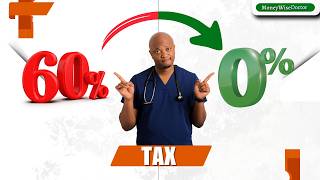
Andy Egwim explains the UK's 60% tax trap for clinicians earning over £100,000. For every £2 above that threshold, you lose £1 of personal allowance until it disappears around £125,000. Pension contributions and salary sacrifice reduce your adjusted net income and can keep you out of the trap.
Questions this video answers
Adjusted net income = gross salary minus pension contributions (including salary‑sacrifice amounts). For example, a £100,000 salary with a £12,500 pension contribution results in an adjusted net income of £87,500.
NI is treated like another tax. With salary sacrifice, NI is not payable on the sacrificed amount up to £2k, but above that NI is still due even though tax is avoided.
Yes, PAYE tax calculations are based on adjusted net income after pension deductions.
Chapters
For every two pound above 100, you lose one pound for your personal allowance. So let's say you end 120k. How much of your personal allowance will you lose? If you put money into your pension, it drops your adjusted net income, not your entire income, your adjusted net income. But the adjusted net income is basically your net income adjusted to accommodate things like your pension deduction. But the pension goes out before it's taxed. So that tax is based on what is left after the pension deduction. And then what you now pocket is your net income, your take home. So number one, personal allowance. And what? Understand what happens over 100k. Okay, so now what was personal allowance? We already know that, so I'm just going to ask and if you're not sure, you can ask. Don't be shy. When we say the first thing on the list is personal allowance. How much is anyone here from Scotland today? We had like two people from Scotland on Saturday. No one from Scotland. Okay. In England and Wales and even Scotland. What is the personal allowance? How much is it? Tell me in the chat. It's a workshop. We bounce off each other's energy. I want to get you involved. Okay, excellent. I'm seeing some answers coming. 1252 5, 70 favor said 12, 570. Excellent. Favor finally said 12 5. Yeah, finally very close. It's actually 1257 0. That 70 is important and price at 125705 7. Good, you guys, you get the point. Basically what it means, at the risk of repeating myself for the million time is how much can I earn and not have to pay tax. If I end this amount, the government will consider my income is too small to bother. So there's a no tax. And some students know this. They'll just work on N12 570 and they don't pay tax. And also some directors of limited companies will pay themselves 12, 5, 70 no tax. So that means you're on 0% tax. Okay, that's personal allowance. Okay? So now the problem with that is above a certain amount of income, you start losing that personal allowance. You've heard me talk about the hundred thousand tax trap or the 60 tax trap. What happens in that instance is that once you hit 100k, then for every 2 pound above 100k, you lose 1 pound out of your personal allowance. Okay, so what happens that if you've got like 110k, then it's going to be 10,000 divided by two. 5,000 goes out of your personal tax allowance. Okay, Right. Just to bring you home, I'm going to give you an example. Your personal allowance is 12, 570. If you've got a pen or pencil, that'll be handy. Even if you don't have. You can work this one out. I know you guys are all smart. If your income, your adjusted net income is £120,000. Okay, remember what I said. For every two pound above a hundred you lose one pound for your personal allowance. A more confusing way. Well, it's not more confusing but 1 pound above 100 you lose 50p. But let's just say for every 2 pound above 100 you lose 1 pound. So let's say you end 120k. How much of your personal allowance will you lose? Now just assume that 100k is your adjusted net income. How much of your personal allowance will you lose? 10k. Okay. Excellent. Thank you. Okay. This is lovely. Excellent.
Why this could save you several thousands of pounds. Not just in your taxes and pensions. Have you fallen into the 60% tax trap as a doctor, healthcare professional, without even knowing? It's crazy. I know you think the highest tax you can pay is 45, but here how it works. If your income exits 100,000, you start to lose your personal tax allowance. And by the time you hit about 125,000, you've lost your entire tax allowance. This means you're paying an effective tax rate of 60%. That's not good. You lose a lot of other benefits with it. Now if you if it's something you've never thought about or you're worried you're not sure how to navigate it, you're in luck because I've written a very clear guide with a 10 point checklist that you can use to avoid the 60 tax drop. One of the biggest one is obviously paying more into your pension. But there are nine other steps you can take. Check the link in the description and download it for free. Let me know if it helps. Let's jump right back into the episode.
Lovely. So you guys have all got that personal allowance. Thank you. So that just makes sense to you that by the time you hit 125k, you've lost 12,5. By the time you hit 125k, 140, you've lost 12,5,70. Okay, basically divide by two and what is the personal tax allowance again? The amount you don't pay tax on 12, 5, 70. So by hitting just that amount, you've lost your entire tax free allowance. So you're effectively paying tax at 60% rate. Okay, so that's the allowance bit that we need to look at. And what's one way, one of the ways we've already mentioned it here also shared his experience. Okay. I'll consider that as a testimonial. Okay. Of his experience. If he was in the 60 tax trap then he contributed to his pension. I was able to you know, come out of that tax trap. Okay. So that's one of the way to get back that your allowance because basically what happens that the government sort of if you, if you money into your pension it drops your adjusted net income, not your entire income, your adjusted net income which is basically your gross income. Minor deductions like pensions and the rest of it will give you your adjusted net income. Okay. So if you've got that tick a, a tick under A for personal allowance. Now the next allowance is basically your pension annual allowance.
Can I ask a question? Sorry.
Of, of course.
Is there a. I tried to look it up like specifically to say this is the adjusted net income because I think it's very easy for us to know our gross salary and of course if we add some sort of extra like I guess locums or what we've kind of done then it's a bit like how do you kind of get your adjusted net income? Because that's kind of the end point where everything else actually your child allowance, whatever, tax free, everything starts from there, not from the gross.
That is true. So everything comes from adjusted income. I will come back to income many times today. So there's a tool I built to answer this question is the nhssalary calculator.com I'll share it also in the WhatsApp group. So you can use it, you can use it to work out your take home pay. You can see what your adjusted net income is. It's automatically going to deduct your NHS pension. So I've built in your NHS pension depending on what level of pension you contribute. If you con, if you're in above 65k you're obviously contributing the highest which is 12.5% and that tool allows you to play around with contributing more to your pension to you get to the point where you are entirely outside the percent tax trap. I built it last year or was it last two years because someone was asking me the same question. I bringing out paper and pen and I thought well you know what it would be nice to have. So it's being used by thousands of doctors now. So last time we checked 25000 visits. So I'll share it Karen, but let me just explain adjusted net Income quickly. Your adjusted net income is basically if you've got like salary of let's say 100,000 and you're putting £12,500 into your pension, your adjusted net income is going to be 100,000 minus 12,500 that put into your pension. So basically it means it's not just your income is your net income is adjusted to deduct all the deductions. Now this is just a simplistic way to show it. If you've contributed to salary sacrifice, it would then be 100,000 minus 12, 570 minus the £2,000 you contributed to salary sacrifice to give you adjusted net income. Does that make sense? Right, you've got it. Lovely, thank you Karen. That's important because sometimes I just gross over it and people might not understand it but we're going to be talking about adjusted net income more in the group. I'm going to share the NHS salary calculator. I'm resisting the temptation to go now to play with it so that we can keep moving. But the adjusted net income is basically your net income adjusted to add accommodating like your pension deduction. So for most of us here you can find out what your adjusted net income is. So you can find out whether you're in the 60 tax trap by looking at the HMRC login. So if you haven't got the HMRC login it's really important because you can see life, what is happening, you can see whether you've crossed. And sometimes they will tell you I've had people attend them, some of them Mastermind program, my full six months financial coaching program program. They've told me that they never realized for once they just logged in for the first time after hearing something like this and it was right there in black and white to say your personal tax Allowance is now 2000 because you've lost a son. So you know it's written right there in black and white. It's not, it's hidden in plain sight. So if you have any trouble around that, if you have trouble working on your adjusted net income, we've got four whole weeks. Pop it in the group. I'm going to be popping into that group 9:30pm every day. 9:30pm Am I popping a little bit earlier, a little bit later but I'm going to be looking at it daily to see if there's any issue. What I tend to find out is that before I come, most people's questions have also been answered and by other people. This is the power of Group support. Because then it's not like, not I'm not like the alpha and omega. The other people are answering based on what they've learned as well from us either by previous workshops. Okay, good. Allowances now. Yeah, sorry. So the adjusted net income, you talked about deducting your personal allowance and salary sacrifice. What about your pay as you earn, is that deducted as well before the adjusted net income? Yes. You mean your, your salary or your pay? Your pay? Yeah. No, no, no, no. So what is being taxed is your adjusted net income that was being taxed. Okay. So your paye is based on your adjustment. Yeah. It doesn't make sense. I know it can be a bit confusing. So if you, if you pull out your pay slip, you see they've deducted tax, they deducted pension. But the pension goes out before it's taxed, which is fantastic if you've got like 100k coming in and 12. Let's. Let me just use simple number. Let me say 10,000 goes out, so what is left is 90,000. Then you see what else is deducted? Tax is deducted. So that tax is based on what is left after the pension deduction. Okay. And then what you now pocket is your net income, your take home pay. Yeah. So that NHSI calculator actually will show you your take on pay and all that kind of stuff. Okay, I hope that helps. Good. Now that's why if you decide like what also gave the testimonial he gave earlier, he put a bit more money into his pension, either through the NHS pension or you did through a personal pension we call sip or through your private payment, whatever pension you've got that drops your adjusted net income because pension is not taxed until you start to draw it. So that's one of the big defenses of the 60 tax trap. Dropping your adjusted net income either by contributing to your workplace pension or your personal pension. That is one way to do it. Of course there are other ways you could do things like, like if you claim tax relief on your professional expenses these days, HMRC will add it to your personal tax allowance. Increase your personal tax allowance. So they do that sometimes if you do things like gifting, but these are really, really smaller ways. The, the main way is through pension contribution. Right. Any questions around them? Adjusted net income or personal allowance before we go into pension allowance. Any more questions around this? Sorry Andy, I, I just like to know ni is it deducted before or after tax that pay tax? Lovely question. This is a simple way that has helped me to think about it N is just tax, Okay? I don't know why they bother. It's just tax because if you think about it, if you're. If you do salary sacrifice, okay, then there's no NI on it and there's no tax, okay? But with the new rule that the government has introduced, if you now do salary sacrifice above 2k, now this doesn't apply to just normal NHS pension. If you do sell our sacrifice above 2k, there will still be no tax, but there will now be ni. I just consider NIS just another tax basically. That's why look at it. I said that is dedicated as ring fence for NHS and welfare and all that. So yes, the NI and the NI is part of the tax to consider. Does that help? Thank you. Thank you. Yeah, it was clear. Okay. Yeah, Good, good, good. Right, now let's move quickly to the next allowance. We've already touched on it, so that should be quick.







