From £30,000 Loss to Financial Freedom
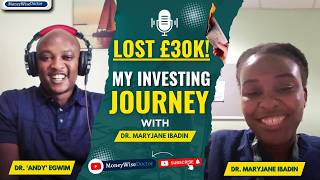
YouTube interview between Ndubuisi 'Andy' Egwim and Dr Mary Jane Ibadin about her financial journey. Dr Ibadin, an ICU/ITU registrar (ST3-equivalent) at North Middlesex Hospital who came to the UK in 2021 and finished medical school in 2012, describes early investing in Nigeria, losing over 10 million Naira in a Ponzi scheme, later losing about £10,000 in a forex trading arrangement after moving to the UK, and then rebuilding her finances by learning budgeting, establishing an emergency fund, using tax-efficient pension/SIP and ISA vehicles, and focusing on long-horizon stocks & shares investing. The conversation emphasises financial education, risk management, and passing financial literacy on to family.
Questions this video answers
2021
2012
Over 10 million Naira
£10,000
ITU/ICU registrar at North Middlesex Hospital (comparable to ST3)
Chapters
I know too many people who lost money in that scheme. I don't want to ask you the mechanics of how the money got lost, but I'm assuming it's something like you put in money, maybe they're paying back, you go and putting back some money. And then finally they just said.
And then one day just, it just goes away. It just like the whole website crashed. We just went into thin air.
Just disappeared.
Just disappeared. I know. I heard people who lost more like people had money in tens of millions in this stuff.
So apart from that, did you ever lose any money again in investing or any, any scheme?
I did the second time.
I'm really sorry. I'm not. What. I'm laughing because I know you laugh.
Because it's funny now. It wasn't funny, but now what I'm.
Laughing is because you shared this story and you were so funny about it. I'm like, what? That's a lot of money.
I come here, I started saving again. Okay. And then everything was going on well. And it was actually a friend of mine who introduced me to this Forex. So this wasn't Ponzi. This wasn't like bring one person, bring another person. No, this was Forex.
Hello, hello, hello. I'm delighted to have Dr. Mary Jane Ibadin here, who is a member of the Money Wise Doctor Mastermind and an ITU registrar in the nhs. And we're going to have a fun conversation. She will share her financial journey and her journey in investing and things she's learned in the whole process. Delighted to have you here, Dr. Mary Jane.
Thank you so much, Dr. Andy. It's my pleasure, really. It's been a long time coming so I'm happy.
It's been a long time. We've been, we've been planning to in this podcast but doctors are busy right to your registrar. So I can imagine how it shifts and all that. The first discussing this last year, September, when you attended our four weeks investment academy and you shared some of your investing journey, I thought, look, I like your story. Sometimes it's interesting to hear other people's story, real life and all that. So I'm going to start. I know I've tried to introduce, but I haven't done a full justice to it. Tell us a little bit about yourself, where you work and basically one thing that most people who work with you don't know, like mine, I play piano. Most people don't know.
Okay. So like you said, my name is Mary Jane. So I came into UK in 2021 and I've been working as an IC registrar. So basically I have ICU and an aesthetic background from Baku, Nigeria, and that's why I've been working here mostly in icu. I've done quite some months of anesthetic also. So I work as an IT registrar at North Middlesex Hospital. So it's one of the hospitals in Knott's London, around Tottenham. Close to the. Close to the stadium. Yeah, yeah, yeah.
White Hut Lane. Yes, I was there two days ago.
Really? That's where the stadium is? Yeah.
Amazing. Amazing. ITU registrar. I look at ITU jobs. Obviously every specialty is important, but, you know, it is at that point, your, your, your, your patients don't even talk and it's like hanging in the balance and everyone is one. Oh, it's an ITU and we've got 10 beds, just 10 beds. We can take more people. It's critical work. Yeah. So I'm delighted to have you.
Thank you.
So that means you've been in the UK for four years and then four years now. Yes, four years. So you've had experience working in the NHS and obviously looking at things like from the point of your finance as an international medical graduate, you moved into the UK and settling in, but your life didn't start when you moved into the uk. Obviously, you've worked previously, you've done other things and I know you've also started investing before you came into the uk. So a little bit about your background in terms of finances and how it was. Obviously you went to medical school. Yes, he's the real doctor, not like Dr. Dre. She's a real doctor. So give us a little bit of your background.
So, yeah, basically like you said, yes, I've been here for four years and, yeah, I think what you just, you said something just now that just made me remember something you said that you. You probably have been investing back home, which is true. I literally just remembered that I actually opened up, like, do you know Bamboo app?
I. I know Bamboo app. I had a Bamboo.
I just remember that. Yeah, I actually was investing back home in Nigeria before I came here, but somehow when I got here, like, investing wasn't on my mind. I literally. I honestly don't know what happened because I think I was involved in other things which were going to, like, get into shortly.
The other things is very interesting from.
My head, like, it just, like, looks like I just had a light bulb moment, like. Yeah, I actually have. A few days ago, I went back to the Bamboo app and I checked, I saw that I had some shares Like Tesla.
Wow. Yeah, wow. Interesting. Now you said there were other things which we're going to discuss and I'll keep it short. Yes, you've got an interesting background. One of the things you shared with me was how you lost about quite a few, quite a bit of money in investing and how unlike other people, you took it and made loss like a school fees, you actually use that loss to learn how to invest properly. So but before you lost the money, you've already started investing quite sensibly, regular investment and all that. So. But how did your journey of investing start? I don't want us to get into the juicy bit crypto and all that, or the money loss. I want us to start with the background. How did your journey of investing start at all?
This is how to get financially smarter in just five minutes. Sometimes the difference between making smarter financial decisions and costly, horrible financial mistakes is having the right information at the right time for the right person. So every week I write the Money Wise Doctor Weekly newsletter is an email newsletter packed with full with valuable financial insights and updates to help you make smarter financial decisions and avoid costly mistakes. Some of the areas I've been covering over the last 70 weeks include actionable tips on tax strategies, pensions, investing side hustles and several other financial areas. Now join thousands of medics who subscribe to the Money Wise Doctor Weekly newsletter to receive it straight to your inbox. And it's totally free. Don't miss out. Subscribe now using the link in the description. And now let's jump right back to the episode.
Honestly, like even though I was investing, I wouldn't really say it was sensible. I, I was into social media, like not really like into social media, like I post content or anything. No, I follow. I just follow quite, should I say a number of sensible people. So somehow I think I stumbled into like one or two people speaking about investing, like on Bamboo app. And there's a lady on Instagram too that I stumbled into. And honestly like the stocks I have on Bamboo, I did not know anything about anything. I just bought them. I'm not even gonna lie, I just like they're just like random things that I bought. There were like things that were really trending like Apple, Tesla and then so a few bits and bobs. So yes, I, I did have some investment. I do have the investment back from Nigeria, but then they were not calculated investment. I knew nothing about it, I just bought them.
Right. So this is like sort of like a stab in the dark. Now looking back with what you know, you've attended the investment academy, you've learned a lot. I've seen the kind of high level questions you ask about your investments. You're making sensible investments, being careful about them. Looking back now, what do you think compared to the investor you are now and investor you were back then?
Oh yeah, looking back definitely I've acquired like loads of information. There are things that I would never have known, I mean like never if I didn't like join the initially the four week investing and then now I'm also in the mastermind. There are things I would never have known. So it's, it's been a journey really. I'm not gonna lie. It's been a journey like learning everything from scratch. Learning like the metrics. I didn't know what ETFs were, I knew nothing. But now I know quite a lot of things and then even when I, when I'm thinking of like buying something, I know what to look out for and then I have the videos to like go back and refresh my. Watch them, watch them. Or I can like put something on the premium group and get answers to the things that I need.
Excellent. Now when you look back at your investing journey like you still have stock services. I started investing. What inspired you? Obviously you were watching in social media, many other people watch social media and then followed what people are saying on social media to start investing. But what sort of like drove you? Was it just listening to people and thinking I want to make money or want to invest for my future or were there any like, any examples around you or people you saw investing? What drove you? Because most doctors are usually quite afraid of investing. So if you started that early, bit early time to invest, what was the primary motivation?
It was, it was mainly the thought of like investing for my future. Because even though I didn't know so much about investing or I knew I didn't want to keep the money in the bank, I wanted something like. So it was more like to have security, to have security for my future, for my children, for my family. That was what was at the back of my mind. Even though I didn't really have too much knowledge at that time. So I think that was like the driving force or the driving factor. So in terms of investing, I didn't really have so many people investing around me. So it wasn't like I had someone around me saying, oh you're happy? But I remember my dad used to, my dad had like some stocks and shares like from the big Nigerian companies. Because funny enough, even now, do you know that I came across some of the stuff he bought online on like one of the Nigerian websites.
I'm like, and claim dividends.
Yay. Exactly. As in I bought my. My partner. My husband bumped in and like oh, I saw your dad's name on website. Did you know he has. Yes, I knew he had like some stocks here and there, but that was all. Besides my dad, there was really like nobody around me. So it was mostly something I bumped into on social media. And then after I bumped into it a couple of times, I just felt like, okay, it made sense to like invest and not keep the money in the bank. Really that was the motivation.
That's an interesting. I find a lot of doctors who know this in their head, but actually going into the next steps and after having talked to, we've had more than 1,100 doctors pass through our master class. Master class and, and one of the biggest issues is fear. And that fear is driven by not knowing what to do. For instance, you're an ITU registrar, you're holding that blip. What do you think? If I got like a brand new doctor who's never worked in IT and I gave them that bleep, they will really, really be worried. Even if you are not ITU doctor, I mean no disrespect to our colleagues in psychiatry. Your work is very important. But if I gave a psychiatry doct, probably, I mean it could be mayhem. So if you don't know what you're doing in investing, like now you're dropping some terms, you learn how to analyze companies, you understand ETFs, you know what type of investor you are, you are, whether you're passive or active, how to manage your risk so that knowledge is actually reduces the fear. Without that knowledge, you will be a risky investor and you should be very afraid because most people think oh, I'm just going to buy S&P 500. But like was your ultimate goal was a long term plan? At what point do you want to stop investing? Right. Okay, now prior to coming to the uk, how many years did you already work as a doctor? I mean like what, what year did you finish?
So I finished medical school in 2012.
2012. So you have 13 solid years as a doctor. That is X, that's excellent. 13 solid years as a doctor. And in the 13 years you've worked as a doctor, what would be one big money lesson you say you've learned that affected the way you actually and that that lesson could be either a mistake you made, a mistake someone made or something you learned that has actually helped you in managing your finances.
So I think the first thing will be budgeting. Budgeting my finance or budgeting my salary, even though I'm not doing like 100% budgeting. But what I mean, like most, sometimes, like before now, when I get my pay, I didn't really have a plan for the money. Like, I just like distribute it as it comes, like as things come, then I just do the distribution. Yeah. It was when I got here that I actually understood the importance of budgeting. So now I know that. And now I know that when I get paid, there's a particular sum I take out for savings and I know how much I'm paying for my bills. And then I know, like the rest is for to chop life.
Yeah.
You know, everything is, you know, as soon as it comes. If you see the way I run and remove the money I want to save away from the. I fly. Like, it's literally like after I do one or two important things to Baba God in heaven, the next thing I fly and remove the savings.
It's like you tight. So you tight. And then you go, okay, the next.
Thing I'm removing the thing, the one for savings. So I know that, okay, that one is sorted and then I can now allocate the rest.
You can see me grinning from ear to ear. I feel so proud. This is something we stress in the mastermind. You pay yourself first before you go ahead to pay the mortgage. You're paying for your. Whatever expenses you need to make, utility bill, cancel taxes and that pay yourself first and. And what do we say? Amass, make it automatic. It should go out automatically from your account the same way you pay your other bills. That way your lifestyle doesn't change. You're not going to change the type of food you eat just because 20% of your income is going out. And because most doctors, usually by the time you start investing, it's a little late, so you're trying to catch up. So you want to invest a significant weaponize your income so that you can invest a significant amount sensibly. That way you increase your chances of hitting your financial freedom number. Your financial freedom go. Excellent. So now you're working as an ITU registrar. Which ST words are you.
So it's comparable to ST3.
ST3. So you're working as an IT registrar. In the future you're going to be a consultant. Okay. In the NHS or wherever you decide to work. Really. What are the lessons you're learning now? Because you've been actually, you came for the Four weeks investment academy last year. You're in the batch, first batch and you came back again this year for the full mastermind. So you're in the financial coaching program. You get the one on one sessions and you're in the private group and all that kind of stuff. Are you attending other classes now which is all around your schedule. You make the ones that fit and you go back and watch the videos. What are some of the key things you're learning now? That one, you are applying now to your finances to make sure that you're taking charge of your finances and two, how you're going to apply that when you become a consultant or even as a registrar going forward. Can you share some lessons or insights that you've learned?
So insights aside from the budgeting thing that I've spoken about, that's a big one. Yeah. I think the other key thing I kind of understood from, even from the four week academy was the tax code. Yeah. Because I think, I think I used to know it was, it was still a bit confusing like how many percent tax you pay on this certain range of salary and all that. And the third thing that I've actually picked on is the sip. Okay. I didn't know anything about that.
I knew anything about sip. And we're not just talking about sipping some water here.
Not sipping some water. No. Like the private pension that you can open that would help you to avoid the 60 tax trap. Okay. And then also help you to optimize your tax code and also make you tax efficient. Because I know, I remember I was asking the question on the group the other day.
Remember I asked you that in the community group?
Yeah, yeah. No, on the, on the live chats, I think on the, one of the classes.
Oh yeah. Okay.
Asked you if you recommend like someone who hasn't hit the 100 boundary range, if you still recommend them to open a sip. And you said yes. Yeah, yeah, I think it was, it was, it was two weeks ago if I can remember. And it actually makes sense because again, aside from what you said that whatever you, whatever I contribute to the SIP account, the government is going to supplement that. It also helps you to be tax efficient because it's going to bring down the tax you're paying on what you have on your, on your salary. So that's also something that I'm going to try and I'm going to implement. I'm not going to try, I'm going to implement it before the next tax year. I'm going to open my safe account and try to like put something inside.
I think those are two solid points. Obviously what we focus on, financial education. We don't tell you financial advice personally, but when we teach, we share what we do and people take it and apply it. So what you hit is a big point.
Now this is very crucial topic. Have you secured your family's financial future?
Many times you're busy as doctors and.
Healthcare professional, that's fine. But if we overlook our life insurance and income protection until it's too late, you're taking a bit of a risk here. I mean, nobody can predict the future. You need to protect what matters most. Think about life insurance and income protection. This is really quite important to protect your most valuable assets. Now, if you're not sure about what you need or how to go about it, check the link in the description. I have a free guide that can help you step by step. Let's get back to the episode.
Personal pension. Most people think, oh, but I'm not hitting 100k, why do I need to, you know, put money aside to avoid the 60 tax around like, hang on, when you put money your sip, you get tax relief from the government and it, I'm assuming you're 40 taxpayer, so you get 40 tax relief, that's the government actually encouraging you to save and that relief comes to your account and the maximum you can put in a pension in the whole tax is actually 60k and that 60k includes your NHS pension port, any private pensions you have and any tax relief from the government. So that actually helps your tax efficiency. And at the end of the SIP, you can withdraw it at 55 now, even though it's increasing to 57 by 2028 compared to NHS pension that you can withdraw at 68 and may get to 71 soon. But look, NHS pension, it doesn't mean pull out of your NHS pension, it's still a great pension, your employer is contributing. But you want to have a plan A, then plan B will be the NHS pension. Okay, those are really solid lessons. And then if you could look back now, let's say you look back to yourself, your, your previous self because you, you mentioned a couple of things, what you're going to do going forward, what you're doing, like obviously you're budgeting, you're learning how to be tax efficient and obviously you're also learning investing, you're learning investing strategies. Yeah, if you could look back, let's say five years back, what sort of advice would you be advising your previous self?
Oh my God, if I could look back five years from now, this is.
The time to tell us about that. That crypto trade, you lost more money than you make that than some people make in a year.
Yeah, yeah, yeah, I agree. I think one of the things I would tell myself will be, would be to be patient with saving or investing. And I can't stress how important it is to be knowledgeable about financial things or like knowing how to save or knowing how to invest at a very early age. Because I think one of the problems or the shortcomings or the disadvantage should I say I had or quite a number of people had because nobody really tells you about investment, nobody tells you about stocks, shares. You're only fortunate if you have people around you. It's just like they say, like most of the things you learn comes from people around you. Because if nobody around you is talking about stocks or savings, like how are you going to know really? Because I literally just bumped into that stuff on, on social media. That's because I use social media because there's some people who don't use social media and it also depends on like the people you're following.
Yeah.
So if I didn't, like I didn't know about it and I think that's one of the things that really that quite a number of people are actually physical because if you don't know about it, then you don't know about it.
You don't know about.
You don't know, but then you don't know about it really. So I wish there was a way to like incorporate like financial education, like real life financial education into to teach people whilst they are young and upcoming and not really wait till like you're in your mid-30s or mid-40s before you start. But again, it's never too late like wherever you start getting start.
When you say real life, sorry to jump in there. What do you mean real life? Like not someone in a Lamborghini or rented Ferrari.
One plus one is equal to two. We're talking about real life financial lessons. Like exactly. Example of what you're doing.
I'm just pulling your legs.
You know, not something you sit in a class and like you're jotting and all that but like come out to the real world, like what is obtainable outside. That's what I mean. So I think let's go into the.
So you said the lessons you tell your five years, be patient. These are really important lessons. Be patient and get financially knowledgeable. It doesn't have to take your whole life over like a doctor sitting your job. You've Got your family. But just spending like a few minutes every week or even sort of attending one course a year or within one book, you are way, way, way. I know that because you're in the private community, your financial knowledge has jumped quantum leap and that's affecting your investment decisions just because you became conscious of it. The challenge is that as doctors, we don't know what we don't know. As any an investor, if you don't know what you don't know, you don't know that. Like someone didn't know about sip, so they didn't know that they could have been getting that tax relief. Okay, so share with us. You said you've made some investment mistakes that you obviously lend. You share some with me.
I have. So I think the very first mistake I made was back home in Nigeria. It was during the saga of. Mmm.
Mmm. So that's like Ponzi scheme for those that don't know.
Yes. Yeah, it was like a full blown Ponzi scheme. Well, that was my first encounter with Ponzi scheme. So I didn't know about, I didn't know what the Ponzi scheme was. I didn't know about it. So it's not like I knew about it. And I went, I didn't know. It sounded, it sounded too good. You know, looking back now, you know they say hindsight is 20 20. It sounded too good to be true. Not thinking about it. But at that point in time it sounded like a very good deal, you know, deal sounded like a very good investment. So it was quite popular. Everybody was speaking about it. So of course I, I put some money into, into that. It's quite the large sum in Naira.
How much was.
Was over 10 million.
So that's, that's a lot of money. I mean, for people who don't know that conversion, not using the current conversion, using the conversion back then, but this happened like five years ago, six years ago.
Yes.
If you had changed it to pounds, was it roughly in pound sterling? I think at that point probably 500 was the conversion rate. So if you're talking 10 million, thus, we're talking about 2k or thereabouts. We don't do, we don't do public math. Right. But every now and then we are faced with them, we are faced with them. A little arithmetic. So I'm just going to do a bit of public math now. So if you're talking 10 millionaire. And don't forget, it's not just about the calculation itself. We're also thinking about what we call Purchasing power, parity. What did 10 million really mean to someone at that point? Because you are working as a doctor and your annual salary or your monthly salary at that point was how much?
It was about. So then I was.
To 20, 000 pounds. That's what it was. Yeah. Not 2,000. So 10 million. Yeah. Using the fact of 500, which it was.
This was back in 20. 20. 20. 20. 20, 20, 2020.
So as @ that point, I think exchange was about. Yeah, I think it was about 400. 400 to 500. Why? Because I did at some point, had reason to change quite a bit of money every now and then. So if you're using a factor of 500. So basically that 10 million that you lost, the 10 million naira he lost, was more like 20,000 pounds. If we compare it to the exchange rate then, and even if you bring it to the exchange rate now to be more like maybe 5,000, do you think? Yeah, yeah. Well, at the end of the day, that was quite a huge amount to lose. And I, I say that for most people, that will be the end of investing for their life. And they. Even though it's not technically an investment, but from many medics I've seen, once they've actually gone into a scam or Ponzi, because Ponzi is not a clear scam at the beginning. I mean, it could be a scam at the end, but usually, like, you put in your money, you're going to make money and there's this mathematical equ. Bring this person, bring that person and all that kind of nonsense at the beginning is not very clear. But most people, once beaten, twice shy. I've seen people that lost money in even an investment scam or a Ponz or any legitimate investment, and then they didn't invest for 20 years and then they wake up at 55 and realize, oh, I only have savings and I have my workplace pension. Let me start investing. Sometimes 60, sometimes a bit late. But despite that, you went back and started learning how to invest. What did it feel like losing that money back then? I mean, because you were a doctor.
Right?
Yes. You were not like an oil baron or something. So I'm imagining £20,000 back then, or even 10 million naira back.
Then. It was a rude shock. It was a rude shock. It was a rude awakening. Thinking back at it, I was thinking, oh, I shouldn't have done it. Like, when you look back, you kind of like see the, the red flags that you failed to see at that time. So looking back, I was like, well, maybe I shouldn't have. Well, obviously, like you said, I just. I took it as one of those things. I took my L and.
I. You took your.
L? Yeah, I took my L and I moved.
On. I know too many people who lost money in that scheme, many close ones. And they didn't want to tell me at first. Then they told me and I thought, well, this would never happen again in your life because now you've got that take that certificate. Never, ever. I'm going to investments you can't control. You don't understand how it works. Yeah, I don't want to ask you the mechanics of how the money got lost, but I'm assuming it's something like you put in money, maybe they're paying back. You go and putting back some money and then finally they just.
Said. And then one day.
Just. Yeah, it just goes.
Away. It just. Like the whole website crashed. We just went into thin.
Air. Just.
Disappeared. Just.
Disappeared. I bet some people lost more, you know, people who might lost.
Houses. I heard people who lost more. Like people had money in tens of millions in this.
Stuff. Yes, they lost. All of it. Just disappeared. Imagine if the same money was invested and it's compounding, and it's compounding over.
Years. Yeah, it would have compounded beautifully.
But. Well, look, we're not going to cry over spilled milk. You obviously open a new chapter. Those five years have gone. People lose money in scams, people lose money in schemes, and sometimes people lose money in investment. But what you're learning is how to manage your risk, how to make sure that no loss actually blows you out of the water. And some of that is true diversification, like what you've been doing. Some people buy like an index fund, an etf, broadens their diversification. Other people buy individual stocks, but they don't invest, invest a huge chunk of their money into individual stocks. So you're managing your risk actually going forward. So apart from that, did you ever lose any money again in investing or any. Any.
Scheme? I did the second.
Time. I'm really sorry. I'm not. What? I'm laughing because I know you. I laugh because you know why I'm.
Laughing? Because I know it wasn't funny.
But I'm laughing because he shared this story and you were so funny about it. I'm like, what? That's a lot of money. That's 20, 000 pounds lost in them. An investment. Okay, look back then, how did you come out? How did you recover? Because, okay, what do you remember what you were earning in a Year back then, was it up to 10.
Million? 10 million? No, no.
You. Because we were working.
As. Obviously it was my savings like of course I.
Understand. I'm trying to look at how many years work.
Yeah. So if say I was earning then I was like any. About 300, it was about 200 plus 200k per.
Month. So this is like a whole year is like 2.4 million basically. So give and take. That is almost like five years worth of income. So what I'm trying to quantify is that it's not like it's some little money or change or something like that for many people to shake them quite a.
Lot. It was literally my whole savings. I.
Remember. How did you recover from this? It sounds like a big.
Blow. Luckily the month the whole thing disappeared was the month I came to the.
Uk. Okay. So fresh start. Fresh.
Start. You would think fresh.
Start. Oh, please. I'm almost afraid to ask you the details of the second.
Loss. I think that helped the fact that I was coming that coming to the UK on the same month. So that really helped to cushion everything because I felt like, okay, fine, I'm already here, that I'm just going to start like, you know, my savings all over again. So it helps to cushion the shock. I think that was why I was able to cop. And again, like I said, it's one of those things. I just took my L and I moved.
On. You're very. It sounds, are you a very. It sounds like a very positive person. You say I took my L and I moved.
On.
Yeah. About £20,000.
Here. Yeah, usually like whatever I like get on with it.
Yeah. Like it helps in it if you're dealing with critically ill patients. Like another day in the office. Right. Tell me about the second one. That's the one I was scared to ask.
About. I'd come here, I started saving.
Again.
Okay. And then everything was going on well. And it was actually a friend of mine who introduced me to this Forex. So this wasn't Ponzi. This wasn't like bring one person, bring another person. No, this was.
Forex. Let's trade trading, foreign.
Exchange.
Yeah. But again I failed to look or to. To think about the risk.
Involved.
Yeah. Because the difference between you having the financial knowledge is that like you said, you know how to apportion you, you know your risk appetite, you know what you are capable of doing, you know the things to put your money in. And you know, even though you're putting your money in this thing, if it goes away then you know, you're going to be okay. You, you have like a cushion.
Allocation, your asset allocation as.
Well. Yeah. The mistake with the second one was I was literally trusting these people that I didn't really know 100%. So this is just like taking your money and giving it to someone and say, okay, take this money and trade for me and give me so and so percent. So that was the problem with the second one. The second wasn't like Ponzi. You didn't, you don't have to bring anybody to bring anybody. But it was like blind, foolish.
Trust. Yeah. So if I understand it correctly, is forex trading. So currencies and all that. You didn't want to start looking at candles and all that kind of charts and all that kind of stuff. Like, you know, I'm not a big fan of day trading, forest trading, any random trading. I believe in long term investment in solid companies with good underlying quality business. But back then it was like, oh, we'll trade for you, you're a busy doctor, don't worry, give us your money, we'll sort it out for you and we'll make you money. Is that the sort of.
Setting? That was the setting.
Exactly. Okay. And obviously where this guy is based in the uk, outside the UK or they're based outside the uk, Based outside the uk. Okay. Sometimes that's a red flag, but that's not the worst thing. But almost everyone I know who has lost money, they couldn't tell me where those companies were on company's house, like the one that someone had messaged me say, oh, I'm really. I lost, I read your blog. I lost about them and that was like 12,000 or thereabout. And I lost it to this company. So I asked them what, what was the address on company's house? What are they registered? So I said, company's house, what is that? I'm like, I need to do a video about due diligence. Like it's so painful to me when doctors. Because I know, I know how hard we work for money. Especially when you are. I don't do as much clinical practice, but I remember like, obviously you are working a long shift and you make this money and then someone can take the money and you know, buy whatever they buy, Lamborghini or Ferrari and then obviously be happy about it without actually delivering the service. So you gave them this money, they started trading. Were you making money at first before you lost money.
Or. I was making money. I don't really remember all the details, but I was making some money out of it, but it wasn't compared to what I, what I put in wasn't compared to what I put.
In. What, what sort of money did you put in? I'm almost scared to ask. It seems like you swing big when you swing like with. Mmm, you put in 10 million. Please don't say something like.
£10,000. What's.
£10,000? Oh.
God. It was.
£10,000. I'm really sorry. Look, I'm.
Just. No, no, no, no, no. Like I said, it's completely.
Fine. You can laugh because now it's funny and you've chatted to me a little bit. I didn't know the full details, but you're laughing about. I'm like, that's quite a bit of money. That's like half of your ISA.
Allowance. So, you know, just looking at the whole thing now, I'm thinking like the first money I lost, the second money I lost, if it was in my portfolio now I know how much.
Will be there if it's just right there invested.
Compounding. Exactly. Even if, even if it's just in life ETFs. I know how much you would.
Have still compounded to passively, no complexity.
Again. Anyway, that's. It's never going to happen. That's, that's, that's going to be the.
Last. You're promising. Are you promising everyone who.
Is. Okay, like investing.
Aggressively? Investing aggressively. But, but carefully, carefully patiently managing your risk? Yeah. You've learned a lot about risk management and all that. Thank you for sharing so honestly. Vulnerably, most people, they take this loss and they never mention it, but I believe that this can actually help someone else to avoid making the same mistakes. And the way you bounced back is really impressive because some people take just one loss and that's it. But I'm thinking that once beaten twice shy, yours now will be twice beating forever shy, you know, so basically you're now doing like sort of sensible investing and all that kind of stuff. So what, what's the approach to investing now? I mean, I mean you've attended the investing academy, you're now in the mastermind. I think we've done one, one to one session for your financial coaching. You've got some other one to one sessions lined up. You attended the tax hack, didn't you, where you were part of the tax hack to look at tax hack, X ray to look at where you might be taking tax and all that. So all that, if you were to start, let's say you're advising your five year old self, you're telling them what you're doing now. Someone is listening. Maybe it's a doctor. Maybe they're. They were born in the uk they are new to the UK or even not a doctor. Someone who is thinking about investing. What's the approach you're approaching now? What are you doing now to avoid sort of like you don't obviously need to tell us any specifics you don't feel like sharing, but the big.
Picture. So my approach now with, like, stemming from the lessons I've learned and all the monies that I've lost, I'm still quite young. I'm still in my late.
30S. So that's.
True. Like I said, I am focusing on saving, like, investing aggressively and cautiously. It was really important for me to know the basics, like, to understand, like, what was even going on. Like, even if we're just to, like, know what to look out for. Know what is what. Know what to look out for in investing, like the platforms and what to do. So my approach now is focusing. So most of, should I say most of all my savings now are into stocks and.
Shares. Most of your.
Investment? Most of my investments are into stock and shares, obviously. And then also I'm gonna say it was from your class. I learned about emergency savings. I have my emergency savings about.
Compute. I have to pull you aside for that to say most of your savings. Let's clap for Mary Jane. So you have emergency.
Fund.
Yeah. It's complete. So you are bold to go out and invest sensibly because you know you have your backup fund. Okay, what does that mean really, for someone who has never heard about it? How would you explain emergency fund? Just quickly, what does that.
Mean? Emergency fund or emergency savings is taking out. So figuring out what your. Your essentials are for the month. So your bills, so your, your, your house, your electricity, food, just your essentials. And then multiplying that by six and then put that aside so you have something for. To survive on for six months if anything were to happen, like a job loss or something like.
That. Three to six months. About six months is solid. Yeah. Okay.
Wow. So. So, yeah, I was gonna say that because I laid down prior to.
Joining, I didn't have any emergency fund. So just like swing for the investments, swing for the fences. But now you have a good cushion. You've done the seven steps to.
Investing. Seven. There are seven steps to take before you even start thinking of investing as a doctor or healthcare professional. Now, this is really important to secure your financial foundation before you start investing. Now, I've covered these Seven steps in a simple guide that I've made available for you in the link in the description. You can download it to help you to build a solid financial foundation that avoid common investing mistakes and also make tax efficient investment decisions. Start your investment journey the smart way. Download the guide now using the link in the description and good luck on your investing journey. Now let's get right back to the.
Episode. You have your emergency fund, you're investing in yourself through your financial education. And now you're investing tax efficiently, which is one of the steps. You're using your isa, you're looking at your sip, you're taking that value available, all the available tax opportunities, and then you're going in to invest so that before you even start investing, you've already started winning. So carry on your.
Approach. Yeah, so my approach, I was gonna say. So I'm doing mostly stocks and shares now. That's my focus now.
Obviously. No bonds or.
Anything. No bonds for.
Now. Long horizon, right?
Okay. Yes. That's why I mentioned I'm still in my late 30s. So my focus is heavily on stocks and shares. And then also from your classes, obviously as I, as time goes on, as I start to grow older, then I must start diversifying into bonds. But for now I'm just taking advantage of the age advantage that I have. I'm just going into stocks and.
Shares. I love it. So basically I make him compounding to work hard for you. I think we're about the same age. I think started investing at about 19. And once you start investing, so it's 20 plus years now. Once you start investing, the first thing you realize, once you learn compounding, you'll be like, why didn't I start before now? But you don't cry about spilled milk. When you start is when you start. The next thing you need to start is now to be intentional. Because if you started investing properly in your 30s or you know what you're doing, you're focusing even though you've missed the earlier period. But then you can now utilize what you have, which is an income. And then you can be systematic about it. Because most people do this half hazard investing. They read something, they buy £100, £200. So they're not focused. They don't have a system. They're not sort of like taking a percentage of their income and investing it and making sure that it's compounding. And even if you are just compound, S&P 500 returned 25% last year. And not every year is 25%. Some years is like 8% some years is like. But average 8 to 9%. Even if you're in a global fund like all world index and you were compounding 78 regularly, you'll still be fine long term. And then if you did someone like me, I've got like stock portfolio returning 87 some years. 78 some years because I'm obviously exposed to more risk. I, I do individual stocks. Not. Not something I recommend to everyone who don't. Who doesn't understand how to value companies. Yeah, but even if you were to just compound with the market, just invest passively over time, you'll still be fine. But most people underestimate that. Compounding. Those are really good lessons. Emergency fund invest stock and shares. Depending on your risk tolerance and capacity for loss, you are less than 40, so you have a long horizon to invest. I'm assuming you're not planning to retire at 40.
45. Yeah.
Yeah. So you have a longer horizon so you have enough time to allow compounding to work in your favor. Someone who is 57 or 60 might not have exactly the same advantage, but you're obviously investing for the long.
Term.
Okay. Because you are less than 40. I'm going to ask you, you know one thing I always say to people, that life does not start at 40. And what else does last at.
40?
Investing. No. Life time. Lifetime.
Isa. Oh my.
Gosh. That's why your bleep has gone.
Off.
Tesco. Why is Tesco bleeping you? Not Tesco? I thought it was Tesco. I'm like, why? What's going on here? Are you a doctor, you know, working in Tesco? Lifetime. Isa. So I'd imagine you have your sorted and all.
That. I do have one.
Yeah. Because it's lifetime Cash and lifetime. Isaac Cash and the lifetime. I saw stock and shares and all that. Yeah, right. Okay. So going forward, I mean if you, if you're going forward, if you were to say, okay, one final advice you could leave to someone who is watching because currently you've done two big things. You started investing, but then you missed some footsteps, some mistakes. Then you went back and you started learning how to invest. Before we get to that final point, I remember that you were one of the first people to just sign up for my mass investing class. I'm like, it was very quick. I sent an email and I refreshed it and you had signed up. We'd never spoken before, we'd never met at that point. And then in the class I asked you what was, was the motivation. You didn't need to get on a.
Call. I ran. If you see the way I run and sign up for that game. I.
Knew. Was that, Was that because of the money you've lost.
Previously? It was because of the money I'd lost. It was also because I needed the financial education because I didn't have.
It. Why did you feel I had it? I could help with.
That. Honestly, I don't know. I think I'd seen your. Some of your posts on the Facebook.
Group. Oh, you saw some posts? Emails, maybe my weekly.
Newsletter. I think I've seen your weekly.
Newsletter. Yeah. I don't think I had a YouTube channel back then. I don't think I started, I don't.
Remember. But I don't think I bumped into you on.
YouTube. Yeah. Because I didn't have a video channel till maybe it was.
Just. Yeah, I just felt like I needed like an. A systematic, an orderly review. That's what something about me. I always feel like I need something to be orderly. Obviously there's social media, there's tick tock everybody. You can go in and just. But I feel like it's always like in all over the.
Place.
Yeah. So at least I feel like for the first time I need something systematic, something arranged that.
Was. Why do you have a systematic approach now to.
Invest? I do, I.
Do.
Yes. I know that because we've discussed that. Yeah. Spoken like a true intensive care doctor. You want a step by step, not just a random step by step review. Yes, in a step by step review, a checklist and all that. Any final advice? I mean it's been, it's been delightful talking to you. Oh my gosh, it was what, what the. The time and the plan and I'm very grateful that I've taken out time, even your break from work and everything to, to have a.
Chat. So my final advice to anyone who might come across this video, wherever you're watching it, is to get financial education. I can't stress it enough, you need to know, you need to have real life financial education. And if you do have it, please pass it on to your children, your family, your brothers and sisters. Because I think that's the first step. You need to be financially literate. That's the first step to taking charge of your future or taking charge of your finances. In getting the financial education, you're then able to know what is available to you. You know about the stocks, the shares, bonds, sip. You know, that's when you know that these things are available to you and then you know how to access them and then you know how to save or invest intentionally into them. Because if you don't know these things, then you're not going to even know how to invest in them. So you need to know, you need to know them, you need to know, you need to know what is attainable to you wherever you are, in whatever country you're in. And then you work your way up from.
There. Really, that's really powerful. So financial education as doctors, we don't get that sort of financial education training in a structured way. And you're now listening to random people on YouTube, tick tock, trying to tell you what to do and they've not been where you've been, they don't understand your situation and they are taking sort of like publishing the content without the context for your own situation. And you mentioned it's not just about passing well to children that the best wealth you can pass to them is obviously financial education and all that. Well, thank you so much, Dr. Mary Jane, for joining me and I look forward to seeing you around. And the investment academy for the last in the bad in the, in this, this current cohort, I think last week, the last week is around the corner and obviously till the end of the year with the financial coaching mastermind I'll see in the private community. Thank you so much. And if you've been watching, let me know in the comments if you've got any questions or if you've got your own experience. Have you ever lost money to investing? What did you do about it? Did you bounce like Dr. Mary Jane did or did you decide once be forever shy? Tell us in the comments and I'll be delighted to also answer any questions you have. Thank you so.
Much. Thank.







