From Doctor to Barista: Why Dr Ellie Left Medicine to Brew Coffee and Rewrite Her Life
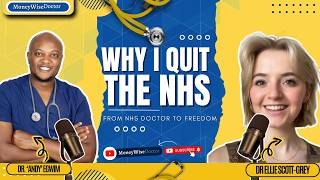
YouTube interview (Money Wise Doctor podcast) featuring Dr Ellie Scott Gray discussing her journey leaving clinical medicine after ~10 years of training to become a barista, writer and marketing manager. She describes early motivations for medicine (mother's illness), intense training (med school 2014–2020), pandemic-era junior doctor work, prolonged neurodivergent burnout, a recent ADHD diagnosis, the financial and practical steps she took during transition (savings, index funds, partner support), and how writing on LinkedIn helped unlock new roles and community.
Questions this video answers
Started med school in 2014 and graduated in 2020.
She described dedicating 10 years: six years in med school plus four years of training.
She worked as F1 and F2 in Scotland and did a year-and-a-half in Australia.
Coffee Cardi, a Sri Lankan‑inspired café in Crosshill, south side of Glasgow.
She started working at 13 and her first job was as a cleaner.
Chapters
Stepping away from medicine was the right thing for me to do, and I don't regret that decision at all. We feel like we owe so much to the nhs. It's such a hard decision to leave because of so many factors. It was so difficult. And it's like a mixture of things. It's. You know, I dedicated 10 years of my life to being a doctor. You know, six years in med school, four years of training. And so you do feel like a responsibility that you're kind of leaving the team behind. All the way through uni, I would always joke and say, I'm just going to quit and go to art school. Like, this isn't for me. I did love medicine as a topic, like, I thought was really interesting, and I got super involved in all of the societies and all that kind of stuff. I was even president of surgical society. Yeah, it is crazy. And even as a medical student, you'd be walking around the wards and you'd get registrars say to you, do something else. Don't do this as a job. Like, this is not what you think it is. And I used to think they were joking. I used to think, oh, they're hoarding all the fun for themselves.
Yeah.
So nice to have you, Ellie, and welcome to the Money Wise Doctor podcast.
Thank you. Thank you for having me.
Excellent. So, as usual, most of the time is me here just sort of like, yapping and giving all sorts of unsolicited advice, which if your thousand doctors seem to find helpful, but every now and then, we tend to find, like, what I'll call a gem, like a story that is different. I like to sort of, like, see the different aspects that doctors and healthcare professionals approach their careers and their financial journeys. Your story, Ellie, is obviously a very interesting one. You're working a part that is different from a part most people have worked. We're going to get into it in a minute, but for the viewers, as someone who's listening and wondering, so this is Ellie Scott Gray. I'm sure she'll tell us a bit more about herself. She's actually Dr. Ellis Scott Gray. She went to med school and I always say, like, a real doctor, like Dr. Dre. And Ellie, at some point in her career, did a number of issues in terms of career fulfillment and other things, decided to make a hard shift, but she didn't decide to go from a doctor to any of all this ancillary career. Like, I'm going to go from a doctor to being a public health doctor or a pharma doctor. You didn't decide I was going to go into health consultancy or any of that kind of stuff. You did, like a full shift and you went into being a barista?
Yeah.
Is that correct?
Yeah. 100. Yeah.
I know now because I've seen some of your work online. I know being a barrister is just. It's just part of what you do. I've seen that you also do some writing. I recently become the marketing manager of Healthcare Career Transitions and Healthcare Transition. So, yeah, I'm very interested to know how that journey started. But let's start with the beginning. At what point, really, did you decide, I'm going to be a doctor? What made you decide, I'm going to go that way?
So it was a mixture of things, really. So I. I decided I wanted Dr. Probably around the age of like, 12, 13. And when I was growing up, my mother was really unwell with cancer and unfortunately she died when I was 10. But that meant that I spent a lot of time in hospitals and being in clinical environments and I was so impressed at the care that she got. And, you know, they really. Because of medical professionals, we were able to stay together as a family for longer than we thought we would be able to.
Wow.
So that was really lovely. And so I was like, oh, wow. Like, I could be that person that gives that care to somebody else and I think that would be really amazing. And I did hit a crossroads at school. Like, I love art, I love painting and I love writing, but I also really loved the sciences. And so I had to really decide which one would be the better path for me. And in the end, I chose science and medicine.
Yeah.
Because, well, a, you know, I had that backstory, but simultaneously I was like, oh, this is like a guaranteed career and a guaranteed job and there's a lot more security. I've learned that wasn't the case. That's what I thought at the time. That's what I thought at the time. So that's the path I went down and. Yeah. And I started med school in 2014 and I graduated 2020, which was peak pandemic.
Yeah. Wow.
It was intense.
That's quite a time to graduate 2020. And I still remember in 2020, I was a JP Registrar in Cornwall and it wasn't an easy time for doctors or even medical students. I think the 2020 badge, it seemed like you guys are just like, all right, now your doctors, let's get in there and start working. Like, there wasn't that much. I don't know how much support you had in Glasgow. I don't know how much support, but it seemed like a quite a very difficult time to start your career as a doctor.
It was. It was so intense and I don't think I truly understood the gravity of it. Like, we did get brought into training early to help with the pandemic and I did a little bit of work in Dundee, so Nine Wells Hospital, and it was in it and it was okay. Like, I wasn't really the front. I technically was frontline, but I didn't feel it because I was working in neurosurgery and ent. So, like I felt like I wasn't really doing anything. But then I went from that. Working in the Glasgow Royal Infirmary. Yeah, in general medicine.
And it was a thick of it.
Oh my goodness. It was so chaotic, so intense. It was a really difficult time and. But in the thick of it, you don't really think about it being that hard because you're like, everyone's going through the same thing. You're just trying to get through each day. And I don't think you really register all the scary things that are happening because you don't really have the time to sit and sit with your thoughts, to process. Exactly. Yeah. 100%.
Wow. Wow. That's quite a journey. It's kind of like all heavy out from up front and I like it. It's more like you're writing. It's quite deep and like, this is what's going on.
This is how to get financially smarter in just five minutes. Sometimes the difference between making SM financial decisions and costly, horrible financial mistakes, it's having the right information at the right time for the right person. So every week I write the Money Wise Doctor weekly newsletter. It's an email newsletter packed full with valuable financial insights and updates to help you make smarter financial decisions and avoid costly mistakes. Some of the areas I've been covering over the last 70 weeks include actionable tips on tax strategies, pensions, investing side hustles and several other financial areas. Now join thousands of medics who subscribe to the Money Wise Doctor weekly newsletter to receive it straight to your inbox. And it's totally free. Don't miss out. Subscribe now using the link in the description. And now let's jump right back to the episode.
But just to take you back a little bit, it was 10 years of age. That was about the time. And it was quite a difficult time to experience your. Your mom being ill and passing most people. I usually say that losing a loved one is not something you can actually explain to someone who hasn't experienced it, but that seemed to have played a big role in you deciding to become a doctor. And you said that was one of the factors. And then second factor was you thought, oh, it could be a guaranteed career, which we, we now know over the years that, no, nothing is really guaranteed. There's a third factor which you don't mention and I don't think, I don't know if it's just classical British of not giving yourself credit, but also you could get into med school. Not everyone could get med school. Yeah, I suppose so, yeah, not everyone. I mean, we're all doctors eventually, but we know, like competition rate. So how was it walking the park for you? Was it an easy thing for you getting to med school? And what was it like up there in Scotland?
Oh, it was intense. Like, I honestly, I feel so lucky that I got into med school the first go because I don't know if I would have had it in me to try again. Because you've got all the work experience, you've got co curricular activities and they want you to do a sport they want you to do, they want to do piano, they want you to volunteer. Like there's so much and it's such an intense experience and then you need straight A's and then you also need to do well in interviews and you also need to do the UK cat. And then if you apply to other unis, there's other exams you need to do. How on earth did we do that at like 16?
That's just to get into med school, to start the journey. Wow. Yeah.
It is crazy. And I think something that I'm really open about is, so I have adhd. I was diagnosed about a year ago.
Yeah.
And some. And some. And I'm very open about that journey. And I don't think I've actually realized how much ADHD has made my life so much harder when it comes to like discipline, revising, even just like just understanding concepts and stuff is. It can be really, really difficult. So I honestly look back at my teenage self and I'm like, well done. I don't think I could do that now.
Like, I don't know what like a pattern, the back. Well done. Wow. That's really quite insightful. I know a lot of people look at doctors and most doctors, we often very forward looking at thinking of the next thing, the next hill to climb, I mean the next mountain you're looking at, oh, I haven't done this, I haven't done that. But a lot of times we don't Sort of take that moment to look back and reflect on the journey we've been. Because for you to have gone through all of that and going to med school and then along the line. Why this is important is that for you to walk away from that career means getting into. It wasn't a walk in the park. It wasn't like it was that easy. So for you to have made that decision there more so a lot of things must have come into play which we're going to explore. And one of them you mentioned is the adhd, which I suspect is massively under diagnosed for lots of. Lots of people. Yes. So just out of interest, what was the sport you did?
The sport. It was hockey. I'm sorry to the hockey players out there. I hate hockey. I hate it so much. I played it for six years and I played at school and I played it for like my local town as well and I hated it.
I mean, the things we have to do to get to where we have to go.
So true.
Yeah. It's not just a scholastic aptitude. It's not just about the ability to get straight is in there to show that you could do this and do that. And that's just to get your foot in the door just to become a do, not to become a doctor, just to get into med school. I haven't talked through the whole journey of med school. That's. That's really amazing. Okay, that's fantastic. So what was your experience through med school like? They're like some tough moments or was it just sort of like a regular. I mean, you mentioned that you were diagnosed with adhd. I. I will still come to where it affects your. It affected your journey to become. To go from doctor to Barry Star. But did you feel it impacted your medical journey or you were just sort of like getting through it and smashing along?
I think in hindsight it affected my journey significantly. And like I, throughout my uni experience, like, I'm just going to be really honest, I struggled with depression, anxiety, just like feeling at times really lost and also impulsive. Like impulsivity is a big factor of adhd. So some of the situations I put myself were just really not the best. But I didn't understand this. And like a part of ADHD is emotional dysregulation, which now I have a very good control of with, you know, a lot of therapy and personal understanding. But, you know, as an 18, 19 year old living on my own for the first time, yeah, it was chaotic. Like when I think about my time, particularly at uni I just think chaos. Like I was completely chaotic. I actually have no idea how I managed to get through med school. Like I just. And I don't know, I was really lucky and the first four years. So I was in uni for six years because I did a bachelor's in International Health halfway through, like an international degree.
Interesting.
It was amazing.
Honestly, I did a master as an international.
Oh my God. Fantastic. That must have been like. That is something that I've thought about doing because I think it looks so interesting.
I love it. It's fun.
Yeah.
So. So you did, you did an additional intercalated degree. So you did six years? I. My primary medical degree in Nigeria, six years is the minimum. So I did six years. And you said if you were to look back at those sixes of your life, you can describe it with three five letter words.
Yeah.
But somehow you managed to get through med school. I can imagine it couldn't have been an easy time. Especially with, I'll say an average 16, 17 year old can be quite chaotic. An average 16, 17 year old, 18 years old. Getting to med school, walking through life is not an easy time. You're getting to understand yourself, you're getting to understand your body, you're getting to understand your, your, your decisions and your character. The type of personality you've got in addition to struggling with other things like depression, anxiety, adhd, makes it quite a tough period. But at what point in your career, going from med school to 2020, when you graduated, started working as a doctor, at what point did you start thinking, maybe I may not work till I'm 68 in the NHS, maybe I might just take a different career pathway. When did that decision come about? Or the thoughts?
Well, to be fair, all the way through uni, I would always joke and say, I'm just going to quit and go to art school. Like, this isn't for me, but I still was. I did love medicine as a topic, like I thought was really interesting and I got super involved in all of the societies and all that kind of stuff. I was even president of surgical society.
Really?
Like, I actually feel like that was a different person.
That's not me.
And I. But when it got to fourth year, and fourth year is the year obviously where it gets a bit more serious and you start to do pretty much full time clinical medicine. And also that's when my finals were for med school and that was when I really started to shift and I started to think, oh, actually, I don't know if I want to do this because Even as a. That was before COVID And even as a medical student, you'd be walking around the wards and you'd get registrars say to you, do something else. Don't do this as a job. Like, this is not what you think it is. And I used to think they were joking. I used to think, oh, they're hoarding all the fun for themselves. Like, they're just being selfish. But, no, they were being serious. They were just like, there is a better life out there. Maybe you should look into it. And obviously, that's not everybody's experience of medicine, but it was definitely a common narrative. And that's when I. In hindsight, I would say fourth year of medicine is when I had my first big, like, neurodivergent burnout. But I just didn't understand it. And I even had to take time off uni. Like, I nearly dropped out. Like, it was quite an intense time. And I honestly don't think I dipped out of that burnout until last year. I think. I think I've been in burnout for, like, five years of my life and not understood it.
Wow. That's a long time to be in burnout.
Yeah.
Do you feel okay? Do you feel. How do you feel now?
Good. I feel really good.
Yeah.
I'm proud. I'm, like, the calmest and happiest I think I've probably ever been, to be honest.
Amazing. Amazing. That's delightful. I'm glad to hear that. I mean, back then when people would say stuff like, oh, this is not a career, this something else, sometimes to be your professors in med school, I think, you know, but you're still practicing. Why don't you go do something else? But like you said, when you're 16, 17, or 18 and get into med school, the decisions you make then. You said you were a different person when you were president of the Surgical Society. But basically the decisions you made then was based on what you knew and how much you could see. And as we keep growing, I will start prioritizing different things and start deciding to focus on different things. But like you said, that's not everybody's cup of tea. Or should I say cup of mocha, since you're going to talk barista stuff. Yeah, yeah. So that's amazing. So at some point, I think I read one of your posts on LinkedIn. You at some point traveled to Australia because you thought, well, that'll be nicer. You got, like, a better weather, different aspects, because people think, you know what, I'm just gonna move countries or Change from being a JP to a surgeon or from a surgeon to do something that people think is changing career pathways. And sometimes most people haven't had the opportunity to have a look back or articulate whether they are really fulfilled. Yeah, because everyone is different, I guess. My joy, any diary products as a doctor. But that's also because I've got the option and the choice to do whenever I like or whenever I want. Well, not whenever I want. I've got to do at least 20 sessions a year to remain on the register. But. But you've just highlighted something most people are afraid or ashamed to talk about. Until much more recently, most doctors would feel like it was a bit of a letdown to come and say, well, I've been through all this thing and now I don't want to practice medicine, I want to go and do something else. Like, in your case, you took a very bold and brave decision. You wanted to go to a barrister, and you're loving it, enjoying it. It's giving you flexibility to do some other things as well, which you're really good at. So what was that like when you came to that point? Did you feel like, what will people say? Am I letting anyone down? Did you feel like, oh, God, I don't know how I'm gonna say this? Is that something you thought about 100%?
The process of deciding to leave, it was so difficult. And it's like a mixture of things. It's. You know, I dedicated 10 years of my life to being a doctor. You know, six years at med school, four years of training. And so you do feel like a responsibility that you're kind of leaving the team behind. And, you know, the NHS has put so much money into you, into training you, and simultaneously, being a doctor was a massive part of my identity. Like, people, as soon as you say to people, oh, I'm a doctor, sometimes their approach to you changes, how they view you changes. And I was really proud to be a doctor. I still am proud to be a doctor. Like, I love Dr. Ellie. Yeah, exactly. Like, I love the fact my ID says Dr. Ellie. Like, I think that's great.
Yeah.
But it was such a hard decision to leave because of so many factors, and it's so hard that it pushes a lot of us into severe burnout, severe health issues, psychological and physical, because we feel like we owe so much to the nhs. And to be fair, this goes really any country. When I've spoken to people from all over the world that have left medicine, we let it completely control our lives from so Many aspects. And it's like, it is honestly kind of sometimes it's like leaving a dysfunctional family, like, it's so difficult. And don't get me wrong, some people love being a doctor and are really fulfilled in their careers. And I know a lot of people that are. But I also know a lot of people in medicine that are really miserable and really sad and too scared to leave. And I really sympathize and empathize with that journey because it's, it was, it was such a hard decision to leave that I only. I had to leave because my health was so poor I couldn't work anymore.
Wow.
Yeah.
Too scared to leave and I had to leave because my health is so poor. These are really quite interesting. I'll say. They are really quite deep topics people avoid. So while I was in Nottingham University, I was doing my Masters, I think I remember medical students who actually ended their own life. And unfortunately that's not an uncommon story. Yeah, we've had doctors, colleagues even during our training who passed on because, I mean, we don't know. There must be several role. Several other factors we weren't aware about. But obviously the pressure of the job would have played a role taking a toll. So I think it's quite, it's quite good that people talk about their experience. You sharing your own experience and you got to that point that you felt so unwell. But rather than trying to push through, because that's sometimes what happens, people try to push through and think, well, you've got to, you know, just get through it. And you've gone through all this training, so, yeah, well done for sharing your experience, Ellie.
Now this is very crucial topic. Have you secured your family's financial future? Many times you're busy as doctors and healthcare professional, that's fine. But if we overlook our life insurance and income protection until it's too late, you're taking a bit of a risk here. I mean, nobody can predict the future. You need to protect what matters most. Think about life insurance and income protection. This is really quite important to protect your most valuable assets. Now, if you're not sure about what you need or how to go about it, check the link in the description. I have a free guide that can help you step by step. Let's get back to the episode.
I'm just gonna give this analogy. I've got friends in the military, they go through a lot of training. I don't know if you know what it costs to train a soldier. I can't remember the exact amount, but to train One Marine, US Marine, I don't know, constituting one UK Marin. It's quite a lot of money. We could be talking about like millions and they could finish their tour and said, okay, I've done my stuff, I've solved my period, now I'm going to go do something else. And people say thank you for your service, you know, but when it comes to a doctor, most times people think you're gonna leave medicine after all that investment. But I usually say, well, being a doctor, it's a sort of, is a training. And that training is not only for clinical skills. I've had a lot of jobs in the past or work or businesses where being a doctor or even as an investor. So I've been an investor for 20 years. I think being a doctor made a lot of difference for me. Sometimes just analytical skills, being empathetic, being considered, having the patience. And when I say doctors also have the medical training, trains you to be more patient, maybe endure some pain. I wouldn't call it pain, but you're much delayed gratification, which is something that is really important in investing. Do you feel like there are some skills? Of course there are some skills. You've actually taken from being a doctor to now what you do. I mean, it's not, I would say, sexist being a barista, but I also know that you're like a marketing manager for health career transitions, which is something new. So what skills have you taken from being a doctor to do those stuff?
Oh yeah, so many skills. Like, even though stepping away from medicine was the right thing for me to do, and I don't regret that decision at all. I'm still so grateful for, for being a doctor and all the things that it's taught me. Patience is a big one. Effective communication skills and that can come into all walks of life completely. I feel like I'm a good communicator. And I think about, you know, the communication skills that we did at med school. Like, I feel like that helped me a lot to be able to do that. And even problem solving is a big one as well. Thinking on your feet, being in high pressured environments, like the parallels I think are endless. Like there are so many skills that being a doctor has taught us and I think that that's amazing and really exciting. And even like the other day I was walking to the train and it's more of like a literal transferable skill, but I was on the way to the train and someone was having a seizure on the side of the road and I could go and help Them, make sure they were okay and get them into an ambulance. You know, like there's skills that I use on a regular basis. Yeah, unfortunately in Glasgow that's semi regular. So I would say I deal with that on a semi regular basis. But you know, being a doctor has made meant that I still help people even though I'm not in traditional clinical practice.
Wow, that's amazing. But semi regular people having seizures on the train. Yeah, that's something very common in Glasgow. I mean I've been to, I haven't been to Glasgow. I didn't realize there were that many seizures. That might be something to look into. Why so many people having seizures in glass? Well, I don't know.
So unfortunately like Glasgow has a big drug and alcohol problem, so it's secondary to alcohol and drugs. So it's a skill. It's a skill that I definitely get practice with, unfortunately. But it's a really good thing. It's a really good thing to have to have.
Right. It all sounds very interesting. I mean most people don't realize but at the end of the day, whatever training you get in life, you never know, it all comes in together. And even if you're helping someone who had a seizure, the ability to communicate the network as well and sort of being able to share your story, to tell your experience, it all comes together, but you can only see it in hindsight. Hindsight is 20 20. Someone gave an example with Steve Jobs. Steve Jobs is the founder of Apple. I'm sure you know Steve Jobs, he's one of the co founders of Apple and at some point he was a monk or he went to live with some monks in India. He was working barefoot. At some point he went to learn some arts, maybe took like a year of art school to learn calligraphy. And then event ended up in Silicon Valley and founded this company that were the first to start making sort of like beautiful interfaces of computers that cared about art and not just the old box kind of stuff. So it all tends to come together eventually, but it can only connect the threads. I think that was what Steve Jobs say can really connect the threads. Looking backwards, you can't tell, for instance myself that being an editor in chief in the university or writing in secondary school that you never knew that, oh, it's going to come together. On my blog that was about weight loss, eventually going to sort of like use blogging to view the business. So it all comes together, all those hearts eventually come together. But I'm very keen to know your first day when you decided, oh, I'M going to be a barista. You are obviously not African. Well, I don't know if you're African, but I can tell you I'm not from Nigeria. But a Nigerian dad, a mom would say. What, Ellie?
Yeah.
What do you want to say? Yeah. So. So what's that been like? Do you have like any pushback? Family, friends or even colleagues?
Yeah. To be fair, even now when I tell people that I'm a barista, like, I do get a bit of judgment and I think that is unfortunately like a downside of, of the job. But so I started working. I started working at 13, which is technically illegal, but that was my first job and I was a cleaner. And then after that.
That's Ellie.
Yeah, yeah. I've been grinding. I've been grinding for a long time.
Wow.
And then after that I worked in like pubs and shops and restaurants and festivals and I worked all the way pretty much until the end of uni in hospitality. So I was working in hospitality for like nine, ten years.
Wow.
And then went into medicine. And then after being incredibly burnt out, so I became really burnt out in Australia. I had to come home because I couldn't work anymore and I had to take like a big chunk of time off. So I took like five, six months off work to try and recuperate in and feel better in myself. And I'd lost all my confidence. You know, I'd gone from a really extroverted, excitable person to really quiet. And I convinced myself I was actually an introvert and I lost a lot of friends and it was a really difficult time. And so I kept thinking, like, what can I go back to? Or what can I do where I'll feel comfortable, where I can rebuild my social skills and I can make myself feel better about myself again? And I didn't want to go back into restaurants and bars because, yeah, too busy. And also I like going to bed on time at half past ten. That's now my rock and roll lifestyle. So I was like, right, I need to go and work cafe. And I can't lie, like, at the start, applying for cafe jobs was really hard because no one wanted to hire me. Everyone was like, you're a doctor, I.
Know what that's like.
Yeah, like you just. It was really difficult. But eventually someone took a chance on me and now I work in a cafe called Coffee Car Day, which is a Sri Lankan inspired cafe in the south side of Glasgow. And it's been amazing. Like, it, it's, it's rebuilt my confidence. I can really translate my creativity into making food and coffee. And what's really amazing as well is that I'm surrounded by people that have nothing to do with medicine. Obviously some of my best pals in the world are doctors, but it's also nice to have that separate entity and people that I work with, a lot of them also have ADHD, which is amazing, and they're writers and painters and DJs and they've had all these really exciting lives and squiggly careers and it's just been amazing to have time in that space and remember this whole side of myself that I completely forgot about.
Wow, that sounds like an artist hub. That. Yeah, that. That is a partly a coffee coffee coffee shop. It's not like artists hub, people hang out. But okay, we also serve coffee. Do you want to give a shout out to Coffee Coffee Car?
It was the name Coffee Cardi. Yeah, yeah. It's in Cross Hill in the south side of Glasgow.
Amazing. Like, if you're listening and you happen to be in the south side of Glasgow, you know where to go to get your coffee and that's where. Could I say probably the only coffee shop in. In the whole of Glasgow or maybe in Scotland that has someone who also has a medical degree. Yeah, it's going to be extra special. Wow, that's amazing. I mean, basically, I think when I first came to the uk, so as a master student, I was fortunate to have a tuition scholarship. I think they call it developing solutions for developing leaders from developing countries back then. And it just couldn't. When I decided I wanted to do some work for my first one year, I couldn't do any work because I thought I had a bit of saving. I'd invested and I knew I was doing and I had a farm here, but then exchange rates, so many things, trying to get my license and I decided to start working. I didn't get any interviews. I applied for maybe 22 jobs and then I did just one simple thing. I took away my medical degree from my CV and suddenly I started getting interviews. Yeah, and these are not like big jobs. They're like, let's go work in a cafe. Not a cafe, I don't have a cafe experience. But like in a bakery or working in, let's say in a factory like boots, contract manufacturing or even just working in the students, basically like recept on welcoming new students. So I know what that's like, thinking, oh, people think, oh, you're qualified, you're a doctor. I'm not sure we have space for you to do that job. But I'm quite happy that you landed in somewhere. But that also connects a lot of dots for me. In terms of your experience. You already had some experience in hospitality. You weren't entirely new because for most doctors who literally haven't worked in that industry and you sort of just put them there, they're going to be like fish out of water. They're not gonna know what to do. I'm pretty sure I'm going to spill somebody's coffee or do something silly and get sucked on my first day. But that sounds really, really amazing. So where, where is your journey? Where do you see yourself going? Is that something you're thinking about? Because you obviously, you obviously got lots of skills, lots of creativity. You, you're doing this coffee stuff and I think it's really quite, how do I say it is quite straightforward. You introduce yourself as I've gone from Dr. Pa, the barista. That catches attention immediately. That's like a proper hook. You've gone from the doctor to being. Yeah, now working consultants and like, okay, yeah, who cares if you work in consultancy, it's not to put your job down. Obviously what you do is important. But if you tell me that you've gone from a doctor to being a barista or a school teacher, I definitely want to hear more about that.
Yeah, Fair. Fair.
Seven. There are seven steps to take before you even start thinking of investing as a doctor healthcare professional. Now this is really important to secure your financial foundation before you start investing. Now I've covered the seven steps in a simple guide that I've made available for you in the link in the description. You can download it. It will help you to build a solid financial foundation, avoid common investing mistakes and also make tax efficient investment decisions. Start your investment journey the smart way. Download the guide now using the link in the description and good luck on your investing journey. Now let's get right back to the episode.
So like, so, so what do I see myself doing? Like long term?
Yeah. Not in five years or 10 years or whatever silly question people ask. What do you say? Yeah. This year, in five years, have you thought about how this all plays out? You think you might come back and be a doctor at some point or that's something you've not really given much thought.
So I've been slowly trying to figure out what is I want to do because like when I first left medicine I didn't know anyone at all that had left medicine and even now the only reason I know people that have less medicine is through LinkedIn. Like, that's the only place where I've met people.
Yeah.
And to be. To be honest, even when I left medicine, I didn't even know what LinkedIn was. I had no idea. But I looked on, like, you know, medic footprints.
Yeah.
And I remember seeing their website, and they were like, you need to get on LinkedIn. And the more people I spoke to, they were like, get on LinkedIn and just speak your truth and talk about what you want to talk about. So that's why I started to do. I just started to write about myself and what I like, and I started writing about ADHD as well, because being diagnosed with ADHD has been a massive part of my journey and has contributed significantly to my happiness, just because now I can live a life that's cohesive with what my brain needs.
Yeah. Yeah.
And through that, that's how I met Hannah, who is the. The founder of Health Career Transitions, who a lot of people might know, but they help people in healthcare transition into other jobs, into other alternative careers. And I started chatting to her, and that's how I got this market marketing job with Health Career Transitions, because she really liked my writing style and the messages that I was putting forward. Yeah. And I've also been approached by other people to do freelance writing for them, which has been really fun. I also. I'm hopefully getting a job in ADHD education as well.
Wow.
All of this has just come from me talking about things that I enjoy talking about. And I went, like. I really related with what you said earlier, and you were talking about, there's so many things in your life that happen in the past that then contribute to your future. And you mentioned, you know, being at school and writing. And I used to love writing. Like, English was my favorite topic. I love creative writing. I think it's a really beautiful form of art. It's so descriptive. And just through writing on LinkedIn, I rediscovered that, and that's now been the key that's unlocked a lot of these other jobs I'm gonna do. And I'm really excited to have a portfolio career because I think that's what I need. I think my brain definitely feels more engaged when I'm doing lots of different things. And so now that's coming into play. And, yeah, it's really nice. It's really exciting that I. It's just all kind of, like, figuring itself out, you know, it's all happening very organically, and I feel very grateful for that. And it's amazing. I can see.
I can see the excitement jumping into Your face when you're talking about it. So massive shout out to my friend. You mentioned Abena. We'll be meeting up tomorrow in London because they, they've invited me. Yeah. Ben has invited me to Medics Footprints. They're having their doctors in Industry fellowship graduation. So I don't leave, I don't leave the Southwest for everyone but Ben, I will, I will go to London. Yeah. So she's worth it. Yeah. Yeah. I think Abena played a huge role in getting more doctors to be a bit more aware of LinkedIn and be more active. And of course you mentioned Hannah. So you mentioned two people who's been on my podcast, who also has been on the podcast. So, yeah, I think there's a theme you've highlighted there, Ellie. The team of sharing your story. Like, I've read the writing and a lot of it is like, is raw. And this is what I've been through, this is my experience, but not in I'm a victim type of ways. Like in a very empowering type of way. Like, I've taken what I've experienced and this is what I'm doing now. And it's also, I've not figured it all out, but this is what I've learned. And most people can relate to that kind of like, journey. They can read. Like, when I first started writing about personal finance, I mean, I've been investing for a long time. I used to blog about different kind of stuff, whatever I like, but I've always been talking about personal finance. Taught some of my consultants how to invest while I was still a mess to them. But I realized that sort of like I had the restrictions of. I didn't want to talk about money because it seems a bit low. Like it's mundane or like doctors talking about money. We should be talking about health, tech and leadership and transformation and how to change the world, which are things that obviously I like to talk about. But I find out when people want to talk to me, they want to ask me what to do about their taxes or investing. Yes. So that area of sharing your story, not being afraid to find your voice in that process of writing, people also discover you, which is how I, I obviously found the story. I've got like maybe 7,000 or 8,000 people, I don't know who select follow me on LinkedIn. And all this happened within the last maybe one to two years of me starting to write consistently. So it's really quite powerful, the idea of just sharing your journey, sharing your story, which is something people are afraid of. How much of that, do you feel. I mean, do you feel a bit nervous about how much you share? Do you think I might see an old schoolmate to say, oh, so Ellie ended up as a barrister now?
Yeah.
I mean, yeah, it totally does come into play. And particularly when I first started writing, because I wanted to be really honest about my burnout experience, about my adhd, because when I was going through my burnout, there were people talking about it, but there was no one that seemed to be going through burnout that I could find anyway that was going through it to the same extreme as me. And I felt really alone and really isolated because I'm going to be super honest, and I got really unwell from a physical point of view, from a mental point of view, and I. I didn't see a way out and I just felt so alone. And I wanted to then make people feel less alone and talk to them about how serious and how raw that experience is to also help prevent that from happening to other people, you know, and the more honest I am about my experiences, the more people are reaching out and they're like, you know what? I had the exact same thing happen to me and no one's really talking about it, and so that's been really great. But, yeah, it's scary being that vulnerable on the Internet, you know, that's there forever. And I know there are going to be people out there that judge me for doing what I want to do, but. And there are people even on LinkedIn that send me quite nasty messages that are like, yeah, yeah. Which is mad, isn't it?
LinkedIn was a nicer platform, 100%, but.
Unfortunately all kind of social media is like that, you know, and don't get me wrong, 99 of people, LinkedIn are lovely, supportive, kind. It's just the 1% that kind of get in there. And I think that's just really common on social media, regardless.
Yeah, like the 1% who maybe are just the news. Yeah. And if you're the 1% year newsance, if you leave me a comment here on the YouTube channel, I'm going to have something to say back to you. Exactly.
Go use it for content. Gotta use it for content.
Well, at the end of the day, I think when we're not afraid to tell our stories, I will tell it as it is. Because if you think about your experience, obviously gone from a doctor to being a barrister, you did so many things, you share your experience with adhd and someone who looks at you might say, oh, I wouldn't tell, I wouldn't be able to tell that you had walked through school all your life to be like, oh yeah, you can afford to do that because maybe you've got like, like a pot of gold, you've got a treasure, or you've got like a lot of money from where you've come, so you can decide to do whatever you like. Most people judge it a book by the COVID So that's also why people are afraid to just sort of get online. And just imagine me getting online, I'm this random guy with an African ascent and then I'm trying to tell everyone how to not overpay tax in the UK and how to invest. And it's kind of like really resonated now. But at the beginning you couldn't tell. You just sort of shared your experience. And then you get like all these consultants, GP's, even junior doctors slipping into your inbox and up to point you have to hire someone to help. It's sort of like replying messages and doing stuff, but being that vulnerable, sharing your experience, sharing your knowledge. I think if anyone is thinking about it, I'll say just give it a go. Yeah, give it a ghost. You don't have to share anything super personal if you don't feel comfortable with it. But also there's something about being honest that tends to, to resonate with people if you're sort of like that up front. But that leads me to something very interesting. The money, of course, is the money wise doctor. So what did you do for money? How did you manage? Did you miss maybe your doctor salary? I mean, you worked as an F1. Did you work at F1? F2?
Yes, F1, F2 in Scotland and then I did a year and a half as well in Australia as an shoe.
Right, right. I know F1, F2 doesn't get paid a lot of money. I mean, most UK doctors don't get paid a lot of money anyway relative to many other platforms. And some people might say otherwise, but yeah, because I've been to the us, I was talking to the doctors in the US and Canada and some of them follow my podcast. I know that most UK doctors relatively don't get paid that much, but. But it's still a decent size income and being a doctor meant that you assured at the end of the month, maybe 26th of the month, you get your paycheck. So having to give up that and go do something else, or even the six months you took a break from work, how did you navigate it? Because one of the biggest things people reach out to us. And one of the talks I gave to Abena's program, that's career transitions. One of the talks I gave to the adopters in industry was how to manage your finances for a career transition, how to prepare and how to land on your feet. So how did you manage all that? Because the money is a big part of it, isn't it?
It is, yeah. It was, it was. It could. It was really stressful at times. I think one of the bonuses, one of. Actually probably the only bonus of being burnt out throughout my medical career was the fact that I didn't really have much energy to socialize.
Yeah.
Or do things, especially in Australia. Like I'm was making decent money in Australia and I did not have the energy to go out with my friends or. Yeah. So all of that went into a high interest savings account and also an index fund.
Wow.
So those are the two things that I predominantly used because I can't remember when it was exactly, but I started to see I need to be more smart with my money when it comes to saving because I tried. I tried really hard.
Impressive.
I think it's because a big issue is with adhd.
Yeah.
Is I. It's a bit better now. It's gotten better with age and also just calmness. But impulsivity is a big problem and that can be with actions, as in, you know, like, I don't know, doing something silly in public or whatever. But. But for me, a big part of it was spending. So that has been a massive problem. And I know that is a common problem for people that suffer with ADHD is spending money because you get that dopamine hit from like buying new clothes, buying a new bike and it can be really addictive. And I noticed that in myself and I know the more burnt out I am, the more of a problem that is. So I was like, right, how am I going to counteract that? This, that was really the thing that pulled me towards trying to get smarter with my money is that I need to counteract this impulsivity problem. And so, yeah, so I started doing high interest savings account, index fund. And those are two things that I continue to do today. But also, like, I want to say I was privileged when I left medicine because I did have savings, but also I had a very lovely partner who was prepared to support me and, you know, like, pay for the groceries and pay for the WI fi and all that kind of stuff. And. And I also had to dramatically cut back on things. And so, like, I don't have a car. I Only have a bike and my feet to get me places. Yeah, exactly.
I'm happy.
So, you know, sacrifices did have to be made. But I was also in a very privileged position, particularly with my partner being happy to support me. That was a big, a big factor.
I love it, I love it, I love it. So these are sort of like the nitty gritty, practical aspects of it. It because basically going from having a regular pay, not having a pay, but having a partner, a supportive partner, a supportive family. Because that's one of the things we highlight. If you're going to make a career change. It doesn't matter if you're the one getting most of the income or your partner or your family member. Just having some, that kind of support is really quite important. And sometimes it's not really even just the financial support. Having that moral support or having someone to sort of like, like be there to support you through the process and not judge you tends to help a lot. But it's equally interesting that you started doing simple, simple financial stuff like saving your money, high interest savings account and then investing it in a very simple way. Not random trying to buy and sell and do kind of stuff that. Massive errors of judgment. Yeah. I don't know if you've read this book, the Psychology of Money.
No, I haven't. But I want to.
I strongly recommend it. Everyone in the money wide Dr. Mastermind. So sort of like our financial coaching program was shipped a copy this year. Yeah. Because we, we read in our book club. I thought it was really good book and I thought, well, when I started investing, this kind of books were not available. There were other good books as well. But this is like a simple pathway. I recommend it for someone who sort of just wants a simple investing pathway. And that's what you're already doing. Yeah. That's really insightful. Thank you so much for sharing your experience and your story. I think like your story is still unfolding. I know there's a lot more coming. I just want to. Is there something you'd like to share that we haven't touched on? Something you think? Well, if I ever get on the Moneywise Doctor podcast, I'm going to share this story. I'll share this experience, I'll share this tip or this one liner. Here is a moment. Dr. Ellis. God's green.
I think just like one more thing about the finance thing. If you have, have adhd, I think a really good thing is having a savings account that you can't touch. So I, I have saving accounts that you need to wait 40 days to access that money.
Wow.
So, like, that keeps it out of reach and it means I'm not gonna buy lots of stuff on depop or thrift or vinted or whatever. So that, that keeps me safe. Another thing is if you think you have adhd, there is no harm in looking into that. I think we live in a world where even though ADHD and autism is becoming a much more significant part of day to day conversation, there's still so much stigma around it and so much judgment and, and it can be a really a difficult space to be a part of sometimes. But ADHD is a disability. It significantly affects people's lives. It's a really difficult thing to live with. And I know I'm all happy and giddy and I'm just like, oh, I've adhd. But it is hard and it has caused significant trauma and, and disability in my life. And I'm not going to be the only one that experiences that. So if you feel like you have ADHD and you want to look into that, do it. Talk to people, reach out. Even if you want to reach out to me and ask things about it, then 100% you should, because you know, you're not alone in. And learning to live a life that's cohesive with what your brain needs, it makes it a lot easier.
That's really powerful. I mean, at the end of the day you want to know, because when you know, then you can take steps to make your life manageable.
Yeah.
Thank you for sharing. So, you know, openly and vulnerably. I know from just from experience, I mean, family, looking after loved ones and, you know, just sort of like from also being a doctor. Lots of people don't understand how much of a struggle it is from. For people who struggle or people suffer from ADHD or autism. And a lot of times the society judges a lot of what they don't understand. But also from that place of difficulty and sometimes pain, a lot of time flowers blossom tend to develop their other skills that they wouldn't have actually worked on.
Yeah.
You okay?
Yeah. Good, good. I'm just listening. I'm just listening.
Yeah. Thank you so much for sharing your story. I mean, you mentioned that if people wanted to reach out, they could find you. So I know there's LinkedIn, obviously we're going to put in your LinkedIn profile. I hope that's all right. If you get a few new followers, random followers, but is there anything else, like a project you're doing where people can find you? The tweet or X, whatever it's called these days. Have you got, like a website stuff?
No, not currently. So I'm trying to figure out exactly where I want to represent my. My work and my thoughts. So I will get there eventually, but at the moment it's just LinkedIn because even though I feel like I'm young, technology is still so scary to me. I'm just trying to figure out exactly where I want to put everything.
I think LinkedIn is not a bad place in terms of professional, because I've got, like, stuff on YouTube, Instagram and all that place, but I think it's on you. I Write more on LinkedIn than most places, and people tend to go to where what they do or where their strengths can actually sort of. Like, for instance, if you're a fashion photographer, LinkedIn might not be the best place. Right. Maybe Instagram might do you good. Or if a comedian, you probably want to be on Tick Tock or somewhere.
Yeah.
If you're. One of the. Your strongest skills is writing, and you can write a very mean hook and you can write a kid, like, about your life. And it's. It's not. It's not that easy to write. I mean, after many years of writing, sometimes we take it for granted. But if you see lots of people write stuff and say, why does nobody read this? And then you write stuff and you get 14,000 impressions. Sometimes taking that skill to go to a platform, that way you can actually use it to. To make impact, but also be able to attract people who want to either collaborate with you, partner with you, or even, you know, get you to work with you, basically. That's actually a good move. Yeah. So, Dr. Ellis Codgray, Dr. Barista, writer, marketing manager and ADHD.
Yeah.
It's been nice having you on the Moneywise Doctor podcast. We're gonna be looking out for your journey and your story. I. I can't wait to see what you do by taking up every experience you've had and fusing them into this powerful voice that you've developed. Okay.
Yeah. Thank you so much for having me. It's been so nice to chat. I love a chat.
All right, baby.







