From Tulips to 2022 — The Pattern That Repeats Every Crash
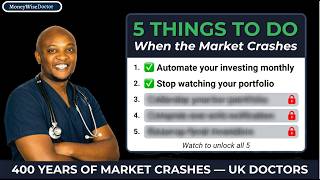
Dr. Andy Egwim traces financial crashes from Tulip Mania to 2022, showing how fear and FOMO repeat across centuries. He shares his own costly mistake selling before the 2008 recovery, then offers a five-point system: automate investing, skip crash monitoring, build an emergency fund, use tax-efficient accounts, and keep learning.
Chapters
In 2008, I made one of the most expensive investing mistakes of my life. And the strange part, at that time I thought I'd been clever. The market was collapsing in 2008, the global financial crisis. I don't know if you were around then. Most of you were. Banks were failing, people were losing their jobs, their homes, their savings, their pension. It was really a terrible time. I was pinching myself and thinking, well, good thing I sold before all this madness. I'd only had just a bit of money in the market. Now, technically, I started investing a few years earlier, before 2008, around the age of 19. For several years after that, when I started investing, the market had been bullish, you know, and when the market is rising, everybody starts feeling like an investing genius. I was buying shares, watching prices, selling when I made a profit, and then moving on. That was my idea of investing back then, you know, just buy something, watch it obsessively, and follow stories in the news and chat rooms. You remember those old internet chat rooms of those days? Then I'll sell when it hits some imaginary target I set. I celebrate, rinse and repeat. No proper attention to the underlying business fundamentals. No real diversification, no asset allocation, no risk management, and definitely no tax efficient strategy. Just vibes, confidence, and a little bit of luck. Then a few months before the 2008 crash, I sold a lot of my stocks, like a good portion of my investment. Not because I predicted the financial crisis, though. Not because I had some deep macroeconomic insight that there was going to be a global crash. No, I was not Michael Burry, you know. You know Michael Burry, the doctor turned investor who famously saw the subprime mortgage crisis coming before anyone else. If you've watched The Big Short, that was not me. I was just a medical student. I needed some money. Cash was tight. So I sold. So when I later watched the market collapse, I felt smart, you know, felt a bit smart. I felt clever. I was like, wow, I neatly avoided one of the worst financial crashes in modern history. But what I didn't understand at that time, and what took me years and several more crashes to fully understand, was this: I had made an expensive mistake. The mistake was not just selling. The expensive mistake was what happened afterwards. I became fearful when everyone else was fearful. So I was moving in the direction of the crowds. So instead of investing during the recovery, instead of leaning into long-term investing, instead of allowing compounding to do his work, I stayed on the sidelines. I already knew that famous Warren Buffett line, and I would quote it to myself, but it's one thing doing it. Be fearful when others are greedy and greedy when others are fearful. Knowing a quote is one thing, doing it is another. You know, when you're under pressure, those are two different things. And when markets are crashing, logic can disappear. Through the window, especially if you do not already have a plan. So it's a good thing if you are seeing this before a market crash. This was my situation. I stayed cautious. I waited for things to feel safe again. I missed one of the greatest bull runs in stock market history. Well, that lesson cost me years of compounding. Thankfully, I eventually learned from it and I was able to apply it in the future. And I'll tell you how that helped me hit my financial freedom. So I've been investing now for over 21 years. I've lived through multiple market crashes, and investing ultimately helped me achieve financial freedom, make work optional, and leave my salary GP role 4 years ago. Not had a job since then, not needed one. But what fascinates me most is this: every crash looks different on the surface. Different headlines, different countries, different triggers. There's always like different people to blame, but underneath every single crash, the same human behavior keeps showing up. Fear, greed, FOMO, panic, euphoria, crowd psychology, the madness of crowds. And once you see that pattern clearly, you start investing very differently. You kind of like start doing things differently. Today I want to take you through some of the biggest crashes in financial history, all the way back to 1637. Yes, we are going back almost 400 years and picking up the lessons that have continued all through so you can recognize the patterns. And use that to be a better investor. Because the technology changes, the assets change, the headlines change, but human behavior, that barely changes at all, as you will see in this video. So come along for the ride. Understanding that human behavior doesn't change, it can genuinely make you a better investor. So let's get into it. If you're new here, I'm Dr. Andy Egwim. I'm a former NHS GP and the author of The Moneywise Doctor, which became a bestseller on Amazon on investing, personal finance, and retirement planning. Yeah, that was when I published in December 2025. So lots of great reviews from the book. Okay, so I write the weekly MoneyWise Doctor newsletter to around 10,000 doctors every Sunday, and I have now taught over 4,000 doctors through my live masterclasses where I cover practical investing, tax efficiency, and long-term financial well-being towards financial freedom. And one question comes up again and again: what do you actually do when the market crashes? It's okay to be investing, but will I lose all my money? Should I sell? Should I buy more? Should I just wait? Most people worry about it even without a market crash happening yet. So today let's answer it properly, but not with theory, but with history, through the lens of history. Quick disclaimer: this video is for education only, is not personal financial advice. Investing involves risk and you should always make decisions based on your own circumstances, your risk tolerance, your goals, and your horizon. If you need help, you could speak to a regulated financial advisor for personal advice. So before you make any investment decision, this stuff here, start by understanding exactly exactly where you currently stand. Most doctors have never had a proper financial health check, not because they're not interested, but because nobody had ever designed a tool that helps to make sense for the specific complexity of doctor's financial life. So I made one. It's called the MedScan Financial Health Score. So it takes about 3 minutes. It helps you to look at your overall financial position across 7 key areas including tax efficiency, pension, investing, debt management, and financial protection. It gives you a clear score, a breakdown of exactly where you are, where the gaps are, and it's completely free. Takes 3 minutes. If you head over to moneywisedoctor.com/medscan, or you can check the link in the description to get it. It's 3 minutes, real clarity, free. So let's just jump right into it. We'll start with flowers, actual flowers. I should have gotten a tulip. We're going back to Netherlands. 400 years ago, tulips had just arrived in Europe and people were obsessed with them. They were exotic, they were rare. Beautiful, lovely flowers. At first, people just bought tulips because they liked tulips, right? Normal behavior. But then something changed. People stopped buying tulips because they love the flowers. They started buying tulips because they believed someone will pay more tomorrow for them. Now, once that psychology enters, things get dangerous very quickly. It's called the Greater Fool Theory of Investing. It suggests that an investor can profit from buying overvalued assets regardless of their intrinsic value, simply by selling them to a greater fool at a higher price. It's a speculative strategy. It's driven by market momentum. It's often fueling bubbles in stock market, real estate, or even crypto recently. So this sort of behavior is not new. During the Tulip Mania, prices of flowers exploded. People were trading tulip contracts when there were no longer enough flowers to trade. Some accounts say one famous tulip bulb called the Viceroy was offered for around 3,000 to 4,200 guilders. Okay, so for context, during the same period, a skilled craftsman might earn around 300 guilders a year. So we are talking about 10 times a skilled worker's income. And guilders was like the reserve currency of the world then because Netherlands was leading in finance. In terms of modern purchasing power, this was an astonishing amount. It's hard to do a calculation directly to what it will amount to in today's sort of money, but if you look at economic historians, we say roughly could be about £100,000 depending on the method of calculation you use. So £100K just for one bulb of flour. To make that relatable, imagine someone today spending several hundred thousands of pounds or even £100,000 on a flour, not to put down a deposit for a house or for a business or a productive asset. A flour bulb. Now imagine someone remortgaging their house or selling their house to buy a flour. It sounds ridiculous, but again, people have remortgaged houses to buy crypto. People have borrowed money to buy meme stocks. Remember NFTs, non-fungible tokens. People have taken loans to chase whatever the latest hot investment theme is, whether it's AI or something else, crypto or NFTs. So the assets might change, the behavior does not. The flowers were booming, and then one day buyers simply stopped showing up, and that's how crashes usually happen. That was it. If you can't sell it anymore, the market collapses. This happened in Netherlands in the 17th century. Now, historians still debate how economically devastating. The tulip mania was, you know, but some accounts may be exaggerated, but the psychology is undeniable. People became convinced that prices could only go up and up and up. And every major bubble in history carries that exact same energy. And you hear things like, this time is different, it's dot-com, it's crypto, it's AI. One key lesson from this is that while history doesn't repeat itself, it often rhymes. And you're going to see the patterns. You can see the patterns. Let's look at the next bubble. It's closer home. The South Sea Bubble. So if you fast forward here to England, in the UK, the South Sea Company had been granted trading rights to South America. Now, this was a big deal back then because obviously Britain was a world power. It was basically a government-sanctioned monopoly. But there was a tiny problem, a weeny little bitty tiny problem. Spain controlled much of South America where they had been granted the rights. So the actual business fundamentals were questionable. Is this company really going to make any money? But none of that mattered because the story was exciting, you know, and good stories can be very dangerous in financial markets. The stock price exploded. Everyone was believing that they were going to get rich. Everyone was thinking they were getting richer. Politicians bought shares. Aristocrats were buying shares. Ordinary people who didn't have money borrowed money to buy shares. Everybody wanted in. And then eventually Reality arrived, as it usually arrives without warning. The profits imagined did not materialize. The story cracked. The share price collapsed. The South Sea Bubble burst dramatically over a period of about 3 months in 1720, with the fastest decline happening between August and September of 1720. Now, after peaking to up to £1,000 in August, stock prices plummeted to around £124 by December, losing roughly 80% of their value. Here's the fascinating part. One of the people caught up in the bubble was Sir Isaac Newton. Yes, that Isaac Newton, the one you learn about in physics, the law of motion, the man who helped to explain gravity, one of the greatest scientific minds in human history. You know, so remember the story about the apple falling and gravity made sense to him and the world changed. Unfortunately, the South Sea Company was not Apple company IPO. It was not a brilliant business changing the world. No. It was a speculative bubble dressed up as an opportunity. Newton reportedly lost a fortune, you know, just from this South Sea Bubble. And afterwards, he's said to have— he's reported to have said, I can calculate the motions of heavenly bodies, but not the madness of people. That is one of the most important investing lessons ever spoken, because intelligence alone does not protect you from crowd psychology or from making costly mistakes. When it comes to finances. You can be brilliant and still make terrible investing decisions. I've met highly intelligent doctors, surgeons, GPs with multiple degrees who have made very costly financial decisions, and I've met people with almost no formal education but they were financially intelligent and they built wealth because they stayed disciplined and learned the basics properly. So investing rewards behavior more than intelligence. That one is really the uncomfortable truth. Now, quick pause here. If you know someone who you think is making a financial mistake and who thinks intelligence loan isn't enough to protect them from bad financial decisions, especially if it's a doctor, go ahead and share this video to them. It can actually help them avoid losing a fortune, and they'll remember you for being a great friend. Now, because history keeps showing us that clever people can lose money in very ordinary ways, and if you're a doctor watching this and want a more structured breakdown of investing, taxes, pensions, and basically financial well-being, I have a completely free financial well-being doctors course. So it's Financial Well-Being for Doctors. The course is available. You can grab it for free. Check the links. It's totally for free. It covers how to set up your financial system and how to think about investing, taxes, the NHS pension, and pensions in general, and how to avoid constantly reacting to things like surprise tax bills, brown envelopes from HMRC, and market noise. I'll leave the link below. Let's just keep going. I'll jump to the next one. The Wall Street Crash, 1921. Now we're arriving at a crash almost everybody must have heard at least hopefully, is less than 100 years ago. America was booming. Cars, radios, telephones. Technology was changing everything. There was a real sense that a new era had arrived. If you've watched The Great Gatsby, you might have seen a thing or two about that era. And the stock market went up, up, up, up. Everybody started investing. Factory workers, farmers, taxi drivers, people that had never cared about investing were suddenly giving stock tips. There's an old story about Joseph Kennedy, the father of JFK, who later became the US president that was assassinated. So Kennedy was already a skilled, very skilled market operator. One day he was getting his shoe polished by, you know, probably someone who didn't know him and what he did in the stock market, and the shoeshine boy started giving him some stock tips of what he should buy. Supposedly Kennedy went home and sold all his shares. His logic was simple: if even the shoeshine boy is giving stock tips, then everybody who can buy has already bought, probably. Now whether that exact story is perfectly true or not, the psychology matters. When euphoria becomes universal, risk is usually high. It is the same idea as Buffett's line: be fearful when others are greedy and greedy when others are fearful. But again, that's much easier to quote than to live. In 1929, there was a massive crash. The market eventually lost almost 90% of its value from peak to bottom. Banks failed, businesses collapsed, unemployment exploded. And here's the part that many people don't realize: the Dow Jones, you know, DJIA, Dow Jones Industrial Average, which is sort of like an index, it's basically an index tracks a basket of major US companies. It did not return to its peak, its 1929 peak, until 1954. So about 25 years, a quarter of a century. That's why time horizon matters so much. So broad diversified markets have historically recovered over time. Yes, because by nature is well diversified, but over time can mean— it could sometimes mean a very long time. That's why we talk about the 7 steps before you start investing, like your emergency fund. Because emergency fund, basically 3 to 6 months worth of your living expenses set aside Cash, ideally in a tax-free savings account, is not there to make you rich, but it's there to stop you from being financially fragile so that you don't have to sell during a crash or just because you need money. So you don't invest in emergency fund— basically it's saved. You don't put it into the crypto that your cousin has told you is going to the moon, and you definitely don't put the money that you need soon into the stock market and then hope that history is kind to your timeline. No, if you are going to need the money in less than 5 years, it's not ideal to invest in the stock market because investing is not just about return, it's about survival. Because if you survive long enough, compounding can do its work and you win long term. All right, now let's look at the next one, Black Monday. So this one is quite, um, in the '80s. Let's look at the next market crash, October 1987, Black Monday as it's called. Again, the Dow Jones Industrial Average fell 22.6%. In one day. One day. If something similar happened today, people would genuinely think civilization was ending. The headlines would be unbearable. Your WhatsApp group would be on fire. Someone would be forwarding you a voice note from their cousin's neighbor's baba explaining why you must sell everything before lunchtime. Look, there are multiple causes for the 1987 Black Monday crash. Some people cited computerized trading, but of course there was fear, feedback loops, overvaluation, rising interest, Everyone heads for the door at the same time. But the lesson is simple: markets can move much faster than human beings can emotionally process. And here's what fascinates me the most: the market in 1987 recovered. The Dow Jones, recovering within weeks, passed its pre-crash high again by 1989. So within the next 2 years, it has passed its pre-crash high. This thing that felt like the end of the world eventually became just a small brief footnote in market history, or a chapter. Not because someone rang the bell and announced, okay, everyone, panic is now over, you can come back to investing. No, recovery often starts while people are still terrified. That is the part many investors miss. The market often begins recovering while headlines are still negative, which means that waiting for certainty— if you are waiting for certainty, it often means that you're going to be missing that recovery. And that was my mistake in 2008, and I'll tell you a bit more about it. I waited for things to feel safe, but markets do not wait for your feelings to recover before they move. All Enough about 1987. Let's look at dot-com bubble. Now it's something more, I think, in more recent history. Dot-com bubble happened in the late '90s. The dot-com bubble, the first, the internet arrives and everyone says, oh, it's going to change the world. And it has. You're watching this over the internet now. And to be fair, genuinely, the internet did change the world. That part was true and it's still true. I still remember going to cyber cafes back in Nigeria as a teenager. At first I would pay a fee for a staff to help me and check my email and, you know, and send emails because then that was cooler than writing letters then. Then I later started paying for an hour of computer time so I could check emails, post and read things online and do a little bit of research and, you know, go on sort of like blogs and stuff like that. So businesses and organizations were going online. It felt like a new era. It felt magical. The internet was clearly revolutionary, but investors took took a true idea and turned it into irrational behavior. Companies with no profits and sometimes barely any revenue were suddenly worth hundreds of millions or billions. If a company had.com in their name, money flooded in. Just like now, if a company has AI, money floods in. Pets.com is one of the most famous examples. Pets.com sold pet supplies online. It had a sock puppet mascot. It spent heavily on advertising. It raised about $82 million in its its initial public offering in the year 2000. But the business model was broken. The underlying business wasn't solid. It was selling bulky pet food online, often with shipping costs that made no economic sense. Now, another example is Boo.com, a British online fashion retailer. It raised and burned through huge sums of money in a very short period. Now, the idea sounded cool, it sounded futuristic. The website barely worked properly for many users. In fact, within 18 months, $135 million was spent on marketing by Boo.com. Boo spent $25 million alone on advertising and pricing relationship— basically advertising and public relationship marketing before it had anything to sell. The business collapsed in the dot-com bubble because it was harder to raise more money. That's how bubbles worked. Okay, so the problem is this problem: you take a real trend and you remove all the discipline around price. Of course, during the dot-com bubble, NASDAQ crashed almost 78%. The NASDAQ— many companies disappeared completely. Now let's be honest, when I look at some of the AI excitement today, I see echoes of that period. I'm not saying AI is not real, and AI of course is changing the world, and AI will likely create enormous value. But as investors, the question is not just, is this technology important, will it change the world? The question is more like, at what price? Am I overpaying for it? Because even a great future can be a bad investment if you overpay for it. Okay, now here is the important nuance. Some businesses survived the dot-com crash, and we know them. Many of them are still around today, and they are the giant trillion-dollar businesses. Amazon survived, Apple survived. Google came later and became one of the great companies of the internet age. But even Amazon fell around 95% during the dot-com crash. 95%! Just think about that. Imagine you had £100,000 invested in this 6-year-old company selling books. Books and videos online, and one day your account went from 100K to 5K. Many people will completely panic. People will freak out. Many people will sell and lose even more. Most people cannot handle that psychologically, especially if you're a busy doctor in a demanding job. This is one reason simple, broad, low-cost diversified investing often works better for most busy professionals like doctors, dentists, and nurses. Okay, because if your strategy is too complicated or too concentrated or too emotional, you probably will not stick to it when things get difficult. And sticking with a good strategy matters more than finding a perfect one. All right, that was that dot-com bubble. Now the next one is the big one, the global financial crisis. Let's come back to 2008. I experienced that one myself, the crisis that changed how I invest forever. But what led to the '08 crisis? Banks had been lending mortgages to people who could not really afford them, the so-called ninja loans. Then those mortgages were being packaged into financial products and sold around the world. Everyone assumed house prices would keep rising forever, but that assumption broke. And once it broke, the entire structure began to collapse. Big things started happening. Lehman Brothers, a massive 158-year-old American global financial services firm, it failed. Stopped trusting each other. Credit markets froze. In fact, the stock market collapsed by roughly 50%. I mean, what was I doing? I was sitting there feeling relieved that I, you know, I sold before things got bad. But what I did not realize was that I had accidentally avoided the crash, then psychologically trapped myself afterwards. That was the key lesson here. After watching markets collapse, I became cautious for years after the '08 crash. I waited for certainty. I waited for things to feel safe again. And by the time things felt safe, markets had already massively recovered by 2010. As at the time I was finishing medical school. That was the expensive part. Not the selling before the crash. It's missing the recovery. Now that changed my thinking around investing forever. Okay, now this other one is quite interesting. It's Japan. Before we move to the more recent COVID pandemic crash. I want to talk a little bit about Japan, the home of samurai, and apparently samurai investors too, because there was also a crash in Japan. This is where I want to challenge something you hear a lot online from so many financial gurus and, you know, online YouTubers and TikTokers. You hear things like, just buy the S&P 500 and you'll be fine. Now let me be clear, the S&P 500 has historically been an extraordinary index. It obviously tracks the top 500 companies in the US by size capitalization. No argument, it contains around 500 large American companies. Many of them are not just American companies, they are world-class businesses. For a long time, it has rewarded investors very well, but I think many people repeat, just buy the S&P 500 without really understanding what they are buying. Look, they are buying large US companies, so it's by capitalization, it's based on their size, not necessarily on profitability. That means US exposure, okay? Not the worst thing in the world, but it means heavy concentration in American mega-cap, large, large-size companies. Often means a lot of technological exposure. Again, that has worked brilliantly in the past for many people, but history teaches us something important: no country dominates forever. In the late 1980s, '80s, Japan looked unstoppable. The Nikkei 225, that's Japan's main stock market index, it reached a record high in December 1989. Japan was seen as the future. Japanese companies were powerful. Japanese real estate was booming. At some point, even a tiny piece of real estate was more expensive than in New York. People believed the rise will continue. Then poof, the bubble burst, and the Nikkei did not regain its 1989 peak until 2024, just 2 years ago. About 34 years So 34 years, that is not a typo. Not 3 years, not 4 years, 34 years. Now I'm not saying S&P 500 is like, is like it to be like Japan. I'm not saying America is about to collapse. The S&P 500 is broader and deeper and full of global businesses, much more than the Nikkei. It's not like the Nifty 50 that happened in Japan, but the lessons remain. Country concentration is still concentration. If you only invest in one country, you're making a bet, even if it feels safe. Safe because everyone else is making the same bet. They're making a bet that that country is going to continue to do well. That is one reason I personally like broad global diversification. Not because it's exciting, it's actually quite boring, but boring is often good in investing. Global diversification says, you know what, I don't know which country will dominate the next 30 years, so I want exposure to many of them. That means America, but also means Europe, also Taiwan, it also means Japan, emerging markets, Brazil, you know, basically a company like Taiwan Semiconductors, massive company, is not on the S&P 500. So diversification is not about maximizing excitement, it's about surviving uncertainty, and survival matters. If you survive, compounding gets to work on your behalf, right? The other crisis that we are not fully covering— there are too many crashes we could cover— there was the Asian financial crisis in 1997. I hadn't started investing by then. There was the Russian default and long-term capital management in 1998. This is an interesting one. There's a European debt crisis around 2011. There's 2010 flash crash. There's 2022 bond and rate hike shock. There was the UK gilt crisis, the crypto crash, the property crashes. If we covered every one of them properly, this video would be longer than some market crashes lasted. So I'm not pretending this is every crash in history. No, I'm deliberately picking the ones that teach the clearest lessons, and especially the more recent ones that I actually experienced in my investing journey. And the lessons keep repeating themselves. Different crisis, same emotions, same crowd behavior, same temptation to abandon the plan at the worst possible time. And that takes me to the more recent one I can remember is the COVID-19 crash. I participated in this. I was investing through it. COVID came. This one genuinely felt frightening. Entire countries were shutting down. Planes were grounded, hospitals were overwhelmed, businesses closing overnight, markets collapsed at terrifying speed. The S&P 500 fell over 30% in just over a month. At that time, I was working as a doctor in Cornwall, one of the most beautiful coastal areas in the UK. While many people were at home, we still had to go to work as healthcare professionals. Yes, because then I was a GP registrar, and if you're working in healthcare, you still have to go to work. In a strange way, work was a relief, you know. You didn't have to stay at home all Each day you went in, but you knew you might end up coming back with COVID This was before the vaccines, but you also felt useful. And at that same time, I was not only thinking about my clinical work, I was also thinking— and I remember the lessons of '08 when I was a medical student— I was thinking, how do I make sure my money continues working for me even during this crash? This time, drawing on the lessons I'd learned in the past, I did something different. I did not sell. In In fact, I was buying more. I invested more. I even got to a point where I was sort of remortgaging to buy more. Of course, not recklessly, not YOLO investing, like you only live once, not like that kind of investing. Not selling the house to buy random shares because someone on Twitter said generational opportunity. No, I was applying careful risk management, diversification. I was evaluating with discounted cash flow analysis for the companies I bought. There was asset allocation, there was emergency fund, the right wrappers, tax efficiency. But I bought more. I didn't know whether the market would recover. Nobody knew that. I certainly did not. I couldn't see the future. I bought because history has taught me something important. Companies with solid fundamentals and broad diversified markets have historically recovered over time. Not every company recovers, not every country recovers, not every asset recovers. But broad diversified markets historically have recovered from crashes. And honestly, if globally diversified markets were to permanently collapse, we probably have bigger concerns than our investment portfolio. At that point, we are not asking, should I rebalance my ISA or my SIP? No, you're probably asking, is there electricity? Is there a zombie apocalypse? Is there even running water? Is there a robotic zombie army coming to take over the world? That is a different problem altogether. I remember thinking during COVID if the world genuinely ends and civilization goes away, I probably wouldn't need the money in my savings account anyway, so might as well invest it. Because if the world does not end, then this may turn out to be one of the best opportunities of my investing life. And it turned out to be. Again, that's not reckless investing, and that helped me accelerate my journey to financial freedom. But calculated risk management. I had an emergency fund, I had an income that hadn't stopped, I had a long-term horizon, I had a plan. So I had the risk tolerance and the capacity to bear loss. So instead of panic, I kept investing, and COVID ended up being one of the fastest recoveries in the market, which reminds us again, the market often recovers long before human emotions recover. So you cannot make the decisions purely based on your emotions. There are a few other market crashes like the rate hike crash. And then there was 2022, there's COVID stimulus inflation arrived in the UK. Inflation went above 11%. In the US, it went above 9%. Central banks responded the way central banks usually respond. They raised the interest rate and they raised it kind of like fast. I'm not an economist or banker, but when interest rates rise sharply, almost every asset gets repriced. Stocks fell. Bonds fell. Property struggled. Crypto collapsed. For many investors, 2022 was painful because even the "safe" part of a portfolio, like bonds, fell sharply. That was a reminder that diversification does not mean nothing ever falls. It means different assets behave differently over time. Sometimes, in the short term, everything can feel painful. That is why investing has to be connected to your goals and your time horizon. If you need the money soon, cash may be the better option. If you need the money in 5 to 10 or 20 or 30 years, volatility is part of the journey. The market might go up and down. It's going to feel painful, of course, but that's not unusual, especially if you have a long-term horizon. Now let's bring this back to normal investing. How does this apply to me and you? Because most people watching this are not trying to trade tulips or launch a dot-com company or become Isaac Newton with a brokerage account. You probably just want to know, how do I invest sensibly without blowing myself up? This is where index investing becomes powerful. I mean, I've invested in individual companies, I've invested in index, I've invested in startups, but an index fund allows you to own a broad basket of companies instead of trying to guess which single company will win you just own the entire league. Think of it like football. You're not betting everything on one club or one striker scoring every week. You're buying exposure to the whole league. Now, as I said earlier on, many people say just buy the S&P 500, and that might work for— no, well, might work for many people, or even buy FTSE 100, which is just limited to the UK. But I want you to think deeper. What does the fund actually hold before you invest in indexes? Is it one country? Is it one sector? Is it mostly just technology? Is it global? Is it limited in terms of diversification? Is it low cost? Is it accumulating or distributing? You know, is it in the right account, like maybe an ISA or pension if you're in the UK, or TFSA if you're in Canada? Because investing is not just about buying something with index in the name. All index funds are not the same. Some are global, some are country-specific, some have higher fees, some have higher total expense ratios, some are sector-specific, some are ethical or what you call ESG, some are Sharia compliant and excludes industries like alcohol, gambling, conventional finance, pornography, and all that. Some are cheap, some are expensive, some reinvest your dividends automatically, that's accumulating, and some Some pay dividends out, that's distributing. The details matter, but do not let the details paralyze you. The big idea is simple: own productive assets, diversify, keep costs low, use tax-efficient wrappers like your ISAs or your SEP or TFSA or Roth IRA if you're in the US, then automate it and give compounding time to work. This is not exciting, but it's powerful. Right, so let's zoom out. Almost 400 years of crashes. Talked about 2 We've talked about trading companies, we've talked about bank failures, we've talked about technology bubbles, pandemics, property crashes, rate shocks. Different assets, same emotion— fear and greed. Every single time, fear and greed. And investors who usually come out strongest are not always the smartest ones. They are the people who build systems strong enough to survive emotionally difficult periods. That's the game— not prediction, survival. If you're investing in a broadly diversified DeskFund, I'm doing it automatically without even having to think about it, then your emotions are out. So let me leave you with 5 things I'll personally do if I were a busy doctor or dentist just starting to invest today. 5 things, especially if I had neither the skill nor time nor the interest in analyzing, you know, individual companies. You don't have the time to start looking at cash flow statement, income statement, balance sheet. Number 1, what I'll do, I will invest automatically every every month using what I call the AMAS strategy. So AMAS is basically Automated Monthly Allocated Savings System. It's a concept I explained in Chapter 2 of my book, The MoneyWise Doctor. The idea is simple: you automate your investing so that it happens in the background without you having to think about it all the time. So you set up a direct debit for a portion of your net income, that's your take-home pay, maybe 20%, Okay, maybe 15%, but I like to start at 20%. Whatever is realistic for you. So if you earn 5K, that 20% will be about 1K. Now that money is moved automatically to your savings and investment every single month. So just like you pay your electricity bill by direct debit, just like your council tax goes out every month by direct debit, just like your Netflix does not wait for you to feel inspired before collecting its money, you should also pay your future self automatically and pay yourself first. So whether it's to pay off debt or to save or to invest, do it automatically. If your investment is set up to automatically go into a broad diversified index fund each month, you remove decision paralysis. When markets fall, your monthly investment buys more units. When markets rise, it buys fewer units. But if it's 1K, it's 1K, and that's it. Over time, it smooths out. Okay, the Americans and Canadians probably call this dollar cost averaging. In the UK, we call it pound cost averaging because we use pound sterling, otherwise known as real money. Okay, I'm just kidding. The key point is this: the decision is made before emotions arrive. If you are using automated investing, you don't have to decide every single month whether to invest or not. You don't have to agonize on on which company or investment to make. That creates a situation where your investments compound automatically in the background over time, and that's how you build wealth without stress. Number 2, what I'll do if I was starting again. I will not obsessively watch my portfolio during crashes. That's emotional self-harm. Watching your investments fall in real time does not make you a better investor. It stresses you out. It often makes you a more anxious investor. And anxious investors make bad decisions. Number 3, if I were starting again and there was a market crash, or even if there wasn't a market crash, I will keep a proper emergency fund even before I invest a penny. 3 to 6 months' worth of your living expenses saved, because needing cash during a crash is dangerous. If your boiler breaks down, your car fails, your income drops, or someone, a loved one, needs, you know, help, or life hits you at the same time the market is down, You may be forced to sell your investment at a loss. It's hard to recover. That locks in the loss. It's hard to recover from that, and it removes your ability to benefit from the recovery and compounding. Number 4: If I were just starting again, I would use tax-efficient wrappers. If you're in the UK, you need to understand things like your individual savings account, ISAs, stock and shares ISAs, lifetime ISA, pensions, you know, like your self-invested personal pension, If you're in Canada, you may want to look at things like tax-free savings account. And of course, for the US, there are various tax-efficient accounts doctors could use as well. I mean, one is the Roth IRA, which is the closest thing to a stock and shares ISA in the UK. I think the UK investors have quite a nice £20K ISA allowance. But the point is this: investing is not just about returns, it's about what you keep at the end of the day. A good investment in the wrong wrapper in the wrong type of account can still create a painful tax bill. Capital gains tax in the UK is 24% if you're a higher rate taxpayer. Number 5, what I would do if I was starting. I will improve my financial IQ every single year, and this does not require reading a thousand books or spending a fortune. In my book, The Moneywise Doctor, I talk about a simple 1-1-1 system for doctors to improve their financial knowledge. One financial book per year, one podcast or blog or newsletter or YouTube video per week. Just one should be all right if you're not trying to overdo it. One workshop or seminar per year. That's it. If you did that for 5 or 10 years, or if you have been doing that for— now, how many years have you been a doctor? Your financial confidence would have been completely different. You don't need to become a professional investor to improve your financial IQ, but you need enough education to avoid mistakes mistakes, and also to know when someone is trying to pull wool over your eyes, selling you financial products in the name of advice that are better for them than for you. Okay, so understanding human behavior, that's a whole stuff. Understanding human behavior is really important. Now, if you found this video useful, please share it with someone. Okay, honestly, I spend a huge amount of time researching and structuring these videos because I want them to genuinely help doctors think differently about money, about investing, about tax efficiency, about your general financial well-being. So if you know a friend or colleague or family member, doctor, dentist, or honestly anyone who panics whenever the markets fall, just click share, forward this to them. And while you're forwarding, you might as well subscribe while you're here because I'll be making more videos around investing, financial well-being, tax efficiency, long-term financial freedom, and I'll be sharing my own journey as well. Um, how I've actually gone from starting from nothing to hitting financial freedom. Look, again, if you want to get my free financial well-being course for doctors, it covers investing, taxes, pensions, financial systems, and how to stop reacting to financial stress. I've recorded in a very simple way to understand. It's all in the description. Thanks for watching, and I'll see you in the next one. Bye!







