How Most Doctors Get Investing and Early Retirement Strategy Wrong
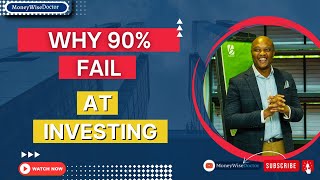
A YouTube seminar led by Ndubuisi 'Andy' Egwim offering investing and early-retirement advice for doctors. Key points: understand differences between ISA types (cash, stocks & shares, Lifetime ISA, Junior ISA), contribute up to the annual ISA allowance (20,000 GBP), only one Junior ISA per child, Lifetime ISA contributions count toward the annual limit while government bonus does not, the UK tax year runs April 6–April 5, prefer low-fee ISAs, build an emergency fund (3–6 months) in a cash ISA then automate monthly investments into stocks & shares ISAs, consider passive investing (S&P 500/index funds) since most active managers underperform, and use a clear plan (e.g., target retirement age) to set investment strategy. The speaker recommends saving/investing roughly 20% of income as a rule of thumb and notes a flexible ISA lets you withdraw and replace funds within the same tax year without using extra allowance.
Questions this video answers
£20,000 (per tax year).
Yes; contributions to a Lifetime ISA count toward the £20,000 allowance.
No; the government bonus is not counted as part of the contributor's allowance.
One Junior ISA per child (you cannot have multiple Junior ISA pots that exceed the child's allowance).
Starts April 6 and ends April 5.
Chapters
You can't be investing in the same way as someone who enjoys their job and wants to retire at 65. I'm not saying you don't enjoy your job. There's the dirty secret of the financial industry and they don't like it when I say this. 90% of wealth managers, professional investors, don't outperform the S&P 500. You know, people talk about ISAs I see with very senior doctors. We're actually born in the UK. They think all the ISAs are the same. Like one told me that for 20 years he was just putting money in the cash ISA. They're not all the same. The mistake most people make is they just continue doing it forever. And they, they keep saying nothing is happening. The money is not moving. Nothing's happening. Like it's not gonna move. The savings account is just tax protected. Hello? Are they there?
Oh my God, I'm here. I've been talking on mute. Oh, I'm so sorry.
That's all right.
I've been on mute. I was gonna say my question is in the chat, but I'll just say quickly. I wanted to ask my first question. It was the lifetime ISA contribution.
Does it.
The part of the 20k allowance contribution if you put some money, does it, Is it part of that? The second question is, if you have one child and you have a two income household, can you open two Junior ISAs? Can your child have two 9K ports or is it just one 9K pot? My child.
I love it.
Thank you.
I love it. I love it. It's just to be paid attention. Right. The first one is easy. Yes. So I start your eye support. Is the eye support. Yeah. You've got like. So your lifetime is. Whatever you contribute is, is part of the 20k. I'm looking at your child. Yeah. Mom wants you to have two junior ISAs. Unfortunately you can only have one. So it's quite, it's intentional finance. Finance for parenting, basically. But Junior Isa, yeah, you can open one per child that is less than 18, but no, you cannot put more than one. But if you're any two income household or you have two adults, you can each have 20k each. Isas, you can max it out. Does that answer your question?
Yes.
I think my husband opened, succeeded in opening one junior ISA when I'd already opened a junior ISA for my daughter already. So I don't know what we should do about that. Should we just consolidate it into one or what should we do?
Okay, that's, that's important question. So you can have more than one isa, but you cannot exceed the allowance. Okay, I can choose to have five. Five stars. I can have five stock and shares isis. This wasn't possible till recently, but I can have more than one isa. As long as for each taxi I don't exceed that 20k or 9k. That makes sense, right? And don't forget, if you opened it before April 6, you. You have a new allowance. From April 6 is the new taxes. So don't worry about it. You can just open a new one after that. Okay? Yeah.
Again, just very quickly, doctor, please. The government, the government addition to your lifetime, what they put in, is that also part of it?
No, no, it's not part of it. The ISA only calculates what you put inside, not what it becomes. Because obviously, for instance, my. If I put in 20k and it's going to 45k, they shouldn't penalize me for that. That makes sense, right? I know the battle you're fighting. I've got a toddler too. So. Yeah. So can I just say quickly, the taxi starts April 6th and ends April 5th. So it's really quite important to know these things because that determines when you can open an isa. The second thing which I forgot to mention is really important is that you want the lowest fee possible. You want an ISA account that has the possible, the lowest fee possible. If it's zero, better. So for those of you who want to check out an isa, I'm not sure which one. If you've got one already, that's great. If your bank provides one. But you need to check the fees because some of them hide under ISA and then they charge you like 2% or some random fees. So that's really important because fees matter. Obviously if you are paying, remember we talked about tax, someone is paying 24%. But if you're also paying 2, 2%, 30% in fees. I'm not paying any fees. Over time it compounds. So I hope that helps. Can I take the next question? 7. There are seven steps to take before you even start thinking of investing as a doctor healthcare professional. Now this is really important to secure your financial foundation before you start investing. Now I've covered these seven steps in a simple guide that I've made available for you in the link in the description. You can download it. It will help you to build a solid financial foundation, avoid common investing mistakes and also make tax efficient investment decisions. Start your investment journey the smart way. Download the guide now using the link in the description and good luck on your investing journey. Now let's get right back to the episode. All right. Neka, do you want to go?
Yeah, I want to go. Thank you very much. Money. Dr. I was actually very fortunate because I was just watching your YouTube. I usually watch my YouTube videos and I was just watching one this evening before I realized that you had a seminar ongoing and then I joined.
So thank you. Excellent.
Yeah, so usually I. It confuses me, this ISA thing because as soon as I came to the uk, my in law told me about isa. He even bought a house with his isa. He's made. In fact they have like a group of friends who make so much money, especially with the stocks and shares. But the thing is, it's so confusing because it could go up and it could go down. So I just post. So I was watching YouTube and I didn't know that I have an account with H and L but been dormant. I haven't even done anything until I realized that I need to up my game again. So I then heard that there's a flexible and then there's a non flexible account. So I want to know which one is better then my last question. So with this ISA thing, once our salaries are being paid, should we put everything, everything in accounts and then start withdrawing from it or just take a fraction and just, you know, put. I don't know.
Okay, fair enough. I think we should take the questions one after the other. Thank you for your question. It's really quite useful, not just for yourself, but for others. Number one, should you put your salary, everything in isa? Who, who knows the answer to that? No, no. You put your salary in your regular account. So that's the account where things start. So that's starting point then. Number two, before you start investing, you want to make sure you've saved up your emergency fund. How do you save that? Don't transfer it every time. You set up a direct debit, automatically sending it into your cash isa, where you save it so that when you have three months worth of living expense, you can then start transferring that. So you transfer directly with your stock and shares isa. So you set up a system so that it works whether you're busy or stressed or somebody is demanding money from you. It just. There's a system in place that makes sense so far. Right? Does that make sense, neca so far? No.
So the emergency account should also be isa, is that what you're saying?
Yes. So the emergency account is the savings account. You know, people talk about ISAs and I see with very senior doctors who were actually born in the UK, they think all the ISAs are the same. Like one told me that for 20 years you were just putting money in the cash ISA. They're not all the same. Your cash ISA is your savings isa. It's just a savings account that is tax protected. So if you want to set up a direct debit to go from your salary account to into the ASHESA is just going into a savings account, but it's tax protected. So that's all by direct debit. But the mistake most people make is they just continue doing it forever and they keep saying the isa. Nothing is happening. The money is not moving. Nothing's happening. Like it's not going to move. The savings account is just tax protected. Right? So that's the first bit. Now, when you've hit your goal, that's why you need a clear goal. When you've hit your goal, your emergency fund, whether it's three months worth or six months worth, the next step is investing. So you don't need to continue using the cash ISA. That 20% of your salary. I tend to say 20% is not gospel, but it's one of the money wise Dr. Rules. It's not as important as the Ten Commandments from Moses, but it's one of our ten rules. 20%, 20, 25%. But at least 20% that was going into clearing up debt. If you have debt or number two savings, if you don't have emergency fund, that same 20 now goes into your investing account, which is now your Stock and shares ISA, that's the investing account. And if you've mastered your 20K, you can make it your SIP or do additional NHS pension salary. So basically you have a method, you have an approach that means that you can crush your debt at the same time, save up money. I'm not saying you have any debt, but obviously this is what this is the layers. Save up money and then invest in a systematic way. It's even better if you're a passive investor. Like you just, you're just buying Broadwell diversified index funds, so you're not doing any fancy thing. That means you can also set up the automation, which is one of the things we do in the four weeks investment deep dive. But you can set up the automation that the money goes out from it automatically every month and buys whatever you want. So that means you're investing on demand, you're investing automatically and it's running in the background like software. You don't have to even think about it. I know a lot of doctors in the mastermind community that have done this and people that are not even in the mastermind. Obviously myself, because I'm a value investor, I buy back ends. So sometimes I'm looking for, oh, is the market down, I'm going to buy and all that kind of stuff. But most people, 95% of doctors don't need to do that. You can invest automatically, set it up passively, but basically understand what each ISA does, what each of them does. They all do different things. But the maximum you can put in every single one of the ISAs. Even if you have multiple lifetime ISA, multiple stock and shares ISA is 20, 000 for now. Does that help at all?
Yes, it does.
Excellent.
And thank you for that question. You had a second question. Sometimes it's the questions you ask that actually makes the seminar to become more clear because. So I don't know what you don't know. Right, so what was your second question?
I said a flexible. Well, it's a cash isa, a flexible cash isa, and a non flexible. Does it matter or.
Right. So a flexible or non flexible. I don't think it matters much, but just to know the differences. Right. A flexible cash ISA means that if you pay money into it. Once you pay money into your cash isa is considered like let's say you've paid in 1k, you've used 1000 out out of your allowance. So basically have 19,000. But the flexible one allows you to take out 1k and bring back a 1k. Again you can pay another £1,000. It just says, okay, it's fine. Neck has only used 1k. But in a non flexible one you've used 2k because you've faded twice. Right. I don't really think it should matter so much because your emergency fund is for emergency. It's not the type of money you want to need every day. Like life insurance. Someone says, I hope my life insurance is a waste. I say, okay, good. That means I don't die before the life insurance runs out. Okay. Because if it's a waste, it means I just paid this life insurance, then I got to 65 and I didn't die, so my family didn't get life insurance. Okay, that's good. I live to 65. That's, that's the whole point. Your emergency fund is for an emergency. If there's an emergency, you get to use it. So I don't, I don't want to sweat the small stuff again. That's our approach to finance. We do 80, 20. Because some people say, I'm not investing in crypto, I'm not Investing in this. I'm not investing that. I'm like no, no, no, no. They are 80, 20. They are 80% of things that. There are 20% of things that do the heavy lifting for you and that's getting out of debt, saving an emergency fund and investing passively over the long term. Here's the dirty secret of the financial industry and they don't like it when I say this because I'm in room sometimes. Financial coaches and advisors, 90% of wealth managers, professional investors don't outperform the S P500. So S&P500 is like a group of stocks, a basket of stocks where you're saying I neck. I said I don't know which stock would do well. So what I'm going to do, I'm just going to buy the 500 of the top biggest. Not saying that's what you should do, but it's passive investing. Top 500 companies in the US and I'm not going to do anything, I'm just going to buy it. Maybe every month I set up direct debit and it buys some of it at a fixed amount. You will outperform 90 of active people wearing Thai, using computer algorithms, doing different things, keeping up with financial times. You will outperform 90 of them if you just do this passive approach. I don't know if you have performed them in 2025. I'm talking based on past data over the last eight years. S P 500. The data is out there. I've written an article about it titled can you really beat your can you really beat professionals and investing or something like that. Most financial advice and world manager don't last it. But the data is there. We are in Thai. I haven't won one for a while. So basically you want to focus on what really moves the needle. And for that I need a plan. If you have a clear plan, you have a strategy. We've got some people in the money wise doctor community who were intending to retire in 15 years. Then one moved to Canada. Her expenses went up a little bit but her income also went out went up a little bit. Now when we run the projections, she's going to retire in seven and a half years. All things being equal, obviously things can go wrong. That's why we have insurance or things can go very right. Maybe some expense you are hoping to get, you end up not doing it or some income comes in. So just having that clear plan is what really matters. For instance, if you want to retire at 50 years, you can't be investing in the same way as someone who enjoys their job and want to retire at 65. I'm not saying you don't enjoy your job. Just say I do 20 days a year, so I'm not in the position to tell anybody anything. Yeah. So basically it's about having a plan. Did that help?
Yeah, it did. Thank you so much.
No worries at all. Thank you for the question. Look, if you've got a question, if it's not been answered or you're not sure you can because you've got the clues at some point, right, you can send me a message on WhatsApp or chat on any of the YouTube videos. We eventually get around to them. But if you send a message to WhatsApp or if you're in the WhatsApp community, you've got a free community. Obviously the, the mastermind community is private because we go a little bit in depth and share some stuff that are all legal, but we basically don't feel like it should be on YouTube or everywhere where HMRC looks at. HMS are very good friends. Right.
So.
But you can send me a message if you've got any question. Basically we'll do our best to answer it.
Okay.
Well, I hope you found that helpful and more importantly, I hope it helped you to see investing in a new light. This is just a small section of what we cover in the full masterclass. If you like me to drop more of these clips, just let me in the comments. Comment, invest and share this video as well with friends who may need to hear this. And if you are ready to stop winging it and guessing. Guesswork is not good for investing. If you want to learn how to become a confident investor to learn how to invest properly, check out our Investing Readiness Scorecard with the links in the description to help you determine whether you're really ready to start investing and what you need to do before you even start thinking about investing to reduce the chances of you losing money. And until then, see you soon.
Bye bye. Sam.







