Overcoming Investment Mistakes: A Doctor’s Road to Financial Freedom
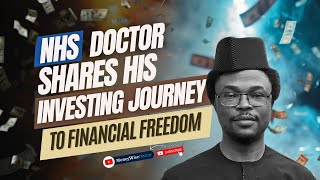
YouTube interview (Money Wise Doctor podcast) in which host Ndubuisi 'Andy' Egwim speaks with Dr. Gabriel Achinugu Omatiga, a London-based radiologist. Dr. Omatiga recounts early interest in finance, admits past investment losses (Ponzi/Forex/farm), and describes a deliberate plan begun ~18 months earlier: budgeting, cutting leakages (gym, subscriptions, transport), automating savings/investing, and increasing income (extra shifts, trading). He automates investments and saves/invests one third of earnings monthly, favours diversified index funds/ETFs for new investors, and stresses community, financial checks, and planning. The episode promotes a Money Wise Doctor Investment Masterclass (starts Sep 14) and a financial health check quiz.
Questions this video answers
September 8, 2024
One third of his earnings each month
September 14 (year implied 2024 from metadata)
83% (from the audience survey mentioned)
121 respondents (survey count mentioned)
Chapters
If I had to think about all my bills and pay them one by one, I'll lose my mind.
You'll pay for it tomorrow if you don't work today.
That is a fantastic way to think about it.
I put away one third of my earnings in savings and investment every month. Your money can actually do more for you. Your money is losing value by you just keeping it in the bank.
You need to work today so you can rest tomorrow.
Not taking risk itself is the greatest risk. As we all know, there's always going.
To be a risk. Anyone who says an investment is risk free, you should run as far as you can from that person. I love it. Have you ever lost money in an investment? I mean. 83% of the doctors now money wives, the doctor community who took our investment safety quiz have admitted to having lost money in the past either through investing in schemes that were not proper investments or not managing their risk properly. Well, today's discussion is quite fascinating. I've got a radiology doctor who has had a long journey in investing. He's a member of the Money Wife doctor community and while he's now finally charted a path for investing and managing his finances, in the past he's had a few hard knocks in investing and has shared his own financial journey with me. So if you're interested, join me on this conversation with Dr. Chimugu. He's a London based radiology doctor and an investor and he will share nuggets from his own financial journey. Lovely to have you. Let's dive right in. Welcome to Money Wise Doctor podcast. This week again is me, your host, Dr. Andy Grim. As usual, we help doctors and healthcare professionals make smarter decisions with their finances and make sure that you avoid costly mistakes with your money. Today I've got an interesting gentleman in the studio. Usually hear me talking about financial education and what you can do to make matter more, but today I've got someone who is a member of the Moneywise doctor community who has engaged with our materials, well engaged with our blogs and podcast and also has his own financial journey to share. So I want to hear from you, the audience. I don't want it to be a one way conversation, so help me make welcome to the studio Dr. Gabriel Achinugu Omatiga. Welcome Dr. Matiga.
Thank you and good morning. Thank you for having me here.
Lovely. Thank you for joining us. Just a bit about Dr. Achimogu is a radiology doctor currently working in London area but has a lot of experience in the past in terms of he's been on the personal finance journey before even he chanced upon Money wise doctor and he, as he said it to me, was it last year. This year he started making the decision to pay more attention to his finances and structure things in a way that, you know, is more, more sustainable. And it seemed like the universe aligned and brought money wise doctor his way. I mean, by money wise doctor, I mean obviously our resources online. So, yeah, I'm very pleased to have you here and I'm sure you tell us a bit more about your own experience. Okay, thank you very much.
I'm great. I mean, I'm happy to be here as well.
Lovely. All right, so let's just start from the beginning. I'll say a lot of times, doctors and healthcare professionals for yourself. You, you worked in radiology. You. Yeah, a radiology specialty doctor, and you train in radiology. So that means you've been studying a lot. You probably have done quite a few exams. So what, what got you to that point where you started thinking, well, I'm really quite interested in my finances, especially in the UK setting. What led you to that pathway?
Thank you again for having me on and it's great to have the opportunity to share my own journey so that we can all learn from it. To answer your question directly, I've always been intrigued about money and money issues. I haven't come from a not too buoyant background as well. We've had to struggle through school. You know, I come from a very large family, so my, my father had, you know, quite a lot to deal with when it came to training us and all that. So growing up, I took interest early in, in stocks because I was fascinated with what is, you know, this talk all about because my father made me read newspapers, you know.
Oh, really?
Yeah, I'll read newspapers and then I have to recount to him what I read. But there was a column in the newspaper that you see, you know, different kind of share sugar, dark communication and all. So I took interest in it quickly earlier on in my far back, as in secondary school. But all those were just learning for me. It was intriguing, but I didn't know what to make of it until I got into the university when I started making conscious effort to actually, you know, start learning about finances. I read a couple of books and one of the books that I read then was the Millionaire. What's that book again?
The Millennial Next Door?
No, not that one.
The.
The. I remember during the course of the discussion.
That's all right, so.
And it taught me, you know, how to get Money, how to keep money and how to multiply money, essentially. But life happens to us as we grow, we get in, I mean, entangled with medicine. As you know and you know, as we, you know, said yesterday, there's a bit of start, stop, start, stop. But about 18 months ago, I really made up my mind. I sat down, I said, look, I cannot embark on this journey of financial freedom unless I made deliberate effort, you know, to achieve at a destination. So I sat down and look at, and looked at what exactly do I need to do to get financially free. And then I made a couple of jottings and writings and decisions that number one, this year I'm going to make get financial knowledge.
Right.
I'm going to get financial knowledge. That was number one. I'm going to do everything I need to to increase my earnings. And the third one, and that's how it relates to money wise doctor, was I was going to deliberately make effort to look at people who have done, gone on this journey, make friends, make, increase my social capital, essentially.
Yeah.
And get involved with people who have gone on this journey. So as you know, to align myself and you know, as the universe would have it, boom, I stomped on money wise doctors. And since then my trajectory has been, you know, it has been different since, since I started listening to the podcast and reading the newsletters. Right. Because it does align with all that, you know, I've always wanted to do.
Wow, your story sounds fascinating and I can't wait to get into the meat of it. Yeah. There are a few things you've mentioned that I really like take off memories for me. Talked about looking at newspapers. I remember the column at the back.
Yeah.
When I was a teenager, I jumped by two narratives. I jumped to the back. You want to see the listings and you want to say, which is a funny way because checking your stocks daily, daily, daily is not a way to leave. Yeah. So that's very interesting. So you're really like, sort of like looking into these things. And obviously before you became, you went to uni, became a doctor, you just were learning, but you didn't really know about. They have enough resources to invest. But recently I became becoming more streamlined in terms of like, you sat down, you did the mass, and that mass. Many people don't do it. They are afraid. Sometimes we don't want to look in the mirror to check what does financial freedom really mean to us and what is the journey? What do we need to do? Because sometimes it means you might need to do some things you don't want to do like stop doing dumb things with your money or taking on debt and buying things you don't really need. Right, let's talk about that mass. So currently you are a doctor, you're a radiology doctor in London and you've sat down, you've done a bit of math to say okay, this is the journey that you need to take to get to financial freedom. Do you remember? Off, hair off, off. You know, offhand what are some of the things you are going to do? I know you mentioned financial education could be already doing like so well and you mentioned sort of being in an environment where it's normalized to try to attain financial freedom or in an environment where you can meet other people who have achieved financial freedom because environment dictates performance.
Right, absolutely.
If you're, if you're in an environment where it's not abnormal to say, you know what, I'm just going to keep my messages, my old messages. I'll drive for another five years but I'm going to invest in the stock market, I'm going to make sure I take care of my retirement and my taxes. That is sort of like if you're an environment where is normal that encourages you to do that but on your own. The other side of it. What was it from your plan other than the education and other bits? What were the nitty gritty of a plan? If you feel comfortable sharing.
Yeah, absolutely. To, to start with when I decided made that decision I knew there were a couple of things. You know there's this saying that nobody's coming to help you. I mean except you help yourself. Nobody's absolutely coming to help you. So I sat down and I look at the figures. The first thing I did was to look at my figures and what was, what was going out and where the goings out, where are they going to? Yeah, I did a bit of financial health check money wise doctors earlier last year sent out that financial health check.
Oh yeah, the quiz.
And I wasn't doing, I was doing relatively okay in the 70s but I knew I needed to do more. So yeah. So number one is what, what, what are the sources of income that I have and what are my expenditures?
Right.
And I looked at okay if I'm going to be financially viable in the, in the months and years to come.
Yeah.
I need to find a way to increase my earnings more than my expenditure. Number one.
Okay.
Find a way to end even when I'm sleeping.
Okay. Passive income.
Yeah, passive income. Find a way to increase my earnings even when I'm not There. So I started investing in stocks more than, more than I used to. I started saving more than I used to.
Okay.
And in order to increase my saving pool, yes I, I started you know, doing a bit more extra work because it's a means to an end.
Practical, practical.
They're doing more extra work to get to, to get more to invest and save. And I opened up accounts. I, I utilize the ISA as well. Unfortunately shall I say I had gone past the Lisa age bracket but there are other schools within the ISA that I could utilize as well. I started seeing actively and of course I automated my savings so that I, there's, there are no stories. Every, every week, every Monday, certain amount of money leaves my account into my savings. A certain amount leaves my account into my investment. So I, I invest, I, I, I automated my investment and of course I started doing a little bit of, of trading as well.
Okay, right, we're going to get to that. But I love, I love the systematic approach you've been, you know, you've applied. It's quite impressive. And that's also some of the things we, we preach or whether we espouse one. You, you sat down, you did the mass, you calculated it and nobody's coming. No miracle or nothing is. Maybe something great might happen. But we're going to deal with numbers here. We deal with reality. We are doctors and we deal with reality. Healthcare professionals don't hope is great but we'll deal with what we can say. So you sat down, you did the numbers say we what are my outgoings? What was my income? And you talked about how you can increase your income. We'll come to the other part, what you were going to do about your outgoings, we'll come to that. But you looked at your income. How can you generate passive income? How can you increase your active income? Because a lot of times a lot of 17 year old youtubers on tick tock are sorry tiktokers again, I'm back again to that who say oh I learned how to generate active income just living in my mother's basement and now I'm more time in the near it all happens within six months. I'm not saying that the Lamborghini they are driving is rented but in, in reality a lot of times you realize you have to use what you've got which is your skill, your ability to work as a radiologist or working radiology obviously generation come, that's your immediate skill you have. So you have to increase your ability to generate income with that. If that meant doing an extra shift, but at the major way are doing that shift is a little bit different. Okay. You're not thinking I'm doing a shift to pay a bill. You're thinking I'm doing a shift to get a bit of money to invest for my future. How does it feel when you're doing so shift.
Allow me to say this on air. You know, it feels a bit. It feels better when I know I'm actually investing this time to do extra calls in order, you know, to secure tomorrow. Because if I was telling my wife again yesterday that I need to work today in order, you know, for me to rest tomorrow, because you really need to expend the hours, otherwise you'll pay for it tomorrow if you don't work today. So I feel, you know, fulfilled each time I finish my work. And I know that whatever comes from this is going into, you know, my, my investment and my savings.
That is, that is a fantastic way to think about it. Because now you're giving a bit of purpose. You're not just going to work. You do your regular work, you obviously pay your bill, but you're thinking about, okay, yeah, this extra bit I'm doing is still the same. The same thing is going to be paid into my account, but because there's a direct plan for it and you've automated it as well. So that is one hack. If I had to think about all my bills and pay them one by one, I lose my mind because I've got like business bills, personal bills, child bills, family bills, staff bills. So basically having it all automated is one area. Then you can review it on a regular basis. There's something you mentioned which I, I found very interesting. You said you need to walk today so you can rest tomorrow. Obviously you're still quite young and, you know, vibrant and all of that. Obviously I have more hair than me, even though I've not hit my 40s. Yeah. So what, what does that mean? Rest? At what point? What does that mean? Does it mean like maybe take breaks? Or does it mean like many retirements? Or does it mean like you've got like a definite goal or age where you're thinking of hitting financial freedom?
Well, for me, what I consider rest is getting to that point where I want to do the things that I want to, that I need to do and want to do without the constraint on me sitting down, without money constraints, more or less, because there are things outside my, my vocation, outside what I, I do for a living, that I really want to do. But yeah, of course, money is a consideration. So I want to get to that point where money no longer limits me from doing the things that I need to do. When I get to that point, I think I'm approaching the so called rest, you know, that, that, that I caught. I mean that as I've defined, defined it myself.
I love it, I love it, I love it. So Basically this is 11am doing the SP podcast. By 11am on a Wednesday morning, obviously you've taken some time off work and we're able to do that because of some level of financial flexibility. I think the last time I was in the GP surgery was five months ago. So that was March. Yeah, thereabout. So being able to get that level of flexibility and obviously there are people who can go another like 50, 60 years and they are fine financially. But just your goal seems quite clear to me. You want to get to that point where you don't want to just retire and go up to the Bahamas or go up to, you know, and just go and sit on the beach, but you want to then be able to take charge of your, you know, have total control of your time and direction of what you want to do, which is amazing. Now, you might not know this or you might know you're the second radiologist I'm intervening here. So there's something happening with radiologists and second radiologist. On this podcast, I had a Dr. Ruth Machin, a radiologist who unfortunately lost her eyesight. Not, not particularly lost her eyesight, but developed some eye pain issues and couldn't practice radiology. She's recently announced that she's become a health coach, which is great. But due to that, she suddenly lost her source of income. She was fortunate enough to have an income protection plan and all that in place. But radiology is not quite an area where people think, you know, I might lose my ability to an income and all that. Do you sometimes think about that as a doctor? Not just as a radiologist, in general, as a doctor, do you sometimes wonder about the security of income, the stability? Is that a thought that has ever crossed your mind? I know you've practiced medicine in different countries. What, what has been your, your thoughts around this?
Well, as they say, life is unpredictable. I mean, you cannot predict, you cannot predict life. And, you know, just like the story of the lady you just talked about, I'm sure she didn't see it coming. So, of course, realistically, there are times I've sat down and I've thought to myself, I use my hands and my, my eyes a lot, God forbid, but what if? And there are lots of what ifs. Yeah. So there, I have to answer your question directly. I've thought of it and that is one of the reasons again why I'm putting these systems in place such that I don't. Nobody prays for these things to happen, but if they do happen, I will not leave my, my family will not be, you know, left on unattended as well as myself.
Yeah, that's very responsible and in a very practical way to look at it because obviously we are very optimistic. But also you pray for the best, but you know, you plan for the worst. So having a plan in place, whether it's investing, having your life insurance, income protection and all that in place. Okay, that's great. Now you've talked about what you're doing to try to increase your income. You've mentioned, obviously you're doing a bit of trading. We'll come to trading in a minute. But you're also doing a few extra shifts and you're looking for other sources of income. Are you doing anything to decrease the other side of the equation, your expenses, or at least keep them the same? Because some people, what happens that their expenses just grow and grow and catches up with the extra income? We'll call that lifestyle creep. I'm sure you know about that. So what are you doing to mitigate or reduce that?
Well, to start with, about 18 months ago, when I sat down, you know, to make that decision, a conscious decision, I looked at the areas that my, that I wasn't doing well, the loopholes, where my money was going, because I've always prided myself in the fact that I can account for my, my money to the last penny.
Much better than me.
Having said that, it's easier said than done. When I sat down to actually look at my books, I, I found out that, you know, there were areas that my money was, you know, escaping from that I needed to block those leakages and hence I, I, I needed to do budgeting. I, I, I had to learn the act of actively budgeting and not leaving any lose money, quote unquote, at the end of each financial month for me. So those are the things that, so from the budgeting I did, I saw the areas that, that needed blockage and I asked. I can't say I've, I've completely, you know, done away with all the leakages, but I've improved significantly from where I was 18 months ago.
Wow. I mean, of course nobody's ever going to get it tight and 100. But the effort itself and that's part of why being a part of a community where people are speaking a similar language and you know, people are thinking, look, I discovered I was spending how much on Amazon prime or Netflix and, and it's just I've not watched it in six months. What am I spending this money or sometimes people find they are subscribed to something. Yeah, they subscribe to their gym membership but they've been running or they work out at home or they never just go to the gym or sometimes you subscribe to. I've seen somebody subscribe to wine or some delivery or something and they don't really need these things in their life. So I'm very interested to know two things. If you've actually, if you remember, how much did you find you could save in a month? And are there anything that stood out for you? You found that, okay, I could get distance by how much you could save, I don't mean the total savings you can make. I mean like how much could you save if you eliminated some things? Like for me, one of the things I eliminated was car payments. I don't know. Yeah, no crime. None of our cars are. And it's not the same for everybody. I just thought about the payment and the interest. I thought now pay myself that interest. But that saved me at least maybe a few hundred quid per month and also gave me something much higher than that, than that money. Sort of the peace of mind that I'm not worried that if I need, if I don't go out and get in some income now, I'm going to have to pay for this car. But in your case, can you think of how much you could, you might have saved by doing that exercise or any specific things that you had to cut out? Hopefully not food.
Students came to mind quickly. And number one, like you or like other people, it's not that it's bad. I also registered with the gym because a part of personal development also meant that I needed to move into my.
Health.
That I was paying 28 pounds per month.
Okay.
But I discovered that, you know, in a month I probably wouldn't go to the gym. Like once if I try, I went to the gym maybe like in a space of six months, I probably went like four times. And I, I said to myself, look, and though 28 pounds is not so much, but then at the end of, if, if accumulates it adds up and that's number one. So I said 28 pounds. Then secondly I, I subscribe to this chef kit, it's called. I mean it's a shaving stick, the kind of equipment that I was paying. They were removing £40 from my account. Oh wow. Initially when I went into it it was cheap, it was about 25 but where the extra 15 to make it 40 came I, I couldn't so I did that for a couple of months and my, my wardrobe is full with you know, a stack of shaving stick that I barely finished before the end so I cut that off so I started walking to work actively my work. Fortunately I've been fortunate to have a work home distance that is limited to about 20, 25 minutes in my previous work and even in my current job. So when the weather is favorable I walk to work. I spent an average of 100, 105 pounds per month on transportation to work if I decide to take the boost.
Wow.
The 45, the 40 pounds with the shift kit and then of course the 28 pounds that I spent with the gym. So I cut all of this, all of those off and you know, now I, I do still take public transport to work but if I have to it is because it is necessary and not because you must. A distance of 20, 25 minutes I think is something that I've been able to do. Like it's understandable that not everybody will be able to do this but these are a few areas, you know and of course my broadband, my phone each, each time 12 months, the they keep coming, upgrade. I'm not going to upgrade anything. What I need, what I'm going to use, you know, I have broadband at home, I, I have broadband at work so there's really no point, you know, doing all these highfalutin. I sent myself a couple of thousands here, I mean a couple of hundreds here and there.
I love it, I love it. Look, look this I like this is just practical now because basically when we talk about taking charge of your financial future, investing a lot of people might say to me and it's all right, it's all right for you because he started investing at 18, 19 and they don't know that at the end of the day there's still a practicality to it. If my anger making if I have in, if I have 10,000, let's just say 2, 500 per month and I'm spending 35 I can predict that I will be broke. It doesn't matter what you do.
Absolutely.
This is why I've got like some consultants GPs in our sort of community and even in our one on one sessions who make, I've got someone who's making like 150k and above, but is in depth, you know, I mean before consultation he was in debt because obviously his outgoing was more and he didn't know where. So let me, let's do a bit of Math. You're saving 40 pounds per month from shaving. I. Your shaving doesn't look too bad to me. So it doesn't seem like you missed a lot. £40, that's significant saving. And you are saving. I think you are saving. Was that like from your gym, you're saving another 28 pounds? Yeah, my, mine costing me about 50 pounds. I don't know. I usually ask my office, sometimes I go to the swimming pool a few times and, and yeah, so it's like, and then you started on transport. So what you did is basically you saved. It's like, it's like a double combo. You save money in the gym but then you started working and the working is you're saving you on transportation, but you're also getting healthier. So it takes me back to when I was a junior doctor. Royal Cornwall Hospital was 38 minutes exactly from where, where I lived in Truro. So in Cornwall and I just work and walk to work and that meant I got my 40 minutes and got my 40 minutes back. Listen to a podcast. Hopefully it's money wise doctor you're listening to. Well, it didn't exist at that point. Yeah, but, but it's so impressive because by doing that you're saving a minimum of £173 in a month. That's a minimum. And in a year that could easily give you over £2,000, 20, 76 pounds which you can then sort of like invest or save or do whatever you want. But it's not even about that amount because somebody might say £2,000 wouldn't make me financially free. But if you think about it over, over the years and then if you think about the compounding what that, what that mindset does to you, because somebody who is saving that amount, you're less likely to get into unnecessary depth. Like you talked about your broadband. They're just calling you, they offer you this, they'll find you that. And thinking, look, I have broadband, I'm doing okay. Why do I need to upgrade? Why do I need to be very fast? Am I uploading any, you know, any extra formulas for making, you know. Yeah, so that's very impressive. Right, so that's a practical aspect and that's a practical way to look at it. Now you've, you've started investing in the stock market at an early age, from what, what you're saying, you studied the stock market. Instead of going into that direction, we're going to look into that a little bit. But first of all, let's look at the aspect of how much a doctor needs to be investing. Because a lot of times we find that people either under investing or over investing or don't even know how much they would they need to be investing. And because you've automated it, you're being systematic about it. There are a lot of people who hear from their friends or they hear the news, financial news, say, oh, the market is crashing, then they sell. Or oh, there's more opportunity to buy, then they buy. Or they think, oh, stocks are going up, then they buy, which is a massive mistake. And then when it's going down, they're selling. So because of that, there's no system in place. They don't know how much they need to be investing, the goals or whatever. From your point, I know you mentioned automated, what, what sort of approach do you take to it? Do you have a specific amount? Is it a percentage of your income? Or do you just sort of like wing it and go, go about whenever there's opportunities?
Okay, I, I, I, I used to wing it, I used to wing it. But of late I think I've started taking specific approaches to, to, to these things because you can't predict the, and if you try to predict the market, you might get burnt. So what I, what I do, there's a specific amount which I started doing since 18 months now of my, cumulatively, I, I should say that I, I put away a third of my earnings both in savings and investment.
Wow.
That one third of my earnings in savings and investment every month. So that's what I do. And then with the investment is automated, so it just goes out of my account, you know, every Monday. Like two days ago, water needed to be invested, had gone out. Invested. Yeah. So that's, that's what I do on a monthly, weekly basis.
I love it, I love it. Just because if, if it's automated and then you don't have to make that decision, the money is gone out, it's gonna be invested. You can't leave things to Charles. It's gonna be invested anyway. Yeah, but you didn't want third. That's more than most people, I think. There's a recent survey that found that the average adult in the UK didn't have up to a thousand pounds. A very high crazy number. And you start thinking about people who have low Incomes are not working. But no, it turns out that some of those are also people who are, you know, working and they are doing, you know, every stuff, but they're not saving. Habit. So well done. Kudos on you to be able to put aside 30, what you usually say from the money wise doctor rules. So there are these 10 money wise doctor rules I came up. They're not as good as the ten Commandments given to Moses, but they're like a general framework. If you're a doctor, you're not sure where to start. We're going to put it on the Link. Usually those 10 rules, you can just focus on those 10 things. You don't have to know everything. You don't have to, you know, be a guru or anything like that. I don't even believe any, anybody out there is a guru in the stock market. But if you understand those 10 things about your taxes, about your finances, investment, and one of those rules is about investing at least 15 to 20%. I tend to say 20 for doctors because most doctors, usually by the time you start earning, you're already in your mid to late 20s. And then you don't, you don't hit your maximum earning capacity till you are Maybe in your 30s, mid-30s, or sometimes a bit further for people who later become JPs or consultant. So you, you, if you invest in, you can't afford to invest. Like the general population, most financial advisors would say invest 15 and we tend to say no. If you can do 20, why? Because you can afford it. If you're earning a bit of a higher income as a doctor, you can afford to put aside 20 and your lifestyle will not massively change. But you've actually taken it to the new level. You're doing 30, 33, which is brilliant. And that takes me to something I've, I've had and was that an AE consultant and if a pediatric consultant, these two people, and I don't know if it's a gender thing, maybe I might be wrong. I don't have a large enough sample, but we've dealt with thousands of doctors but this way, like female consultants, and they had this massive saving rate. Some of them are saving like 50%, you know, but they weren't investing at all. So what is wrong with that? What is wrong with just saving? Why don't I, why can't I just save my money or put it under the mattress with tamiya, it's Italian. What's gonna happen?
There's this concept of the, the real value of money that, you know, the real Value of money that if you keep money. The value of ten pounds, for instance, yesterday.
Yeah.
Is not the value of ten pounds today. And, and most of these banks, I mean, the highest I've seen in the UK is probably 5.4% returns on your, on your money if you decide to put in certain specific accounts.
Yeah.
So a 10, a 5% on a £1,000, for instance, probably bring you maybe 50 or 500. I can't do the maths now, over a year. So inflation is a big problem. So if you keep your money 1000 in the bank over a period of one year, you have already lost, you know, depending on where you're living and depending on what denomination your currency is in, there are certain places that We've lost over 23:30, inflation and all that. So it is not bad. I feel kudos to people who can save that much. But of course your money can actually do more for you. If I are losing. Your money is losing value by you just keeping it in the bank alternatively, when you can actually put it in certain other vehicles that can multiply and at least hedge against inflation.
Yeah, that is, that is a, that's a, that's a great way to summarize it because this is the word most of us, we, you know, inflation, that's what most people don't think about is the hidden tax you're paying. If you, even if there was no tax or you think you've paid your income tax, there's also a tax on the future money, inflation. So the amount of money you have right now in the bank is going to be ultimately be worthless. Not worthless, not absolutely useless, but it's going to be worth a bit less in the future. That's why what £10 could buy even just five, six years ago, it can buy the same thing now. And you mentioned an aspect I don't even, I don't even know where to start from. Devaluation currencies like some of us have invested in different countries. I'm originally in Nigeria and so are you. The naira as a currency getting devalued and all that. I had to battle with that as a, as a master student. When I moved to the uk, I had income. The same with you as well. You did your masters here as well. You know, sort of like dealing with that and that. That takes me to a nice segue. I said, you came to the UK as a student just like as I.
I did initially, yes.
Initially, yes. Initially came to do your Masters.
Yes.
And, and then you stayed on, obviously. You got your medical license, you're already a doctor by then anyway.
Yes, I had qualified back home as a radiologist and then I took two years to come do a master's in biomedical engineering. I got a job here, but I felt, you know, I needed to go back and consolidate on certain issues. Went back home, did two years back home as a consultant radiologist before relocating back to the uk. Wow.
I'll say you've studied quite a bit. How, how did it feel like then, as a master? How did you sustain? Were you on a scholarship? How did you manage your finances and all that?
Well, good enough. I, I must say that I have good home support here in the uk, which is one. But more importantly, if I had not planned for the rainy day, I would have been in, in trouble. As a resident doctor, I saved a lot and I had a couple of investments here and there, even though I sank some in the sink in the waters as, as most of us did back then, because. No, I listened to your last podcast with, with the gp. Yeah, you did tell her that, you know, that was her school fee, that she paid my own fair share of my school.
Yeah. Dr. Honor. Yeah, yeah. So from what, what you're saying, just for the viewers, in case they don't understand that you, you, you lost some money in investment. Most people don't talk about it, but if you come close, I'll share a little secret with you. We're just about to round up a survey ahead of our investment workshop that is coming up and our survey. So people on the waiting list had to do a survey. 83% of, of the medics, doctors, healthcare professionals that took the survey, 83 had lost money in the past, 83 admitted to losing money in investment and I'm suspecting it might be more, but 83 now, this is over 100 people have done that survey. 121 now admit to having lost money. So you're not in the minority. But, but I, I want to understand how you lost that money because basically if you share your experience, other people can also avoided. Sir, how did that happen?
Oh, well, I, I, I think I knew that it was Ponzi scheme, so, but, but I, I, and I went into it, you know, with my food chest, as they say. And you know, that was one, one avenue that I lost. I went, I, I think I did the mma. That's what I was trying to get help at the time because I was trying to raise money again for my masters in the uk. So I got into those, you know, quick, quick which, which again, the, the shortest route is the longest one. Exactly.
It's a straight line.
So anytime you try to circumvent it, you always end up getting bonds. But then genuinely, people still do lose money, genuinely. Even investment. And that's what we. We. I started a farm at some point. I started investing with some friends in, in Forex. I did lose money in those areas. Those were genuine investment platforms, but I still lost money. So. But those were, you know, learning points for me to get to where I am today. Because we're all we are, a sum total of our experiences coming, you know, to this point here.
Absolutely love it. I know I, I lost the farm in the past as well. I moved to the uk, my farm manager ran it down, I was no longer there and suddenly the farm that was generating fee cash flow, suddenly, it was a fish farm, suddenly needed me to, to put in money and I was, I couldn't afford to do that. So at that point, this was over ten years ago. About, about nine years ago. Yeah. But thank you for sharing that bit with us because a lot of people make it look like, oh, they've had a really perfect, you know, investing journey and nobody really does. And a lot of time, even the best investors in the world were Warren Buffett, who obviously inspired me quite a bit. He's had some investments too that didn't work out too well. So that's, that's very interesting. Yeah. So now going back again to sort of investing because a lot of time people get scared. Doctors, nurses, healthcare professionals, we deal with risk, we deal with blood, we deal with life and death situation. But I've never really seen. What's a word that scares medics so much. I mean, once they hear investing, there's tachycardia, their heart rate goes up, you know, there's a dilation of the eyeballs and, you know, everything just gets, you know, like. No, no, no, no, no. Either because they've lost money in the past or they know somebody that has lost money, or there's a news of somebody that has lost money in an investment, which is not always an investment, as we know. So. So I'm going to go into a little bit about investment the next few minutes that we have left. But one thing I wanted to paint was an analogy. You said people lose money in legitimate investments. Yeah. And if they are managing their risk well, they could lose money and it's a permanent loss, obviously, if they finally sell in the stock market. But if you hold on to the stock and the stocks eventually recover, you're going to be fine. But that doesn't necessarily mean you should hold on to the stock because the stock might be dying. So having a good risk management approach is really important. But there's an analogy I shared in the group. I said that if you're doing a legitimate investment, like your businesses that you did or invested in a good company, did an analysis, you didn't know the company had a fraudulent management or something happened. It's like you're in a boxing match, right? In investing, you're in a boxing match, got two eyes, I've got two feet. We're just boxing. And there's a bit of a fair chance. So even if you, let's say invested in a company and then they had competitors who ate their lunch and they went out of business, so it's like a fair boxing match, okay? Now if you invest in a scheme that claims to be an investment, but there's no clear pathway for it to invest money, is it like being in a mixed martial arts, you know, like ufc, you're fighting with a very highly skilled fighter who is also a dirty fighter who is ready to use any sort of like dirty unallowed tricks to bring it down and might even have like a hidden like weapon in their hand. And you, you've got your hands behind your back, I tied behind your back one hand, that you've got one hand and then you're blinding in one eye. That's why it's like. So while in a u, in a boxing match or even in a fair UFC fight, you might win or you might lose, but there's a fair chance. And you can reduce your risk by training, being smarter, you know, understanding when to quit and when to, you know, tap. When it comes to schemes like the one you mentioned. And it seems like so many people lost money in all sorts of schemes. I told you 83. But the other, the other number in the survey said 100 of everybody wanted to invest for the long term. So long term, everybody has a long term approach, but somehow 82, 83 had lost money in short term approaches. So that's the analogy I give in terms of investment, that there's always going to be a risk. Anyone who says an investment is risk free, you should run as far as you can from that person. They're either not being honest or they are not being. They're either not being honest or they're a bit ignorant of risk and they don't understand. So what will you say to an average medics, colleagues who wants to invest? They Know already that saving, there's inflation. Saving is important, but it's not enough. But they are really afraid. What would you say? Where can they start from?
Okay, well, first off, for somebody who wants to go into, into investment, they need to start, start by doing their financial checks. First off, because you need to know where you are. That's the first place where you are and where you want to get to.
Exactly.
If you know where you are and what you get to, you can now plan, start planning on what you need to do to. Yeah, to where you need to get to. I mean, not taking risk itself is the greatest risk. As we all know. Human beings, you know, can, can engage in. And as I often say to myself, yes, I've lost money in investment, but the, my gains in investment have outweighed whatever I've, you know, lost in investment. So. And nobody's going to need to save you. So you need to start today. So know where you are, where you're getting to any house. And then you start planning. Short term, what do I want? Yeah, medium term, what do I want? And long term, what do I want? So if you, if you put those three things in perspective, you'll be able to say, okay, why am I investing short term? Okay, my. Maybe I want to buy a kind of next, I want to buy a car outrightly in the next two years and this is what I need. You can start to put money away, whether in savings or investment, you know, that can generate an income for that period. Then five years. My child is probably going to start going to the university. I cannot be paying out of pocket. You know, I need to invest something that would grow and meet the need at that point, 20 years from now, I need to retire and live a life that is not less than my quality of life currently. What do I need to put away now in order to be able to achieve that in 20 years? So that's what I would say. Sit down first. Know where you are and where you, where you need to get to. And the in betweens will now start adding up by, you know, logging on to, I mean, listening to podcasts like this, you know, materials and, you know, help and get. Being in the community. Community like this, you know.
Yeah.
You know, that helps you to see people who are doing the things you want to do that would also encourage you to do similar things.
This bit already, I'll say is a podcast, Alison. There's a lot of nuggets in there, sort of like understanding where you are, where you need to be on the distance you mentioned in the financial health check and if you're listening you can check in the descriptions. We're going to pop it in the screen as well but in the descriptions you can head over to the website. So the financial health check to check yourself in terms of where are you, what do you need to do? Because most people don't know where to start. So put that together. As I said, it's a quiz basically. Basically we gamified it that you can go through your savings, your investment, your taxes, your, those different aspects, financial protection to see where the gaps are. So put the link in the description. You can do it. Obviously you've done it and it was very illuminating as you say. Well, thank you so much. That's a lot of, a lot of insight there. Before we go because we've got, I know you've got to, you've got, you've got, you've got an engagement next. If not we could end up talking for a few hours. Yeah. Before we go, if you're in the audience, if you're, if you're enjoying what you're listening to, if you've got questions, if you want comments or you want to share your own experience of, of investing or losing money or making money or you agree or disagree, pop it in the comments. And if you want Dr. Chimugu to come back because I've had quite interesting discussions with radiologists, maybe I should invite more radiologists. But the last one was a JP and she was great. So tell us in the comments and, and yeah, we'll probably, you know, reply or reach out to you. Yeah. But before we go now, let's talk a bit about investment. As you know, we've got the investment master class coming up in September which is, is massive really. I didn't expect that many people to show interest but now the, the waiting list has blown up. It's like four times the number we can accommodate but we're only going to do like 20 to 30 people because want to keep it as small and as intimate. It's going to be one day, you know, through the investment workshop and then four weeks follow up reviews. And obviously for those who are not in the premium community, we also give them that 12 weeks support so that they're in there now. Why we started that is because most people, unlike you, when they think about investing they don't really, they mean what does this practically mean? Where do I start from? What style of investing? They don't even understand like analysis or you know, index fund. So if you were to Speak to somebody who is just starting out to invest and they don't really understand these things. Where would you say they should start from? You've given us a why but practically where should they start from? You've mentioned obviously financial education. Let's say they've done all that. So where. And I'm not expecting you to tell them what to buy but basically if you had to talk to your younger self to say okay, I want to invest, what does that mean practically?
Well for me, if I were to talk to my younger self I would have started investing in. I don't know if they, of course they would have existed at the time index funds, the ETFs is what. What I would readily go into one because you can do it passively and not be involved and then you can do your other work. I don't have to be engaged in the headaches of trying to analyze the market order because business compound over the years. So if you. I would, I would say start with, with index funds and these things, you know, rather than pick one stock, they have to do a lot of analysis. You can actually pick from the whole lot. The pool, you know a pool that has so many of the. Maybe a hundred or depending on where you are. I do some of the FFTs 100 in the UK. Oh, oh, Footsie Hundred in the UK. I do the, the S P 500 in the US it depends on what you want. But get, I mean the first thing is get started because oftentimes people want to under procrastinate get started and get on the ETFs, get on the index fund to start with and you'll be glad you did in 12 months time.
That's interesting. Yeah. And like you, by the time I started investing there was no information about index fund. I didn't even have access to them. So I'd invested in individual stocks for more than 10 years before I got to a point where I think it was more like 15 years before I got to the point where I, I could assess index funds and all that. But by then I was already so set in my ways until I had a baby. Then I realized look, you need to de risk the situation. Now you've got a child, you've done all right for the last 15 years and that's fine. But now you need to be more risk. So I'm going to agree with that. A lot of times if you're an investor, you're just starting out, you don't know where to start. Rather than procrastinate and think you need to know everything. I'll say, first of all, you could start with just a little amount in the first instance to learn from and then look at things like broad based diversified index for funds. A lot of times people over stress index fund, they say, oh, you've got to buy the whole world. Sometimes just getting a broad enough index fund like I like s and P500 simply because it's easy to track. It's been tracked for multiple years. It's been shown to be 99 of active traders, professional managers for more than, you know, for decades. It beat them consistently. Yeah, but some people also say, yeah, I buy the global index, which is fine. I mean diversification at the end of the day, you have to think about it from a risk approach, my approach for many, many years, I've never held more than six to 10 stocks at a time. Ten is too many. Six is usually what it is. But also I do quite a bit of work. I'm attending investors call. I don't know if you, if you followed my podcast, I wasn't sure that meeting, you know, my earlier in the year and I don't expect an average doctor who is not crazy about stuff like this to go and do that. I've got friends who do this and they're happy. They will say, oh, this company, oh, this is their competition or they're increasing their, you know, you know, they're, they're spending this area, they've raised money and all that. But most people don't really need to go and read company reports and filings and, and all that. So if you buy an index fund and you automate it in a way, it takes away a lot of guesswork for you and makes it a bit simple and easy. So you probably not get, get the best results in the market or you beat 99 of active traders. Wow. So that, that's, it's a very lovely discussion. I've enjoyed chatting with you. Obviously your experience. Would you even touch anything about you being a radiologist, the work you do and all that? Because we've talked about finance. But just before I let you go, is there something you want to share? Let's say someone back home or listening anywhere, they're in the gym or they're walking to work. Work, they're doing their own work to work. Is there something you like to share with them or any last parting words?
Oh yeah. My, my, my parting word on this occasion is just to say that every, the journey of a, of a thousand miles, as they say, always begins With a step. If you take that step today, get a community of people who are like minded like the money wise doctors community. Learn a lot because I've learned quite a lot. In fact like you said, I, I, I'm trying to learn from this community how to mitigate the risk, you know, because I've also, you know, I dove into the waters and doing a lot of investment here and there but I'm narrowing down from the things I'm learning on the group and so please get started. Get a community of people of like minds who are doing the things you want to do. Ask questions as often as you, you can. And, and I'm glad that we have you to run to each time we one or two things in the, in the, in the group chat, you know, somebody's always there to respond. So take that step today and for, for, for, for, for a bright future.
All right. That's very high praise from you and I really appreciate that. Obviously from an experienced investor like you, you're not totally nervous and a lot of people in the group are actually quite nuanced and we've got people who are like you, who got an experience, you've had some experience in the past and then people midway. So it's very nice to know that you're still getting quite a bit of value in the group and yeah. So if you want to join the Moneywise doctor community we send out invitations based on who's already in the newsletter. So based on your engagement in the newsletter you could be invited to join. Unfortunately you can't join directly. So if you, if you're not subscribed to the newsletter, head over to moneywisedoctor.com subscribe. We'll send a weekly newsletter. We'll give insights into what's going on. Sometimes we talk about the tax changes, anything changes in the, you know, one of the newsletters about how to claim back your taxes and we put out a video. A lot of it was very popular ISAs and all of that stuff love so is a is I, I think I'm getting from it as well. Even though I studied it, I'm getting from being able to share and learn from everybody. So it's an amazing community and thank you so much Dr. Chimugu. It's been a blast. It's a treat and I hope hopefully in the future might be able to grab you back and talk a bit more. Okay.
Delighted. Thank you very much for having me on.
All right Chess. Now if you're listening back at home and you're not too sure where to start. We've got an Investment Master class that's going to start on September 14th. You can't join Investment Master Class without being on the waiting list. So there's a waiting list already and it's already oversubscribed but we might be able to open some more slots. So if you want to join the Investment Master class, that's a for what you need to do is today a quiz. The quiz is an investment safety score to tell your investment safety score and let you know what areas you might be blindsided where you might be struggling. If you get on that waiting list then we could send you an invitation to join the class. And if you are looking at this after September 14th when the class has already started, head over to moneywisedoctor.com subscribe and be able to notify you in the future of any other opportunities that have come up. All right. And thank you for joining us and hopefully be back again next week with another video. Bye bye.







