Side Hustles for Doctors: NHS Consultant Reveals his Youtube channel
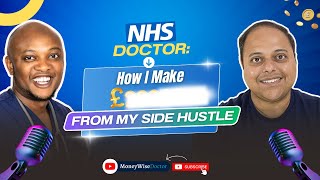
Dr. Suman Paul, an NHS respiratory registrar trained in India, built a YouTube channel for IMG doctors during COVID and grew it to 14k subscribers in three years. He makes minimal money from YouTube ads but earns significantly through brand sponsorships, mostly from finance companies targeting his audience of international medical graduates navigating UK visas and careers.
Chapters
So one of your revenue strategies, obviously, YouTube platform pay, how is that? Is that enough to justify the amount of effort you put in or.
We can't be saying the rubbish. We have to be very legitimate, otherwise we won't get sponsorship. And that's probably a reason that I still wanted to learn new skills.
What's the typical charge? Or does the brand just tell you what they are going to pay? Do you have like a charge rate or try to build in a framework somehow to gain some revenue and it doesn't have to be like selling courses or. There are so many ways to.
But anybody who knows the framework, like you, you will be able to make it out that what this person is doing.
Yeah. Hello. Hello. Welcome back to Moneywise Dr. Channel. Here we talk about how healthcare professionals, doctors, dentists, nurses and obviously other healthcare professionals can make the best financial decisions. I'll also do other things like bringing in doctors who are out there doing interesting things. So today I've got a bit of a surprise for you. I'm being joined by an interesting gentleman, Dr. Suman Paul, who is a respiratory, I think I can say a respiratory registrar, about to become a consultant actually. But he does more than that. He runs a YouTube channel called Suman Paul where he shares good, useful insights for IMG doctors. And recently he has also been talking about finance and investing. So you're welcome, Dr. Powell.
Thank you, Andy, thank you for having me and inviting me for your talk show and it's a pleasure to be on the show because you and me, we, we had a brief chat before starting the show today and we, we share the same passion, so.
Excellent.
We are passionate about finance, financial independence and taking control of our money. So it's a pleasure to be on this show today.
Welcome. I. I start by apologizing because I don't know if I've pron. Name correctly, but hopefully you can introduce yourself properly. I know you are ST7, almost a consultant, actually, and that takes a lot of hard work and for you to combine it to what you're doing with your YouTube channel is very impressive. Can you give us a proper introduction of yourself and how you started what you're doing?
Yeah, I think I'll use this opportunity to practice for my consultant interviews, give a brief introduction about myself.
Let's do that.
So I'm a ST7 respiratory and general medicine trainee in Liverpool Merseyside region of the northwest of England. So this is actually my last month of training and I actually received my ERCP outcome today, this afternoon. Oh, wow. So I'm fired up now.
I should be celebrating. I didn't. I should have brought like the drink to celebrate.
Yeah, so. So my full time job is as a registrar and I've been through the this pathway for last five years because I started training. So it used to be 5 years st32 st7 and that's my full time job. So I'm a full time doctor who does few other hustles and YouTube is one of my longest learning hustle.
Right.
That's been going on for more than three years now. Apart from that, I actually came from India to uk.
I just want to take a minute to thank you for what you've done. Yes. You watching this channel now? Let me tell you what it is. So this channel has grown at amazing rate. It has grown at an amazing rate from 0 to over 1400 subscribers just within 4 months of launching it. Now this is beyond my wildest imagination and when we launched a few months ago, I thought it might take us a couple of years, maybe three years to even cross the 1000 mark. So thank you. However, something really fascinating has come to my notice and I thought I should share it with you. I've come to see from our YouTube analytics, from our numbers from the back end, that 70% of you who watch this channel regularly and listen to the Money Wife Doctor podcast are yet to hit that subscribe button, that precious subscribe button on our YouTube channel. You see, when I first made this call a few weeks ago, it was about 75%. So thanks to you, the number has dropped from 75 to 70 just over the past few weeks. And I'm grateful. Well, our target is to get to 50%. If you can get 50% of the regular watchers subscribe, that would be fantastic. And I want to speak to the other 70% while I thank the 30% who have already subscribed to the other 70%. My question is, why haven't you subscribed? Tell me in the comments. And if you like what you're watching right now, please can you hit the subscribe button? Go ahead, smash the subscribe button. So thank you for watching. And now let's jump back to this episode.
So I did my basic training in India. They came here. So that's one of the reason that I started this YouTube channel, because I share my experience. As simple as that. That's the easiest thing to do, talk about yourself because you don't need to do a lot of research. Yes, and you will agree now because you have started your YouTube Chann channel as well.
Yes.
So, yeah, so that's, that's what I am.
That is, that is brilliant. That is amazing. I mean I like, I like your story. You've come to the uk, you've come from India after doing your basic training, you did your medical training, your basic training, then it's obvious you've gone in at MRCP level. Like you started in an Mr. Speak because you did five years. So that tells me you've gone to MRC level. Yeah. You mentioned something about talking about yourself, obviously. Is it easier? I can't start telling people about how to build a multi billion dollar tech company because I haven't built a multi billion tech company. But I could talk about investing and getting financial freedom and all of that, or working as a doctor and investing. So could you tell me a bit more, what inspired you to start producing videos? I mean for other people? You've got, you've got 13, 000, is it 14, 000 raving funds?
14 and a half, yeah.
14 in three years. That's quite a major feat. So what, what led you to that angle? Were you already in YouTube or social media or had you done any bit of camera work in the past? Most doctors shy away from things like this.
Yes. So Andy, I started my channel at the peak of the COVID epidemic and at that point in time, of course with doctors we are always. Our lifestyle didn't change a lot. We were doing our hospital job and everything, but people were hooked onto online videos and any content creator around that time. They kind of really blown out at that point and of course we were always looking at making some extra income and I think there was a data that came out, I heard recently in one of the videos that if you are real rich, maybe millionaires, you need around seven sources of income. So some kind of survey of amongst millionaires. So, so the idea was to develop a new source of income and just to try out different things. So I just did a video on my phone. Really simple and really bad video on your phone.
So you didn't need to buy any new.
No, no, nothing, Nothing. So. And eventually for two, three months nothing happened. But suddenly that video started getting views. It wasn't a good video but eventually it ended up like more than 50,000 view in a matter of one and a half year. So when I saw that, so when I saw that I am getting views, so then I started doing regular videos and even with the job at that point it was. We are, we are a small family, just me and my wife. So you could get Some time over the weekend, despite having your on call and everything, you could probably use videos. Maybe you'll miss every five, six weeks, maybe you'll miss one or two weeks, which is not ideal for a YouTube career. But it was still okay. So. And it took me around exactly one year to get monetized. So 1,000 subscriber and 4,000 years.
I think you've done a good job, Powell. Yeah. Give yourself some credit.
So consistency is the first thing. If you put out bad videos every week, people will watch your videos. You can be. This is a guarantee. That's how the system works. The next thing is you have to learn about the idea of catching people's attention. Now, I didn't know about this, but the reason I know about this is my first brand sponsorship. The brand sent me a kind of a flowchart that if you have to do a video, you have to do it in this content. This is the format. So hook a hook introduction, then talking about the product and then call to action. So this is a rough idea. So you know this generation.
Yes.
Their attention span is less than that of a goals fit goldfish. So less than eight seconds. So you, you, you have eight, seven to eight seconds to hook a person in, in your video. If you can't do that in first, seven to eight second, they are gone. So yeah, you can have the best video in the world, but nobody's watching it. So they have scored past your video.
Absolutely. There's only like 25 and above and maybe the oldest, maybe 60. And when you see that hook is really quite important. And, but because I've come to. Before I started content creation as in video, because I've, I've blogged, I've done copywriting, I've sold things online. I've, you know, I've already. Can you tell me a bit more in terms of the audience, how they find you and the sort of people that find their channel and what they are usually out looking for.
Yeah. So this is something that from my experience, I can share with anybody who's planning on doing any, any social media content. Instagram, YouTube. The first thing is you need consistency. Now, I'm not consistent, but if you are serious about it, you should be consistent because you will get rewarded by the algorithm.
I think you're pretty consistent. When I look at your video, I knew that if you were writing, you need a headline, you need a hook. You needed all that.
Yeah.
Obviously that helped me when I was transferring to video, but it's not exactly the same. So how did you learn how to study all those hooks and sort of like carry on. Did you have to do a training or course or you just kept watching on YouTube and learning or self taught.
Self taught and watching on YouTube. So I have my favorite YouTuber. There are people I, I follow and there are people like coffee as well. Okay.
So.
They'Re not, not, they're, they're not, not doctors. The people I copied, they're not doctors. So my viewers would probably not be watching those videos. So they're completely different on their completely different format. But you, you learn from people, you learn from other people. Of course there is a way of attending training, there are courses, you can spend your money, but I have never done that. The reason is the way I think about YouTube is any money that comes from YouTube goes to YouTube. I never spend my salary money on YouTube. I've never done that in three years. So not a single pound of my salary has gone to YouTube. So I don't pay for video editors. I know if my videos will be better if I pay for it, but I don't do it. It's a principle that I follow. That money as I earned from salary that goes to my household, money that comes from YouTube goes to YouTube.
This is, this is, I love it. Because basically you have a plan, you have a clear strategy. Because the problem is when people approach content and they're thinking they want to get results, but they don't have a clear plan. Your clear plan is that I make money from my regular work is going to go into my household, it's going to go into my investing for my future. But if I get money from YouTube then I can use it to improve the YouTube video. And it's gotten you to 14,000 subscribers. Many people give up before they hit a thousand subscribers. I think we hit our first thousand subscribers in the first three months, but it felt really hard. And also just hitting the first 1,000 subscribers is not enough. Hitting that 4,000 hours. But, but that takes me to something. I don't know if we're friends on LinkedIn and you see there's a framework that I developed, I promote, I think that content creators should use because not everyone might be get to where I mean you got to monetization in one year. Some people never get monetization. And I tend to, I tend to talk about the Neuro framework. So I tend to suggest that medical content creators should not wait till they get the views. And we've discussed elements of it before in the past, before I actually developed it into a Full framework. I can tell you about it and then tell me what you think about it as an experienced YouTuber because you've got three years experience now and you're still in the game.
Name.
How does that sound?
Yeah. God.
Right, this neural framework, it looks at like neuro N, E, U, R, O. I know, I know. You are a pulmonologist, you're a chest physician. And as you know, I'm a gp, so I'm not going to go into neuro at all. I'm talking, it's just an acronym. So neuro N is for niche. So you find your niche, you find your 1000 true fans. You're not chasing everybody, you're not trying to be on Tick tock to get attention from everybody. And it can be on tick tock, but you know who your niche is. That small niche or even a big niche is more important and more powerful to build than going after everyone. And I think you've applied it to your channel as well. You've got a niche. You're targeting doctors, usually IMGs and all that, especially IMGs that have come from India like you as well. So that's niche. And so E is looking at external sort of like sources of income rather than platform income. Because basically YouTube is quite a grind, isn't it? Lots of people never get to monetization. And if even if you get monetization, you still need to keep pumping out things. And then there's the U. U is your unfair advantage. In your own case, Dr. Suman, you've got an unfair advantage. You, you, an IMG, you've worked in two countries, you're about to become a consultant. So you know what you're talking about. You've not written plab or you've written plab. You know, mrocp. Someone who has not passed through this process does not stand a chance. You will not be able to connect with your audience. And then there's R. So R is basically thinking about revenue strategy. So things like, how am I going to make money? I understand your channel, I've looked at your channel because I look at some creators, they've got like 20,000, 30,000, 40,000, 50,000 and they don't have this framework in place. And then they complain about not making any serious money. But I looked at your channel, you've got a clear understanding. So that revenue strategy is thinking about other sources of revenue. So I mean, I know it sounds like the E, but the E is actually email list, building an email list because that is also part of the Revenue strategy and then O is other, other avenues, like collaborations, just like what we're doing now. So, so what do you think of that framework? How are you applying? I'm sure it has something similar. You're not depending on the on platform income from YouTube?
No, but I, I really love your framework because I think it, in short, it covers the whole strategy of YouTube that anybody should have.
You see, I've not come to it because of I'm a YouTuber. I've come to you because I'm an audience entrepreneur and run a business.
Right.
But. But it seems to me like you're applying some of it already.
Yeah, and, and running a YouTube like is like a business. If you are in YouTube for money, then it's like running a business. And, and this is the perfect framework because I know it now from experience. When I started my first video, I had no idea about this.
Yes.
But now, three years down the line, R is becoming very important to me and a lot of strategies and things that have been following six months to one year. R is a very big part of that. I mean it's not very evident. But anybody who knows the framework, like you, you will be able to make it out that what this person is doing.
What I love about you each time we chat is your honesty. Because I see some doctors and healthcare professionals creating content and it's a little hard to make headway when there's. It's not that they're not honest, but they say, oh, I'm just making the content to help people to put the information out there. Then behind the scenes they're complaining that they're not making any money from it. But if you're honest about what you want to do, you're providing value. You deserve to get some. I mean, lots of people watch your videos. It clears their confusion. Just like lots of people watch our videos On Money Wise Dr. A recent video, we had like almost 700 people who. It was watched by about 1500 people, but about 700 people used it to claim back taxes. And at least 4 or 5 within 24 hours emailed me or sent me a message to claim that. To say they claimed up to £10,000 in taxes. Tax relief, basically. So your, your videos as well. Imagine someone sitting in India or in Pakistan or even Niger anywhere in the world and they are thinking, can I move to uk? Can I really? I mean, do I have to do plab? And then there's this gentleman on the screen telling them step by step, so you're providing value. And I think It's a good idea to figure out how to, to get paid because if you get paid then you, you, you'll be able to justify it in my case to my board of directors. Ask my wife and my toddler. I have to explain to them why I'm spending so much time looking in front of cameras. What do you think about that?
Yeah, because like you mentioned that a lot of YouTubers or social media personality, they are not very upfront about what they look, what they're looking to gain out of it. And I have seen people, doctors, IMG doctors who always portrayed that they are helping out people, they want to help other people. They are not in the game anymore. The reason is the amount of hard work it needs. If you are not getting something out of it, you can't continue.
Yeah.
So you need to have that revenue plan at the back end because otherwise you can't continue. This is not a one year, six months, two year game. You just have to keep going. So you just, you, you don't need to just wait for a 1 million subscriber and become a millionaire. No, at even a 5,000 subscriber, you need to figure out how to get that 30 pound a month to pay off your broadband bills. So that's how you think about it.
Absolutely.
And only then you can last 10 years. Because the people who have gone to 1 million, they have not been there in two years. So they have spent spend five years, seven years, 10 years. So you need, you need a plan, you need a plan to justify why you are spending this time.
Yes. Especially as a doctor, your time is really valuable, isn't it? Like we see people like Ali Abdaal who has a big YouTube following over 5 million now, but he started this like seven years, eight years ago. And now as you go higher in your job, like you become a consultant, probably if you were to be looking or doing something, at least your time should be worth at least 150 pounds per hour or whatever it is consultants charge for. Look, and even if you didn't look me, spend the time with your family arrested. So the amount of time invested into coming up with a title, you know, when people look at it from far looks that simple. But you know now having done so many videos and you've had videos that have hit 50,000, 70,000 views, you know the amount of sheer hard work that goes into it. So what I tend to suggest is if you are going to do that hard work, and I agree with you, try to build in a framework somehow to gain some Revenue and it doesn't have to be like selling courses or things. There are so many ways. Can I, can we apply that neuro framework? Let's look at your. There's something I call neuroimaging that I do for medical content creators, especially those of them that are trying to apply the framework. So we do this neuroimaging, look at how we can actually apply. So we'll go to your station now and if you are watching this, you definitely want to check out Paul Suman. So it's Paul, but it sounds like Paul Suman. You want to check out his channel. It's really, really fantastic channel for doctors, healthcare professionals, particularly if you're an IMG doctor. He has some really, really useful insights there. Both career finance and many things. But, but let's look at the channel now. We'll start with the neural framework. And niche was your niche. What niche are you targeting?
So the niche was Indian doctors who are planning to come to the uk.
Okay. But now they are in the uk.
There is the uk. So slowly it expanded. So that was the initial group and then I started making videos. Of course some of them are in UK now.
Yeah.
So they will have other, other interest. They will have other problem. Burning problems.
Yes.
How to apply for a visa. How to apply for your natural naturalization.
How to bring a relation. How to bring a relative to visit.
Exactly. How to bring your parents to uk. Apply for a visitor visa.
How to buy your first house.
Yes. That's part of the finance niche as well. Yeah. But when I started making the video, I didn't have any long term plan in mind. I just say, well, I just need a topic. Okay, let's get this topic and put a video out. And then I realized at some point when I look at the top performing videos, I'm seeing that it's a visa video. That is the top ranking video.
Oh wow.
And those videos bring in a lot of money because they are watching the uk. So the CPM cost per mile videos are very high.
So I've been here talking about investing and finance, which is what I love talking about. And I'll talk about maybe for the next 70 years, maybe I should have been talking about how to get a visa.
I mean you actually never know this unless you do it, isn't it? Yes.
So that's your niche. We know your niche. Your niche is basically doctors. Some of them are abroad, some of them are in uk. But is your niche. Obviously niche can grow sometimes. Like my niche now might be people talking about personal finance along the line might be people building businesses and then people who have seen sold their business and figuring how to invest. But your niche can grow with you and that's. That seems to be what's happening. Your channel, your niche is going with you, but at least you have a niche. So that's 10 in the neuro Framework N then email list. I gave you 100% on this when I looked at your channel months ago. And I. I've just seen a doctor who's got like almost 25000 subscribers, big creator, working hard and he had 0 over 10 in this email list. So it's Neuro Framework N E U R O you've scored in N. Tell me about your email list strategy and why it's so important.
So Andy, I don't have an email list. It is very important.
I think, I think, I think I saw something the last time we talked. I think I saw a link somewhere on your channel.
It's not my email. I have a email attached to my channel which I have put us as a link. But I don't maintain a curated email list like you do. But it is a very, very important strategy. Like I follow lots of YouTube educators.
Yes.
Like Think Media podcast which is.
Think Media is for real youtubers like you. I'm just like talking in front of the camera. But Think Media, they're all about video quality. Do it like this. Right. But, but if people want to get in touch with you, can they get in touch with you? Can they? They know how to get into. Okay, that's good.
So I put my email, I have an email, it's there on the channel. Anybody can get in touch with me. Yeah.
Well I know you're about to become very busy but as a consultant. But if you, if you are looking to change the one, one thing you want to change your channel. I think that E is really important. Email is because sort of, yes, people watch your YouTube channel, they go away. But the people you can contact because sometimes people want to do a consultation with you. They might want to, you might want to email. Like our email, our YouTube channel went live and within three months we had 1,000. It's not because I'm very handsome, it's not because I'm. I'm shouting in front of the YouTube channel or dancing. It's because we already had an email list that we are building, we built for the last four months and all that. And we're just, just tell them, oh yeah, if you want video go there. And then they landed there. So email List. Okay, I'll give you, I'll give you a score because you know it. I at least. But yeah, that might be something will help you set up. It's not a difficult thing to do even if you curate your first 1000. Let's go to the next level. I think you are doing marvelously well in this one. You is unfair advantage. So an area where you're, you're already good in you didn't need to train you already because of your background and your experience. So how are you applying your unfair advantage to your YouTube channel?
So there are two things. One is my career as a doctor and you just talk about training and normal MRCP exams. So that's the basic strategy of my channel.
Sorry, can I stop you there for a minute because we're about to rush over something important. So that's not just anything. You are a specialist doctor and yeah, you've worked in two continents, two countries and you've written some really difficult exams because some people don't realize how hard MROCP. So for those of you that are non medical MrCP. Dr. Powell here is a member of the Royal College of Physicians, which is the baseline exam he even did before he started his higher training. So that's one unfair advantage. So let's look at the other rest.
Yeah, so and also my background from being from India. So because I have trained in India, worked in India, so that's a good way of connecting with Indian audience.
Absolutely.
Because I could be talking about uk, but if I've never worked in India, you can never have that connect. So that's my, that I would say my most unfair advantage.
That is, that is very huge. I mean your background is one and your training is the other. Because I look at your channel, I see something like CRO C R O R O E and I, I know it's a currency for measuring money. And does that make, does that strike any. Do you know, I see your channel, I see you're talking about money, but you're not talking about pounds and you're not talking about rupees. It's like 1000 rupees is equal to.
Yeah.
What has it called? Zikro or am I missing the spelling?
See, so rupees. Oh, okay. It's called crow. Okay, it's okay, I get it. Crow is, it's, it's not the currency, it's the amount of money.
Is that like a thou? Is it a thousand or.
So? 100,000.
Yeah.
Let me make it clear. So, so in India our the way we do. The numbering is thousand.
Thousand.
Then more than 100,000 is called 1 lakh. So 100,000 is 1 lakh.
I hear people talk about luck and cron. I have no idea what they're saying. In my investors group I have people say, Oh, I make 1 lakh.
And 100 lakh is 1 crore.
100 lakhs is 1 crore.
Okay, 1 crore. So the way we Indians think is.
Yeah.
When you are a CR. So that means when you have 1 crore as your net wealth.
Yes.
You are considered rich.
Oh, okay. Because 100 lakh is one cr. And how many. What? How many rupees make one lakh?
100,000.
100,000 rupees make one lakh.
Yes. So for each 100 lakh.
All right. If I still remember my arithmetic. Now we are looking at 10 million rupees. 10 million. I mean if you have a million of anything, you're rich.
Yeah.
Even 1 million books.
The show that, you know that the TV show who wants to be a Millionaire.
Yes.
When that got went to India, it. It was called Konmanika Koti. So who will be a cr? So that's how we. We see crow. Okay. So all right.
All right. See this is a master class. I didn't, I mean I watched Slumdog Millionaire but they didn't teach me anything. But here, Dr. Suman Paul is teaching me. Yeah. Thank you for that. Thank you for that. So we've looked at your niche which is doctors mostly of from Southeast Asia and now most of them are uk. Looked at your email, this strategy so we can talk about how to set up an email list for you so you can make announcements. You don't even have to be like me. I send a weekly newsletter that I don't miss it. Every week I send a newsletter on finance or what's happening. But in your case you can just say I've released a new YouTube channel, new YouTube video and that will be you start building your this maybe the next thing will be if you want to know when I Release a new YouTube, you can subscribe here or you can also get my disc. I can even send you the seven key things. I think every new IMG doctor who is going into training and wants to go into medicine because somebody going to medicine wants to know that can be your what we call lead magnet. So that would be what you put on offer so that you can attract your core people. Of course it has to be really good for people to even be interested. Then your unfair advantage. We've talked about it now let's talk a big one. We've already started touching it are revenue strategy and obviously you're one of the. The few content creators are monetized. I know a lot of people they don't. They either get to 1000, they get fatigued. I'm sure there are many people that get monetized. So one of your revenue strategies obviously YouTube platform pay. How is that? Is that enough to justify the amount.
Of effort you put in or not the platform pay. Even with my following I get something between earning 35 to 40 pound a month. So the YouTube revenue is not enough.
That's beautiful. I mean given the amount the quality of videos you put out and the amount of following. Yeah. So that goes to say this is why I stress on the Neuro framework. Unless you're looking for 5 million views or 5 million, I mean wow, 30 to 40amonth. That wouldn't be enough even for you to buy a take one hour of your time. Unfortunately no. Yes.
No. So tell me why you need to learn about other ways of earning revenue and probably the way I treat my YouTube channel. This is my business, this is my shop. I mean that's how I look at it.
It is a business, Dr. Suman. It is a business. You're spending hours on it. But what are the revenue strategies that you are looking at or you're already implementing and then maybe we'll look at what else you can suggest.
Yeah. So the main money comes from brand sponsorships. That's the main money because. So brands are always looking for genuine content creators.
Yes.
They are not looking for the most polished videos. Now this is something that I'm learning now. And so there are big brands from us whom I've worked with. So they are not looking for the best quality videos. No, they are looking for someone who is doing genuine work. Real content resonates with the viewers.
Absolutely.
So they have a way of monitoring that they look at the comments because you can see someone with a hundred thousand subscriber and there are two comments on a video. So there is a way of judging where people are interested in.
Yes.
And that's what the brands value very much, brand sponsorship.
That's. That's true because the days of when people just have like 5 million these days some brands want to get bang. They want to get bang for their box. They want to maybe sponsor people that have 20,000, 10,000 and maybe they'll sponsor a hundred rather than sponsor somebody that has 5 million mentions then doesn't connect to the audience because now you've got 14,000 and those 14,000, they feel a certain level of connection to you compared to when you have 14 million. If you have 14 million. Yeah. So brand sponsorship. So set platform, brand sponsorship, that's a good one. And what sort of brand would you usually expect to sponsor? Is it like pharma? Yeah. You can't do pharmaceuticals in the UK.
So 100 of my sponsors, they come from finance.
100 finance, yes.
So I have only one non finance sponsor that was a health product medical device that I did, a blood pressure 24, 7 blood pressure as A. Like a Fitbit watch which does the blood pressure. So that was the first non finance sponsorship that I got. It was a Swiss company, but apart from that. So that slowly. That's one of the reason that I slowly started moving away from doing MRCP and PLAB and those videos that I'm. My videos are earning from finance, I'm getting positive from finance. So I should double down on that.
That, that, that is responding to data. That's what data. You saw where the data is going and that's part of how to sort of like be a data driven business, isn't it? Because you're running a business. Yeah.
This is something that you learn along the journey.
Like.
Of course, when I did my first video, I had no idea. My first branch sponsorship was a Nigerian company. Really? So, yeah. So I was around 5000 subs then.
Yeah.
And they approached me and. And they, they had a remittance platform, so money transfer.
Yeah.
So they were established between UK to Nigeria, but they were trying to do the India. UK to India as well.
Yes.
That's why they got in touch and that is like it was a very successful. Really? Yeah.
You weren't looking for them, they found you.
They approached me, yeah, they approached me, yeah.







