Smart Tax Investing Masterclass for Medics
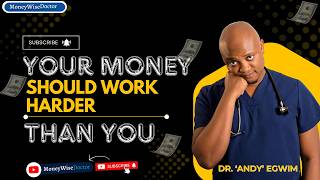
YouTube masterclass (Ndubuisi 'Andy' Egwim) aimed at medical professionals explaining tax-efficient investing: practical rules for ISAs (Lifetime ISA, Junior ISA, annual ISA allowance), pensions (NHS defined‑benefit, self‑invested personal pensions/SIPs, child pensions), and tax traps (loss of personal allowance causing an effective ~60% rate). The session combines high-level guidance, specific numeric thresholds, audience Q&A (on NHS vs SIP contributions, accessing pensions, tax on withdrawals), examples (using SIPs to buy commercial property), venture tax reliefs (SEIS/EIS/VCT), testimonials, and calls-to-action (downloadable guides and community/masterclass sign-ups).
Questions this video answers
£4,000 per year
£9,000 per year
£20,000 per year
Until age 50
Employee ~12.5% and employer ~23.7% (example for 'Dr. Mary')
Chapters
You are working harder than your money. You need to make sure that your money works harder than you. That's what investing is all about. And if you invest tax efficiently now, your money is not just working hard. It's breathless and it's panting and it's sweating. It's trying to help you to work less. Everything in finance that is simple and straightforward usually cost you money if it's too simple. And like people say, oh, I don't want to use an immediate company to do local. They should just take the 40%. I'm like, really? In the UK, there's a tax even till death. It's called inheritance tax. And if you do nothing about it, you don't do any good tax planning. It's just sad seeing people having to give up like 40% of what they worked for all their life. And their families might have to sell their house.
I will keep attending these things because every time I attend, I pick, even if it's no matter how tired I am or whatever, I always pick something new. So today I've picked three good things. Three good things. So I'm really happy.
Okay, so now we talked about ISAs, and I, I tell you, ISAs, there are a lot of nuances. We talked a few things on ISAs. There are other issues like people think about, if I leave the country, can I still use my ISAs? Okay. I hope you know that your lifetime ISA, you can contribute to your 50 years, and after 50 years you can't contribute anymore. The maximum you can put in a lifetime ISA is £4,000. And if the junior ISA, the maximum you can put is £9,000 per year. But all your ISA allowance in a year is £20,000. I'm sure you know about all that already. But of course you also realize that lifetime ISAAC could actually be shares or cash. For instance, if you're buying your first house, you want your lifetime ISA to be in cash because you don't want to gamble or be investing money that you're going to need in the next two to three years. But if, for instance, you're not buying your first house, you have now bought your first house and you're thinking about investing. It seems a bit funny to just leave your money lying around until 60 years. Just every year, I'll put 4,000, I'll get a thousand pounds. And remember that after 50 years, you can't contribute more money to the Lifetime ISA. Therefore, the government is not adding any extra thousand pounds for you. So if your money is just lying down in cash, our Dear friend, inflation is going to attack it. So that's why you want the money to be working. My lifetime ISA is not income even though I'm below 40, but I'm approaching 40. But my lifetime Isaac is not in cash, is in stocks and shares. So this is something for you to think about again. This is not for personal financial advice. I'm not telling you to pull out a lifetime as I from cash, but I'm telling you what I would do and what I've done already. And I'm hoping that you can connect the dots. Okay, Right now there are a few other things we looked at. Some people asked about pension. I think pension is one of the most underrated things most people don't realize. People think oh pension, when am I going to get it? Look, in this country any money you put into pension, you get a pension tax relief for it. That's a super power for tax efficiency. How this works, some of you've got NHS pension before you get taxed, the NHS pension goes out so you already don't get taxed on that. So if you have an additional pension like a private pension for instance, let's say, let's say doctor, let's say Dr. Mary and let's say she's a consultant, she's just working in the hospital, she ends a hundred thousand pounds and 20, let's say 12.5, that's the actual figure. 12.5% of her income is going into pension. So that's 12, 500 pounds. Her employer is also contributing 23.7%. So at the end of the year when you go to the next year, they look at pension groups, how much has that pension grown? And most times it is nowhere near 60, 000 pounds. So that means you still have a huge pension allowance that you don't use. And Dr. Mary can say look, I've used up my ISA and I'm thinking of what next to do. So what I'm gonna do now, I'm going to take the extra money I've got and pay it into a private pension like a sip. Or maybe it's all like, I don't know if Dr. Pepper is a full looking but let's say Dr. Pepper is a local and doesn't have NHS pension, he can decide to create a private pension for himself. So self invested personal pension that he can manage, he can use it to invest either in commercial property or in stocks and shares and bonds and REITs. So that's quite powerful, isn't it? Now if Dr. Mary on the Other hand has already paid tax on the money they put in their private pension. Once they put that money into their private pension they get 20% automatically back packs back. So you get 20 of that money that you've already put into your pension. HMRC the government will say okay take 20 back. That is where a lot of people make a mistake. They stop there. Remember Dr. Mary is a HRT higher rate taxpayer, she's paying 40 so she needs to get the rest of that back. So if she's put like 10,000 and they say okay take 20, it's gotten 2k back going back into the pension as tax relief. She should through self assessment contact hmrc. Whatever I need to do to get back the remaining 20% I prefer to do self assessment than being on the phone for 30 minutes. So by the time you file your self assessment you can get the remaining back. So that's the superpower of pension email that said it helped to reduce attacks velocity. That is very good. I think I remember seeing, I remember your, your lovely testimonial you gave us video testimonial. I love it. I love video testimonials. And, and thank you so much for that Dr. Melda.
7 There are seven steps to take before you even start thinking of investing As a doctor healthcare professional. Now this is really important to secure your financial foundation before you start investing. Now I've covered these seven steps in a simple guide that I've made available for you in the link in the description. You can download it. It will help you to build a solid financial foundation, avoid common investing mistakes and also make tax efficient investment decisions. Start your investment journey the smart way. Download the guide now using the link in the description and good luck on your investing journey. Now let's get right back to the episode.
So basically pension is actually another tax efficiency. Remember we're talking about investing here, but we're talking about tax. First of all, you've used your ISAAC to shield your future returns, your capital gains and dividends. Now use pension to even, even, you know, get more tax back that can go into your future funding. So that's one way you can use private pension. But here is something I've never said in a video. I've said it in our four weeks master class. I've said it in our mastermind sort of the private groups. Every child that you just give back to that is doing better. Today the government allows people who are not working to have a pension. So if you're working your maximum is 60k. But if you're not Working, whether you are a stay at home mom, stay at home dad, wherever you are, or you're a newborn baby, you can have a pension. And if you put any money in the pension, the government gives you tax relief on the pension. So they add some money on the money you put inside the pension. Let me say it again with numbers. If you put 2002, if you put 28, 80, that's a maximum net into a pension fund for a child that is junior ship, the government will top it up to £3,600. That's the 20 tax relief. So that's one way some people worry. I don't want to open a junior isa. I don't know if my child is going to blow up the Junior ISA when they turn 18, buy a Ferrari, do a big party. So one other way could be a pension. Because sip even for yourself, you can assess it from 55 years, it's going up to 57 years in 20, 28. So your child, even if you are worried that, oh, by 18, they wouldn't have any, you know, some people say by 18, you never get sense in Nigerian palace. Well, they can actually get it at 55. And even if you think, oh, why would I be putting aside our money for 55? Remember, at the end of the day, still the money you are giving to your child, if you are probably going to give your child money at 20, 30, 40, maybe at 55, especially with the government topping it up. Not everyone has to do this, but that's an additional tax hack you can think about. So after you've done your own sip, if you still have money, you can actually do a genius SIP for your child and invest the money. Right? Okay. And when, since you're talking about Junior Junior I said the maximum you can put in is £9,000. If your child is less than 18 years and you can actually invest the money, if shocks me, stop shocking me. But people putting money in cash in Junior Isa and just leave it lying around. The child is one year old, they're not going to get it for 17 years. I'm like, why is the money not working hard? Why are you working harder than the money? So this is the whole point of this seminar. You are working harder than your money. You need to make sure that your money works harder than you. That's what investing is all about. And if you invest tax efficiently now, your money is not just working hard, it's breathless and it's panting and it's sweating. It's trying to help you to work less. So sure that your money is working harder than you. Right. I know after this SIP stuff people have a few questions, but if you've got a question or if you want to send me a message, you want to chat about joining the master class or you want to join the mastermind, feel free, send me a message. These are some of the doctors who have gone through the program, so people who have also attended our events. That's Dr. Vales. I said I'm really, really happy with the current service I'm getting from money wise doctor. She said something more, she said that I give the practical aspect. And then there's Dr. Oge who is a JP partner in London. Nice, clear, easy to follow information, very relevant to medical professionals and cultural assets is a wonderful touch. And of course a few other people here, there's Dr. Mukhta who attended our four weeks master class last year for investing. Right. So these are a few of the feedbacks. Right. So feel free, send me a message. I think someone in my team will share. You can take your phone and point it to the screen and I think that backwards should lead you to our money wise doctor community. Or send me a direct WhatsApp. Able to reply you now obviously because I'm in this class, but if you've got questions, want to know about the class and you want to or basically just want to join the community. Because it's not just about learning, it's also about that community accountability. People who would actually sort of gear you on. You can see people like, you see, oh, Dr. Evans, I started at the same time with him and you see he's already gotten his emergency fund, now investing and he's asking all this advanced question about SEIs and EIs and he wants to invest a million pounds. So having that community is really quite helpful. Okay. Right, so any questions at this point or should we go in and do the other aspects as well?
I'd like to know whether you would recommend additional NHS pension contributions or a sip.
That's an excellent question, Priya. Thank you for bringing it up. Obviously I'll tell you my opinion of it, but that wouldn't be a personal financial advice to you because again I, I'm not your personal financial advisor, but pension is basically pension from a tax point of view. Okay, you understand that bit? So if you end up getting up to 60k into your pension, true NHS pension or true C is all considered as part of pension, they are going to get tax relief on. Okay. Do you understand? You understand that?
Yeah, got it, yeah.
Then going forward the question is now, do I go for NHS pension or do I go for sip? Now here's the thing, most times and we've tried this thing out with some consultants and also some in the registrars. So go and get your total reward statement. You could get that from your esr, your electronic data and find out what is your total reward statement so that you can work out how much is already going into your NHS pension. Then you realize that for most people is not up to 60k. And then they did the next step that we talked about. Contact your NHS pension administration and tell them you want to put some extra money in your pension, basically because it's a way to avoid the 60 tax trap. Because if you have more money in your pension, then that means it reduces your taxable income and is a way of restoring your personal tax allowance. You get back your 12, 5, 70. I'm sure you understand what I'm saying, Priya. Yeah, yeah. So now when they contacted a pension administrator, they weren't allowed to put in the whole money. Sometimes they will be allowed to put in £8,000 sometimes because basically, remember your employer has to contribute as well as they contribute money, they have to contribute. So that doesn't give you full agency. That could be one way to do it. And I know a consultant who has done that and actually use the maximum extra contribution they can make. But they hadn't still hit their 60k, so they now had a SIP to make a top up. So in that case, the difference, why would I prefer a sip is because the SIP gives me more control. It's self invested, I can decide where it goes. Priya, can you decide your NHS pension is invested?
Sorry, I didn't get that. Can you decide? Not with the NHS pension.
Yeah, you can't decide. Basically it's a defined benefit. The, the. I don't think it's invested anyway. Basically 75000 people left the NHS pension last year and it's a great pension and it's a marvelous pension, but you have to wait till you are 68, maybe 71 when they change it again. So that's the problem. I'm thinking if you already got NHS pension, maybe you want a plan B. You may not want to put your plan B inside your plan A port, you might want it to be in a different port.
Okay.
Another thing with sip, apart from the fact that is you can use it. Let me tell you something about SIP and it's very funny because I don't think I've said this one in a Video as well. We already know that SIP, you can get it at 55 years versus NHS pension at 68 and they are increasing it to 57 in 2028. But you could actually borrow money from your SIP and buy commercial property. If your SIP has up to a million pounds in it, if you put up, let's say 500k, you can borrow up to 50 of money, your SIP to invest in commercial property. And I've seen somebody do it beautifully. He basically used 50% of his support to buy an office building and then his business rents the office building.
I see.
Guess what? He was a former manager at the bank and then started working as a financial advisor. When we are chatting about it, we are laughing at how fun is this system. Does it punish only people who only work hard and don't understand the system? So basically his office is paying rent to his pension because his pension business. How does that sound? Prayer.
Excellent.
That's, that's, that's the thing. I think NHS pension is great because it's guaranteed final income. I know a lot of NHS pension experts today. It's guaranteed final salary and it's great. There's no investment risk, is index linked, so it follows the inflation and you're not likely to lose it at all. Except of course, if you take your pension for 25 of your tax free lump sum and decide to invest it and you have no experience of investing. I've seen people lose money like that. Yeah, I, I hope that helped.
Yes, it did help very much. But what are the implications when you have a sip, when you finally take your pension after you retire or when you retire when you're eligible to take your 25% tax free lump sum. Does it complicate things if you have a private pension or it's all quite.
Straightforward, this could save you several thousands.
Of pounds, not just in your taxes and pensions. Have you fallen into the 60% tax trap as a doctor or healthcare professional without even knowing? It's crazy. I know you think the highest tax you can pay is 45%, but here how it works. If your income exceeds hits a hundred thousand, you start to lose your personal tax allowance and by the time you hit about 125,000, you've lost your entire tax allowance. This means you're paying an effective tax rate of 60%. That's not good. You lose a lot of other benefits with it. Now if you, if it's something you've never thought about or you're worried, you're not sure how to navigate it, you're in luck because I've written a very clear guide with a 10 point checklist that you can use to avoid the system 60 tax drop. One of the biggest one is obviously paying more into your pension. But there are nine other steps you can take. Check the link in the description and download it for free. Let me know if it helps. Let's jump right back into the episode.
Everything in finance that is simple and straightforward usually cost you money. It is too simple. And like people say, oh, I don't want to use a limited company to do local margins. They should just take the 40%. I'm like, really? By the time you fall into the 60 tax trap, you're now paying an effective tax rate of 60%. So I'm not saying it's complicated, but it is. There's an approach to it. This all requires a bit of planning. Right. And this is part of why, even for those in the mastermind, I'll tell you that it goes beyond investing, it also goes about legacy. Do I need a trust? Okay. How do I structure to make sure I don't end up paying inheritance tax? Do I have a will? Do I have like my investments in the right place? Now for someone who turns 55, they can decide. Okay, at 55, let's say 57. Priya, I don't think I can't see your Facebook. I can't. Not that I can tell, but I suspect you're not yet anywhere near 57 or 55.
Oh, I'm quite close.
Okay, but let's say you get to 55 now and you decide to take your, your pension from your sip. Let's say you had a sip all these years so you can take 25 tax free, right?
Yes.
And you might decide to then continue drawing your pension from your SIP every year because then the rest of it is taxed as income.
Sure.
So let's say you're drawing out how much, how much can you draw out and pay zero tax on? Draw out.
And that's according to your 25.
25, no tax. But then every year after that. Sorry, I'm not putting you on the spot, but you asked a very good question. So I want to drive a little message home so that you remember it. So after you've taken the 25 lump sum there is the rest is charged as the rest is taxed as income. So if that's the only income you take out, how much can you take is. It's a question. You know the answer.
But I've just asked anything above your personal allowance will be taxed.
Excellent. Prayer 12, 5, 7, 0. So if you draw to 570, there's no tax. If you drop to 50k, you get 20 tax. And if you decide, oh, I want to draw 100k, you get 40 tax. So if you get to NHS pension age, then you can still do the same thing. You can draw your pension.in 5% tax free. And whatever you draw is taxed as income. Basically, it defers that tax that you should have been taxed earlier on, especially in the situation of a sip. It, it defies it, it delays it. And what does it help you do? It allows you to make the money compound. It allows you to have the money working hard in the market and compounding. So that's finance for you, basically. I hope that helped.
Yes, thank you very much.
All right, you know, you know, has a question. You know, is currently one of the currently delegates in the Mastermind and, you know, is currently doing the four weeks investment academy just as part of the package. And we've had two one on one session, haven't we? Yeah, very, very impressive lady. Yeah. You know what, before you ask a question, what has been your experience of the Mastermind? Be frank.
The first thing I would say is it's really informative and it's been very helpful to like overcome the fear of moving to a new country with all the things we hear about the uk, how you cannot make money in uk, how you can never be rich, how they will tax you to the last penny, you know, so it's, it's been very helpful to learn all this, you know, strategies. Yes. And I'm, I'm becoming more confident in the things I can think of, conceive of doing.
Lovely, lovely. So there's always a, there's always a system anywhere you go to. I know some of people in the Mastermind are in Canada, two doctors who join us from Canada and they, they're not, we're not all figuring out the system and their own tax situation. A lot of doctors move to Canada, they start earning money and there's no NHS pension. They have to learn about investing. And then I'm getting all these call having to do one on one sessions by 2am and some of them were already in the Mastermind before they moved, so that's no problem. Right, thank you so much. You know, like you said, in the UK there's a tax even till death, it's called inheritance tax. And if you do nothing about it, if you don't do any good tax planning, it's Just sad seeing people having to give up like 40 of what they worked for all their life. And their families might have to sell their house to get that money. Meanwhile some of it could have been avoided. Right. Let me not go into inheritance tax now. You know, what's your question?
Okay, I. Two questions. Because you just said something down to Priya that I didn't, I didn't really get what you said. So the first thing you said is you can take 25 of your pension tax free, right. As a lump sum. Then after that you can now take, when you say take your personal allowance, is it the 12,005, 70, is it like £1,000amonth to let's say on an average in a year.
What does that mean?
That when you take it like that you will still, you will still avoid being taxed.
You've got it. I think that, I think the p. I think. How do you say the, the penny has dropped. What you understood was correct. So when you've taken your lump sum, it's tax free now money draw out of that pension, then it's considered as income. Remember you've never paid tax on that money.
Yes.
And even if you did pay tax, when you put it back in pension, they give you tax relief. So the government is now saying, can we have a pound of flesh please? But then you know, says no, I'm not, I'm not, I'm not dumb. I've been through the master class and I know what to do. So you know, can decide to take 12, 5, 7 0. Of course you can take more. You might need more money in your pension. But remember at that point most people are paid off their mortgage. I might not have children in school or you might still decide to take 50k if you like. But the tax will now be 20% compared to the 40% you would have paid while you were still working. So there are many ways around it. And some people have other income from their investment. They might prefer to draw from their dividends, which is basically tax, not tax free. If it's a non isa, it will be tax free. If you are selling shares at that point and moving to bonds, there would be no capital gains. Or if you've decided to take part of that pension and buy a commercial property. When we talk about commercial property, people are thinking about one large office. Even shoppers and OPAs can be commercial property as long as there's business happening there like commercial property. So that could be that the commercial property then pays you an income. Yeah. So yes, you got it correctly. If you draw any income from your pension, it's taxed at the current tax rate for income.
Okay. So if it's below or at the tax allowance rates, you will not get any tax.
There will be zero tax. Basically. I don't know why tax, I don't know why PTA is still 12, 5, 7 0. It's very funny. It's what we call fiscal drug because inflation is happening and the prices. But the personal tax allowance should have been about 20k. I said should have been somewhere like 40k now at least. Basically that's another stealth tax stealth like you're being passed but you're not seeing it. Because if the government goes out now and just increases the taxes, people complain the the government will be voted out. But by not changing the S allowance, we're not changing the personal tax allowance. You're all being dragged into a higher tax band. So basically if you're a consultant, maybe they are even recently doctors had some pay increase. I think there's going to be, I don't know if there's going to be a strike. If there's a new payment, the payment is also dragging into the new tax. Yeah.
Forever.
Yeah, maybe they will change it or not. But it's fiscal. We call it fiscal drag. So you're being dragged into a higher tax band. Inflation is already there. Even when your money is increased, it's not increased in line with inflation. So one weapon you can do is to be tax efficiently investing because your investing is actually inflation working on your behalf. Meanwhile, fiscal drag and the rest of it is inflation working against you. And even if you buy only bonds or you just save your money, inflation is also working against you. I'm afraid it means your money is much more secure. You're less likely to lose it, but you might as well put it under your pillow.
Okay, so my second, my, my. The question I wanted to ask really was about another thing you said that I wasn't sure I heard right. And that's about. You said something about your life. Life Isa, you said yes.
Your lifetime. I say yes.
You can put it in stocks and shares.
So you know your lifestyle mindset. You know how you just put 4k or whatever amount you put in and you get 25. So usually when you're going to buy your first house is in cash. Right. You can do it in cash or stocks basically. But most people advise, we usually recommend it's a better strategy to be in cash because your deposit for your first house should not be in the market. Nobody can predict what can happen in the stock market. Now when you bought your first house, you're not going to get access to that money again. Tier 60. Also you can't contribute more money into that port after 50. So there's going to be a 10 year period where there's going to be absolutely no movement. Okay. Where if it's in cash, it's just there's no more money going in, there's no money from the government and you've got like this, your pot of money waiting there and whoever is using it for whatever, you might get a bit of interest, but who cares? Interest is not much. But if you bought your first house and then you switch from license cash to Liza stock and shares, the result of that is that that same money is now in the market working compounding. You see why it's good to have your camera on. I can tell when you know gets the point.
I'm closing my eyes. I've just been having a lot of Eureka movements.
We are meeting on Saturday again just.
To say one more thing that I will keep attending these things because every time I attend I pick, even if it's no matter how tired I am or whatever, I always pick something new. So today I've picked three good things. Three good things. So I'm really happy this is the free one.
Thank you so much. I appreciate that. Okay. If you guys don't show up then I'm just going to be one random crazy guy talking into a camera. You know, that's not much fun. So it's nice to have these master classes and answer questions and share. It also feels like a good way to contribute. Okay. Because a lot of thank you so much. You know. Right. Okay. So I don't think there's any more questions and for anyone who's still around, I know a male that wanted to know about scis. It's just like a scheme that the government has introduced for years and I've actually used it. If you're going to invest in a startup but as a tech company or any of those things, if you put in any money you get like some cash back. So if you decide you want to put in any money into SEIS, you get 50 tax relief. That's a lot. So the highest rate of income tax relief is 50% but you can put in only a maximum of 200k per year. Okay. That's how SCIS works. EIS, you can actually put on up to a million pounds but you have to do it there for a good three years and you can get 30 cash relief. And then there's VCT. Like when you watch Dragons Den and you hear them in Dragons, then look, they're not just helping like some poor, you know, entrepreneurs struggling and they're putting money. Dragons Den is one of the best tax relief programs. Listen, it's a venture capital trust and when they put in their money, they get 30% back of any tax they've paid. For instance, if you put in a million pounds into a deal, they can go and claim 30 of the median. That's 300,000 from any tax they've already paid. So I call it tax back the same way you say cash back like the government gives you. Okay, take back the stocks because, yeah, invent investing in, you know, this type of company that is like for entrepreneurs. So that's VCT Venture Capital Trust. I know someone mentioned they've done visiting. Right. Okay, so basically I think we've come to the end of the evening. There's always a lot. I want you to give me some feedback. If you take your phone and point it, take your phone, camera or the link will also be shared in the chart. Point it to the barcode and please head over to the site. Just give us a quick feedback. You can just pull out your phone and do a video or just write a feedback for us. This feedback helps us know whether we should carry on doing this type of sessions and if it's helping. So just point it there and make sure you get a link to the form. Give us a feedback. I really appreciate it. Thank you so much. And of course, if it has been a waste of time this whole evening, spending this whole, you know, two hours, then please want to know as well so that we can figure out how not to waste time. Well, I hope you found that helpful and more importantly, I hope it helped you to see investing in a new light. This is just a small section of what we cover in the Flow Masterclass. If you like me to drop more of these clips, just let me know in the comments. Comment, invest and share this video as well with friends who may need to hear this. And if you are ready to stop winging it and guessing, guesswork is not good for investing. If you want to learn how to become a confident investor to learn how to invest properly, check out our investing Readiness scorecard with the links in the description. It will help you determine whether you are really ready to start investing on what you need to do before you even start thinking about investing to reduce the chances of you losing money. And until then, see you soon. Bye bye.







