This Book Exposes the Thinking That Can Keep You Broke—Even With a High Income!
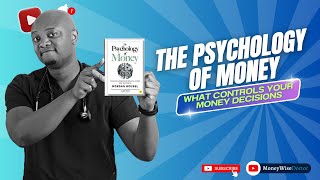
Ndubuisi 'Andy' Egwim breaks down Morgan Housel's The Psychology of Money, arguing that how you behave with money matters more than what you know. The book shows how luck, risk, and your own past shape financial decisions, and why compounding works best when you actually stick with it.
Chapters
I need to pick something off the floor because my jaw dropped when I first heard the story of Ronald Reid a few years ago. He was a janitor who left $8 million in savings when he died and he gave it all to charity in 2014. Yes, you heard that right. No, no, no, no, no. He didn't win the lottery or inherit the money. He was not from the royal family and was not a gross vendor. He simply saved and invested consistently throughout his life, letting the wonders of compounding work its magic. Now, the moral of this theory, why is it important? Is because your behavior with money is more important than how you are. You don't need a diploma from Oxford, Cambridge or Harvard, or even a job in the City of London as a banker or hedge fund manager to become financially well off, but just sound financial behavior and common sense. Now, as Morgan Housel, author of the Psychology of Money, puts it, financial success is not a hard science. It's a soft skill where how you behave is more important than what you know. In the next few minutes, we're going to delve into the key lessons from the Psychology of Money by Morgan Housel to better understand what drives the money decisions we make and find out how we can actually improve on that. Make sure that we are financially well. All right, I'm gonna let you in. We've got a quick update. Got some seriously powerful financial insights coming your way regularly every week, and trust me, you don't want to miss out. But here's the kicker. Only 25 of you watching this are setting to get this golden nuggets when we drop them on the podcast. Why? Because 75% of you have not subscribed yet. So if you're in the 25% club, thank you. You're the real MVP and we appreciate you. But to the 75% who are watching regularly but not subscribing, let's change that quickly. Or tell me in the comments, why haven't you subscribed? Come on, let's do it quickly. Hit the subscribe button to make sure you don't miss out on the content. That way you're doing yourself and even me a favor, because then it lets YouTube know they were doing something right. All right, so join the club and never miss another episode filled with financial wisdom, tips and fun. Hit the subscribe button. Let's make sure you're always in the know. Alright, let's jump right back into the video. And if you're new to the channel, welcome back to Money Wise Doctor, where we provide financial insights for doctors and healthcare professionals to help us make smarter financial decisions. And if you're not a doctor healthcare professional, come along for the ride. Anyway, today I'm going to be reviewing the Psychology of Money and I'll share some lessons I learned from it. I've read it a few times. We're currently in the Money Wise Doctor Book Club in our private community is a recommendation that we're reading currently. It has a lot of profound lessons and with over 5 million copies sold around the world, New York Times bestseller by Morgan Houser is a must read. I recommend for anyone interested in taking charge of their financial future. One of the premises from this book, which I strongly agree with, is that the decisions you make about money and how they affect you now and how they affect your future, while they are very critical, obviously. But the mistake most people make is to think that the financial matters or even the wins or the losses you've made is all based on what you know. Mentally, this is not the case. Not at all. Very few people make decisions based on numbers or calculators or spreadsheets. In fact, I've seen this time and time again, especially during stock market crashes or crazy bull runs. And I often wondered why very bright and intelligent people sell off perfectly good companies, good investment, just because the market is crashing and then they pile back to buy the same investment as very sky high valuations during a crazy bull market. It goes beyond knowledge and maths because a lot of these people I mentioned, they are really smart. Smarter than me. It goes to something else. The Psychology. So the psychology of money is what drives a lot of the decisions you make, a lot of the way your attitude to money. So that factor, the psychology of money is what we are going to be looking at in this book, which has the same title. Now let's look at the lessons. Lesson 1 the importance of Behavior Over Knowledge now one of the key takeaways from the book is that financial success is more about behavior than technical knowledge. I mean, it's good to know how to do your analysis and you know, but you can have all the financial expertise in the world. But if you can't control your emotions and behavior, you struggle to build wealth. So while it's great to learn about investment, analysis, fundamental analysis, technical analysis, whatever it is you prefer is a behavior that makes the difference. An example of this can be found in Health a close analogy because I'm talking to medics. We often see patients who struggle with health issues but continue the same lifestyle behaviors that lead to them, like smoking, despite knowing what they should do to stay healthy. In fact, some doctors and nurses who actually know how these things work may still eventually smoke and you know, indulge in excess alcohol despite knowing so it's beyond what you know. The same applies to finance, budgeting, investing comes back to to your psychology. Lesson 2 the role of Luck and Risk now this is an interesting topic because Morgan Housel emphasizes that lock and risk play significant roles in our financial outcomes. It's essential to recognize that these are crucial elements and some things are beyond our control. I mean you, it's great to work hard and all that, but not everything is well within your control. So it's important to prepare for those things. And one way to prepare is actually having the right insurance. So things like life insurance, income protection, these are things that are really quite important to have in place. Now, reflecting on my own career as a doctor and then launching Money Wise doctor, I realized that some opportunities and setbacks combined all together to shape my own financial path. And acknowledging the role of luck helps me to stay humble and makes me more cautious even when I'm making investment decisions. So understanding that not every outcome is solely due to our actions allow us to better navigate the the complexities of financial planning and make allow for risk and things not going our way. Lesson 3 Compounding and patience I love this because patience is a skill. Albert Einstein once said compounding is the eighth wonder of the world. He who understands it ends it. He who doesn't, pays it. Now, if a brilliant mind like Einstein holds compound interest in such high regard, it's certainly worth our consideration. The power of compound is a recurring theme in the Psychology of Money also argues that patience is one of the most underrated skills in finance. The longer you stay invested, the more your money can grow exponentially. Now, starting early to invest. If you start early to invest and if you're in the UK or US wherever, it's important to consider your tax advantages. If you're in the UK, you have to know about the stock and shares ISA, understand all the ISAs and how to use them to your best advantage. Now if you're unsure about the ISAs, check in the descriptions for our playlist. You can check our playlist on ISAs and we'll delve into the different types of ISAs and how you can use them efficiently to your best advantage. Let's jump to level. Lesson 4 the seduction of Pessimism Now Morgan Housel discusses how pessimism often sounds smarter than optimism. I mean why it's important to be cautious. A consistently negative outlook can hinder your financial growth and decision making. If all the time you think things are going to go bad, you're going to miss out on a lot of opportunities, especially if you're afraid to invest. You're just saving. Saving is great, but you leave yourself open to our common enemy, inflation. Now, if you save money all the time and you miss out on opportunities to invest, you will not have the opportunity to grow your money quicker than inflation. And that means that the chances of financial freedom will be quite slim, especially if you are planning to retire early. So while it's good to be cautious, it's also good to understand when to take advantage of opportunities and when to invest. If you if you just keep investing consistently, irrespective of how the market goes, you're probably going to come out alright than someone who didn't Lesson five Tail Events and Financial Planning now in this book it touches on impact of rare and unpredictable events, known as tail events on our financial lives. These events can have outsized effects, both positive and negative. A good example is the COVID 19 pandemic, which is a prime example of a tail event that disrupted many aspects of our lives, including our finances. Nobody really prepared for this. Having an emergency fund diversified investment portfolio can help to mitigate the impact of this event. Nassim Nicholas Taleb is an expert in this area. Black Swan is a good book to read. Lesson 6 Freedom and Control over Time Morgan Housel said the ultimate goal of money is to give you control over time and life. I totally agree with this. Financial independence provides you the freedom to make the choices that align with your values and passions. Now he gives the example of his father who was an emergency room doctor. Yeah, his father was an emergency room physician, was able to retire relatively early in even in his second career as a doctor and became a farmer. Controlled his life. From my own personal experience, being able to walk away from my salary GP job. Part of it was because I had a clear financial plan in place. The goal is not to be able to buy the most expensive Ferrari or to buy a fancy Lamborghini. For me, the goal is to be able to control my time. And even though I have full control of my time now. Well, except for my toddler who tends to call the shots. Yeah, but I can say that apart from that, if I didn't have the time, I wouldn't be able to write this newsletter and do this podcast and share these financial tips. So having the time is the freedom here. So your goal is not to get more money so you can impress your neighbors. But to be able to buy more time, doctors work very hard on long hours and often at risk of burnout. So aim for that goal of financial freedom or to get to the point where you're financially well enough to be able to cut down your hours or adjust your hours or change the way you work now. If you like to get a free email from me weekly that can help you in that direction, check the link in the Description for our Moneywise Doctor newsletter Email Lesson 7 the influence of Personal Experiences I've just shared mine Our personal experiences shape our financial decisions and according to Morgan Housel, each person's unique life experiences have an impact on how they approach money. So it's important to recognize and consider these influences like your background, your experiences, your father's experiences. For example, growing up my family faced some financial challenges and later being exposed to investing in my late teens and being an IMG doctor who has moved to the uk. I mean all these things all come together to affect how I think about money, how I relate to money, and about the time I started investing, what sort of success or you know, failures. Those things actually shaped how I I invest. So understanding your own experiences and how they shape your financial behavior can help you to make more mindful decisions. So recognizing that impact of your personal financial history can lead to more informed and thoughtful choices. And it allows you to understand why you might feel certain anxieties. I mean I I know people who are multi millionaires, but they are still very affordable afraid that they might run out of money. So you need to understand that. So in conclusion, the Psychology of Money offers invaluable insights into the psychological aspects of financial decision making. By understanding and applying these principles, you can make more informed and rational, beneficial financial decisions. So whether you're just starting your career or looking to optimize your financial strategy, or preparing for your retirement, the lessons from this book are relevant and impactful. If you check the links in the description you can get a link on how to get the book. If you found this helpful, don't forget to like the video. Subscribe to the Money Wise Doctor channel for more financial insights tailored to doctors and healthcare professionals. Now feel free to share in the comments below. What are your thoughts? What are your experience? Have you read this book? Do you find it useful? Are there anything that resonates with you? And are there any other books you'd like for me to review? I'm happy to have a look at them for you. And now if you're interested in getting my weekly emails covering areas like investing for doctors, us, how to make smart financial decisions, life insurance, income protection, mortgage, and all of that. Check the link in the description to subscribe to my weekly newsletter or head over to moneywisedoctor.com to subscribe with the button at the top of the right corner. Alright, thank you for watching and stay money wise till next week. Bye bye.







