UK Labour Budget 2024: Impact on Doctors and NHS Staff Explained
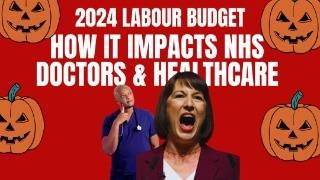
A YouTube explainer by Ndubuisi 'Andy' Egwim (MoneyWiseDoctor) summarising the UK Labour ("Halloween") Budget 2024 and focusing on what the changes mean for doctors, dentists and NHS staff. Key takeaways: ISA allowances unchanged (£20,000); fiscal drag remains a risk because personal tax bands are frozen; employer National Insurance increases (13.8%→15% and threshold falls £9,100→£5,000) with a rise in employment allowance (£5,000→£10,500); VAT on private school fees introduced (20% from Jan 2025) and business rates relief ending April 2025; Capital Gains Tax rates increased for non-ISA investments (basic 10→18%, higher 20→24%) while residential property CGT rates remain at 18/24; inheritance tax thresholds frozen to 2030 (individual £325k, main residence £500k) and pensions to be included in estates from April 2027; stamp duty surcharge on second homes raised from 3% to 5% (effective 31 Oct). The video ends with practical tax-efficiency tips for medics (use ISAs, family ISA strategy, maximise SIPP contributions, review estate plans) and calls to subscribe to moneywisedoctor resources.
Questions this video answers
£20,000
Basic rate: 18%; Higher rate: 24% (effective immediately after the budget).
Employer NI rate increased from 13.8% to 15%; the threshold to start paying falls from £9,100 to £5,000.
Increased from £5,000 to £10,500.
From January 2025 at 20% (business rates relief for private schools ends April 2025).
Chapters
So, less than 24 hours ago, Rachel Reeves, the UK Chancellor, the Labour Chancellor, revealed one of the most important budgets in decades, the 2024 autumn budget, popularly known as the Halloween budget. And it's huge. I know today is Halloween, but this is quite important. With 40 billion pounds in new taxes, it's the biggest since 1993, when Norman Lamont did it. Some of us weren't even born then. Norman Lamon's budget was 38.5 billion. Now, this budget changes the game, but what does it mean for you as a doctor, dentist or NHS staff? And how can you protect your financial future with all these changes? We'll cover all of that in this video. Let's jump right in. First, the good news. Let's start with what didn't change. One ISAs. The ISAs remain untouched. ISA allowances haven't changed, despite the widespread speculation. The annual ISA Allowance remains at £20,000 with no lifetime cap introduced. Now, this is a relief for many, especially investors like me, but I'm also glad that I sold off a lot of my non ISA investment into an ISA just hours before this announcement. Now, stick around and I will tell you why that move was crucial. The clue is in these three letters. Cgt. So, capital gains tax number two thing that didn't change. Frozen personal tax allowance. Now, this is where things get a bit tricky. There's been no changes to the personal tax allowance or tax bands and that's not necessarily good news for us. And why? Because of something called fiscal drag. F I S C A L. Fiscal drag. Don't worry, I'll explain fiscal drag clearly. But first, to understand this, let's review the tax bands. For those of you that unfamiliar with the tax bands, here's a quick summary as shown on the screen for those watching on YouTube and if you're on the podcast, you might want to go and check it on YouTube. 1. The UK tax ban for 2024, 2025. You start with the personal allowance. So 0 pound to 12,570 is taxed at 0%, no tax. But the basic rate is 12,571 to 50,000. It starts at 20%, while for the higher rate it's from 50,271 to 125,000. It starts at 40%. And remember, above 100,000 is when you start falling into that horrible 60% tax trap. If you don't know what the 60% tax trap is, check out my detailed article on it on moneywisedoctor.com it covers it in Very good detail. All right, the game has changed. HMRC has changed the rules around claiming back taxes for your professional expenses. Thousands of doctors like you have used the guide on moneywisedoctor.com taxreliefguide to claim back several thousands of pounds in tax relief for things like GMC, MD, royal college expenses and previously you could just walk through the guide we made online and do all of it online and get your tax relief. But now HMRC has made some changes. You can no longer just do it all online. You can start the process online, but you now need to post the actual paper receipts to them. Of course you would have known all about this if you are subscribed to the moneywisedoctor.com weekly newsletter. If you've missed out if you haven't been getting that newsletter, that means chances are that you're missing really quite useful financial insights and tips that we share on weekly basis. So what are you waiting for? Head over to www.moneywisedoctor.com subscribe to make sure they are getting all the insights we are sharing weekly in terms of investments, pension taxes, ISAs and every other thing that is really quite useful for doctors to make smarter financial decisions and avoid costly mistakes. We'll jump right back to today's episode. Now for the additional rate tax ban obviously is over £125,040 is taxed at 45%. Now what happens with the fiscal drag? What does it really mean? Think about it like think of inflation like a conveyor belt that nudges your income higher over time. So your salary might increase to try to catch up with inflation. But this does not necessarily make you any wealthier because inflation eats away at the extra earnings anyway. So you don't necessarily have higher purchasing power or feel any richer just because your salary has increased in cash amount. Now if the tax bands remain frozen while your income is inching up with inflation, you could be pushed into higher tax brackets even if your purchasing power stays the same so there's more money coming to your account, your purchasing power has not improved, but you're paying more tax. It's like an invisible tax hike. And for doctors and healthcare professionals who might see some pay rise, this can mean a larger portion of your income is taxed at a higher rate without you even noticing it. That's quite convenient for government, isn't it? Now essentially you are paying more tax without getting significantly richer. So that's what fiscal drug is all about, that being covered. Now let's get into some of the big changes that we actually made in this budget that could affect you as a doctor or healthcare professional. And number one, GPs and GP partners or private practitioners you want to look at this one is Employer National Insurance. It has been increased, so this one is big for GP partners and private practice owners. Employer NI is going up from 13.8% to 15%. That's a whole 1.2% increase and the threshold to start paying it will drop from £9,100 to £5,000. That's a big drop and that might mean higher operational costs for practices and could impact the take home pay. And for doctors who are also employers like GP partners, on the other hand, the employment allowance has been increased from £5,000 to £10,500 and this is to help small businesses, but it may not fully offset the cost for larger practices. Now, I'm just going to do a quick shout out to Dr. Ogo, NHS consultant and anesthetist, who has asked me this morning to explain employment allowance. So basically what it means is think of employment allowance as a yearly tax break for small businesses. So think like GP practices. It allows them to save a set amount on employer National Insurance, so helps them to reduce what they have to pay on ni. This discount helps businesses reduce tax costs so they can reinvest in hiring more staff for enhancing services. It's currently at £5,000, but following the recent budget announcement it will be rising to £10,500. So a bit of good news there. Now let's move on to the next impactful change that many people are quite sure about is VAT on private school fees. Now, number two, VAT on private school fees. This one shouldn't be surprising as labor announced it quite well ahead of time, mean they announced it before the budget. But from January 2025, families with children in private schools will pay face a 20 VAT. So on school fees and the business retrieval for those schools will also end in April 2025. Now, this is a major change for doctors and healthcare professionals who are currently sacrificing to afford private education for their children, not because they are ultra wealthy, but because they want better for their little ones. For instance, an NHS consultant in the Money Wise doctor community shared that both he and his wife, who is also an NHS consultant, they've driven their older cars for more than 10 years, live modestly in their smaller house and don't take fancy holidays, all to support their children's private education. So this VAT increase feels like a heavy blow to such families, effectively raising the school fees they have to pay by 20%. Who knows if they'll still be able to afford it. Now families need to rethink their financial plans and some might even consider pulling out their kids out of private schools if it becomes too costly. And this is something I've experienced personally from my own experience as a child being removed from a private school to a public school where my family could no longer afford it, and from my own experience as a child moving from a private school to a public school where my family could no longer afford it. It wasn't the worst thing in the world, and there's more to that story, but that's not what this video is about. If you want to hear more about it, let me know in the comments and I'll probably do a separate video about it and tell you what happened. I think I turned out alright. What do you think now? Interesting fact. For every child in private school, the government actually saves about £6,000 annually in expenses they should have spent on them in state schools. And the Institute of Fiscal Studies actually estimated it as between 4,900 pounds and 6,900 pounds. Oxford Economics also knows that private schools save the UK government around 3.5 billion pounds annually by not using the state funded resources. So the implications of these VAT changes they might extend beyond the personal finances of parents to potential broader economic impact. That's something to really consider. I'm sure labor government thought about it. Number three, the big one Capital gains tax hikes. So for those with investments outside of nysa, here's a heads up. CGT rates have increased. The basic rate has jumped from 10 to 18% and the higher rate from 20% to 24% effective immediately. So it's happened already. So I'm glad I sold off some of my non ISI investment just hours before this budget was announced. Actually a day before now. If you follow my weekly newsletter, you'd have seen this heads up in the last week's email and you'd have known that this was a plan. This is what I was going to do. So if you're not already subscribed, make sure to join with the link below for timely insights or head over to moneywisedoctor.com subscribe and now this other thing might be a cheering news for those of you intending to buy a second home or buy to let landlords if you intend it to be that residential property rates remain the same at 18% and 24% for basic and higher rate taxpayers respectively. That surprisingly didn't change. I thought that might change. Number four Pension changes and inheritance tax. Here is one to pay attention to, especially as a doctor or healthcare professional. The inheritance tax threshold freeze has been extended from 2028 to 2030, so it's keeping it as 325k per individual and 500k for family homes passed directly to descendants. So you pass it to descendants. But there's a bit of a twist. From April 2027, pensions will be included in your estate for inheritance tax purposes. Now, this is a big deal because this could be crucial for doctors and healthcare professionals with pensions, whether it's just the NHS pension or private pensions like your, you know, SIPP or sars. So this will now be included in your estate for inheritance tax purposes. So to manage this strategy, there are a few things to consider, like gifting assets or setting up your life insurance interest and reviewing your estate plan. So this could be considered. I mean, we'll talk a bit more about that. But remember Rule 10 of the Money Wife doctor rules plan your estate and succession. So this could be quite essential to protecting your family's future. Of course, none of this is personal financial or legal advice, mainly for educational purposes. And if you need a highly experienced specialist independent financial Advisor, check out moneywisedoctor.com to find one that suits you. And also check out those 10 money wise rules for doctors. Now let's move on to something else. Stamp duty. Land tax. Yes. Stamp duty on second homes. Yes. If you're buying. If you're planning to buy a second home or an investment property like buy to let the stand duty surcharge on second homes is increasing from 3% to 5% effective from October 31st. So today, and by the time you see the video is already in effect. So this was just announced on the 30th yesterday. So if you're buying a second home, if it's on your radar, you may need to revisit your budget calculations and consider if this still works for you as an investment. These are some of the main changes that could affect you as a medic. There are several other changes in the budget that I didn't bother to cover here because I don't know how relevant a change in alcohol duty. Drought beer, draft beer. I don't know how they are particularly relevant to us, but yeah, there's quite a few changes. However, here's a summary of what didn't change, which is just as important as what changed. And I'll just give you a rundown of what is not changing. One, no change to the ISAs. So your 20k allowance still stays there. Two. No changes to the capital gains tax allowances. No chance they didn't increase the allowance it could have three. No changes to the dividend tax rates or allowances expected. 4. No extension to the freeze on income tax and NI thresholds. They will rise with inflation from 2027 to 2028 tax year. It is good. 5. No change to pension tax relief or tax free cash entitlement you can withdraw okay and 6 no change to the plans to reduce stamp duty land tax threshold from April 2025. So these are some of the things that didn't change and some of them are actually all right. I mean some other the others you have to think about. Now you might be wondering what can I do to handle these changes? What should I do? Well, I While everyone's situation is unique, here are some steps I'll consider. Again, not personal financial advice because I don't know your unique situation. I'm not your financial advisor. Good news first one. Labor's budget didn't touch the annual ISA or pension allowances which means the £20,000 annual ISA for adults and £9,000 for junior ISA limits are still quite safe. So you can contribute up to £60,000 as well annually to your pension tax free. So pension allowance is still there. So being tax efficient is more important than ever. Now here are some tips to consider. 1. Individual ISAs if possible. If you can afford it, use the full £20,000 annual ISA allowance to protect your investment returns from capital gains tax, dividend tax and even interest from your savings. Especially for those of you who have your money like emergency fund in your cash ISA or is a smart move to keeping your gains tax free. I mean it's all legal. Number two Family tax strategy. So if you have a family, think of taxes as a family team effort rather than rather than as an individual effort. Each individual has £20,000 annual ISA limit and you can open junior ISAs for your kids under 18 with a £9,000 limit. So in a family of four that means you could collectively have an annual isa allowance of £58,000 all tax free that you can use before you start paying taxes on your investments. 3. SIP contributions if your budget allows, if you can afford it, aim to contribute the maximum you can and it's 60,000 into your pension. So it could be a blend of your NHS pension or your self invested personal pension like your SIP or SARS, but the maximum is 60,000. So for the best SIP options I have a detailed SIP comparison guide to help you pick the best platform with the lowest fees and easy and automated to use. So check the links in the description and watch the video here on my YouTube channel to decide what SIP might be the best option for you. I'll also share which one I use now. Lastly, don't forget to check in on your financial plan regularly. You could do annually or quarterly. And if these budget changes caught you off guard, it might be the right time to sit down with an independent financial advisor who understands the unique needs of doctors and healthcare professionals to work out an effective way to plan your financial future. Now, these are my final thoughts. So basically, here are my final thoughts on this Halloween budget. It's shown that the only thing that is constant is change. So to stay ahead, you need to be proactive. Make sure you are subscribed to our weekly newsletter on the moneywisedoctor.com subscribe for more updates and strategies that are tailored for doctors, dentists, healthcare professionals, NHS staff to help you make smarter financial decisions and avoid costly mistakes. So that's it for today's deep dive. Tell me in the comments how do these changes affect you and planning for your financial future? Drop your thoughts in the comments below and don't forget if just a Share this with your colleagues who might find it useful. Feel free to share it is totally free and like and subscribe for more videos breaking down what you need to know to avoid costly financial mistakes and make smarter financial decisions. Until next time, take care. Bye.







