Why health is the most underrated financial investment a doctor can make
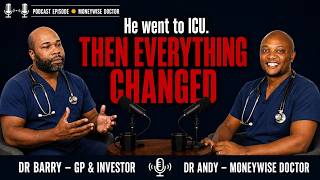
Dr. Barry spent time in intensive care, which led him to rebuild his finances around an emergency fund, debt elimination, and income protection. He allocates 20-30% of income to tax-efficient vehicles like ISAs and SIPPs, and shows how reducing adjusted net income can preserve child benefits while lowering taxes.
Chapters
When I became quite unwell, I was admitted to the hospital. Yeah, I was in ICU for about a week. Yeah, had major surgery, came out. It took me about 6 weeks to get back to work. Yeah, that, that interlude gave me some great insight about life. I had friends, but you've got kids.
When you went to ICU, you're just very worried, oh, if I'm not around, my family provided for.
And I didn't appreciate how bad the high-interest credit card was. Yeah, until thereafter when I noticed that it didn't— I never understood to a great extent what that 20-something percent meant.
Basically, it's a bit like a drug dealer giving you a sample, you get hooked, and then when you come to buy, you suddenly realize and you're going to end up selling everything you have just to to buy, you know, because basically lots of people look at credit card, you think you can just go and borrow money and buy anything.
Life sometimes will teach you lessons. Take the lessons out of it.
So welcome to Moneywise Doctor Podcast. So I've got here Dr. Barry, who has We've just had a very interesting podcast and Dr. Barry, or you could call him Favour Lebari, his friends call him Barry and I'm appointing myself as his friend too because he's been in my—
Oh, what a privilege.
Thank you. So he's been in my mastermind, my private financial coaching for the last 6 months. And Barry is a GP with many hats. He's a GP, he's a GP, but he also does a bit of locum. He's training to be a GP with special interest in dermatology. And sexual health. And Barry had been an investor for about 20 years prior to joining the Mastermind. He had tried his hands at investing, has had a bit of, um, you know, um, I'll say up and down journey. And also, yeah, and also at some point had a really big health issue, um, that made him to start thinking more carefully around financial strategy, planning, thinking about the family And then, you know, not just investing but also making sure that there's a good solid financial base. Yeah. So Barry, what— have I missed something? Is there something else we talked about you'd like to add?
Well, I think you essentially captured a good bit. And, uh, yeah, so yes, um, life, life journey, it throws a lot of things at us. Yes. And, uh, what we make out of it, we take great responsibility. So yes, I have invested for a few years, but in the last one year I have made conscious decision joining the Moneywise Doctoral Group, joining the Mastermind, and which has helped me to have very clear knowledge. Yes, I wouldn't— I would say with some laser focus to ensure that what I'm doing is going to put me on the trajectory to achieve my FIRE number. Yes, uh, when I choose to retire.
Yes.
And, uh, I don't— I no longer look at the future.
Yes.
That fear.
Yes.
I'm more confident in, um, investing. Either I'm doing a broad, well-diversified, uh, ETF in my, uh, in my, uh, SIP, or I am, uh, investing or picking stocks individually, my shares, using fundamental principles. Yeah. Should help me.
So you're not— you're not guessing. You're kind of like— and about it If someone were to come across this podcast, what are the 3 things they're going to get from listening to this podcast? Why should they even bother listening to 2 40-year-olds, doctors, talking about finance? What do you think they might pick out?
Well, uh, one of the things I, I do believe that, uh, if you take the time to listen, you will understand that, uh, as life evolves, you be thrown different curved balls. Uh, what you make out of it is important. So Making sure that you will always be on a salary. Life can happen at any time, but making sure that you have a system in place to keep something in case of challenging times. When opportunities also arise, you need to be able to have cash to deploy. Uh, you— one would need to be consistent in investing. Know that at the end of the day, you want to be generous. I want to do that strategically. Yes. And importantly, as finances tend to improve, the other parts of your life should also improve health-wise and all of that so that you have a balanced life that you should enjoy. Wow.
Wow. Thank you so much, Bayo. I love, I love the nuggets you've dropped so far. And of course, if you're listening, tell us in the comments, what did you learn? Is there something you agree with? Is there something you disagree with? Do you have any questions around that? I suspect we might want to bring Bayo back. And if you want him back, tell us in the comments, I'll be bringing him back. I feel like we still have a lot to talk about. Thank you so much, Barry. So if I were to meet you for the first time and say, Barry, could you just tell me quickly, just tell me in a minute, who are you? What do you do? Kind of like from that angle. I know I did a bit of introduction there.
All right, that, that's great. Uh, you've mentioned my name. Yes. And, uh, my friends call me Barry, as I would say. Yes. Um, I am a husband of one wife and I have two lovely children. Uh, I'm from Nigeria. I trained in medical school in Nigeria and came to the UK.
Yes, about 6 years ago.
Wow. Uh, yeah, more of a background in emergency medicine.
Oh, okay.
And, um, about less than 4 years ago, started GP training, became a GP last year, and, uh, currently developing my special interest in dermatology. Wow. Uh, as well as, um, sexual medicine. So two prongs, uh, two prongs—
dermatology, dermatology and what?
And sexual medicine.
Oh, okay, sexual reproductive health. Are you doing all the diploma stuff and the—
I'm currently doing a diploma in dermatology. All right, uh, for a bit of sexual health, reproductive health, menopause and all of that. Done a few courses around there. I also joined, uh, uh, associate with the British Society for Sexual Medicine as well. So nice, uh, getting a lot of knowledge, learning, uh, developing myself. And more importantly, uh, this point in my life, I think I'm also trying to increase my capacity, knowledge. Yes, experience, um, in investing. Yes, uh, because I do believe that, uh, one of the things that hold all of this together is great finances, and, uh, that could make life more meaningful.
Absolutely, absolutely. Look, I'd buy— like me, you're not one of those doctors that are shy to talk about money, uh, because basically we understand that, well, it could make— it could make life more meaningful, it could impact you, um, and, um, we're basically thinking, well, even what you make, how you use it, how you make use of it to make sure that you're getting the best out of it rather than it sort of like falling by the wayside. Good. Right. So let's explore. Let's get into the meat of the matter. What we're going to be looking at, attitude and understanding around money and investing, especially as a doctor. So you've been a doctor for how long altogether, Barry?
I would say for, I graduated from med school in 2015. Smarts. Okay.
Wow.
Okay. Just said 11, 11 years.
11 solid years at the moment.
Yeah.
And you're a real doctor, not like Dr. Dre. You're like a proper doctor.
I wish I'm Dr. Dre.
Fair enough.
I was about to say, but I'll pass on that.
That's why I'm wearing this, you know, headset. So maybe I wasn't Dr. Dre, but maybe I could feel a little bit like Dr. Dre wearing this one. Yeah. 7. There are 7 steps to take before you even start thinking of investing as a doctor or healthcare professional. Now, this is really important to secure your financial foundation before you start investing. Now, I've covered these 7 steps in a simple guide that I've made available for you in the link in the description. You can download it. It will help you to build a solid financial foundation, avoid common investing mistakes, and also make tax-efficient investment decisions. Start your investment journey the smart way. Download the guide now using the link in the description, and good luck on your investing journey. Now let's get right back to the Ndubuisi 'Andy'— so you've been a doctor for 11 years and the last 6 of those years were in the UK. So you've been in the UK for a few years now. And, um, at what point did you start thinking, well, um, just going to work, taking a salary, it's not just the way to go long term in terms of my finances. I need to make my money start working hard for me. At what point in your journey, whether as a doctor or medical student, what point in your journey did you start getting interested in financial well-being and financial independence and all that?
Um, my journey through life, about 4 decades now, I have had interesting events. Yeah, yeah. Um, I was opportune to meet people up, and I think I did adopt someone that serves as my foster father. Yes, he, he has been in investing He worked in an NPC, had a good job, but I didn't see him driving flashy cars as such. Okay. He did invest heavily in stocks and shares, in landed properties, and with my, uh, relationship with him, I started investing a bit early. Wow. I think I probably bought my first shares around maybe 20 Not too early, but around 20, and, um, did a bit of that here and there, um, until I remember my brother said, saying that, told me a few years ago that you used to invest a lot, you don't seem to do much anymore. I recall what happened in 2008.
Oh yes.
I lost significant, yeah, portion of my portfolio then. Yes. Because in medical school I invested. Yes. Heavily as well. Um, I had a good stockbroker, but I had—
I relied so much on their recommendation.
Yeah, for guidance. So I wasn't taking ownership as such. Then a few years ago, uh, about the last 3 years thereabouts, I had a very nice friend. We are schoolmates from med school. Yes, he set up my ISA account.
Okay.
And Ndubuisi 'Andy' and, uh, did put in a couple of things there. I put in very little money.
Okay.
And when I looked at it in a year's time, I saw it had done over 25% at the time.
Yes.
I was like, this sounds good. About 30% sounds good. But again, I wasn't too sure what exactly that was. He has gone on to make very significant investment because If I may say correctly, we, we had a colleague, our friend, as a doctor, that, uh, graduate medical doctor, but he's an investment banker today. I do believe he gets, uh, some guidance from him. Yes. And he is invested significantly in the UK, invested back at home, far, far big. Well, because I didn't understand and my dynamics was, uh, quite different. Yes. I wanted to know, I wanted to understand what was going on so that I don't just lose money or put money into what I don't understand. And that's how in my search, I think I got to meet you from probably the Ndubuisi 'Andy' Egwim group. I saw some of the things you posted, and I can't remember exactly when I joined the Moneywise Doctor group. Okay. But what I remember clearly is that after a couple of months last year, I indicated I wanted to to get on the Mastermind. Yes, um, to get clear guidance, which I'll say I've got great clarity.
Wow.
In that journey, um, I have made significant progress.
I do know that, is that in your investment journey?
Okay, investment journey. Okay, uh, I think I've got a good start, I've got a good background. Okay. And, uh, getting the finest here and there.
Yes.
And, um, I do believe that, um, with all what has happened, like recently, I remember I did tell you about, uh, a few years ago— no, that was last year, uh, when I became quite unwell. Yeah. And, um, I was admitted to the hospital.
Yeah.
I was in ICU for about a week.
Yeah.
Had major surgery, came out At an important intersection in my life. So I finished my training in the hospital technically, but I was on leave. Wow. At that time, so I didn't even take sick leave. I was on annual leave for my last week.
Oh my.
So it took me about 6 weeks to get back to work.
Yeah.
That, that interlude gave me some great insight about life. I had friends, but the bills had to be paid, mortgage had to go.
Yeah.
And all of that.
You've got kids and a family. Yeah. Dependents. Yeah. Yes.
So it became apparent that I need to take responsibility and make necessary arrangements to ensure that my life is no longer just about me.
Yes.
Or about the family and the society, so that at the end of the day I'm able to provide the required support, either by being present, financially able Yes. And, uh, even in the future, when I'm not actively working, yes, I should still be able to enjoy a good life. So all of those have impacted how I see investing and why I should invest and put in the necessary measures to ensure I do that within— do it optimally. Wow.
For my own greater good. Wow, that's a lot of golden nuggets. I want us to unpack a little bit of that. So your journey in investing was inspired because you started at 20, so that's pretty early. Most people didn't. I started at 19. And you would always find that there was someone in the background influencing. Either you've noticed that an uncle or a dad, or in your case, foster dad, had done some investments in the past, whether it worked out big or not. That's what exposed you to that world when other people are trying to save their money to buy Walkman or whatever it is people are buying in those days. And you started investing already. Yes. So you started quite early, but you mentioned that when you started investing, at some point you were a bit wobbly because you weren't very sure of what you're investing. You've lost some money sometimes in the past. Okay. But I just wanted us to explore this different dimension that you mentioned. You shared this in the community, shared this in one of our masterclasses. You are— you unexpectedly got unwell. This was— you weren't even 40 yet then, but you got unwell and then you had a family. That means you have dependents in the UK, bills are there, you have to pay your bills, and you had to spend 6 weeks in the hospital, um, during which very little or no, you know, jump in income was happening. Um, but that takes me to an angle because we always talk about investing. People always think about finance from the point of what I'm going to buy and what I'm going to make, but there's this ladder that we learn in the mastermind called the 7 steps, the 7 steps before you start investing. So we talk about things like saving up an emergency fund and then having like financial protection in place and all those kind of things. How did that play out when you were out of work or, you know, in the hospital, were you worried about— I mean, Nigeria will say God forbid, but were you worried when you went to ICU, which is quite serious? Were you worried, oh, if I'm not around, will my family be provided for? How did that play out?
I'll answer it in parts. I was worried.
Yeah.
As a matter of fact, when I was still in the hospital bed, I had to ask the surgeon that I needed to fill up, uh, my, uh, life insurance, uh, policy for critical illness cover. Yes, because I felt, yes, I'm going to be away from work for a significant time, and that was going to impact because, like I mentioned, I started feeling ill towards the end of training. So I finished training, so I couldn't claim sick pay.
No, that's—
I couldn't, I couldn't do that. No. Yeah. So some of the, the, the basis for investing, uh, there were, there was a lacuna there because my emergency fund was not built. Yes.
Yeah.
Yes. Um, I did have some little money in my cash ISA and all of that. I didn't bring it out at that time. And one of the mistakes I think I did make was, uh, I think I did leave the, my cat, all my cats, uh, at home or with my spouse. So of course money had to be spent at the time. Oh no. And I didn't appreciate how bad the high interest credit card was.
Yeah.
Uh, until thereafter when I noticed that it didn't, I never understood to the great extent what that 20-something percent meant.
Yeah.
And Even when I came back from the hospital, when I even started doing stuff, I still went ahead to do some investment, but that was stealing so much.
Yes.
From, uh, from my income.
Yes.
So that was on one, uh, end, but I did have insurance policies, okay, uh, in place. That had its own issues, as I think I must have even, uh, told you at the time, something that I feel at some point I'll look into it again. Yes. And, uh, see if I would pursue it further. But I told myself something, that life sometimes teach you— will teach you lessons. Take the lessons out of it. Yes. Uh, I could go to court with my insurance because basis in which I was ill, I had acute intestinal obstruction.
Wow.
And some technicalities were saying mesenteric infection, which were all there. So I thought, fine, at this point let me heal. I would address that later, but more importantly, lesson for me was, fine, ensure you are liquid on kite. Yeah, you have significant investment that will take care of you irrespective of whatever you have put in place. So I should be my own insurance to a great extent. Yes, yeah, yeah, yeah. So the implication of that, that significant lesson of what happened at the time, and of course not just my nuclear family is dependent on me, I have significant family members that I have also cut off, I cut off for.
Yeah.
So I wonder what will happen to my mom or my father or my siblings. Yeah, I do think about them. Uh, as well, but importantly, uh, it made me to see life in a better perspective. You have people that love you, you have people you want to reach out to, but again, you, if you are the important person earning that income, because at the end of the day when you have made significant investment or making money, you want to be generous, but even at this point you also want to have a portion for a certain level of generosity. I'll take it back slightly. Yes, when, um, my mom was in healthcare, she taught me one very important lesson— budgeting.
Okay, so your mom worked in healthcare as well?
Yeah, I learned budgeting, and I've been budgeting for— I'll say throughout— when I started, uh, before I go into med school, I was doing some other stuff in higher institution as well. So I started budgeting from maybe 16, 18. Wow. So I understood that. But again, because we keep on learning.
Yes.
One of the things I've learned recently was that probably we budgeted in a way that could have been improved because we budget everything else and we wait for what is at the end to see if you want to save or invest. But exactly, uh, What I have done today, or what I've done in the recent past since last year, yes, was that I ensure that the first thing that comes up is, uh, what percentage or what portion am I assigning for my investment or savings, savings for investment. So I am automatically allocating something, the AMAS system, AMAS. Yeah, to ensure that that goes out first. Yes, I know what my recurrent expenditures are. Yes, uh, looks a bit big because I decided to increase my mortgage payments when I finished, uh, training as well. So when I put all of those together, I know, okay, this will go to recurring, then if I need to do other things. So yes, so I have learned lessons. I have improved, used that lesson to improve my knowledge. Yes. And found interesting people that will help me also in that journey.
Oh, this is quite an interesting journey. I mean, there are a lot of principles and things to pick up from there. One of the things you mentioned, most people don't realize, black tax. Basically, you're not just earning money for yourself, you earn money, but you're supporting your direct family, you're supporting extended family. Of course, you want to be generous, But, you know, we talked about this in the mastermind of planning it. You know, yes, we end up like budgeting, we pay for everything and then we save at the end. But now you're implementing the AMAS system that we teach, which is basically Automated Monthly Allocated Savings system, rather than waiting for, okay, let me pay the council tax and everything. You also automate by direct debit your own savings, your own investing. Your own debt liquidation. Okay, that's very, very interesting. Thank you for sharing all that. So a lot of all this was going on at the point we started chatting about you, when you came in touch and wanted to join the mastermind. Before then, you'd already been in— you've been following my stuff, like you've been following my stuff, like you said, on my post online and videos and all that. And there are a few lessons that you highlighted I want us to look at. A lot of times people jump into investing but they haven't built that basic, you know, foundation. And number one is we usually say, first of all, you have to build your financial— your knowledge. You have to build your financial knowledge, become educated in understanding finances. And we talk about 1-1-1: one book a year, um, let's talk about one workshop a year, and at least one podcast or newsletter. Hopefully for someone watching this podcast, they've done one podcast a week. That's one of them. Of course, we've got like, um, books. There are lots of books, but I wrote, I wrote this one, The Moneywise Doctor, which has now been read by thousands of doctors. But it talks about finance and all that kind of stuff from doctors and all that. And then just the other things you need to do before you start investing is having an emergency fund. Now you've described it here, the importance of liquidity. And now this is not like saving like all your money because then inflation obviously catches up with money. So it's basically like having enough to last you 3 to 6 months so that even if things show up that you didn't plan. And of course, the third one is insurance, life insurance, income protection, and, you know, having those bases. And of course, you can still start investing. And you mentioned one again that is big is debt and, you know, credit cards. They like to chase after people. Oh, if you don't need credit cards, credit card companies want to offer you credit cards. If you need a credit card, they don't want to offer a credit card. And you see credit card interest of 27%, 30%, 40%. In fact, I've had credit cards that are like 102%. Of course. Yeah. My business credit card.
Business card, right?
Yeah. But would you— the question would usually be if you automate the repayment of the credit cards and treat it as a debit card, then that sort of means, okay, I'm not suggesting that everyone goes out and get a credit card, but that means that the credit card can serve the security purpose as well as sort of like some level of liquidity and without paying any interest. But I always say to people, for you to pay 27% on a credit card, if you have leftover payment on it, I wouldn't advocate going to invest. This is what you were sharing now. I wouldn't advocate going to invest to make a 10% return if you've got a 27% credit card. So what's your perspective on that, Valery?
I absolutely agree with you on it. At least I've lived the experience. Yes. Because sometimes you're happy that you make some percentage points. But yeah, of course, we know that one of the things I have invested in— yes, one, I invested in myself.
Yes, I joined the, uh, Mastermind, which is my 6-month financial Coaching for Doctors. Good.
Yes. Uh, I think I was one of the big buyers of your book because I gave to a couple of my friends.
Yeah, you did.
Yeah, yeah. I got the e-copy, got the paper copies and all of that. Wow. Uh, and, um, I also, even before your book came on, there's this, uh, book by Karlu. Is it Karlu? I just saw one. He's a Nigerian, uh, quite was quite elaborate. I couldn't understand some of the concepts, but there were a lot of things I could pick from it. Okay. So when I now read your book, I think, uh, things became a lot clearer. Wow. Okay. Uh, the understanding was greater where I think we may not understand quite well. Those interactions we had clarified, uh, a lot of things including tax planning, estate planning, and all of that.
Yes.
So yeah, so In terms of, um, the credit card debt, so one of the first things I did, uh, even, uh, after I committed to joining, uh, the Mastermind, yes, was to ensure that all my high-interest credit cards were sorted out. So I ensured that all of them were paid for. It was a lot of money, a lot. It was paid for, and that gave me a lot of peace. As a matter of fact, I never knew that some of my credit cards did charge interest rate until when, um, I think maybe something happened. You just use it, I thought you just used a small portion, and it has passed the period where you had put for the complete, the direct debit to go away. So that went on, I saw, I was like, no, I'm not paying even as an extra penny or pound or so for this. I'm not happy losing any money through that because it is a drain. Yes, on resources. And yes, there are other credit cards that have been coming that may be useful, but what I have come to realize is that there has been a massive study by the banking institution. I invest in the banking institution, don't get me wrong, but They have looked at our psychology. Yeah, it's easy to swipe, just swipe, swipe, swipe, swipe. And like one of the last ones I got, they give you a big credit card to use and they don't charge you anything for 1 or 2 years. So you get used to it. So it makes the appetite, the appetite is big and all of that. So, uh, that discipline has to come in to know that fine, uh, this money is access, you can use it for when you need it. Yes, always pay it up because it will come like a leech to leak out the very gains you are trying to make while investing.
So yes, this is really interesting. Basically, it's a bit like a drug dealer giving you a sample, you get hooked, and then when you come to buy, you suddenly realize and you're going to end up selling everything you have just to, to buy, you know, because basically lots of people look at credit card, they think you can just go and borrow money and buy anything. But if you employ this AMAS system, the chapter of my book, it's quite straightforward. Treat your credit card like a debit card. Basically automate paying back the credit card, automate putting in money you're saving, automate putting money you're investing the same way you pay your council tax and electricity bill, water bill and all that. If you automate it, then you're not going to probably run out and spend £25,000 or £40,000 on your credit card. That's not normal for you. Likely going to buy out, go out and use a credit card and buy a car if you know that you're going to pay at the end of the month, it's going to come out by direct debit. Except you're a crazy person, but you know, most, most doctors are not crazy, right? Okay, Barry, very interesting points. You know, you're quite popular in the Mastermind because you, you, you're very kind in sharing your knowledge and things you've been learning. You've been through the Investing Academy, which is part of the Mastermind, which are 4-weekend investing workshop where we go deep into basically risk management, investing, how you can— you finish it and you become a DIY investor for life. You can learn how to manage. You've been through the Tax Hack workshops as well, which is basically, yes, finding where you're leaking taxes and plugging all of them. Lots of people lose taxes without even knowing. And number 3, you've been through our Find It and Fix It as well. Where you find where you're leaking money, whether it's through credit cards or through bills you're paying. So, and before, even before joining the 6 Months Mastermind, you've also been doing a lot of financial, you know, looking into finances and studying. If you were to go back to Barry, 30-year-old Barry, you know, okay, you say, I want to share some nuggets of knowledge. If you wanted to go back 10 years, what are the top let's say 3 things, if it's more than 3, I'm quite happy to hear, that you'll be sharing to say, okay, this is what I'll do if I were to go back 10 years ago?
Yeah, there, there are a lot of things I could change. Okay. And I'm happy that I've changed some now. Okay. Uh, which would have compounded a great deal. Okay. But all the same, uh, to put it in context, yes. I should have been consistent in, um, investing.
Okay.
I should have stayed consistent because, yes, I still picked up a little stocks and shares here and there. I should have stayed consistent. And, uh, with the benefit of hindsight, that allocation, probably if I was doing £300, £400, £500 every month, that would have— 10 years, that would have been quite a significant compounding. Yeah, that would have been quite, uh, significant. Yes. Uh, I've always believed in investing myself.
Okay.
Uh, which I try to do. I remember in my teenage years, uh, I read a lot of books.
Yeah.
Yes, sure. That's when I knew about Warren Buffett, Robert Kiyosaki, and a lot of them. So one other thing I think I should have probably enforced quite early there have been boundaries. I know this become a bit strange, uh, we've never talked about this, um, or setting, ensuring that in my budget I ensure that fine, this is the allocation I'm going to give for this.
Yes.
No more, no more than that.
So that's strategic generosity. You apportion a percentage. That's part of what we cover in chapter 10 of the book, isn't it? I'm going to tell, but this is like the percentage every month I allocate to investing, but this is the person that I allocate to supporting, and that's it. Okay, just like an NGO.
Okay, okay. Yeah, so this is what is available if you, you join the queue.
Fair enough, fair enough.
If there's something that comes in and all of that, because again, you need to take care of yourself. And part of, part of that, uh, for me is, uh, why I'm saying all of this is that it has also impacted on how I do things.
Yeah.
Yes. Um, I've prioritized my health, I've prioritized, um, my finances, and I'm working things out. And maybe you might not have known, I used to be very big, bigger than this. I used to be a lot bigger.
You've lost weight, right?
Yeah. Wow. And, um, that was quite deliberate. Just like this morning, I'm riding my bicycle to the gym. Wow. Had a good swim.
And you like to go swimming, right? Because you go swimming with some other person in the mastermind. So one of the senior doctors said to me, oh, I know Barry, we go swimming together. I'm like, wow, you know Barry?
Yes, yes. So ensuring all of those put together. So my younger self would have been, uh, I don't have the crystal ball to say my younger self would have been a lot better than what I am today, but I'm grateful or where I am. And I know very well, uh, with consistency and improvements, yes, that I may not get back the 10 years, but I could do a lot, lot better, uh, from the knowledge base I have now done that and using all of these principles, uh, put to put in place.
Wow, that's a very, very holistic answer much better than I was even thinking about. So one, you advise your younger self, you had to go back 10 years, take care of, be consistent in investing because compounding is the game. Okay. Yeah. I think, um, I said, so I left, I started JP Job 4 years ago and not needed a job since then. If I had been consistent as well, if I didn't stop investing in 2008, maybe I might have done it before I was 36. You know, so compounding. So number one, be consistent. And being able to do it consistently means you have to have clarity. You can't keep driving on a 100-mile road, 200 miles, if you're unsure. Like, I live in Devon. If you're coming out from, let's say, Manchester, you are coming, and I say that your next turn is in 100 miles, if you didn't have the clarity, you won't keep going. So you have more clarity now. So hindsight is 20/20. So consistency, which could lead to compounding, of course, as long as you're not investing in random things. Some people just buy this random stock because it's popular. They have no discipline. They have no understanding of investing approach. And I'm going to come to that in a minute, how you approach investing. So consistently investing in high-value companies, whether it's through a broad, well-diversified index fund, or if you know what you're doing, analyzing on the valued companies, which is quite more, more difficult than it seems. Okay, so that's number one. Number two, you said you were going to set boundaries in terms of you're going to still be generous, but there will be strategic generosity. We call it give like an NGO. And giving like an NGO is basically like when, when we work in NGOs, there was funds allocated at the beginning of the year, and you applied for the fund, and if you met the criteria, you got the funds. So you still give money, but maybe you might allocate 5%, 10% of your income is going for strategic generosity. And if people reached out to you to say, for instance, I need money to have a big wedding and someone else needs money to sort out their kidney problems, they can't get like money, the kidney guy might get the money before the big wedding guy. And next month, the big wedding guy is well come to apply again. So that's strategic generosity. That way you're not feeling guilty and you're still doing what you can without actually also crashing your own economy, because you still need to grow this economy, your personal economy, to be helpful. And number 3, which is really helpful because a lot of people talk about money and not realizing that health is wealth, you know. If you, if you're unhealthy, I think was it Confucius who said, I can't remember, was it, um, I can't remember exactly who said that the healthy man has many desires. The unhealthy man only has one desire: to get better.
That's right.
When you're healthy, I think, I want to hit a million pounds in, you know, in revenue in my business, or I want to retire at 50 years, I want to do this, I want my stock market portfolio, I want my career to, you know, like now you're a GP, you're trained in dermatology and all that, you want to become a GP with a special interest in dermatology. But when you're lying down in that hospital bed in ICU, I'd imagine that you had one desire. I want to get better. Think about it. Basically ending up with acute GI problems unexpected from nowhere. You're young, relatively young. I can call you young. We're about the same age and then ended up having this surgery. That must have been quite you know, crazy. So taking care of your health, prioritizing it, that's something that we all— especially as you get into this side of like 30s and 40s— is an investment. If you started doing like 30 years ago cycling, you'll be in a better shape. Obviously, um, hindsight is 20/20.
That's right.
Can I share with you, Barry, when I talk to doctors in the Mastermind, right, um, there are some doctors there in their 50s. Do you know what they say to me? I wish I met you 10 years ago when I was in my 50s. Now, when we talk with doctors in the Mastermind, so a private financial coaching, who are in their 50s, senior doctors, consultants, GPs like you, do you know what they said to me?
Guess. I wish I met you when I'm 40s.
I wish I met you in my 40s. So now we're talking and you're in your 40s, I think, well, I wish I said this in my 30s. I always ask that question because there's someone in their 30s who is also saying, well, I wish I listened to this in my 20s. So hindsight is always like 20/20. It's always like, I wish I said it, but you can't really go back and change. Now what you can do is all the experience and wisdom you've gathered where you are now, you can then take that to leap forward. Because I see that a doctor in their 40s who has significant income and has a lot of wisdom and experience and has a clear direction to go can actually do a lot in the next 10 years compared to a doctor that is 25, hasn't had any serious income, is not sure whether to buy crypto or to buy stocks or whether to travel to the UK or US or do whatever they need to do. But now you've got like a clear stability, clear direction, and you've invested a lot into your own financial education, not just in investing but tax efficiency, how not to leak, business structure, how to set up your local. So that's very useful. Now, before we draw this to an end, I want to get some, um, your investing approach before, now, and in the future. So before you join the Mastermind, you know, before I attended Investment Academy, you already had some investment experience. I want to understand what has changed, what, what, what, what was the approach going forward, you know? And basically what, what, what the impact has been on your life generally.
That's true. I, I give you, I give you, I give you an idea of what's been going on. Yes. All right. So like you mentioned, um, for instance, I do IPOs. I don't think you do IPOs as such.
Not a huge fan of IPOs. No, I think there's SpaceX IPO is coming out now. There was Dangote Cement IPO. Last time I bought IPOs, that was a refinery. Yeah, I think last time I bought IPOs maybe like 15 years ago, more than that. Yeah, probably like 18 years ago.
Yeah, I see. So, um, but part of, of course, I did like you mentioned earlier, I did buy shares probably when it's on the offering, which of course, you know, most times is already ballooned out. Yes. I, I relied on guidance from people whom I don't know if they are actually looking for my best interest because the, the stockbroking firm will be working towards getting their own fee. Yes, they get their own fee. You know the game now. Yes, yes. And, um, of course I wasn't very consistent before now. What I have learned now, uh, is that I do most of the things myself.
All right, DIY. DIY, yeah.
Yes. And, um, I have, say, two approach to investing.
Okay.
Yeah. Uh, I do mainly stocks and shares at the moment. I know I could do a lot better once my funds balloon out, but at this point This is what I think I understand very well. Okay. So I do a lot of ETFs, that is the index funds or exchange traded funds. Okay. So broad, well diversified funds. Yes. Which was— I felt that would be mainly what I'll do in my SIP account. Okay.
Yeah. That's your pension account. So your private pension.
Myself invested. Personal pension or private pension.
Sorry to jump in, Barry, because we're talking— because we've been through these things, we've chatted about them. For someone who is listening, you're welcome. It's just me and Barry talking here. But for someone who's listening, when you say SIP account, what, what are you referring to?
Okay, so this is, uh, my personal private pension, the self-invested private pension. And in the UK, every— I believe every adult that is working does have an allocation of up to £60,000 a year. And of course, since I still work for the NHS, I do have a workplace pension, but currently I'm salaried for 2 days. Okay. So that would not be a lot. Yes. So I, I feel that it is more of my own responsibility to do my own contribution in the defined contribution as opposed to the defined benefits. And looking at what's going on in the country, if I were to even stay, with pension going up and all of that, we don't know what the future will—
yes, uh, say. So you're not depending— you're not depending on your NHS pension, your workplace, because you mentioned there's an allowance of £60,000, but part of the allowance is being, you know, your pension growth from your NHS pension. But you also have your own personal pension, self-invested, that you manage. Yes. As long as you're not crossing that 50K, but I know, yes, but the SIP itself, you're investing it by yourself in the stock market.
Yes.
And all that. Oh, okay, that's good.
Yeah, so that is all, uh, exchange-traded funds, ETFs. And, uh, one of the things I've also improved within this time frame of the investing academy, uh, and, uh, with the one-to-one session was to ensure that The finance came that fine, the broad world diversified fund.
Yes.
Like the FTSE All-World. Yes. Uh, should have the biggest allocation.
Oh, okay.
Yeah. As opposed to the salt and pepper here and there.
You, you, you like a lot of, you like a bit of pepper. You like a bit of spice in your investments. You like some thematics, semiconductors and all that. Of course, Barry and I are not suggesting this as investment advice for you.
No, not, not at all. Look at what is convenient or what meets your own, uh, what your, what, what you plan to achieve.
Yes.
So that's on that ground. I thought I would do just stocks, as in pick each individual stock in my Shares Trading 212 ISA account. That's the, uh, individual, uh, uh, savings account, or how to put it. So the stocks and shares. But what I have found out Is that fine? I still need to do a bit of, uh, the ETFs, okay, to keep a base. Because even as I have done the AMAS system, something comes to that account as well, which sometimes could be significant. So because picking individual stock is a skill, yes, it's a DCF, we use the discounted cash flow analysis and all of that. Yeah, you wonder what you picked a few months ago. Everything seemed to be quite high at the moment, so it takes a lot of time. So while, um, I should be investing automatically, yes, I still try to keep some cash in the event that I find a good company. Yeah, I could invest. So I don't— one of the lessons I've learned is that I don't want to be overinvested, as in too concentrated in the market, that if there was to be an opportunity— I'm not predicting a crash, but we know that this will eventually happen. And when it does happen, just for instance, the Iran-Israel-US war. Yes, that was a big dip, and I did take advantage of it significantly. I think more than half of what I've invested went in that time.
So wow, good.
When I was watching your video about lump sum versus, uh, the pound cost averaging. Yeah, I would say I'm using both. I do pound cost averaging, but when I have the opportunity, I'll put in a lump sum. So that is one of the things I have learned. Um, for instance, when I got— so we're talking about my journey from 20 years ago to now. Yes. Before now, when I got dividends, I'm smiling to the bank.
Yes, you just spend it. Nothing wrong with that.
So, so, but that did not compound.
Yes.
For instance, I, I, I bought GT shares 2 years ago. I'll just use this for example. I'm not suggesting anything. Yeah, I bought, but that has done about 3x.
3x, that's 300%. That's right there.
Yeah, yeah. And, and they paid dividends lately. So I had given that money out earlier on, but you know what I did? I said no, that's wrong. I had to get the money back. And say no, this needs to go back. But of course, looking at, uh, what I now realize, I was like, fine, this has gone significantly high. The fundamentals of business is still very good, is around 6. 6, okay. Yeah, but I, I looked at another bank, uh, like Access Bank or so, it was like 1. They didn't pay dividends, value was low. At the moment. So I was like, fine.
Was there free— did they have like good strong free cash flow? Banks usually have good strong— I did look at the numbers, I was comfortable with them.
Wow. Initially when I was looking for, or like on Yahoo Finance, one of those tools we use for, yeah, uh, yeah, yeah, I didn't see them on, on that, but I later found some of the things that gave me good information. I think I even did a screenshot of what they were. Yes. Slept all right. I was happy with the number, so I divested, invested more because— so that journey, what, what my point is, I know where I'm coming from.
Yes.
That I could now look at these things very clearly.
Yes.
Make up my mind and say, fine, this is a good business, this is a better opportunity. And, uh, I could move away from this point or invest more at this point in this time. And I now understand how compounding works. So yes, you don't just take out the money and go party or buy some new designer shirt or trousers. I mean, it's good to enjoy.
Yeah, I mean, it all depends on your goals, where you are and all that. But I feel so proud of you because of the you're applying like what you learn, the discounted cash flow. Because I remember before you came to the Investing Academy, you said you used to buy based on intuition or whatever is popular, or you just sort of invested and you lost quite a bit of money in individual stocks. Yeah, but now you're applying a very disciplined approach because a lot of people say, well, yeah, just buy index fund. Of course, buy index funds. That's it. But if you have the skill, you know how to value businesses and value companies, and you understand the risk— in your case, you're not even allocating 100% of your funds to individual stocks, you're just allocating a percentage— that could still give you an opportunity like you've done to buy dips. And you know, in a very— because the whole key here is risk management, managing your risk. You're not sort of selling your house to buy one stock and you don't do stuff like that, especially after you had a very seasoned training in investing. Wow, this is very, very interesting, um, approach. I see like sort of like taking your investments and then reinvesting it in a very careful way. All right, so that's all for investing, but how about tax efficiency? What have you done in terms of making sure— I mean, you've been to maybe two tax hacks now. Yeah. I think your little one's asking right there.
Oh, sorry about that.
No, that's fine. That's fine. Yeah, they're just telling you you've got a few more minutes to go, Daddy.
All right, so, um, uh, if I get that question right, um, can you say it again?
Okay, let me just rephrase it. In terms of tax efficiency, the same way you advised a 30-year-old Barry on investing If you were to look at what are some common tax mistakes you see doctors make, especially IMG doctors like me and you, there's some common tax mistakes. You look back, a lot of what I teach are from my own experience. A lot of what I wrote in my book, The Moneywise Doctor, from my experience. So if you look back and think, well, from what you've learned from the Tax Hack workshops, so our Tax Hack X-Ray workshops where we sort of like go deep into tax efficiency, finding where the leaks are, what are some of the things you recommend? For instance, if someone were like a GP like you and came to you, locum GP or salary GP, what would you suggest?
I get what you're saying. Uh, I'll say a couple of them. Um, of course I run a private, uh, a limited company as well, so, uh, I'll apply some of these, uh, to it. One of— for tax efficiency, for instance, let me use the for instance. Okay. I'm a high-rate taxpayer.
High-income tax.
Yes. Yeah, yeah. High-income taxpayer. So my tax— looking at that, the money I put into the SIP is prioritized.
Yes.
Because I get the government.
Actually.
Yeah.
So, so just for someone who didn't understand, Barry is a higher-rate taxpayer. So 40%? Yes. So, but that— but if you contribute money to your pension, your SIP, you get your tax back. So that's 40% of gross, which basically is 50% of whatever money you put in your SIP. That's correct. And just to clarify, Barry, sorry that I'm butting in there, 20% or 25% net you get automatically, and then the other 20-25% you get from self-assessment, right? So if, for instance, let's use numbers to make it clear. If you said, okay, you want to be tax efficient, you made money from your locums and you didn't want to cross into the 60% tax trap, and you said, oh, I'm going to put this $20K into my SIP. So what would, what would that mean in terms of like, before you've invested the money, what would that mean in terms of tax back you're going to get?
Okay. Uh, I'll, I'll, I'll put it in two ways. First, if I get that correctly, is that if it's from the company account, that's already an expense. So I'm not paying tax on that. Good.
Yeah, good.
And one of the SIPs I have, the main one I've used mostly is that, that's as far as salary is concerned.
Yes.
I've dropped my Sessions No Doubt, but that, that comes back in. And my children, I still have young children. So I was looking at high income child benefit tax recently. Company. Yeah, so I was able to drop my sessions. Yeah, so I don't even— I'm not even hitting the 60 grand.
So your adjusted net income is below 60K, which qualifies you guys to avoid high-income child benefit tax. Yeah, that is tax planning.
Yeah, yes. So I've tried to optimize it in terms of what I'm doing with the company, which I will not share a lot.
We can— we can You can discuss that in the next Tax Hack Workshop or in the community. Yeah, but the fact is that if we went through all you can do with your limited company, we'll be here for another 4 hours because the last Tax Hack Workshop, we were there for like 3 and a half hours, right?
Yeah. Okay, for instance, my education is coming from the company as an expense. Uh, two main educational things I've done in the last few months Wow, the mastermind of course costs some money. Yeah, which I'm happy that I've gotten far more than that value.
Yeah, hopefully 10x, 10 times what you pay.
Yeah, uh, it's quite empowering. Yes, of course, uh, professional development as well, uh, which has come in from that. So all of those are part of, uh, tax efficiency strategy. I'm employing. I do believe that if I'm not under the light, I may be able to list out a number of tax efficient system I have put in place.
Okay, okay. Of course, these are all legitimate, but you share what you're comfortable with, which is the important thing. But what if you didn't have a limited company? Let's say you were just a doctor, you put the money in the SIP. Let's say you put $20,000 in the SIP, what would that $20,000 become before you start investing? Sort of what you're sure of.
Yeah, from what I have seen, at least the first 25% net— is it gross or net now?
It's net.
Yeah. So that's like $10K is $2,500.
Yeah.
Yes. Then $20K, that's $5,000.
$5,000. Okay.
Yeah. So that comes in first.
Automatically.
It's part of automatically, yeah, it'll be immediate, but that comes in and that starts doing some heavy lifting for you. Yeah. Then when I'm filing my self-assessment, I'm sure that I'll get the other 20% bits.
Yes.
So that, that makes a whole lot of sense to me. Yeah. So you're already about 40 to 50%, you move faster as compared to my, uh, ISA accounts. Yes. Yeah, so it is a good, uh, tax-efficient way for, for funds, you know, you can allocate that you don't need, uh, immediately. But for goodness' sake, I know that myself is in 3 places. My future self is an important bit of it. So yeah, if I'm allocating 20 to 30% of my income into that, I do not have any regrets. Yeah, in doing so.
Yeah, I love that. I love that because most people just say, oh, just put in ISAs. And a lot of time you obviously have a deep understanding of ISAs now. You've understood ISAs and SIPPs. Of course you still use your ISAs, but you know which one to prioritize as a higher rate taxpayer because of tax efficiency. Wow. So, so, so much, uh, we could go on here for another 2 hours, but you know, we like to nerd, nerd out in finance and stuff like that. And that's what we do every day in the in the Mastermind community where people ask questions, we answer questions, we talk about finance, talk about how to make sure that your £1 becomes £2.50 and then £10 in a legitimate way that is tax efficient. So thank you so much for coming and sharing your experience. I'm delighted to have you here. Okay, what will be the last, last thing you leave? Even, even this last minute, you've just shared nuggets about about reducing your adjusted net income, retaining your child benefit, child— avoiding high-income child benefit charge and all that, and then investing the money. But if you were to think of, oh, is there something you haven't said or something you would leave to the audience or something to, you know, think about?
I do believe there's a lot of information out there, and getting the right information is important. Uh, having Having the right groups can help spoil you. But so what I would say, uh, to my colleague is that it's good to start, it's good to make out some time. We are very busy people to learn financial planning or finances and investing, because at the end of the day, the work may go away, but as far as life is concerned, we need to take care of ourselves. We need to take care of the bigger us in the whole picture. So investing and investing in a way that you're comfortable to sleep well at night.
Yeah, it's important.
Yeah. So yeah, that's what I'll say.
You can either eat well or sleep well. So if you want to buy an investment that's going to give you 100 times return but you can't sleep well, that is not good financial well-being. Thank you so much. I appreciate you taking out time. I appreciate everything you are doing in the community, sharing your knowledge, learning. You've always been open to learning. And then what I love is how you apply what you learn. So you're an example of a Moneywise Doctor, a doctor who's decided not to just rely on the system, not to just cry and wring their hands and say, oh, they're taxing me so much. You're making strategic moves to make your money to work very hard for you. Thank you so much for coming on the Moneywise Doctor. I appreciate it.
I really appreciate the opportunity. I was scared of coming in. Why don't you give me the next 2, 3 years? Let me have more results.
No, no, we like it. So far so good.
I believe I'll be holding myself accountable as well.
Yeah, no, we like it here. All right, thank you.
All right. Yeah, thank you. You take care.







