Why I Left Medicine To Become An Entrepreneur
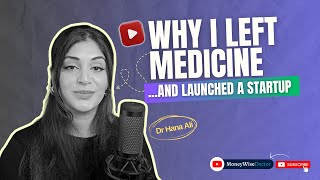
Dr. Hannah Ali left clinical medicine after graduation to work in health tech, spending seven years building startups including Gaia Medical and MyStarTutor before launching Healthcare Career Transitions, a platform with 103 users offering resources and coaching for healthcare professionals changing careers.
Questions this video answers
July 7, 2024.
Seven years.
About five months.
Approximately three weeks before the interview.
About 103 users.
Chapters
Why did you go down that part of volunteering? How did I even come around? Did you just say, oh, I haven't got enough to do? I'm in med school, so I haven't got enough to do already. I'm just gonna pile up a bit more.
You know, when I was leaving at the time, I remember going to my careers advisor in the university and also speaking to the foundation school and asking, you know, what are my options if I wanted to leave, what can I do with my degree right now?
You move from a different country. Does that have any bearing at, or was it too early by the time you moved, that it didn't have any impact?
I think one of the things that have helped me most in my career and make sure I go down a path that makes sense to me and that I genuinely enjoy and feel fulfilled in, is honestly listening to my instinct and my gut. I think for a lot of the doctors, whether they start looking for something else early on or later on, they usually have wanted to do something else for a while, but just haven't been able to take the leap for one reason or another.
So what sort of age, grade or work level, I mean, by consultants, junior doctors or whatever that you get to see that make that transition and how do they approach it?
There are genuine issues when you don't speak about money. And in a space like this, like I said, I think people are just very comfortable. And when there's no need to speak about money, they don't speak about money.
Right. Welcome back to the Money Wise Doctor podcast. As usual, every now and then is me. And I'm telling you how to make the best financial decisions for yourself as a doctor. But today I've got a guest, a special guest on the podcast who has taken a very interesting turn to her career. I'm going to review who the guest is in a minute. So a lot of us talk about leaving medicine and sometimes people talk about working part time and doing different things. But in this case, my guest has actually, right from the beginning, decided to take a very hard career turn and done something different. Worked in a bit of tech now work, worked in medtech and does quite a few other things. And recently she's launched a platform to help doctors who are trying to transition from health care to other stuff or even just do part time health care work and all that stuff along the line. So, welcome. Put your hands together, let's get into the building. Dr. Hannah Ali, welcome.
Hannah, Hi. So nice to be here. Thank you so much for inviting me onto the Podcast.
Lovely. Yeah, lovely to have you. Yeah, I'm sure I haven't even begin to do any justice to that introduction. I know a little bit because we've had a chat previously. I know you were fully trained doctor. It's not the doctor. There is not like a fancy title like Dr. Dre, fully trained doctor, went to med school in the UK and then decided, you know what, I'm going to take a bit of a break, try something else and come back and see how it's going. And it's seven years and it's still going. Can you tell us a little bit about what you've been up to? I mean, how did you go down that path in your journey?
Yeah, absolutely. So, like you said, I took a very hard turn very early on, much earlier on than people usually do. So I went to med school in Liverpool and I think it was probably around my third year or probably my fourth year that I started to question. You know, I would look around me and I would see the lives of the registrars, the consultants ahead of me, and I would think, like, do I really want to go down this path? I'm not quite sure. I made this decision so young. Let me see if there's something else out there that I might want to do. And even at that point, I was also starting to struggle with my mental health a little bit. As we all know, it's. It's incredibly challenging to be in medicine. So in my fifth year, I was actually volunteering for a health tech startup based in Berlin, and I was just writing patient information leaflets for them.
Okay.
And I thought to myself, like, let me do some research and see what would it be like if I just took one year out after graduation. How hard would it be to come back into F1?
Okay.
So I applied for the F1 post and I had everything ready, but then I thought, let me just try it. So I asked the health tech company in Berlin, do you have a full time job for me for a year? And they said yes. So I thought, okay, well, why don't I just go for a year, check it out, see what it's all about. So that summer that I graduated, I moved to Berlin by myself. Didn't know any German, didn't know anyone here. Yeah, it was, it was very exciting, but also kind of scary, as you can imagine. And I arrived here and honestly, as soon as I started working in health tech, I just absolutely fell in love with it. I fell in love with tech startups, entrepreneurship, and the feeling that I had working in Clinical medicine versus working in tech was just so dramatically different. So when the year came up and I reapplied for F1, I retook the exams that I needed to retake. I had a post ready for me in Wrexham and then the same kind of thing happened. I thought what would happen if I just took another year off and explored a bit more. So then one year turned into two, turned into three and now seven years later I'm still in Berlin and I'm working in the tech and entrepreneurship space.
Well, this is one massive break here. How do you say when you take out a break, it's one massive one. It's gone from one year old into seven. And the good people of Rexam, don't be mad. I guess there are some people disappointed in Rex. Hannah has followed her heart. Yeah, yeah. It's very interesting story and you seem to be enjoying what you're doing. Obviously you've tried a few things and you've launched an exciting project, but it all started with you volunteering. Tell me a bit about that. Is that what medical students? I mean, I've been a medical student, but that was much longer, a longer time ago than yourself, I suspect. Well, I think so why did you go down that part of volunteering? How did I even come around? Did you just say, oh, I haven't got enough to do, I'm in med school so I haven't got enough to do already. I'm just gonna pile up a bit more.
Well, interestingly, that is unfortunately my personality type I do like to pilot on, but in actually the way it works in Liverpool is you take your final year exams in the fourth year. So I had already finished my final year exams, I had already passed everything that I needed to pass. And so fifth year was very much a clinical year. We were just in the hospital all the time and I had a friend who I was on rotation with and she was already volunteering with this company because she wanted to, I guess do something different. And I thought to myself, I love writing, I love disseminating information. This has always been the most interesting part of medicine for me is knowledge acquisition and then knowledge dissemination.
Yeah.
And so she said, hey, they have a volunteer role open. This is what I do. Would you be interested? And because it was somewhat of a creative role and I was really missing that in medicine. Yeah, I thought, yeah, why not? It's super like it doesn't take much time. I can kind of dictate the hours I want to do, the work I want to do. I can Give it a go and then see, see where it goes. And I started and I just, I really enjoyed the process. So I volunteered with them for a few months and then that's when it led up to me leaving and asking them for a full time job.
That's amazing. I mean sometimes I spoke to and well, not quite an F1. She's just finished her training as a doctor, 24 year old yesterday and she obviously I had her and her partner who is in finance and she's thinking about taking, going into finance and being a trading assistant for one year. See how it goes. And the, the, the, the partner who is obviously also young in finance is egging her on and say yeah, give it a go. You get the same pay and asking, well, at 24 it's fine, think about money. But when you're 34, when you're your mid-30s, hopefully you've got a bit of money and then you're thinking about do I love it, am I enjoying it? And from what you're saying, obviously you headed in that direction because you enjoyed creating, you enjoyed disseminating and look where we are now. Seven years later, you're curating and curating opportunities for doctors, isn't it? And your platform, health, career transition seems to be aggregating that information and disseminating it as well. Would you agree? Is that sort of like the direction you've, you've ended up in?
Yeah, absolutely. I mean like you've said, I've always been drawn to acquiring knowledge and then disseminating it in some way. And I had, you know, when I was leaving at the time, I remember going to my careers advisor in the university and also speaking to the foundation school and asking, you know, what are my options if I wanted to leave, what can I do with my degree right now? And unfortunately they don't get that question often, so they weren't quite sure how to answer and they ended up giving me very, very minimal information. So at the time I felt like I have maybe three options and I had no one to speak to who had gone through the same thing or who even was considering doing the same thing. So I really had to just go at it blind. And it took many years for me to find other ex doctors and people doing other things. And in the back of my mind I always thought someone needs to create this community, someone needs to create this resource center and in a way that I didn't have access to and the things that I specifically needed at that time that I wish I had access to. So yeah, Then I, I kind of. It took a while for it to, to come to the point where I was the one to build it because I think I needed to go. To go through a process. I built some other. Like, I built my first health tech startup after I left the health tech company that I was working with. And I built another edtech startup in my family. So I had to assimilate some information first, try different roles. And then now I feel like this was the right time for me to come back and disseminate it.
People, wow, what a journey. I mean, we're going to get into that journey a little bit. You, you mentioned you've tried some other things, health tech, edtech. And I find that entrepreneurship people say 90% of businesses fail. Like, yeah, 90 of businesses fail, but not 90% of entrepreneurs, because entrepreneurs start in this field. If you keep going, someone said you have to start off to seven or one out of seven fail. So I'm going to do eight. Hopefully. It is a magic number. Yeah, well, it's been quite a journey. But you mentioned something really key. You mentioned your family. You started a business with your family. Not so many people would do that just because it could be like, oh, yeah, now I'm gonna have to fire my mom. How's that conversation going to go? I'm going to need to tell my brother, who is waiting for the paycheck for his child school fees, that we didn't quite make payroll this. This month. Yeah. So we're gonna have to pay you half. But yeah, you mentioned your family. So that, that takes us back to your origins. Nobody will pick up from this here lovely vowel enunciation and your accent being different from mine, that you weren't born in the uk. You shared that with me. So can you tell us a bit more? I know, I know, like me myself having moved to the UK towards the late, late 20s and you know, heading into my 30s, you've moved from a different country. Does that have any bearing at all or was it too early by the time you moved, that it didn't have any impact?
Well, I was, I was really young when I moved. So I was born in Iraq and I left when I was 2. And then at the time, it was during Saddam Hussein's regime. So my family were kind of fleeing Iraq. So it took us about three years until we were able to come to the UK as refugees. So we applied for asylum, but luckily we already had my uncle and his wife who were very well established doctors in the UK and they had left many years before. We had. So they had already come to the UK and they were working as doctors in the uk and yeah, so we, we came here when I was five and I, I don't recall anything from that young. But obviously we still have lots of family and we, we go visit Iraq. My family have, my parents have now moved back to Iraq, so we go visit them every couple of years.
Oh, wow. All right.
And I think obviously, you know, coming from a Middle Eastern background, there's always going to be an influence for the paths that you choose to go down. But I am just really lucky that my family has been really supportive of any path I've chosen to go down with my career.
Excellent. I mean, it's. When you mentioned that sort of like family coming from a Middle Eastern background, you mentioned earlier on that you had a child of the guidance counselor, career counselor, and you realized you had three options. And that took me back to Middle Eastern background. I see a lot of Iraqi doctors. What were those three options? I mean, tell me the three options from your family in terms of career options, and then tell me the three options from the guy having spoken to the career counselor. What you came up with. What were the three options?
Well, with my family, I mean, it was kind of. I was so young, I kind of just wanted to. And I was ambitious. So I just did the, you know, the top three. I felt like one of my options, which is most brown people's options, which are like law and engineering, one of those as one of the options. And I really gravitated towards medicine because I wanted to help people with my work as well. But I didn't think about it deeply. I mean, I, I. The only other career I thought of when I was a child was to be a fashion designer. But, you know, that's so unheard of in.
What do you say you're gonna do again? Fashion. What?
Fashion?
What.
What's that? What's fashion?
I'm not gonna pay the bills. Wow, that's very, it's very interesting. Obviously. I've done a review of the Psychology of Money recently on Money Wise Doctor podcast, which will go live soon. And it's very interesting how we don't even think about it, but it's like there are softwares running our background, our, our background, where we've come from, our family. You might have not have grown up like you are two years, but you might not have grown up in Iraqi Iraq where you had Iraqi parents. You were surrounded by Iraqi community. The way people think about money, the way they think about business, career tends to have a certain impact in the way we approach our. Our careers and money and everything else. And I think that has a big bearing and it's very interesting to see how you've navigated. Obviously, you're living in Germany now, you've worked in the uk, you've gotten quite comfortable with transitions. So sort of like you've transitioned from one job to another, you've transitioned from one country to another, you've transitioned from businesses and all that to. So are you a rolling stone that will gather no moss. I'm just kidding. Obviously, you've got a lot of moss, the good kind. So what has led sort of like, to that, sort of. What lessons have you gathered from transitioning from different locations, different jobs, different careers? What will be a key trend you see, that you've learned about yourself and obviously about how you prefer to do your career, your life and your business?
I think one of the things that have helped me most in my career and make sure I go down a path that makes sense to me and that I genuinely enjoy and feel fulfilled in, is honestly listening to my instinct and my gut.
Yeah.
And it sounds really. I know for a lot of people that sounds airy, fairy, but there is something really powerful about it. And the times in which I've tried to quieten it and say, no, no, no, this is just, you know, like, I need to push through because this is what I have to do. This is what's expected of me. Those have always led me down to parts that. That I felt quite miserable in. So over the years, I've really learned to trust myself and the way that I feel and the way that I think this would be best for me, because, honestly, who else knows what's best for you other than yourself? Obviously, with help and guidance from your family and your support network is very important. But at the end of the day, there's always going to be that underlying feeling and that energy that you feel when it comes to a new direction. And you have to ask yourself, does this feel right for me or does it feel like I'm doing this because I am forcing myself to do this and I actually don't want to be here? And learning to hone that over the years has been so powerful and now it's just such an inherent part of my decision making and it hasn't really led me astray, so fingers crossed.
That is amazing, Hala. I mean, a lot of people come to it later in life and some people come to it a bit earlier, but some people believe that human beings, and I believe that we are beyond body and, you know, just mind and emotion. There's a spiritual aspect as well. And a lot of times what you described to me, sort of like listening to your inner person and being able to sort of like, let that. I don't believe it's airy fairy. I know that from investing for almost two decades, that whenever I don't quite feel it, even when the numbers line up and I don't quite feel it, sometimes I wait and get more. Like Warren Buffett, one of my mentors would say, you don't have to take a swing at all the pitches. You can let that go if you're not sure. Yeah. So that was very interesting thread because I heard a lot of talk now about burnout and anxiety and mental health, and I'm not an expert in burnout or anything like that. There are already enough of them. But I feel like sometimes people get burnt out when they are doing sort of things because there's some sort of expectation, outward expectation, outside expectation, rather than from inward, where they feel at peace with. Yeah, but you've been through this journey where you've really done some hard things. A lot of times people are in the talking beats where they talk about stuff, but actually going and starting something, getting your hands dirty, walking the talk, moving to a new country, starting something, failing publicly and all that. And throughout all this thread, what has been your North Star, has that been, like, a driving force? What's the goal? What do you want to achieve here? Is that, like. For me, it's always been about flexibility, options, time, freedom and all that. But for yourself, I'm sure you want to change lives, but is that a bit more? Is there something more? Was it mainly I want to change lives because there are multiple ways to change lives, Hannah.
Yeah, Yeah, I think it's the same. It also takes a while, I think, for you to learn what it is that you want out of your career. And I think it's hard sometimes to know that when you've only been in one path.
Yeah.
And haven't explored other paths as well, because you kind of can't tell yourself what you like and don't like and what feels right and what doesn't feel right. So it's definitely an exploration, and I think it's an ongoing one that will be with me throughout my whole career. And every 10 years, you're a different person. So what you need now, you won't need in 10 years. But where I'm at right now is very much I Just like you said, want to change lives, but also really want to find work that fulfills me. And as long as I'm building something, I don't really mind what it is. Building something that's helping people and that gives me, like you said, the freedom and flexibility to also live my life alongside that, then that I'm pretty much that I can, I can work on.
Anything that makes, that makes sense. I suppose my garden shed has fallen and I need a bit of building that doesn't fall. Volunteer wheelhouse of building. I understand there's sort of like some type of building you're talking about here, but yeah, I get it. I mean, yeah. Currently working on healthcare transitions. Let's get into that a little bit because it's been quite hard. A lot of times now a lot of talk about, oh, medicine stole my future, medicine stole my energy and a lot of thought. A lot of times when we get into medicine, we are pretty much teenagers and get into this idea of stuff. And for different people, they realize it midway in their career. For me, I knew going into medicine with my eyes open, coming from Nigeria, from Africa, I knew this wasn't the ticket to health. I had relatives who are doctors. I knew, oh, it's going to. It allows you to serve and also a good platform to start. But I wasn't deleted about it. Hence I started investing as early as I did, even if it was a very tiny amount. But yeah, most people realize that maybe me doing their career when they're already consultants. A lot of doctors that we deal with@moneywisedoctor.com are usually like GPS consultants. But in your experience in dealing with healthcare transitions, what sort of trend are you seeing? What's the primary reason why people decide after so many years working in this area, it's very difficult to get into med school. You know that firsthand. You have to be top, top, top. And then working through this whole difficult job for years, decide, you know what, I'm good, I don't want to do this anymore. What are the commonest reasons you see people deciding to do that transition?
Honestly, the people that get to get to that stage, for the majority of them that I've spoken, spoken to often have had it lingering for a long time. So even, even if, you know, they reach a point of consultancy and they think now is the right time to change, they've had it on their mind for a while. But what often we feel in medicine, and I've heard this term being used so often, is that we're on a conveyor belt of a career. And we're often told this thing, this notion, and I always said this, so many people said this to me as well, is like, oh, no, no, but just wait another two years. Like, just wait until you get foundation training. Just wait until speciality. Just wait until, and then you're like, okay, but then 20 years down the line, firstly, that's a long time.
That is a really long time.
Yeah. And then once you reach that stage, you know, I, I, from the people that I was viewing around me, I wasn't being filled with the idea that they were also very, very, very, very happy in their careers.
Yeah.
And so I, I would look beyond and say, okay, that's what it looks like in 20 years and it's still not what I want. But it's very difficult to leave a job like that. It's a, it's a really highly respected job. It's a fantastic job that you help people, you get so much fulfillment. It's, you can pretty much find a, like, job. I, I know there's a crisis with GPs not being able to find jobs right now, so maybe not the case, but it's, it's secure in that it's much easier to find a job as a doctor than it is to find a job as like a marketing manager, for example, because it just tends to be more competition. So, yeah, I think for a lot of the doctors, whether they start looking for something else early on or later on, they usually have, have wanted to do something else for a while, but just haven't been able to take the leap for one other, one reason or another.
Yeah, yeah, that's a really good answer, Hannah. It seems like it doesn't just spring out from nowhere, people. Yeah, it's nice on LinkedIn when we say, after I had my burnout experience, I decided it was time for a change. And yeah, but sometimes that wasn't the initial, really. Most time people have thought about it and then that was sort of like the final, you know, straw that broke the canal's back. I hope I've said that the right way. So they've got to that point, they decided, look, I need to do something now, I need to change. It's a little bit different for maybe someone like me. In my class, I was voted most likely to make headlines. But that's not the only one. I don't talk about the other vote I got, I was voted most unlikely to practice medicine. I think I, I was, I got a first or second in that and I was like that early stage And I like, what are you guys talking about? Then I practiced medicine just enough for my first two years and I was off for four years. But I did realize that, yeah, I, after I had a bit of time and money, freedom to the flexibility. I mean, I don't own a yacht or, or drive a very fast Lamborghini, but I got to that point, being able to leave my salary job, I have control of my time and schedule. I realized that I did actually like practicing medicine only if it was on my terms, if I wasn't dependent on medicine entirely for my sustainable income and I wasn't very anxious that if I lost my job, I'm done for, I wouldn't have anywhere to go or stuff like that. So I realized, yeah, there's a bit of you that likes you, like you still like the job, like helping people. I'm very delighted when I'm like in the GP and I'm or other hours and I'm seeing a patient and we can have a chat and you know, have it a bit of chit chat and then help them. They're going out, they are sort of like walking on air. That's very good. It's not about the science a lot of times. Yeah, but like you said, I agree a lot of times there are stuff that has been in the background and sometimes people push it down. They think, oh, two years later, three years later, and before you know it, you're on a conveyor belt, you don't get fired, you've got NHS pension, which obviously me and you, we don't have because we're not in the nhs. But it's a great pension. But yeah, you know, why would you leave that? And people are playing it safe. So that's, that's an amazing insight. Obviously you've given this a lot of thoughts over, over the last years. That's why you're coming out with such deep, insightful responses. Yeah, okay, that's one. Now, other than that, what else do you tend to see when people decide, oh, I want to make a change in my career? You tend to see people who want to go full time, bomb the boat, just go out there, see what I can find. Or do you tend to see people who want to do a bit of portfolio job where they, I do a bit of this and I do a bit of that. Or do you tend to see people who just maybe I've seen people swing all the way the other way, say, you know what, I'm going to become a painter now or a designer, then eventually link it back to medicine, they'll call it. Oh, it's painting therapy. Like, you don't have to be, but yeah, okay, I get it. Yeah. So what sort of pattern have you been seeing in your job?
Honestly, it varies so much. Some people are really, like you said, they reach a point where they're very sure that medicine isn't what they want to do for the rest of their lives. But a lot of people, I would say most of them are just really uncertain. Firstly, what their options are, what they even like to do. They have no idea what would be a good place to start. So a lot of my time is spent giving people the first one or two steps to exploring a career. Like, read about this or think about this, and these are the kind of options that you have. And yeah, it's, it's, it can be very varied. But one thing is, I think people have the perception that to explore something new, it has to look a certain way. So they either think it has to be like a very high risk, like, I have to quit my job and do something else completely.
I move to Germany.
Move to Germany. Yeah. Like, it has to be this extreme thing that, I mean, I know I did that, but it definitely doesn't have to be that way. And going on to the story that you, you told previously about how much you enjoy medicine now that you're doing something else on the side, I've heard that so often from so many people I know, is that, you know, they, they think the solution is to leave entirely, but really the solution sometimes is just to do something else on the side. So it takes the pressure off. And once you've taken the pressure off, medicine having to be your full time job, your only sole income, or, you know, being there all the time and kind of being, you know, married to it in a way that you don't want to be married to it, maybe you want it as a girlfriend, but not married.
Wait, let me check if my wife is listening on the podcast. Maybe I still want us to remain married. Okay.
Yeah. But the idea is that you can explore things in a very low risk way and you don't need to set your whole life on fire and leave everything behind and go in a new direction. For some people, that works brilliantly, but for most people it doesn't. So it's, you know, when we talk about exploring a new path, it really can be just, hey, now I'm gonna go part time and try to do something else on the side. And that's just as much of a success as Someone who says I'm gonna quit and goes like, become a software developer in health tech, for example.
Yeah. Wow, that's really insightful. I mean a lot of times people don't know what options are available to them and they are not enough career counselors. You have people on one side saying you're an idiot for living medicine and then you have people on the other side, oh, this is great. And in my case living medicine fully four years and I really, really enjoyed it. But it was always a part of me. I wanted to practice so I kept my license and whenever there was voluntary work, I always go in and yeah, I'm actually, I'm a doctor, actually I went to med school. It's not only about the social, you know, benefit, but you're just like, oh, I'm able to help someone in that way that, you know, there's not a lot of opportunities where you could do that and people trust you and you know, look, I've got to manage this drug very carefully. But that was a very good point. That leads me to a very salient, I think an area where a lot of people struggle with when people talk about going part time or going full time or living medicine. Money is a big issue. And obviously a money wise doctor, we talk about money, we are going to, we are going to venture this to go back to money. So money is a big, big issue. And we've had people on sort of like our private one on one sessions or emails from get like thousands of doctors we get in touch with every week. And you know, and one big thing is money because someone did a post in a forum where I'm sort of like finance for Dr. Vespa said, what's gonna happen to me? What's gonna happen to my family? He didn't even know about his like life insurance, income protection and all of that. So we, we find that a lot of times for doctors, like you said, you don't have to burn the boat immediately. I mean you could if you've got the resources and you're fed up. But also it depends on what stage you are in. Like if you Left in your 20s, early 20s or what I said investing at 18, 19, I was happy to risk everything I had, which was nothing. And when you are in your 20s or when you are in your 30s and for some people in their 40s or 50s, it's a different ball game. And if you're listening to this and you're in your 60s, we haven't forgotten about your 70s, but basically I've got to be inclusive, Anna.
Yeah, yeah.
Basically what is different? Isn't it? Because then people have like mortgages, they've got like children in private school, they've got like all sorts of things. Maybe aged parents they're caring for and. And the worst of all, they sort of on that lifestyle inflation treadmill where my Mercedes is bigger than my neighbors. And I mean, I have nothing against Mercedes, I drive one. But they get to that point where they're thinking, oh, I need to match what other people are doing. Yeah. So it's different for different ages. So what sort of age grade or work level, I mean, by consultant, junior doctors or whatever, that you get to see that make that transition and how do they approach it?
It's like you said. Yeah. It's such a varied spectrum of people. Most people tend to be in the younger stages, so the earlier stages of their career, which would make sense, like you said, they're much more. They have much higher levels of risk, like they can take more risk than someone. Consultancy level. Yeah. But you still get people feeling the same sorts of way at the senior stage of medicine. And I guess everyone's approach is different for someone who's younger. So, for example, me, who had. Who hadn't started working full time yet, I didn't have anything to risk, but I also didn't have the level of expertise or the earning potential of someone who was senior, like a consultant. So, for example, there were certain routes that wouldn't have been so easily available to me, like consulting, like health tech consulting, for example, wouldn't have made so much sense to me. But someone at consultancy level could charge a premium because they have a huge amount of expertise that is incredibly difficult to achieve and is very hard to come by. So it's really. A lot of it really is about mindset, if you want to look at it in the. In the sense that I have these golden handcuffs. I've worked so hard to build this income level and I can't think of a way to escape it because what if I can't find another job that can match that income? That's a very, very valid concern, but it doesn't mean you don't have options because even when I left at that early stage, the first job that I got matched my F1 salary. So even with just my medical degree, I was able to match my salary, let alone someone at consultancy level. And obviously there's a lot of nuance to this and for some people it's much harder and I don't want to be Like, I am very positive and I don't want to be like, oh, everyone can do whatever they want. I want to be realistic to a degree.
Your positivity is shining through my screen and I'm struggling to even look away. Yeah, yeah, but actually, that's. Yeah, that's a really, really valid. I suppose that's why a platform like health care, health and career transition is such a useful place, because apart from. I know there's a sort of community around it, apart from just having the information, it's not just a job board. Apart from just having the information is also sort of like having people who are like, no, no, it's okay to feel a bit scared because what you've just done, you've sort of like shattered some excuses people approach with. They think, oh, I'm F1, I don't have any experience. And there you go. Hannah left, or Ali Abdaal left at F2. At least he got things going and he had some good income. Like I said, the difference between your screen and your. The quality of your production and mine, that you take his course and you actually actioned it. I. I bought. I bought it and never used it. So I don't do courses. I. I tend to learn a lot on my own. I just hire someone who can give me an hour brush. Yeah, yeah. So that's the difference between the quality of your production of mine. But yeah. So you had F1 experience, you went for it. There was a mindset. A lot of times you see someone else who's a consultant who think, oh, no, if I move from. And I know lots of GP say they can't find work and that. That's true. We're in the southwest, Coral and Devon where I am. There's still a need for gps if you are ready to do salary job. A lot of people don't want a salary job. So when people say there's no work, they don't find the work they want. And remember, as a gp, you're still a doctor. You can work in a hospital or sexual health or different areas or whatever. But what, what you're saying now is that irrespective of any level, or for my. Do a cliche, for every level, there's a devil. That's a cliche. Maybe we should scroll, drop that. But that's it, actually. Because when you have one, you think, I lack experience. How do I know that I'm not going to waste the next 10 years of my life? And you came up with an idea. I'll test it For a year. That way you've got an out, you're not risking too much. And after a year I can test it for another year, see how it goes. And then you ended up with seven years, which is brilliant. And for someone else who's like a consultant, the only excuse might be, now I have too much experience and I've got like 120k salary most health tech jobs. I've spoken to JPS and consultants who said, oh, they were going to pay me £50,000. I thought I was. No, that's not gonna make any sense for me. And I'm thinking, look, try starting a business. You start from zero. Sometimes you start with zero income, you work for a year, you grind it out and then before you get out your one million dollar pay per day. Yeah. So that's a lot of us as doctors also a bit risk averse.
Yeah.
And would you say that if more people had a clear sort of like plan in terms of money plan, financial plan to transition, do you think that might make it a bit easier? I mean, having a financial plan before living medicine? Because in my case, when I left as a salary gp, but a while, I would say, all right, I'm done. But if it was because I had a plan that didn't start, that's the point I decided to leave is something I built and invested and sort of like developed other sources of income. But would you say that money is sort of like a big hiccup? I know doctors don't tend to think it's not very polite to talk about money, but I get a pass. I'm not from uk so I'm not always required to be very polite. I try to be, yeah. So would you say that money is a big factor and having a financial plan might make a bit of a difference? What do you think?
Yeah, absolutely. And actually I'm really glad that your platform exists because I think that we don't talk about it enough and I think that is really limiting people's earning potential.
I'm giving a thumbs up to my team that someone is glad. That was excellent. Thank you.
Yeah, but it's really true. It's really limiting our earning potential when we don't talk about money. Because there's a wealth of knowledge out there and unless you're accessing it somehow and being really diligent about it, you can end up in a situation where you're, like I said, in golden handcuffs because you haven't thought about how to secure your, your future financially. And it's not just for doctors looking to transition, it's. For any doctors, any healthcare professionals, it's super important to take the step to, to plan. What would it look like if for whatever reason, I could no longer do this job?
Yeah.
Because I need to have a backup plan. And there could be many reasons you, you can't do the job for whatever reason. But I think especially in organizations such as the nhs, you get very comfortable and you can rely on a salary. And you probably have in mind that this salary is going to be with me for the rest of my life. So it feels less urgent to do financial planning. Whereas for us who are entrepreneurs, we're like constantly financially planning cash flow.
Now I see.
Yeah. Because we might end up with nothing. But I think we need to honestly, just honestly speaking, we need to get rid of this notion that it's impolite to speak about money or impolite to speak about our salaries because it's holding people back. And I've heard so many stories, both like, mostly outside of healthcare, but of, of this. You know, when, when companies say you can't speak about your salary, you can't share with other people.
Yeah.
And then people on the same level, they tend to be women because obviously we know there's a gender pay gap.
Yeah.
Are earning 100k less than their male counterparts who are exactly the same level in the organization with the same kind of similar background. So there are genuine issues when you don't speak about money. And in a space like this, like I said, I think people are just very comfortable and when there's no need to speak about money, they don't speak about money. But it's not helpful for the community as a whole, but also for individuals. That's my opinion, anyway.
I think I very much share a lot of doubts, obviously, speaking about money. If I were paying someone differently and I. I was paying different, I wouldn't want it to compare notes and find out that we are being paid less. Obviously. Medicine. I don't think I'm an expert on gender pay gap, but in the UK it seems like if you work at F1 and I work at F1, irrespective of our gender, we get the same pay.
Yeah.
Yeah. But I'm sure there's more nuance to the gender pay gap thing. I probably need to take a lecture on it or somebody in my YouTube comments will let me know how to go about that. Please. If you're an expert, let me know in the comments. I will learn a bit more. But yeah, I think I agree with you not talking about money. It seems a bit hypocritical because people that you're always talking about money. I mean, I'm going for a walk on Monday or Tuesday morning in the woods after dropping off a little one, and someone is driving a commute of an hour to get to work they don't like. And also sort of like spirit spend 10 hours doing the job. And maybe if you're a doctor fine. Or a healthcare professional, you might say, oh, yeah, we do need to help people, but maybe an accountant and, well, you're helping people as well. My accountant shout out to you, you're doing great. Yeah, but a lot of times about money, you want to get money, you want to get money to pay your fees, you want to get money to pay your mortgage and all that stuff. But it sometimes feels like a bit of a social status game to say, no, I don't talk about money, but you're working all day for money and then you see someone who's building a business, you think, why are you all about money all the time? Because money is important. I think I totally agree with you right now. In your case, when you moved to Germany, you hadn't got an income. You didn't have like a war chest because. Or maybe you did, I don't know, it might be an Iraqi princess hair and all. You feel. I don't know. But, but from, from all indications from what you said before, you didn't have a name in sort of like a big war chest. You are sort of like, I think you're quite brave and that's very good. A lot of times, again, not everyone needs to be like, I'm charging forward, moving to a new country and I'm going to start this new thing. But there are, there are different grades or there are different degrees to it. So moving, moving careers or deciding to cut down, having a clear financial plan, this is your plan. You know what you, what you're doing, you know what to do if things are not going all right. You know, okay, this is where the issues is really important on your case. How did you finance your move? I mean, it's a bit easier if you're still coming out of medical school and there's no. Not yet any expectations. But did. How did you manage? I mean, you had. Oh, yeah, you had a job.
Yeah, I had. So I had the job. But actually, even in the beginning stages of the job, for the, the first, I think it was the first three months, they were paying me a very low salary as a contractor because they hadn't secured their Series A funding round. So the promise was like, okay, you'll be honest, low salary for three months, but then you'll get on a higher salary. And when, once the three months were over, I did jump up to a higher salary, and that salary did match my F1 salary. And to add to that, at the time, and still probably to this day, Berlin, which is where I live, is a. Has much lower cost of living. So rent was much cheaper, food was much cheaper, travel much cheaper. So it made sense for me financially. But I would have to, and I always have to mention, because I think not enough people mention this, I couldn't have done it without the support of my family. And, and my family at that stage had also built wealth. My uncle, who was a doctor, became an entrepreneur and built his wealth. My dad, who was a civil engineer, became an entrepreneur and built wealth. And I'm not saying I was swimming in money. Definitely not the case.
I can see you trying to, with.
Your wig, swim, breathe through the money. No. But my family were able to support me and I know that that's not the case for a lot of people. So I don't want to be one of those people that go out there and say, you can do anything you want, but then not mention that. Actually I have financial and social support to help me do what I want as opposed to having to make it on my own. But what I did was a very, like, very bold, financially risky move, and it really requires some financial support to help me do something like that. And, but, but not everyone needs to go as bold as that. So you can still financially plan if you don't have support outside of yourself to take baby steps into trying something new. Baby steps and see if it works. But I, yeah, that's. That's kind of how I did it.
Yeah. Your honesty is refreshing because, see, a lot of people who don't actually give the full picture, but yeah, I think it's very refreshing. But also, even with that sort of backing, you still needed to take a bit of them because they weren't exactly going to fund anything you want to do. And they might think, oh, Hannah, just didn't we just dump a few hundred thousand on this expensive medical education? And now you want to go do what in Berlin? Do you even speak German? Yeah. And if you think about it, Bill Gates and Jeff Bezos, they all come from a bit of a well of backgrounds, wearing entire valley they were in. Broke and despondent, ran like living on the streets. But you also had to take like a personal risk, reputational risk. If you look back 10 years or seven years in your case, and time does fly, I'm sure for you might feel like just yesterday that you were out of med school. It feels that way to me. Even the double time now for years. But yeah, there's also that risk of, am I going to look back seven years? I'll find out. All my mates are consultants. Influence now. What have I done with my life? I've done what, like go to different countries and, you know, which in itself is also an experience that you could write about and then it becomes a book bestseller. Yeah, yeah, but I like that sort of like nuanced approach and understanding again, that's why it's a personal decision. It's personal finance. Not everyone's gonna leave. We don't want everyone to leave. But, you know, is understanding. What is your risk appetite? What is your. What's your personal finance again? What's. What's your background? Me moving to a new country didn't really quite have that sort of cushion. But I also had some strengths. I've been investing for a long time, so I knew that worst case scenario, I'll sell all my stocks. I came down to £5 at some point and nothing. I want to do my masters and I thought, Oscar, case scenario, I could sell some of my shares, which I never want to do. Yeah, but in your case, you sort of like had. Okay, if things don't work out, I can pack up, go back home. I'm sure my parents will still welcome me, which is great. Yeah. But, yeah, so let's look at it now. Let's say from a practical point of view, someone who wants to sort of make a transition. Give me an idea who is here. Let's just sort of like walk through a mental exercise. Who is your avatar? Avatar client or customer? Who is this sort of like commonest person you have on your platform?
Our current primary avatar would be probably an F1, F2 NHS medical doctor who is feeling super burnt out, super exhausted. Has always had some sort of desire to. Who work in either the tech sector or in a creative sector. And they're just, yeah, looking for someone to speak to because they feel that they can't really speak to anyone around them.
Yeah. Yeah. Wow, that's amazing. So let's call them. I'm not gonna call them. Hannah.
We'll call them.
Let's call them. Alina.
Alina. Yeah, let's call them.
I get to look at the data behind model one. I say, like oh, these people, they are between 25 to 45. I mean we've got people less than 25, we've got people over 45 but like the bulk of them falling between 25 to 45. But not all of them are male. A good passionate that I've got like almost 50, 50 split male and female. So we're going to deal with them. Alina Elena wants to, she's an F1, she's working in London, she's about to go to F2. She, she's thinking about the gap here or should she not? What should she do? And she finds out about this amazing platform called Healthcare Transition. She's feeling a bit bummed out. Then she finds a lovely YouTube channel. Guys, check out Hannah Ali. She's got like banging thumbnails. Her YouTube channel is just up to the. I thought I might delete my channel. I saw you but I realized again I'm not a content creator primarily I'm guy talks about financed doctors. Yeah. So she finds your channel and she sees one of your best performing videos. I think is that, was that at least Alice course or how When I left medicine.
When I left medicine.
Yeah, when I left medicine. Which is really, really good video. Well done. And yeah, so she written and she's thinking, oh I need to, I must have to do something. I want to get in touch. So walk us through the journey of Alina. You can. You're free to make some assumptions in terms of their background and we are going to assume that they're not from a well off family but their family is not also dependent on them like a lot of international medical graduates like me. You might find situations where you've got to support family because that's what we do, that's our background. You've got a budget for family. Let's take all of that away from Alina. Let's just assume that she's starting on a fresh clean slate. She hasn't got a trust fund or inheritance or anything but this is where she is at the moment. What happens when she comes to Healthcare transitions?
What happens when she's in the platform or what would I suggest that she do?
Let's say she finds the platform and obviously the first step will be to sign up. You've got a mailing list because you're a smart entrepreneur. A lot of creators don't have mailing lists because they've not used our neural framework. So you've got your mailing list. Right. So they sign up. Probably you give them something to sign up. A Lead magnet or something, they sign up. So walk me through, what's the next step, what they hope to get. And because I know there are quite a few Alinas who listen to my podcast and they might think, oh, this look, you've been investing since 19, you've gone to Warren Buffett, Berkshire Hathaway conference. So you might not be able to tell me exactly what to do if I'm transitioning for my career. Yeah, I learn about money, but the actual transitioning is they jump on health care transitions, they get on the mailing list, what will be the next step, what should they expect, what sort of support, what sort of community are they going to get? Job suggestions like coaching calls and all that. How does it work?
Yeah, so we have a free plan that's open to everyone and I would suggest that's definitely the best place to start. So free.
All right. That's the right price.
Well. Well, we need to run the platform some way.
Absolutely.
The free plan is always, will always be free. And it's our resources section, so that is always the best place to start. And it's where you can find our information. Right now, our resources are primarily sectioned into career transition resources. So alternative careers, transferable skills, things like that. And then there's entrepreneurship resources, there's mental health support, and there is, Gosh, my mind has gone blank and I forgot on the last resources section, but there are lots of flash it on the.
Screen what the career options are and sorry, just to jump in there, when you say resources, what are those? Like videos or PDFs or courses or whatever, what exactly does that mean?
So they really vary. So some of them are like lists of companies that you might look into. So for example, in the health tech resources section, there's a list of companies by country that might be interesting for doctors to transition to or healthcare professionals to transition to. In the career transition section, it's more like PDFs and ebooks and we tend to make them very detailed, so we try and pack in as much information as possible. And actually yesterday we launched a free guide called 10 Transferable Skills for Healthcare Professionals Exploring New Careers. So you can get that guide as well.
That's useful. I mean, it's all sticking nuggets you think about. Oh yeah, of course. And then putting it together in a way that is actually become digestible. That is very useful. Okay, yeah, that's a good one to check. 10, 10 transferable skills. I know there's quite a few of them. Okay, so Alina joins the platform and Alina can actually see these resources, they're all free, which is very useful. Oh, there are options. I didn't even realize there were options. And now these are the options in different countries. So it's not just uk, it's in different countries. And I've also read a few things about career transitions, support and all that. What is the next step? Let's say Elena thinks, you know what, I want to get on the paid path. I think this is a journey and I'm going to need some support. It's not something I want to do on my own because a lot of people, a lot of people don't realize how lonely it could be, this whole journey of going the alternative part. And they think I want to, I want to join someone, I want to get that sort of coaching or support. What, what would be the next step for them? What are the options?
So if Alina decided to go on the paid plan, which you can also get a one month free trial for, so you can definitely test it out and see if it's something for you and if it's not, you can decide to cancel it, which is totally fine as well. And what we offer in our free plan is obviously more robust. So we have a community space where we connect other healthcare professionals, a lot of them being UK based medical doctors who are also exploring alternative careers. So we have, imagine it like we have a feed, but we also have a chat where we communicate with one another daily, ask questions. Someone might say, how can you help us with this? Or I have a question about this or I'm struggling with this. And we also have, I have two really wonderful junior doctors on my team as well who help me manage the community and answer those questions. But I'm pretty much there all the time like answering all the questions.
You want to give them a shout out?
Yeah, shout out to Christina and hiba. You guys are absolutely wonderful. Christina's actually almost about to start her F1 in August so I'm rooting for her.
She follows me on LinkedIn.
Yeah, she's a massive content creator as well, so follow her. They both have really great YouTube channels, so follow both of them.
That's amazing.
And yeah, so we have this community space. We also do a weekly community coffee connect, we like to call it. So it's a online call that we have. We just check in with everyone we have. Yeah, we talk about a specific theme for that day and then we all contribute and support one another through that. And that's really, really lovely because I think it's Good to actually speak to people as opposed to just messaging them in the chat. And aside from that, we have webinars. So we have the, our first webinar coming up on Thursday, I believe. Yeah, Thursday is the 30th and that is on. I'll be hosting that webinar. It's an introduction to health tech careers. We have discounts for our partner coaches that offer coaching through our platform. We have discounts for partner organizations that offer services for people who are thinking about, well, healthcare professionals thinking about exploring new careers. And then we have a job board that we tailor specifically to healthcare professionals looking for new careers that we upload jobs to weekly.
Wow. Wow. It sounds like a lot of very rich. I mean even the free one already sounds like a lot of useful value but obviously beyond the free one because obviously a lot of doctors, we're comfortable paying for CPDs and we're comfortable paying for exams. And you know, unfortunately most people don't realize that it works the same way. I mean if you train six years, in my case med school was six years, then you've trained six years and you've had to pay for your mrc, GP exams, MRCP exams. Then when it comes to entrepreneurship, sometimes you shorten the journey by oh, you mean you've been doing this for seven years. I don't want to do trial. I'm going to buy your experience and maybe buy some of the insight you've got. That is something I wish I said from the beginning. Obviously when you start out as a 18, 19 year old, you're looking online and launch my first business at 22, you're thinking, I don't know who of these I scammed. So I'm just going to knock all down and learn everything by myself. I don't have the money to pay them anyway and I'm making the revenue now I'm trying to supercharge my business. But when you're a doctor, you're getting some income. You can actually use that to sort of like pay down some of your ignorance depth, maybe knowledge depth because I don't know very much but much more than that. I think the aspect of community, it sounds like a really fantastic, you know, getting everybody together once a week. People can have a chat, maybe sometimes share their wins or moons and who knows, who knows what sort of opportunities come up from there. Sometimes they're looking for a co founder, a partner. Sometimes you want to hire a graphic artist or ugc. That's something that sometimes creators or people who have actual businesses like go like an E commerce business. Sometimes we need an, you know, ugc like user generated content. They want someone to speak into the phone. So that sort of platform gets people together and I think it's really the way to go. Well done. It seems like you've done a lot of work, you and your team. Is that like, talk about a lean team of three people doing a lot of work into that. Well done. That's, that's something you should really be proud of, what you've built. How long did it take you to get it to the mvp to the minimum viable level where you could actually open it up to the world to say, come in and see what, what I've been building for the last. How many months?
Well, given the fact that, you know, I started the process, I would say from ideation to launch, it took about five months.
Okay.
And I very much go through, I go down the approach of no code MVPs and DO and launch as soon as possible. Because the most like legit feedback you'll get is from people actually using your service. So you can do as many interviews, as many surveys as you want, but it will never compare to someone actually using your service. So get it out there as soon as possible. And a lot of that time was spent really trying to speak to different doctors. I spoke to loads of doctors who were exploring alternative careers or thinking about an alternative career. It was also building lead magnets. It was getting the team together. But five months is, is relatively quite a short time. But yeah, we only launched three weeks ago, I think. So there's still a lot more work to do.
It feels like you guys have been around longer than that because of the impact in making. But yeah, I'm glad you sort of like delve into that because obviously you, I think I can say this. You, you're relatively young. You're very young and. But most people don't understand that just because you're in your, you're less than 30. It's not impolite to say that we have to scale around distance, but you've packed in a lot of years of experience. There are things we're riffing about like lead magnet and so on. What's the lead magnet online? I'm like, yeah, this is a lead magnet. This is what it is. You've passed all that rudimentary elementary stage. But a lot of doctors don't realize just the same way, like you're in the world or you're a gp. You don't have to tell someone, this is a butterfly. This is how to take blood. This is how you know the same things apply when it comes to entrepreneurship, building stuff and all that. And you're approaching it, obviously, from, I'll say, like a creator who has experience. You're appreciating it because you like, let's test it, let's fail first or let's succeed. You're not sort of like thinking, I've seen people who have. I've got these ideas, I've talked to doctors. I want to build this. I'm even afraid to share the idea. Someone might steal it. Nobody cares about the idea. Ideas are so many gods, like, really tested in the real world. But in your case, you're saying no before. We spend a lot of money on software developers, because I've talked to founders who. Their businesses fail. They've had to build it out, spend a lot of time coding it, and then it failed. But you're thinking, I need to get it out there, let the market tell me. And if it's not working, fine. I mean, the minimum you can do is at least to get, like, some scorecard, get paying customers, get people to sign up and all that. That is how experienced entrepreneurs do it. And I love it. What's not to love? Excellent. Right, so we've talked a bit about your background, your origins, your career, how you end up where you are now. And obviously you launched three weeks ago. I believe you're getting momentum. How many people have you got on the platform now? Is that like.
We've got about 103 people on the platform.
Wow. Okay. That's pretty good. Like 103 people signed in under the platform. That's amazing. Yeah. And I suppose it's something that has that sort of network effect. And it doesn't go from 103 to 104. It goes from 103. And if it's going all right, it can actually double and then go exponential. Because if I'm in that platform and I've got a friend, I'm saying you've got to check out this health, career transitions and all that. Right. So what's the future in terms of where do you want to go from here? Even though I think it looks a bit clear. Well, I don't want to assume anything. You are the creator. You've done it together with this LinkedIn. You've got, like, a platform. There's coaching and there's obviously. Is there consulting services there or mainly just group coaching?
Currently, not just the coaching.
Yeah, it's a group coaching. And for you to join the Group coaching calls or sort of like be on the group stuff. Is that like the paid package or is that the.
So currently it's not group coaching, although we're thinking of doing something similar with our coaches. So because it's so early in its stages when, where we've got lots of ideas for different things that we can try. So right now it's just accessing individual one to one coaching or coaching programs through our partner coaches and you get discounts as well on that. And then in the future we're hoping to work together with our coaches to have more of a structured coaching offering. Yeah, but yeah, still lots to do. Loads of different ideas that we have. We, we're even considering at some point potentially doing in person events. But yeah, that's, that's way down the line. So right now it's just taking it step by step, trying to get it to a point where it's useful for people. We can get some feedback about what's working, what's not working, what they like, what they don't like and then we can improve it slowly over time.
That's a smart way to build it. Sort of like iterating along the way, getting information, getting feedback and, and just going, yeah, I think that's a fantastic way to go. Yeah. I've talked quite a bit, I don't know how much time we still got, but I was hoping to get into your different businesses that hasn't worked out in the past. What do you think? Is that something you're comfortable about, jumping in or.
Yeah, I am, I'm just, I'm just conscious of the time because I have something else quite soon but I'm happy to talk about it.
Yeah, of course, yeah, I've done it for a while so it's very interesting. My podcasts tend to vary and if I'm fortunate to have the freedom of being the sponsor. So I can go as long as, as short as my guest and myself have. Yeah. So if, if you want to give us in a nutshell because you didn't just arrive at this business, you've done health tech. Could have done so many other stuff. Yeah. So what was your experience? What, what businesses did you start in the past? Which ones didn't work out? Which ones? What did you learn from them? Because I think they are all learning opportunities, isn't it?
Yeah, absolutely. So the first one I started was called Gaia Medical and it began as a health information website for people living in Iraq because the current state of the health care system there and the Health information. Public health information is pretty dire and the general public knowledge on health is also quite, quite poor. So I wanted to approach that solution by offering free to access information guides in Arabic and English for the wider Middle Eastern community as well, but primarily targeted towards Iraq. Over time that, that kind of developed then into.
We.
Kind of tried to niche it down a little bit and fixate on a area of health that people needed most help with and that there was the least support available and that ended up being mental health. So it transitioned then over time into what became a online therapy platform for the Middle east and North Africa. And we were trying to do a social enterprise approach of also offering it to Arabic speakers in the West. And then for every speaker, every coaching client, not coaching, every therapy client that we had in the west, we would offer one free therapy session to someone in the Middle east or North Africa who maybe couldn't afford to access therapy. And it was, it was a really, really big dream. It was a very important one, but obviously super complicated to actually implement. As you can imagine. I had a really fantastic team of therapists and safeguarding professionals. But yeah, it's, it's things that you wouldn't even consider, for example, like payments structures and technical structures and like all these, these things that are so complicated in, in a country like Iraq. And so we ran that for about three years. Three years until it, yeah, came to a point where I tried to apply for grants and funding but unfortunately I didn't get any. And it came to a point where I was like, yeah, this is, this is not making financial sense as a, as a organization. So I'm going to put it on the back burner. And then in the future, if things change, then I can come back to it. So I close that down and maybe in the future I'll open it again because, because I know that there is a huge need for it, but I also can see that there are other organizations who are trying to build in a similar space. So as long as they have access, I'm fine.
That's a big. Yeah, that's a really big dream, big vision. And it seems like one that is really close to your heart. And a lot of times we come back to what we wanted to do, maybe approach it from a whole point of charity or it might be a bit more structured social entrepreneurship because it's quite, quite big. It's very complicated and it's the first time found that. Imagine how difficult that must have been for you. I mean the therapist and, and you had, did you have to employ them or were they sort of like on commission basis or how did that really work?
Therapists. They were on. They were contracted because they also did other. They worked with other clients or they had their own therapy coaching platforms. So it just. It was. They were based. Sorry, they were paid based on each session delivered.
All right. Okay. Wow.
Yeah.
Gaia Medical. Let's just keep that somewhere because I. It sounds like something you might want to return to at some point, depending on what. What. What part you, you know, you eventually travel and what. What else did you run? What other businesses did you try?
There were some other smaller ones, but the other larger one I created. Created was the online tutoring platform that I built with my company. It was not my company. My family. My family, I suppose.
I suppose. Companies.
Yeah. Well, they were already working on it for about a year. Was. My brother is a software developer and then my cousin is a. Was a head teacher. So they came together, they banded together to create this platform and they were already working on it. But by the point I had joined, they still hadn't. They were overdoing the mvp and they still hadn't launched. So I came in and then we launched and we ran that for about two years. And we. Again, for the same sort of reason, we decided this is not quite working out financially in the way that we wanted it to. So we decided to close that down. And that's probably the hardest aspect of the business, is to make it work financially.
Yeah. I mean, I also admire the courage to decide, look, let's not do it. Zombie business. It's time to pull the plug. A lot of people don't do that. They just sort of like, keep going and get tied to it, and it's very hard. And talking about career transitions again, it's like, I mean, this job, I've been on it. I can't say it's not working. I'm gonna make it work. I'll die in this job. Yeah. But, yeah, nobody needs to die in a job or any business less. And sometimes you just need to get out the, you know, the boats and leave the ship and it's fine, because then you have another opportunity to captain another ship. Yeah, that sounds interesting. What. What was it called, the. That platform?
It was called My Star Tutor.
My Star Tutor. Wow, what a name. And you're building it with your. With. With your family, obviously. That's Saba. Was it a softer. Yeah.
Oh, from my video. Yeah.
Yeah. That's great. Yeah. It's always. It's a fantastic trial. So apart from that. Was there any other one? So this obviously already enough. You've done like two big ones. Yeah, yeah.
There was one other smaller one and it also came from a pain point that I had living in Berlin. I, My partner is very much into martial arts, so he goes to his martial arts gym down the road like every, every evening basically. So. And then he comes home and then talks to me all about Muay Thai and everything. So then over the years I, I started, we went to Thailand also and I went to one of the Muay Thai gyms and I thought actually this is really, really great. It's not just a workout, but there's like so much empowerment in it, especially for women or people who don't feel safe on the streets. And it's about community and I really loved it. But when I came back to Berlin, my German is, is not great, so I just.
A little better than mine.
Yeah, I, I wanted to do classes or find classes in English and find classes where there were more women because it's a very male dominated field. Martial arts.
Yeah.
And I couldn't. I mean, there was one club that I went to, I went to one of the classes, it was just me and then like five other giant men and it was like in German and it was all very intimidating. So I decided to start up my own club and we began running sessions and there was a lot of interest in it and it was really fun and I loved it. And I could also train, which was really great. And my partner was doing the training, the sessions, as well as one of the coaches.
Wow.
But actually, even though that one financially could have worked out, what ended up happening was it meant that I had to be in Berlin every single weekend.
Well, what did you have to do there? You were martial as coach. I mean, I don't remember a lot of my Taekwondo now, but did you transfer and become a coach within a few?
No, no, I wasn't the coach. But I think one of the things that I wanted to do, create and was important was a specific kind of welcoming atmosphere and vibe which I had to be there. And because it was so early stage, you know, there were other things like only I had access to. There was like a remote control lock or something and our partners only gave me access. So there were some things that made, made it so that I had to be there for every session. And after, I think it was five or six times months, I thought, you know, it's a great idea, but this is not the kind of business I want to build. I've never wanted to build like an in person business. I've always wanted to, to stay in the online space because it's fine if I was building it in the UK where my roots are, where my family is, where my life is. But when I'm constantly switching between Germany and, and the UK and for example, I can't go to a wedding of my, my cousins or I can't do this like it, it just didn't make sense for me so I closed that down. But again, I'm hoping one day in the future I can revisit it.
Wow. It's been so, so amazing, so insightful. A lot of useful nuggets. I'm sure we'll be chatting a bit more and obviously you guys from health care transition has taken some of our details from moneywise, doctor.com and we're very happy, happy to support you in your journey and also lots of doctors transitioning and getting their money right. Because that's a big part of it. And yeah, so where, where do we look for you? Obviously health career transitions is a place to find you but if you want to tell us exactly for Alina, you still there? Alina still listening. Right. And for maybe not, not Alina, maybe Andy or people else like, like me or someone else listening because I think it's also useful to, for even people in their 30s, 40s, whatever stage you are, if they wanted to find you was a website or social media where they could find you.
The best place to find me is social media. So I'm on lots of the platforms I'm on. LinkedIn is probably the one that I'm on Most and Instagram, TikTok, YouTube, I'm on a lot. So contact me in whichever way feels comfortable for you. Whether it's in a dm, it's a comment, it's a. Whatever it is. I'm, I am super happy to connect with anyone. I would say just bear with me because I get lots of messages and sometimes it takes me a while to get around to responding but I do read each and every one and I do try and respond to each and every one. So that's, that's where you can find me.
That's good. But what's a website for healthcare career transitions?
Oh, it's, it's healthcareertransitions. Mn Co. It's a bit of a lengthy one so maybe we can add it to the description.
Well, I would definitely say if you check the link in the description you get a link to help career transition. If you're Thinking of changing careers, Wondering maybe you're not sure you want to be information support. Head over to Healthcare Transitions MN with. Yeah, that's cool. Yeah, you get, you get a link, if you always better to go with the link. You get a link in the, in. In the show notes. Click on it, have a look, see what Hannah Ali and her team, they've built something quite useful, something helpful. Have a look at that. Yeah. So thank you for joining us today and thank you for sharing your story and your journey and look forward to hearing a bit more about what you're doing in that space. Okay.
It was amazing. Thank you so much. I really enjoyed the talk and thanks for having me.
All right, cheers. All right then, from the past, what do you think? Is that something you're comfortable about, jumping in or.
Yeah, I am. I'm just. I'm just conscious of the time because I have something else quite soon, but I'm happy to talk about it. Yeah, of course.
Yeah. I've done a whole hour, so it's very interesting. My podcast tend to vary and if I'm fortunate to have the freedom of being the sponsor, so I can go as long as. As short as my guest and myself have. Yeah. So if you want to give us in a nutshell, because you didn't just arrive at this business, you've done health tech, could have done so many other stuff. Yeah. So what was your experience? What businesses did you start in the past? Which ones didn't work out? Which ones? What did you learn from them? Because I think they are learning opportunities, isn't it?
Yeah, absolutely. So the first one I started was called Gaia Medical and it began as a health information website for people living in Iraq because the current state of the healthcare system there and the health information, public health information is pretty dire and the general public knowledge on health is also quite, quite poor. So I wanted to approach that solution by offering free to access information guides in Arabic and English for the wider Middle Eastern community as well, but primarily targeted towards Iraq. Over time that. That kind of developed then into. We kind of tried to niche it down a little bit and fixate on a area of health that people needed most help with and that there was the least support available, and that ended up being mental health. So it transitioned then over time into what became a online therapy platform for the Middle east and North Africa. And we were trying to do a social enterprise approach of also offering it to Arabic speakers in the west and then for every. Every coaching client, not coaching, every therapy client that we had in the west we would offer one free therapy session to someone in the Middle east or North Africa who maybe couldn't afford to access therapy and it was, it was a really, really big dream it was a very important one but obviously super complicated to actually implement as you can imagine I had a really fantastic team of therapists and safeguarding professionals but yeah it's, it's things that you wouldn't even consider for example like payments structures and technical structures and like all these, these things that are so complicated in, in a country like Iraq and so we ran that for about three years Three years yeah it came to a point where I tried to apply for grants and funding but unfortunately I didn't get any and it came to a point where I was like yeah this is not making financial sense as an organization so I'm going to put it on the back burner and then in the future if things change then I can come back to it so I close that down and maybe in the.







