Why I Quit Medicine To Build A Multi-Million £££ Property Business
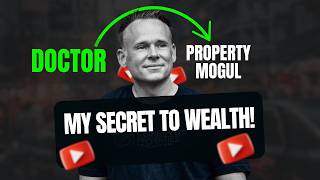
This YouTube interview (Moneywise Doctor episode) features Dr Andrew Tread Gold recounting his transition from medicine to property development and buying businesses after a GMC referral and earlier training disruption. Key themes: loss of career control in medicine, delayed gratification and compounding asset reinvestment, frugal lifestyle, and concrete growth metrics (large recent property and revenue additions) while still publicly sharing the step-by-step journey. Sponsor inserts provide financial-planning resources for healthcare professionals.
Questions this video answers
£4.9 million
£1.5 million
£40,000–£50,000 of credit card debt
An eight-figure exit from the businesses in five years
With a loan from a family member (then renovated by him and refinanced)
Chapters
My first property was bought with a loan.
Yeah.
And that loan enabled me to buy a house. Did all the work on the house myself.
I'll call you real estate icon now.
Last year we added £4.9 million worth of property to the portfolio.
It's compounded to the point where you're now talking about an eight figure exit, which is a figure so many people.
Do not appeared more that first house in Darlington than I did for £1.2 million worth of property last year.
More money doesn't solve the problem most of the time. If you've already got poor financial habits off poor habits in general, the more money is just going to make it a bit worse.
People think they can't do it and most people, it's not that they can't. It's such a lot of effort.
I've come across so many colleagues who you see a consultant who is working in private practice and it's earning not of £200,000, but it's in a lot of deep depth.
There's a plan for everything.
If you compare and contrast where you were compared to where you were before you started your journey after this whole GMC stuff and where you are now.
I share and I'm very open with everybody about everything that I do. I'm very driven to build something for my, my family and my legacy. I could have done more qualifications and been personally satisfied with that, but that's not me.
Well, the money wise doctor. So we talk about money here, Right? So returning champion Dr. Andrew Tread Gold GP Dr. Business buyer, and I think I can call you real estate tycoon now. You're very modest, but you put in some empire by the side. And then among the laurels is that your episode is the most viewed, most watched, most listened to podcast episode on moneywise.com over the last one year. Your podcast episode with myself one year ago is still the most viewer you share the experience of nearly, you know, your harrowing experience with GMC being investigated, you know, and being worried about losing your license and your income and how it's sort of suddenly focused to you. And an example you gave us that you were originally, there were three tracks. There's a track where you're just comfortable living your life, not worried about building assets. There's pain in between. And then there's the other side where you're building your way to financial freedom. It seems after that experience with GMC you crossed the path of pain. And then I've gone into this part where you're now multiple business Owner, you've got property and amongst other things, you obviously teaching doctors, talking to doctors and coaching, which is something I know you're passionate about. So welcome back. Andrew.
Wow. It sounds like you're talking about somebody else.
When you came for your last podcast, I think I introduced you. I looked back at your. Your experience, knowing that you worked as a urology doctor. And I talked about you going to send baths and all that kind of stuff, and you sounded like that. Again, you said, oh, that's a very generous introduction, but none of this is made up. This is what.
Yeah, I'm not really. I'm not really one for acknowledging achievements or accolades. Like, I don't really feel like I've achieved anything. I'm more focused. It took me a long time to. To understand how I work personally.
Yeah.
I wondered why I didn't fit in for so long in all sorts of things throughout my life. I always felt a bit like a misfit.
Yeah.
And it struck me when I was about 40 and more. So I'm 47 now. Yeah. And over this last seven years, I've really worked out what makes me tick. And it's not. It's not achievement that makes me tick, it's the development and responding to challenge. So I do a lot on my social media, so I post daily about this type of stuff and I say I've got it down into a small quote that it's growth, not goals, that motivate me.
Good, not goes.
Yeah. So I kind of. The goals are a byproduct of the achievements are a byproduct of the growth, you know. Yeah. So. And one of my, you know, when I look to the future and think about what I want in my life, I want more responsibility, I want more challenge. I'm a massive kind of advocate of people like Jim Rohn, in particular Jim Rohn, who's a big, incredible speak. I'm a massive fan of Jim Rohn. And one of Jim Rohn's things is that, you know, don't wish for smaller problems. Wish you are better at dealing with the problems that you've got. So it's not about, you know, Jim Rohn says, you know, it's not about becoming a millionaire. It's about becoming the person that becomes the millionaire. So who do you have to become? Because becoming that person stuff comes with it. And I've adopted that. It resonates deeply with me and the stuff that has happened along the way, which I'm sure we'll talk about today. Yeah, it's Just a byproduct of that. And it doesn't, doesn't register with me as an achievement. Even though some people think you're smashing it and all the rest of it. That's not the point. The point is that it's about being uncomfortable, loving being uncomfortable, loving growing into that and then looking at the next part to make you uncomfortable again. It's probably a bit sadist, a bit sadistic, but yeah, what else would I be doing?
Now? This is very crucial topic. Have you secured your family's financial future? Many times you're busy as doctors and healthcare professionals, that's fine. But if we overlook our life insurance and income protection until it's too late, you're taking a bit of a risk here. I mean, nobody can predict the future. You need to protect what matters most. Think about life insurance and income protection. This is really quite important to protect your most valuable assets. Now, if you're not sure about what you need or how to go about it, check the link in the description. I have a free guide that can help you step by step. Let's get back to the episode I love.
I mean, anyone can say anything, right? These days. People can get on social media and say stuff. But I love the part that obviously you walked the path. You know, people say empty words and they say, oh, yeah, you have to grow. You have to put yourself in uncomfortable situations. But we've seen the receipts, we've seen you working on your sites and looking after your projects and doing. Being sort of raw and realistic about the journey of entrepreneurship. Some days you wake, I wish someone will fire you so that you can do some stuff. Yeah, but I think it's very timely. You said you started figuring out things when you were about 40. It's very timely. For myself, I don't know about my audience, but you know, my podcast, I treat it as, first of all, I'm having a chat with you, but I'm approaching 40, so maybe I may eventually figure out my shit in seven years, I'll fly off. Yeah. And. And when you're approaching 40, was that sort of like being able to start focusing a little bit? And for someone who's just joining. If you, if you haven't watched the first episode with Andrew, you definitely want to go and watch it. Especially if you are thinking of pivoting from medicine to entrepreneurship or you just want to grow as a person, I think you really, really. There's a reason that has been one of the most watched podcasts, but now we're not going to go Back to rehearsal of it, but I'm going to mention one of the main issues was that you are living your regular life. Then you had this issue we still say was kind of unfairly, you know, treated or okay, well it was a situation where GMC was quite, you know, give you a difficult time. For 18 months you weren't sure your life was hanging in the balance and you only had one source of income. But in summary, that forced you to really focus. I started developing other streams of income which then allowed you to leave medicine, so to speak. Well, I know you don't practice traditionally. I'm not sure if you still hold your license. You still do? Yeah, because I usually. I'm a big fan of holding your license basically because you actually worked over many years to get it, so why not? So that's sort of like the summary and that was like the first episode. You unpacked your journey from going into trading. Trying to figure out a way to get an extra stool.
Leg. Extra leg on my stool.
Extra leg on your stool so that you're in unbalanced. But so much has happened in the last one year and you now have taken me back seven years. You said it was around 40. Started figuring out or the main catalyst, was it still related to this GMC issue or were there any other main catalysts around that time that sort of like super focused you towards understanding?
What makes you think, well, the GMC thing was the ultimate catalyst that lit a fire under me, that I needed to do something and the realization that a lot of what we do in life can be impacted by other people. So I'm not going to go back over it, but I was referred to the GMC by a doctor over an admin thing, a cremation form. It wasn't a patient that got hurt. There was no patient involved whatsoever. So the things that you think you can see coming, yeah, those are easy to avoid. But when your colleagues are, you know, doing things and you're blindsided by that, it made me think, well, what else can happen? And there was a point before that when I was in surgical training where I thought I was going to be a consultant neurologist. And the government completely changed surgical training. It was the days before portfolios and online applications. It was all done with interviews and handshakes and the old Thai brigade, which is how I ended up moving from London into the northeast. Because I'm from a council estate near Manchester. I didn't have the double barrelled name that the surgical trainees might have had from Eaton And Harrow in London. So that's how I ended up moving northeast to get onto surgery.
Yeah.
And then I was quite happy being a surgeon. And the government made us all kind of reapply for our training jobs again. And those of us that were already working, not one of us got interviews. Wow. It was the people that were paying, the people that wrote the software, they were the ones that got interviews. And eventually the consultants, after six or seven months, said, well, where's Mr. Threadgold and where's Mr. Bales? And where's, you know, these people that I've trained for years, where are these? Why aren't these getting interviews for their own jobs? And the whole thing collapsed, at which point most of us had scattered around the country. What? A good friend of mine ended up in Norwich as a trust sho non training jobs to maintain doing urology. I'd gone into general practice and eventually they offered us our jobs back. And by which point I was into GP training. I said, no, thanks. And that was, one moment, a massive life lesson where I realized that I'm in a career in my life where I'm not in control of it. The government can change it just like that. And it's a bit like, in business terms, it's a bit like selling widgets on Amazon. Yeah, your widget is amazing. Everybody buys this widget. You build a business over a couple of years, you're doing fortunes selling this widget on Amazon, and Amazon suddenly notice and think, oh, we can make that widget for cheaper than you from Amazon. So all of a sudden you now have no business because Amazon have taken your business and you've got no control over it. But yet we all, as doctors, build our careers in an environment where we are not in control of it. The government can change it like that, a complaint can change it. The GMC can change it and there's nothing you can do about it. And that was one of the massive life lessons that really made me think, followed by the gmc, that something had to be done for me personally and for my personal future. And so those are the two big things.
Wow, that's heavy.
You did ask.
Guilty Cappadiem. Look, if you're listening to this at this point, this is the point you want to pause and then replay it, because there's a lot in that few sentences. Basically, how much of your future are you living in the hands of one, you know, at the stroke of a pen? A policy change, because you mentioned Amazon and this is something Amazon has done quite a few times, I think about the other aspects would be building a business on Facebook or Instagram or one of the social media platforms and they could come back and just change the algorithm. If you're not building your own owned media, like your podcast or your email list, they could just come whoosh and just change it and you suddenly go to zero. So. But this is a risk that most doctors, most medics have never really thought about it in such clear terms that any slight change, and I wonder if his experiences like that actually crystallize it to make it seem this could actually just suddenly change my whole trajectory. Would you like to go back now and be a surgeon, seeing all that you've done so far?
No. And do you know what? When I. I was a career surgeon. Yeah. I was. I'm that kind of person.
Yeah.
And I thought when I ended up in general practice, I thought I'd sold my soul because you know what it's like in hospitals. You know, you're not a proper doctor if you don't work in a hospital and all the rest of that rubbish. And it took me a few weeks of working in general practice to realize that actually that was what medicine was about for me. You know, being almost being your own boss as much as you can be in a practice, independently working, being run by clinicians with more, more experience, not necessarily having the whole thing run by nurses who've just been promoted up the ranks. Yeah. No disrespect to nurses whatsoever. My wife is a nurse in a midwife, so she's in control.
You're gonna have some explanation to do at home now.
Yeah, well, she's in control. I'm still being run by a nurse.
Well, I think I get your point again. So there's a bit more autonomy in the GP practices like JP surgeries are basically run by GP partners. Could you wear GP partner at some point? And then there's a manager and all that stuff and you feel like you're in a bit more control.
Yeah. And you get, you get to see people that come back again. There's continuity in general. Even nowadays there's still continuity. Whereas in surgery that was kind of what was missing. And I did find myself, because I'm very people oriented and I did find myself following consultants around and having to re. Explain to patients what the consultant had said. And it kind of, I wondered what, you know, why, why am I the one that's doing that? So in the end I ended up in general practice and I actually, initially in general practice, I was quite happy. And then another thing Occurred to me one and there's a problem with getting your cct. As a doctor, it doesn't matter what your specialty is, okay? The problem with getting your CCT is that once you've got it, that's it. There is very little career progression ever again. After your cct, you might get a job in the ccg, you might get on the local LMC board, you might, might get a job in a role in an advisory group in the hospital. But really once you've got your cct, you're at the pinnacle of your career and you never progress. The earnings never really change either. And if you're doing that in your mid-30s and you've got another 30 years of not progressing, the people like doctors that are intrinsically goal driven, we have a goal to get our exams, we have a goal to get into medical school, we have a goal to get on the training program of our desire in a location where we want. We have a goal to get our CCT and then there's no goals after that.
So I've never really thought about it that way. But I mean, obviously, especially in GP practice, it feels like any growth is going to be now horizontal rather than vertical. I don't know how it is for maybe consultants in the hospital, but it seems like any growth is going to be people then start doing diplomas and doing extra stuff and going into some other roles. Yeah, so that's quite insightful. Obviously different from entrepreneurship where you basically are learning every day, you're having to grow every day. Right, Yeah.
I mean there's some interesting crossover there by the way as well. So for example, the in, in medicine we get to a point and then, you know, I got to a point, I've done my CCT and I wanted to try and generate more income, so I went and did a diploma in occupational medicine and then I wanted to start an occupational medicine business.
Yes.
Which we started. But at the time the partners in the practice couldn't see that it takes a while to build a customer base. Yeah. The fact that I was outgoing, meeting potential clients and trying to get customers, they would rather me be in the practice seeing patients.
Patients.
Because being out there wasn't proper work. You know, it's a bit short sighted, but that's the difference. But what, what you realize is it's like dentistry, you know, you get to a point where you've got your. Or being a surgeon, you get. Yeah, you get to the peak, you get your tcct, you get to your level of competence. More qualifications do not Equal more money. Take a dentist, for example. The dentist has got his practice, he earns his money, he can go and get more qualifications. It won't improve his income. The only thing that improves your income is how well you market your services. And that's the big difference. And you know, those are some of the things that transfer across and the attitudes that transfer across when you own things like a healthcare business like I do a private practice. Getting that mindset into clinicians that have grown up in the NHS is a challenge. But we can unpick all this stuff.
Is a huge challenge. Yes, yes.
Something quick and useful. If you ever wonder what your actual take home pay is after taxes, ni pension deductions, or you just not sure how paying more into your pension will affect your take home pay, our free NHS salary calculator will give you a clear, instant breakdown. It's perfect for planning your finances, checking deductions or even spotting overpayments and helping you determine how any changes in your pension contributions can affect your take home pay. You want to make sure you're taking enough home now. It's easy to use and it's stellar for NHS professionals like you. You can try it now for free on nhsssalarycalculator.com so it's NHS salary calculator dot com. The link is in the description. Now let's dive right back into the episode.
Right, so there's a lot to unpack there. Part of what I enjoy about doing this podcast, totally unscripted, is that I don't even know which direction we're going to go. And now you've opened up this stuff that we want to explore because there's so much juice in it. We start from one. You talked about progression and growth, which was where you started the podcast from. You said you found out what made you tick. About seven years ago you found out it wasn't the goals, it's the growth. It wasn't about sort of like hitting a mark, it's about progressing. And now you sort of like taking it back to the medical profession where it seems everyone's goal at the beginning is to become a consultant or a gp. Basically it's family medicine consultant. I don't know why they don't call it that. But you start out from there and then you hit that goal, which on your progress to get there, it seems like, oh, this is what you're working towards. Then you hit that goal and it's suddenly like, now what next? And it seems like, I'm just gonna stay here now. For the next 30 years or 38 years, until I die or until my. My career is over, whichever goes first. Or burnout, you know, burnout. That's a.
That's.
A lot of people talk about burnout these days, and it just feels like, okay, without having that sort of something to aspire to, a lot of people now end up, you know, being sort of like just developing in a horizontal way. You know, they might tack on some extra stuff, tackle some extra stuff. If you're a GP partner, most times you have very little time for merge. And the way the GP partnership is set up, it's not set up to grow properly as a business. It's not set up to. You can't increase your customer acquisition. You don't want to drive down your customer acquisition. Except as a private gp, you're not looking to hire more, or even if you hire more, there's a limit to. There's a cap on everything. So there's no incentive to drive growth, because part of what leads to growth is the incentive. Actually, until you mentioned a very key factor there, which is about investing. And it's not investing money per se. Well, money is part of it, but investing the time to get a business or to get wherever you are, to grow, to germinate. Because obviously someone listening might say, oh, growing is not just about income, it's about developing yourself. But we have to keep the numbers one way or the other, we have to count the scores. And so your GP partners thought, well, you are developing a business, just like I spent a whole year sort of creating free content, doing stuff, letting people figure out if I know what talking about before we made any revenue. So your GP partners felt, I don't know what Andrew is doing. I'd rather sit down there and see patients rather than running around claiming to start a business while he has a nice time off. So how has sort of like delayed gratification played a role in your journey to make that leap from a doctor to a property developer to now a business owner? Because I'm going to get into all the businesses we've acquired in the last. Yeah, actually, yeah.
Well, delayed gratification is massive. You know, I was driven to build something that would allow me to get out of medicine as quickly as possible. And by doing that, you know, you slowly start acquiring properties, developing them, refinancing them, and instead of the money the property generates or the business generates, instead of taking that out and, you know, going. Buying a set of turkey teeth with it and having a picture next to a lamborghini Louis Vuitton handbag. You know, I would put it back into the business and it would compound and slowly I would delay the, the gratification and I'm still delaying gratification. I live a very frugal life. I've really, I don't have much in the way of flash belongings whatsoever. I have a few trinkets left over from when I was a, a doctor. Yeah. Before I learned about this stuff from before I was kind of 40. Really. Yeah. But now, now it's about buying assets that generate money and the money goes back into the business to buy more assets that generate more money and slowly over a period of time, you know, build wealth slowly. This is not get rich quick. Nothing is get rich quick. So delaying gratification is absolutely essential. I would go back to what you said about growth doesn't necessarily need to be financial. 100% it doesn't. You can grow educationally and it takes different people to grow in different ways. You know, I'm very driven to build something for my, my family and my legacy. I could have done more qualifications and been personally satisfied with that but that's not me. My, my growth is from a different place. So figure out if you figured out that growing by getting qualifications satisfies you. Perfect just doesn't satisfy me and that's fine.
Well, the money wise doctor so we talk about money here.
Yeah, exactly.
Yeah.
I know I should know my audience. I should know your audience.
You're in the right place Andrew. And yeah, we want all of it, one whatever it is that you're looking to grow. But again you've also hinted at something really quite, you know, a theme. I see the days of 17 year old YouTubers who take a picture next to a Ferrari or even property investors and developers who feel the need to show off their Ferraris or Lamborghinis. I mean don't get me wrong, in social media sometimes you have to get attention one way or the other to pass your message. But I've looked a lot of your content seems so raw and realistic. It's like I've got, I'm a multiple business owner but this is my life. Like I'm not living a flashy life. I'm not sort of like living on, you know, bad debt, borrow a lot of money. Which now having done money wise doctor for almost a couple of years now, I've come across so many colleagues who, you see a consultant who is working in private practice and is earning not of £200,000 but he's in A lot of deep depth and is living in a house worth probably a million pounds. These are not hypothetical cases, these are actual conversations, one on one sessions. And you just realize, okay, more money doesn't solve the problem most of the time. If you've already got really poor financial habits or poor habits in general, the more money is just going to make it a bit worse. But I just want the comparison, if you could compare and contrast where you were in terms of finances, assets and liabilities and oh, I just want a new car and all that kind of stuff compared to where you were before you started your journey after this whole GMC stuff and where you are now in terms of, you know, assets and building stuff, in terms of also your habits of spending and all that. Because you probably don't look like the typical Instagram millionaire.
So when I, when I started, I'd been in. Well, when I, when I started this journey, I just bought this house. So I had this house, which is quite a big house, but I had a massive mortgage. I had 40, 50 grand of credit card debt. I had a car on finance. I had no savings at all.
Wow.
I was working to pay the tax man and then the tax bill would be massive and then I would work harder and earn more and then the tax bill gets bigger and then you have a nice couple of holidays because you deserve it because you're working so hard and they have to go on a credit card. And I was, I had the full consumer thing going on. Yeah, I was, I was working to live and it was. Yeah. And when the GMC happened, I thought that was one of the things, you know, what would happen. How would I pay all these bills that I've got? Whereas. Now.
Let me just, let me just interrupt you, Andrew, there. Feel free to tell us exactly you're not bragging now because I know you're modest. Feel free to tell us the full details.
Last year we added £4.9 million worth of property to the portfolio. Wow. And in the businesses that we acquired, we added £1.5 million worth of revenue to it. And that's in the last 12 months.
Wow.
So prior to that, you know, several million pounds worth of property, hundreds of thousands of pounds worth of income from the property. That's a gross income. You know, there are costs that come off it. You know, of course, of course I run around in a 10 year old car.
Okay.
I have a truck or. Well, I did have a truck that got burnt in a firebomb, but I have an old van that's a 2007 van that I spent £2,000 on. You know, I don't have any, I don't own anything from Louis Vuitton, anything that I, any income I get just prepares my, pays my living expenses and the rest of it, it gets compounded. But I'm at the point now where, you know, we, I can have holidays. So I've just had a nice holiday. I've treated myself to a nice holiday. But there's a plan for everything. And, and you know, ultimately, for example, the businesses. I'm working on an eight figure exit from the businesses in five years. That's amazing. Should I wish to. So that's, that's a long term plan. But it's. Yeah, I'm a different person now. You know, it's. But. And I started with nothing. My first property was bought with a loan from a family member. Yeah. And that loan enabled me to buy a house. Did all the work on the house myself. Then it revalued at a higher amount because I'd forced the value up, got a mortgage on it, pulled almost all that money back out, moved on, refinanced it and moved on. Kept the asset that pays me an income every month. And slowly I shared that regularly. And I share everything on social media.
Yeah.
And people see what I'm doing, see that the stuff is true and accurate and people think they can't do it. And most people, it's not that they can't. It's such a lot of effort. So most people will say, well, if I lend you money for three years, will you give me 10% a year on it? And I say, yeah, fine. Because we only invest in property I don't buy. I don't spend it on shit.
Yeah.
I spend it on stuff that works with a track record.
We haven't been seeing Nesta Lamborghinis.
No, absolutely. And once, once that, that thing unlocks where people see what you're doing and trust you and that then enables you to grow quicker. And then you get growing pains of managing multiple different sites and multiple employees and all the rest of it. And you develop into that and you become a natural at that. It's. The whole thing takes time, experience, dedication and risk tolerance. But I share and I'm very open with everybody about everything that I do. And that's one of the tricks, if you like the shortcuts.
I love it. I think is that openness that has made your podcast episode so popular and just you happen to be. I think you're the first person we've invited back. I mean, we might invite some people back and people won't, but actually that sort of openness. And this is what I'm doing, this is my journey. But again, you've touched on something you said you share your journey, which not a lot of people share. The hard parts love. People share the LinkedIn version. Like, I could write a LinkedIn post, or we could write a LinkedIn post to say, I left medicine. That's the hook now. I left medicine and made 4.9 million pounds last year in revenue. Here is how I did it. And then they go along to say, believe in yourself. And you know, no, but you share the raw step, the journey. And that's good because a lot of people don't realize the amount of effort that really goes into making anything work. Even if you just had a podcast, if you had a business, the amount of share effort you have to invest upfront, you have to be willing to do that. And not knowing for sure whether it's going to work 100%, because that's the other part. But I feel like my experience so far in entrepreneurship, you've had me on your podcast and investing has shown me that it's better to start even if you're not sure and fail and then start again and learn. Which I think you must have experienced in your property journey, because in our last episode, you shared how you bought that first flat.
My first property was bought with a loan from a family member. Yeah. And that loan enabled me to buy a house. Did all the work on the house myself.
Was it in Darlington? Yeah. You bought your first flat. Kids, obviously people say, what? Your flat was throwing off an extra, maybe 200 pounds extra at the end of the month. Some people say, well, how do I get to financial freedom with 200 pounds now? And they think I'm just going to go do an extra liquid shift or go find something. But somehow it's compounded to the point where you're now talking about an eight figure exit, which is a figure so many people do not. I don't mean everyone, but of course there are entrepreneurs in my audience, but the average doctor doesn't figure out an eight figure exit anywhere in their life. I mean, even if they cash out their NHS pension or whatever pension they've got, they're not thinking they're going to be imagining an eight figure exit. So that's really quite fantastic. And I wanted us to pause for a moment and just celebrate that moment because you have a tendency.
I haven't done it yet.
Yeah. I know.
That'S what I'm aiming at.
Oh, gosh, now, I don't know. Your car is older than mine, so I'm thinking, well, if I haven't got an Xigor, is it. I'm actually changing that car. I'll probably keep it for a while more. But it's editing closer to five years.
But, you know, it's about. There's. There's lots of different ways you can look at it. You know, it's a. It's about cash flow. So the first thing is, you know, do you have something that generates enough income to fund your life? You know, the first number is covering your expenses, your mortgage or rent and your bills and your essentials. Once you get to that point, if you're still working as a doctor or whatever job you're in, it gives you an enormous feeling of freedom because, you know, have a bad day, you can go home and you can think, well, actually, even if I didn't go into work, I'd still have my essential expenses covered. So it allows you to treat the job differently, with a bit more freedom. And actually, when I got to that point, I enjoyed the job a lot more because I didn't feel that I was reliant on it.
Absolutely.
You also then realize, you know, I might be doing 60 hours a week in this job, but my side hustle pays for my, you know, essential spending. What happened? What would happen if I left and did 60 hours on my side hustle? You know, and the difficulty is, I had a message yesterday on. On Facebook, actually. Somebody, the doctor was asking me, how much do I need to earn from my business? What percentage of my doctor's salary do I need to earn until it's safe for me to jump? And that's. I said, that's the wrong way to look at it. You know, there will never be a perfect time to jump, because when you leave medicine, it's a bit like BASE jumping. You know, will the parachute open when you jump out of that plane? Hopefully at some point, you've got to make the choice to do it. And that umbilical cord, that income trap that we have as doctors where we're over average income on, you know, usually that is. That's what keeps you trapped because it's a comfortable life, but it's not enough to make you financially free, but it's enough to reduce your motivation to get out. So, yeah, it's a difficult thing.
So much. So much golden nuggets being dropped casually. I'm not gonna let that happen. They're going to come back to it. So basically, I don't know if you know the concepts where I grew up. I grew up in Nigeria and when we went to visit maybe my grandmother in the village, there's like that. You get like a good. It's being tattered. So, you know, like it's tied. There's a rope around it and then it's tethered. It's got like a bit of a rope and it can move around. It's grazing around the perimeter and it can, it can go beyond that perimeter for what you described. That imaging just came to me where you are if a doctor, a consultant. Okay. Yeah. You've got a. An illusion of freedom. You've got like some income you can actually spend, but there's a perimeter which you can go beyond. You can't decide, oh, I want to take out like one year to work on my business. Because you are now sort of like trained. It's almost like heroin, right? Some. Was it Nassim Taleb who said one of the biggest addiction in history, heroin and a monthly salary.
Yeah.
Is one of my favorite authors of all time. I think I mentioned it to you on your podcast. So. So that money salary is very addictive. And one of the joys, obviously, when I left my salary job two years ago, it's going to three years now. I left my side job was getting that sort of freedom of like, yeah, actually, I can actually take the majority of my time. You make your side hustle, which is something you're passionate, you're good at, you're obviously very good at it and making your main hustle and putting that amount of time. Because you see a lot of people trying to get to the point where the side hustle starts to pay for, you know, their life expenses. There's not that element of sacrifice or stuff. And what happens that it doesn't really happen because then you are never giving it the enough time. You're not giving the attention. Like we're doing this podcast by 10:30am on a Tuesday morning. Who does that? If you're a doctor, you're probably somewhere at work at the moment or you've done a night shift, you're resting. Part of why we're able to do that is because of that freedom. We've got that flexibility. And I rather have that than a Louis Vuitton bag. Lvmh. I have nothing against you. I think I value freedom over a Louis Vuitton bag or a Ferrari.
Yeah. It won't look as good on. On instagram. Though.
Freedom is hard to picture. I mean, it is, yeah. Because wealth is obviously not visible most of the time. It's a spending that most people can see. So, Andrew, Andrew, mate, congrats so much on so much of what you've achieved. But I know you, we've talked a few times. I know you need to find time to stop. Just acknowledge what you've done and then continue your journey. Because now you're thinking eight figures, I'm moving to the next step and I love that that's part of what drives you is growth, is growth and that's great. Now let's look at your businesses. The last time we spoke on the podcast, you had just, you were just about to sign to acquire a business. I think it was a truck servicing. Yeah, it was a truck servicing MOT kind of place, which I thought, that's right. Wow. You're not sort of just looking around businesses around Metony. You are looking at a certain criteria. You want a business that we are generating at least a million pounds a year and had a certain number of employees. So you wanted to make sure you weren't buying a job. I need to buy a business where there was a managing team in place. And you are going to buy some OT physio place as well. So you've gone from a doctor to property developer to a business buyer. So I've met a lot of doctors who are obviously in clinical medicine. I've met a lot of doctors who are in property. Some of them are in my audience. I, I don't think we have that many doctors buying businesses. So can you give us your progression, Sort of like a master class, how you got to that point?
Well, so we'll come on to onto the businesses because there's some big lessons there as well, which is kind of. I really, I'm really keen on people knowing that it's not glitz, glamour and easy and there's risk involved. And so I want to talk a little bit about that, if you don't mind. But the property was the gateway. The property was the entrepreneurial gateway for me. It started with a tiny house in Darlington and a commitment from myself to learn and immerse myself in people doing interesting things. And over the years, for the last five, six, seven years, I've committed every day and every week to learning about business and entrepreneurialism, not just about property. So last time we spoke, you know, we, we're both good readers, so. Yeah, I, I read about 50 books a year. So. Do you? Yeah, I don't listen to the news, I don't listen to the radio, I have an audible audible book audiobook on in the car. Whenever I'm in the car I don't even listen to music anymore. And as an ex musician in a long time ago, that's an unusual thing for me. And so what happened along those years of compounding experience of listening to other people that are doing amazing things, it opened my mind further and we all suffer with the Dunning Kruger effect, every single one of us. And for those that don't know what they're doing in Kruger effects.







