Practicing to Lose? Faith’s Response to Sudden Tragedy, Grief, and Loss– Purity 740
M.t. Clark responds to the Uvalde shooting and personal loss by offering three Christ-centered practices for grief: weeping with those who suffer, providing practical help, and persistent prayer. He emphasizes being present and silent when needed, and cites Romans 10:9 on affirming faith through suffering.
Chapters
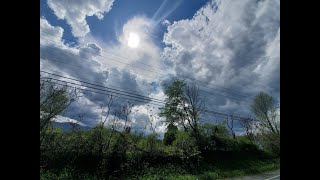
To see today's photo, go to mt4christ.org or follow me, M.t. Clark, on Facebook or Twitter. Good morning. Today's photo of the sun shining through cumulus clouds and over utility lines and some roadside greenery comes to us from a friend who shared this pic and other shots of the heavens in an album they called Look to the Sky on social media back on May 15th. While this photo is magnificent in its simple beauty, it is with a heavy heart that we share it this Wednesday morning, as not only has there been another mass shooting in our country, this time at an elementary school in Uvalde, Texas, that has reportedly resulted in the deaths of 19 children and 2 adults, but I also received news late last night that my wife's uncle Michael died suddenly last night, apparently from from cardiac arrest. At times like this, we might find ourselves looking to the sky to ask the Lord, "Why? Why did this happen?" Unfortunately, this isn't the first time that our nation has seen a school shooting, and it probably won't be the last time. And regardless of the efforts of law enforcement and members of the media to investigate this latest crime, the answers they uncover about what happened will not adequately answer the question, "Why?" Likewise, the loss of our loved ones will not be adequately explained to us from the reported cause of death that is drawn from a coroner's autopsy report. Man's efforts to explain the evil that men do and the phenomenon of death in our lives can answer the questions of what and how things happened, but for the answers of why, the The answers of the question "Why?" are existential. They have to do with the big questions of the meaning of life. And while some will just look to the sky and possibly lament or grow angry at the seeming lack of meaning and/or purpose to our lives in the wake of such tragedies, I know that there is a God above it all who loves us and will one day send Christ to make things right. The biblical narrative for the reason why bad things happen and why we die probably won't provide much comfort to those who are hurting and grieving, and may enrage those who don't have faith in Christ or any respect for the Bible as God's word. So I would hold off on sharing the root causes of evil and death that are provided in scripture in Genesis 3 through the story of Satan tempting Adam and Eve, resulting in the knowledge of good and evil, and thus the beginnings of sin and death. Uh, that won't help someone who doesn't believe, and it might not help those who do. However, the Christian faith can be of immeasurable value in times of trouble, provided that the person has mature— has a mature understanding of the truth of reality that is revealed in Scripture and has a relationship with God through faith in Jesus Christ that is augmented by a continuous practice of renewing the mind with God's Word and applying its wisdoms to the way that we live. Uh, the Bible contains the answers to life and death, but those answers can confuse and provide cold comfort to those who don't understand them or who are not actively applying them to their lives. The Bible is uncompromising in its depictions of sin, suffering, and death, and in presenting Christ as their only remedy, and his life reveals the appropriate response that we are to employ when tragedy, suffering, or turmoil comes. From the New Testament narratives of his life on earth, we can know that we should— we can know what we should do when we don't know what to say or what to do. First, Jesus wept. Jesus' tears were shown 3 times in Scripture: once at the death of his friend Lazarus, once over the city of Jerusalem when he contemplated its future siege and destruction at the hands of the Romans in 70 AD, And finally, in the Garden of Gethsemane on the eve of his arrest, where his anguish was great but his desire to do his Father's will was greater. Christ's example shows us that it is okay to cry, and as Paul tells us in Romans 12:15, we are to weep with those who weep. When we face tragedy, loss, or rejection, it is natural and healthy to express our emotions and to let others express theirs. Instead of trying to relieve people's grief with theological explanations, we should just be present with them and help them where we can. Which brings us to the second thing we can draw from Christ's life to do in times of trouble: Jesus healed. Jesus' heart of compassion was shown in his miraculous healings. While we may not be able to physically or emotionally heal people like Jesus did, we can offer hospitality and help to those who need it in other small ways. Being present and available to help others may be the best way to show God's love to those who are hurting. So be a friend and a Christian by helping where you can and in knowing where you should give space. And finally, Jesus prayed. Christ was constantly in prayer. When he was faced with his greatest trial on earth, he went to the Father in prayer, poured out his heart, poured out his heart to him in prayer, and rose to drink his cup of suffering with peace. This is the difference maker. That close personal connection with God and a knowledge of who God is assures assures us of God's presence, protection, and purpose. God is always with us, but we have to seek him to know the wonders of his love. And in times of heartache, when we seek the Lord in times of suffering, we will find him, and he will give us comfort and strength to persevere, even persevere through even the worst tragedy. Through faith in Christ, We have the assurance of our salvation and eternal life in God's kingdom. So no matter if disease or sudden death should come our way, those who have made Christ their Savior know that no matter what pains we suffer on earth, we can trust that the Lord will never leave us or forsake us, will give us strength to endure, and will welcome us home when we— when our time on earth has ended. So we know that we have his ultimate protection. Christ knew it, and he faced an unjust trial and death on the cross with peace because of it. And although we may never fully understand why things happen the way they do, we can be assured that everything that happens has a purpose under heaven. Romans 8:28 says that we can know that all things work together for good to those who love God and to those who are called according to His purpose. So while we have limited understanding of why bad things happen or why people die, the Lord knows. We can trust that He works all things together for good. To have peace in the storms of our life— lives, we need to stand on the rock, Jesus Christ. When we know who we are in Christ, we can be assured of our acceptance, significance, and security in Christ. The truth of who we are in Christ and a close personal relationship with God that is fostered by continuous practice of the spiritual disciplines of prayer and Bible study will keep us grounded in peace in every circumstance and comfort us in times of trouble. So in hard times, remember to keep walking and talking with God, and he will see you through. Today's Bible verse comes to us from the New Living Translation Bible Promise Book for Men. This morning's meditation verse is Romans 10:9, and it says, if you confess with your mouth that Jesus is Lord and believe in your heart that God raised him from the dead, you will be saved. Today's Bible verse is the prescription for salvation. I follow the resource I have selected for the Bible verse I use each day, so I apologize if this is old hat because I use Romans 10:9 all the time. In either directing people to make a profession of faith in Jesus Christ or to assure Christians of their salvation. Did you say it? Did you make Christ your Lord and Savior? If so, you are saved, so let's follow Him. I like to keep things simple because living as a Christian, renewing our minds with the Word of God, and repenting of our worldly ways will be complicated enough. So rather than endlessly doubting if we actually— we are actually a Christian, I ask people that simple question and then encourage them to live as a Christian if they answer in the affirmative. If you don't feel like a Christian, assure yourself of your profession of faith and start acting like a Christian. Your feelings will catch up as your mind sets itself on the Word of God and decides to apply God's wisdom to the way you live. So, if you run into any who doubt, give them Romans 10:9 and ask them the question, "Did you confess with your mouth that Jesus is Lord and believe in your heart that God raised him from the dead?" And if they say yes, assure them that they are saved and encourage them to start living like it. As always, I invite all to go to mtforchrist.org where I always share insights from prominent Christian theologians and counselors to assist my brothers and sisters in Christ in their walk. Today we continue sharing from John Piper's Don't Waste Your Life, and we're on the third point of how to apply your faith, and we're gonna share the fourth point as well. So it's gonna be a lengthy— well, maybe we're just gonna share the third. As you can say, I'm sort of doing this on the fly. So we're going to share that third point, which says we make much of Christ in our secular work when it confirms and enhances the portrait of Christ's glory that people hear in the spoken gospel. So yeah, we want to, we want to glorify Christ. And if you want to see what John Piper has to say about that, um, go to mtforchrist.org and you'll see that third point, uh, from his chapter 8 of his book Don't Waste Your Life. And of course, we share that for educational purposes, and we encourage you to purchase John Piper's books if you want it all in one shot. Otherwise, we'll give you a little bit at a time to encourage you in your walk each day going forward. Um, yeah, it's, uh, it's a rough day. Uh, basically, uh, a death in the family, and, um, I have friends who are, are, are sick or are suffering from medical conditions, and then we get another national tragedy in terms of a school shooting. Just 10 days, you know, prior, we had the shooting in Buffalo, which was basically racially motivated, to show us that, you know, that we don't have to really explain, you know, sin. It's out there. Evil is, is pretty stark and easy to see. Unfortunately, some people look at the suffering and these evil acts and they point to it and say there is no God because of it. But I just recently saw that Frank Turek's CrossExamin.org, his ministry, shared a post about this, and I shared it on social media, so if you follow me on Facebook, you'd be able to look it up somewhere. But the gist was basically that, you know, the presence of evil doesn't discontinue the existence of the good. And if we know evil, we have to know good. And God's the creator of all things. So to say there's no God because of evil is to say, you know, I guess you don't appreciate the good things in life. God created both good and evil. Unfortunately, man— the narrative in Genesis tells us that man chose to know good and evil, and with that disobedience, sin came in the world and death came in the world. It's like I said, it's not a very comforting explanation in the wake of these things, but it is the explanation. And, uh, it's, it's as puzzling as the explanation that are— that we're saved and have eternal life by putting our faith in a man who died on a cross. These things are spiritually discerned and spiritually revealed, um, and we are to renew our mind with the word of God, and the Holy Spirit will illuminate the understanding as we draw close in prayerful study of, of God. Word, and as we apply our faith to our lives, and thus we can learn and grow and mature in our faith. And so we can't just— I've learned very painfully that, um, uh, people don't know what you know, um, when you, when you've gone through Bible college and got a degree in Christian counseling and, and simultaneously, um, repented of your sin and walked through recovery and you know, walk through the trials of a life maintaining your faith in Christ and trying to live as a Christian. So it wasn't just book study, it was life application. And that's what we teach here on the blog and the podcast, is that there's great value in our faith, but it doesn't come from just knowing it. It comes from applying it to our lives and practicing what we preach, you know, and, you know, standing on who you are in Christ and walking in that both physically and emotionally and behaviorally. We try to live as Christ would direct us to through his example and through the wisdom of the apostles and the epistles that tell us how to live as Christians. So that's what we try to encourage because there's great hope and peace that comes through our faith when we practice it. And that's what this is all about. Today's heading, you know, Practice for Times of Loss, usually a practice for times of victory. But today we, you know, we show that there's great value in practicing our faith when we lose, when we're rejected, when we're condemned. That's when the value of our faith really comes to bear because We can find peace in the storm when, through our faith, when we practice it in, in those times and share the hope that's available. But we can't just immediately give the hope and knowledge that we have to people. So today I direct people to be, be present and help where you can, and to know when to distance yourself and know when to be silent. Didn't say that in the blog, so if you're listening, you got that. Be silent sometimes. Um, anyway, I'm going to be silent, uh, just before we pray here. Um, yeah, let's do that. Um, Lord God, Heavenly Father, thank you for another day in your kingdom. We thank you for the, the riches of your love and grace and mercy in our lives, and the comfort you give us in times of trouble, in times of pain, in times of suffering. Lord, we pray for you to go before us today to open our eyes to your goodness and your beauty and to direct us in the good things we need to do. Lord, help us to share and show the love of God to everyone we encounter today. Lord, we pray for you to go before us, to, to, you know, set things up for us, Lord, so we can walk into the good things you have prepared for us. And open our eyes, just let us see. Lord, we pray for the people today who are listening. We pray for anyone who's suffering the loss, which is abundant in our society, from the tragedy of these recent shootings to, to personal struggles and, and disease and, and, and personal losses to death. Lord, we just pray for you to come alongside all of us today to comfort us and to guide us in the way we should go. Lord, we thank you, we praise you, and we love you. And, uh, all these things we pray in the mighty name of Jesus. Amen.
More from M.t.




Making Too Many Mistakes and The Mercy of God’s Grace and Favor - Purity 1811






