The GCC Pod Ep 6: From Cost Centers to Innovation Engines
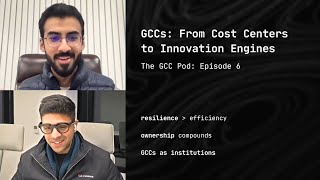
Muhammad Umar explains how Global Capability Centers have shifted from cost-cutting back-offices to innovation hubs for AI and R&D. The old model outsourced automation; the new one outsources intelligence. Three operating models—Build-Operate-Transfer, captive, and joint-venture—each suit different needs, but all face hidden risks like permanent establishment and transfer-pricing issues.
Chapters
So for years I think these offshore centers overall were very much seen as these cost saving mechanisms, sport functions, back offices, so on and so forth. And I think that mental model is very much breaking in the sense that there's a transition where global capability centers are now becoming places where genuine innovation is happening. AI systems, R& D, product design, and even in some cases, you know, core business decisions. So let's unpack this a little bit. Right? Why is the old idea of offshore centers as these cost saving back offices fundamentally broken today?
I'm not sure if it's broken, but I mean in 1980s when all, when we started all this offshoring thing, I mean, I was listening to Narayan Murthy, he's a founder of Infosys, and he was saying like how the early work of building Infosys was like they were doing lots of code, storing it in floppy drive and sending it by mail to the American businesses. That was a start of offshoring. And then we had all those cloud infrastructures and all that that allowed this collaboration across multiple geographies. So the offshoring started from that floppy drive. So that was the thing. But now currently what we're seeing is when we talk to the customers, one of the major challenges, outsourcing automation to a third party services vendor. That's how outsourcing was, that's how the world started to look about outsourcing. But now outsourcing intelligence, what it means is like, okay, take my data, take the entire infrastructure, take all my secrets, take all that and take my money, be more intelligent and then come back and now help me becoming more intelligent. This model that first enables someone else to build the intelligence on top of your infrastructure and then ask them to come back and now they would help you build the intelligence for you. And that's somehow CTOs and the businesses are struggling with how to think about outsourcing intelligence. So that is a major challenge. Currently it's a new kind of work. I haven't seen any, I mean, I haven't seen anyone who basically outsourced someone, okay, take this, take my money, be more intelligent and come back and help me become intelligent. That's not the thing that we've seen. So that's the challenge. So historically that outsourcing automation, outsourcing labor is now fundamentally is being reimagined, one of which is like, I mean, rather than outsourcing to third party services vendors, you set up your own capabilities in those offshore locations. As you talked about global capability centers, the real difference between global capability centers and others is like Global Capability center is the extension of your own, basically your own team. It's your team, even if someone is helping you with infrastructure, helping hire engineers and stuff like that. But eventually it's your team extension of your team. So that's the major reason the nature of the work has changed entirely. It's outsourcing. Automation was one thing, but the outsourcing intelligence is a very different ballgame. So probably that's something that is just changing across the spectrum.
Yeah, I think I completely agree because the reason I feel like it's completely changed the game is because now with modern capability centers, they're becoming increasingly responsible for work that directly impacts both revenue and then also differentiation. Things like AI, product development, data platforms, internal tooling, experimentation in general as well. But I think trust is something that then comes into the conversation as a result of that. Right. So what kind of work, Omar, are Global Capability Centers actually doing now that they maybe weren't trusted with in the past?
Again, I'm not sure whether what kind of work was not trusted in the past, but I would just add on, like previously, the primary purpose of offshoring was code generation. That was the core. I mean, I mean, for example, if you want to automate certain internal apps or if you are, for example, building new custom. If you are, for example, an airline business and you want to build a new kind of customer experience, so you needed lots of engineers who could generate a lot of code for you in the front end, back end and set up the cloud infrastructure and all that stuff. Right. So you need a lot of code generation competency. That competency is not required. I mean, I mean that kind of competency. If You've used Cloud 4.5, Cloud 4.5 is using Gemini Codex. I mean, that is something that you need probably a few thousand tokens and you would have all that in house. So clearly code generation is not what companies are looking for. Even existing capabilities centers, they're big with these services vendors, if you see they're big layoffs that are currently been going on. So one is that no more code generation required is required, no more customer support, call center, these kind of things. That's not required anymore. What's required? I think what I've seen is like active contribution in R and D in building new products and coming up with a marketing strategy. One of the major things that I've seen in setting up global capability centers is where teams, what historically used outsource coding, now outsourced lots of editing stuff, lots of marketing stuff. So they're being outsourced, for example. So if you are a major product play and you want to launch few new podcasts, you want, okay, all the work, the initial, all the work of editing and all that work of posting and all that though all is being done even with AI, but you want all that cloud storage. So the work that really moves the needle for the business, that kind of work that really allows to improve product by 1020 x that kind of work. The bulk load of GCCs are currently on setting up these large, very large data infrastructure teams which for example, if you want to fine tune different models, large language models, let's say you need very large scale data optimization and data infrastructure teams. So you set up those kind of teams, right? So the nature of work has changed. I'm not sure if somebody's raising a very large scale data team to hire 40 Node JS developers anymore.
And I do like the fact that you use the word outsourcing again. And I remember we talked about, you know, how AI should be in sourced versus outsourced specifically when we talk about AI. But when you said that, it made me think of something else specifically around gccs, which is a little bit interesting, is that there's no single way, if you look at it, there's no single like correct way to set up a global capability center. I think it's about how the model that you choose or that you build needs to really just align with, you know, how you take risk, what kind of control you're looking for and then obviously the speed of execution and so on and so forth. So how in your opinion should companies think about, you know, choosing between all these different models that are out there? Build, operate, transfer, joint venture models, captive models. Talk a little bit about that.
So I mean in principle there are three models that are currently, I mean the place is wide open, there's lots of innovation going on. People are coming with, companies are coming with lots of different models, but generally there are three. One is bot that you. And it works when speed matters and risk needs to be minimized early. That's what bot model is all about. Then there is a second model called captive. It's where it works when control and IP sensitivity are paramount. Most of the data related workload is through setting up captive global capability centers and third is joint ventures. That's where for example, you basically set up a new business in partnering with a local entity and that's required when you need to navigate lots of unfamiliar ecosystems and you want a lot of local government governance Structure kind of thing. So that's. These are the three major models that are currently going on. And then there are two ways. One then in terms of businesses, there are two kinds of businesses. GCCs are now something that's not only pure play GCC businesses are doing. So there are companies who are only building GCCs and those companies are in essence are basically real estate businesses. Right. So they have that real estate, they help you set up the infrastructure but then you come and you of course they help you, but you build your capability on top of it. That's the core GC businesses. But then consulting businesses have also launched these global capability center service offerings and they, and what they call as third party GCC offerings. So both, both are the basically both kind of work, both kind of service offerings are now acting as an extension of your own organization. These both kind of workload are where the in house teams or in house technology leaders are directly managing the employees, directly managing the work infrastructure and directly looking at the cost of how much cost is and how much, how much are they spending on building on raising these teams and all that. So yeah, I mean that the only thing in the wave of AI currently that's, that's surviving this AI shock is this GCC model somehow.
Yeah, yeah. And I, it's very, it's fun to keep up with it. Right? It's fun to see how many different ways. I know you mentioned like you know, three models which are probably the more prominent ones out there. But as you mentioned, you know, so many different companies are now bringing in their new GCC practices and doing in so many different ways. But I also think like across those different ways, regardless of how you operate, I think the closer that these centers get to decision making, like genuine decision making, the more you get susceptible to, you know, these invisible risks like legal and tax structures and local labor laws and all of those things. So I'd love, I'd love for you to dive a little bit deep into, you know, what are some of the biggest hidden risks that.
Oh, I mean, I mean it's not an easy thing to set up global capability. So one of the major risk is PE risk like permanent establishment risk can quietly create massive tax exposure and then weak transfer pricing collapse and scale and audits. That's another risk. IP ownership might be explicit, especially in case of joint ventures. So these are the major risks. But I think one of the things that I've learned is like if you are just if setting up gcc, if you're new to setting up this probably the best way to set up GCC is with third party GCC providers. So you avoid that tax exposure, you don't go into that governance infrastructure and all that. And eventually once you set up that then move from that third party to full captive gcc. But so that's, that's my take is to navigate the local laws of the, and then dealing with all the legal and tax exposure kind of things. That's not an easy thing. We've been, we've gone through this, this whole exercise when we were, when we used to set up, when we set up this gcc. But eventually we transferred from full to third party GCC for that business and that was a major reason. So yeah, I mean tax expired and legal and governance and all these regulations, that's all real.
Yeah. And I also want to add to that because in a lot of the conversations that, you know, a few of the people that I'm speaking to day to day, a big part of that conversation is like, you know, the numbers around retention, attrition, all of those things. So let's talk a little bit about that as well because there is a perceived risk that is associated with those things too. Right. So naturally you come up with these strategies and all of that. But why do you think these retention strategies, for example, if we talk about that, why do they fail so consistently or why are they perceived as such a major risk in this kind of engagement?
The key thing to understand here is, I mean I think the single most important point in all this conversation we're having is retention. And when we talk to gcc, these businesses, because we need to understand the difference between traditional outsourcing and gcc. In traditional outsourcing, they don't care if they have to fire the entire team. We need to understand no amount of retention mechanism would be enough if you don't have any protection for the engineers you're hiring. In traditional outsourcing they say okay, no more project because they don't care. Their brand is not exposed to these engineers because those engineers are being hired by the third party service providers and it's their brand that got hit. Right. So in traditional outsourcing, retention is not what was historically was not something that the core businesses they had to look after, they didn't care. So they used to fire a lot. What I've seen in gccs, some of the leaders have started to do the same practice, apply same practice in the GCCs too. And then coming back and saying why we are not able to retain, then you have to Build that culture at the end of the day, I mean frankly, we've recently fired lots of people, but it was not us who fired, it was basically the parent business who fired those businesses when we had this very long fight from last six months with them. Like you can't just fire people like this, right? It's not the way you do it. But this is, this is important. When you are setting up global capability centers, you need to look for the long term, for the next three, five years that you need to retain the talent while the most of the talent is now being reimagined. You need a very different kind of skill set. But at the end of the day you need skill set, you need talent. And to retain talent in GCC for the longer term, you need to come up with strategies where you can, where you can retain an engineer for a long time other than why people would work for you.
Right?
So this is something that I talk to a lot of people, lots of CTOs like you need to think when it comes to GCC, you can't apply the same principle as you used to apply when third party, when you were used to outsource the work to the third parties, service providers, right? Gcc, your own business, you need to bring the same mindset as you have for example in America or finding your own people or releasing your own paper. You can't, right? Your brand gets it. Your, you just, you won't be able to hire people again. Right? So these are the talent. So it's a very critical point and people just mix it when they think about GCC and working with the services vendors.
And I think a lot of what you said, you know, you mentioned a few things and I think they all kind of tie in together into resilience and long term sustainability and long term thinking. I think we can agree that a big part of that or those decisions around model and how you set up retention and your culture, I think a big part of that is also geography. So how should companies think about geographical decisions today? Because I think we can agree that is no longer just about the cheapest option. Like absolutely not.
In terms of geographies, there are multiple things we need to think about. 80% of the spend in the emerging markets where people spend is on four things. Housing, education for the kids, health and housing, health, education. And fourth was it just got. What was the fourth thing? So they were. These were the four things where it. 80% of people, 80% of the time people spend their money on these four things. Right. But I've just forgot the fourth, what was the fourth pillar? But we need to think about, so we need to think about in terms of their spend, why do they, they why people need money so they need to spend in these four areas. So one of the thing is in when it comes to work, most of the businesses are not allowing people to work from home, right? So if they have to, if they can't work from home, let's say their home is in tier 2 city and you have your set GCC set up in tier one, let's say they want them to relocate and you're not willing to pay a lot of, for example proportionate increase in their salary, then what, so we, so what we, what we need to do is we need to set up GCC because you're not allowing work from home. So when you need to think about is like okay, rather than just focusing the entire GCC on Tier 1 series, let's say for example, in case of Pakistan, if you're setting up in Lahore and Karachi, if these are the two options, why not say why not Multan, why not Hyderabad? In Sindh, why not Rawalpindi, why not? So how can we bring global capability centers closer to the where the talent lives, Closer to the, closer to the, closer to the, where people, where people have their family and they don't have to live in a separate home and all that stuff. So tier two cities, I think they're rising in India. Tier two cities. If you think about setting up GCC in Bangalore, I don't think new companies are setting up GCCs in Bangalore. They're going deeper, setting up in Hyderabad, although that's also tier one Chennai. So there are lots of places now in India that are where GCCs are being set up. Tier 2, there are tier 2 cities, tier 3 cities, even so we need to just replicate the same in Pakistan. So how are the tier 2 cities? Some of the companies in Pakistan have set up their capabilities. They are the services businesses. They have set up their capabilities even in Bahawalpur and Multan and stuff like that. So we need to think about how can we help global businesses in setting up those GCCs in these tier 2 and tier 3 cities and share more about that city infrastructure. So for example, one of the city I like, I think where it's an incredible place to set up global capability center in parks and outside the tier one cities, Bhavalpur, the Islam University Bhavalpur is creating very good graduates. They're producing good graduates. Lots of the city infrastructure is very Good in southern Punjab. So we need to think about it and because if you think about Karachi and Lahore, the cities are so big that if you move, if someone wants to move from barrier down to let's say in Kodinja office, it's like 100 kilometers.
Right.
And you know the traffic, even with the ring road, I mean it's not anything to do. So. So you need to think about all that. If and most of these businesses, they're not allowing work from home, which is okay. So they need a place where people could come and they will work from them for not for just a reason for most of the time it's the security reasons. Right. You just want that all the IP gardens are in place. People work from the workplace and all that. But for that you need to think about if we can move to tier 2 cities or tier 3 cities or closer to or for example building that micro hubs where in the main city. How can you set up multiple micropods micro GCCs in the same. In the same city. You need to think all. You need to bring all that into perspective and setting up community centers.
Yeah. And when you mentioned remote work and working from home and all of those things, it kind of brought me Back to like 2020, the time when like so much changed. Right. Remote work, geopolitical shocks like literally failures of massive supply chain. I think all of that kind of forced companies to very much rethink like their location strategy, especially if they had a single location strategy. I think that was something that you had to rethink. Right. So let's talk a little bit about what changed after that time overall in how companies design their global operations.
Now the mix when there are few teams they allow to. So for example if you're setting up your gcc they are primarily. What I've seen is primarily the nature of work is on prem. They want the people especially insensitive work. They want the team to come to office and deliver work from there. So the 70% of the time that's the case. But then there are within that GCC they allow their leaders allow some of the team members to work remotely. Some of the times not entirely. Some of this, this is mix of a hybrid. So. So it's a balance how to access the talent that is distributed versus how to drive the productivity. So now it's. So it's. It's a balance that the whole equation exists in spectrum and you just need to adjust your spectrum so how much leverage you want to give to the to. To your team so they can work from anywhere and how much control and guardrails you want to in place. So. So it's basically a spectrum or I mean what we like the most is people should come to offices and they deliver work from there. That's my personal take that I'm not a big fan of remote work. But yeah, I mean there are some incredible engineers who are working with Koninja for last so many years and they are doing some exceptional work working from remotely. So yeah, at the end of the day it's a spectrum you need to think about not just on off thing, either this or that. It's not that thing.
Yeah. And you know, I think it's also that understanding that these shifts happened and how we're navigating them now and you know those. It's like a hybrid combination of so many different things. I think understanding that is one thing, but then executing this transition in a correct way that's obviously legal and can scale I think is a potential point of struggle for a lot of companies. So how are some of the world's most important businesses today Omer executing this transition? And you mentioned Codeninja, you mentioned the way you like to work. Where does Code Ninja really fit into this bigger picture? Because for me I think this has become less about outsourcing now and more about looking at it from a lens of, of building an institution. Right. So.
So we are pretty early in this space. I mean we have set up few GCCs for businesses in the bid market in America and we were just learning and we have got some incredible success early on. So most of our work has been working with partnership investing firms and vertical software acquirers. So. So our GCC basically is. So when companies, these financial businesses acquire a business they after acquisition they set up the GCC for those companies to reduce the cost to modernize the technology stack and infrastructure. Because these businesses basically hold those acquired businesses for a while, run them, make them more efficient, make them sustainable long term plan, eventually sell that off. So we come after acquisition and become their partner in post acquisition strategy of just modernizing that acquired business. So that's primarily, that's. That's Corninga's basically work in that particular stack. It's a very niche kind of thing. So we've been working in that stuff. In that part we're trying to work with other businesses. But as I said we are very early, we're a very young business and the core of what coding is like. I think one of the things that we are leading from the day one is we want the businesses at the core, if you ask me what coding just stands for. We want the businesses to self build their entire systems rather than outsourcing to the services business. Because we think intelligence is not something you can outsource. You need to build that in house. So we are basically that in house infrastructure starting from our platform hyper that's basically allowing businesses to self build their entire AI systems rather than outsourcing it to the third party vendors, GCCs and other infrastructure. But it's very much the whole thing currently very much focused on that partnership investing firms and verticals of acquirers. So yeah, but we are expanding for example through another partner. Not directly. We are working with leading AI labs and helping them set up their data infrastructure. But there's a company we did this joint venture earlier in 2025 and through that we're working with most of the leading AI labs and setting up their data. That work is also very early. So we are very early in our journey and I think we're excited about what's coming next. We're very excited about what AI brings for table the entire AI hyper infrastructure hyper platform is built through AI. If there wasn't any AI, we couldn't have built that. So yeah, we're very excited about this. What's what's coming. So yeah.
More from Muhammad






FDE Epi : 16 | AI Agents, Billion-Dollar Infrastructure & the Future of Intelligence




