Getting interviews but No job offers
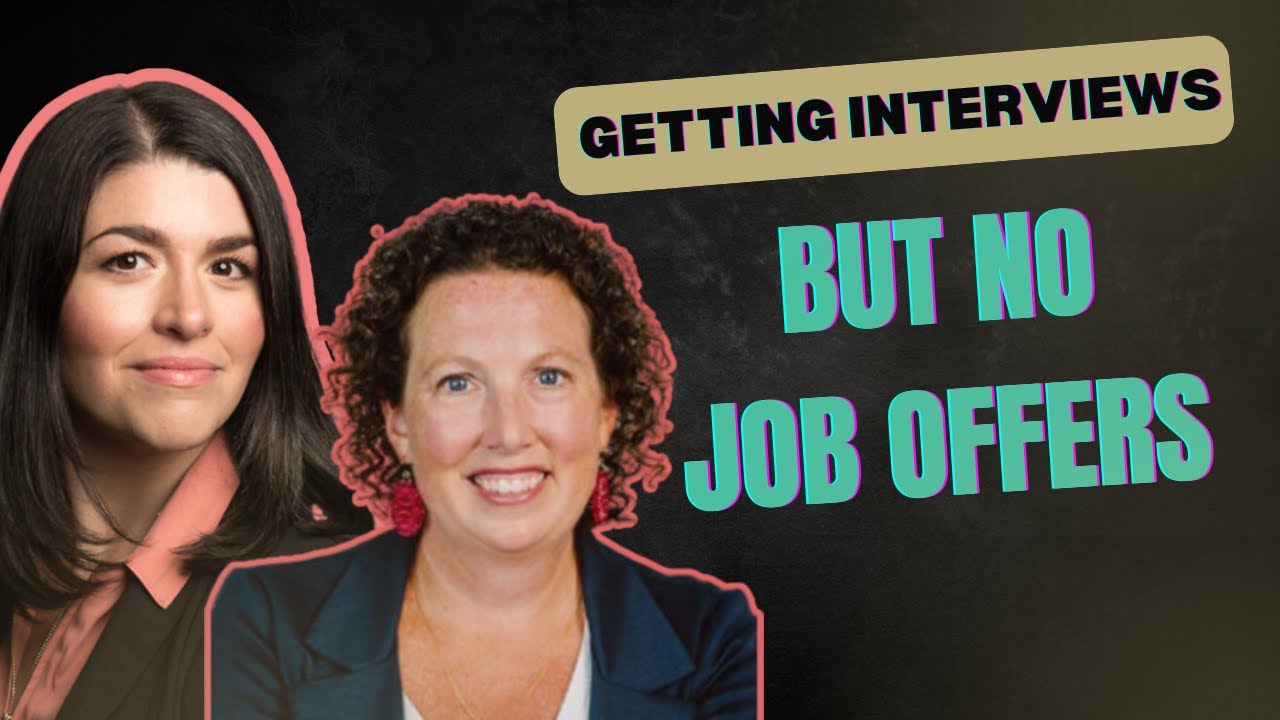
Natalie Fisher, a career coach, explains why business analysts get interviews but no job offers. She covers four key issues: self-doubt that undermines confidence, vague answers instead of concrete results, taking credit for team wins, and handling unclear job descriptions. The fix is cataloguing past successes, leading with outcomes, and staying resilient when fit is unclear.
Chapters
All right. Hello, everyone. I'm Laura Brandenburg from Bridging the Gap, here today with Natalie, who's here to talk about why you are getting interviews but not an offer for a business analyst job. This is a challenge that I know a lot of you face. Natalie is a career mindset coach that's helped hundreds of people get unreasonable offers. I love that. That they didn't really originally believe that they could get. She works on mindset, which those of you who've followed me for a while know I'm a big geek when it comes to mindset and success strategy. And she helps you with both and is obsessed with figuring out the specific mindset tools and blocks that will get in the way of really smart people succeeding in getting into the position they want with the salary they want. So great to have you here, Natalie. Thanks for being here.
Yay. Thank you for having me.
Yeah. And before we get started, you have— actually, we'll get to that at the end, right? The website and all that. But you have this guide, which you shared with me called 8 reasons that you get interviews but no offers. And I've downloaded it and read through it. I think it's absolutely brilliant. And anyone who wants to download it can get it in the notes below. But we're, we're not going to cover all 8 reasons today because this is a bit of a short interview. But I do want to just dig deeper into a few of the reasons that really stood out to me and I think are relevant to our community. So the number— the first one was number 2. And this is where you said they sensed an energetic doubt in your abilities, right? And this one certainly, I think, affects business analysts because as analytical thinkers, we often doubt ourselves in the first place. Yeah. And then we can get thrown off because like the terminology is a little different than we've seen before. And we want to make sure we're like answering the question perfectly. And so that can make us come off as less than confident. So like my question for you is like, how do you advise people to overcome this one?
Yeah, for sure. There's many different tools that I use. I think the one here that's most applicable for maybe a new business analyst or somebody who is unsure of their own abilities right now is to look at, first of all, take stock of what you have done and make that forefront of your mind. Like, I have done, and even if it seems like it's small things, there's always a big list of things that you have already done that you're probably not giving yourself enough credit for. The I can figure things out thing, because you have figured out a whole bunch of things that you didn't know how to do in the beginning, right? Of course. It's like you've been doing that since you were born. Walking, talking, it's just stuff you figured out along the way. All of a sudden, we grew up and we got really doubtful that we would be able to figure things out, and that's where we get tripped up. I would offer that, that thought, and it's really helped a lot of my clients to just repeat that. Like, I know I can figure things out because— and then pointing to all that evidence of the times when you have figured things out when you started and you had no idea how that was going to go. Yeah.
And I mean, just like, as a business analyst, your job is to figure things out, right?
So yeah, exactly.
You probably have done this before, and if it's a good role for you, you probably You have a lot of evidence in your favor of your ability to do this.
Yeah, and there's so much evidence anyway. It's so easy for me to go into a conversation with a client and start to dig out all the things that they've done. But the problem is nobody is going to sit there and question you on the details of the things you've done. So you have to do that yourself for yourself so that you can be like, okay, I understand. I do bring more to the table than I thought, and I have figured out more things than I thought. Yeah.
Yeah, that prep work seems really key.
Yeah.
So the next one I wanted to ask you about was like when people say they didn't get specific enough or concrete enough information, right? So can you just share a little bit more about that? And like,
how
much do you advise people to share? Because you also don't want to go like so deep into the details that you're lost in the weeds.
Yeah, for sure. That's a great question too. So it's kind of like I was thinking about this and how I could Um, use an analogy to kind of illustrate how this is. And it's like, it's like a— if you're serving a meal, you don't want the meal to be so like overwhelmed with so many spices and so many things that you can't taste any of it, but you also don't want it to be so bland that it just tastes like nothing, right? And so what I think is people normally will go on the bland, vague side, and they'll be like, oh yeah, I can do that, or they won't give specific examples. So what we want is like, I think like the main part of the meal is like your results, or like what are the results that you attained or achieved from, from the story that you're telling? Was it that, you know, you got people to collaborate on something and that meant that the business was now able to move forward with a project that got done on time? And why did that matter? So the main part of the meal is the result. And then the side dishes are kind of like The situation, like explaining how you, like explaining just the context of the situation, what ha— like how you got into it, what your task was, what the assignment was, just giving some context. And then, and then talking a little bit about the actions that you took and how you did them. But your main part of the meal is the, the one that they care about the most are going to be the end results that they, that, that what you're talking about actually achieved. So that's kind of how I would describe it. And just think it's like one extreme, you're really vague and you're like, yeah, I. did it, I can do it, no problem. The other, you're like telling them all these things and they're just kind of— their eyes are glazing over with, okay, when are you going to be done talking? So you want to kind of be in the middle focusing on like, don't forget the results. Like, I find a lot of people forget the results. I'll be having a conversation and they'll be like, they'll be like, well, I did this, this, this, and this. And I will say as the coach, okay, but what— why did that matter? What were the results from that? And then they will give me the, the best The best answer they've given.
But you have to dig for it.
Exactly.
You know, this, we didn't quite prep for this, but I'm interested at what level you coach people to give results because like, as we were talking about before, like there's the project results, but then there's also the individual results, like what they contributed to the project. And I think BAs can kind of get stuck in the middle of that. Like where, what results do you advise people to focus on in an interview?
Yeah, so I— a question I asked to kind of weed that out and clarify that for people is, what would have happened if, if you were not there, right? Like, what do you think would have happened if you were not part of that project at all? And then it kind of becomes clear as to what unique specific contribution they had.
Yeah.
And we could kind of put together, like, what was it in their unique thought processes that contributed to that final result? And so that's kind of a good weeding question to make it clear because They have a pretty good idea at that point. If you remove that person from the situation, the project would've turned out differently.
Yeah. So, like, as a business analyst, if you weren't there to write the dozen use cases for how the software was gonna work, the business and the software people would've been talking back and forth and trying to shortcut this process and probably built the wrong thing and be getting through it.
Exactly. Yeah. Exactly.
Instead of, like, a really clear process. Yeah. And I think in, like, that example too is, like, in terms of your, like, don't go into the deep— like, you wouldn't go to the details of, like, well, first I did this use And then I did this use case and then I did this. But you might say, I created a dozen use cases and this is how I worked with the team, right? To kind of give a flavor of the project without like the step by step by step.
Yeah, totally. And I like to say, like when I was interviewing myself, I would always like kind of give them that overall thing. And then I would say, and if you want to see more examples, or if you want to see more results, I'm happy to share them. Most of the time they didn't need to, but it made me feel better to just give that option.
Yeah. All right. And there are so many, again, good reasons in the guides, and there's a lot of practical guidance too. But the last one I want to talk about in the time that we have today is number 8. And this was like, it has nothing to do with you. Right. And I think job seekers want to make every interview about them, and it's not always the case. Often, I think when people are interviewing business analysts, it's like the The hiring manager sometimes doesn't have a clear view even of the role that they're hiring for. And so they might put a list of qualifications down, but then as they start to interview people, you might be like qualified on paper, but they're like, oh my goodness, this is not what I actually need. Like I didn't get the requirements right. Which is a total, it's not about you situation. Like, how would you help advise people to like maintain their mental and emotional resilience in the face of like that kind of an interview process where that might be happening?
Totally. So in that kind of an interview, interview process, or in the kind of a process where you went in and you just kind of knew it wasn't the right fit and you didn't really like it either. Like, there's going to be situations like that where it just wasn't— it wasn't going to work out no matter what you did. And in those case situations, for your first step is to like identify that. But I think deeper is just being, being confident with how you showed up and focusing on evaluating yourself from your own perspective, like not making the result means something about you. So if you got rejected for something— like, I had a client, he got rejected for something that he told me he didn't even want, but he was still disappointed about it. And it's like, you get to make the decision, you know, I don't want to work for a company who doesn't know what they want yet.
Yeah.
Like, I don't want to work for a company who, um, isn't going to be flexible with time off, or whatever it is that you discovered in the interview that maybe you didn't feel right about. And So I would say, like, in my program, I talk about evaluating based on things you can control. So there's a list of things you can control, you can feel really good about. You can walk outta that interview saying, you know what, I did everything I could. I'm happy with how I showed up. And if they, if, if it's not a match, it's not a match. And sometimes, you know, it's not. Yeah. So identifying that you, you have a decision to make as well. It's not just them, like it's equal. I think we often get that confused. We think they're the ones with the power and stuff, but they need you too.
Yes. I mean, you have an immense amount of power. As a business analyst and people need this skillset and like they just need to understand what you can do and the value you can create for them. So that's awesome. So Natalie, do you wanna share a little bit more about this download I've been talking about and where people can find it? I'll definitely leave a link below.
Yeah, absolutely. So the link for it is below and we go into the 8 specific reasons, how to fix them all. And yeah, just kind of going into the mindset because that was the number one question that I kept getting is, I'm going on all these interviews, but what am I doing wrong? And so, like we talked about, sometimes it really doesn't have anything to do with you, but most of the time there are some things that you can do to definitely increase your chances and guarantee that job offer coming through.
That's awesome. And if you want to learn more about the business analyst role specifically, at Bridging the Gap, we also have a free workshop called the Quick Start to Success, and I will leave that link below as well. Welcome. Thank you so much, Natalie, for being here today. And thank you— or yeah, thank you for being here today.
Awesome. Thank you for having me. It was great.
More from Natalie






How To Sound Good Without Having All the Answers (In Meetings & Job Interviews)


