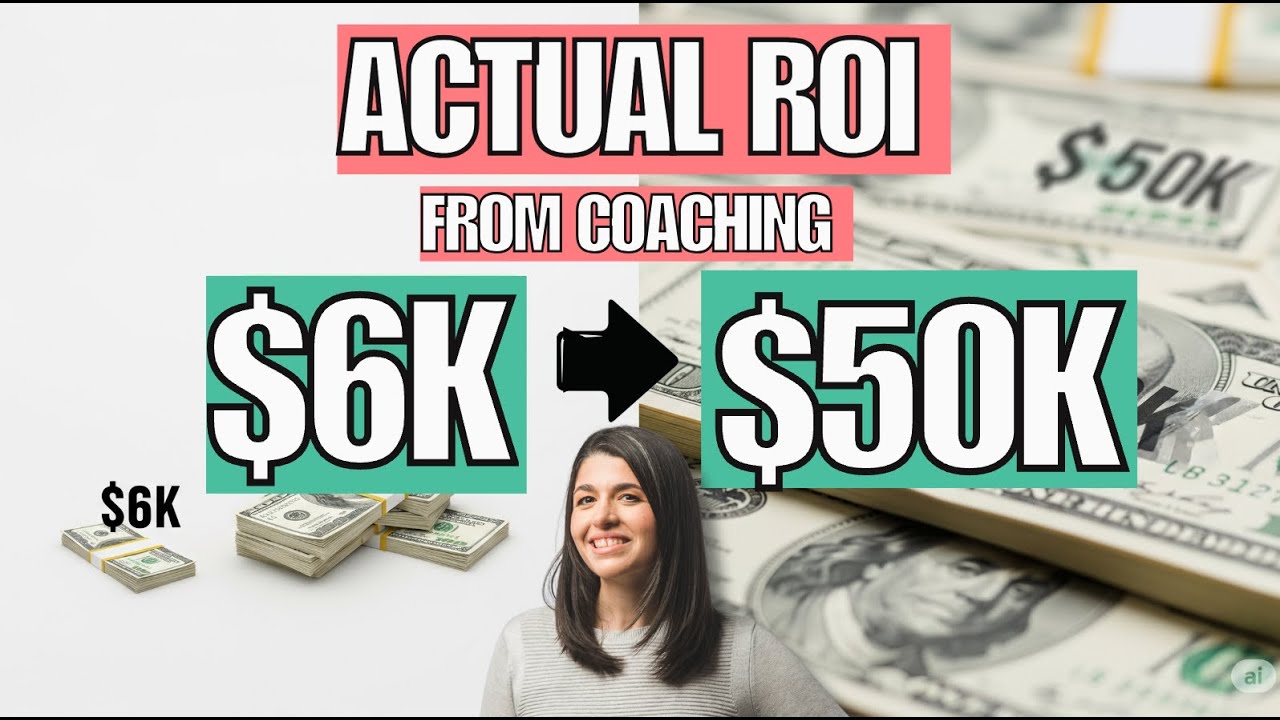
In this solo video, Natalie Fisher explains why many people hesitate to invest in coaching or courses and how that hesitation stems from unexamined decision‑making patterns. She outlines a framework for evaluating past investments, identifying the subconscious narratives that lead to post‑ponement, and creating intentional implementation plans (including obstacle‑vs‑strategy sheets) so that each new investment can be treated as a controllable, high‑return asset rather than a gamble. Fisher contrasts the passive nature of stock‑market investing with the active control one has over coaching outcomes, shares concrete ROI examples (e.g., a client turning a $6,000 coaching fee into a $50,000 salary increase), and emphasizes cultivating a growth‑mindset investment mentality. The video concludes with a call to action for viewers to apply these strategies, trust their decisions, and view future program investments as opportunities for exponential personal and financial returns.
Chapters
How to trust yourself when making decisions. So one thing I come across a lot with my clients is they are afraid to make a decision because they don't want to make the wrong or the right decision. And this comes down to a framework as to what they— how they have been making decisions so far and what they've been telling themselves about those decisions. So when you make a decision and say it doesn't work out— so this is like a super, super common one— people will sign up for a program, they will invest in a program and then they won't get the results that they wanted, or they won't implement the work from the program and then they won't get the results that they wanted. And they're always kind of pushing it out into the future and be like, I have to do it later, or I have to do this, or I have to do that later, right? And so the, the thing they've then told themselves is— and this is maybe unconscious— but they're like, I don't get results from programs, or that program didn't work, or I, I didn't implement, so therefore I'm not someone who implements. I still have to implement. I'll do it later. As I talked about in one of my other videos this week, post postponing those decisions is what postpones your results. So when you make an investment in a program and you don't implement or you don't get the results, then what's happening is you're actually telling yourself, "I'm not someone who makes good decisions about investing in programs. I'm not someone who makes good decisions because I didn't get the outcome that I wanted," right? Instead of evaluating that decision. So why did you invest in that program? What did you specifically intend to get out of that program? And what was your plan to implement? And what was your plan to get the most out of it? And even just asking those questions, some people— like, I've had lots of conversations and people will be like, I don't really know. Like, my friend invested in it and I don't even know what results she's trying to get right now, and I don't even know how she's doing, but I just trusted her and I invested. And so, for example, if that was someone's answer I might say, okay, well, that's really good to know. That's really good to know that that was your thought process when you made that investment. And the next investment, you might want to approach it a little bit differently knowing how this investment worked out. And so you got to look, go back and look at what brain was making that decision and why it made that decision and what it got or didn't get from that decision and what it would like to do in the future for the next time. Because people that invest in programs, they, they are growth-minded, right? You have a growth mindset, and that's what drives you to want to invest in programs. There's lots of people who don't invest in programs because they just don't care about growing, and they'd rather complain because it's easier, right? It's easier to say, oh, poor me, the world owes me, I can't get results. But people who want to grow and people who want to upgrade their mindset They invest in programs. And so it's really sad to me to think that you would— that people would be investing in programs and then not— and then feeling bad about their decision, right? Feeling bad like, oh, I didn't do it, or I didn't get the result, instead of looking at the decision and deciding how they're going to approach it next time and becoming the person who gets what they came to get from the program and kind of working out their own plan as to how they get results from programs. And then investing becomes really fun because you know that when you decide to invest in something, you're going to get a return on it. You're going to make a return for yourself. And that's really fun. And it's a great, like, a really fun place to invest in, or invest— like, it's the mindset to invest in versus what a lot of people are doing right now. And I don't blame people because this used to be me before I learned differently, was, oh, I signed up for that, I didn't get the results, it didn't work. I saw all these other people getting results. I didn't get my results. And so it must just not work. I didn't implement properly. And not even really getting clear about what that— what those thoughts were or what that was about. And just then being scared and nervous to invest again because it wasn't the result you wanted. But you didn't intentionally decide to get that result. You didn't learn the ins and outs of what it took to get the result from the material. So therefore, you weren't going to get it. And That is not something that has to be perpetuated, because what I know for sure is people who invest in programs, they enjoy investing in programs until they don't, until they get nervous and start to feel irresponsible because of one of the things I just said, like they didn't get the results or they didn't implement or whatever their thoughts they had about that past decision. And then it stops them from actually growing more, growing further, and being able to create more in their lives from new investments, right? And so the cool part about investing in coaching is you get to get an investment when you're the one who shows up, right? Like, in the stock market, we don't have any control over that investment whatsoever, right? Like, we put in the money, and if it goes up or down, like, we don't have any idea how that's gonna go. We just— we're just guessing, right? But in coaching, if you invest in a program, you get to get that investment back, and you get to decide how you're going to go about that. And there's Like I've invested in a lot of programs where I did not like feel like feel really good about afterwards, but it comes down to the mindset that I had as to how I was approaching it. And so there's been a lot that I have gotten a really good investment back from, and all of the things that I've done, I don't regret any of them. I love it, and I love investing now because I know that I am the person who's going to get that return back, and it's really fun to invest, and I can trust myself with investing. And I just I feel really sad that people. don't feel that same way. They don't feel like they can invest and be excited about something actually working, right? And so I know that a lot of the times these days there's like these big claims made like, oh, you're gonna land, you're gonna do this in this much time, or you're gonna do this in like, look at this person, this person did this. And like, I also show those results, right? But there's also a lot more to it than that. There is the speed at which that person made decisions, the speed at which that person worked, the the speed at which that person evaluated, like all the things that, that, like the speed at which that person implemented that got them those results, right? And so if you became that person and you were starting to see how that person's mind works, like for you, who that version of you is, then you will, you would start to see how you're somebody who gets in like the return for your investment as well. But if you haven't done that yet, then you don't have a, a frame of reference for it. And all you have is kind of wishy-washy information about something not working and you feeling bad about it, and you haven't really even looked at exactly why that is. That's like my experience from talking to several people is they just don't know. They're like, well, I don't really know. I haven't implemented this. And like, I kind of tried this and that didn't really work. Or I tried this and these things worked. Like, yeah, the program was good. It was— it worked. But it's like you didn't really go all in on it, right? You didn't really go like, okay, I'm gonna— I'm gonna have a plan. And, and when that— like, even like an obstacles versus strategy plan where, okay, if if this happens, I'm going to do this, and if this happens, I'm going to do that. But like, no matter what, I'm going to make sure that I make this investment back. And that is a really powerful place to come from, because otherwise it's like, yeah, it's very wishy-washy. It's like, oh yeah, what if I put that in and I don't get that back? And what if it doesn't work? What if I do it again? What if I let myself down again? And it's like, that is all a line of thinking that was developed from not analyzing results properly from previous decisions. So the alternative, if you don't analyze your results from previous decisions and make a new path and a clearer, more crystallized vision for the next time you invest, then you just will either— you'll just stop investing and you'll just be like, I just can't invest anymore. I'm just not going to be able to get the results. Nothing works, blah, blah, blah. Or you will just continue to, to, to just invest and then have the same thoughts about it or invest and then be let down again because you haven't really created that very intentional plan for yourself as to how you get that back. So coaching is an investment. That is what it is. It is not money spent. It is money that is going to be returned to you. I have several clients who I can name that made incredibly huge ROI investments. Like, they invested $6,000 to coach with me and they doubled their salary by $50K, right? And yes, maybe that took them Like one client in particular, I'm like, it took her a year to do that. But imagine like the worth of that investment. It's like $6K. You, you put in $6K and you take out $50K in a year. That's better than any investment you'll get on the stock market. Any investment that will give— like no investment's gonna return that much for you, right? So you have to think about it as an investment, even if it's just like a $7 thing that you invest. Say, how am I going to get this $7 back I'm going to implement everything it says and I'm going to get— I'm going to earn my $7. Or like at some point you're like, no, I want to earn double the— at least I want to double that investment, right? So I wish someone taught me this sooner. I wish I knew this before, but it's something that really stops people from making like powerful decisions for their futures. It stops them because they think, oh, I just have like this wishy-washy way of thinking about my previous investment and I don't like it. And maybe they even want to avoid thinking about it. They're like, oh, I just You know, I don't know what happened with it. It's over. I didn't get it. Like, it's not the way that it needs to go forward. And especially if you're someone who likes investing, who has a growth mindset, you're going to want to invest in the future. You're going to want to grow more. And unless you take care of this investment mindset now, you're going to have like very heavy and nervous and bad feelings about investing in, in, in programs and coaching in the future. So that's what I'll leave you with. I hope that was very helpful for you, and if you like this video, give me a thumbs up. If you didn't like it, give me a thumbs down. I kind of went on a tangent there, so I don't blame me if you want to give me a thumbs down. And subscribe to the channel. Leave me a comment. Let me know what you'd like me to talk about in my next video, and I will talk to you soon. Bye-bye.