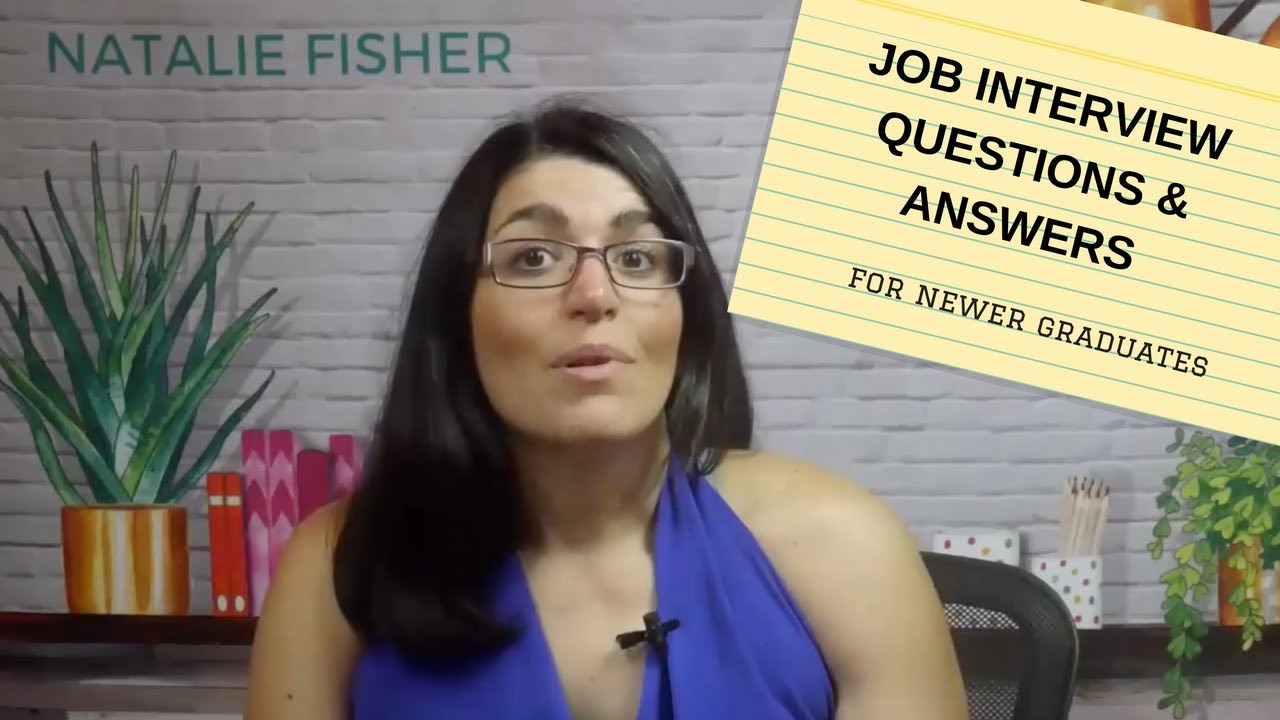
In this instructional video, career coach Natalie Fisher walks recent college and university graduates through the five most frequently asked interview questions and provides concrete strategies for answering each in a way that distinguishes them from other candidates. She explains how to personalize the "Tell me about yourself" response with a memorable anecdote, how to research and convey genuine enthusiasm for a company when asked "What do you know about us?" (including a reference to a separate tutorial video), and how to address experience‑related prompts by either highlighting transferable skills or telling a learning‑story when direct experience is lacking. Fisher then focuses on behavioral prompts such as "Tell me about a time when..." and "Give me an example of a time...", emphasizing the importance of interview storytelling and offering a formulaic approach. Throughout, she promotes a free downloadable guide and workbook that contains fill‑in‑the‑blank templates, sample answers, and a collection of 25 story‑building questions to help graduates prepare confidently for upcoming interviews. The video concludes with a call to action to download the guide, engage with the channel, and apply the presented tactics to secure job offers faster.
Chapters
In this video, you're going to learn 5 of the most commonly asked questions. You're going to learn the key to answering them and the secret for college grads to answer interview questions in a way that helps them stand out. So my name is Natalie Fisher, and I specialize in helping new grads, freshers, who have worked hard in the classroom and done everything right but are still not getting the job offers to reach their full potential and get into higher-level roles a lot faster. So stay tuned. So the 5 most commonly asked interview questions: Tell me about yourself. What do you know about us? Do you have experience in...? Fill in the blank. Tell me about a time when... And give me an example of a time... Some of these will come at you in different variations, so you will still be able to prepare for them even if they ask you the same questions in a different way, for example. So if they were to ask you, why do you want to work here? You can apply the same answer as you would for, what do you know about us? Because you're only going to convey positive things about the company that you want to work for. So you can answer the same in both cases, which means less prep work for you. So the key to answering these questions— so the tell me about yourself question, you don't want to answer like everyone else. Most people answer with their work history or a very boring synopsis of their life. So try to Add some personality into your answer. You want to tell them something unique about yourself and you want to give them something to remember about you specifically. So I'm going to give you an example. So this is a response that an account manager might give because it's a very relationship-focused role. So example answer. I'm the kind of person who is good at building relationships. So for example, I have friends that if I don't talk to them for a few years, I know that we could pick up the phone and and pick up right where we left off. So that's a great example, and it would fit well with a role that is going to be dealing with customers or building long-term relationships. So the second question, what do you know about us? So I have an example video that is called How to Research a Company Before a Job Interview, and that video will give you an example of how to answer this question as well as where to find the information that you need to answer this question. So check that video out. I will link it up below. Question 3: Do you have any experience in fill in the blank? Oftentimes new grads, freshers, don't have experience so they can really get stumped on these kinds of questions. The key is first not to try to fake experience or say that you do have experience when you really don't. You have 2 options on how you can approach this. Say you have some experience in in another thing that's similar but not the exact thing. You can say, well, I have some experience in PowerPoint but not as rich of experience in Keynote. However, I'd be really excited to deepen my knowledge on that program. So the other option is if you have absolutely no experience, you want to directly go into selling them on you and your ability to learn with a story about how you've learned something in the past where you didn't know what to do to begin with. And we all have these stories. This is something we've all done, learned how to do something we didn't know before, unless of course you're a baby and you don't, but that's the other way you can answer it. All right, the next 2 types of questions. So either tell me about a time when, or give me an example of a time. So these are both hints that these are going to be behavioral prompt questions. So these are the ones that you can expect in some form or another, and the key to these is to really master your interview storytelling so that you can connect and relate with the interviewer in a way that other candidates don't know how to do. Now these are my favorite types of questions and I've coached hundreds of students on how to answer them and come up with an abundance of examples, so while I would love to go through them all in this video, it would end up being a 2-day seminar, so I've got a free downloadable guide for you that's really easy to just click, get it in your inbox, and you can go through all of the examples, the formula of how to answer them, and everything is right there for you. So a secret for college grads to answer interview questions in a way that helps them stand out. So a big mistake that I see interviewees make is that they aren't clear on what they want. They're not really conveying what they really want. So even if you don't know for sure what you want yet, like maybe you don't know you want to work for that company yet, or if you do want to work for that particular company, you want to make them feel special. So I would recommend that you research the company well, And you act like you have searched them out and you specifically want to work for them. So this makes a world of difference. And when you mention specifics about why and what you know about the company and what you love about the company, their mission and what they do, that really sticks with them. And it subconsciously gives them kind of a closeness to you, like, oh, this person really appreciates what we're doing. And it kind of gives them A nice feeling about you in general. So my mission is to make sure that you are not settling for less because the truth is you don't have to. And I push my students to really raise the bar for themselves, to shoot for more than what they thought they deserved. So that's what my message is all about and that's what I want to get through to you. So that's my goal. I want to help as many recent college and university graduates that I can so that I can help them achieve the unthinkable things in their careers faster than they thought possible. If you want to learn more, there are specific tactics that you can use to develop your confidence, get prepared for the interview, and I'm going to give you a head start right now by giving you an opportunity to grab my free guide. I've put together a very comprehensive guide on how to prepare for the most common interview questions. You're going to learn the key part of the whole interview strategy, which includes answering some of the key questions with a sample formula. You're going to look at the formula with an in-depth example that will make sure you're communicating your value with every answer that you give. You're going to learn a series of concrete examples for the top 10 most commonly asked of the toughest questions, situational questions. You're going to have fill-in-the-blank templates ready for you after each question so you can just fill in the blanks, start getting your own stories on paper, and if you're still getting stuck because a lot of people do, it is quite challenging when you haven't thought about this before to come up with stories. I've got 25 questions to help you come up with your own stories much quicker and more easily. So if you've got an interview coming up soon, grab the guide. All of this comes in a beautifully designed workbook designed specifically for you to prepare for your next interview. By the end of working through this guide, I can pretty much guarantee you you're going to feel a lot more confident and you're going to feel a lot more prepared for your interviews so that you can go in there and really nail it with confidence. So click the link below. That's all you got to do. Grab it now. Thank you so much for watching. I will see you soon. And if you like this video, don't forget to give me a thumbs up. Leave a comment. Love hearing from you. And I will see you next week. Bye.