Making a successful career change & doubling salary with Nicholas
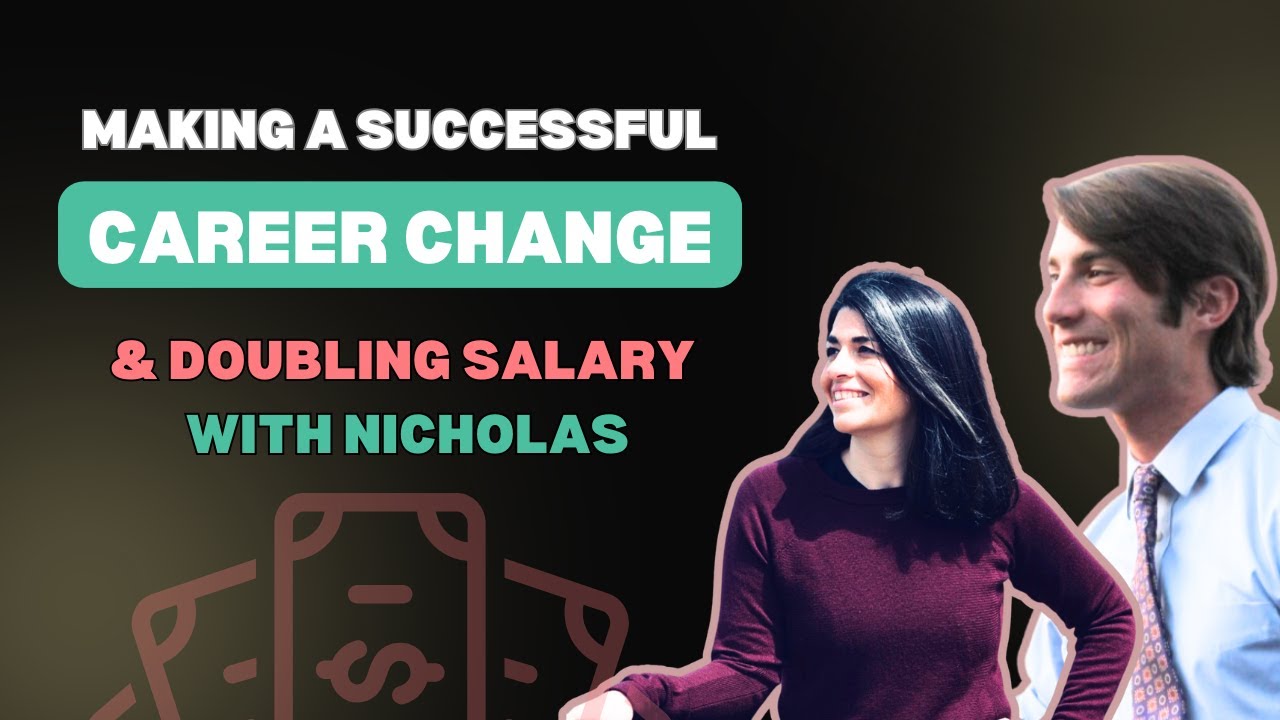
In this episode of Natalie Fisher’s career‑coaching podcast, client Nicholas shares his journey from an eight‑year tenure as a corporate controller in accounting to a new role as an implementation specialist at a software company, achieving a near‑doubling of his salary. The conversation traces his early reliance on connections for job placement, growing dissatisfaction and “Groundhog Day” fatigue that sparked a desire for change, and the paralysis caused by fear of the unknown. Nicholas describes how hiring a career coach in December helped him clarify what he wanted, confront limiting beliefs, and adopt a proactive mindset. He outlines practical tactics he used—targeting familiar industries, intensive LinkedIn networking, and persistent outreach despite rejections—while embracing the “pottery experiment” philosophy of learning through many attempts. The discussion also covers the emotional challenge of saying goodbye to his long‑time role and identity, the importance of continuous networking as a perpetual career strategy, and the tangible (LinkedIn mastery, new job offer) and intangible (embracing ambiguity, resilience, time‑management discipline) outcomes of a three‑month coaching engagement. Nicholas offers advice for listeners on the value of unbiased coaching, the need to tolerate discomfort, and the mindset of “fail forward” to achieve career breakthroughs.
Chapters
All right, well, here we are. Welcome to the podcast today, everybody. We're here with one of my star clients, Nicholas, and Nicholas has been able to achieve something that a lot of people would probably think is impossible for them. So I'm excited to get into his story and journey today as he's going to explain to us how he made a big career change with a significant salary jump and a bunch of like roadblocks along the way that he got through. And without further ado, Nicholas, why don't you start out by telling us a little bit about your— about yourself.
Okay, well, so I graduated from the University of Georgia a semester early, so I was one of those students who tried to get through school as quickly as possible. I enjoyed it, but school to me was always a means to an end. So I graduated early, got a job through a connection, was there for a few months, got another job through another connection, and that has been my job for the past 8 years. So My job experience, job search experience rather, has always been connections-based, who you know kind of thing. So I always knew that was how the job search really functioned. So I've been in my current job for about 8 years, and the last few years I was struggling with, you know, knowing what I wanted to do, what was the next step for me, and kind of that fear paralysis, fear that the paralysis induced by fear of the unknown.
Mm-hmm.
Which held me back. So that was my experience with school, job search, and then a few years into that, you know, was struggling with that. And then that's when I decided to find a job coach and to help me kind of discover what I should be doing, what's the next step forward, you know, what's a good fit for my talents and abilities. And That's what got me with Natalie back in December. And today I'm starting at a software company as an implementation specialist. So I'm going from accounting, which is my background— I was essentially the controller of a company— to now a software specialist. And we can fill in the details from there, but that's my path. So account— economics degree. Accounting for about 8 years and now accounting software as a consultant.
Yeah, it's amazing. So a couple of things I want to touch on there. First of all, you were in this job for 8 years and you kind of just, you kind of talked about how you just kind of, how you kind of got it easily through a connection. And there was a while where you didn't, where you felt like you didn't want to be there anymore. Like for how long do you think you were kind of like, uh, I know this is not for me anymore. Before you were like, okay, I got to do something?
It started, I can remember the day, it was January 2018. Every year it had been a new challenge at that company. It was a lot of stuff we were implementing, changing, and whatnot. And January 2018 rolled around, I was like, you know what, this kind of feels like Groundhog Day. Uh, it's, it's, you know, we've kind of, we've changed what we needed to change. It's not getting exponentially more difficult anymore. We fixed everything. It's like, okay, I'm getting kind of bored. Like, I can do what took me forever very quickly. Uh, there's— it's very cyclical, um, what we do. It's busy our fiscal year. We're fiscal year based, so September is our fiscal year end. So it's busy through October, December. Then you have calendar year stuff, and that's done usually by March, April. And then after that, it's pretty much like summertime. And it's just not that crazy. And we weren't, you know, before we'd use that time to implement new systems or improve old processes, or when we have a new auditor or something come in. So we would have to prepare for all that. And it's like, okay, this is not that hard. So I try to find some new stuff to do. That didn't really work. Whatever. Then it got busy again. 2019 rolled around. I was like, I might just get— this is even worse than it was a year ago. So that's when I started really looking into a career change was 2019. So, you know, talk to connections, let recruiters reach out to me. As you know, that was kind of one of my struggles.
Mm-hmm.
We'll probably get into that soon. And the problem was that I just didn't see anything I really wanted to do and I was just getting frustrated. So I just kind of kept on dragging my feet. And so 2020 rolls around, okay, this is like, you know, late 2019, early 2020, I was already, I was this close to like probably getting a new job because I had a few recruiters and companies highly interested in me. So I knew I had, I could have jumped. Then COVID hits and it kind of obviously it changed everything. And for me, I used it as a time for some self-growth, some time to relax, break my routine, not have to show up to office. I used it sometimes for relaxing in the last half of the year to really get into, looking to the job finally again. So that's, yeah, that's about a year or 2 worth of time that I was like, okay, I gotta move on. And part of me, I psyched myself out. And part of it was also COVID related too. And once we got that behind us, I was able to really finish the deal.
Yeah. Yeah. And so the other thing, yeah, so that's really well explained. Impressive that you remember like the dates of like your journey. A lot of people don't remember that. But yeah, so being really hyper aware of like, okay, this is boring. I've heard lots of people say that before, like, my job has turned into Groundhog Day. I feel like this is the same thing over and over. If that's— if, if you're listening and you can relate to that, then definitely, um, keep listening to the, to the progress that Nicholas has made here. Um, so one thing that I noticed about you right when I met you was that you were very decisive. You were just like, yep. You like had a way of making decisions where you were just moving forward. And I think that's what led to your success being so fast was because you were just charging forward, right? So you decided to hire me right away. Um, you decided to continue like with the work. You didn't really stop. Can you talk about, um, how you, how you stay in that like decisiveness and how you kind of motivate yourself to continue at that fast pace?
At the end of the day, I realized It was all going to be up to me to make progress and the change I wanted. As you know, my title that I was getting recruited for automatically, for lack of a better term, through LinkedIn was not what I wanted. And it wasn't really my qualif— my title and qualifications just didn't really match completely. So I was just getting really frustrated with that. But then it gave me that realization of there's no one out there, some magical tooth fairy kind of person who's going to No, give me the job and find me and do this. It's going to be up to me. So once I realized and bought into the fact that it's up to me, I have to take action. You have to fail forward. It's— you have to just keep on trying and trying and trying. And I think one of the things that really woke me up to that was one of your early podcasts about the pottery experiment where one group does the pot. And they spend all day trying to make this perfect ceramic pot while this other group just tried like multiple, like hundreds of different pots. And that group actually had a better pot even though they probably failed at 99 of them. The 100th one was way better than the supposed perfect one.
Yeah, I love that you took that in.
Yeah, so that really resonated with me. It's like, there's no one out there. There's not a knight on a white horse waiting for me to help me out. Once I bought into that fact, It's all up to me. And it's just really how many times you try doing stuff. And you might get someone who's rude to you on the phone or someone who doesn't respond to your emails. OK, maybe message them back and just keep on going as fast as you can in a lot of ways. And there's speed bumps on the way. There's micro quits and limiting beliefs that pop up. And that's obviously what a coach does. It helps me to realize where my blind spots are, even though I think I'm more clever than I am sometimes. It really helps to have someone point out, hey, you're lying to yourself, or you're just taking a mental shortcut. Yeah.
I think that's so ironic that you say that because I think that having that knowledge, just being like, I can't see what I can't see, I don't know what I don't know, that is probably the smartest awareness to have because that happens with everybody, right? If we just make the mistake of thinking, oh, We can like we know it. We can do it. It's like well, if you don't have the results you want yet, then obviously that's not the case. So I think that's like the smartest thing is like yeah, knowing that there's stuff you don't know that's not in your awareness yet, and that's okay, right? Because then you go the then that knowledge gets you to go and find what you don't know, right? So yeah. So yeah, let's talk a little bit about the the struggles you had with the transition because it is like it was like a big leap from like. controller to like implementation, because they're totally 2 completely different jobs. And, and I know that for a while you were thinking maybe sales. Either way, it was going to be a transition, and there was going to be somebody who said, oh, you don't have this experience. And that, that demotivates a lot of people. So why don't you tell us how you worked through that? How did you like navigate that challenge?
Well, first I started with finding companies that were in a similar field to what I already knew. So I was trying to prevent too much of a shock for myself and other people where it's like, you know, there's literally no box that you check that is relevant, you know. So I try to avoid some of those, you know, that problem of, hey, at least these 5 boxes you understand, you know, you check off, like you have industry experience. you understand what the software does, you understand the problem the software seeks to help, you have accounting knowledge. That really shone through on my interview. So a lot of it was trying to narrow down something that I was already familiar with, and then, you know, that gets, you know, a pretty wide basket of companies that fit that. And then from there, it was just, you know, knocking on doors, so to speak, on LinkedIn. And sometimes you don't get replies or whatever, or You know, they're not hiring or whatever, but, uh, no, just, just really getting people on the phone to talk to, I realized, was the big thing. So really getting to talk to them and, you know, when they hear me talk, I'm pretty good at presenting myself. And, you know, they, they know, I know what I'm talking about when it comes to things like accounting. So that logical leap of, okay, this person's in a different field, isn't too, too hard for them to bear. Okay, he understands this, he understands that. Only thing maybe he doesn't know is how our software works to a T and doesn't have implementation experience. But, you know, that's— we can teach him that, and that's not hard. This other stuff's actually the hard part, and he knows that very well. So that was my thing— find something I understood and then just talk to as many people, network. That really helped. The way I got this job was it was a I planned to see back in January and I noticed that this connection had posted on LinkedIn about job openings at his company. So even though it was, the call didn't go anywhere initially, just the fact that I kept him in my loop, I reached out to him and within 2 weeks I had a job offer. So yeah, it's really just networking. Don't disregard anybody. You never know how they might come back into your life, especially in social media. And, uh, yeah, just narrow down to what you know. And that's, that's what I did.
Yeah, a lot of good stuff there. Yeah. So how would you describe what your challenges and experience was before we started working, working together and then after?
So my challenges before I started were not knowing exactly what I wanted to do. I kind of knew what I didn't want to do. But that's not a positive. Negativity doesn't really create action. It usually just creates kind of a mental block. And that's what was happening with me. It's like, okay, I don't want to be a cost accountant at some Fortune 500 company. And all I do is like the same journal entry over and over, or a financial analyst thing where it's just very cold calculation things. I kind of knew what I didn't want to do. So that was one of the challenges. On top of it, when I was setting my LinkedIn profile for available for work, my job title would attract those kind of things. I was fielding leads for something I didn't really wanna do, and I kinda knew I wasn't 100% qualified for, even though I could do it. But like I said, my job title, it was financial analyst, but when it gets searched, it was for a different kind of financial analyst 'cause I work at a smaller company, so the titles don't really match. So I was getting more frustrated talking to people. I would get really far in the interview process and then like, oh yeah, they need somebody with 5 years, this kind of experience. I was just getting frustrated with being recruited, not really knowing what I wanted. And then I guess, and you said the last part was what my challenge was after that.
Yeah. And then after we started working together, how did you kind of change your view on?
Oh, okay. Yeah. Okay. So, um, really it was focusing on what I wanted and, you know, tuning out some of the noise because I had— I was tempted to circle back around. Well, I'm still getting reached out and I'm in round 3 of this interview thing. And it was kind of distracting me because I had a limiting belief of there's nothing out there for what I want to do at the moment, or I've talked to all the people I can know. So let me feel these same thing, same request, which wasn't working in the past, obviously. So it was really just tuning out the noise in a polite way and just getting really focused on what I knew I wanted. And if I were to get an offer, I would say yes to. So that was the challenge, was limiting belief, frustration, and then pivoting to a positive action and positive thoughts.
Yeah, for sure.
That's probably got me where I got today.
Absolutely. Yeah. And I remember that we talked about that a lot because you did know very clearly what you did not want.
Yeah.
Which is a good place to start. Like, sometimes you gotta start there, but then it doesn't end there, right?
Yeah, it does not end there. Yeah.
Yeah. And then also, um, with having the recruiters and having like fielding all these calls that for things you weren't really interested in, and I— and we worked on that. It came down to the belief of like, if you don't really believe fully that you can get what you want, then you're gonna be more— that you're probably going to settle for something that you don't want, which was something that you realized quickly, and that's when you kind of stopped spending so much time there. So yeah, really valuable lessons there. So how do you look at those challenges? Like, if you're to look back now on your 3-month journey, how do you look at that now as you've come through to where the success has actually happened?
That That it was, it was necessary to go through to, A, know what I want— wanted or not, didn't want to do. And then also, B, kind of wrapping it up with a bow of, okay, at least I tried. I went through, as you know, I got to the final stages of an interview, like 4 or 5 different rounds of interviews, and I didn't get the job, but at least I, I, I can tie it up with a nice bow of, okay, this is done. I've— I don't want to really do it anyways, you know, getting recruited for it. And I went through the process for a few different companies and it didn't work. And it's like, you know what, I don't ever have to revisit this again. I don't have to have that lingering doubt of, oh, what if I had said yes to this person? Or what if I— I don't have to worry about that. So I think that was the challenge that, you know, looking back, you know, It was frustrating and made me wanna pull my hair out sometimes, 'cause you're getting people on the phone, sometimes they're kinda snarky with you, the recruiter-type people, they can be kinda, I don't know, they can be nice and sometimes they can be kinda sarcastic with you. So I'm glad I went through it, it's finished. But at the time it was obviously very frustrating and it hurt me at an ego level, it's like, well, what's wrong with me? And that's kinda part of that thing, thing more than anything. It's not like a trigger to desires. Like, just being rejected sometimes means more than being accepted. I think it's kind of human nature.
Yeah.
And kind of accepting rejection was one thing I was kind of not allowing myself to do. And I'm glad I was able to go through it, be rejected, and now accept, like, you know, it's over. So that's, that's probably the one, the biggest takeaway from that experience.
Yeah, and that's really wise. It's like, yeah, you had to go through all that. And I always kind of say it's like when you look back at your results, you're going to look back and it's going to be a bunch of stuff that didn't work and a bunch of stuff that did. And that's what gets you there. Yeah. So what would you say your biggest fear that you had to overcome, if any, to say yes to us working together?
Part of it was kind of like at an emotional level of I knew this was gonna be the end of my current job and just that emotional connection of saying goodbye to people I know and a schedule of events and maybe stuff like that. Just, that's part of saying goodbye to myself in a lot of ways because it's—
Yeah.
It was like essentially my second job, but I had it starting at 22 years old. And, you know, it's just, it's like, it's like saying goodbye to yourself. And I think that was kind of one of my emotional anchors of like, I don't, you know, once you get to a certain point, it's harder to leave than not because like—
Yeah.
Yeah, you know, so I think the part saying kind of goodbye to myself in a lot of ways, like, hey, it's time to move on in a, you know, in a good way. But it's also like, you know, the memories of people or like, or, you know, and of yourself, you know, things that went on in your life as in that company, that in your work experiences kind of fits into all that. So I think that's part of it, just kind of letting go of the past, my past self, past experiences, you know, that kind of thing.
Yeah.
So I think that was probably the hardest part. And then also just, you know, looking forward to, okay, well, yeah, there's that issue. And then it's like, okay, well, what's next? And I think that was part of it too, like that what next thing just kept on driving me crazy for years and years. So I think just finally accepting, hey, it's okay not to know. That's what a career coach is helps you, helps you, helps you help yourself. And you can't just do it for a week or two and then like kind of quit on yourself. It's, it's a sustained process. Uh, so I think just that committing to not knowing, but working through the not, uh, ambiguity. So that's part of it. So I hadn't really let myself work through it. I knew that I did it. The vagueness was there and, you know, I was dealing with that, but I didn't really let myself work through it for months at a time. And that was, that was part of it. So saying goodbye to the past and, you know, embracing the unknown was what I had to overcome to start working with you.
Super, super well said. And it's what like a lot of people are struggling with right now. They just, they, they don't— because growth is hard, right? Like doing that was not easy, saying goodbye and like accepting, okay, I am going to become a different person now. Like it's like shedding a skin. Like your old skin, and it's like shedding your old identity. And that's why so many people do stay stuck in something that's like Groundhog Day, because it's called being comfortable in discomfort, right? And you having that realization that like, yes, while I am comfortable and while it will be hard, I still want what's on the other side more, and I'm willing to do that work, and I'm willing to overcome those fears. So huge. I'm so like— and how old are you? Because you said—
I just turned 30.
Yeah. Yeah. So just turning 30 now, like imagine what's possible for you starting this early, like amazing. And so we talked about it briefly on our last call, but like 3 months. So it was 3 months in the search, basically it worked out perfectly. Was it like worth the time spent and all that frustration and like the, all the ups and downs to get to the result that you have now?
Yeah, hindsight 20/20, definitely. At the time, there was times, yeah, I mean, you know, you want to quit sometimes, but that's, that's part of having a coach. They, they get you where you can't get yourself. So that's, that's what you obviously help with, but it's all— it's worth it. And, you know, and going forward can be easier because now I have, you know, in theory, a career path of, okay, this is a very broad field in consulting implementation. There's a lot of direction for me to go forward, so I don't have that stuck feeling. So it was a lot of work, you know, at the time. There were times it didn't feel like it was worth it, but, you know, that's just little tricks, you know, you play with yourself. But, you know, even at the time, I know this will be worth it. Just got to keep on going, keep on going, tune out some of the negativity. And then, and now, okay, I got a job, and then I just, I feel like it's so much easier. I don't have to keep on reinventing the wheel. I know networking stuff I'm better at. I already know what, you know, what I do and don't want to do. I'll be in the field already, so I don't have to worry about getting offers for stuff or reached out for stuff I don't want to do. I'll be getting reached out for things more similar to what I'm doing now. So it's more than worth it. Where it's— Job— the job search never quits, I don't think, because, you know, I think that's kind of one thing I've definitely learned working with you. It's not a binary approach where you have a job or you don't have a job. I'm looking for a job, not looking for a job. It should really kind of be a perpetual process and not in a, you don't have to be as, maybe you're starting from scratch, it might be more intense, but once you kind of get to, you know, a big milestone like a new job or something, just that mindset of it's always, it's reaching out, talking to people, you don't have to be searching, just that perpetual process that a lot of people, that's just not, you know, ingrained into us. I think it's always this binary approach that we're told and I think that kind of holds people back because, oh, well, I gotta do my time at this company, or let me stay here for 5 or 6 years, then see, when in reality it should be you have a job and you're always talking to people and helping other people out and value for value. And you never know what happens. You might hire someone, hey, this is a good guy, I'm hiring a good person to work at our company, and you benefit them. Maybe down the road, someone else that you talk to randomly, it's like, hey, Nicholas, No, we're starting this. We would love to, you know, I would love to interview you for the VP of something, you know, you never know. So I think, I think that's, that's the biggest like thing I learned. Just, it's a perpetual cycle. And it was definitely worth it. And, you know, it's definitely a huge relief for me.
Yeah, absolutely. And it is like a theory. Like it's a, it's a known thing that, you know, when you, when you're in motion, you're going to stay in motion. And if you're at rest, you're probably going to stay at rest. It's more likely, right? Because that's just how we go. So when you're able to look at it that way, you'll never have to worry about find— like getting your next job offer or making your next move because you've always been kind of having that in the back of your mind. So, and I absolutely see that that's the truth with everybody else that I work with and with myself. So it's the best, the best way to think about it. And also you get those tools for the rest of your career, right? And so you're gonna have Quite a few years ahead of you and you want to be able to enjoy what you're doing. You want to be able to have options. You want to be able to have people in the community that you know, and that's all setting the foundation for what you've done in just 3 months. So what specific results improvements did you experience, tangible, intangible, while working together?
Tangible, definitely learning how to use LinkedIn well. I think that was The biggest skill. It's not that hard to learn. It's really just, uh, you know, I know you have a module on how to use it. I mean, you can probably find YouTube videos too. It's really not— it's essentially, it's Facebook. If you can use Facebook, you can use LinkedIn. But that's probably the biggest skill is how to use LinkedIn, uh, how to find people on there, you know, find jobs, companies, you name it. So that's how I got my job, was just using LinkedIn to its fullest capacity. So that's, you know, going forward, if I were ever to have to do something again, I would feel way more comfortable doing that. And tangible, definitely embracing, I guess, ambiguity. I'm a very binary thinker in a lot of ways. Like, I like very I like extremes. That's kind of how I operate, either extreme rest or extreme action. And there's all in life, the, the, you know, what makes life interesting, I guess, is that gray zone of ambiguity where you can apply those extremes. We get to understand, like, there might be times you don't know which extreme to apply, you know, like, do I need to be patient or do I need to have action? Do I, you know, Mm-hmm. Or maybe it's— yeah, and then what you teach is essentially it's that sustained action through the fog. And so that's, that's probably the biggest thing, just embracing ambiguity through effort and just, and just trying, uh, you know.
Yeah.
And also like limiting beliefs too, where that fog can feel like it's getting denser and denser because we put these, these, uh, filters up of, I've tried everybody here, or, you know, these people aren't hiring, or there's no more companies in this thing. So our brain is very good at, you know, it's a survival mechanism, it's an efficiency mechanism of, okay, what's the quickest answer? It's, okay, it's— there's— that person's mean, okay, or this person's a jerk, or this person—
Yeah.
We are very quick, we're very efficient at using filters because— and it's, you know, we get into psychology, I guess, but it's very true how we in order to operate, we very quickly put things in buckets. Okay, I've done all I can there. Okay, uh, no, there's— that person is not ever gonna get back. Okay. And you just— that's just what we do. It's like, wait, am I— is that true? Or am I just doing the quick, uh, categorization thing?
Like, why is that really true? Am I like— yeah. And that's, that's part of the blind spots thing, right? It's like, yeah. And that's what stops most people is like they get into a blind spot that they don't know and they just think it's the fact. Yeah, and then also just willing to get it wrong sometimes. And that's something that you did right from the beginning that I think was a leading factor in your success, was that you were just willing to get on the phone, just willing to talk to people, and just willing to do it. And then you were like, I don't know if I did this right, I don't— I didn't have a question for this, I didn't do this. And I'm just like, that's perfect, nothing's gone wrong. Like, then the fact that you did it, right? So, so yeah, just that, um, that willingness to just do— get it wrong sometimes, like, that's huge and so underrated, right? And—
Yeah.
And, and yeah, because it was ambiguous. I mean, if you'd never never done that before, you'd never spoken to that person, you'd never done any of these things before, then of course you weren't gonna know how to get 100% the first time, right? And we expect so much of ourselves.
So yeah, really, the pottery analogy still is— that's still the best one. Like, just keep on making the pots.
Yeah, for sure. Yeah, just go. Yeah. And you will get a perfect one at the end, as we can see. Yeah.
Yeah.
So what will you take with you moving forward going into your new role? with what you've learned?
Definitely, I guess, like internal networking. Always, always be communicating with people and creating value because a lot of this is, you know, it's harder when you're job searching to some degree, but it is about creating value for other people and, you know, good communication skills. That's something definitely I learned better through, through this. Um, and definitely the discipline of time management because I was doing another job and doing this at the same time. So having that discipline of structure of, you know, of doing multiple things. Granted, I don't— going forward, I don't want to have to do 2 things at once. I'll be, I'll be working, but just, yeah, definitely discipline.
And knowing that it's possible, right? Like you can work a full-time job and do your job search and be successful in it. Yeah.
And then I guess, and finally, you know, I did it. I started off just so not far behind, but just I had a lot of work to do, like in terms of where to go, who should I even talk to? It just, there's so much just fog out in front of you. And if I can do this from 3, and I, and I, as you know, I started doing this even a month before I, uh, I started working with you. I was like, okay, it's starting to kind of— I see how it kind of works, but I need the actual discipline of a coach to make sure I'm not missing anything, to keep me engaged.
Uh-huh.
Uh, so if I can do all of this in massive ambiguity, uh, you know, a, a career shift, for lack of a better term, I'll be okay at my current job. There's gonna be ambiguity, there will be frustration, there'll be times I mess up. So that, but that kind of failing forward And get up and trying again is what I'll take to this new job. You know, that is more of a mindset I'll be bringing versus, you know, I learned some new like accounting skill or something like that. It's that mindset shift, like embracing what you don't know, but knowing, trusting yourself to figure it out.
Yeah, nailed it. Yeah. Yeah. And with that, there's really no way that you fail because you just know that you'll figure it out eventually. Right. So exactly, how would you describe your experience of us working together? And did anything surprise you?
I think it was a good balance of, you know, keeping me in check on our calls, but also giving me a lot of leeway to do what I needed to do during the week to make it happen. So I think sometimes, like, you can get a career coach or any kind of coach and they're on you a little bit too much. And it's like, I don't know, I think it was good for me to see things for myself intro week. And then if I had questions, of course, you know, you always were very quick to respond, but giving me that freedom to fail or wonder or get frustrated and then revisiting it later versus constantly, okay, well, you need to message this person or you need to fill out this little Word document for your journals and all that kind of stuff.
Yeah.
It was more, it was very open-ended, which I think I like structure, but I think I needed to see that ambiguity and work through it, but have that touchstone, you know, either through email or a call during the week. Like, oh, okay, that, you know, all right, that makes sense. Let me try that now. Or, you know, I, I think I needed to, to really be in that, that sound of silence period and not constantly being, you know, okay, you know, you need to call me or text message me once a day, or, you know, all these little things. Like, it caught too much, you know. I needed that. I think that's my— I need someone like you to allow me to be, you know?
Yeah, and that's how it is. To get balance. Like, the best results come from that, right? Because like you said in the beginning, it's like you realize like you're the one responsible for your life and your future. You're doing it. Like, I'm your guide, but you're the one who's gonna be figuring this out. Like, all the credit goes to you, right? Like, you're the one who created the result. And then, yeah, and then the day comes where you're not, we're not working together And it's like, you are going to be able to take all that with you and be able to continue to like have the same level of thinking and the same level of processing on your own and learning. And that's kind of what I aim for is to be able to give people those tools and empower them to be able to go off on their own and create amazing things and, you know, not be dependent on someone.
Yeah, that's a good way to put it. Yeah, exactly. It's like every day we're talking or something and then all of a sudden I'm like, whoa, I'm not used to this. I'm kind of used to being on my own and just having you to talk to in the week. So it's not going to be a huge gap, but like, wait, okay, what part of it was her and what part of it was me or something?
Yeah, yeah, for sure. And then letting you come to your own realizations because those are the most powerful ones, right? That's when you learn the most. And same for me, like when I work with my coach, it's like when I come to my own realization, that's when, that's when I really have breakthrough. So yeah, good way to sum that up. So what does your life look like? What do you have to look forward to now after working together and after you landing this amazing offer?
So I start on the 12th. So right now I'm wrapping up with my current job with transition, start the 12th. So, you know, it'll be a busy few months just getting trained and everything, learning the system. So I'm nervous about that, of course. That's going to be another thing I need to work through of just being patient with myself, but knowing I can do it. Like, this can't be the hardest thing on earth, because— and they took a shot on me, so they obviously saw something in me. So just having that self-belief. And, you know, any job is always— is going to be difficult at first, because, you know, even though something might not be technically hard, just the newness makes it feel harder than it really is. And just kind of embracing that fire hose feeling that's, you know, that's just not uncommon. Just like, it's okay to not know. It's okay to be like frustrated at first. It's okay to feel overwhelmed and then it always gets easier. So I think that's what I have to look forward to. And then on a personal level, I also will be hopefully moving in the next few weeks to a few months. So that's kind of my next project. So working remotely and moving to Atlanta. So that's my, I guess, next 3 to 6 months in a nutshell. Awesome.
Very exciting. Very exciting. Yeah. Well, congratulations. I'm so excited for this. So what would you say to somebody who's on the fence about working with a coach or working with me specifically because this is my podcast?
Sure. Yeah. I think regardless of where you are, who you are, it's always to have— it's good to have someone who's not your family or friend keeping you in check. and someone who's unbiased and doesn't have a skin in the game, so to speak. So I think it's always good. At our company, our CEO gets, I think, quarterly coaching, or monthly coaching, but paid quarterly. But he gets coaching, he's the CEO of our company. So I think it's good, once you're out of high school or in college, that mentorship aspect that you get from a good teacher or a good professor or whatever, it kind of goes away and you're more Hey, what can you— what have you done for me lately field? And it's not really the same as like, you know, your favorite history teacher or your favorite math teacher. That doesn't— you don't really get that anymore. You're in this zone of figuring it all out on your own. So it's good to touch base with somebody, even if you think, oh, I have the perfect career and everything is great. I think it is good to like reevaluate, okay, how could I provide even more value?
Mm-hmm.
You know, I think it is a good physical. It's a career physical. And, you know, maybe for some people it's once a year you need it, maybe once, you know, whatever. I think it's a good thing for any direction. And if you're frustrated with your career, it definitely helps to have someone to work things out, sound things off. You know, for me, I'm a very extroverted talker, so I need to talk things out.
Mm-hmm.
So that definitely benefits me. Some people might not be like that, but that's fine. I mean, that's what you're there for. You meet people where they're at. They can meet you. So yeah, if you're looking for a job, it definitely helps. If you're nervous about, oh, this is going to be so much work, this is going to be so difficult. It is a lot of work. And I would never lie to anybody about that. It's not, you know, it is work. But, you know.
And that's how you get— that's how you get to the point where you've gotten to, though, right? Is like, yeah, by understanding it, embracing it. Like everything you said on this call has been super helpful, like embracing the ambiguity, just going for it, like being willing to fail forward. And like, those are the, those are the types of characteristics of what it takes to be successful and get through it. And in 3 months after starting the process, being sitting where you're sitting, right? Yeah, like almost doubling. Yeah, almost doubling what you were at to where you are now. And being able to say, yeah, I did that, looking back and being like, I made that happen, right? Yeah.
Yeah. And it gets easier. I think, you know, I do it and I think we all as humans do, we imagine worse. worse than reality. Like, what we imagine is, oh, no one's gonna wanna talk to me, or I'm not qualified enough, or I need to get another certificate, or I need to do this. We think all this stuff, and versus like, okay, well, let's start doing, let's start talking, let's really figure it out. And once you start doing things, your body naturally kind of goes in this adrenaline mode of like, oh, you're actually like, wait, I'm in this 5th round of interviews and I'm getting grilled for this.
Yeah.
I don't feel scared or whatever. You kind of get into the zone of action.
That feeling of upleveling. Yeah.
So just start doing stuff. It's definitely worth it. And I don't care who you are or where you're at, it's always good to touch base with somebody who's unbiased and it might give you a breakthrough in any direction. So I think it's definitely worth it.
Yeah. Great way to describe it. And then, yeah, any last words on how you would describe coaching, like, to somebody who's never experienced it before? How would you explain it to them?
It's kind of like part therapy. It's part, uh, you know, I know you're not a licensed therapist, but, you know, in a way, just by talking, you know, like talking things out, it's kind of like it's part talk therapy, it's part, um, strategy, like a strategy and a tactical, uh, level, and No, it's also just, you know, being asked good questions. So, you know, sometimes, you know, you don't know the right questions to ask yourself. You don't even— yeah, you don't even know that they exist. Like, okay, yeah, I didn't think about that. So it's just, uh, it's a lot of talking, at least for me, because I like to talk. But then also it goes into, okay, you ask me some good questions and, um, and some strategy and help me like kind of tinker with things. I think that's probably the biggest takeaway like I got was You know, being better about making adjustments. Because if you're like relying on yourself to make the adjustments, like sometimes you don't know, like, hey, try something different. Or, you know, why did that work? Why didn't that work? So I think that was—
Yeah, exactly. Yeah, yeah, totally. And yeah, and I mean, you're probably thinking what, like, or articulating what a lot of people are thinking about it. Like, it often, it comes up like, oh, it's kind of like therapy. And, and yeah, I'm glad you said that because I think a lot of people think that too. And so the way that I usually explain it to people is like, yeah, therapy is more about your past. It's more about digging into your past and why things happen the way that they happen, like way back in your childhood and stuff like that, is how I imagine it. And I mean, I do think it's helpful. I do think therapy is helpful, but coaching is more about like focusing on a specific result and everything it takes to get to that specific result and, and fine-tuning as we go and and just everything that you described basically that you went through to get to your result, um, is basically what the, the goal of coaching is, is to move forward with a specific result in mind.
Exactly.
And then be like, okay, now I have all these tools and like this new way of thinking and like I'm feeling empowered to go do, to go create my own results after that as well. So therapy, I feel like you could be, I feel like you can go to therapy for a long time and not necessarily make any progress because you, it's kind of like an ongoing thing. And I mean, coaching can be the same and you can always uplevel every time to like a new result that you want to create, but you don't have to. It's kind of like learning the tools, giving you like the ability to fish instead of just giving you fish.
Exactly. Yeah.
Yeah. Yeah. So thanks for bringing that up like that. And then, yeah, is there anything else that you want to tell listeners who are frustrated where they are right now? Maybe they're feeling like they're in Groundhog Day and they want to make a change, but They're not seeming to be able to do it. Anything you want to share?
Yeah, I think it's being okay letting go a little bit where, you know, it's okay. Like, hey, this is where I've been. This is my past. And being okay. Like, I know, like I said earlier, it's a lot of things are about other, you know, you think it's one thing, oh, I just don't know what I want to do. Or, you know, if I just stay on this thing, I'm going to be at this level. But in reality, it's like, there's deeper emotional connections to things. I think it's being okay embracing where you've been, where you are today, being okay, kind of, like I said, saying goodbye to yourself if you need to, your past.
Yeah.
Kind of just that, like, hey, yeah, this company's important to me, the people that are important to me, I had a lot of great formative experiences here, or literally, I started here, my my child was just born and now I'm 50 years old or something and I have that connection growing up, having their kids grow up while they— there's a lot of emotional connections. I think it's being okay to say, embrace that, feel it, and to help you move forward. And so yeah, definitely that and making a change. It really is just, it's one step. And if you don't want to leave, you don't have to leave unless you get laid off or fired. If you just Just, just give it a shot. You never know who you'll meet, what you'll find. Like, oh wow, I didn't think I'd be good at this. Or it's worth just finding out sometimes because I think that nagging thing, like, yeah, maybe I should try something else or look into this, but, you know, I just don't really know and I want to spend the time doing this. I think it is worth everyone just, you know, Yeah. Be okay to say goodbye, you know, embrace the past, but also like You know, find out what's all out there. And, you know, there's opportunity out there, I think.
Yeah. And that's how you become an example of what's possible, like you have been, right? It's by thinking in that way and being able to— yeah, I love that. It's like, say goodbye to yourself, your old self, because that's basically what it's going to take. And not everybody can and wants to do that. But if you do, then you can see what you've got.
Yeah. And then, and then also just having someone there, like, you know, doing it yourself is kind of scary, but having someone like, you know, you work in HR, so you've, you've seen a lot of stuff. You've been doing this for years, uh, the coaching part. So having someone there to like help you like deal with, you know, maybe the past stuff is like kind of up to you to have to deal with. I get, I get, you know, you still can talk about on the call, you can talk about pretty much whatever you want on the call with me.
Totally.
But, uh, but just having someone like, hey, you know, you're not, you're not alone. If you mess up or you get scared or you don't know what to do, like, okay, at least there's someone here kind of helping me in a positive, not like you're doing all the work. You're there just like, okay, I'll pull you back up. Okay, now where do you want to—
Yeah, exactly.
Someone's there. And then that's good, at least knowing someone. Okay, I got this touchpoint every Monday at 12 o'clock Eastern time. I know there's someone in my corner at least. I'm scared, I'm frustrated sometimes, And, you know, I don't know what to do, but that touchpoint's there. So I think, you know, it's definitely worth it for that.
Yeah, yeah, absolutely. And I always like, yeah, it's for sure. It's like there's nothing that cannot be coached on. Like there's nothing that cannot be worked through so that you can see it in a way where you can move forward in the direction you want to go. So yeah, thank you for putting that so beautifully.
Thank you.
Yeah, so I think that's all the questions that I had. And it's been amazing having you on the show. And I think everything that you shared is going to be incredibly useful for so many people who are at the beginning of the journey where you were 3 months ago and are hoping to get to where you have gotten. So thank you so much for generously sharing all that with us. And, uh, and yeah, I can't wait to see like the big leaps that you're going to make in your career and what's next for you over the years. And it's going to be really, really big and exciting. I know it.
Thank you. It's been a pleasure.
Thank you so much. Okay, I'm gonna stop the recording now.
More from Natalie






How To Sound Good Without Having All the Answers (In Meetings & Job Interviews)


