Mark’s Ninja mindset moves to a six figure career in a new industry
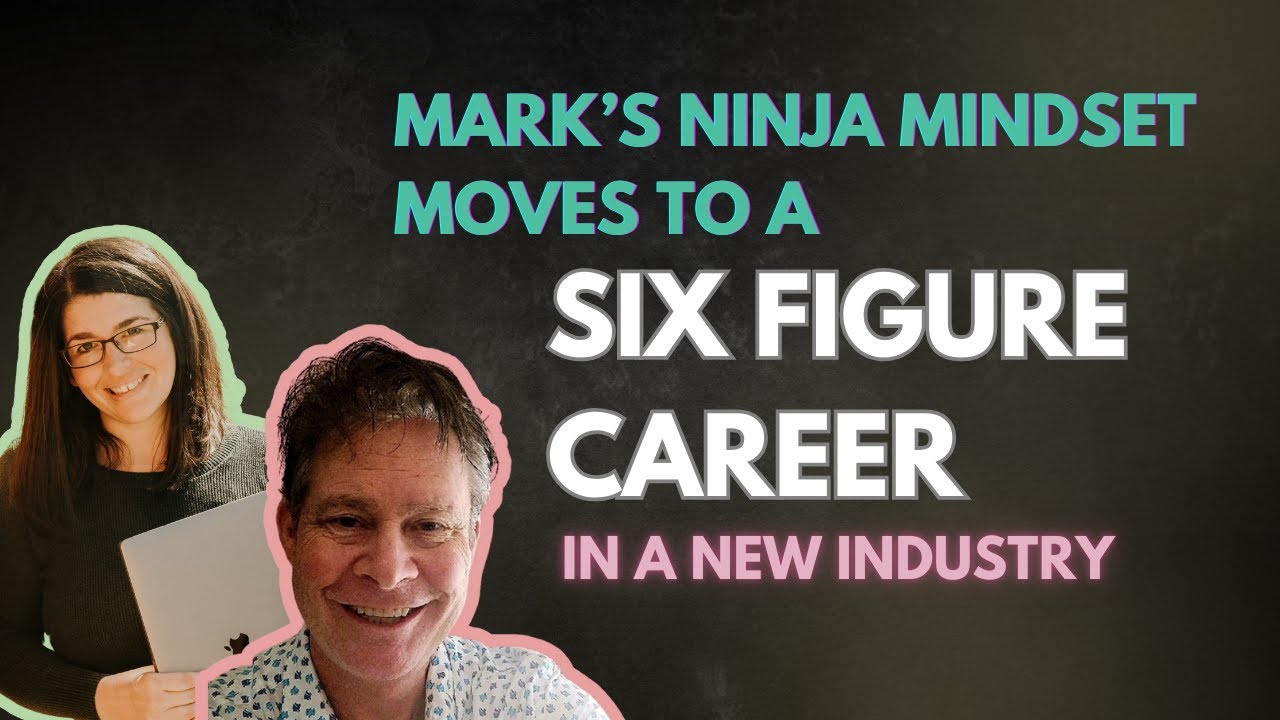
In this podcast episode, host Natalie Fisher interviews Mark Fitzpatrick, a former supply‑chain efficiency expert who, after a period of burnout and a toxic work culture, partnered with Natalie for career coaching. Mark describes his pre‑coaching challenges—perfectionism, people‑pleasing, anxiety, and a zero‑mistakes mindset—that left him feeling like a failure in both personal and professional realms. Through coaching focused on mindset rather than tactics, he rewired his thinking, embraced his Enneagram type (a Type 1), and shifted from fearing unknown interview questions to viewing them as opportunities. He learned to value transferable skills, approach interview rounds strategically, and adopt a “failure‑as‑fuel” perspective. The coaching also helped him recognize the importance of organizational culture, leading him to accept a six‑figure role in a global healthcare company despite lacking direct industry experience. He quickly upskilled in Tableau and SQL, becoming a knowledge leader on his team. Mark credits the mindset shift for increased confidence, better work‑life balance, and the ability to ask questions without fear. He advocates coaching for anyone feeling stuck, under‑compensated, or defined by others, and shares practical advice on mindset, interview strategy, and cultural fit.
Chapters
Hello, welcome to the podcast. Today we have a very special guest on. His name is Mark Fitzpatrick, and he's going to share with us some of the breakthroughs that he had, some of his experiences with coaching. And, um, yeah, without further ado, Mark, why don't you tell us a bit about yourself and what you do?
Yeah, great. Hi, Natalie. Um, yeah, my name is Mark Fitzpatrick. Um, basically throughout my professional career, I've been known as an organization organizational efficiencies expert. So I primarily focus on improving profitability through process automation, primarily concentrating on supply chain discipline. I've worked with Fortune 50, midsize, and entrepreneurial businesses to create synergy— synergies that include M&A, implementing global demand forecasting systems, defining and automating executive analytics. Streamlining supply chain management processes, and leading change management initiatives. I'm currently employed with a global healthcare organization. My immediate focus is working with manufacturers, wholesalers, and home infusion pharmacies to determine the most efficient way to deliver blood replacement products to domestic patients who require life-enabling infusions.
Wow. Yeah. Life-changing work you're doing.
Yeah. Yeah. It's very, uh, it's, it's, it's incredible. I really, I really appreciate what I'm doing right now.
Yeah. So fantastic to be working in something that has such a big impact on so many people.
Yeah.
Awesome. So, um, let's start out by kind of talking about your before, before you were, um, what, what you were going through in your life and your career before we, before we came together and you started to hear the information that I was sharing and we worked together.
Yeah. So the list of challenges is long but distinguished, I guess you could say. How much time do we have?
Yeah, just break it down as best you can.
Yeah. I believe that both from a professional and personal perspective, I was and always will be to a certain extent a perfectionist. Um, a people pleaser, someone who always needed to be relied upon, and I'm the hardest worker in the room, if you will.
Mm-hmm.
My personality is one of preparedness. I'm always trying to anticipate the next move, et cetera. Um, none of that is a, a flaw in moderation. However, it, it's exhausting, to be honest.
Mm-hmm.
What I wasn't aware of is that the, the maniacal external focus does nothing to empower me. Um, whether it's personally or professionally.
Yeah. I think a lot of people will relate to the perfectionist nature, wanting to be overprepared, having everything ready, having all the answers, as we'll get into a little bit further on in the interview. Um, how that is actually, how it serves you to a point and then how it has a diminishing return after another point.
Yeah.
So how did you look at those challenges before and how do you kind of look at them now after you've gone to, you've gotten to the finish line of, you know, landing an amazing role and been very successful before you landed it, and now even more so. But having gone through that process, how do you look at the challenges differently?
Yeah, this, this is so important, and, and that's exactly what changed for me. Um, previously there was constant pressure and subsequent anxiety that defined my life day to day, and As I reflect back on it, um, I broke it down into a couple, 2 or 3 categories. And, um, as you can tell just by the way we're talking and by breaking it down, that's the way that my mind works. So anyone who's listening who studies the Enneagram, who's ever taken the test, I'm definitely a 1. Um, love it. So I, I encourage anyone to take the test. You'll learn a lot about yourself in the process. But, um, from a personal perspective, from a professional perspective and also from a candidate or interviewing perspective. And what I'd like to share with you is the before and after, if you will, the challenge that I had before and then how I sort of broke through, if you don't mind. So, yeah. From a personal perspective, the pressure of providing for my family, for my kids, the pressure of being a good example, the pressure of always having to be on. From a professional perspective, the pressure of living up to a zero mistakes tolerated culture in an organization, the pressure of being miserable in that organization and the attached feeling of inadequacy to venture out and market myself, the pressure of staying miserable in that job because I needed to provide and then no one would hire me because I made so many mistakes as I did anyway. And then from a candidate interviewing perspective, the pressure of being so prepared that I'm disappointed if I didn't know the answer to an antiquated question in the third round of interviews that had nothing to do with the position I was applying for anyway.
Mm-hmm.
So in summary, the before piece is that I was a failure, right? So now my brain has been rewired since working with you. From a personal perspective, You've taught me to think differently. The bottom line is I've always provided for my family and I will always find a way to provide for my family. Those close to me appreciate it when I'm not on. In fact, some of the most memorable and entertaining times in our lives happen organically when I'm relaxed and uninhibited.
Yeah.
Yeah. From a— When you're not trying to get it right. Yeah. Yeah. From a professional perspective, a zero mistakes tolerated culture is not only unattainable, it's toxic. Um, it's lunacy. It's the definition of insanity. There's nothing empowering about it. It's not even worth wasting my time and my life anymore.
Mm-hmm. Yeah.
Um, from a candidate or interview perspective, I'm prepared because I always prepare. Um, being a 1 on the Enneagram, of course. Um, I cannot possibly know the answer to every question, and that's okay. Um, my mindset shifted from, and this is This, this was the big thing with, with your coaching. This was my mindset, mindset shift. I might want to edit that. If I'm asked a question, I won't know, which is the way I approached every interview, to when I'm asked a question, I won't know. I can't tell you how freeing that was for me to come to that realization. That was the key for me because it relieved my anxiety. during the interviews that followed after we just started working together a week or two.
Mm-hmm.
So in summary, I don't fail. I learn and then move on. And my goal was to always have 3 jobs in queue or 3 potential opportunities in the queue. So when one dropped off, rather than looking at myself as a failure and what did I do wrong this time, and then The past is repeating in the future, etc. I work to fill that void. I turn failure into fuel.
Yeah, absolutely. And I think that such a key thing, instead of saying, if I'm asked the question, I don't know, to when we just assume it's happening, then you can kind of be put at ease knowing that you had already handled it in the past. And that it wasn't a detriment. And it wasn't even a problem that you didn't know Everything.
That's for certain.
Yeah. Yeah. And then also just relieving the pressure because I think often we think that everybody knows all the, everyone else knows all the answers, like all the other candidates would know all the answers and it's just not the case.
Yeah.
So, yeah.
And what I learned from you was, um, the goal is to get them to like you, right? So the goal is the conversation. They already think that you have the qualifications to do the job or else they wouldn't have spent the time to make the call in a COVID environment to do the phone interview and then follow up with the Zoom interview or Skype or Teams or whatever the organizations do and then bring you in if need be. So, Yeah. A lot of candidates don't give themselves any credit at all when in fact that may be the biggest hurdle that they face. And, um, your coaching proved to me that I, I was successful in getting the interview. I was, I just wasn't successful closing because I was so hyper-focused on there's going to be a question that I'm not going to know. And then I would either freeze or try to dance around it and thinking that I knew it rather than saying, you know what, I don't know the answer to that question right now. But, um, yeah, if we're a mutual fit and you hire me a week after I, I'm hired. I'll know it.
Yeah, exactly. And would you mind sharing about the answer that you did give when you did have the, the, the 3-pronged question that they asked you? And then you, you kind of used that analogy of the onion and then said, and I didn't get quite down far to the last layer or whatever.
Yeah, yeah, yeah. That, that, that was really interesting. So it was round 3, I believe, of, of the interview process and The questions in round 1 or 2, you know, you have typically the HR screening in round 1, which if you know your resume and you can, you know, the company, you know, do your research and know the company well enough, know a little bit about the culture and what they're all about, and then how you can leverage some of your transferable skills, my guess is that and you're conversational enough, my guess is that you'll pass, you know, through that round unless there's some sort of antiquated salary discussion that should not come up in that round of interviews anyway. The second round typically is with manager type, maybe not your direct manager, possibly so, but they'll ask more job-related questions with regard to your past experience. And that's where you really tie in your transferable skill sets. And even if you're not in the same industry type of thing, the third round of interviews that in this particular example that I had with the director, she was asking questions that virtually had nothing to do with the job that I had. And they were, if you look at an income statement, for example, in finance, they were buried in subsection B. And basically I just handled it and say, you know, I— I understand that you're a private company and therefore I don't have access to the public record on that. So therefore I'm going to have to pass. But if you would happen to hire me, then I will definitely gain access and have that, have that knowledge. So in that particular instance, I just sort of put them at ease and, and let them know that, you know, we're peeling back the onion about 7 layers here. Mm-hmm. And so we, we worked it out that way.
Yeah. And then also, like, you were never supposed to know it. It was kind of like a test.
Yeah, it was. And I think it was— you get to the director level and above, and it's more about how you handle adversity.
Exactly. Yeah.
And change. And because change is the only thing that's constant. And so they're just testing your, your mettle a little bit to see how you can think on your feet.
Totally. Yeah. And side note, I had a VP who, he used to ask a question in 3 prongs just to see if they, if the candidate would come back and answer each question point by point, or if they would get like distracted and just go off on the first one. So they do all kinds of stuff just to see, you know, how you handle each situation. And I, and the actual knowing of the answers is sometimes not even as important as we think.
That's right.
And, and yeah, and I think that was something that we came to the realization of when you were still moving to the next rounds, even when you didn't have all those answers.
Yeah,
so we definitely— something that, um, not only you do, you're not alone— we just discredit all the stuff that we have achieved, like all the points that we have gained along the way. We're just like, nope, not good enough. Nope, not good enough. So really important to highlight that stuff, and then, and then from that place Then you can feel more empowered and be like, oh, I am actually doing pretty well. I'm doing better than most people. And then that gives you a shift there as well.
Yeah.
So, um, what do you think was the biggest fear you had to overcome, uh, working with me?
Yeah, this is, this is really interesting. I was thinking about that as we had our initial consultation. And, um, and I don't know whether I even told you this story or not, but I actually found you as a result of a YouTube search for— and this was probably 8 months along in my most recent search, um, and I think I searched for something along the lines of depressed about interviewing failures, something to that effect. And to be honest, um, I cleaned that up, uh, Quite a bit. I know this is a podcast. I can probably swear, but I've sworn before
on it.
Yeah, yeah. There might have been an F bomb or two in there, but Google can handle it. So my brain was wired for negative outcomes based on prior results. So I was in a rut mentally and emotionally, to be honest. So what was important to me was to find somebody that had proven success to teach me the things I didn't know, and it was obvious that my results didn't equal my efforts.
Yeah.
That's when I decided to try easier. And what I mean by that is to lean on someone I trusted for honest feedback, advice, and information. The strongest leaders recognize their blind spots and then remove them with advice from trusted and competent people.
So good.
So I chose you to show me where I had opportunities to learn and grow. And by applying your techniques, my brain was effectively rewired. It was quite a transformation. And yeah, it's a leap of faith. But the question for me was, how's it working so far?
Yeah, totally. And I think that's just like the smart thing that you did there was to recognize like, there's things I don't know, there's things that I need help with. And, and that was kind of the realization that you had where your next step was like, yes, I'm going to go get help instead of like, I think a lot of people don't don't see that as their next step. They're just like, well, I have to figure it out on my own. That's my only option.
Yeah.
So, yeah, and really powerful thing you said there about the strongest leaders, because they do, they all have coaches, they all have consultants, they all have somebody who is pointing out those blind spots for them.
Yeah, I think it's important. And, and, um, I, I heard a saying one time that even psychiatrists need psychiatrists.
Yeah.
So, yeah.
And coaches need coaches. Yeah. I mean, I talk, I talk about it all the time too. I have my own Um, I have my own coach as well because I practice what I preach. So yeah, for sure. And then would you say it was worth the time, effort, and work spent to have the result that you have now? Because I know not only the time that we worked together, but the, the time you spent listening to podcasts and putting that positive input into your brain, all that added up to the result that you have now and the confidence that you have now to move forward.
Yeah, most definitely. The main thing for me is that I'm now adding value in an organization and in an industry that aligns with my values and goals while earning 6-figure compensation. So yeah, after 3 short weeks, I was being looked to already for insights and leadership in an industry for which I had previously no experience. Wow. So it's really empowering when you can walk in And, um, have that type of belief system in yourself. Ask, you know, be curious, ask the questions, and don't feel like you are going to be judged for asking questions. I always prefaced every, most everything I say, even, you know, this may be a stupid question, even though that may not be the right way to say it, but that puts people at ease somehow. And it's like, oh, there are no stupid questions. So, um, for sure. And it's been a, a very enlightening experience for me, something I hadn't, experienced in my past and something I wouldn't have experienced had it not been for your coaching. So yeah, it's been, uh, definitely worth the time and work we spent together and the investment that I've made.
Yeah, it's been an honor coaching you. Um, and there's something we discussed on one of our calls too, was I think it was you that said it. And then I, I remembered like a leader in my past and a leader in your past also just putting it out there saying, this might be a stupid question, like saying, having the CEO say that, for example, and, and just having that memory of being put at ease. And it's like, the point is, is that you get the question out there because the worst thing is to just not ask it and then be wondering and then making assumptions. So however listeners need to preface it, however you need to feel comfortable, the point is that you ask the question. If it's not something that's like easily Googleable or findoutable in the documentation. Yeah. And maybe it is. And sometimes I preface it like that too. I'm like, maybe I've missed it in the documentation, but the most important thing is that we aren't afraid to get the answers we need to do the work that we were hired to do.
That's right. And it's a, it's particularly a benefit when you're new. I mean, you can play the new, new gal and new guy card for a while, right? So, I mean, you don't want to abuse that, but at the same time, if you work hard and you're diligent and you're studying, you take notes and you're, you're, you're diligent with your work ethic. Um, people, people are, are great. They'll give you a break and, um, Yeah. And, uh, they, they won't take advantage. And the main thing is we've talked about several times is organizational culture. Yeah. And that's the best advice that I can give is that when you're looking for work, you're looking for a new place, you're looking to, heck, even shift careers and what you're doing right now into a whole different space. Culture is so important nowadays because everything moves so fast that that culture of inclusion, that culture of there are no stupid questions is so important because Every organization wants it yesterday. However, the way that organizations go about getting there yesterday is the most important thing. And I, that's through your coaching. That's one of the things that I discovered that became the top of the mountain for me was that toxic work culture that I had had in the past was I was willing to sacrifice a little bit in compensation in order to be a little bit more free.
Yeah, with my work. I remember saying it doesn't have to be one or the other. It can be both. Yeah. And I want to highlight a little bit of that too, because I think a lot of people can resonate with that toxic work culture or that overworking work culture. And there's, there's two, like, well, there's several different types of culture. But from my experience, if we just break it down, it's like the one type where they, they expect you to overwork and work overtime, and everybody does that. And if you're not working harder to meet deadlines or to Like even at your own— the expense of your own health, um, and everybody's doing it, and that's kind of the culture, and you know, you're not supposed to ask questions and that kind of thing. Or the, the culture where it's okay to ask questions, it's okay to make mistakes, we all collaborate, we work together, we help each other out. Um, how would you— because I know you had the experience with the toxic culture and you weren't even kind of— it wasn't even really in your awareness, like, oh, you can have this amazing culture, it exists, there are lots of organizations that operate like this.
Yeah.
Do you want to talk a little bit about the, your experience with the toxic culture?
Yeah. Yeah. I mean, it feeds directly into the coaching aspects of what we talked about. And, and if you don't mind, it feeds actually right into the, to the results and improvement that I saw in myself as I went through this experience. So my growth was a direct result of a shift in mindset. That shift in mindset came as a result of the toxic culture that I was in. I was, for lack of a better word, beaten down. I felt as though I couldn't do anything right. My weight had gone up to an unbearable amount, never, never seen before. It was stressful. I felt like I was in the Macy's, you know, Christmas, Halloween, Thanksgiving Day Parade all in one, you know. It was horrible. I didn't sleep, etc. So it's amazing the tricks our minds play on us and the power we give others to define our worth.
Yes.
So that's not to say we shouldn't consider constructive feedback because we all need that. The most successful and admired leaders empower their employees to provide candid feedback in order to better serve their customers and move their organizations forward in a positive way. However, when an organization, manager, or people in our lives begin to negatively influence our value system, explain away why they can't give us that raise yet want us to work an additional 10 hours a week, or you need to bump up your productivity, or attempt to make us feel guilty when we attempt to set reasonable boundaries, then it may be time to reconsider those relationships. So, if others define our worth, we'll cave every time. If we define our worth, then consequences be damned, there are other options and we know
it.
We have a choice. We can either work to live or live to work. And it's all about what we choose to value most. And I can tell you, It was that culture that when we— that I got laid off from, to be honest, because of a merger, that when I started working with you, that we had to untangle my mind to get me out of that.
Yeah, yeah, yeah. And I think the first step is to realize that there is a better option. There's always a better option. And I think that what stops people is lack of belief. So it was a gift in disguise that you were laid off from that, because it sounds like it wouldn't have been like helpful to you to keep— to stay there. But also, um, the lessons that you learned about how it's not necessary to stay in a place like that. And I think most people that are in a place like that, if you're listening or you've experienced that before, it's because you don't believe you can have better. That's right. And yeah, so Mark is an example here of what's possible, and I can tell you that There are abundant organizations. There's lots of organizations that have a really wonderful culture and there's no need to be there. I think it's like you match up to where you're at. Like if you don't value yourself, then you're going to end up potentially working at a place that doesn't value you. Yeah. And so the specific results improvements that you experience tangibly and intangibly, Um, throughout the work that we've done together?
Yeah, there, there are a lot of them. I, I, I think the— and I keep going back to this theme because it's, it's really pertinent to me— is that my— the shift in mindset that I had, um, that I experienced during our, our coaching sessions was, uh, incredible to me. And not only to me, but those around me, those who are close to me, those that knew me and know me rather. And that, that growth and that change is a direct result of that shift. The mind is a very powerful thing. And as I mentioned before, that the mind can trick us into thinking of ourselves and Different ways. I mean, we can be positive about the way that we think of ourselves and our value and our worth, or we can shift it the other way and think negatively. When we're in the interviewing process, um, we are very good— at least I was a very good Monday morning quarterback— and go back through the interview and why didn't, why didn't they select me? Or why was I runner-up? And why didn't I get the feedback? And
Mm-hmm.
All of, all of the things rather than taking the view of, I remember one of your podcasts now of, of a scientist and sort of dissecting, um, well, I had 8 of the 9, even though I didn't get the feedback. It's like, well, that all that means is that this wasn't meant for me. There's something else out there and, um, I can utilize that. I just need to put another one in queue. That, that was my mindset after we started working
together.
So those are both tangible and intangible life lessons that I've learned because, to be honest, this may not be and probably won't be my last job. So I need to take this going forward, what you've taught me, and leverage that for the rest of my professional career.
Yeah, absolutely. And yeah, I like to always say it's no job is secure. Right. Even unions. I had, yeah, I've had clients who have been let go from the union. It's been very shocking, but no job is secure. The only secure, the only security that you have is our own, is the one that we give ourselves. Yeah. And the investment in yourself is what will continue to create more certainty within yourself and building that mindset. So that's all, that was all you. And yeah, I'm super proud that you took all that, really like took that in and then applied it right away and continue to use it. So yeah, what specific things moving forward into your new role are you going to take with you? Kind of touched on that, but I know we also had a discussion about why they chose you for the role. Yeah. And they had kind of given you a specific category, and that's why they wanted to hire you.
Yeah. So I think the main takeaway that I've received from your coaching is the empowerment that I felt since day 1 in my new organization. The work we did together in shifting my mindset has given me the confidence to be inquisitive, to feel empowered rather than ignorant when asking questions, to lean on prior experiences with the knowledge that what I've accomplished in previous roles can actually be leveraged for benefit now. So it's not really the starting from scratch mentality that I've experienced in the past. It's— I view myself as an expert with background and experience that no one else on my team has. It's a powerful combination when commitment to service in the industry that I'm in now and work ethic is combined.
Yeah, absolutely. And then, um, tell— can you share what they, what they said about why they were wanting to hire you, what they saw in you?
Yeah, they— it just sort of goes back to, to what we talked about a little bit earlier, and it was the, the resume sort of spoke for itself. The credentials were there with regard to the education and experience, et cetera. Mm-hmm. Part of their interview process was talking to team members and folks that, although they didn't have a direct correlation to the hire, they did have input as it related to the culture and how is this person going to fit in our organization, whether it be in a remote environment or whether we're in the office or whether we're in a hybrid environment. And it was through those conversations that I believe got me— helped me get the job. So the credentials were there, the boxes were checked, and it was the conversations that we had and The connection that, that I was able to build with the team members and leveraging those past experiences in my particular field, even though this was a different industry, to come up with some sort of macro level or high level ties, if you will, that sort of made sense, if that sort of makes sense.
Yeah, absolutely. And I think that that's important because a lot of people um, expressed to me that they find that like they don't— they kind of have a gap in belief as to whether that's possible to do what you did and switch into a, um, a different industry. So obviously your belief system was that you— that, that you'd be able to bring the skills and the value regardless of what industry. Um, can you talk about how you, how you framed your mind around that? Because a lot of people do think, you know, oh well, I don't have what they're looking for, I don't have experience in this industry.
Yeah. Yeah. So, and to be honest, for those listening, I was one of you at first because if they were to say to me, well, the job requirements, if I read anywhere on the job requirements, whether it was the qualifications or whether it was the preferred requirements said need the ability to write SQL, or need the ability to run Tableau, et cetera. Mm-hmm. Even if it was in the preferred requirements, I would exit out and not even apply. Now, this was initially, we started talking and I said, well, wait a minute. Our discussions led to, well, that's a preferred requirement. That's not a requirement. You've checked all of the boxes above in the qualifications. Why not try to have the discussion on you've got transferable skill sets in all of these other applications. You want to learn SQL and want to learn Tableau. You have the skill sets in order to do that. Why not, if it comes up in the interview, why not say, I would be excited to learn that? Yeah. You know, turn it into a positive rather than, well, no, I don't have it. And kind of, you know, hold your head down and walk away. So that totally changed the way that I looked at the jobs that I was applying for. And sure enough, this particular position, their preferred requirements were SQL and Tableau. And in my second week, after 3 days of training virtually, my manager had set me up with online training for Tableau.
Mm-hmm.
And so I've been working through them and I've already designed a couple, and it's via Excel for those that don't know that, but And I've already designed a couple very rudimentary things that no one else on the team has even attempted. So what I found out was that no one on the team has these skills. Mm-hmm. And now I'm the one on the team that's going to get that knowledge. And so therefore, I'm going to be the leader on the team as it relates to gaining that knowledge. And it's going to really increase the efficiency that I'm going to have on my job. I'm going to really have the opportunity to produce some pretty remarkable reports actually that, that, that are gonna, that are really gonna increase the efficiency of my job and actually make my product line stand out, I believe, once I get good at what I'm doing.
So. Yeah, absolutely. And I would go—
Never sell yourself short because you don't know what's inside their head.
Absolutely. And I would go even farther and say, even if it's not on the preferred and maybe you don't have every single box on the main requirements, Because I was that person too who didn't have those— all those boxes checked. So it's definitely something that we kind of disregard thinking— and I know a lot of people do this— they're like, oh, I don't have that. I don't check all those boxes. And then it's easy to get frustrated when you're thinking that way, but it's definitely not always a requirement. Just like when they say that they can't— they don't have room to negotiate salary. That's often also not the case. So we want to stay open to exceptions to the rules because there's a lot of them out there. Right.
Yeah.
So did anything surprise you during our coaching?
Yeah. So the experience overall was incredibly enlightening. So as I reflect on our time working together, I really feel as though that I had conversations with a good friend who had known me for years. So I was really surprised. Yeah. So, and I appreciate that. So I was really surprised at how much work we did on mindset versus tactics during my particular search. Mm-hmm. So that's a testament to you and what you knew I needed. So I didn't realize that career coaching included an in-depth focus on so many of the mental aspects of the search process. And That's where you created value for me. And I assume I'm not alone in that regard.
Yeah. And that's why I kind of, I like to focus on the mindset, but everybody seems to want, well, a lot of people seem to want the strategies and tactics. And I think that what was different, like you're really, really receptive to the mindset coaching. So you're like, I want, like, you're kind of hungry for it. You're like, I want to know what I don't know. Like, and, and that's where it was really easy to be able to coach you in that way. Whereas other people, um, or if you're listening, you might even be one of those people, and I was like this too, that was just like, tell me the script, tell me the story, tell me the— like, tell me how to structure my answer, tell me what to say, right? Instead of— it doesn't actually come from the exact words, it comes from how you're thinking about yourself, about the story, about your past. It's so much deeper than that. So, so yeah, and I think that I find it so much more powerful to coach on mindset because now you can take that away and apply it to all different situations, apply it to your next goal, apply it to everything else you want to do as well. And it's kind of like teaching somebody how to fish instead of giving them a fish.
That's perfect.
So yeah, so yeah, thanks for sharing that. And, um, what does life look like now for you and kind of what's next? Because I know we talked about some exciting things happening in your new role.
Yeah, yeah. So, my professional and personal lives have a sense of balance, you know, if that makes sense. Mm-hmm. So I'm confident with the imperfect person that I am, and I don't hold myself to unreasonable standards as much anymore, right? So I'm confident that I can and will contribute positively to life in general, to my family, my friends, to My employer, to my team, my community, et cetera. I, I show up every day with purpose, um, and it allows me to handle adversity rather than crumble, um, when adversity hits, because it's going to. Um, this is a, a direct result of our conversations and the additional reading and listening material— materials that I've taken advantage of. Mm-hmm. self-directed desire that I have to make the best of every day. So I think I add value now by showing myself a little grace, which I didn't do, quite frankly, prior to, uh, to our coaching.
Yeah. And also the fact that you were adding value the whole time, you just weren't seeing it very clearly and beating yourself up for like not doing enough and stuff. But like everything you've done up until now has led you to the place where now you're in a position to even like add exponential value now that you have these shifts.
Yeah.
So, so good to hear. And what would you say to somebody who is on the fence about coaching?
Yeah, that's a great question. I think that for anyone that's on the fence, I think ask yourself these questions. Is what I'm doing now working? And am I being compensated fairly for the value that I provide? I'm still amazed that all of this was a result of a YouTube search for a non-expletive depressed about interviewing failures. And here we are today. So, Yeah. I would encourage them to review your materials, watch your videos, connect on LinkedIn, find out what you're all about. The content To me was amazingly professional and thorough, and it really hit home with what I had been struggling with in my search. So the— I mean, the, the amount of information and advice that I got just through LinkedIn alone was incredible. So I would assume most of us face similar challenges.
Yeah, definitely. And I think that's why I think that's probably one of the biggest search Like, I think lots of people search what you searched because I got a lot of people like finding me through those, those types of videos. So for sure. And thank you for sharing that. And how would you describe coaching to someone who's never experienced it before?
Yeah, great question. So for those of a certain age, I guess perhaps the concept of coaching initially started and ended at the resume resume review and a list of headhunters or other resources. So although those are important, the full benefits of coaching are they've evolved. So a successful coach will also, you know, help you develop the soft skills that you're, you're needing to succeed in your interviewing process. And not only that, but performance reviews and other environments. So Soft skills are particularly important now because whether it's a COVID environment or other environment, we're living in an ever-changing, fast-paced world nowadays, and it's important that we adapt. So those who leverage the opportunities that they're given to cultivate and hone their soft skills have a competitive advantage and increase their chances of landing the position that they've always wanted and the compensation that they deserve.
Yeah, absolutely. I think that coaching has definitely given me a huge advantage in my life, and that's why I, you know, decided to go all in with becoming a coach. So I definitely think that speaks, that speaks a lot to what a lot of people are going through. So what would you want most listeners to know who are frustrated right now because they can't seem to close the deal? And I know that you know that problem well because you had several where you were so close, you just felt like it was so close but not quite there. Um, what would you recommend for them?
Yeah, yeah, that, that's, um, this is an easy one for me because that, that this was me, right? So always the groomsman, never the groom. Second place, runner-up, silver medal, middle podium, however you want to do it. So
you got lots of those.
Yeah. So frustration is the norm in this situation. However, it's how you choose to handle it that will ultimately make the difference. So,
yes,
I received interviews on probably 25% of the applications I submitted, which was awesome. It really was. Uh, I made it through phone interviews with HR and then a round or two at the company until the eventual call of doom. Um, and then maybe or maybe not a reason why, most of the time not. So your coaching and the mindset shift that resulted turned that all around.
Mm-hmm. Yeah. And I think that, that, that was— yeah, there was a lot of different shifts, but we've, we've covered— we've done a good job of covering a lot of the information in this podcast. So for sure. And what would you suggest they like watch out for? Like lines of like— because all those old patterns that are ingrained, like the being your own worst self-critic and beating yourself up and handling rejections in the default way. Um, From your own experience, what anticipatory guidance would you give to someone if you were to go back? Kind of another way to phrase the question is, how would you kind of advise yourself, your past self, before you got to this point?
Yeah, that's a great question. It's amazing what you can accomplish when you remove obstacles. And when you're in a mindset that's not benefiting you, um, those obstacles are cleared. And by that, I mean you're— I don't mean that you're not going to face adversity, because we all have faced adversity. Mm-hmm. It doesn't mean you're gonna land the first job that you apply for. I'm not here to say that that's going to be the case. However, um, you tend to shift everything and look at things as rather than failures as a learning experience, or you use it rather as fuel instead of failure. And by doing so, um, you then shift to say, hey, that just, that must not have been the right opportunity for me. Mm-hmm. When we were working together and this shift started to occur, what I found is that my, my 3 and Q, um, methodology or my mindset, um, that wasn't that difficult to replace. Um, I would have 3, then I would go down to 1, and then in prior to you was like I would work a month to get that 3 back in queue. Now when we started working together, 3 would go down to 1, I had 2 more the next week.
Mm-hmm.
And it was all a matter of opening up my mind to say, okay, well, those 2 didn't work out. we sort of analyzed it scientifically and said, okay, well, that probably wasn't the right fit, or maybe the culture was a little off, etc. I'm going to sort of refine the way that I look at things. And I didn't beat myself up. Rather, I said, that just wasn't the fit. The right opportunity and the right company hasn't found me yet.
And
when all of that changed, that's when, in fact, the offer that I accepted— I actually had 2 more companies that I was interviewing for at the time, one of them asked me to hold off on accepting the offer because they wanted me to interview with the director of the— and I just knew that this company was the right fit for me with the culture, industry, et cetera. Right. So it didn't matter what the others said. But the point is that the 3 in queue, that there may have been another offer or 2 out there that I didn't even entertain. And it didn't— it wouldn't have mattered because I found my home. I knew where I wanted to be.
Yeah, so good. And I didn't even know that you had, um, I knew that you had 3 in queue, but I didn't know that they'd asked you to hold off for interviewing with them. Yeah, and that's what happens. Yeah, all those mindset shifts just becoming, you know, reality going into play. Amazing, amazing work. You're very good at mindset work, Mark.
Takes some help.
Amazing. So, um, what nugget of wisdom would you leave people with? To help them go from where you were to where you are now, if you were to sum it up with a nugget of wisdom?
Yeah. So if you're— I think what I learned throughout this experience is, um, several-fold, if you will. Um, if your challenge is tactics, um, Natalie can help you. If, like me, you're struggling with mindset, um, that isn't benefiting you, if you, if you're stuck in a rut, if you're allowing others to Define your value, Natalie can help you. You know, ask yourself if you're happy in your current situation or in your search, if you're being compensated for your true value. If the answer to any of those questions is no, then Natalie's coaching will be of great benefit. I'm living proof of it. And it happened for me, thankfully, fairly quickly. And it's something that Um, can happen for everyone that's, uh, that chooses to listen.
Yeah. And for anybody who's willing to apply and do the work and, you know, credit to you. Thank you so much for being with us today. And I think this is going to be so valuable for so many people. Thank you so much again for being on the show.
Thanks a lot, Natalie.
More from Natalie






How To Sound Good Without Having All the Answers (In Meetings & Job Interviews)


