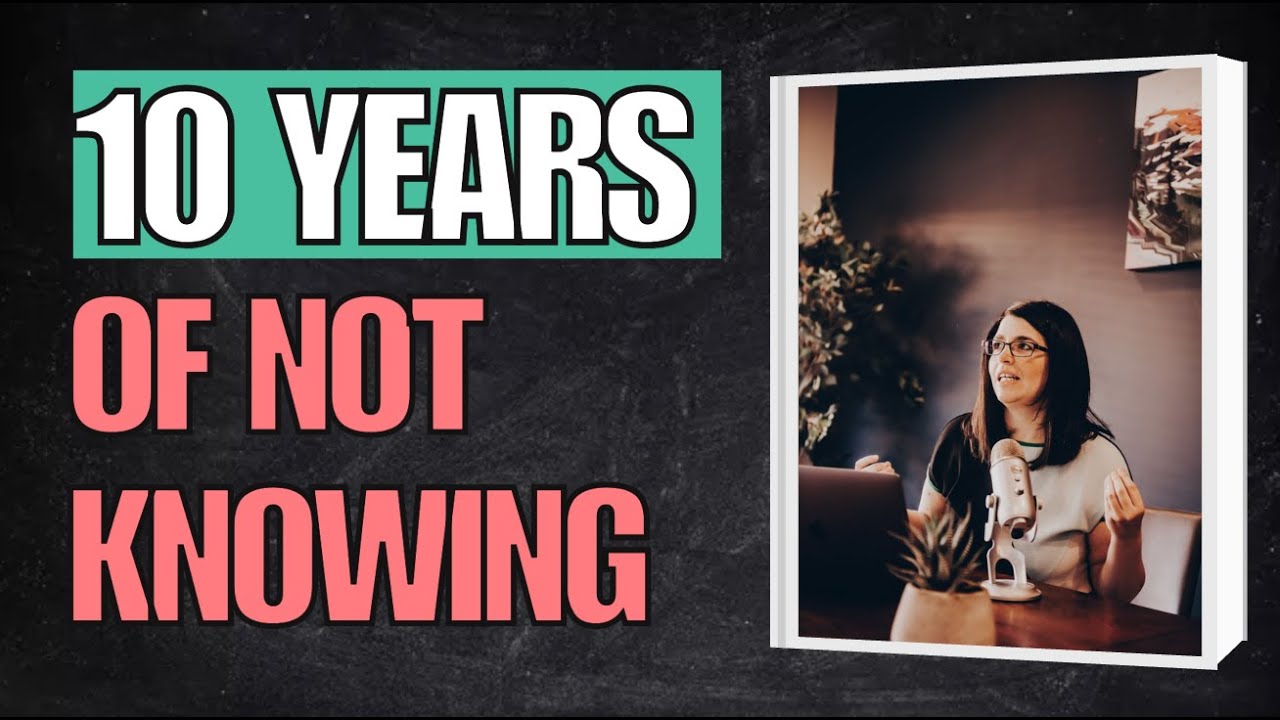
In this personal monologue, Natalie Fisher recounts her ten‑year relationship with a narcissistic partner that she failed to recognize as abusive until a mentor labeled it as manipulation. She shares a vivid anecdote where a simple request for NyQuil escalated into a hostile outburst, illustrating the unpredictable and controlling dynamics of the relationship. Fisher reflects on how she rationalized her partner’s behavior by attributing it to his traumatic childhood, and how she eventually reframed the experience as a catalyst for personal growth, resilience, and a deeper understanding of her own value. She draws parallels between this toxic relationship and common workplace abuses such as chronic underpayment and broken promises, emphasizing how justification and fear can keep people trapped. Fisher outlines the mental shifts that enabled her to leave, the lessons she learned about self‑advocacy, and how she now helps others transition from bad to good career situations, negotiate higher salaries, and value themselves. The video concludes with a call to action: viewers are invited to like, comment, subscribe, and join a free class on self‑valuation and salary negotiation.
Chapters
It was abuse and I didn't see it at the time. So my name is Natalie Fisher. I help people in their careers get out of bad situations and into good ones and never go back. I'm speaking from my own experience of being in a 10-year narcissistic relationship that I didn't know I was in. Today I'm sharing a story. This is part of a series of the moments that helped me see my own value so that I could Escape and get into a better situation. And today I'm sharing with you the things that created the freedom for me. So one of the things that I noticed that, that happened to me, and my mentor told me, he's like, that's abuse. And I just totally didn't see it. I was like, no. And I justified and I made excuses for him. So here's what happened. I was feeling really sick one day and I was living with my ex. We, we owned a house together. And I was feeling just really sick one day, nonstop coughing. I hadn't been able to get a good night's sleep in a couple days. And I was like, do you think you would— would you mind going to the store and getting me some NyQuil? And he was like, he looked in the bathroom and he's like, we have gravel, take the gravel, this will, this will help you sleep. And I'm like, I had to be really careful with what I said, so I was always really mindful to appreciate his ideas first, not just tell him what I thought right away. So I said You know, thank you, that's a really good idea, I appreciate that suggestion, but I really just want some NyQuil because that really does the trick to knock me out, and that's really just what I need. And he got so mad, he took the gravel and he threw it into the toilet, and he slammed his hand on the bathroom counter. And so I said, okay, that's fine, I'll go get my own NyQuil, no problem, love you. It wasn't like a spiteful thing, but he got so mad and he stormed off. And I told this story to a mentor, and he said— he was like my first mentor— and he, he said, that's abuse. That's manipulation and abuse and blatant disrespect. And I didn't hear it. I said, no, he just— he had a really hard childhood, and he had such hard issues as a kid, and his dad had beat him, and he had 2 women that left him, and they drained his bank account. And, you know, it's not his fault. We got to go easy on him. We have to understand that that's why he is how he is, and that there's there's just nothing but empathy and sympathy to be had. Right? That's how I was. And so now my views are very different. Now my views are yes, you can have a difficult time, and you can have a like a challenging childhood, and it doesn't have to make you into a jerk. And I can say the same for me, right? Like, I had that challenging experience for 10 years, and it could have made me very bitter. It could have made me hate all men. It could have made me— it could have made me into a different person than I am. But instead, I decided that it was going to make me smarter. It was going to make me more resilient. It was going to make me faster at thinking. It was going to make me a better person for the partner that I would then attract. After that relationship. So the thing that— the lesson that, that I learned here was that I wasn't ready to see it until I was ready to see it. So I'm sharing these stories in the hopes that you might start to see things a little bit more clearly that are going on with you, even if you're maybe not ready to see it yet, or you haven't been ready to see it in the past. Because I— like, 10 years— 10 years is such a long time to be with someone who you were literally walking on eggshells with all the time, or just not being able to I couldn't be myself. I had to censor everything I said, and even if I thought that what I said would be okay, it was so unpredictable that he could get mad another day about something that was totally fine two days later. Like it was so unpredictable. I could not win this game no matter what I did. But I got very agile, and I got very like observant, and I have a really good memory for remembering what people say to me, and. All this happened, and I just decided I'm going to make this into the best experience that I could have had, the best learning experience, and the best relationship PhD, as I now call it, that I could have. So what I wanted to offer to you was you, you could be in a toxic environment, and you could not know it because you're making justifications for the situation. So a very common one is someone could be very underpaid for a long time, and they could say things like, oh well, you know, they. they say they're going to keep their— they say they're going to give me the raise, but they haven't yet. And they keep moving it forward, or they keep saying, making promises and not keeping them. They keep— their actions and their words don't match. And that's been happening for a while. But if you could keep making really, like, valid justifications for why this is happening and not removing yourself from the situation. And I realized that the reason I didn't remove myself from the situation earlier was because I didn't fully believe that there was something better out there for me. And the pain of leaving was too great. The pain of leaving— I thought, oh, everything— we have this property tied together, we have— he has like access to all the tech in my business. Like, he, he was very controlling. He wanted to set it all up for me, and he's an IT person. And I was like, ah, I don't really want him to like get mad at me. And what if he like sabotages some stuff? Or like, what if this happens? What if that happens? Like, the pain was just so great that it was greater than me leaving, until it wasn't, right? And I wish that I had realized these things earlier, and at the same extent, it had to take the time that it took so that I could get to where I am now. And because I did—I don't know if I told you—but I tried to leave for two months, and then I ended up going back. And I was like, oh, why did you go back? You'd already done so much of the hard work, and then you went back. And so it just all had to go the way that had to go, and I just didn't know that yet. And being now where I am, I can see, oh, of course it had to go that way, because now I'm with this wonderful partner who. And he wouldn't have been available if I had left earlier. It wouldn't have been him. Like, I would have had a different experience. I, I wasn't done learning the lessons I needed to learn yet. So the, the series I'm sharing is, is for the intent for you to kind of reflect and see where you might be missing some things, where you might be not ready to see some things yet. And maybe these stories can enlighten something in you that you maybe have been seeing or ignoring or putting off. And, uh, I aim to inspire you to have the courage to be able to, to change that in your life if it's something that maybe you know you're eventually going to do. Maybe you know you're not ready yet. Maybe you're getting ready, or maybe you can decide that you're ready now. So my name is Natalie Fisher. I help people in their careers, and I help people to leave bad situations, get into better situations. I help them get promoted. I help them ask for what they want. I help them get what they want, and I help them not to take no for an answer. And if you know me, I asked— I doubled my salary in corporate, and I did that over a 4-year time span, but it wasn't just an easy yes, right? Like it was a process of getting to yes. And that process happens whether you give yourself the yes first, you have to learn to then go through the, go through the steps to get yourself the thing that you want, whether that is in your career or in your relationships. But what I can guarantee you is there is something better waiting for you on the other side of a hard decision. And when you're ready to make that, I would love to be there to help support you. So if you like this video, give me a thumbs up. If you didn't like it, give me a thumbs down. Leave me a comment. Tell me what resonated. Tell me what the aha moment was. And I'm doing a free class coming up on how to value yourself so you can finally get paid what you deserve. And I'm sharing all these little, these little insights that I have learned and a process that will help you to communicate in a very obvious, strategic way as to why you deserve to be to be paid more. If you want to be paid more and you're not, then I'm going to help you to do that in a very clear, authentic way that sounds so no-brainer that it will be very difficult for anyone to ignore or say no to. So this is the, the thing I've learned over all these years, and I can't wait to share it with you. So join me for that class. Click the link below. Depending on when you're watching this, you will see it in replay or you will see it, um, live. There will be an opportunity for you to attend live, or you can see it in replay. And I look forward to meeting you and hearing your story. So I will talk to you very soon. I'm Natalie. Give me a thumbs up. Subscribe to the channel if we're not— if you're not subscribed, and I will see you around. Bye-bye!