Success interview with Ciara
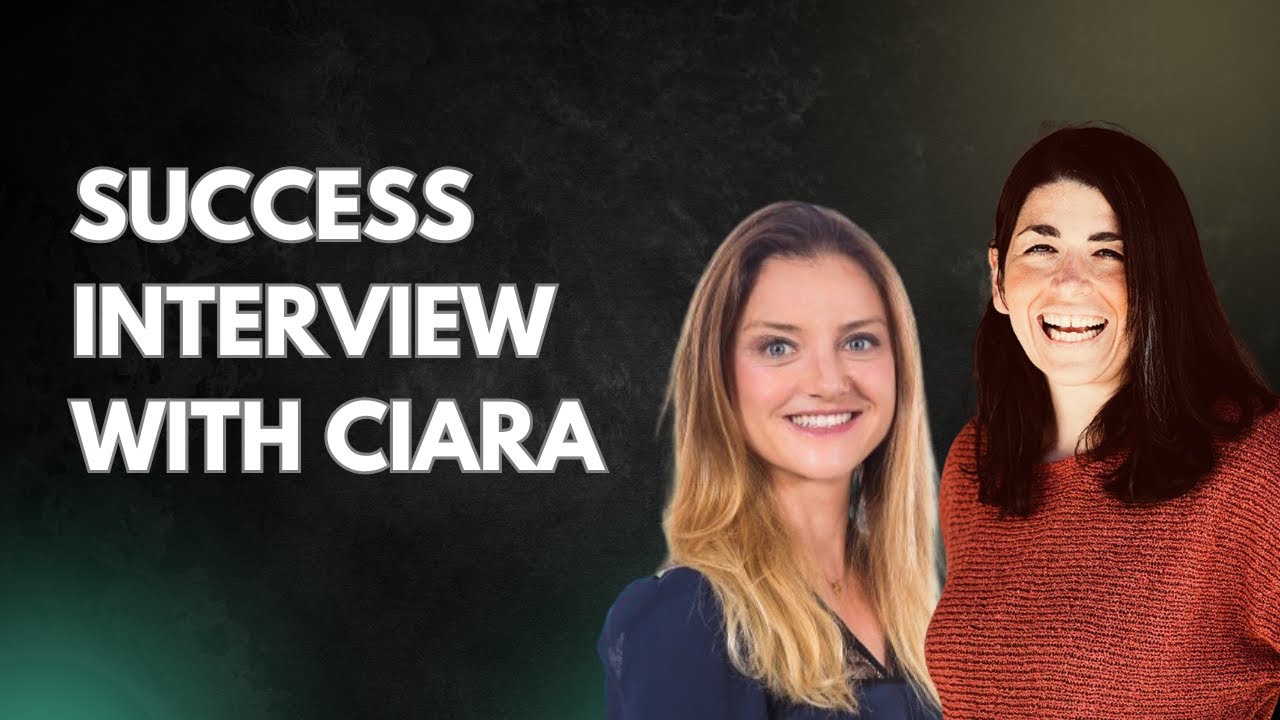
Kira lost her job during COVID and struggled with perfectionism in interviews until she reframed them as conversations between peers rather than performances. She learned to trust herself, prep less, and focus on how she could help the company instead of proving her worth. That shift led to a new People & Culture role aligned with her values.
Chapters
Hello, hello, and welcome to the podcast. This week we have a very special guest with us. Her name is Kira, and she's going to be walking us through her journey of now being in an incredible role where she's going to be making a huge difference. And I'm going to let her introduce herself and tell us a little bit about what she does. Kira, go ahead.
Yeah, so I, um, work in people and culture. I've been doing that for about 3 years now at a small travel company of about 100 people. And I lost my job back in May when COVID hit and travel companies were having trouble surviving. And that put me back on the job market really for the first time ever. I've always had a fairly easy time finding work. I was a teacher initially in my career. Then I was working in sales where it was always very easy to find work in the travel business as long as you had a lot of travel experience behind you. And so for the first time now, I was looking for a new role in a new area and was petrified at the whole process of having to do that. And I think I'd been kind of out of work for probably about 3 months, I think, before I came to you and was, yeah, just petrified by the whole process and was actually applying for work a little bit half-heartedly and feeling very relieved when— feeling very relieved when companies didn't get back to me because that meant I didn't have to go and do the interview, which was obviously very counterproductive.
Yes, and so one of the things that I loved most about working with you was that you had a lot of really valuable experience and a lot of really valuable accomplishments, but you weren't seeing those very clearly. And so looking from the outside, you were able to kind of like have the experience and have the capability to do the job, but in your head, you weren't really seeing that super clearly. So do you want to talk a little bit about how your journey began and where we started and kind Kind of what you were thinking about your own experiences and what you were capable of in the beginning.
Yeah. So yeah, I felt fairly confident in my ability to actually do my job, but was lacking a lot of confidence around how to kind of articulate my value, I guess, to other people and to sort of sell myself. And that's coming from somebody who used to be a salesperson.
Yeah, you were the top salesperson.
I don't have a problem selling other things. But then talking about myself was a different story. And, you know, I had been working for 3 years, just 3 years in this area of people and culture. Although I had like another, you know, 15 years of experience in other areas, I just felt like I didn't have enough experience to get the roles that I wanted. I didn't know how What kind of value I could bring to other companies. And I was just really worried about, you know, not knowing enough or not being good enough or—
Not having all the answers.
Not having all the answers. Not being perfect. Yeah.
Yeah, exactly. So many listeners will be able to relate to that for sure. Just like everything you just said, I'm sure it's what people wake up thinking about all the time, right? Like, I don't know if I can. I don't know if I'm good enough. I don't know if I— like, I want What if I don't have all the answers? Like always going to this worst-case scenario. So how do you— how would you describe the process of kind of turning that around a bit where you kind of started to see like, oh, maybe I don't have to have all the answers, or maybe, you know, it's still possible for me even with these kind of crappy thoughts that you were having?
Yeah. I mean, I think there was a small part of me that knew that from the beginning, but it was it was being overshadowed by all this fear and this desire to be perfect and have all the answers. So my default mechanism was to prepare and prepare and prepare and try to get, you know, the right stories and try to memorize and try to predict, I guess, what I was going to be asked in the interview, which of course you can't do completely. You can get some idea, but, you know, there's always going to be questions that come up that you don't know. I can't plan for. It took me a while. I mean, I think I had to remind myself of the times in the past where I've been able to do things that
I
didn't feel fully confident about, but they went okay, and I survived, and it was all right. And I think I had to reframe it a little bit, you know. I think, you know, in interviews, you can often feel, or I felt, like, they have all the power and I have none. And I kind of had to change that in my own mind to look at it more as like a peer-to-peer conversation. Mm-hmm. And that's part of, you know, that I'm coming in to help them with a problem that they have. That's kind of what I got from your coaching was, you know, trying to reframe it and take the focus off of me and what I was worried about and put it more onto like, how can I help these people? What kind of impact do I think I might be able to have on this business? given the experience and skills and attitude that I bring. So that was a huge thing. I mean, it took me time to get there, but I think the first, you know, the very first interview that I went on, it was really about, you know, trying to find that trust in myself.
Mm-hmm.
That I don't have to have all the answers. Let's just go in, let's trust myself, let's try to be present. and deal with it as it comes. And that's all I wanted to do. That was really my aim of getting through that first interview, actually.
Excellent. So that's one thing that I kind of want to emphasize is like the result that you got was going into that interview and just being able to focus on a different thing while you were there. So instead of where you were starting, which was they're going to be judging me and all those thoughts that were creating, a lot of uncomfortable feelings and feelings of pressure and nervousness and tenseness, you were able to refocus your thoughts not completely towards the other side of like, I can do this and it's going to be great, but more to the point of like, what can I offer? What do I have? And focusing more on them. So it was— it's not something that like you snap your fingers and all of a sudden you become great at interviewing. It's a process. And you kind of took that step, that first step from like being petrified to like going with like this different mindset to be able to then kind of open up and see the path afterwards. Because we know that, and you said it took you some time, but in the grand scheme of things, it didn't actually take you very long. Like we haven't even finished working together yet and you are already in this amazing role, which we'll talk more about. But like in your head you think, oh, it took me some time, but in the grand scheme, it didn't take you very long actually. So I just want to emphasize like the process is like a step-by-step and this was kind of your first step, like my first interview, I'm going to take this mindset and we're able to. So how did you feel after that first interview and not having all— like, I don't even think you had anything that threw you off because I remember asking you, did anything throw you off? And you realized like, I could actually trust myself because I did actually know enough.
Yeah. Yeah. I think a couple of questions came up that, you know, that was even just— that wasn't even like a full interview. It was like a screening call. And I remember I you know, I was practicing this trust myself thing, but I had still prepared for that interview. I was kind of doing both, like preparing as much as possible, but then at the last minute, like the last day, I'm like, okay, now let me just like settle and try to relax and trust myself now. But I had done quite a lot of preparation for that one. And I remember they were asking me questions that I wasn't actually answering On some of them, I wasn't actually answering the question they asked me. I was asking— I was answering the question I thought they were going to ask, the one I had prepared for. Yeah. So, it didn't quite fit. And I knew it at the time as I was going through it, but I was like, okay, whatever. I just like let it go. I just kind of went with it. A couple of questions came up that I hadn't prepared for, and I think I handled them okay. And I came off it feeling pretty good about myself, not because I'd done like amazingly well, I thought I did okay, but that was really good for me. And I was like, okay. And it felt— I was okay with that. I was okay with that. I was okay. You know, it was enough to give— make me feel, I guess, positive to go into another interview and be like, okay, it wasn't perfect. I didn't do it perfectly, but I'm okay. And it was actually good. And I still kind of, you know, um—
You took a significant step forward from where you were before. Right.
Exactly. Yeah.
And that's, that's kind of like the milestone. Yeah. The milestone result. So there's these, there's the milestone results and then your ultimate results, I'm going to call them. So the results of like going into an interview where you don't feel petrified, you're just, you know, you're there and you're focused on different things and leave and be like, okay, that was good. I'm like proud of myself for doing that. Right.
Yeah, yeah. And it gave me like that little bit of confidence, that little step forward in confidence that I needed for the next time. And actually, and actually, I did get a callback from that one, even though it wasn't very good. It wasn't perfect. I did get the callback to go for face-to-face. So it gave me enough confidence that walking into the face-to-face interview, I was like, okay, you know, I feel a little bit more comfortable now with this, with this.
Yeah, absolutely. I was gonna ask you, was that the one that you did end up getting called back and then Yeah. So, so yeah. And also like, you are always going to be harder on yourself. Like, that's something that we've talked about before on the podcast is we think being our own worst self-critics is something that is helpful or we're supposed to do. But in the end, it doesn't really help us. So. Yeah.
Yeah.
Awesome. Yeah. So that was kind of like a good demonstration of like the first step in the process. So if you're having trouble getting over something, you feel really scared or really terrified to do something, and then you have these little shifts and then you go you're able to go and do it, even if it wasn't perfect or even if you didn't get the ultimate result right away, that is still a big win. And I think that what people don't do is they kind of discount them right away. So when we worked together, we were like, yeah, that is actually a big win for you. And that kind of gave you that kind of forward momentum of like, yeah, that was a big win. That was a big deal for me. Right. Even though I didn't get that offer right away, Like it still counts towards the ultimate goal. And so—
Yeah, for me, for me it was huge. For me it was huge because, because I was that scared and I had built up this big fear. And I think fear just grows the longer you do nothing about it, really. Like the fear grows. And I knew I needed to step into that space. I knew I needed to actually, you know, do— go into the interviews and just try it out. for me to gain that confidence. And so I knew that it was just a small step, but for me it was, it felt really huge actually.
Yeah, exactly. And so, and being able to see that and being able to be proud of yourself for that was a big part of what kept you going and ultimately to the ultimate result that you ended up getting. So it's important for people to see that because a lot of the times people will go, they'll like, they'll build up the fear, same thing, they'll go, then they'll go and do it and they won't get it. And then they'll be like, oh, I knew I couldn't, I knew I wasn't good enough, I knew it wasn't gonna work. Instead of looking at it like, you looked at it, which was like, that was a big deal. I did that. Right. And that's a huge step forward. So I think that's how we need to be looking at all of our, our process. Like when we're going through something, we're not just immediately going to get it right away, not to expect to, but just be like, okay, these, all these steps count towards where I'm going and they're all meaningful.
Yeah. Exactly. And I think that was one of the things like me, you know, one of the, ways I approached it was it's all learning. It's all learning. And the only way I can kind of really get the learnings is by going out and doing it. And so, um, yes,
yes,
that was also something that really helped change my mindset around it. It wasn't like this big, um, win-or-lose situation. It was like, okay, this is learning. It's a step forward. It'll ultimately take me where I need to get to. Um, but this, this might not be it, and that's okay, but it's learning.
Perfect. Perfectly said. Yeah. And that's so much more helpful than like, oh my God, I have to get this or it's the end of the world. Not that people like That's a bit extreme, but people can have versions of that in their head.
Yeah,
absolutely. So, and I know that this is also something that like, that a lot of people resonate with that student mindset and that need to prepare and that feeling like you have to have everything prepared, like for a test. Like if you don't get an A on the test, then you're a failure. And I remember that we coached on that a lot, which was like the, okay, you can prepare to a point, but then after that, you just have to go and have the experience and that's going to be uncomfortable, but that's part of it and there's no getting out of it. Can you talk a little bit about how you reconciled that in your mind and balance that? Like, because I know that for one, you didn't prepare at all, and then for— you've still overprepared. And like, how you kind of balance that in order to achieve the mindset that was required to ultimately get to where you ended up?
Yeah, I mean, I think in the end, I, I was experimenting because I was such an overpreparer. I think I decided I need to experiment the other way completely and like not really prepare. And just really, again, trust that I know my stuff. Like, I do know my stuff. And it's not— one of the things I kept saying to myself is, it's not rocket science. Like, what I do is not rocket science. Like, I have a good feeling around it. I know my stuff. I read a lot around it. I don't need to study up more for the interview. So let me just, let me just see how it goes when I don't prepare.
Yeah.
And that's kind of, that's kind of what I did, because I felt the biggest issue that was getting in my way, again, was this, like, just not trusting myself, feeling like everybody else had all the answers, and I didn't, but that wasn't true. And so for me, it was almost like experimenting or getting a bit playful a little bit with it, just— Yeah. you know, not— I think before, one of the reasons I was so scared around it is I was like putting a lot of my own self-worth into the interview, that if I failed at the interview, I was a failure, you know. Mm-hmm. And so I kind of had to strip that away, I think, and just be like, you know, if this— if the interview is not successful, it's not failure, it's learning. And so let me just experiment with different ways and see what's effective, what works for me and what doesn't. And ultimately, the not preparing thing actually worked kind of well. I mean, I prepared to a degree in terms of researching the company and learning about their values and, you know, reflecting a little bit on my own experience, but not trying to like write out all the questions I thought they were going to ask me and write out responses and do all that in detail stuff. Yeah. It was more just, you know, okay, let me just reflect on the experiences I have that tie myself to this role. And then let me go in and just try to be present. Let me just try to, you know, be a normal human being like I would be with anybody else. Like, let me try to listen to them. Let me ask them questions as well. Like, that was also really useful for me, not just sitting there waiting for them to ask me questions. Let me try to make this more of a conversation because that also makes me feel more comfortable.
Absolutely.
And it changes the dynamic of the interview. So asking them questions, just trying to be present and engaged. And, you know, yeah, talk with them like it's a regular conversation. Yeah. Yeah.
And I remember you asked me about that. You were like, how do I make it a conversation or how can I change the dynamic? And it's absolutely possible, especially like if you're interviewing with a company who like you would want to work with normally is going to be friendly. They're not going to say, no, you can't ask questions. Like I joke and I'm like, there's no questions police. You can ask questions whenever it feels natural to ask questions. And so, yeah, it's, Totally possible. And so you did a really good job of that and made you feel more comfortable, which probably made them feel more comfortable too, because when you're more at ease, like, they're, they're going to be more in tune and more at ease with you. And the way that it's done is just you don't have to sit around and wait for them to ask. If you answer something and then you're like, oh yeah, by the way, what about this? Or if something comes to mind and you can just have a conversation like you're talking with your coworkers, and then it just kind of changes the whole dynamic. Yeah, and then as far as the preparing thing, just to go back to that for one second, when they— like, you did have this thing where you were preparing for a long time and that was your MO. Mm-hmm. And then you had already prepared so much that your stories, you already knew them, you already knew the answers to these questions. And there was a point where it didn't really have any increased advantage to prepare that stuff anymore because you already knew it. Then the work was, was trusting yourself and being like, I know I can recall the answers when I need them. That was the actual work. So you, you embrace that. And something that you did really well too was just embracing the discomfort, being like, yeah, maybe this is going to be a bit uncomfortable, but I have to do it. This is the work. This is my next step. There's nothing else to do. Like preparing for, preparing for more time isn't going to help me. Right.
Yeah. And I think one of the things that you said that, that, that helped me as well was like, you know, because it's uncomfortable being unemployed anyway. And you would say to me, look, it's already uncomfortable. So this is, you know, it's uncomfortable either way. You can either go out and do this stuff and it's going to be uncomfortable, or you can sit at home and not do it and it's also going to be uncomfortable. And so I was like, okay, you're right.
So then you took that.
It's crappy either way. So let me do something where at least I'm moving forward and doing something about it. Yeah, yeah,
yeah. And you did that really well. Like every opportunity to lean into discomfort, you went for it and you did it. So absolutely. And so do you feel like you— so because you mentioned, you said you did feel confident in your abilities, but I do know that you had some limiting thoughts around your abilities, like about thinking that other people might be better or that they might have more experience or that they might have done the same job in multiple companies before, therefore that made them more desirable and things like that. So you still had to kind of become aware of those thoughts and the fact that they were holding you back and then kind of see yourself in a new light, like seeing yourself in a way where you really had value to offer. Can you talk a little bit about how you feel about your value now?
Yeah, I mean, I think, you know, it's true that I don't maybe have as much experience as other people, but the experience that I do have was was very intense. And I was responsible at my last company for building up the people and culture team from scratch. And I, you know, I know that the value I bring to any company, you know, I know that I can, I will work hard at any company to understand what I need to do and figure out how to do it, even if I haven't got the experience behind me. So I think,
yeah,
I think in terms of my own value, you know, I think about it in terms of my initiative and my creativity and my curiosity and my ability to, I guess, figure things out more than anything else.
Yeah, exactly. So you had to kind of draw on that, like the experience from the past did not equal your capability in the future. And all those unique characteristics that you would bring to the role. And also just like your personality, which you were able to, in the end, let shine through at the interview as well, which I think had a big factor on why you were hired where you, where you ended up being hired at. So yeah, just, that's a good different perspective to, to bring to light. Like, it's not all about the experience. I mean, you had enough experience to get an interview. That's all that really was required. And then after that, it's not about the experience anymore. It's about all the other things. So what do you think was the main factor that shifted in your mindset, or if there was more than one?
Uh, well, I think it was this issue of trust in myself and in my capability, um, and just dropping that need to be perfect. Realizing that it's okay to not have all the answers. And that actually, as you said, you know, the interview is not about— not just about having the answers. You know, skills are part of it and having maybe, you know, some stories is part of it, but it's also about your connection and your likability and your personality and your attitude and your passion for what you do. Mm-hmm. Which in the job that I ended up getting, I was really passionate about that. And I think that did come through in the interview. And I, again, it wasn't a perfect interview, But I think, you know, I thought about it as well, you know, and you said this to me, put myself in their shoes. And I actually have been in their shoes because I was a head of people and culture. I used to hire people.
Mm-hmm.
I used to be in the other seat. And, you know, what you're also looking for in the person that you're interviewing is, yeah, their passion, their curiosity, their drive, their potential, all of those things. And, you know, do I want to work with this person day in and day out? So, you know, in addition to, you know, having some of the right skills and experience, there's all these other things as well. And I know that they count a lot. And you'd rather, you know, I would rather have somebody on my team that has all those qualities than somebody that's like an expert 100% at what they do, but doesn't really connect with people or relate to people in the right way. Mm-hmm. Especially in the role that I do. Yeah, absolutely. Maybe it's not as important, but, you know, the relationships I build with people are really important in my job, and that has to be strong as well.
Yeah, absolutely. And yeah, as I said, I think it— or as I was thinking, I think it is more important, especially in your job. And the fact that you had all this, right? Like, you're like, yeah, I am actually really likable. I do actually get along really well with people. I do actually have all these things to bring to the table, but you forgot about them because you were concerned about being judged, concerned about not being enough. And it's like, well, when you're not focusing on that anymore, you can actually let them see who you really are. Because they sometimes— they like, if you're going in there over-rehearsed and like really like some people, when I'm coaching them, I'll ask, we'll be practicing an interview story or something. And I'll be like, so what would you say if they asked you this? And they immediately go into like this robot mode. And I'm like, wait a second, where's the person I was just talking to?
But, you know, that's the funny thing though, because like, you know, when I was, you know, before I connected with you, I was looking online, I was watching YouTube, I was Googling these things, trying to, you know, find out what are the answers I should be saying. And it just felt like everybody online that was giving advice on this stuff was giving you kind of like an overly rehearsed answer. Mm-hmm. Following, you know, always following the STAR method and always doing this. And it didn't, feel natural to me, and I think I was trying to emulate those answers and it didn't feel right for me. It didn't feel right for me at all, and so I had to just find my own way with it, I think, a little bit.
Exactly, yeah, exactly. And that's something that I think that a lot of people look at, and that's why— that's because I've come across this a lot. Like, people are like, oh, but I have to say it perfectly, I have to have this exact answer right, and they miss the whole part They miss the whole mindset piece, like where they're not thinking, like, you could say the right words but not say them in the right way or not be relaxed or not be genuine. And the words won't land in the same way, right? So the words don't matter as much at all. And that's where a lot of people don't, like, they don't really teach about that or they just want to give, because what people want is a script. They're like, give me the script, tell me what to say and then I'll get the job, right? And it's like, well, if that worked, then everyone would have jobs because there's lots of scripts everywhere. So. We're just missing like these key components of like digging a bit deeper to see like, okay, what is really the reason why like this, you're not being successful here, right? And so really uncovering that with everybody's specific mindset is going to be a bit different and they're going to have different blockers, which is why coaching is so useful. So getting to the bottom of them and just being like, okay, this is how I'm going to think about it, that's going to work for me. And then I'm going to show up at the interview and I'm going to be, you know, natural and authentic and passionate and You know, they get to see who you really are.
Exactly. Because I'd much rather be unsuccessful being who I really am than trying to be somebody else, you know?
Exactly. Yeah. And that's something that, like, again, we get rejected, we're like, oh no, that, like, there's something wrong with us. And yeah, I love that you said that actually, because I was thinking about this. I wrote an article for Vault and it was looking at rejection 3 different ways. One, like the scientist. The scientist, if they get rejected, will be like, oh, interesting. I wonder what— like, my hypothesis was that this would have worked how I answered these things, but it didn't. So let's see why it didn't work. 2, the artist would be like— the art— an art— an artist is all about having unique and honest expression, right? And there's no right or wrong way to do art. They might be like, oh, well, they didn't appreciate my unique art. That's okay. It just means it's good art because not everybody likes it. Good art has strong opinions. Right. So, and then, and then we try to change ourselves to try to fit in a box, and, and then we end up making it all about the fact that we're not good enough, and it's never about that, right? So, so having those realizations. Yeah. So if you were to share some nuggets of, of wisdom with, uh, with listeners about what, what do you think that they could change in their mindset or be open to, just like be open to, if they're feeling really like nothing is working for them right now and they're not able to kind of progress, what would you share?
Um, you mean in the interview process?
Yeah, yeah. If they're getting stuck in the interview process, which is a really common problem, getting called for interviews and then going through them and then not having Not having the success?
Yeah, well, first thing I would say is it's all learning. And I heard this quote recently where it's like, you know, you're not— because sometimes I think it can feel like if you're going for interviews and it's not successful, you can feel like you're starting from scratch again. And I heard this, just this quote recently where it's like, you're not starting from scratch, you're starting from experience.
Yes.
And so, you know, if you're going into it and you're reflecting on it afterwards and you're you know, understanding what you did well, what you might want to do differently the next time, which is the process you kind of took me through after each interview. It will— I mean, I genuinely believe it will ultimately get you where you need to be.
And— Yeah.
Yeah, I mean, I think it's a process and it's— for me, I think it was just about Continuing to do it, continuing to do it, and not, again, trying not to let my self-worth or my value ride on it. It was just, you know, it was just learning about myself more and more with each interview.
Yeah.
Which is useful No matter what.
Absolutely. What a great way to look at it, for sure.
Yeah. And, um, and again, letting go— for me, it was about letting go of that need to be perfect. So I think if anybody's thinking that they need it to be perfect, it doesn't need to be perfect. You just need to trust yourself enough, um, that you can go in there and be yourself and be present and engage with, with the people, you know, across the table from you or across the Zoom from you as it is today.
Great. Yeah, those are great. And also that brought up for me about how— and this happens to everybody too, and I always like to talk about each person's experience with it— like when somebody says something to you that like demotivates you. And I know that you had that experience with a recruiter who had said, who had said something to you when we first started working together about that, that really demotivated you. And I mean, this happens to everybody. So it's just so interesting to just to give other people listening a heads up too. Like somebody says something to you and you could take it to heart and make it mean something. And we can look at Kira now after what this recruiter said and see that obviously it didn't mean anything, but at the time it really seemed like a big deal. You want to talk about that for a minute?
Yeah. Yeah. So I guess You know, yeah, one of the routes that's worked for me before actually is just getting jobs through recruiters, which has been pretty successful. And so this time around, I did the same thing. I called a couple of recruiters. I applied for a job through a recruitment agency, and then I called up afterwards to follow up on it. And when I spoke to the recruiter, she was like, oh, you know, do you know, like, the people applying for this role have like 10 years of experience. It's a really challenging interview process. You know, I'm looking at your CV. all you have— I mean, I know you've done these other things before, but ultimately all you have is 3 years experience, completely discounting— well, first of all, completely discounting like the 15 years of experience that I'd had before I went into people and culture doing other things, and not really looking at the quality of that experience over the past 3 years either. She wasn't really asking anything to get to know me. She was judging me purely on the basis of— what was, I guess, there on my CV and just made me feel like shit.
Ooh.
And it really, you know, it made me, you know, yeah, it really brought me down for a good couple of days, I think, before I, I think I had a session with you and kind of talked through it and you said, yep, that's totally normal and that happens and I wanted to warn you about that and I felt a lot better. But yeah, for 2 days I did nothing after that because I felt so crap about myself. Yeah. And now I've gone into a role earning, you know, a good bit more than what she was quoting me I would be able to earn. And in the type of role that makes me way happier than anything she would have put me into. I think she was really just trying to put me into a little box and, you know, shoehorn me into, you know, a certain role at a certain company. It just totally deflated and demoted me or demotivated me.
Yeah, absolutely. And that happens so often too because they are just looking at it from one perspective. Like they're looking to fill a role. They're looking for these boxes. They're like, if it doesn't say 10 years experience, then they're not interested. And I think you mentioned the word narrow-minded, which I agreed with. I think that it is a really narrow-minded way to look at it. But it also like isn't true, right? Like what she said wasn't true. And the reason why you felt like shit for those 2 days was because you believe— like, a part of you believed that maybe what she's saying was true, right? Mm-hmm. And so when we can take things that other people say to us and not, not believe them, like, immediately be like, oh, okay, well, that's that one person's opinion or whatever, um, we can— we don't have to get in our own heads about it and actually stop. Because I've talked to people who somebody has said something to them and they've they've given up on their entire dream because somebody said, oh, you're never going to be able to do that. And this is one person, one person's opinion, who has one experience, who's looking for— like, they have one agenda, and they're going to go off and live their life and not even give you a second thought. And yet you've given them so much of your time and energy based on what they said, thinking that it could be true, that it's just really sad to see. So now we can fast forward and of course look back and be like, yeah, that wasn't like there was no ounce of truth in what she was saying. So it's just good to go through that and be able to give other people the perspective of when other people say things to you, you get to choose like what you— if you believe it or not and what you're going to do with it. And yeah, there's a metaphor that I like to use. It's like, would you let someone come into your living room and take a dump and then leave? And it's like, well, of course not. But like, people do that in our brain all the time.
It's so true.
Yeah, so it was good that like you were able to work through that and see that. And now if anyone says something like— and now in the future you can take that learning with you. And like if someone says something to you that really makes you feel bad, you can question it and be like, is that really true? Like, like, do they really know me? Do they really understand me? Probably not, right? Like just from looking at your resume. So yeah, yeah. And then, um, and then what I wanted to talk about your successful interview and how, like, why do you think that was? Why do you think you were able to be successful? I think a big part of it was you were at the point where you were now showcasing your personality and you were being human and you had your, you know, you were aware of the value that you were bringing. But I want to hear your thoughts on what you think made that interview successful.
I think from the beginning when I saw the job ad and I researched the company, it just felt like such a great fit for me. It felt like like completely aligned with who I am and my values and my, yeah, my whole belief system around people and culture. So it felt like such a great fit from the beginning. I knew, like the job ad spoke to my soul. Yeah. Which sounds kind of funny, but it was a really well-written job ad and I just thought, I'm perfect for this. And I felt really confident in myself because, and I shared it with like everyone I knew and they're all like, yeah, this is so you, you need to go for this. And I think that in itself, feeling such a close alignment with something, which I hadn't really felt in anything that I'd looked at before, was more about me trying to fit into what they wanted. This one really felt like a great fit for me. Mm-hmm. And I, yeah, and so that made it that much easier, I think, going into the interview process, feeling like I didn't need to be anybody else but who I am, because actually, You know, they are a reflection. It felt like they're a reflection already of who I was. So now I just needed to kind of show up and, yeah, show them what I can do, basically.
Yeah. And I mean, like, I do resonate with that too. Like, a lot of my clients will be like, yes, I was really aligned with the role and I think that's why I got it. So like, they were kind of having thoughts like, yeah, this is me, I'm perfect for this. like, I want this and I would do a great job here. But also, like, you had to have the confidence that you were the right person too, right? Because if you— like, you could see that exact same job ad and be like, oh my God, I really, really want this, but what if I'm not good enough for it? And show up totally differently. So how do you think you showed up that made you be able to connect in the right way and show your value and yourself in the right way to be able to land the role? Because you could still be perfect for it and not get it. Like, that's happened with people in the past because they're not— they're aligned with the role and they think they are, but then they don't have the mindset to support that.
Well, I mean, I guess alongside the alignment, I mean, I did have a lot of the skills they were looking for. You know, and I think my collective experience was really useful. It wasn't just drawing on what I— the experience I had in my last 3 years of my career. You know, I'm going to be delivering workshops, and I was a teacher for a number of years, so it's drawing on that. And I'm, you know, I worked in sales for a few years, and this is a— this is like the company I'm working for now is going to— is a consultancy, so you're working with clients. And So there were a number of different skills that I've built over my career that I felt I had to offer. I knew that I had value to offer outside of like a traditional candidate, maybe. Mm-hmm. Because I have had a varied career and I maybe see things in a different way and they're kind of out-of-the-box thinking. They're not a very traditional kind of company. And that's, Again, that kind of referral, more varied experience.
You were looking at the job description in that way of like, okay, this is what I can offer, this is what I have. Because you could have just as easily been like, well, I've never worked with different clients before, I've never done this specific thing before. Like, easily could have thought that, right? Which is also, um, something that people do when they look at the job descriptions. And so like, it's easy— like, you just had this automatic way of looking at it now, but like you could have just as easily gone to the opposite and found everything that you couldn't do. So the fact that you looked at it in that way and had that attitude towards it, it definitely helped you go in there with that self-confidence and that mindset of, you know, I can help and I, I am completely able to offer what they need. So I just wanted to point that out because like now your thoughts have become automatic, which is amazing. But like, there is— there was a clear difference to you before and you now, where now you're like, oh yeah, now I— now I'm looking at what I need to look at that's going to serve me the best in getting what I want, versus before where you were like looking at the things that were not helpful and wondering like, what can I do to get unstuck or get out of this? So, and I think you just progressed really quickly, so I want to give you props for that. But you're not like also just like slowing down to realize it, like being like, yeah, I am looking at things in the way that serves me the best now.
Yeah. I mean, I don't— yeah, don't get me wrong. I definitely had that feeling with a number of other jobs where I would just look at it and then, you know, break it down and talk myself out of it. Like, why are all the reasons I can't do this? Or I don't match exactly what they have on the job description. So I, yeah, definitely had a number of those experiences as well. And yeah.
And I think that just being able to keep looking and keep your eye out for what you want, like instead, like you mentioned at the beginning about having that mindset of like, oh, they'd be lucky, I'd be lucky to have an opportunity, like they're lucky, I'd be lucky to take, have any job versus I have value to offer and I'm looking for the right thing for me, also creates that feeling of equality of like, yeah, they're just as lucky to have me that I am to be hired there. And it's a good match kind of thing. Because you also used a lot of that stuff along the way as clarity for what you really wanted, right?
Yeah, definitely. Definitely. I just didn't expect it. I didn't really expect to find what I wanted So closely, but yeah.
And I think, yeah, and actually thinking about that back through some of our conversations, I think that like you did that work as well, that mental work of clarifying what you really wanted, because we had conversations about what parts of HR you really were passionate about, what you enjoyed working on the most, and using the opportunities along the way that maybe didn't work out, or using the job descriptions that you saw as data and information to clarify what it is you really want. Because when we know what we really want, Then we're going to be able to see it when it shows up.
Yeah.
So yeah, I think you deserve credit for like attracting that too. Like with all that stuff that you identified as we were going along the path together. So yeah. And how is your new job so far?
Yeah, it's really good. I'm still onboarding. So it's still, there's still a lot to learn and, you know, I think we've already been talking about this, but, you know, I still am finding some of those, you know, thoughts that came into the initial interview process now coming into my job in terms of, you know, wondering if I'm good enough, having that bit of imposter syndrome feeling now that I'm in the role. I'm like, oh my God, you know, there's a lot of new stuff for me and I'm trying to catch those thoughts now and— Yeah. You know, and change those thoughts and have healthier, a healthier mindset towards it. So I guess, yeah, it's a process that's gonna continue because I'm— those thoughts creep in in different areas in different ways. And so, yeah.
Yeah.
I'm very grateful that I still have you as my coach to kind of carry on working through those. But yeah, the job is going well. It's very supportive. supportive team, very collaborative team. Still feels like a great fit, but it's uncomfortable. It's uncomfortable because it's new and it's a challenge and it's taking me out of my comfort zone. And, you know, on the one hand, that's very exciting. On the other hand, it's scary. Yeah. But I know it's gonna, you know, lead to growth for me. And it's, It's all of those reasons, the variety, the challenge, the learnings that I wanted to get the job in the first place. So—
Exactly. Yeah.
You know,
it's ultimately what we want, right? Like, yeah, I remember one of our conversations we were talking about, like, if you're, if you're not uncomfortable, if it's too easy, then you, then you wouldn't be happy with that either because you'd be like, well, I need to grow. Like, if something I hear from people so often is like, there's no more room to grow in my position, so I need to leave. Or I need to find somewhere where I can grow. Because as humans, we're supposed to grow and we're supposed to evolve, and we're going to be looking for those opportunities. And then it's just like battling our brain on like, okay, it's uncomfortable to grow, but it's also uncomfortable to stay still. Like you were saying before, it's also uncomfortable to not grow because we want to grow. So embracing that and growing in the way that, you know, we want to, right? Like you're doing something that you love and you're passionate about, and there's no better way to grow than to be offering your value and stepping up in a way that serves others while you're growing, right?
Exactly. And this is what I try to bring it back to is the impact I can have on other people, on other organizations. Because now I'm working in this consultancy where we're helping, you know, to bring, you know, to help startups and scale-ups grow successfully by putting their people first, which is something I'm super passionate about. And, you know, has the power to impact a lot of people in very positive ways. And so that's where I'm trying to keep the focus and think less about me and all my insecurities around my, my, my capabilities and trust that I will be able to do it. And if I don't know how to do it, I'll figure it out and, and, and keep the focus on, yeah, the impact I have on this.
And also the fact that you know so much more than they do anyway, because you've been like 3 years of intense experience, the passion, the time you've spent thinking about these problems that they're having. You have so much more to contribute than they do because that's not where their focus is every day. So even if, even if, you know, you like, there's no way you wouldn't have something new or something to offer because of just the sheer facts of the situation. So
yeah. Yeah.
Yeah. Well, that's amazing. So I'm so happy for you in your new role and I'm excited to continue working with you and I'm so proud of you. And yeah, is there anything else you wanted to add to—
No, I mean, just final thoughts. Yeah, just, I just, no, just a thank you to you for, you know, getting me where I am right now. I mean, I still have a ways to go, don't get me wrong. I feel like this is a work in progress. But to think 3 months ago, I mean, it's basically 3 months, I think, since I contacted you and really started, you know, job hunting for real. And now here I am, 2 weeks into a job that I never thought I would get in the middle of a pandemic. And, you know, it's crazy. I can't quite believe it at the moment. And I kind of want to say I was just lucky, but I know there was, you know— Yeah. Yeah, there was a process to get me here, and it happened to come rather quickly. And maybe there was a lucky component to that. I'm sure there was. But, you know, thank you for keeping me on track, holding my hand through it, and And making me feel better on those days where other— whether people were bringing me down, because that's, that's a huge part of it, is just maintaining that resilience a little bit through that.
Yeah. Well, thank you for your thank yous. I would love to take all the credit, but really it was you. Because, and I mean, I, I find it like this coach-client relationship is kind of fun because it's like, it's like you did the work, right? But like, I know that I gave you tools and support and guidance along the way, but I know that you had to show up and do the uncomfortable will work anyway. So it's kind of like this win-win situation because I love to see you succeed and you ultimately are able to now see what you're capable of and able to do a lot more because now you've built that confidence in creating this result. And yeah, I mean, it is tempting to think that, oh, there was some sort of luck involved in it. And I think that along the way we kind of dissect the successes. So it's really important to go back and be like, okay, well, what created this success? I'll always be like, how did you create that result? Because I believe everything is within your control. Um, but yeah, I think that you don't give yourself enough credit sometimes. So that's something that we're working on celebrating and giving yourself enough credit. So work in progress,
like I said.
Yeah, yeah, always. The work is never done for me either. So totally. And yeah, so I think That's all. Those are all the questions I had for you. Thank you so much for generously sharing with everybody, um, your experience. I know they're going to get a lot out of this. And, uh, yeah, I'm looking forward to maybe having you on again one day when you're even like at your next level of your career.
Let's see. Let's see.
Let's see. One day at a time. Okay.
Thanks, Natalie.
Bye.
All right. Bye-bye.
More from Natalie






How To Sound Good Without Having All the Answers (In Meetings & Job Interviews)


