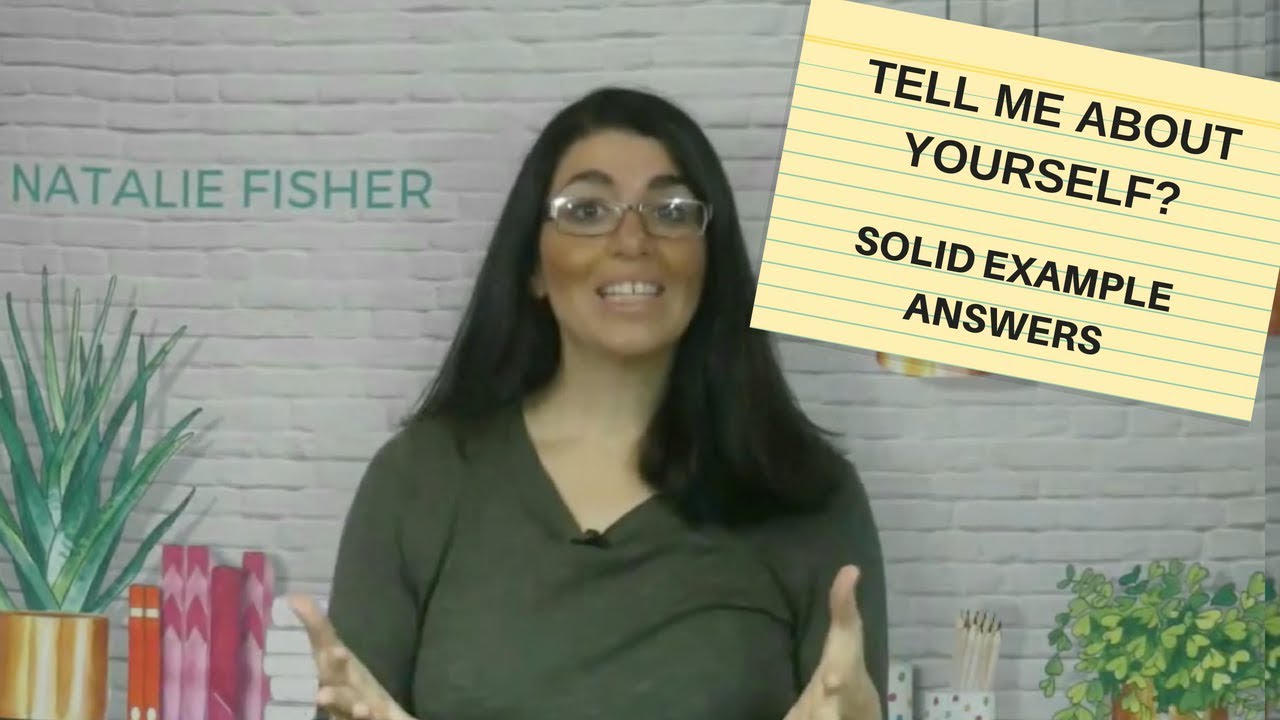
Career coach Natalie Fisher teaches the "I'm the type of person" framework for answering "Tell me about yourself" in interviews. She shows two examples, one focused on customer service and one on organization, and stresses keeping it brief and rehearsed. New graduates especially should avoid rambling and prepare a clear ending.
Chapters
In this video, you're going to learn a radically different way to approach the tell me about yourself question, especially useful if you have less experience and you're worried about your lack of experience. So in this video, you'll learn the key to really setting yourself apart from the beginning, and you're going to learn the biggest mistakes people normally make, which can cost them the job when answering this question. So I'm Natalie Fisher, speaker and specializing in helping people with less experience, new graduates, or if you've been out of school for a little bit but you just haven't gotten the job offers that you want, that's what I'm here for, so stay tuned. So tell me about yourself. So this question starts off every single interview. There are so many different ways to answer this, and I'm sure that if you're watching videos to come up with an answer, the perfect answer yourself, that you're going to see a lot of different advice out there for how to answer this question. So I'm going to share with you today a way that I've used and that's truly made the difference for me and really helped me connect with interviewers, and I've also passed it along to my clients and they have found great success in it as well. So The approach I want to share with you today is called the I'm the type of person approach. So when you don't have a ton of experience and you know you need to really stand out in a way that makes you memorable, I'm going to share a way that you can do that. And a better way that you can do that is with an example. So I'm going to share an example of the I'm the kind of person approach. So this example is an answer for a role that has contact with customers and is very people-focused. So depending on your role, you'll want to highlight a part of your personality that fits well into that role. So for this one, we're going to go with a customer service example. So the answer would go, I'm the type of person who loves people. For example, I'm the type of person who's known for calming down even the most difficult of customers at my previous role, and I was the person that my colleagues would call on when they had a client that got out of hand or couldn't be calmed down because they knew that I knew what to say to calm them down and they would always walk away happy. So I love that this role involves helping clients and customers and I'm excited to learn more about it. So that's one example and that's worked wonders for me specifically for that role and anything that involves people, so account managing or HR, that kind of thing. Here's another example. I'm the type of person who is always looking for ways to learn a new process and make it more efficient. For example, in my classroom in one of my group projects, I always organized our group in a way that had the group members voting me chief organizer of the group, and I loved that this role involves organization, and I'm excited to learn more about that. So that's an example that involves specific organizing. So you want to tailor your I am the kind of person that answer to the kind of role that you are interviewing for. The key that sets you apart. So that's essentially going to do it. The key is to infuse personality into your answers and make sure that your answer tells a little story like the examples just did. So when you give a response, you want it to be concise and succinct, and you want it to have a clear ending. So as in the examples, in the examples that I just mentioned, I love that you can just say at the end, I love this role, I love that this role involves, and then you can fill in the blank. And I'm excited to learn more about it. So the one thing you don't want to do is ramble on. So preparation is key to the— this very easy question, and it's not so easy because you can ramble really along very easily. So if you want to be super prepared, just craft a short, succinct answer that infuses your personality and gives them a reason to see you as the right fit for that particular role. So some of the biggest mistakes that people make is the first one is they fail to prepare, which often leads to giving too much information about your life story, which often means rambling on. So that's most easy to do. Rambling is going to kill your interview, and it's easy to get stuck in a position where you realize you're rambling and then you're like, yeah, okay, that's pretty much it. And then there's this awkwardness, and you want to avoid all that at all costs. So the way that you do that is by practicing beforehand and coming up with your answer and just saying it over and over to friends, family, or whoever. So there you have it, a simple way to stand out with an answer that is confident and uniquely infuses personality and connects right away. So now I want you to come up with your own intro answer. So please do that and post it in the comments below for bonus points. Thank you so much for watching, and remember that answering this question is one thing, but there is a lot more to interviewing than just answering the questions. And in fact, if all you do is answer the questions, you've already lost the interview. You have to do a lot more than that in order to make it to the other side. There's a whole strategy at play, and if you'd like to learn more, you can get started right now by clicking the link below because I have a surprise for you. So it's my free guide, and you get free instant access. It's the ultimate Situational Behavioral Interviewing Guide, and what you get when you download the guide is you get an in-depth breakdown of the formula to help you answer these questions, tell good stories, in-depth formula that's going to help you instantly communicate your value in an interview with every answer that you give. You're going to get a series of concrete examples for the top 10 most commonly asked situational interview questions, and you're going to have fill-in-the-blank templates for each question so you can start to fill in your own answers and get them down. Down on paper. And if you're still getting stuck, because from working with so many people I know that it's often very difficult for people to come up with these stories, I've also included 25 questions that you can ask yourself that's going to get you thinking about your stories and help you come up with them much quicker and more efficiently. And what's more, you're going to get this in a beautifully designed workbook designed specifically to help you prepare for your next interview, and it's absolutely free. By the end of working through this guide, you'll be totally ready for your interview And you can get on your way with starting your new job. So thank you so much for watching. Click below to grab it now. If you like this video, give me a thumbs up. If not, give me a thumbs down. Happy to have you here. Thank you so much. Leave me a comment. I'm Natalie, and I'll see you soon. I like the TV show Friends. Do you like the TV show Friends? I've been watching it a lot on my TV, and yeah, It's like 10 years old or 20 years old, but it's still hilarious.