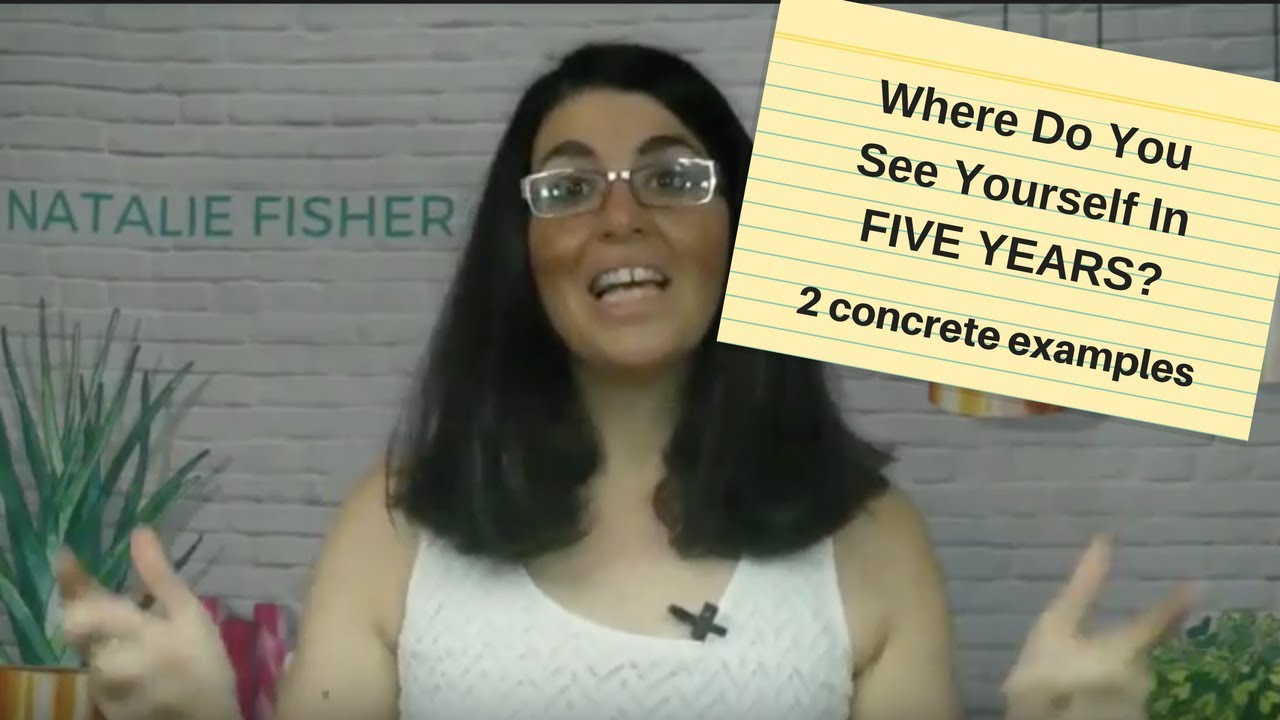
In this YouTube video, career coach Natalie Fisher walks viewers through two distinct strategies for answering the common interview question, “Where do you see yourself in five years?” She first outlines a safe, two‑part response that aligns with what most employers want to hear: a commitment to mastering the current role in the first 2‑3 years, followed by a plan to become a key contributor and mentor in the next 2‑3 years. Next, she presents a bolder, goal‑focused answer inspired by HR expert Liz Ryan, which emphasizes personal learning objectives (e.g., gaining analytics and email‑marketing skills) and then flips the script by asking the interviewer where someone with those goals could end up in the organization. Fisher explains why this approach can reveal a company’s transparency and culture. Throughout, she stresses the importance of tailoring answers to one’s personality, viewing the interview as a two‑way conversation, and projecting confidence. The video concludes with a call‑to‑action for a free “Situational Interviewing” guide that provides templates, story‑building prompts, and example answers for common behavioral questions.
Chapters
Hey there! In this video, I'm going to break down 2 ways that you can answer that question, where do you see yourself in 5 years? I'm Natalie Fisher. I'm a speaker and I coach new graduates, or if you're lacking experience, that's my department, to help you land those job offers despite your lack of experience by using new strategies, outside-the-box strategies that work. So if you're interested, keep watching and check out my other videos. Stay tuned. Okay, let's be real. The job interview question, where do you see yourself in 5 years, is kind of annoying. It's uncomfortable. You can't possibly know where you're gonna be in the future for sure, or what 5 years is gonna look like. Within that time frame, jobs will exist that you don't even know about yet, and your long-term career plan could completely shift. It happens all the time. I'm gonna show you 2 answers to this question. So remember that your situation and your personality type are unique. Unique, so you might feel comfortable saying something that someone else might not. So that's why I'm giving you 2 answers. So the 2-part safe answer that most employers are going to be totally happy with, that's what we're going to start with. So employers and interviewers want to hear certain things from candidates when they ask this question about the 5-year plan, and those things that they want to hear are: they want to hear that you plan to be at the company long term. They want to know that they're making the right decision in hiring you because you want to stay there. They want to know that you're on board with the company goal and that you're not already thinking about this job as a stepping stone to move into something else. And they also want to know that you're going to be happily working hard there for them for as long as they need you in that role. So that's what most employers want to hear. So here's a sample answer. that works well in most cases. Part 1, in the first 2 to 3 years, I see myself really sinking into this role. I plan to master the position and know the ins and outs of it. My goal would be to fully understand the areas where I can improve and continue to learn and improve upon what I'm doing. I'd like to really be able to focus on the big wins in the department that would make this department perform at its absolute best. And then part 2 of the answer, You would say, for the time after that, for the next 2 to 3 years after that, I see myself as being a key contributor in the department and a key resource of knowledge and expertise to the other team members and the organization. I want to be able to extend my strengths and offer to help with mentor other staff members when necessary. I really want to be able to use my skills and knowledge. that I can continue to gain experience in this role. So that's the safe way. You can make that your own, take those— take that answer and make it your own. The second way to approach this, which is the bolder yet completely reasonable way to approach this, and I learned this from Liz Ryan, and she is an HR guru and she does a lot of career tips. But she says it takes guts to ask, where do you see yourself in 5 years, when a hiring manager isn't even committing to keeping you employed for 5 months from now, even 5 weeks from now. So what right do they have to ask you that? That's her take. So if you kind of agree with that, then you might give an answer like this. And in this example, that pertains to an— this example pertains to an analytical or email marketing role. So for this example, you might say, I want to learn more about analytics and specific software programs and methodologies that are used to improve email open rates, and I would love to take some additional training on learning how to do these things and improve my skills within this department so that I can be more valuable in a marketing department. So her take is you, you're not being specific about where you're going to be in 5 years, you're just saying kind of what your general goals are and what you want to learn about and what interests you right now. And then after that, you want to ask a question back. Back to the interviewer. You always want to ask a question back to them to see where they stand on it. And you could say, where would you see a person with these goals going in your organization in the future? Or where would you see them going under your management in the future? And you can ask them what their plans are in a tactful, subtle way. And if they're open with you and they give you an answer that feels honest, that's a clear sign that you're interviewing with a good, transparent organization that communicates well with its employees and potential employees. So you need to actively decide for yourself how you answer this question. Once you do, you'll feel more empowered than ever and your confidence will come through in the interview. So it comes from that mind frame of, you know, you're interviewing them just as much as they're interviewing you, and that really demonstrates that in that question where you ask them, you know, where do you see me in 5 years if I were to work here? So there you have it, 2 options for how to answer the 5 years question. Thank you so much for watching, and remember, answering this one question is one thing, but there's a lot more to interviewing than just answering questions, right? In fact, if all you do is answer the questions alone, you've already failed. There's so much more going on and so much more to consider when nailing an interview and getting multiple job offers. So if you want to get a head start and start learning about this strategy, the strategies that work, you can get a free guide by clicking the link below. It's called my free guide to situational interviewing, and in the guide, when you get it, you will download it right away and you'll get 10 concrete examples of the most commonly asked situational behavioral interview questions, and I break them down with the formula of how to communicate your value with every answer that you give. You're also going to get fill-in-the-blank templates for every single question, and you can start filling in the blanks yourself to get your stories on paper. And from working with so many people, I know that it's not always easy to come up with your own stories. So I've given you a little cheat sheet, which is 25 questions that you can ask yourself to start getting those stories flowing. You can ask your coworkers or your friends for help with that and get even more stories, and that will help you. Nobody should not have a story, trust me. So thanks so much for watching. Remember, if you like this video, give it a thumbs up. If you didn't like it, give it a thumbs down, and I will see you in the next video.