4 Rules To Live By That Will Bless our Life | Rule 1- Love To Learn
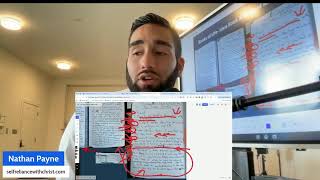
Nathan Payne shares four principles for a blessed life, diving into the first: Love to Learn. He describes a system from Sterling W. Sill's 1974 book The Majesty of Books: read, mark useful thoughts, record them in an idea book, then review and memorize. Payne keeps a gratitude journal and memorizes scripture as part of the practice.
Chapters
All right, everybody, we're about to get started. I just gotta go put my stream on, on Instagram so people can see it there before I get started. So come on, let me know where you're watching from. I got something cool for you guys today. If you guys like self-development, self-help, if you like becoming the best version of yourself, We're going to go right into it. One second, let me just get the stream going. All right. Today I'm going to be talking about 4 rules to live by that if you live by these, you're going to be— your life's going to be blessed. And it's blessed my life. So I want to show you these 4 rules that I live by. And these have been taught by God. God has taught us these 4 rules to live by. And if you live by them, you're gonna learn, you're gonna progress, you're gonna grow. Okay, so I'm gonna show you not only the 4 rules to live by, we're gonna focus on one of them today. I'm gonna explain to you guys how you can really implement this rule in your life and really take it to the next level. Okay, because this is something I've had to do, I've had to learn, and I'm excited to show you guys. So without further ado, let me dive right in. I just got to make sure one last thing. I got to make sure my mic is, uh, It's on the right mic. Okay, good thing I checked because it looks like, uh, it wasn't. Let's see. Oh, hello, hello, hello. Can you guys hear that? Okay, man, I was— I would— I had the intro, I was feeling it, guys. But hey, I'm gonna do it one more time. You know why? Because I do repurpose these and I put them on YouTube for anybody that doesn't see these in the future. So I'm gonna do it again. All right. Hope you guys enjoyed that, but I'm gonna do it again. All right. Hold on. Let me— yep. All right. That's working. And you think I would have this dialed in by now. Okay. Today I'm going to be talking about the 4 rules that you need to live by in order to have a prosperous and a happy life. These rules are taught to us by God. They— he wants us to do these things so we can progress and grow. And I'm going to focus on one of these rules and show you guys how I implement this rule in my life and what I do to take it to the next level, what I do in order to help me to live this rule. And these rules probably won't surprise you, but they're very simple. I promise you, if you live by these 4 rules, you're gonna grow and you're gonna progress in your life and you're gonna be— you're gonna have more joy. Okay? So, without further ado, let me dive right in. Let me share my screen. Okay. So, I'm gonna write some things down on my vibe board. So, the first rule is to Love to learn. Okay. This is my left hand. So I'm not the best at it, but it's whatever. I'm practicing with my left hand. So first rule, love to learn. Okay. The next rule is to strive, strive to serve. Okay. Serve. All right. Strive to serve. If you're always looking for opportunities to serve others and it's not all about you, strive to serve, right? Okay. And then the next one is think to thank. Think, be grateful, think to thank. All right. And then the last one is pause to pray. Okay. All right. My cursive is not that good in my left hand, but it's all good. All right, guys. So these are the 4 rules to live by. Love to learn, strive to serve, think to thank, and pause to pray. Not in any specific order, but these are things that I promise you, if you live by these things, you're going to live again a happier life. If you're loving to learn, if you really enjoy learning, there's a lot to learn in this life. If you're always looking for people to serve and to love, there's a lot of people to love and serve, and you're going to get outside yourself and like thinking about, oh, I lack this, I lack that. No, you're going to be able to see other people's situations and be able to help them. Think to thank. It is true that a way to overcome anger and negative emotions is to be grateful. So if you're thinking to thank, if you're thinking for ways to be grateful, you're gonna be more positive, you're gonna live a better life. And the pause to pray, okay? Life is busy, but if you can pause and ponder and pray and thank God for what you have, you're gonna live a better life, okay? So now, how do I implement these things in my life? I'm gonna show you guys what I personally do to— today we're going to be focusing on this one: love to learn. Okay? I did not used to love to learn. I promise. Like, I can tell you guys, when I was younger, I was like, school's dumb. I'm going to get through college. I don't really care. I'm just going to try and get through it. Now, it wasn't until later as becoming an entrepreneur, I found out that like loving to learn and learning, like reading and really diving into other people's minds and learning from other people's experiences, especially with reading. Like, it is an amazing thing. I used to not really care about it, but learning and loving to learn can just increase the amount of joy, increase like, I don't know, like how awesome life is if you can learn from other people. Okay. So it's not after high school you're done, not after college, like you're continuously learning. And I'm going to share some things that I do that I've learned from reading tons of different books and learning what other people do to learn. I'm going to share them with you and I know they'll help you out. And Today, we're going to be focusing on one of the things I learned from a book I read called The Majesty of Books. Okay, I'm actually going to share this with you. This is really cool. You guys should check this book out. It's pretty awesome. It's called The Majesty of Books. Okay, let's see. That honestly might not— okay, what is it? I swear that was the name of the book, The Majesty. Okay, um, let's see. It's going to be on my author, like what books I recommend on my Amazon. So let me, let me show you. Okay, this is my planner. If you guys haven't checked it out yet, you should. But if we go to my author page, what the heck is the name of that book? The— yeah, The Majesty of Books. Maybe it's just such an old hidden book that no one really knows about it. But guys, this book game changer for me. It was written in 1974 from a guy that's read over like thousands and thousands of books. And he basically laid out his way of learning through reading books. And I was like, "Oh my gosh. This is great." It's very simple. But, um, that's what I'm gonna be sharing with you guys today, alright? So, there's different ways to learn— like live these rules, like in your life. Love to learn, strive to serve, pause to pray, and think to thank. But we're gonna be focusing again specifically on loving to learn. When it comes to loving to learn, keeping an idea book is one of the greatest things that I've done in order to learn and love it. Okay? I get a journal like this and I write. I'm going to explain what I write, but I write down things I'm learning. Okay? And we're going to go into why that is and how to— the best process to do that. But when it comes to the 4 rules that we discussed, guys, of like loving to learn, striving to serve, pausing to pray, and thinking to think, You can knock them down. You can knock all of them down with the books of life. All right? I call them the books of life because these are the things I want to keep throughout my life so I can learn and constantly be growing. So, I keep a gratitude journal and I keep track of all the blessings and the hand of God I see in my life. Like all the things that happen, all the blessings I receive. I'm like, I want to keep track of that so I remember. Okay? So, that's like pausing to pray and thinking to thank. It comes from the gratitude journal. And then loving to learn comes from the idea book and the book of memorization. I'm going to explain what that is as well. That's loving to learn. And, you know, pausing to pray and thinking, pausing to pray, that's, I don't really have a book for that other than like I write down where I see God's blessings in my life in my idea book and also my small plates. Okay. So if you guys have Now I think you understand like what I'm getting at. There's 4 rules to live by and the books of life which I keep. And if you guys like don't believe me, it's like they're right here. I took a picture. They're on my shelf. These are journals, gratitude journals I have. I think these 4 or 5 are my idea books and these ones right here, more gratitude journals. Okay? So these are things that I've done to keep track and to learn. Okay? Because I know when you write things down, you internalize them. They become— something happens in the brain where if you write things down, you learn more, it becomes like, yeah, it just becomes a part of you. Okay. Now, let me share with you guys really quick. I'm going to go super fast into how I keep a gratitude journal. But this video is not necessarily about gratitude, the, you know, pausing to thinking of the thank, but I'm going to give a really quick overview of how I keep a gratitude journal if you guys are interested. Okay, all I do is I write 3 things I'm grateful for every day. 3 wins I had the previous day because I always journal about the previous day, 3 things I'm grateful that will happen, not grateful that for because I can be grateful for anything. But when I say I'm grateful for cheese, I'm grateful for my wife, I'm grateful for my daughter, but I also manifest after doing what things, saying what I'm grateful for and manifest what things I'm grateful that will happen. I'm grateful that I live on a farm in Canada. It happened. I'm grateful that I'm debt-free. It's happening, right? So, well, yeah, it's anyway, not having to get into all that. But yes, you can be grateful for things that haven't happened and they'll happen. Okay. And then I also, this is something I've been trying recently is just writing things I'm grateful for that my, of my wife. I'm grateful for my wife. I'm grateful that my wife is kind. My wife is amazing. I just write down attributes and things she's doing that I want to remember. Okay, now in the very back of my journal, my gratitude journal, I keep what I said, the things of God where I see his hand in my life. I call it the small plates, uh, spiritual tender mercies. You can call it spiritual experiences, whatever you want. I just put that in the very back. And, um, yeah, and you can say the Four Rules of Life and pausing to pray. I guess this would be a good reflection period where I pause, I pray, and I I think and I think and I put it in there. But the main thing I wanted to talk to you guys about today is the idea book, okay? So, where did I get the inspiration or the thought to do an idea book? I gotta give credit where credit's due. I got it from my man— oh, it's loading. I gotta give it to the credit to Sterling W. Sill, okay? This book changed my life. It helped me to really learn because in the past when I read, I would forget a lot of what I read. I'd be like, you know, that was a good book. You know, I didn't get much out of it. Now I get a lot out of what I read because I'm not just reading to get through something. I'm getting— I'm reading to obtain knowledge. And yeah, awesome book. I don't even know if you can find it, to be honest, because it's so old. It was like from 1974, and I don't know how many copies were sold or how many are out there. But I got one. I was at the DI, and I'll tell you the crazy story. If nobody knows what the DI is, it's like the Goodwill. It's a thrift store. I went there. This was after I decided, I was like, God, please help me learn more. Help me study more. Help me get more from my reading. I want to learn more and have more wisdom. So I go to the DI and I'm like, huh, I've never gone to the book section of the Goodwill, the thrift store. But I was like, I'm going to go check it out. And it was like a beacon of light that shined on this book. I'm not even playing, guys. I was like, what? What is this book? And I look at it and it's literally what I've been— I was praying for at the time. This is a couple of years ago. And I was like, okay, I'm gonna read this. And it literally gave me everything I needed to know. It said what books you should read, how you should read them, how you should study, how you should take notes. Like the best— like this guy read over, again, over 2,000 books his life. He has over like 10, 20, 30 idea books that he's filled out throughout his life. He's not around anymore, but rest in peace. But he, he explains, hey, out of all the books that have been written up until 1974, like, this is what I actually recommend is worth your time. This is why you should do this, and this is what you get out of reading this type of stuff. So I was like, okay. So I read his stuff, and I'm giving you guys the knowledge that I got from his— of how he studied these books, okay? And that's why this, The Four Rules to Live By is love to learn. He helped me to love to learn. I really enjoy reading. I love learning. I keep my idea book with me all the time. I'm about to finish this one. Um, I got like one page, like 3 pages left until I put it, uh, get another one. But anyway, this is his process, okay? This is the process for learning from your idea books. I'm going to go through it right now and, uh, Just to show you how it works, I write the things I'm about to explain like in the front of the book and I go through it like this, like boom in the front. And then the back, I put my book of memorization, which is things that I want to memorize that I've learned. Okay, because I want to like internalize things that I want to stamp in my memory. All right. So this is his process. Again, this all comes back to shout out to my man, Sterling W. Sill book I found from like the light from heaven shone on this. And I was like, okay, this is going to help me. So I want to explain it. I want to share this with the world because this has helped me to love to learn. All right. So process from, for learning from my idea books. I hope everyone can see that. So this is the first part, the first step to learning from your idea book. I think it's pretty dang simple. It's to Read, read a book. Okay. That's pretty simple. You need to read. All right. What books to read? Well, you can ask me what books to read. I'll give you my opinion. I actually have a list of books that I recommend to read. Um, you can, if you can find his book, he'll give you the list or I'll just tell you what it is, but read. Okay. The next part is mark all helpful thoughts with pencil in the book. Okay, so as you're reading the book, read with a pen and a pencil, right? Or a pen or a pen or a pencil. Oh my gosh, I can't believe I was— anyway, I was like, why am I stuttering all over that? Read the book. And as you're going through, take notes in the book. That's it. Right. And, you know, that's the next step. Okay. So take notes. Mark all helpful thoughts in the book. Next step to that, 3, is think and make decision on which ideas to utilize in your life. Okay? So, as you're writing these down, as you're taking notes, you're like, hmm, that sounds like a good idea. Like, maybe that's something I can implement in my life. This is something I want to like think about or remember a little bit more. Put these specific ideas I marked down in the book as I'm reading with my pencil or highlighter or pen. In the idea book. That's it. That's the process. You're reading with— you're reading a book. So I'm reading this one. I am marking down with a pen or a pencil or a highlighter ideas that I like. Okay, that things I like in there. Then I'm saying, hmm, this is actually probably worth my time to, um, you know, remember this one. I'm gonna put this specific idea that I marked in my idea book. Okay. So, I write it down in here as you guys can see. Like legit, I'm doing it. This is the process. Okay? Once you do that, review. Okay? It says, the next step after putting in your idea book is review and memorize the most exciting ideas. So, I take the best ideas that I've gotten, I've taken from marking it in a normal book. Putting in my idea book, and then I look at this and I say, which of these should I like commit to memory? Which one should I put in memory, my memory? Then I take it and I put it in the very back of my— this is my baby, messed it up, man. She was just writing all over it, but hey, it's all good. Then you take it and you put it in the very back of your idea book, as I call it, the book of memorization. As you guys can see right there. Okay. Things and ideas that I like that I want to commit to memory. And then I read these over out loud and it helps me memorize them. Okay. It's kind of crazy. I'd never thought, I always thought like, oh, I don't, I don't have a photographic memory. Like I can't remember things. Because of this process, I've been able to memorize really long poems. I've been able to memorize scriptures. It's kind of crazy not to like boast, but it's just this process. Okay. Okay? It's not that I don't have a good memory. It's that I just didn't practice doing these things. Okay? So, continuing, review and memorize the most exciting ideas. Use the book of memorization. Like I said, it's in the very back of the book, of your idea book. Read the current volume of the book of memorization daily and previous volumes weekly, monthly. It's just read them however much you need to, to commit it to memory. For me, for about like maybe a year, I wrote in my idea book and I would read out loud for every day for a year, like a lot of the things I had written in the book of memorization I wanted to remember. And I was able to memorize a ton of things. Now, the issue with that I've realized, like if you don't constantly like read it or review it, you forget it. Maybe it will pop up back in your head, like when the time you need it. Like, let me see if I got one. This is one that I was going to say, let me think if I can remember one, just whip it out. So it says, Chief of all thy wonders, works, O God, supreme of all thy plan, thou hast put an upward reach into the heart of man by Harry Kemp. Right? So that's like something that I've memorized or this one, this one, I'm going to attempt to do this. This is a very long poem just to show you guys that it works. Let's see. A Psalm of Life. What the heart of the young man said to the psalmist. And guys, I'm not looking at anything. This is me, right? What the heart of the young man said to the psalmist. Tell me not mournful numbers, life is but an empty dream. And the soul— shoot. Okay, hold on. I'm gonna get it. All right. Tell me not mournful numbers, life is but an empty dream. Shoot. I had this one. Things are not what they seem. Okay, let me do it one more time. This isn't— this is not embarrassing. Maybe a little bit. All right. Tell me not in mournful numbers life is but an empty dream. I'm not going to be able to do this one. It's so long. I honestly, I think I could get it if I just like Okay, let's see. This is one by Henry Wadsworth Longfellow. A Psalm of Life. Fellow. A Psalm. I just— it's that last— it's that one part that is messing me up. A Psalm of Life. Because I got to prove to you guys that I can do this. This is— but I got to hit you guys with the proof that this works. Okay, let's see. Okay. For the soul is dead, okay. All right, so I'm not gonna look at this. Tell me not for life is but for the soul is dead, okay. All right. Tell me not, tell me not in mournful numbers life is but an empty dream. For the soul is dead that slumbers and things are not what they seem. Life is real, life is earnest, and the grave is not its goal. Dust thou art, to dust returnest was not spoken of the soul. Not enjoyment, not sorrows are destined to end our way, but to act That each tomorrow find us further than today. Art is long and time is fleeting, and our hearts so stout and brave still like muffled drums are beating funeral marches to the grave. In the world's broad field of battle, in the bivouac of life, be not like the dumb driven cattle, be a hero in the strife. Trust no future, however pleasant, let the dead past bury its dead. Act, act in the living present, heart within and God overhead. Lives of great men all remind us we can make our lives sublime, and departing leave behind us footprints on the sands of time. Footprints that perhaps another sailing over life's solemn main, a forlorn and shipwrecked brother, sing Seeing, yeah, seeing shall take heart again. Let us then be up and doing with a heart for any fate, still achieving, still pursuing, learn to labor and to wait. Okay, so why did I just do that? Because it's, it's the truth. Sometimes your mind, like, you can remember it. Sometimes there's parts of it that you can't remember. It's what I'm just letting you guys know that if you want to commit things to memory, If you want to love to learn, right, even if it's embarrassing that I gotta like show you guys that it's legit, um, that I blew it a little bit, this works. This process works. I got a bunch of other ones that I'll— I probably could tell you guys that I'll probably— I could blow. Um, I'm putting myself on the spot now, but if I try and do stuff, um, memorize, but it works. It really does. Um, I'll say this is one of my favorite scriptures by Isaiah. I gotta do this one. This one is, um, to whom shall he teach knowledge and whom shall he make to under— to whom shall he teach doctrine, whom shall he make to understand— man, I'm just— I swear I got all these down, guys. Whom shall he make to understand doctrine, whom shall he make to unders— whom shall he teach doctrine, who should I make to understand wisdom? Okay, I'm gonna stop because it's obviously I needed to like refresh on a couple of these. It's been a while since I've like read them. Consistently. But all I'm saying is this process, it does work even though it's not looking like it's working too well. This is a process that's really blessed my life to enjoy, at least enjoy learning, because maybe these, when you commit things to memory, doesn't work out perfectly. But look, the next step after doing these things and reviewing the rest, if you don't memorize them, stamp them deeply in your memory and into your brain cells, I can become deeply acquainted. I'm going to read it again as if I'm reading it. So this is what I say to myself: the rest I don't memorize, stamp them deeply in my memory, into my brain cells, so I can become deeply acquainted with those ideas. I want to have an intimate speaking acquaintanceship with those ideas so I have them in my subconscious and the Holy Ghost can help me to recall them when needed. All right, that's, uh, that's what you do with the rest of the, the things in the book of ideas. It's like Look, maybe I can't memorize everything that I want in here, but I'm gonna read it and I'm gonna stamp it deep into my subconscious and be like, hey, I really like this. I, I don't— I'm not gonna be able to read it all the time and memorize it, but I want to remember that. And I honestly think God will help you do that because I've read something that's like, anything you read, you really like, you'll never forget. It's just real back there in your head, your brain, kind of like what just happened with me. And I promise, I know that Isaiah, uh, scripture. I, I read it all the time. I just don't know why I can't remember the part that says, to whom shall we teach doctrine, and whom shall we make to understand wisdom? Them who are weaned from the milk and drawn from the breast. For precept must be upon precept, precept upon precept, line upon line, line upon line, here a little and there a little. I just get mixed up on the part where it says, whom shall we teach knowledge, and whom shall we make to understand doctrine? I actually think that's what it is. Whom shall I make Whom shall I teach? We're gonna look it up. This, this is ridiculous. All right, Isaiah is in the Old Testament. How do you spell Isaiah? Gosh, I'm blowing it today, guys. Isaiah. Oh my gosh, that's— it's a funky one. All right, whom shall, shall He teach doctrine? Doctrine. Whom shall he make, he make understand? I think it's doctrine and then it's understand with, uh, knowledge. Doctrine. Whom shall I teach? Uh, okay, let's just see what it is. Freaking embarrassing. Here it is. All right, God. Okay, let me have the whole scripture here. And there are different versions of the Bible, of course, right? So I've been reading the— I'm quoting the King James ones. All right, whom shall— there it is. Whom shall he teach knowledge, and whom shall he make to understand doctrine? I get these mixed up sometimes, back and forth, but I usually, usually I'm able to do it. Maybe not on the spot, unfortunately. Whom shall I teach knowledge? And whom shall I make to understand doctrine? Them who are weaned from the milk and drawn from the breast. For precept must be upon precept, line upon line, line upon line, here a little and there a little. Okay, so to wrap it up, guys, this hasn't gone exactly as I planned because I thought I wouldn't— I wasn't even going to recite any of these. I was trying to prove that this process works somewhat. Oh, man. Alright, well, this is the process on the Books of Life that I got from my boy Sterling W. Sill, The Majesty of Books, the book that I found at the Goodwill that changed the way that I love to learn and that I study books, okay? So I'm going to do a quick recap for anybody that's interested that maybe just popped on or wants just a recap to understand a little bit more completely. So you get a book, alright? The first step is you read the book. Okay? The next step after you read the book is you mark all helpful thoughts with a pencil inside the book. Okay? You can do a pen. You can do a highlighter. The next step, step number 3, is you think— the next step is think and make decisions on which ideas to utilize in my life. Okay? So, you're like, okay, this is good. I marked it. Is this something I want to actually apply in my life and remember and— yeah, just like You get the idea. Do I want to keep this thing in my mind? Step number 4 is put the specific idea that you marked in your idea book. Okay, take what you wrote down, marked in a pencil, write it down in a journal, right? Well, we're calling it the idea book. Write it down. Okay. Something happens when you write things down, you remember them better. All right. Next step, after you write it down in your idea book, review and memorize the most exciting ideas Okay, you want to say, hey, I'm committed to memorizing, just like I committed to that Isaiah scripture. Whom shall I teach knowledge, and whom shall I make to understand doctrine? Them who are weaned from the, uh, weaned from the milk and drawn from the breast. For precept must be upon precept, precept on precept, line upon line, line upon line, here a little and there a little. So sort of easy one, but again, I get mixed up on the beginning. So which ones are you going to commit to memory? Put them in the very back of your idea book and then read it daily, read it weekly, read it yearly. Again, I was reading mine like over— it was about a year ago. I read it for like a year straight a year ago, and I still can somewhat remember, um, as you guys have seen proof that I can somewhat remember them. But it works. All right, um, now after you've done those things and you put them in your book of memorization You want to take the rest of the ideas and you want to stamp them deeply in your memory and into your brain cells so you can become deeply acquainted with those ideas. You want to become intimately— you want to have an intimate speaking acquaintanceship with these, those ideas, so you can have them in your subconscious and the Holy Ghost can help you recall them when needed. Now, I don't speak like this. That's not— these aren't really my words. These are Sterling Sills' words. This is what he wrote, so I just copied down his process. And I'm giving it to you guys. And this has blessed my life and it's allowed me to— again, the purpose of me showing you guys this is to love to learn. Okay, you learn, you, you live by these rules. If you— one of the top rules to learn, live by in this life is to love to learn. Okay. There's a lot to learn, and it keeps you humble too, because if you're— if you love to learn, you realize that you don't know that much, and you probably never will in this life. You're not gonna know that, like, the mysteries, all the mysteries in the universe, like how did— how were the worlds created, all these things. Like, that's— we just don't have knowledge, access to that. But it keeps you humble because you're like, man, I got so much more to go, and I'm not as smart as I think. I got a lot, a lot to learn. So I hope this helps you guys to go ahead and say, hmm, okay, well, instead of just reading a book and trying to get through it, let me actually take it through a process where I read, I mark, I put it in an idea book, I stamp it in my memory, I commit to memorizing it. You're going to get way more out of learning, reading, and you're going to love it. I promise you're going to love it because when you can start memorizing things and seeing that you're remembering things better. It's really cool. It's, it's exciting and it's fun. So hopefully this was helpful, guys. I didn't mean to go, uh, too long, and honestly, I didn't mean to blow it when I was trying to memorize these things and recite them. But hey, whatever. This is raw and real. I'm not making this up. Um, all right, everybody, I want you to have a great day. We'll see on the next video. My goal is to just continuously put out stuff that will help you guys come closer to God. That's what I'm— my goal is to help you come closer to Jesus Christ. And hopefully— well, it's not even hopefully. Those 4 rules that I got, that I told you guys about— strive to serve, love to learn, pause to pray, and think to thank— those are taught. Those are God's words. That's what he wants you to do. Okay, so my message is just to put that in front of more people. There's a lot of nasty things online. There's a lot of things that are a waste of time. So hopefully I can combat that as much as I can by inviting people to come to Christ and giving them, uh, tools to help them improve and progress in life. So have a good one, everybody. If you enjoyed this, give me a like, subscribe, subscribe to my YouTube channel that where I put all this out. And if any of you are interested in, uh, improving your life through setting God, uh, godly goals and putting Christ at the center of your goals, uh, that's where this— I, I just created, I just published a planner. I use it myself. It's called the Self-Reliance Planner. You guys can check it out. It's free on Kindle Unlimited. Go check it out. It's, uh, yeah, it's my life's work of how to plan. I put it in the planner for myself so I could print it off instead of having to go do it at Staples and paying like $35 every 90 days for the quarter because this is used every quarter. So I was like, let me just make a book out of it and print it myself. And it's like way cheaper to do that way. And seems like some people have been interested in getting it and I hopefully it blesses their lives like it's blessed mine to have, you know, direction and process and a system that allows me to stay consistent with what I'm doing every day. Hope everybody has a good one. Uh, any questions from what I shared, uh, shared today, just throw it in the comments. Love to help you guys as much out as much as I possibly can. Peace out.
More from Nathan





Why Traditional Wholesaling Keeps Failing You (Use This Pre-Flip Method Instead)





