Becoming a Master Planner: 3-Day Planning Review to Structure Your Life in 2024
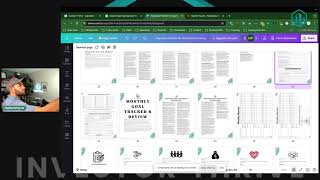
Nathan Payne teaches a three-day planning system using OKRs: build a life plan with vision and values on day one, break it into quarterly objectives and key results on day two, then execute with weekly reviews and daily habit tracking on day three. He emphasizes tracking metrics, pivoting when results stall, and keeping it simple.
Chapters
Get it. Let's get into it. Today is day 3 of the masterclass of how to plan your life. Okay, and that is what we're doing today. We're gonna go and review day 1 and day 2, and again, today, day 3, is how to implement what we've, uh, talked about. I'm excited to go over that. So let's, uh, let's begin in just a little bit. We're going to make sure we let everybody enough people come in, um, that, uh, maybe, you know, maybe a little bit late. But yeah, please, please come on in. How's everybody's day going? You guys want to tell me, uh, you know, right in the chat, how's your day going? Tell me. Want to interact with you guys. Okay, let's see. While you're doing that, let me get this ready. Right. Oh yeah, I'm not sure. Okay, you're good, Raymond. What's up, Melissa? Has anybody made any phone calls today to any sellers? Has it made any offers today? Curious. I don't know what time zone you're in, but I'm hoping you have. Hope you're taking action. That's what it's all about, is taking action. Waiting to see if my first JV is going to come through. All right, Melissa. That's what I like to hear. I, I'm doing a JV in Detroit right now as well, so, uh, you know, it's— that's exciting, very, very exciting. Okay, and, uh, Beth, how are you doing? How's it— how's it going for you? All right, and, um, yeah, I'm excited about today. We're pretty much gonna tie and wrap everything together today. We're gonna make it easy to understand what I've been talking about if it's been kind of maybe difficult. Um, I also want to ask you, everybody in here, who has so far, um, who has, uh, taken action on the planner on any of the steps, whether it's the life plan, the year plan, the quarters, the quarterly plan? Have any of you, um, done it? And not— if not, it's okay, you know, watch the videos and, you know, make sure to really understand this. Obviously you can use ChatGPT like we showed to to, for it to help you. But just kind of curious where everybody's at on that. Melissa, Raymond, Beth, any of you taken any action so far on or thought about put it out there, thought about what you want to do with your goals, your life plan? Oh, wait. Wait to hear from you. Don't be embarrassed if you haven't. It's, uh, I'm not mad at you, just want to know. I haven't had— I don't have a printer, uh, getting it. Okay. And Raymond, you can do this on the computer as well. Okay. Um, Melissa started and super excited about it. Could 'Couldn't print it though, make you buy Canva.' Yeah, yeah, so you don't print it through Canva, you print it yourself. So let me show you guys really quick. This is for everybody that wants to use the Painless Planner. So you go here to File, okay? You go where it says Share, right? And you go to Download. You're not going to print it through Canva, you're going to print it— you're going to go to the library or you're going to go to Office Depot or somewhere else where you can do it. All you got to do is go to PDF print, okay, and then you pick the pages that you want it to print. You don't have to print out the whole thing. You can actually pick specifically what pages. If you go down to, right here on how to use the planner, it actually tells you what pages to print if you want to do it for 90 days. It says print single-sided pages 13 through 19, 35 through 44, and 48 through 63. Print one-sided, print 13 copies of pages 23 and 24 back to front. So anyway, this will tell you what— how to print it if you want to print it off yourself. But this is what you do. You go to PDF print, you pick the pages you want, and then you download it. Okay, so you download. It says upgrade to Canva for Teams. You click here, say download a free watermark draft. Okay, so it's downloading right now. And what you can do is you can email this to yourself or email it to Office Depot, email to yourself, go to the library and you can print it off at the library. If you just take the PDF at this point that's going to download, you would just say on that PDF now because this is a PDF where you print it, print and it's a lot cheaper. I actually go to the library because it does, you know, prints in colour and it's like 10 cents and usually a page and usually if you go do that anywhere else, it's you know, more expensive. So public library, very easy. All you do is you click on the PDF and when you're at that library, you click print and it prints off the pages you want. Okay. All right. Hopefully that was helpful and to do it. Yeah, anytime, Melissa. Okay. So let's get into this, everybody. Let's go over what we talked about the previous days on this masterclass. And again, if you haven't watched this masterclass, We're going to have some recordings out there so people can view it. It's going to be on our YouTube channel. If you guys have not been to the YouTube channel to check out what I put out, I put out a lot of real estate content. But if you go down to this, one of the playlists at the very bottom, it says how to plan your day, set goals, and structure your daily routine. I have videos on how to use the planner, how to journal, and I'm gonna put this series, the masterclass, in this playlist. So if any of you are interested in diving into that on my YouTube channel, it's just Nathan Payne, Painless Flipping. Go to the very bottom and it's under planning, how to plan your day. Okay, hopefully that's helpful as well. All right, let's get into it. Before, before I get started, does anyone have any questions that want me to clarify anything before we dive into a review of the previous day and how we're going to take our quarterly goals that we had set yesterday and put them into a weekly planning session and a daily session using the calendar. Does anyone have any questions? Sorry, not the calendar, the planner. Melissa, Raymond, Beth, any, any questions from me, from you guys on how to, what we talked about, like before we go into it? If not, that's totally cool. Nothing yet. All right, let me take a sip of this, uh, Pero. I don't know if you guys ever drank Pero, but it's— I like it. I grew up drinking it. It's just like barley. It's like caffeine-free coffee because I don't drink caffeine. Uh, well, a little bit, but I don't drink coffee. Okay, anyway, let's dive right into it, everybody. Today is, um, the Day 3 of mastering, uh, planning with the Painless Planner through OKR. So we're going to become a master— we're going to become master planners today using the system, um, that I've showed you so far of reverse engineering your goals. You have to start out with what you want in life, okay, that your life plan, and then you got to figure out how you're going to accomplish it down to the daily activity that you have to do, okay? Now we're not just saying, hey, I want to be a, uh, you know the best fight— UFC fighter in the world. I want to be the strongest man in the world. That's, that's a very big goal. And if that's your life goal, then you have to break that down into actionable steps, um, through objectives— what you want— and key results, and which means how are you going to do it. You got to break your goals down into that, or it's very difficult to achieve them. And you have to track them. If you're not tracking how you're doing on your goals, good luck achieving them, because you're not going to know if you're doing it or not. So like I said, we're going to go over these things today. So let's review yesterday. Um, and yesterday what we did is we went over quarter— the, the pretty much the whole, uh, first part of the planner. So what we do is, if everyone doesn't remember, people are just tuning in, we go over our life plan. We hit our vision, mission, core values, and strategy, and we use ChatGPT to help us achieve those those things. We just ask them, hey, you tell them what you want in life. Hey, I want my vision in life is to love and serve others. I want my vision to be remembered as someone that gave and didn't take, or for what I gave and not what I received. Okay, then you tell that to Chat. Chat is like a brainstorming tool. It can help you. Okay, if that's your vision, then blah, blah, blah. It will whip out your vision. And then you— if we go up here, I think I can scroll up to our vision. Okay, to empower individuals to excel in their personal and real estate ambitions. Uh, turning potential into prosperity. That's my, my vision for my business. That's what I wanted. This is the mission. It all gave me that. Core values, strategy. And you just ask it what, what you want. You just say, hey, um, this is what I want, chat, help me out. So we did it for the life. We want to know what we're trying to accomplish in life. Bam, bam, bam. And you break it into categories of what you want, because I believe, after doing a lot of studying, that your life is broken down into 5 categories: spiritual, community, self-development, health, and business. Obviously you can break it down to more categories, but I like to just keep it 5 to keep it simple. Then you ask Chat, you say, hey Chat, you know what, thanks for helping me figure out my life plan. Help me figure it out for 2024, okay? Because I only got like this year to plan for this year. What can I do this year that's going to help me achieve my mission, vision, goals, uh, using all of the core values and the strategy that I need to implement. It will tell you, hey, according to your life objective, this is your objective you should do if you want to achieve this in your life. Okay, now it's not always perfect, but you're using it to brainstorm, so it helps you with that. So you come in here and you say, okay, this year I want to, uh, become a black belt in jiu-jitsu. Okay, now then you realize, hey, that might not be, uh, logical because I'm a white belt and get a black belt, it takes years. So that's not probably the best objective because it's probably not going to happen. Um, so then you go year. After you go year, you say, okay, well, I can't— the year is a big, big— it's 365 days, it's a lot, a lot of time. I need to break this down into quarters. How am I going to accomplish my year goal that aligns with my life goal in the next 90 days? Okay, 4 quarters in a year. So you ask Chat, you say, hey Chat, Now break down my goals, my year goal into quarters. Okay. Now it will give you all quarters like the quarter of the year. I think that's too much information. So I asked it later. I said, hey, just give me quarter 1. Give me the objective, key result, and initiatives needed. Okay. So for health, let's see what it said for, for health, self-development. Let's see, community health, successfully complete a challenging physical event for charity. Okay, that was one of the things that it said, one of the objectives I had for the year. And the objective for Q1 in order to accomplish that would be to start training and fundraising for the event. Okay, that's what I need to do. And the key result is how I do it. Not— it's like the actionable step that, you know, if you're doing it, you're going to achieve your goal. Establish a weekly training schedule with 90% adherence and raise 25% of fundraising target. Okay, so it's saying, hey, If, if you do this, then you're going to get that. If you— again, the objective is the what. The key result is the how I'm going to do it. It has to be measurable. If you don't know how you're going to do something, how are you going to— you're not going to achieve it. And that's the problem. Like, I set a goal when I first started wholesaling. I started— I set a goal for $4 million. I was like, hey, I'm going to make $4 million this year. This was like my second year into wholesaling. My first year I did like $250,000. Second year, I was like, I got to set giant goals, $4 million. And guess what? Do you think I wrote out how I was going to do it really well? No, not at all. I was just like, I'm going to kind of keep doing what I'm doing, but I'm going to like work harder. That was like my idea. I'm going to work harder. And that was like no tracking. Like maybe there was some tracking involved with the like marketing, but it was— if I would have actually sat down and be like, okay, in order to make $4 million, I have to produce this many leads and I have to do this, I have to call this many people, I would have realized that I needed to hire way more people. I needed to do a lot more things. But that's, that's how I used to set goals is just like the objective, what I wanted at the end without really understanding how. Okay, so yesterday again, life, year. Now we're into quarterly objectives and that's once you get to the point of knowing in the next 90 days right here, finalize your OKRs for the quarter. Once you understand where you're at in the next 90 days, what you need to do, it gets a lot easy, a lot easier to break this down and actually make it happen. Okay, make it, make it possible. So, um, Raymond, uh, Melissa, uh, Beth, if you're, if you're with me, and anyone else in the Zoom, um, does that make sense? Like, I'm reviewing it again, but we're gonna dive into now how do you make it happen on your weekend day. I just want to get you your feedback. Does everyone follow me? Any questions? Any concerns? Give me a 1 if you're, you're with it. Give me a 2 if you have a question, then I can address it. But That's pretty much where we're at so far. We're at the 90-day journey, which is the beginning of the quarter where you need to decide, you know, what, what your quarterly goals are that align with everything and how you're going to accomplish it for the, for the quarter. Melissa, happens to everybody, right? Like, I want to make $1 million. It's like, okay, great. But How are you going to do that? And if you don't have a plan on exactly how, it's going to be pretty dang difficult. You're just kind of trying to get lucky, okay? And that's what I did my second year, and I'd done my— pretty much my whole life until I started really planning the right way, is I would just set the objective, the end in mind, and hope that I'd get there. It was a hopeful thing. It was a luck if I ever got there. I just figured if I worked hard, it would happen. Exactly right. And that's, I think, a lot of people feel the same way, right? It's like, oh, if I just put a lot of energy behind it, it'll happen. No, you really got to know what activities will, uh, relate to, you know, getting you what you want. Okay, so pretty excited now. We've gone through life, year, and now we're at the 90-day journey. Now let's figure out how we can make this happen, um, weekly and daily. Okay, we're almost done, everybody. We're— if for 3 days, if you can implement what I showed you from yesterday— sorry, um, Tuesday, Wednesday, and today— you're set, right? And you can reach out and I can help you out, especially if we work together. I'll really dive in and help you hit your goals, or at least make sure you feel confident with what you put out, uh, you set as your goals. All right, so what's next? All right, well, it's weekly planning. All right, so you have your, your 90-day goals. That's really 90 days is still a big chunk of time and you might not feel like that confident that you can accomplish that. Time to break it down. We break these things down granularly, like really, really break them down. So what are we going to do? It's time to weekly plan. If you have not weekly planned before, it is a strategy to something that I do with my wife. Every, every week we meet and we talk about the finances of the family, how the family's doing, how our relationship is going. We, we talk every week just to see how everything's going. I do it in my personal life with my planner. And in business, people do it with business meetings. They'd say, hey, how'd last week go? Let's review. If you're not really reviewing or being reflective about how things are going, you're just going to kind of just keep going. You might not make any changes for a long time. But if you can reflect weekly and even daily, like I'm going to show you, you are going to progress much faster. So if you're not doing weekly planning, don't, don't get upset. Don't, don't feel like you're, you're failing. It's That's why we're all here. I'm here to show you guys that weekly planning and aligning it exactly with your OKRs for your 90-day journey that align with everything you want in life, that's how you do it. Okay, so weekly planning. How the heck do you weekly plan? Well, yeah, I'm going to show you. And here are some key— this is the planning key. This is like definitions. If you guys don't— if you like are curious to like what it means that I put out there. Um, but yeah, that's the definitions. All right, weekly planning. How do you weekly plan, Nate? All right, so right here, all I do is, um, I put the date, right? I put the date of the week that I'm planning for. So right here, um, for next— where are we today? So next week, so Sunday is when I plan my week. I would go here and I'd say 7 through 13, the 13th, okay? So I go 1-7, uh, 24 through 1-13-24. Okay, that's the week I'm planning for. Okay, I'm just gonna act like I'm planning for next week and just show you guys how to do this. So before I plan my next week, I want to make sure I reviewed my previous week just to make sure that I did good and if there are any questions or anything I left behind. So this planner, the way it's set up is, um, you, you have a review of your last week, you have your KPIs, you have your numbers that you, um, you know, you put out. So for example, yesterday, uh, I think it was Melissa, we talked about the Peloton. Is that right? So this would be, uh, the one of your, your goals on here would be the to work out 3 to 4 times, let's just say 4 times a week on the Peloton. Times. Oh, love it! Awesome, you did it this morning. Okay, so work out 4 times this week on the Peloton. Now, this is too big of words, so let me— let's see. Okay, so one of your key results— or sorry, your actions— your key results are the things that you need to do in order to hit your goal of being consistent or whatever that objective was for the quarter, you would go in here and you would say, okay, check. I have to put text box in here because I don't actually type out on these things. I like to print them out. But you would just say check marker 1. Okay. You would say, okay, I'm doing this. Bam, bam. I'm crushing it. You know what? I actually went above and beyond and I did 5 times this week. Okay, sorry, this is for the goal, so this would be 4. So let's do one more, and let's say you didn't do this here. So you would just say, bam, I didn't do it there. I take the week off, I take the weekend off. So then you go total, okay, say how many times I did 1, 2, 3, 4, 5. Let's see. I know this is like obviously common sense how to fill out a graph, but I'm just showing you what I do. So this is happening during the week, right? So let's say previous— I'm planning for next week, but during this week I would be going in at the end of every day, which I'm going to show you a little deeper. You're saying, yes, I did this. Yes, I did this. Yes. And you feel good. You're getting endorphins. You're feeling great about yourself. You're saying, hey, I'm crushing this. How do you write it like this or handwrite? How do you like it? Do you do it like this or handwrite? I handwrite, Melissa, so if you— just to show you. So right here is my planner and I handwrite it. Do you see that? And just so you guys can see like I actually do what I'm saying is Here's the week so far. These are the goals that I've set, and I'm writing out like, yes, I did it, no, I didn't do it. Okay, and then the previous week, you would obviously review it like we're doing right now. Okay, so let's say it's the end of, end of the week now. Now I'm planning for next week, but before I plan for next week, I want to review how I did the previous week. Okay, so right here, This is all you got to do. And we're leaving these blank. These obviously would be other key results that you've set for yourself. Like, did I raise 25% of the charity? Like, did I go out and raise money? You would say I raised $5 here, raised $0 here. Like, if that is your goal to raise money for the charity, that race that we were talking about. Okay, so review of your last week. Go to the monthly tracker and answer the questions below. Determine how well you did to stay on track and accomplish your OKRs. Did you get closer to accomplishing your OKRs? Figure out what you need to do differently, uh, celebrate what you did good, and determine what you need to change in order to get closer to what you want, right? So Melissa, if you review your week and you didn't do any Peloton, you would have to be faced with this, uh, you know, review to— and you would have to be honest with yourself and say, dang, I didn't do Peloton at all. But that's okay because you would be able to say— see what What happened? Well, um, I was on vacation. Okay, well, what could you have done to prepare since you knew you're gonna go on vacation? Well, could have gone, you know, got a gym membership like for a couple day pass, whatever. So what you do here is once you track, you go, uh, go track your initiatives on the monthly goal tracker. So we take our weekly, we take our weekly information and we go to the monthly goal tracker, which is basically just keeps track of every week. Okay, so for example, let's say this one is health. So the health objective is to get jacked— no, sorry, stay consistent working out. We're using your example for health. Stay consistent working out. And then this one would be Peloton 5 days a week, 4 days a week. Okay, then I would go in here and I would say confidence score. Confidence score is 0, 0, sorry, 0.1 to 1. Okay. 0.1 is like I did really bad and 1 is like I'm crushing my goal. So you're crushing your goal. A metrics is like the number of time you did it. Okay, I did it 5 times. And the reason you feel good or you don't feel good, I'm crushing it. Okay, so you do that enough times, right? At the end of your quarter, you're like, dang, I hit my goal. I, uh, I— my score is incredible. I, I hit everything I wanted. Did it result— did doing all these things result in what I wanted in the objective of staying consistent working out? Yes, it did. And if, if it— if you make an objective and you do what your key result is the whole time and it's not attributing to the objective being accomplished, then you know, hey, I was doing the wrong key result. And that's how businesses So business is like, I'm going to cold call for sale by owners, okay? So I can make $1 million. So I cold call for sale by owners every day. I make 100 calls and I'm writing it here. 100, 100. I'm hitting it. I'm hitting it. At the middle of the 90 days, you see that you haven't made any money. It's $0. You realize, oh my gosh, I picked the wrong key result. It's not doing anything to move me to my objective. To make $1 million. I need to be doing something else. And that's the problem that a lot of people have in business is instead of tracking how they're doing as they go along and seeing, is it impacting my objective, my goal, they just keep doing it. And at the end of the year, they're like, it didn't work. Well, for me, I can immediately see as I'm doing this, oh, it's not really working like I thought it would. Let me try a different key result. Instead of cold calling for sale by owners, let me cold call probates. Let me cold call notice of defaults. Let me see if I'm starting to get a little bit different traction. So I want to make sure you guys understand that point of why this, this makes sense and why this is important is because as you're tracking it every week and looking at your 90-day data, you can see if it's, if it's working. If your key result is actually worth your time to do. Like, let's say, um, Melissa, your goal is to— let's just say for this example, your goal is to lose weight, right? And you keep on doing the Peloton every day, uh, and, and you're in the middle of the month and you've actually— let's just say for example, you've, you've gained weight, right? You'd be like, wow, well, that key result, the— of riding the Peloton, it's not working. Me riding the Peloton isn't helping me lose weight. It must not be the right key result. It must not be the right thing to get me my objective. And then you'd have to be able to sit back and say, what, what is it? Is it maybe I'm eating the wrong foods? Is it the diet? And then you're like, well, let's actually switch the key result from riding the Peloton to eating. Let me make my goal of eating no carbs and let's see if that does it. Then you, you change your, your key result in the middle of the 90-day journey. You're like, okay, Actually, it's been 3 weeks and since I changed my key result and I have not eaten a carb since, I've actually dropped 10 pounds. So even though the Peloton sounds cool, it's not helping me achieve my goal. Maybe I don't need Peloton, right? And that's what I realized about weight loss is it's not so much about the exercise. I've been doing exercises in jiu-jitsu for 2 years and I'm at the exact same weight. But as soon as I started changing my diet, that's when I started losing weight and feeling healthier. So exercise, especially if you're consuming a lot of calories, doesn't always help you get— lose weight. It can help you maintain it, maybe lose a little bit, it fluctuates, but really it's diet. And that's what people find out as they track and they lose weight. It's, it's, it's not so much exercise. Um, good example that happened and had to readjust to— exactly. Okay, so, um, everybody that's watching, is you understanding why it's so important to keep track of your, your results on the weekly tracker and then to go to the weekly metrics for your monthly and, and plan it out so you can see just on a map quickly, like on a grid, why it's— what, like, if it's working or if it's not working. Give me some feedback. I want to know if everyone gets this because this is probably one of the most important things in business that I guys— I can teach you guys, um, outside of business or just personal lives. It's like, this is how you change, right? If you don't track, then you're— you'd never know what's going on and you're just trying to get lucky. Tracking is the most important thing for improvement, right? If you don't track, you don't— you can't really improve. Um, so I think I beat the— beat the— as the saying says, like, beating the dead horse. Like, I think you guys all get it, right? So that's why when we're going to the weekly planning and we're reviewing, we're going and saying, okay, let's look at the numbers. Now, this is another, uh, thing you do is you track your initial— your monthly goal initiative, and you give yourself a confidence score. All right. And this is the cool part, the self-reflection that helps you improve. As all this helps you improve. But this is, this is great. So I sit down after I track my numbers and I say, what progress was made on your key results over the last week? Well, the progress I made was I bought the Peloton, I started riding in it, and I feel great. I feel so good. So that's the progress I made on one of the key results. Remember, there's 5. By the way, guys, if you don't want 5, you can just do 1. I just do 5 because I try to do every category of what I believe makes up my life. So this is another cool part. You say, yeah, I did great, but actually, what did you not do great? What is primarily the primary thing slowing down and blocking your key results? Well, what's slowing you down? Well, you know what, to be honest, I'm not waking up in time enough. I'm not waking up early enough, so I have to rush to work. And I don't get my Peloton workout. So what is the thing slowing me down? Is I'm staying up way too late and I'm not waking up early enough. Then you're able to say, that's what's slowing me down. What do I do to improve? I gotta wake up earlier. I gotta get my workouts in. What can I do to move forward next week to 10x my life and not 2x it? So what can I do to 10x, like get you better results and not the 2x results that you got the previous week if you, you feel like you didn't do that good? Well, you just, you just kind of figured it out. You're not waking up, um, and it's, it's kind of ruining your flow. Okay, for me, what I've realized recently is my phone is stopping me from being productive. You know, when I get, uh, I guess bored, or I don't know, yeah, bored, I look at my phone a lot, and that's, that slows me down because I get distracted and I'm scrolling. Then you're like 30 minutes later, like, what was I just doing? So my phone is something I've realized I need to stop using so much because it's a waste of time. Like, there's really nothing that productive that happens when you're scrolling, okay? All right, and Melissa said— Marcella says, yes, love this. If you don't track or pivot, then you lose momentum and you don't realize where you went wrong. Thanks, Nathan. That's, that's the key to business, uh, Marcella, and thank you for saying that. The key to business is pivoting, okay? If you continue, like if you get, if you started a business in like the '80s selling milk door to door or whatever, right? Like you delivered milk, but sales start dropping, but you keep going. You're like, hey, it's all good. You're going to be out of business soon. But if you realize, hey, people aren't wanting milk delivered to their house, is like, what's going on? Let's, let's see why the sales have dropped. Like what's going on? Like why are people leaving us? Businesses are always pivoting, like especially in real estate with the way that the market has shifted. If you didn't shift your business and you kept spending the same amount of money on marketing and doing the same strategy, like you probably went out of business or lost a lot of money. If you kept flipping the way that people flip before, you went out of— you lost money. Okay, so you have to track what's going on. And Melissa, you say, this is so great. I'm working on this the rest of the day. I appreciate that. Yeah. So That is the importance of the week. You're able to look at it with the lens of like, hey, this is what I just did. This is— I'm accountable. Like, what can I do to be better? And, uh, then you just say, on a scale of 1 through 5, with 5 being the highest, what would I rate my last— my, my, uh, last week overall? Okay, 5, you get it. And then you say why. Well, it's because I progressed. Okay, I feel great. I did really well. Um, This week, and this is a quick checklist, this week I was able to eat smaller and healthier portions. Okay, that— this is all for me, by the way, guys. This is my planner. You're all through, um, you know, just making your own copy, can change whatever the heck you want this to be. You can actually even delete if you're like, hey, I don't even like those questions, those are dumb. You can delete that, and then when you go and print it yourself, it's going to be your own planner. So I've made this so you guys can customize it. Did I improve my relationships? Check. Have— did I have fun and take enough breaks? Very important. You can't— you gotta, you know, sharpen the axe. Yes. Take care of my mind and draw? Yes. Sleep enough? Yes. Did I have weekly plan with my wife? Yes. Did I reflect on the journals I've already, uh, wrote in? Or, uh, and my decision book— it's a book that I write decisions that I've made so I don't have to make them all the time. Yes. I love to read now. I didn't used to like to read, but because of this, I've been accountable myself about reading, and now I love it. Last week I read the Bible. Last week I read a book by Fyodor Dostoevsky. Next week I'm going to continue reading them. I haven't finished it yet, keep going. And, um, I'm going to show you this question is asked and answered, um, but you, you ask it when you're planning the week. So, did I achieve the number one most important thing this week? Yes, I did. And if so, reward yourself. If not, why not? Because still, even in a week when we break all this down, maybe we're trying to take on way too much and you really need to pinpoint one thing out of all your goals. If I can just get that one thing done, like, I had a good week. Okay? And you want to make sure you're accountable to yourself on that one thing every week. All right, everybody, so that was the review that you review before you plan the next week. Okay? Does everyone kind of— is everyone following me? Give me a 1 if you follow. The importance of reviewing. Now, if you haven't planned a week, then you can't review it. But is that— give me a 1 if you guys are understanding, uh, why weekly planning is so powerful. Okay, any questions on weekly planning, on why reviewing and, and putting out your numbers, um, on your, your, uh, 90-day or quarterly tracker helps you make decisions and change and pivot? Any questions? Give me a— give me a 1 if there's Well, actually, just tell me if you have any questions. If not, I'll just keep going. Okay. All right. We're making good time. All right. We're going to go into the actually planning a week and then letting— doing the day and then we're done, guys. We're done. Just got to do it. Yeah, you have to do it. And I'm telling you, everybody, like, this might seem like a lot, but if this can change the trajectory of your life and like actually help you accomplish what you want, It's totally worth spending 30 minutes to an hour a day planning out and making sure you're moving in the right direction. And this takes me— planning out my week takes me, by the way, like, as you can see, I take my phone and I click time, like a stopwatch, and I time myself because I don't want to get, you know, be doing it forever, be distracted. And I like to just check that I'm not, you know, just, you know, doing it and then I get distracted and then an hour and a half later I finish. This keeps me focused. So I actually time, and it takes me 30 minutes to plan out my week every week. To review, it says right here, review and score previous week takes me about 15 minutes. And then I time planning this week and it takes me about 15 minutes. So 30 minutes total to plan out your week and know what you're doing and make sure you're confident about it. And just so you guys can see, like, I'm not BSing you, um, like, right here is the weekly planner that we're talking about. And that's my— I planned my week right there. Okay. I even wrote down the time. I don't know if you guys can see that, but I wrote down the time. Okay. All right. So let's talk about how we would plan out the week. So I start the timer just to make sure I'm on track and I'm not wasting time. You would review your spiritual OKR. You're going to review your OKRs that you set. So I have mine written out. So I review it. For those of you that don't have it written out, you just use the, the version that's on the computer. You would have this filled out, so you're reviewing it. So we're going to go here and we're going to review this. So I'm going to say, okay, um, my spiritual objective is to build a spiritual group. Community is to identify and design a community service project. Health is to initiate training and fundraising. Um, business is blah blah blah. You get the idea. And then you look at the one key result that you made because we, we only pick one key result. We don't want multiple key results. Here it is. So one objective, one key result per category per 90 days, or you'll get overwhelmed. Okay, and, and there's 5. You can again make 1 or 2 if you want to start slow. So we're gonna look at the health objective. So my objective in 90 days is to initiate a consistent workout routine on Peloton. The key result is to complete a minimum of 20 Peloton workouts over the quarter. We decided we're actually going to do more. We're going to do 4 a week. So you can just say complete 4 a week instead of this one. So we would go to the planner and we would go to the weekly planner under, um, let's see, where is it? I'm— this thing always skips this one, but anyway, let's get this out of here. And we're skipping the other, uh, the other, uh, objectives, and we're just gonna go to health since we're on that health one. Review your health OKR for this quarter. So again, we're going, we're looking at our OKR here. I just looked at it. I'd rather write it out, but it's just here. Begin development of a new real estate— oh, my bad, health. Initiate a consistent workout routine. So I go here. What is the focus to progress this key result forward? Uh, for the week ahead. So what am I going to do this week to progress, um, and focus getting to complete a minimum of, uh, well, we're— we said 4 workouts a week. So what do I got to do? What I do got to do to focus? We already talked about waking up early enough was the problem. So what would the focus be? I'm not hitting my goal for a week. What's the problem? Uh, well, we already, like we said, wake up earlier and make sure I do it. Okay. So you would type that out and you'd put it there for the health. Okay. As I pursue this key result, the biggest obstacle I'm going to have to achieve this, right? As I pursue this, the biggest obstacle might be— get— help me out here. What's a big obstacle that you guys could see happening as your week, you're planning, you're gonna try and wake up earlier? What's an obstacle to waking up earlier that you guys could see happening? Write it in the chat. I want, I want you guys to, um, participate in this one since, you know, we're doing this together. Why would you not wake up early? Didn't sleep well, tired. Okay, okay, so that's one. Does anybody else want to have like, why would you not wake up early enough? What's— what would be a problem? The thing that I'm thinking about is you just didn't— maybe you're on your phone at night, you keep on scrolling, you keep on watching videos, it's hard to, uh, sleep. What does anyone else have? Anything? Maybe you didn't go to bed on time, you keep on going to bed at 12, or you're watching movies. Anybody else got anything? So let's go ahead and stayed up too late. So what, what it says, as I pursue this, uh, result, the biggest obstacle might be— I'm gonna say, um, kids. Yeah, that's, that's probably— that's, that's a tough— maybe you could address that too. You'd be like, hey kids, I really gotta wake up early. I mean, I don't know, my baby is like 6 months, 5 months. I, I don't know if you can talk to kids like that, but anyway, let's just say it's the phone. I keep on staying up watching videos. So the biggest obstacle is my phone and watching videos too late. Okay, so how are you going to overcome this obstacle that's keeping you from hitting your dream, you're achieving your goal? Well, you guys can go ahead, type in what you believe, what you think you should do to stop having this phone be— how are you going to overcome the obstacle of the phone? What I would say is not— put phone in another room, other side of the room. Yeah, I actually put my phone— I charge my phone in another room and I bought myself like an alarm clock at the Goodwill because it's, it's too much of a distraction. So I just put it in another room and charge it. So put phone in other room. After 8 o'clock and charge it and don't pick it up until 10 AM the next day, right? I'm just, I'm just flowing now. I don't— I'm not saying that. That's just an idea. Okay, so that's how you're going to overcome this. The next thing you're going to do is I will work on this key result. So you're actually going to plan when you're going to do this. When are you going to put the phone in the other room and make sure you do it? I will work on this key result. Well, for me, this would be a daily thing. So you would go ahead and say, well, I'm going to work on this phone, this thing daily, daily. And the next thing says, go schedule this on your Google Calendar right now. So not only are we planning it, we're putting on our calendar and we're making sure we do it. So I go to my calendar and I say, okay, all right, 8 o'clock, it's time to put the phone away. Put phone in other room. And then I set it to repeat, um, daily. Okay, so there it is. So now I have my phone at 8 o'clock tonight. I'm gonna get a notification on my phone that's gonna say, hey, time to put your phone in the other room, Nate. And guys, as you guys can see, I have, you know, lunch and walk. I got a bunch of stuff. I use my Google Calendar for everything. Okay, so I don't need that on there, but I was just showing you. So I plan it and that's where we do it. And so go schedule, and then all I do here is I just say done, right? Like I did it. Done. Cool. So that's what I do for each goal. Every, every week I just say, how much closer am I to get there? What's holding me back from getting there? And if there's nothing holding you back, you're, you're definitely going to accomplish it. And I do it for a business, health, self-development, all that stuff. Does everyone, does everyone get that? Any questions on how you would go through and set, you know, plan your week on how you're going to accomplish your objective, your, your, your goal? I don't want to move on unless people get this because this is really important to helping you achieve this. It's really powerful when you can reflect on what you're doing, why you're not getting there, and what you can do to improve. Do you— I know this is a rhetorical question, but do any of you really think that, like, if you're doing this every week and you're not going on your Peloton every week and you're, you're, you're reading this and you're like, dang, I still— have not done my phone. I still haven't done it. It's gonna be 4 or 5 weeks when you're eventually like, hey, um, I gotta do this. Like, I don't know what— why I'm not just putting my phone away. I'm staying up too late. Like, you're eventually going to change your habit and your patterns because you're repeatedly talking and, and addressing this concern. Um, I know these categories, but do you, uh, do a maximum goals a week? Um, I do 5. This is it. This is— these are like my max goals. Like These are the most important things. Obviously things come up, like things I want to do, but if I— these are the most important things for the quarter. So you got to make sure they're things you really want. So 5. Okay, so you do that for every category of things you want. This is something I do. You guys do not have to do it. I reach out to— what friend will I reach out to this week? I pick one friend and I reach out. Okay, must remember tasks and events of this week. So there are tasks that are associated— not associated with your OKRs, like taking your kids to practice and not forgetting, you know, paying taxes. Those are things that like, those aren't associated again with your OKRs, but need to be done. So I write down things that need to be done. And then like I told you guys, I pick the most important thing I need to get done to move my goals forward this week as the number one thing. And that's what we talked about here is, did you do it? Out of everything, what was the most important thing? Now, if you go through all these and you decide, hey, Waking up early is the most important thing. You would say waking up early. You'd review and you'd say, okay, I did it, I crushed it. And that's it, guys. That's your weekly planning and you're done. Um, obviously you would fill this out with your key results on what you're, you're going to do, work out the times, and that's it. You don't— you just put that in the goal and you're ready to rock and roll, uh, your week. You're feeling prepared, you're feeling ready to take on the week, and Guys, this is— I'm showing you what to do in your personal lives, but this is what people do in business. This is what companies do. Companies, they review the metrics of their, their employees. They check, they say, what's going on? What could we do better? This is a tactic of OKRs. It's literally what Google— it's what all these businesses are doing to stay consistent, stay, uh, improve, fire the wrong people, change and pivot. This— if you master this in your personal life, you're going to master business. This is how you improve in business. Um, let's see. Marcel, my word for the year is consistency, so this plan is perfect. Thanks, Nathan. I am being determined to stay consistent with all my goals and intentions. Love it. All right, so we're done on the weekly, and all I got left to show you is the daily planner. Um, let's— let me— let's kind of pause a little bit right here and let's see if there's any questions before we go into the daily disciplines, the things that you do every day. Does anyone have any questions? Does anyone have anything that they want me to clarify on the weekly planner, planning your week, so you know we don't move on without you guys understanding? Anybody in the chat? Let's see. And I think consistency. As you were saying, Marcella, consistency comes from holding yourself accountable and tracking. Like, it's very difficult to be consistent at something, like, unless you're, like, accountable, right? To yourself, to someone else, or you understand why you're doing it. Like, if I don't want to call, for example, cold calling, right? I don't cold call, but if I wanted to be consistent at cold calling, I would have to know why I'm doing it every day when it's, like, not fun, and I would have to know not only why I'm doing it, but I'd have to like hold my— like check off that I'm doing it so I could be like, all right, at least I'm doing it. At least I'm feeling good about it. Any questions on the weekly planning before we go to the daily planner and then we wrap this thing up? Thanks for showing me how to print it. I've got it now. Yes, I think for me is that I take way more than I should and then I freeze and get overwhelmed. Yeah, that's, that's the problem that a lot of us have is we feel like if we're busy, we're productive. If we feel like if we're doing something, we're doing, we're progressing. That's not true. If you're in the book Four Disciplines of Execution, which is a great book, it talks about most people spend their life in what's called the whirlwind. They do activities that they think are important. But they don't get them any closer to their goal. So like, for example, what's actually really important for your health or like we've talked about is the Peloton or eating healthy. That's really important. But like maybe some people feel like, let me, let me address like the concern today. Let me take some pills. Like that's, that's what I feel like I need to do. I need to take a pill to lose weight. That's not going— that's maybe address the problem like right now, but in the long run it won't. And people spend their time in the whirlwind trying to put out fires, trying to address things they think are important, but they don't have long-lasting impact. Okay. And these things that we're setting goals for and planning, they do. I don't know if that was the best example with the pill, but all I'm saying is it's— you have to do things consistently that have impact. And if you do too many and you do things that aren't aligned with your goals, you're just going to be busy all day doing nothing. And that's what I did, especially as a wholesaler. Like, there's a lot of things like, guys, I built so many spreadsheets, so many websites, so many scripts. That matters. What matters if you want to make money is talking to people, asking them, you know, making offers. That's really that matters in real estate. You could spend all your time doing all these things, setting up your business, setting up a CRM. Doesn't matter. I've set up so many CRMs, all this stuff doesn't matter. It matters about taking action and doing the things that actually matter. Okay, so what you mentioned before about making sure that I recognize what I'm doing is not aligned with my ultimate goal, that I need to say no thank you and just stay consistent with my agenda and goals. Exactly. You have to make sure that what you're spending your time on aligns with what you want. Like, for example, my friend from Arizona, text me or text our group chat of friends and he's like, hey, does anyone want to get lunch? For me, one of my goals is to be present and be a great friend, right? So like, maybe I'm busy today. Maybe I could say, oh, it doesn't, you know, align with my goals, but it does. It aligns with my goal to like love and serve and be there for people. So I reached out. I said, hey, well, let's figure something out. Now, it doesn't mean I have to go to lunch. Maybe just reaching out and saying, hey, I'm here is enough, right? And he doesn't want to go to lunch anymore. Who knows? I haven't heard back from after. We're supposed to go today. I haven't heard from him, but that's what I mean. Like, if it aligns with what you want in your life, then it's easy to say yes or no. And saying no is extremely important. You have to say no to a lot of things, okay? Or you're just going to waste a lot of your time and you're going to be at the mercy of other people that just ask you to do everything, okay? I get asked— when I first started coaching, a lot of people asked me questions nonstop, and now I don't respond, not because I'm rude, but it just I have to say no. I can't respond to everybody. I have other things I got to do. And it's not that I don't love or want to help, but it's just— that's just how it is, right? I'm pretty busy. So let's move on if everybody's ready. Can you guys give me a 1 in the, in the chat if you're ready to go to the daily, uh, the daily disciplines, just so I know everyone's with me? Okay. All right, let's wrap it up. Let's wrap it up with the daily, the daily. All right, I'm super excited about this. Okay, so this is the daily planner. Again, mine is nuts. Well, I think it's nuts, but I do it and it's helped me out a ton. But you don't have to do everything I do. So I wake up and the first thing I do when I wake up is I just go to my office, right? It's right next to my bedroom. I go to my office and I open up my planner and, uh, I brush my teeth, right? I brush my teeth, but I go to my planner and I write down what time I woke up. Um, and I actually track in one of my health apps, like, uh, how much time I sleep. So, um, I say, okay, it's 5 o'clock, it's 6 o'clock, it's 5:40, whatever. Bam, I went to bed at 10. I just slept whatever, 7 hours. I write down what I slept. So that's just pretty simple. It's just like, I woke up at 5, 7. I pray. I love Jesus. I love God. I'm a spiritual person. Now, if you, you don't believe in those things, uh, in Jesus or God, you can meditate. Meditation is good. It's basically just— I think prayer is a form of meditation. You close your eyes and you breathe and you pray. Meditation, same thing. Close your eyes, you breathe, you focus. Meditate, pray. That's what I do. I then drink water, right? I've been drinking tons of water, so I start my day off with some water. So I check that off. And you guys are like, what, you got to check all this off? Guys, that's just how it is for me. Like, I— if I don't write down something or have a checklist, like, I forget. Like, if I don't have this, maybe I would develop the habits to remember, but I, I have to run through a checklist. So right after I re— uh, drink water, I read, I read scriptures, right? That's what I, I like to do. I like to be close to God. I think it's important to, like, um, you know, take care of your spiritual needs, especially along with your temporal needs, your, uh, your body. But spiritually I think it's important. So I read the scriptures. I say, okay, I'm starting my scripture study at 7:30. I'm starting on page 51. Okay, it's been 30 minutes, or right now I'm reading 40 minutes in the morning. 40. I start my timer and I say, okay, I ended on page 75. I read 4 pages today. Good job, you didn't get distracted. I'm tracking this just because I want to see how fast I read and if I can improve. And I write down, you read your 40 minutes. Because in my, um, in my objective, one of my objectives is to get closer to God spiritually by reading the scriptures. That's, that's one of my objectives. So I track 40 minutes I'm reading. Am I getting closer to God? I believe I am. Okay, then I read in a good book. I'm reading a book, uh, by Fyodor Dostoevsky, and I read for 40 minutes there. I know it's kind of crazy, 40 minutes, but I wake up early. I read 40 minutes of scriptures, 40 minutes in a good book. So I write what book am I reading— Demons, That's what it's called. I know it sounds kind of crazy, but it's, uh, it's just about, uh, I won't go into what the book's about, but it's a good book. So anyway, same thing. And then I say, okay, I've finished reading for the morning. How much total pages did I read? I read 20 total pages. How many, uh, pages— how long did I read? Blah, blah, blah. Okay, poetry. I've never liked poetry. I think I don't get— understand it, but I've read through a lot of— from a lot of people that understanding poetry is, is important. Not only does it help you be happier, but it's— it changes your life. So I've been doing it. I've been reading poetry and I write down my thoughts. Okay, I have an affirmation app. I just press play and it tells me, repeats affirmations I've said. I check that off and then I review my previous day. So just like we review our week, okay, just like we reviewed our previous week, I review my previous day. So I go down here and I review my day and I start the timer because I don't want to be doing this forever. Reviewing my previous day takes me 5 minutes. Okay, 5 minutes to do. I ask questions like, did I accomplish my number one thing I set for yesterday? Did I eat healthy? Did I connect with my wife? Did I cook with my wife and eat? Did I have good thoughts? Was I present with people? Did I purge technology? Did I listen to good information or just zone out? I just ask myself these questions and I check them on. And if I don't, then I know what I need to improve on. And it is one of my goals to serve and help people. So I say, what acts of kindness did I do today? And that would be the previous day. Oh, I did this. I, I, you know, helped a lady with her groceries. Um, who did I network with? Oh, I networked with Jerry Norton. I networked with, uh, Pace Morby. I'm just thinking of these names. Did they empower you? Yes, they helped me improve my life. Today was fun because I was able to meet with those guys, had the podcast. I taught people about how to plan. It was a great day. Um, today I had a hard time with— I struggled with putting my phone away. I really wanted, um, didn't want to look at social media, but I, I got distracted. What will I do to improve? Well, I'm going to put my phone away. Okay, I really just got to put it away when I go to work. What did I do today that is 2x instead of 10x and a waste of time? What did I do that was a waste of my time that I can reflect on? My phone is a waste of time. I spent too long at the making a decision on what I was going to eat. I should be quicker. Bam. And then score your day. 5, 5, 5, 5, 5. I did great. 30 overall. Now, if you haven't done this already, you would go to the weekly and then you would go and score yourself. Okay. Because my objectives are reading. So I'd say I read, read, read. Red, red, red, serve, I serve people, blah, blah, blah. And then that's reviewing your day. So I do that first before I plan my day or review my day. Okay, so like I said, that took 5 minutes. And by the way, this is my whole routine and I do it every morning. And if I don't do it in the morning, I do it later throughout the day. If I don't have enough time, I'll decide which ones that I can get rid of. Like maybe I don't need to read the poetry, maybe I don't need to read 30 minutes. 40 minutes in a good book and scriptures. Maybe I'll cut that down in half. You can pivot, doesn't always have to do this, but I review it. I have a gratitude journal. I write my gratitude journal every day. It takes me again like maybe 6 minutes. I exercise and stretch. Um, usually I do that at the end of the day, so that's not always in the morning, but I put that there if I know I'm going to work out later. Uh, plan review, life plan, and 10x your— so Plan day, review life plan, and 10x yearly objectives. Okay, so this is pretty much— we're gonna be done right here. Thanks for sticking with me. I know this might be a lot and I might be rushing through this, but this is, uh, we're, we're coming to the end. So it's time to plan the day. So I sit down just like I did for my weekly. I say, okay, my weekly objective to push this, uh, my health objective forward was to put my phone away. So I reviewed that. I went here and I reviewed my OKRs for the quarter. And, uh, like I said, it's not what we're talking about, but we— in this example, it's putting the phone away. So you would say the focus to push this key result forward this week is— the focus to push the, the doing the Peloton is to put the phone away like I planned. I'm going to do it today. Now, if you had already done it the previous day, you would make a new focus. You'd say, okay, to go harder when I do Peloton, maybe I'm not going hard enough and it's just I'm getting lazy. So you would just say what you need to do to focus, to push yourself forward on that. Maybe it's okay, I'm going to throw in a little bit of better dieting. The one thing I can do to progress today's key result forward is that one thing you're going to do, right? So again, we're saying Put the phone away is the focus, the key result for the week. And then the one thing that you can do to progress this key result forward is if you already put the phone away, you can say, hey, I'm going to throw in eating a little healthier today. You would do that for your 4. And the reason why I review this every day, week, and is because I can't forget what my goals are. For someone that has so many distractions in his life, like I think I read that there's like 650 advertisements that people see daily, um, that are trying to get your attention. 650— you're, you're probably going to forget a lot of what you need to do when you got 650 advertisements. On top of that, people, distractions, videos, people are trying to get your attention. If you don't stay focused on what you want, you're going to forget. So I review my what I want daily because if not, I'm going to forget. So then you come to secondary tasks. These things are not related to your goals, so they're not as important, but they could be important important for today. Like, for example, I have to, um, book tickets to Florida. Okay, that doesn't achieve any of the OKRs but needs to be done. Okay, that would be a secondary task. And last thing is you just have a couple questions. Now, if you guys are like, yo, this is way too many questions to ask myself— again, planning my day takes me like 12 minutes, so it's not that crazy. And in total, it's, it's like 45 minutes to plan everything, and then the rest of the time is reading. So if you can spare 40 minutes to do this, you, you're, you're good. So I asked myself, if this were the second time I got to live this day, what would I do differently to improve? Okay, well, I'd put my phone away. Again, we've already talked about that. I put— I, I'd spend more time with my baby. Uh, what do I get to enjoy and look forward to today? Well, I— today I have— I'm teaching you guys a master class. I have another master class. I have a deal that's closing tomorrow, which is cool. It'll probably be like $10,000. I have jiu-jitsu tonight, which I'm going to be prepared for. I'm doing a tournament on Saturday, so that's exciting. Preparing. I'm about to go eat lunch and take a walk. I might see my friend Todd. So I'm writing down like lunch, Todd, MMA today, masterclass, serving, helping my wife. I have a great baby. That's what I'm looking forward to today. I have a great day ahead, and everybody does if you just realize the blessings that you have. What's my biggest danger for today and how can I overcome it? It's the phone. I gotta put it away. What opportunity do I have right now? I have an opportunity to, uh, get better at jiu-jitsu. What strength do I have? I have a strength to focus. I'm very focused. I know what I want. Uh, I can accomplish— I can consider today a win if I can accomplish this one thing. Okay, just like we did for the week, the one thing for the week What's the one thing I want to do today? If I can do anything today, what is the one thing I want to do? And for me, it's I want to update the planner, uh, something I'm doing for, for my other business. Um, and then this thing, I've kind of teetered back and forth with getting rid of this question, but I do, I do answer it. It's just like, if you were in a book, if you were to write your life today as a book, what would your summary be? So I'd say today Nathan is going to do a great job at being a good example to others of love, right? Or Nathan is going to work really hard and accomplish all his goals. It's just like setting yourself up, getting yourself pumped. Then you would go in here and you'd say, okay, let's look at my time today. I got my masterclass, I got lunch, and then you would go and time block. I'd say, okay, well, I woke up at 5, so I woke up, did my morning routine, washed my baby, started working. Right here at 11, we did the masterclass. 12 is lunch, and then, uh, 1 to 3, I have specific tasks I need to do. I'm not going to explain it. And then 4 is the masterclass from 4 to 5:30. 6 is, um, jiu-jitsu. If you guys look at that, so we got Brazilian jiu-jitsu, and then I come home, shower, connect with family, and go to sleep. Did I include enough breaks? I did include enough breaks. Did I schedule my number one most important thing? I did. And what activities should I delegate and not do since I I'm a business owner, I have employees. What did I just schedule and say that I was going to do that I shouldn't do because it's a waste of my time? The tickets, right? Like, that's not something I need to do. I can have Jackie, my assistant, book tickets for me. So actually, instead of booking the flights, I'm just— I just told Jackie the dates and I say, hey, get me the tickets. So that is how I plan my day and it all aligns with my life. So as long as I'm doing the things that I've set, it's all going to help me accomplish my life goal. And at the end of the day, I just review. And by the way, I think I don't do it at the end of the day. I do it in the morning. I check, I review my day the next, the next morning. Oh my gosh, guys, that's it. That's all I got. That's how everything aligns from your life to your 10x year to your quarter to your weekly planning to your day. That's it. Now this, this might be a ton, right? And guys, I've been planning for years. I've been trying to figure out the best way to do this. And this might be like way, way, way, way, way too much. But what I want you guys to do when you're doing this is if it's too much, just get rid of a lot of the fluff. Get rid of it. Right. I've just given you what I do. You're looking at the planner of someone who's like been doing it for so long and really like probably went maybe to some people overboard. But for you guys, what you can do is if you don't like all these questions, if you don't want all this stuff, just delete it off your planner. Just, you're like, hey man, I only really want, Nate, I only want like 2 goals. I only want to ask myself this question. I don't want to ask myself this. I don't want to ask myself all these questions. I just want to ask myself 1 question at the end of the day. I don't want to do any acts of kindness because that's not something I want. I want to focus on right now. So you can go there, you can update that, and if you're like, look, I'm only focusing on 2 goals, well, okay, that makes it easy. Just, just change it, and then you guys have a planner that you can use. It's extremely easy to update, right? So I made this for you, and there's some exercises at the end of the book if anyone's interested in learning like about the exercises that will improve your lives. Like, go ahead and read them. We don't have time to go over them, but these things are also helpful. Maybe we can do another, um, you know, video in the future. But, uh, I want some feedback now because I've just been talking and showing you guys my, my daily planner and how taking the daily actions aligns with what you want in life. What do you guys feel like? This was presented in a way that you guys understand Was it easy to understand? Was it way too much info and maybe I need to break it down next time I teach it to like not as much info? I'm curious because again, this took 3 days, 3 hours to break it down. I could not do this in 1 day, it would be too much, but 3 seems fine, maybe 4. You could do a couple more days. Okay, so anybody else, any other feedback, anything good that you could let me know how I can improve and help you out. Because again, I did this so everyone could, uh, could do it, right? Not just to hear it or learn about it, but like you could take action. That's what I would— if I could do like one hope in doing this and building this planner was that people could set goals through objectives and key results and achieve them. Um, Beth, I agree, a couple more days, it was good. There is a lot, but it is good. Um, so let me ask you, Beth and Melissa, so If we were to spend a couple more days on this in the future, if I redo this, what would you want more time to understand? Would it be the, um, let's— let me give you the grid view. Would it be more of like the life plan? Would it be like setting the yearly goals and how to do that the right way? Would it be breaking it down into the 90 days, the quarter? Would it be the weekly planning that we talked about, or the daily. So really, because there's 5 things, right? There's, uh, there's life, your life plan, your year, your quarter, your weekly, and your daily. Um, I would like to go step by step so we're doing it with you, if that makes sense. Yeah, so you're saying like if we could, uh, maybe actually do some— like do, do, uh, plan someone's life, like actually do it with them? Is that what you mean? Like, let's like have a discussion with someone and maybe walk— like, for example, Melissa, we could bring you on and just say, hey Melissa, let's talk about what you want and, uh, let's, let's do it. Let's actually plan it out. Is that what you mean? Weekly and daily, for me, it's where I started to get a little overwhelmed. Yeah, totally get it, uh, Beth. I, I feel like I might overwhelmed everybody on that one. I meant each of us do our own as we go. Yeah, I feel like the doing your own as you go is a good idea, but it might, um, that might take a long time, right, to like wait for everyone to like write it out or talk to ChatGPT and get it. What I would like is maybe to do this again, um, because once you guys start doing it, you're, you're gonna have the right questions to ask. Like you're going to be like, okay, I know now. I know like what he's talking about by like setting the goal. Because I work with David Lamorte, is one of my— I mentor him and he did it and then he had really good questions. But when I was talking about it, it didn't really make sense until he went through and showed everything. So what my goal would be cool, what I'd like is if you guys watch this, do it, try to fill it out, try your best. And then if we do, you know, if we do it again like in a month or a couple of months, then you're going to have so much more that you're going to be able to understand because you actually did it. And I think until you do it and try it, it's going to probably still be confusing. And that's kind of how it was for me. Everything that I've showed you with OKRs and I've taught you and how I built my planner, these— I didn't just make this up, guys. I didn't make up like the way it's structured. I took this from trying to use other people's planners and doing it in my life. I'll show you one last thing what I mean and then we'll be done. So there's this guy who wrote a book right here. It's called Business Made Simple. He created a planner and this is what kind of sparked me on building my own planner. So he created a planner, it's a lot easier to use than mine and he gives away a PDF on how to use it, okay. So I took the PDF and I used it for 2021. I was like, okay, let's try it and then as I used it, I was like, 'Oh, this is how I'd make it better. This is how I would improve it.' And I made my own. So as you guys can see, like his is— he still has the 3 goals, he still has the to-do list like I showed you guys, he's got the story, he's got all that stuff. It just wasn't exactly what I wanted and it was, you know, it was a PDF. I couldn't customise it. So just letting you know that until I started using his planner, I wasn't able to know how to make it better. So that would be my suggestion if it was a little confusing. Watch the videos, they're live on my YouTube channel and I'm going to make them. I'm going to come out with a series of what we just did, but I'm going to take out like the questions. I'm going to take out the ands and the ums and when I wasn't being quick and we'll try to make the videos quicker so you can watch through it a couple of times. But that's the goal. Any questions before we end? That was it. I went 12, 12 minutes over what I wanted, but hopefully that was worth it and helpful. Um, and thanks for the feedback on the daily and weekly being a little overwhelming and maybe walking some people through it. But my suggestion for that would be try it, come back, and then it will make more sense. Any questions, concerns, anything you want to say before we end, guys? This has been the, uh, 3-day plan of how to plan out your life, and I really pray and I hope that you guys do it because I think it will improve your lives. And I'd love to hear if any of you do it and see results, because David, uh, got, uh, that— who I'm mentoring, um, is like, yeah, man, this is, uh, this has helped me. He's— he wanted to get into meditating. Now he went— because of this, he was able to go and get his meditation. I think he got like a meditation license, like he can teach it, or he went through a course. So super proud of him. Um, and that's what we want. We want to move forward and closer to what we want in life, and meditation is something he wants. So Beth, anytime, anytime. Raymond, thanks for coming. I appreciate all of you. I appreciate that you— Beth and Melissa, thanks for coming. And, uh, wish everyone the best of luck and, uh, have a great day. And, um, go hit your goals, go hit what you want, go get what you want in life. Have a good one, everybody. Later. Peace out, everybody. Later.
More from Nathan





Why Traditional Wholesaling Keeps Failing You (Use This Pre-Flip Method Instead)





