Crush Real Estate Wholesaling with These Proven Tactics
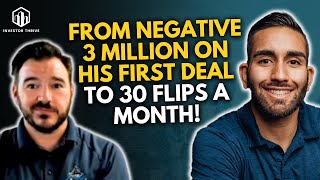
In this episode of the Painless Flipping Podcast, host Nathan Payne interviews real‑estate investors TJ and Nick, known as the Sicilian Brothers. The conversation begins with TJ recounting a disastrous $3 million loss on a 112‑unit apartment purchase in Memphis in 2006, highlighting the risks of over‑leveraging and market cycles. They then describe how they rebuilt their business, operating out of North Dallas with a diversified portfolio that includes wholesales, whole‑tail acquisitions, seller‑financed deals, and flips, each accounting for roughly 30%, 20%, and 10‑15% of their volume respectively. Their marketing engine relies heavily on Google PPC, direct‑mail campaigns, and referral networks, while they have abandoned cold‑calling due to low efficiency. The duo explains their team structure: TJ focuses on business development and marketing, Nick handles sales, systems, and paperwork, and they employ specialists for acquisition and lead generation. They discuss market strategy, preferring depth in a few familiar markets (North Texas, parts of Georgia, Arkansas, Florida) over a nationwide spread, emphasizing ROI and lead quality. Finally, they share how they give back through a monthly mastermind, YouTube channel, and open‑door events, and stress a growth mindset that treats failures as learning experiences and advocates high‑volume deal flow to recover from setbacks.
Chapters
Welcome back to the Painless Flipping Podcast, Investor Thrive Nation. We got some special guests today that literally, it sounds like he got crushed on his first deal and now he's crushing it. So we want to talk to TJ and Nick. How you guys doing?
Great, man. Thanks for having us.
TJ, didn't mean to throw you under the bus there, bro, saying you got crushed. But it sounds like you did.
I'm the only guy that I know that gets up in front of 300 people and says, who here has lost $3 million on their first deal in front of, you know, a big old stage? But, you know, what the heck? It is what it is.
Well, you set yourself apart for sure, man. I love it. So what the Painless Flipping Podcast is, guys, and for anyone that's listening that's brand new, is our goal is to make getting into real estate, wholesaling, fix and flip, whatever you decide to do, as painless as possible. I know it can't be completely painless, but we're going to try our best. That's why we bring on experts so we can learn from their experience. Of what, where they started and where they're at right now. So let's dive into both of your guys' first deals and let's find out where you're at right now so people can learn how to get to where you're at as soon as possible. TJ, let's go first. How did you lose $3 million?
Oh, that's easy. Just buy stuff in 2006. So my first deal was 112 apartment units in Memphis, Tennessee. I found it off of Craigslist of all the places. I did a bunch of research on the market, competing inventory, other deals that were available, that kind of stuff. It looked like a really good deal. It was a really good deal. 2006 leads to 2008, 2008 leads to kind of 2010. And when, what, just cap rates with commercial, right? If you're raising rents and let's do a 10-cap, not that anything trades at a 10-cap anymore, but if you got 100 units and you're operating a 10-cap and you raise rent by $100, you just made $1 million. If you got to drop rent by $100 to stay occupied, you lose $1 million. That's the unfortunate part of commercial real estate. And then maybe compound that if we're working on 5-caps now, that's how some of these guys are getting into trouble in the current market cycle. For the most part, it was a very successful project. We did the capitalization, the improvements well. We get up to about 93% economic occupancy at the peak. And then the market just decided to do what the market decided to do to us because we were in a fundamentally market that was a little bit overbuilt in that particular asset class. So it is what it is, but you dust yourself off, you learn from what happens, and kind of keep going.
Wow. So did you raise capital for that, or was it all your own money?
No, I mean, if you're gonna lose money, lose it like family and friends. So we raised some money here and there, but it was all pretty close. So that's, uh, does it make it better or worse? I don't know. Maybe they forgive you, maybe they don't. I don't know.
Yeah, that happens, you know, it's a risk, and I think everybody knows that, but until it happens you don't really see what happens or who's your friend or who's not, who's forgiving, right?
Oh, for sure.
Okay. Well, so definitely want to come back to you and see how you bounce back and where you're at right now. Nick, tell us about how you got started.
So I actually got into the family business in a sense. I used to be an offshore engineer and—
Hold on, hold on, hold on, hold on.
Hold on.
We're not related. I just want everyone to know that.
No, no, not him. I'm not family with anybody in California. So I was working offshore and then I had to to take a shift just because my kids, I was missing them.
They—
I was working about 10 months out of the year offshore and it sucked. So I said screw it, hung up the boots and got into the family business, started working with my brother, formed the Sicilian Brothers, and we just been crushing it since. Our first deal though, no, uh, speaking of first deals, uh, it was a like a 9-month flip headache that we made like $5,000 on. So it was like an education that we paid for.
So what ended up happening? Was it that you got your rehab wrong? That you ran into some issues?
Yeah, everything. We got in there, we got the rehab wrong every time. Once you started pulling walls down, right? We were finding plumbing. We had to replumb the house 3 times. It was just a nightmare. It was just a nightmare. So, but again, it was an education. One way or another, you're paying, so.
What would you guys do differently if you could start over again? Well, not start over again, but if you, you knew the result, what would you do differently? Would you have not bought those?
What? Yeah, I mean, all right, well, his is way different than mine. I'll let you answer for, for you, but for mine, no. Again, it was an education. I learned a shitload through it. So every deal is going to be different. Some are going to be winners, some are going to be losers. You're going to buy things and find out that holy hell, the whole thing needs to be replumbed and you never had it even in the budget. Or you find out that the house has a California foundation, right? You didn't even know what that was. And then you have to We've refoundationed a house like 8 times and it still has issues. So I mean, you're always paying for an education one way or another and you're always learning.
So dang, okay. And how about you, TJ?
No, because you can't change the memories going through something like that. The, uh, outcome obviously like to change, so you can never predict the exact outcome that you're going to have. Would I go back and do it different now, like knowing absolutely everything that I know now? Yeah, of course I would have bought in Dallas instead of Memphis. But that being said, like, you can't, you can't undo that education. You can't undo that knowledge base. You can't undo that experience. And it made me really realize, especially in life, that it really is about the experiences, about going through the process. It's not about the outcome. Obviously, we always shoot for a favorable outcome and we try to stack the deck in our favor as much as we can, but sometimes that doesn't happen. So it needs to be then about the experience of doing it, about what we got from having done it. And then now how do we apply that to, regardless of the outcome, success or failure, how do we apply that to, uh, projects going forward?
Love it. Yeah, progression is the key, right? Always progressing. So tell me, guys, where are you at right now? What's your business look like? What are you doing?
Yeah, so we partnered up a couple years ago, actually, which is, I guess, why we got double booked on the podcast, which is actually pretty cool. And we operate out of North Dallas. So we market all around North Texas. We have a basically distressed residential business where we move a high volume, or at least in our opinion, relatively high volume of distressed residential properties. Our marketing channels are heavy in Google PPC, mailers, and referrals. We're where those were the best. And our dispose strategies, we really try to merge a dispose strategy with an entrance strategy. It kind of allows us to provide more value to the sellers and allows us to really optimize the profitability of a deal. We've touched some commercial since then, but it's more like kind of by accident or as a subset of doing our fundamental business. We like the space. So on the exit side, we do maybe 30% wholesales, maybe 30% whole tales, maybe 20% seller finance where we're providing seller financing terms to an end buyer. And then 10 to 15% on the flip side. We were probably a lot heavier in flips about 2.5, 3 years ago during COVID Flips were selling for $25,000, $30,000, $40,000 over ask, like all day long. The market made an adjustment last fall, and we made an adjustment prior to that because we saw it coming, and we adjusted the business to do a higher volume of still fantastic deals. And we still do, you know, we still do a lot of flips, but we supplement it by doing a lot of other stuff too.
And is that mainly wholesales so you don't have to take them down?
No, no, no, all the above. So only about 30% wholesale. We do a lot of wholesaling, and it's definitely the best turnover offer, bang for the buck, especially if you're, you know, getting a big spread. Um, but no, we do a lot of seller financing. So we'll sell a house on terms where we are the bank, we provide financing to the end buyer, and then they make payments to us, or we sell the note to recapitalize. So that's another pretty big, like, part of the business. I would say that's probably about 20%, somewhere in there. Um, and then the other 30% is more of a whole tail, which is not a flip, not a wholesale. We take down the property to gain control, and then maybe we do minimal repairs, maybe we don't. It just depends. So if we have, for example, in our company, if we have a really juicy wholesale we're going to make $100 grand, but the seller like is really desperate. We don't have a buyer that's going to make it like just line up perfectly. Well, you know what, screw it. It doesn't matter. Close on this deal. Even if we only own it for a week, we don't care. It'll cost us $5,000, but you know, we don't want to pinch that to lose out on the deal entirely. So we'll close it ourselves. We'll dust it off. We'll do whatever we have to do and then we'll resell it then. So that's probably still about 30% of our deal volume as well. I think we have 32 or 35 active deals. So it's, you know, we move some, we move some stuff.
That's quite a bit, bro. That's a lot. 32.
That's okay.
You have anything you want to add with that, to that?
No, I mean, he hit the nail, the nail right on the head, right? Um, crushed it. One thing that we realized is that we don't have to blow out full rehabs, you know. We can do a lot less, give them a little bit of sweat equity, not push the market, and sell them a lot quicker. That was a, that was another huge realization. We did that a year and a half ago. We started switching more toward hotels than full-on retail remodels. So That was a good switch we made then.
Kind of make it sound like we bumped into it. We saw the market shifting, so it was very intentional in terms of changing the objective. And we still do a bunch of flips, but we saw the market shifting. I wouldn't even want to say it's softening. Yeah, but it's softening from way overheated. But what can we do to increase our velocity, our turnover ratio, and protect our downside risk? It was really more about protecting ourselves on the downside because we didn't— honestly, we didn't think that it would stabilize kind of where it was. We thought it probably keep drifting down. So we're like, all right, well, let's speed it up and just move stuff faster. And we're really good at that. We always had been, but we kind of preferentially take that exit strategy over flipping now. But we still flip. It's got to be a good reason to flip it though.
Of course. Yeah.
Do you do novations at all?
We do. Yeah. That's probably the extra. We're not huge in the novation space, but we do it. We think it works well for a certain seller profile. So if you do the math on all the deals that I just said in terms of percentages, Uh, there's probably about 10% left over, maybe 7% left over. That's probably the Novation space for us.
So when you break down, uh, when you said you partnered a couple a while ago, who does what in our space? We don't do it with you two.
We try not to work. The team does stuff. We don't do shit.
Yeah, we hired out the best roles possible. So, right, yeah, we're the admin side though.
So I grew from a position of pain. Like, I don't like talking to sellers. Fundamentally think I'm pretty good at it, but it's not really interesting to me. You're having the same conversation over and over again, right? So let's hire someone for that spot. Well, shoot, now we got to generate more leads to make sure that they're able to feed themselves and me. Well, that's not— there's no redundancies there. So now let's generate enough leads to have a couple acquisition guys. So we kind of grew it that way. About 2 and a half years ago, Nick, my wife, and his brother Tony kind of formalized the thing. We kind of tested out a couple of JV deals together and turns out we have a really complementary skill set. So I'm pretty good at the business development and directionality, like steering the boat. Nick's brother is fantastic at sales training. So he basically heads up the sales and dispo teams, both. We're obviously really active in the transactional nature of what's going on with the different deals. I handle the marketing and then Nick handles a lot of the other stuff. He handles the systems, processes, putting together paperwork for the fund, sending like stuff for the attorneys back and forth. So it works well. The important part is to have complementary skill sets that you can merge into a cohesive company that is going the same direction. Because if you're all— if you both have the same skill set, if you're both really good at buying, then, you know, why partner up? Because neither one of you bring something different to the table.
Yeah, yeah. 1 1 can equal 1 or -1. I had a business partner as well, and it was kind of like, you know, awesome guy, but we both had the same skill sets, right? So let's talk about marketing. I'm curious, with doing that many deals, which channel is working the best and which channel would you drop if you had to drop one?
We actually just dropped one, so that, that works out. But, uh, we dropped one on our end just because it was the least producing and with the highest manpower to make it work, right? You had to sit there and monitor, and that was just cold calling our VAs, right? We weren't monitoring enough, weren't spending the time to actually sit there and work them, so we just cut it. They're running them for about 6 months, but TJ is in charge of the PPC and I'll let him talk about that.
So Google PPC has been, I've been doing it almost 6 years now. It's been a good performer. It's got logistical issues with scaling. It's got a bunch of issues, but it's a, it's an inbound lead. It's fantastic lead. It's great for the company. It's probably our best margin and volume play when you kind of combine the two. The second best is mailers. So we do outbound mail, which provides an inbound lead, which is also cool. We like the inbound leads a little bit better than the outbound leads. We don't use any of the bot lead services. Our kind of philosophy would like being, I guess everyone likes to say vertically integrated. That's the catchphrase that everyone uses now. I just like to think of it as like, I like doing my business, which is knowing what the business is. So those are our two big ones. And then we do have decent volume, I suppose, referrals. So we're pretty active in the North Texas area. We get wholesalers to send us stuff. Maybe we'll buy it. Maybe we'll help them move it. On the other side, we'll, you know, sell to the same guys once in a while over and over again. So it's kind of a symbiotic relationship. It's, that's difficult to quantify, but who doesn't like a free lead? We make $20K, right?
Of course. Yeah. That's, that's what I like. So that's very, that's what I've been hearing a lot. I don't know. Have you guys ever heard of the Family Mastermind? If not, it's okay, but it's just a mastermind.
I've met him a couple of times. It's a good mastermind.
Yes, I was just got back and, you know, I was talking to everybody at marketing because I'm always interested to see what works. And, you know, mailers and PPC seem to do well and texting almost obsolete. Like, I don't think anyone's really doing it that much. Cold calling. Some people do it, but, you know, like you guys said, the return— there's better returns.
It comes down to the cold callers themselves, right? That's the whole thing. Everybody thinks that they can just hire out a couple of VAs and pay them $4 an hour and get leads, and— right, that's not the way it works, right? You actually have to find VAs that are good and credible and then train them on your own systems and everything, right?
So for sure, it's a lot of work, right? And the PPC— do you run your own PPC, you said, or do you hire it out to like Need to Speed or any of these companies?
We've tried some of the agencies, and some of them are better than others and we don't use any of them. So, uh, take that for what it is. And we're one of the higher spenders probably in the DFW market and we, we kind of like it that way.
Have you ever, uh, been, um, I guess wanted to go nationwide or try a couple different markets? Have you ever been, uh, tempted to go try a bunch of different places?
Yeah, we're actually in a couple different markets. So right now we have definitely heavy in North Texas is the best way to say it. Um, we run our campaigns pretty strong out here., but we're also playing in a multiple market campaign in Georgia, Arkansas, and a couple of cities in Florida. We've never really wanted to do the nationwide, nationwide thing. I know the guys that do that, and I know—
It's a nightmare, bro.
It seems like kind of a hassle. I don't know. We've kind of tried it, but we couldn't get— I guess the sale on that is you get a lower lead cost, and we just couldn't get the lead cost low enough to justify the headache of going after the deal and figuring out, like, what's the exit strategy in some piece of crap property in the middle of nowhere that I've never seen. I think going deeper in several markets that you're able to understand better is generally the ROI personally. You're going to be doing maybe less volume, but you're going to be able to know the markets better and actually juice the deals for more.
No, I agree. Dispo ends up being the problem, especially if you're getting stuff in the middle of nowhere and you're like, I got to find some guy who's going to buy this. And, you know, knowing the numbers is tough too.
Look at it this way. Would you rather pay— so if a cost per click is just— well, no, say cost per lead. If your cost per lead is $400 in a metro area, which is maybe high, maybe low, it depends on where you're at, whatever. And if your cost per lead is $150, but it's rural and it's out in the middle of nowhere and you got to learn everything about it, which, which lead would you fundamentally rather have? I'd rather have the more expensive one in an area that I can understand better.
Agreed.
No, I agree with you. A lot of people have suffered through that.
Like, I went through that. I knew them all 2 and a half years ago and we, we played with it some. We spent some money on it. We kind of broke even. I figured we'd probably bump into the issues that we bumped into and I was like, yeah, that's, it's kind of my thought. So we're going to stay away from that and leave that to the the volume guys. We'd rather do the margin.
I dig it. I dig it. Well, I mean, you guys are doing volume, so that's awesome. Well, uh, you know, for, for those that have listened, like, man, I like these guys. I like, I like what they're doing. What do you do to help people out? Are you mainly just helping people move their deals? Do you have coaching?
What do you guys provide? Take it away.
Yeah, all right. So we provide, uh, as much help as we can, right? What does that mean? Every month, once a third— every third Thursday, we open up our doors and we have a, a mat— like a mastermind impromptu event here, right in our office. People come in, it's an open hall, right? So we have, uh, the mastermind, reiaf.com, where they can find us, they can help, uh, we can network and help any way possible. And then we have the YouTube. Right now it's, uh, The Sicilian Brothers. Uh, we're still working on changing the name, but there's That you can find us on anywhere.
Wow. So you got YouTube, you got your doors open, and you have a mastermind.
Is that correct?
Yep.
Yep.
Sounds good. Sounds like all good stuff. So everybody that's listening, if you guys want to work with these guys, whether you're in Texas or not, I'm sure it doesn't matter to you. You're probably willing to help anybody, right? Oh, for sure. Well, anything you want to leave Investor's Tribe Nation with before we sign off? Do you have any golden nuggets you want to leave behind?
Man, just don't stop, right? Once you're getting into this, a lot of times people think that they're going to get rich on one deal, and that's not the way it is. Every deal, you're learning something from it. So just keep on going until you get in a system that you're able to replicate it, right? But you're going to have your ups, you're going to have your downs, you're going to have your surprises. Just keep going. Keep your head down and keep going, man.
Even if you're negative $3 million.
That's a big number. You got to dig out somehow. What's the best way to dig out? It's probably do a lot more deals to make a lot of money. I guess on that note, maybe a piece is don't worry about failure because you're going to have it. If you're not having a failure once in a while, you're not doing enough deals or you're not pushing the envelope enough. So don't chase failure, don't, but don't be scared of it either because it's going to happen.
I mean, that's some powerful stuff coming from some powerful guys. All right, guys, well, I appreciate your help and you coming on here, and we will see you next time.
All right. Thanks for having us, man.
Thanks for having us.
More from Nathan





Why Traditional Wholesaling Keeps Failing You (Use This Pre-Flip Method Instead)





