Empowering a Greener Tomorrow: From Energy-Efficient Homes to Entrepreneurship
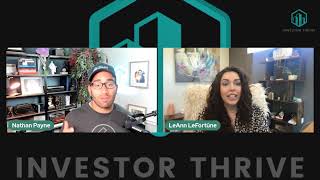
In this episode of the Painless Flipping Podcast, host Nathan Payne interviews Leanne LeFortune, the founder of Fortunate Foundations, a green‑building company based in Austin, Texas. Leanne shares her unconventional journey from growing up on a remote Alaskan island, working as a commercial fisherman and research vessel crew member, to undergoing double hip surgery and deciding to become an entrepreneur after listening to Tim Ferriss. She recounts early attempts at house‑flipping in Alaska, the extreme conditions, and why the market there was unsuitable for her green‑building vision. After a six‑week, Jeep‑camping move to Austin, she launched Fortunate Foundations, focusing on 5‑star Austin Energy Greenbuild‑rated homes that eliminate thermal bridging with exterior foam board. The conversation covers major setbacks—including a contractor who embezzled $200,000, an easement dispute that cost $50,000, and the impact of rising interest rates—highlighting the importance of title insurance and thorough due diligence. Facing a slowing market, Leanne pivoted to short‑term and mid‑term rental management, emphasizing flexibility in business models. She discusses the role of mindset, daily gratitude practices, and personal development, as well as mentorship from Fortune Builders, Keller Williams, and authors Jay and Wendy Papasan. The episode concludes with actionable advice for aspiring entrepreneurs: pursue what sets your soul on fire, maintain grit, and be ready to adapt, plus information on how listeners can connect with Fortunate Foundations via its website and social media.
Chapters
What is going on everybody? This is the Painless Flipping Podcast. If you're watching this live, glad to have you on here. Got a sweet episode for you today. We're going to be talking today about energy efficient homes and how to even become an entrepreneur. So if this is the first time you listen to the Painless Flipping Podcast, the main goal of what we're trying to do here is to show people that it does not have to be painful to get into flipping or get into real estate, get into wholesaling and entrepreneurship. You can learn from other people's experiences, and that's why I bring experts on the show. So you can learn from them, so you don't have to figure everything out on your own and be a very painful experience, right? Remember, this is the Painless Flipping Podcast, so that's why we're here. And I have my guest here, Leanne. What is up, Leanne? How are you?
Hey Nathan, thank you so much for having me. I'm doing great.
Good. Yeah, I'm glad to have you on here. And to be honest, I like, I like to tell everyone like straight up, we've never spoke before, and I think that's the best way to have podcast is so we can learn from each other and I can ask you genuine questions I feel like everybody would want to ask, right?
Yeah, I mean, I feel like my story is a little bit painful, so maybe people can learn from me so that it's a little more painless for them.
Yes, yes. And let me tell you, that's— I feel like that's most people's journeys, is something very painful, right? They have to go through trial and error, and obviously you can't avoid all the pain, especially when you're growing. And progressing. So, but our goal is to help as many people learn from your experiences so they don't have to, you know, deal with all that. So let's start. Tell us a little bit about who you are, you know, quickly, and then we'll dive into your story because I know you said you got a great story. But yeah, kind of give us a summary of who Leanne is.
Sure. So my name is Leanne LeFortune. Um, I'm originally from Alaska, moved down to Austin, Texas about 7 years ago, and That's really when I started my green building enterprise, which is what I'm doing currently.
Wow. Well, you know what? Let's— let me just— for the listeners that are listening already and they're just sitting there like, what is green building? What is green? What is that?
Oh, yeah, that's a really vague term. So, yeah, great question. I think it's different for everybody. But what we do is we do 5-star Austin Energy Greenbuild rated homes. Which essentially means that we stop the thermal bridging that happens. You know, like for Texas, it's heat. The sun shines on the house and goes through your studs actually into the home. And that's where most of the thermal bridging occurs. So we'll actually put a foam board layer on the outside of the home when we're constructing it. And that helps tremendously with your energy efficiency and your like AC bills and whatnot.
Can someone that has an older home make their home energy efficient, or do you have to be a new build?
It's really hard. That's actually kind of how I started, was trying to flip old homes and make them energy efficient, and it was insanely difficult. I would say you can make them more energy efficient than how it started, of course, but to get like a 5-star rating like what my homes are No, you can't really do that.
So tell me, you said you're from Alaska. You grew up in Alaska like your whole life and then you moved to eventually to Texas?
Born and raised. Yeah. So let's get to the story.
Yeah. Is that, is that part of your story? Is Alaska? Yeah, absolutely.
That's where it all begins. So I grew up on an island in Southeast Alaska, really remote. Like you can either take a boat to get there, um, a ferry or a bush plane. But that's really it. Um, you can't drive to or from the island that I'm from, so really remote, small village fishing town. My father is a commercial fishing— or fisherman. I grew up commercial fishing.
Okay.
And so I had just an, you know, a large number of sea time hours, which you need in order to get your commercial fishing— or I'm sorry, um, to get your captain's license, 100-ton captain's license. So that actually ended up doing was going on to get my biology degree. But because I loved seeing all the whales and everything that I saw where I grew up, it was like Nat Geo, like in my hometown. And so I went to get my biology degree and my 100-ton captain's license. And due to that, I got a job on a research vessel where I would spend most of my year out at sea. And I got one email a day that I could send out, and that was my communication with normal civilization. So to have a relationship or anything like that was really difficult. And ultimately I ended up being like, you know what, um, I'd like one day to have a, you know, a husband and a dog and a house and all those things that most, you know, the average American wants.
Yeah, the dream life.
Yeah, exactly. So I I decided to quit with really no plan for what I was going to do after that. I knew that I wanted to be an entrepreneur. I actually one day had to get double hip surgery soon after quitting my job.
Really?
I know, I'm not gonna go down the rabbit hole of how I was a competitive weightlifter, but I was, and I wrecked my hips in Alaska. Yes, I was actually, and a CrossFit coach. So that's what I was doing while I was going to college, is Were you working out on the boats as well? Oh my gosh, was I ever! But I was doing more of like bodyweight exercises, and I found a place where I could do pull-ups on the boat. But you can ask anybody who was there, they're like, yes, Leanne would do, um, push-ups between sets and stuff.
Wow, that's amazing. And I, I have to ask this too, what kind of fish are you able to catch? Are these crabs, or what are you getting out there?
Yeah, yeah. So when I was working with my dad, it was mostly salmon fishing. Fishing for coho or silver salmon and king salmon. So there's 5 different species of salmon, for everybody who would like to know. And, um, those are the 2 that I would mostly catch with my father. And then I would also do shrimping and crabbing with him as well. But he had all the permits. Like, I don't know if you've ever heard of black cod, but those are cod that live like a mile below the ocean. And he would do sea cucumber diving and he would do geoduck clam diving, which are— geoducks, clams are like this big. They're giant. Yeah.
And about the ocean, I don't know much about— well, I've read books and watched stuff, but I don't know much about the ocean, to be honest. It's kind of scary.
Yeah, it can be. It can be. And I actually am a rescue diver. And if you go diving and you see a giant see a lion, you're like, oh man, this is— I'm out of my element. They're almost more scary than sharks to me.
A sea lion?
Yeah, because they're like 2 tons or something. I mean, they're just huge.
Oh my gosh. Wow. So you hold on. I got to get— I got to like comprehend everything you're saying. So you, you're CrossFitting it up. You're a weightlifter. You're— you can save people. You, you know, you're seeing sea lions in the ocean and then eventually you're like, forget this because I can only send one email. A day or a week, or I can't remember. But now I'm going to Texas. Is that kind of what's going on?
Yeah, so actually I ended up laying in bed getting my double hip surgery. We'll go back to that. And I was listening to The 4-Hour Workweek by Tim Ferriss, and I was so inspired. I was like, yes, I'm gonna be an entrepreneur. But you could do that selling butterfly stickers. Like, what does that mean? I was like, okay, well, so what am I going to do? And I'm driving down the road after I can actually hobble to my car from my hip surgery, and I am listening to the radio, and all of a sudden I hear like, do you want to learn how to flip houses? And I was like, yes, that's what I'm going to do.
And this is in Alaska, correct?
This is in Alaska. Yeah.
Someone in Alaska is running ads on how to flip houses.
Yeah, yeah. Um, Dan Merrill. Dan Merrill. And, uh, what was it?
Unreal. Wow.
Fortune Builders. Dan Miller. Fortune Builders. It's a nationwide thing. Yeah, they come to Anchorage, Alaska. And so I went to this, you know, real estate thing, signed up for the class, and started taking their courses and whatnot. And, um, I actually met my now husband there as well. So, you know, it worked out pretty good.
Yeah.
Um, we did a couple flips in Alaska. They were rigorous. They were so hard. Oh my gosh, I was jackhammering concrete myself in negative 20 in the dark, like, because Alaska's dark in the wintertime. So negative 20 in the dark because we gutted this house. We had no power. There's like one work spotlight to use, and like, it was intense. We got We got through it and we were like, yeah, we don't want to do this anymore. This sucks. Um, and so plus the real estate market there is really small and we had big grand visions and we wanted to do green building and it was hard to do in Alaska. Not many people are for it. It's kind of an oil state. And so we ended up getting rid of everything we own and he has a Jeep. So we got a rooftop tent to go on the Jeep and we drove from Alaska all the way to Austin, Texas, where we had never been before.
Like, it was like—
it was a total leap of faith. We had a hunch. Someone said Austin was a great market, and we were like, let's go there. Yeah. And it took us 6 weeks. We had to go through Canada, down through all the states to get to Austin, Texas. It took us, like I said, 6 weeks. And but we stopped in all the parks along the way, the national parks, and had a blast doing it. So it was a lot of fun. Stopped and saw family members, borrowed their shower and their washer and dryer so we could at least have clean clothes along the way because we were camping. Yeah, we were camping the whole way. Yeah, it was great. So we arrived in Austin, Texas, but because the flips in Alaska didn't go well, we had like no money to our name. And we bought a— we were able to get in with someone else like helping us get into this apartment because like, you know, they check your credit and all that stuff when you get it, right? And, uh, we bought a Walmart like blow-up bed and that was it. We couldn't afford any other furniture, but we were like, we're gonna continue the dream. And we— so we started Fortunate Foundations, which is the, the company that we own now where we build the green buildings. And that was 7 years ago. And here I am now with, um, like, I think about 15 employees, lots of VAs, lots of subcontractors working for us. But, um, yeah, it's been quite the journey with it.
Let me ask you about your experience as an entrepreneur, because usually, like, I feel like people don't start seeing the results until like 3 to 5 years, like even 7 sometimes, where it starts becoming profitable. Because I think people, like, their expectations like a year immediately. What was your experience? Maybe it wasn't like that for you.
It was not a year. Not, not at all. There were— there's so many trials and tribulations along the way. Um, pretty much off the bat, the first thing that we wanted to do was hire general contractors to work for us, to build our homes for us. One of those generals, um, embezzled about $200,000 from us. Oh my gosh, that was a tough lesson. Yes. Shut down his company and ran off to who knows where.
Shut it down, huh? Wow.
Yeah. So there was, you know, I didn't get anything from that except for a hard knock lesson there.
I can't believe that.
And then one time we bought a property that had a JUAE, so a Joint Use Access Agreement with the neighboring lot, and we actually had to kind of cross over that guy's property to reach ours.
Oh man.
And we thought it was all like an easement thing.
Or is that like—
Yeah, it's another— Yeah, it's another term for an easement, essentially. And so anyways, that man happened to be an attorney, and he had it out to make our lives as difficult as possible and basically said, I can keep you from building what you want to build here. And we were like, well, we kind of need to build this. That's kind of our business. We need to make money here. And he really took us for a ride because we were still fairly new entrepreneurs. And honestly, for anybody watching this, like, you have title insurance for a reason. Make sure to use it.
Did you use it? Did you use it on that experience?
No, I wish I would have. That's why I'm saying that.
Yeah. Because From my experience with title companies, they try their best to like get out of anything as well. Oh, really? Yeah. So yeah, not saying that don't use it, but yeah, everybody's trying to be slick, I feel like.
Yeah, yeah, yeah, absolutely. So anyways, this, this guy made it very difficult for us to conduct our build and I don't know, he cost us somewhere around the terms of $50,000 is what that whole thing ended up costing because we had to get an attorney and everything.
The war or some sort of—
Yeah.
So I'm sure when you buy properties now, you're like, okay, we're going to build. We got to make sure there's no issues with like property lines, anything like that.
Yeah. Well, the easement was there so that we thought we were good. Like, we were like, okay, here's the easement. It says we can use it, what we can use it for. We thought everything was down pat and good. But if there's an easement, maybe you should talk to your neighbor who has the easement with you and make sure everything really is good and see how they feel about you building there. What's in there? Have an attorney review it before you close. I don't know.
I have a question about the interest rates increasing. Has that been kind of difficult for building as well? Because I know you probably were expecting a higher purchase price and now the prices— is that kind of been difficult? Because I know it's been difficult for us in Utah on a lot of the flips that we had.
Yeah. Yeah, it's been very, very difficult. Homes are sitting on the market a lot longer than we expected. They're going for a lot less than we expected. Buyers Buyers can exercise a little bit more of their scrutiny and then what exactly they want in a home, you know, so they'll pick over your home. At least that's what I'm seeing, right? Yeah, I feel we build very beautiful, great energy-efficient homes. They're like, too close to the street, and I'm like, well, there's not much I can do about that. So, you know, yeah, um, but yeah, what that's done is it's caused us to pivot actually, and we're going into the, the rental space. And so I actually now have a short-term rental management company because—
got it—
like, I, like, we started doing short-term rentals, midterm rentals, and I also manage them as well. Oh cool.
Okay, that was your pivot. You know, you built these homes, energy efficient, beautiful, and you're noticing that people are kind of being a little pickier, and you're like, hey, let's rent these things out until we can get what we need. Is that kind of what's going on?
Yeah, until the market turns a little bit, we're gonna hold on to them because I don't really want to short sale. Like, no point going underwater if you can just hold on to them, rent them out, and sell them later when the market turns around.
Yeah, that's what I had to do on some of the flips that I had here is, you know, with the way the market— we were projecting it before interest rates went up, we were looking to make a lot, and then it almost either was like break-even, make— you make a little bit, or you lose. So we, we held on, and luckily the, the market went up a little bit, just a little bit, but now it seems to be a little stagnant. So very, very interesting. Um, great way to pivot. And I think that's important for everyone to know is like change is constant in business. It's not like you can just like create a product or create a business and just be like, oh, we're good. Like Tim Ferriss, he says The 4-Hour Workweek, but hey, sometimes you're gonna have to get back into that thing and figure it out.
Yeah, I know. And I mean, I'm still working more than 4 hours a week, let me tell you. Like, yeah, I'm nowhere near 4 hours a week. I hope so one day, but I I don't see it in my near future, right? Um, it was just the— it inspired— it actually inspired me to be an entrepreneur more than seek The 4-Hour Workweek. I'm still young, I'm okay with working more if that's what it takes at this point. But, um, yeah, pivoting is— I've pivoted more times than I can count. I mean, I went from flips, moving down to Texas, finding that flips are not very lucrative in Texas because of how the price of land is just a lot in Austin anyways. Yeah, in Texas, I guess I should say. And so being able to buy a lot and build 2 or 3 homes on that lot is much more lucrative than trying to flip an old home and not really recoup the cost. You're working, which isn't fun when you're working that hard. And so, um, going from flips to new construction now to like rentals and whatnot. I just, yeah, I feel like you kind of have to be fluid and listen to what the market's telling you to stay ahead. You always have to have an edge. You know, that's what kind of how entrepreneurship is.
Are you reaching out to other builders that you might know in your network and offering your services? Like, hey guys, you're probably not able to sell these and, you know, you don't want to short sale. We can rent, help you out. Do you— are you offering that as well?
I'm not, but that's a great idea. I might take that.
Yeah, yeah, because I figured, you know, some people might be in that situation. So if you reach out to those builders and just say, hey, instead of just trying to take a loss or just get rid of it, let me manage those properties until, um, you know, the market rebounds.
Yeah, yeah, right.
Cool, cool. Well, hey, that's a very cool story. And I think one thing that resonated with me from what you said was you took action, right? Like, you're like, hey, let's sell everything, let's freaking get in the Jeep and roll. Down. And I think that's amazing. So what do you have to say for the people who are watching this podcast, or will live, or will watch it later? Um, what advice would you have for them if they're in a situation where they're like, they want to but they haven't done it yet?
Oh goodness, I don't know. I just always say do what sets your soul on fire, and that will just keep you going. You really— to be an entrepreneur, I would say that you have to have grit. But if you're doing what sets your soul on fire, you'll get through it. I mean, I told you about the, the builder who took me for $200,000, and then like the neighbor who took me for $50,000. And there's like countless others that I could— I'll just not talk about. We don't have the time, but I could go on and on. And if I wasn't doing what I felt my calling was and what set my soul on fire, then I wouldn't still be here. I wouldn't—
it wouldn't—
I wouldn't be able to keep going. It's during those times that adversity and hardship that really, um, it makes you or breaks you. It's like either you're going to just really dig in because you're doing your passion, or you're gonna like throw in the towel and quit like most people. So just make sure you're doing what you're passionate about and what you feel like you're on Earth to do.
Love it. Um, so I'm curious, with your experience of 7 years, has coaching taken any place in your journey? I know you said you did Fortune Builders, so that that was coaching in the beginning. Have you done more of that, like learn from other people or got mentors, or you're trying to figure it out on your own?
Um, I— it's mostly doing it on my own, but honestly, I have met a lot of people. There's, um, some fairly famous authors that I know personally, like who— the man who built or wrote the, um, Million Dollar Investor, I think is what it was called. I feel terrible. But anyways, um, Jay Papasan and Wendy Papasan, just to do the name dropping. I forget the title of the book. Sorry, guys, if you're listening. And, um, they were wonderful coaches. They definitely helped us. They actually, when we first wanted to hire our first employees, they kind of taught us. Keller Williams has a great training program for that, and they actually brought us in under their wing and took us through that kind of program as far as how to hire your employees, which was wonderful and amazing.
So important.
Yeah, totally important. And then of course the Fortune Builders, like you mentioned, uh, was a little bit of it. And then I just do a lot of personal development because honestly a lot of this entrepreneurship is like— it is all about your mindset. It is It is all about your mindset, and if you have a great mindset, you can really get through anything.
Any, any advice on, uh, improving that mindset? We got Kyle right here giving you the, the 100 round of applause. He loves it. Um, yeah, any, any advice for someone to keep your mindset? Because I agree, I think mindset is so important, and I have specific things I do every day, like a routine. Yeah, get ready, um, for the day.
Yes.
Anything that you do or you'd like to share?
I am all about that attitude of gratitude. It's like wake up and think of 5 things that you're grateful for, and that'll immediately— you'll start looking for the positive things throughout the day instead of the negative. Like, you'll start looking for things to be grateful for. Like, when I was on the blow-up mattress with no money, barely able to get food in my belly, that kind of like broke. Going broke but still going. And I was like, you know, you had to really dig in to think of what you're grateful for in moments like that. But it can always be worse. At least I wasn't on the street, you know. And I'd wake up and I'd be like, okay, I'm grateful for this roof over my head. I'm grateful for warm running water today. I'm grateful that, you know, for dinner. And like, you know, like you can really, even if you feel like there isn't much you can be grateful for in the moment, there are— you can always think of at least 5 things. So not all—
one, I'm like a proponent. I love that, I love that. So actually, we were talking about my shelf earlier. So right there, as you can see, those are my gratitude journals that I started keeping from when I started my entrepreneurship journey 5 years ago. So I can go through those and look and say, what was I grateful for like 4 years ago today? And, uh, so anyway, if you ever want to try that— I don't know if you've ever tried that, but I really like—
Yeah, read one to us.
Yeah, so I just— I used to start out with just like bullet points. Let me see what I was grateful for. Uh, so I got, um, the outdoors. Yeah, nature, God's creations, um, church, my dog and cat, working out, and my back feeling better. So I, I can actually remember what happened. That was— I think I had gone on a hike that day. It was probably Sunday. And my back, uh, really hurt back then. I think I hurt it lifting and it was getting better. So it's cool to like write it down and just your memory's like, oh, okay, I remember.
Yeah, that's great. Yeah. What kind of lifting do you do?
Oh man, yeah.
What's your favorite workout?
I actually, I, I actually do jiu-jitsu, Brazilian jiu-jitsu. That's like my, my lifting, like my workout. I, I used to lift like, um, you know pull-ups, you know, bench press. I was never that good, so I was like, hey, I wrestled in high school and I wrestled a little bit in club team in college, so I've always liked doing that more. So that's, that's what I do now.
Awesome. Love it.
Yeah, yeah, good stuff. Well, hey, it's been great chatting with you. Do you have anything you want to leave our listeners with? Or I guess also let's dual purpose it— leave them with and how can they reach you? Okay.
Yeah, yeah. Um, well, like I said, I'm Fortunate Foundation. So you can, if you want to find me on my website, I am doing a website makeover. So if you type it in today, you won't find it, but in about a week I think I'll be done revamping it. But it's fortunatefoundations.com, and I even put all my homes that are for sale up there as well. But you can go on there and find out more information, what homes we're working on, what's coming soon, what's for sale, all that stuff on there, ways to invest you know, which really you don't want to put too much out there. But, um, you know, if you want to learn how you can invest with us, about how you— when people, you know, with people that you trust, that are doing green, good things for the environment, we're an awesome way to invest in real estate, which is tangible. And, you know, things. And I'm also on social media. I actually did recently a 360 65-day live challenge, but I went 400 days because I'm just that overachiever.
Oh shoot.
And I left them all up, so if you really want to learn about me, you can come to my Facebook page and watch.
It's a lot of content right there.
Yeah, yeah. And so you can find me on Facebook, you can find me on Insta, um, we're on all of them, so you can find us anywhere at Fortunate Foundation.
Love it. Hey, I'm sure anyone that reaches out, you'd be willing to network with and chat with. Uh, Leanne right here, it's been a pleasure having you on. Go check her out on her Facebook, and she's got that challenge. That's amazing. Cool. All right, well, it's great having you, and, uh, you know, we'll wrap it up for today. All right.
Yeah, thanks, Nathan.
See everybody.
More from Nathan





Why Traditional Wholesaling Keeps Failing You (Use This Pre-Flip Method Instead)





