From losing 2 houses in bankruptcy to flipping over 50 million dollars!
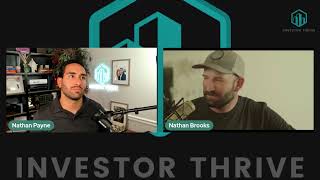
In this episode of the Painless Flipping Podcast, host Nathan Payne interviews real‑estate investor Nathan Brooks. The conversation begins with a light‑hearted banter about sharing the name Nathan before diving into Brooks' early foray into real estate, where he bought two houses in Kansas City, faced a predatory lender, a lawsuit, and ultimately a deed‑in‑lieu that led to personal bankruptcy. Brooks explains the different types of bankruptcy, the long‑term credit impact, and how he rebuilt his life by learning from those painful mistakes. He then details the evolution of his business: creating a multimillion‑dollar real‑estate portfolio, launching a lending company that offers fix‑and‑flip, bridge, long‑term buy‑and‑hold, and construction loans, and shifting from high‑volume flipping to diversified income streams including short‑term rentals, development, and crypto exposure. The discussion also covers his operational philosophy of partnership over solo scaling, his lifestyle choices such as daily gratitude journaling, reading habits, fitness, skiing, hunting, and strategies to stay present by limiting phone use. Brooks promotes his book "The No‑Quitters Guide" and invites listeners to connect via his lending platform, social media, and a large Facebook community. Throughout, both hosts emphasize resilience, continuous learning, and balancing wealth creation with family and personal fulfillment.
Chapters
What is going on, everybody? This is the Painless Flipping Podcast right here. I have a guest with me, Nathan Brooks. How you doing, brother?
I'm so good, brother. And we get to have the Nathan show today. So, I mean, let's be clear.
Oh, you know what? Honestly, man, I've been finding a lot of Nathans out there. One of my business partners I work with, his name's Nathan. I know a lot of Nathans. I'm sure you do too, don't you?
I do. Although I will say I actually know the most name of, of one single name is Davids. And I keep making a joke that every time I meet another David, I'm like, dude, I'm gonna, I'm gonna host a David party, and the only people I'm gonna invite are people named David other than me.
Yeah. Yeah, I'd go. I wouldn't be invited, but that sounds like a good party.
It would be. Well, because since we're Nathan's, I feel like there might be, uh, some synergy there. We could—
so, no, I think so. Maybe Nathan and David party. That was just a bunch of guys like, yeah, having a good time.
That's right.
So everybody that's on here, if this is your first time listening to the Painless Flipping Podcast, our goal is to help you succeed in real estate, to avoid all the pain and all the heartache you go through by just trying to figure everything out yourself. You know, we want to make it as painless as possible because, Nathan, you know and I know it can be very painful if you just try to put your head down and try to figure it out all on your own, right?
100%. It's, it's definitely something that you want to have those mentors and coaches and people on the way who, who really help teach you the things that you, you know, you can learn them two ways, right? Right. You can time or experience, uh, but, um, You know, it can cost you if you don't.
Exactly. And it's cost me and I'm sure it's— well, it has cost you because we're about to talk about your first deal. That's what we do in this podcast. We talk about where you're at, the first deal that you did and where you're at right now. We know you're crushing it right now, but we also want to know what happened when you first started. So you told me that on your first deal, you, you bought 2 houses and then lost them. Is that what happened?
Yeah. So I literally, I overheard somebody talking about real estate while I was at a lunch date with my probably then girlfriend or fiancée, not even wife. So some time ago, overheard them talking about real estate. It was in the time when you'd hear like on the radio, you'd hear all the Rich Dad Poor Dad stuff all the time and all those, you know, seminars and stuff. And so I was just, I was just so gung-ho, read the book Rich Dad Poor Dad and I'm like, ready, fire, aim, I'm in. Nathan, I am in. Let's go. Let's go. So of course, I'm a broke musician at the time. I'm playing and earning my living as a professional musician. And overheard this guy talking about real estate. 3 weeks later, we're in business together, which everything that could go wrong in a partnership, relationship, whatever, business transaction went wrong, from him not showing up to him being the guy who's responsible for construction, who is going through a divorce who only shows up on Friday to get paid. I'm starting to try to hire, you know, contractors from like the day labor pool because I don't even know what to do. And it wasn't like now where you can go on a Facebook group and be like, hey, I need a contractor.
Right, right.
And so they— I eventually got them rehabbed for the most part and had, and had, you know, trouble selling them. And then it's starting to be—
what market was it in, by the way?
In Kansas City market.
Okay, got it.
And, uh, and I somehow managed to buy more houses past that as well. Uh, back in the day they would do an 80/20 loan, so you could literally get an 80% loan for your 80% and then a 20% loan for the remainder 20%. So literally that's 80/20 loan, or otherwise known as 100%. Yeah. Uh, so Uh, that was also a bad plan. But, uh, through all that and going through literally, uh, a lawsuit and ultimately bankruptcy—
who, who sued? You said lawsuit. Who, who came against you with that?
So it was actually the lender on one of those two houses, or on those two houses. He, he was a complete shark. And, and as I've learned and grown and have experience now recognizing that this is not a good person, not a good lender, not a good— you know, they're more like a mob shark than a—
break your knees if you don't pay and stuff.
100%. Yeah, same guy that's notarizing the mortgage is the one like writing it out. So it's wild. Yeah, something. But so I had worked out a deed in lieu of foreclosure. And for people that don't know what that means, it basically means I give the the loan back, the property back, and in exchange they don't file for foreclosure. It's still not great by any means, but it's better than that. Right. So I was trying to work through the properties that I had and, and ultimately, you know, once they filed for a lawsuit, then we really just had one choice.
So why would they file for a lawsuit if you did the deed in lieu back to them and gave it back to them?
As a question I have never been able to come up with a good answer for.
So you gave it back to them and they still filed a lawsuit?
No, they had agreed to it verbally. And I was actually out of town making a record in LA at the time, which of course probably sounds really odd. But I remember distinctly being on the phone and working through that. And it was such a relief. And I get back to town and the bank actually goes to the house with the tenants who are in both of those houses and starts collecting the rent, uh, unbeknownst to me, from them, even though they were current at the time. Yeah. And, um, yeah, it was just an absolute mess.
That sounds wild, man. Yeah, that was your first experience in real estate?
That was my first experience in real estate.
Oh my gosh, that would have probably shook and shaken most people to never do it again. What, what happened?
Well, you know, going through that, I recognized the power of it and also how much I'd really screwed it up. And to be clear, I mean, I still screw stuff up. I'm not perfect.
I just, I just had to deed in lieu a property back like a, uh, I think a couple months ago in the Utah market because we bought it the pan at the height of the, uh, pandemic. Interest rates went up, the house was worth $100,000 less than what it we bought it for, rehabbed, and it's like we were underwater. So we talked to the lender, he's like, I'll just take it back. And, uh, he sold it. Uh, we, we actually deed it and looted back to him and paid him $15,000 to take it back, uh, which sucks. But, um, you know, and then he sold and he said he lost money on it. So, and just for everyone that's watching, like Utah where I'm at, um, what part of Utah? Salt Lake City. This was in Provo, if you're familiar with Provo.
I actually— I love skiing Park City, and I was looking at buying a house in Heber. I know that market like pretty well, I would say. So, yeah, I'm very— I'm pretty familiar.
Well, then you know that the prices during the pandemic, they crushed it, man. They went up so high.
Yeah.
And in Provo, which is a college town where Brigham Young University is, it really got hit hard when the interest rates went up because it just didn't maintain its value. So where we bought, yeah. So not to get too much into me, but I'm just saying, hey, it happens. And I'm not like too much too big to be like, hey guys, I, I, I got to hear people like, I've never lost money on a deal. I'm like, well, good for you, bro. You've been in business for how long?
I'm like, you're a liar. Yeah. And that or you haven't done many deals.
Right, right. Yeah, for sure. So anyway, to go back to you, you were saying you did that. You're not sure why they came at you other than they're sharks. And you saw the potential in real estate, so you stuck in.
Yeah, and you know, going through bankruptcy is just an absolutely awful, awful thing. And I remember sitting there with my wife and just thinking like, I'm such an idiot. How did I do this? How are we in this position? But also then realizing, you know, everybody screws stuff up, you know, and whoever's listening, whatever you're thinking about, you know, whatever struggle you're having, other people are having it too, you know. And it's, it's a self-talk that we, we defeat ourselves with, right? And people who have a negative, you know, belief system or lack of emotional intelligence or whatever that might be. But for me, it was like, hey, I can clearly see now what this is. And so how could I go through all of these horrible experiences and not learn from them and, and reallocate that that learning and knowledge to doing it better.
Of course. Do you mind if I ask some questions about bankruptcy? I don't know much about it.
Go ahead, for sure.
So if, if you declare bankruptcy, like, what are the cons of doing that? Like, you had— let's just say you had all this debt, right, that you had to pay, and by declaring bankruptcy, does that mean you're just scot-free and you're like, hey, I don't have to pay it anymore? What— how does that work?
There's a few different types. So there's a Chapter 11, which is a corporate bankruptcy. So that would be like a bigger business or I'm not sure, I don't remember what the threshold is, but it was, you know, much bigger than what mine was. And then there's a Chapter 7 and Chapter 13. Chapter 13 is a personal bankruptcy where you basically restructure the debt and you have typically a payment plan. And then Chapter 7 is like when you push all your Monopoly chips in and you say, here's all my assets, this is what I have. And And basically that's it. So you lose everything.
Okay. Like cars, your house, everything.
Well, personal residence, typically they could be included and then the cars could be included. In our case, the house was not included. The cars were not included, but it was everything else other than student loans, which, by the way, you cannot get rid of in bankruptcy. So think about that one. If you're a college student getting crushed and you— gosh, you know, that's pretty wild.
No way getting out of that, buddy. Right.
And then the other thing too is a Chapter 13 stays on your record for 7 years and a Chapter 7 stays on your record for 10 years. And so it is basically a scarlet letter that sits on that, on your credit profile for, you know, a decade. And I distinctly remember I had gotten back to like a 700 credit score within like 12 months, 18 months after bankruptcy. I bought my first house post-bankruptcy a couple of years later. And, you know, we'd done tens of millions of dollars at this point. I can't remember what year it was, maybe 2015, 2016, something. And I somehow missed like one payment that was like $30 on a credit card, you know, unintentionally, right? And it dropped my score like 100 points because you have that bankruptcy on there. And so, you know, if it's such a big deal and it's such an impact for a long time.
So you want to avoid that obviously as much as you can, if you can, right?
Yeah, absolutely. Interesting.
Okay. Because I was just— I was— did you ever hear of a company called Sunday.com that did like real estate deals? Have you ever heard of them?
I haven't, no.
Yeah, so there was just a platform that came out like pretty heavy during the pandemic. They started doing deals all over the country, and they would just go to sellers and say, hey, um, we're not going to buy your house, but we can put it in front of a bunch of buyers and get you offers. So they were agents that were like doing wholesaling, uh, but transparently being like, hey, we're just going to present the offers that we get to you. And they like raised $136 million, and now they've pretty much went down. Yeah, the belly up. So I'm just curious, like, if something's like that in a business where you raise a ton of capital and then your business blows up, um, I'm sure you file bankruptcy because you— I don't know, I'm assuming, unless the people are like, hey, it was whatever. I don't know.
Well, it depends on how it's structured, and I, I'm not an attorney, nor am I smart enough to know those things, uh, intimately. But, you know, there's a lot of different ways those things are structured. So if they went and raised like venture capital kind of money. And they—
yeah, yeah.
You know, I imagine those people just lost their money, you know, and if you did it in like a syndication style, then they would, they would have to sell off those assets, which they probably did anyway to repay, you know, repay as much of that, that debt as possible.
It's a scary thing. I think like, because I've talked to a lot of people that raise money and then they put it into like different businesses or syndications and sometimes they lose. And it's a gamble too, right? It's not like they always work out.
No, they definitely don't. And I've done a few syndications myself, both on the— we built a fund and we have a multimillion-dollar fund that we do deals out of now. And I've also invested in friends' syndications. So you have to be very thoughtful in who those operators are and what the deals are. And you you know, make good decisions.
Yeah, 100%. So no, I think it's amazing. I mean, it's unfortunate, but at the same time, you learned a ton in the beginning. You probably have more experience than most people have been doing this, just from that experience, that have been doing it for a long time, than, you know, than people who— well, I don't— all I'm saying is you learned a lot from—
learned a lot. Yeah, learned a lot. Tough, tough experience. And, and, uh, you know, working through that and understanding how— what not to do, as well as, you know, what, what things we can do better and Right. Like I said, I mean, and even for you, right? And, you know, even, even this last year or two— sorry, last year or two, you know, it's been a, it's been a weird season, weird learning, learning through what is the market happening and interest rates and inflation. And there's a lot of weird stuff going on in the market.
No, there is. And I think if, you know, you try to play it cool and like, hey, I'm crushing it no matter what happens to market. Hey, everyone has to pivot. Everyone, you know, business models change. If you're doing the same thing you were doing like 2 years ago, you're probably not doing doing the right thing. Yeah, yeah. Because I know like 2 years ago I was really heavy into marketing spend, right? I was just shotgunning the whole approach and just trying to get sellers. Now, not even close that I'm doing that, because that's— why would I just throw money after, you know, opportunities that might not return on, uh, you know, return on my investment? So 100%. Crazy. So tell us where you're at right now. You said you started out, didn't, um, you had the bankruptcy, but now you, you persevered, you've learned a lot. What are you doing right now, Nathan Payne Payne? Yeah.
So we have a few different things. We have a lending company that we help fund other people. We built a multimillion-dollar real estate portfolio, and it's both short-term and mid and long-term, or short and midterm and long-term rentals. And we buy and we hold some in multiple markets. And by the way, I want to own one out there. So maybe we could—
Dude, Heber. That's what you want, huh?
Yeah, dude, I— anywhere, anywhere around there would be awesome. Uh, and I love Utah.
Next time you're out here, you gotta hit me up. I live in Sandy, so if you just go up Big Cottonwood Canyon, it's, uh, you know, you're at the snow— what is it, the Snowbird and Solitude and all that?
I know exactly where you are. Love it. Uh, and we will, we'll make that happen. I have my Epic Pass actually showed up today. Yes, here's my Epic Pass. I will be.
So you are a pretty avid skier then, dude. Awesome.
Yeah, skier, hunter. I literally just got back from Idaho yesterday from a backcountry hunt.
What part of Idaho?
Uh, it was in the Frank Church Wilderness, which by the way, Nathan, is the largest contiguous, uh, national, uh, conservation space in the United States. 2.3 million acres. Uh, so it's, it's pretty, pretty wild.
You know, Idaho's underrated, man. I went to school in Rexburg, Idaho, if you're familiar with the Pocatello, Idaho Falls area. It's just eastern Idaho. But yeah, Idaho is great.
Amazing. So, but so now I'm really working on helping other people fund their deals. We do flips still, but I'm not, you know, we were doing 100, 150 flips a year. Yeah, I'm not doing that anymore.
Back like we talked about, like, you know, pivoting. You're not. You're not doing as many flips as before. Okay.
No. We're also doing more short-term, midterm rentals. We just, we find that we can make them, you know, return 10, 20, 30 times what a regular rental, you know, does. And we typically buy a much more higher-end product too. So, and then we do some developments too. So with our fund that we raised, we, We buy and build and do some development in Texas. And so we've, we've developed some lots and we build duplexes, single families and some small multifamily. And so we've done that. We're doing that right now as well.
Wow. It sounds like you got a lot going on. Is it just you or do you have a couple of people involved in the company? Like, what does that look like?
Yeah. So August of '21, I had a bunch of people on my own personal staff and we had a huge overhead. And now I've really been more focused on partnership relationships and leveraging people and systems that are already in place and utilizing the things I'm really good at. And so I have a handful of partnerships and a very small, you know, a very small team. So I have a— also have a 13,000-member Facebook group. And so we, we help people invest in real estate and we have contractors and real estate investors and realtors and so forth in there. And so I've basically one director of operations on the real estate side, one director of operations on the, on that community side, and, and then partnerships beyond that.
So when you said you've gone more into partnerships, does that mean that you've reduced your, your overhead a lot and you're not, you don't have all those employees like you did before?
Significantly, like hundreds of thousands of dollars a month. Yeah.
And when did this come about? Was this because of the pandemic or was it Is that why?
100%. Yeah. And just getting tired of, you know, having to flip, you know, 8 or 10 houses or whatever it was a month just to pay your overhead. And, and we built— we'd grown so much and we bought this big, big, beautiful office. And, you know, I think there's some people that love having that big business. And what I realized was that was not what I wanted. And I'm not a person who wants to sacrifice to make another, you know, half a million dollars, a million dollars, or whatever that, you know, number is for people. For me, it wasn't worth it for my sanity and my time and getting to hang out with my wife and my kids and do the things I love to do.
So yeah, lifestyle, right? Like, I think when people get into this, they think that's what you need to have is that big, you know, big team, big overhead, the big company, when you realize That adds a lot of stress and it's not worth it.
Not worth it. Yeah. Not worth it to me. So yeah, it was definitely like, how can we do this better? How can we make it better? And so I've really revamped that. And I also, you know, the thing I think about a lot too is how do I have different income streams that all cover what that monthly nut is? So if you have a month that's tough in one area, you still are covering it in another and many others, right? And so I've been Really focused on that and also focused on having a little bit more of a balance in my net worth where I have less of my holdings in actual real estate and more of mine, you know, balanced through other stuff too.
So like diversification, right? You're investing in not just real estate. Is that what you're saying?
Yep, absolutely. And how can I—
Are you a crypto guy?
I have some crypto and I, over the last couple of years, I've had, you know, couple hundred grand in and out of crypto stuff. But, um, honestly, I— that hasn't gone that well, but the Bitcoin part has. And so I'm really more, more just, um, have a small amount of regular into Bitcoin. And honestly, just, you know, thinking about a low-cost, you know, fund and how much cash am I keeping. And, um, and so just getting that down is— I think a lot of those of us investors, we spend so much time buying real estate and all of a sudden you look at your net worth and you're like, okay, well, hey, maybe I'm a millionaire or I own 10 houses or whatever, but almost, you know, the, the majority of or all of your net worth is illiquid in this asset.
So, well, it's interesting because I think you brought up the book Think and Grow Rich earlier, how that was kind of like maybe that got you. Did that— were you saying that's part why you got kind of started? You heard some of that stuff on the radio or stuff similar to that?
Well, it was Rich Dad Poor Dad, and then—
I'm sorry, that's what I meant, Rich Dad Poor Dad, not Thinking You're Rich, my bad.
Yeah, and I'm an avid reader, by the way, and I, I love books. And I also just read The Psychology of Money, awesome book. Rich— Richest Man in Babylon, great one. Yeah, uh, and there's just on and on and on.
I've been trying to get— I got the Harvard Classic Library over there. I don't know if you read outside of business, but I like to read outside of business a lot. But yeah, I'm a big reader too.
I love it. I, you know, it's amazing when I, when I think of things that are the biggest impact, lowest cost, and lowest, like, uh, um, you know, impact to get, or, you know, difficulty to get into it, it's like reading is the number one.
Oh my gosh, bro, I, I love reading for the fact that, like, you can read something from, like, 1,000 years ago, 200 years ago, and you can dive into the mind of that person that was living, and, and and know more about maybe that person that is not alive anymore than you would if they were right here with you. Like, you can read everything that they thought, their, their best, you know, their best work. I think it's just so cool how we have all this information out there, and, uh, you know, it's at our fingertips. Like, we can access it.
I love that, and I could not agree more. And, and, uh, for people who say they don't have time, you know, it's one of those things where, you know, every morning I get up, I have very strict morning routine and, you know, I go walk. So like this morning I walked a couple miles. It was raining, doesn't matter. I love walking. I'm outside. Go walk. I put my earbuds in and listen to a book, right? And you can always find time and we always, we make time for things that are important to us. Of course. So.
So I love walking too. I just had my first baby, a baby girl. She's like almost 3 months now and I just crank up that stroller, bro. We go walking for hours.
I love it, dude. Congratulations. Being a dad is the coolest thing ever.
Yeah, no, no, it really is. And it's kind of opened my eyes to like the amount of time that somebody can work. And, and I talk to a lot of people that like focus so much on work and they're like not at home, right? They're not spending time with their family. And they're like, their, their thought is like, hey, I want to be prepared, I want to be set for when I'm older. But my, my thought is like, bro, you're missing all the good years that your kids like the 20 years they'll actually be home. Why don't you focus more on that? Yeah, you know, having that freedom when they won't even want to hang out with you. You know, they're gonna have their own families.
I read some sort of statistic, and I'll probably get it wrong, but it's generally in the right, you know, right direction, which is, you know, you spent like 80 or 90% of your time with your kids when they turn 18, you know, by the time they turn 18. And when you think about that, it's like, Oh my gosh, my son's 12, my almost 13, my daughter's almost 10.
Yeah.
And so, you know, when you think about— there's a, there's a conversation all the time about when people are in hospice or whatever, and they're like, hey, what are the things you want to look back on? Or you would have done differently? It's like, I spend more time. Like, it's not about money. So the money is a tool. We're on this podcast, we're talking about money, we're talking about investing and making good decisions. It's just like, at what cost?
Right. No, it's so interesting. I've dived into that a lot, right? Like, because I— my, my wife, her— I think her, her grandma passed away a couple, maybe a year ago, and she left all the money behind to the kids. And the kids, you know, they spent it, right?
Yeah.
And it's just like they bought things that they wanted, like a house, a car, all this stuff. And it's like, wow, she left all this. She saved it for someone to just go buy whatever they wanted with it. So it's, it's, it just makes me think of like, yes, you make it to what end? You make all that money, you can't spend it. And your kids are just gonna blow it.
Yeah, yeah, exactly. Well, yeah, what are you going to do about it? And, and also, like, from a legacy standpoint, there are other things besides money also, right? What is the education? What are the books you read? What is your work ethic? And what is your emotional intelligence? And are, are you a human being that loves your life and, and finds ways to, you know, create happiness instead of, uh, and putting that into the world instead of, you know, taking it?
So about your routine, I'm interested because I, uh, I want to learn a little bit more because I have a strict routine too that helps me prepare for my day, my week. Uh, what you said, walking— what else do you do in the morning, uh, that helps you prepare for the day and your routine?
Yeah, so I have a written gratitude every day. Uh, so I write 3 things I'm grateful for, money, and also if there's something that I'm really focused on, like, you know, 3— those 3 things, and then, hey, it's going to be a long day, so I'm going to be present in each moment, and, uh, including when I am done working and hanging out with my family. Um, and then, uh, drinking water. So I track the amount of water I drink, I track the amount of protein I eat, uh, whether I've drank alcohol or not. Uh, and, um, trying to think of what else— reading, walking.
And you have a set amount of time you try to read a day, or is it just what you can get in?
You know, I, I say 10 pages or 10 minutes, but I probably average, uh, 45 minutes to an hour at least of reading a day.
Yeah. Do you do that in the mornings, or is it when you get back from work, or—
Yep, typically in the mornings. You know, I'm typically out of my— I don't usually use an alarm clock, but I have this, uh, bed, uh, mattress thing that's called an Oiler, O-O-L-E-R, something like that.
Okay.
And, um, so because I always get hot, well, it also has— so it has tubes that run through this thing.
Wow.
And so you can make it as cool or warm as you want, and it has a system that pumps water through it. And then the cool thing too is instead of waking up to some like obnoxious alarm, you can actually have it warm up as, uh, around the time that you want to wake up. So your body naturally wakes up in a rhythm, and, um, so it's a much better way to wake up.
That sounds beautiful. Yeah, it's nice. So about your 3 things that you write that you're grateful for in the morning, is it just 3 things, or do you kind of sometimes jot down like what happened the previous day? You kind of elaborate, or is it just 3 things quick and you just get it out, get it done?
Oh, and push-ups. The other one was push-ups too. So I do, I do push-ups every day, um, and a lot of times I'll do more workout than that, but sauna and stair climber and all kinds of things that I love to hunt, love to ski, love to be outdoors. But, you know, the written gratitude typically is just written. I used to try to like track a journal and have like specific journals and I have years of journals and I just found it to not work as well for me. And so I literally have, it's in my desk over there, otherwise I'd show you, but it's just a notepad and I just, I use a college-ruled notepad and start every day. I write the date and I write 3 things I'm grateful for, and then I write the 3 things I'm focused on for that day so that I can have a very clear plan and also be in a, in a positive mindset.
I like that because I, I do the 3 things and I, um, I write like what I'm going to focus on that day, and, uh, I actually do a little longer process. And I always question if it's like, is it just better just to be quicker and not be— take so long? Because I actually time how long it takes me to write my journal takes about 12 minutes, like on average. So it just makes you wonder. I got it right here. I keep track. So this is one when I started my real estate journey, I was just doing the bullet points of like things I'm grateful for. So this is 2018. I started 5 years ago, but it's cool. It's cool to look back and be like, oh, I was grateful for, you know, Costco pizza then or whatever.
Yeah, well, and I mean, you know, sometimes just the Costco pizza makes, you know, makes the day better, right? Exactly. Uh, and I, I don't think I'd be concerned about the 12 minutes. I'd be more concerned about the, of the effectiveness and, and like the value you get out of it, right? So, you know, for me it wasn't, you know, that I just, I didn't find myself enjoying that time. I really enjoy writing my gratitude, and I also have a friend of mine who we exchange almost every morning, and so Um, we text each other, so it's not only is it accountability, but it's also like, oh, that's a good one, you know?
Yeah, yeah.
And, uh, one of the things that he writes in his a lot of times is, um, let me see, what is it? There's such a good line. I think it's, it's like, must be present to win. Yeah. And, uh, he, uh How can I surrender to, um, you know, he's a pretty religious dude, you know, surrender to God today, or must be present to win. So that really helped like challenge me also, where it's like, okay, uh, I have the gratitude, but then I also have the, the like the mental, uh, willingness to what am I actually like working on today.
Yeah, no, that makes sense. Now, last thing I want to ask you about being present. I have noticed for myself that my phone is the thing that destroys my pre— my pre— when I'm present. Like, if I have my phone, I'm getting calls, or I want to be on social, it doesn't enable me to be present with the people I'm with. Has that been the case for you, or what have you done to be more present?
100%. And you know, it's funny, I, on, on Facebook, probably a couple weeks ago, I posted this where, uh, I looked at my phone and I looked at And if people don't know, you can actually go into your phone and you go, if it's an iPhone, Settings and then Screen Time. And you can see your activity. So Settings, Screen Time. And so I went through and I was like, oh my gosh, I'm spending like, you know, 4 hours a day on my phone. And of course I post that and, you know, I have people on there who are like, dude, I'm like 6 or 8 or 10 hours. And I'm just like—
Can you believe that?
No, no, I really can't. And so my— also the intention then became, okay, well, am I picking up my phone because I'm Pavlov's dog to my phone and myself, uh, or am I picking it up because I really actually need to do something? And so just, just doing that alone has helped. But man, it's a struggle, and it's also a struggle having you know, kids and, and what are we teaching them and how are they, you know, I mean, how many times we go to a dinner, you know, I love going to awesome dinners. I'm a big wine guy, big food guy, and you roll into dinner and, and you walk past a bunch of tables and everybody's sitting there on at the table on their phone.
Oh dude, it's tough. Like now that I've been more aware of my phone usage, I look and I see it everywhere and it's, it kind of It's not— I don't want to say embarrassing, but it's like sad. I'm just like, oh man, look at all these people could be engaging, you know, building relationships, but they're just on their phones talking to someone who, you know, I don't even know what they're doing.
Yeah, or you don't even know the person, or, you know, you've only connected via, you know, uh, Facebook or Instagram or whatever. And, you know, honestly, a lot of times too, I'll either put it in my pocket so I have to, you know, it's an extra effort, or I'll even leave it in my truck and it's just like Hey, you know, to what end are you willing to, you know, not be distracted?
Agreed. Yeah, I went on, uh, when I first got married, my wife was really big on that, and I would bring my phone with me, obviously, on vacations, and, uh, I would always be on it, and she'd be like, you're not even enjoying our vacation, right?
Yeah.
And, uh, eventually now, like, I don't even— if we go out somewhere, I just leave the— my phone in the car or at home, and she's she brings the phone in case there's an emergency, and she doesn't have any problems because she's like, I don't need to talk to anybody. So it's been— and my vacations have been so much better. It's so much more fun to be more present. You're not worried. You're like, when you get to that phone the next day, you're not— you're like, hey, everyone survived, it's all good.
Yeah, well, it literally— yesterday, you know, I got back from, from backcountry hunt in Idaho, and there is no cell service. So guess what, you know, you get in a bush plane which means you literally take off in a little tiny 4-seater plane and they fly you through the mountains and land at this dirt strip in the middle of nowhere. And you get on a horse and you ride horseback in the middle of the mountains and chase elk for 7 days. And that sounds amazing. Yeah. And very hard work too, by the way. But it's, you know, you can't be on the phone. There's just nothing to do. So because there's no cell service.
That sounds good. And do you have a good time? Was it fun?
You know, it was not my favorite hunting trip. Uh, I will leave it to that for the moment. But, uh, it's, uh, I love being out in the, in, in the wilderness, and I love the challenge, you know, the personal challenge of, of, you know, gosh, elevation is no joke, man. Where you live, you know, uh, it's, it's awesome. So, uh, yeah, I'm grateful for, you know, for being out there for sure.
Awesome. Definitely an experience to have for sure. Um, well, Nathan, tell us a little bit about how people can reach out to you and what you can do for them, because obviously if they've been watching this live or will watch in the future, they want to know how they can reach out to you.
Absolutely. Yeah, there's a couple things. And, uh, thank you again for having me on. I really enjoyed the conversation a lot. Of course. Uh, so there's a couple things. First of all, I wrote a book, and a lot of things we talked about actually— it's funny— so it's called The No-Quitters Guide. It was published in January. You can buy it anywhere books are sold. Books-A-Million, Barnes Noble, Amazon, whatever. And then we have an awesome lending company. And it's interesting in the real estate space right now, the access to capital is actually a big struggle for a lot of people. And so we've put together some really cool programs. And so but we'd love to help. It's called bridgefinancialservices.com, and we can connect with you there too. And then of course social, so Nathan Brooks REI, and I'm on the same on all platforms. So make it easy.
So the type of lending that you provide, is it, is it for fix and flips mainly? What kind of lending is it? Is it long-term?
We have a product for all of those things. So we can actually do long-term buy and hold money, including even a 30-year AM product, which is pretty amazing. That is amazing. We have fix and flip products, a couple of them. And then we also have some bridge loan type deals as well as we can do new construction, we can do apartments in the commercial space. So we can cover all those gamuts.
Wow. And I'm sure the underwriting process, I mean, who does that for, I guess, fix and flips? Who underwrites and makes sure that the deal's worth lending on?
We have a team in place. So again, you know, I partnered with one of my favorite local lenders who I'd worked with for a long time. Perfect. And we, you know, we brought a great team together and great products. And so it's been a great way to do it.
So is that how you do it? Is instead of you having to raise millions of dollars, you've partnered with someone that already has the funds and then you basically connect?
Is that what you do? Yep, absolutely.
Love it. I think— yeah, that's awesome. And I honestly, from like Tom Kroll and a lot of the guys that I've worked, seen in the family, it seems like partnerships is the way to really scale. It's not let me figure out how I can have to do everything and build everything. It's let me find the right people and then do the connections.
It sounds like that's what you're doing. 100%. And it's been— it's fun to work with people that you enjoy, and it's also fulfilling to, you know, be able to Well, there's a great book, right? "Who Not How." So you don't need to be the person that can do all those things. You can partner or hire in or, you know, whatever that will produce the same outcome or better. And you get to do the things that you're great at and staying in your lane and using other people to, or partnering with other people to do what they're so great with.
Did you read the new book that Dr. Benjamin Hardy came out with called "2X"? 10x is easier than 2x? No.
Yeah, let me show you this one really quick. I'm gonna write it down though because I love that. I love him.
Yeah, he's great. So he just came— well, I want to say just, it was a couple months ago. Um, Dr. Benjamin Hardy and Dan Sullivan, the, you know, the guys that did Who Not Who How, and I think it was, um, The Gap in the Game. Yeah, yeah. So he, this one's amazing. I read it, uh, 10x is easier than 2x. It talks about how focusing on, you know, the higher leverage activities is smarter than the smaller stuff, right? You know, just it actually takes— it's like coaching, right? So if you focus on like, you know, small ticket items, you're going to have to work harder than if you focus on bigger ticket. You know, you have to work with less people. They're higher quality, easier to, you know, work with. So anyway, very, very cool book. I recommend anybody, not just you, Nathan, but anybody that wants to read a good book. 10x is Easier Than 2x is a great one. I'm gonna get it. I'll have it. Yeah, and let me know what you think because it definitely changed the way I thought. And it's really interesting because most books that I read have a variation of like, do higher leverage activities, um, focus on one thing. I mean, there's The One Thing, there's Atomic Habits. Like, everything is like just in a different way it's spinning. Like, dude, just focus and get good at something.
That's really like— that's it. By the way, acquired. Well, there's the video.
Boom. Is that, um, Audible? Is that you're gonna listen to it? Yeah, I got on Audible too. So I, I'd like to read the physical copy and Audible, and then I'm like, man, I'm getting so much from this.
So yes, I typically will do Audible first, and then if, um, there's something specific in the book, uh, like for instance, I have a number of books sitting at my desk right here.
But so here's Traction, and, um, of course, the man, um, the myth, the legend, right?
Yeah. So, you know, when I— once I have them, then I'll go back through and I'll take crazy notes and, you know, put a million markers in them so I can go back and find it.
For sure. I'll give you one more that I just listened to on Audible. It was sick. Do you know who Jesse Burrell is from Batch Leads?
He owns Batch Leads. I know the name. I don't know him personally.
So he told me he recommended Fear Nova. Sorry, Fearvana. Fearvana. It just talks about like how fear, like a lot of people perceive it to be a bad, bad emotion, but it's actually a good emotion that drives you to actually take action. So if you like Audible, it's Fearvana. It's just, I think it's just fear and then Vana. It's a really good one as well. If you, you know, if you're looking for more.
Love it. I'm always looking for more.
Yeah, great. That one, that one was sick. I was like, man, that's good. It just made me like want to pursue things I'm a little bit afraid to do. Like I never considered doing skydiving because I'm like, screw that. But the guy's like, hey, you do more things that you're scared of, you become a bigger beast.
So I'm like, so I started training martial arts.
Like, you do MMA?
I do MMA too. And, uh, so I took a cage fight at age 39 in front of a few thousand people. And, um, and, uh, yeah, so that's definitely— did you get rocked? Uh, I ended up losing the decision, but, uh, broke his nose and had a, you know, dude, 3 rounds in a cage in front of a bunch of people is, uh, it's a pretty wild experience.
Oh man. Are you a fan of UFC and MMA?
I am a massive fan and I've gotten to train with lots of guys in the UFC as well.
So really? So, you know, Bo Nickal, Anthony Cassar, you know those guys from Penn State? Yep. So I'm cool with Anthony Cassar. I don't know if you know who he is, but he won the NCAA championships his senior year at heavyweight and he just fought. He just fought on Sunday and he won. His second professional MMA fight and he's 2-0 and I sponsored him. I put my little logo on his shorts, his fight shorts. But anyway, it's cool because I'm a really big fan and I do jiu-jitsu at my gym.
So I love it. Jiu-jitsu is awesome and martial arts is such a blessing. And I've skydived, I've power paraglided, you know, backcountry hunting, like riding horses through the mountains is actually pretty— can be pretty sketchy too.
But yeah, right on the edge of that cliff or something.
Yeah, a couple thousand feet down drop. Down and you're riding an animal that's wider than the cliff ledge is.
But, um, it sounds sketchy.
It can be. It can be for sure.
But you sound like the guy I need to be hanging out with, Nathan. You know, you face your fears and you read, and that's what I'm about.
That's 100% it. And I, you know, it's one of those things when you see something, you can't unsee it. And so, uh, you get to deal with it or you don't deal with it. And I think You know, I've had purposely embraced the desire to be a Renaissance man. Like, I hunt, I fish, I know how to take care of my family, I know how to operate a gun, I know how to, you know, grow vegetables, you know, train martial arts, play music, read, you know, it's like, how can I embrace those things that I think really actually matter?
Yeah, and if the world starts getting a little wild, I think you're gonna be all right. You're all right, and you ain't afraid. It's like, hey, if everything goes wild, I'll grow some cucumbers, cucumbers, or some tomatoes.
Yeah, we're— I'll be, I'll be good to go for sure.
Well, awesome, man. It's been a pleasure chatting with you. Invest to Thrive Nation. Um, this has been the Payneless Living Podcast. Reach out to Nathan. He's got a sweet book. He's got a Facebook group. You can reach out to him on social and, uh, you know, take a lot from what he said. He's got a wealth of knowledge, reading, Uh, you know, going after what you want, not being afraid. And especially, we talked in the beginning of this, you know, your first experience wasn't the one that everybody thinks you have, but you're still going strong, man. So you're an example to all of us. Thank you for coming on. Absolutely.
Thank you for having me. I really enjoyed it.
All right, everybody, see you later, and we'll see on the next one.
More from Nathan





Why Traditional Wholesaling Keeps Failing You (Use This Pre-Flip Method Instead)





