From losing 40k on his first deal to running a digital marketing
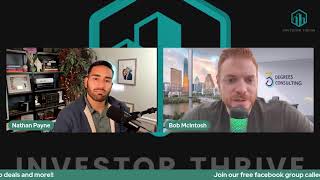
Bob McIntosh lost $40,000 on his first house flip in 2009 when an FHA appraisal fell short and holding costs piled up. That failure pushed him to learn the numbers, eventually flipping a fire-damaged duplex for $20,000 profit. By 2017 he shifted to digital marketing, building an agency that generates investor leads through SEO, especially in Buffalo, NY.
Chapters
What is going on, Bob McIntosh? Is that how I say it?
McIntosh.
McIntosh.
Yeah, it's the hidden A.
All right, all right. What's up, man? So everybody, this is the Investor Thrive Nation, the Painless Flipping Podcast, where we talk to investors about how they got started, where their, their first deal, and where they're at right now. Because the goal, Bob, just to let you know, the goal of the podcast is to let people know, even people that have made it, you know, done tons of deals, they had to get started just like any new person needs to get started. And our goal is to make sure that their journey isn't as painful as mine was. Maybe yours was. I know you lost $40,000 on your first deal, so it probably was a little bit painful.
I just wanted to take that out. Just a little bit.
Just a little bit. Yeah. So that's the goal of the podcast. So I appreciate you coming on here, and let's dive right into who Bob McIntosh is and how he got his first deal and what happened and where you're at right now. So let's dive right in. Bob, tell us a little bit about yourself to get started.
Yeah, so, uh, short version is I, um, I graduated college, had a little bit of money left over courtesy of my family, which I was very thankful for. And I didn't know what the heck to do with it, right? It was about $10,000, so nothing major, but you know, enough to do something with. And I sat around for like a year or so, just kind of like analysis paralysis of what to do. And I eventually bought a rental property. And to that day, I still own it. It's still a great property. Started cash flowing about $200 a month. This is back in 2008. I was like, okay, cool. This is awesome. Well, if I want more of these, because I was thinking, how do I get out of my job now? Right? I was like, I'm going to need a lot of rentals to make that happen. I was like, I need more cash faster. So we decided to flip a house. Our first flip, to be real, I was a cocky 20-year-old who had read some books. Now, mind you, this is 2009. So it's like, there's not really— training was sparse at that point in time. There wasn't really— there was no podcast. There wasn't really even communities about this stuff per se. I read a bunch of books and thought I knew everything. Went in and we lost about $40 grand on that first flip. Now I say we, it was not my money. It was my, uh, mostly my parents' money. And, uh, that was very painful, as you can say, because nothing like telling, telling your parents, hey, we did this thing, I lost a bunch of your money. Yeah. But, you know, we figured it out from there, dialed in, uh, and, and have done a lot more and made all that back on our second one and some more. So, uh, just started figuring out from there. But yeah, I know the first one was, uh, it was tough. And of course, too, it was a very different market, right? It was 2009. Things were actively going down. In the 8 months I held the property, I watched the value continue to decrease by $1,000 a month, $2,000 a month. And you're just like, "Oh." So very, very different time. And I didn't know what I didn't know. For example, I got a Wells Fargo $203K loan because I didn't know what hard money was. I don't even know if hard money was a thing back then. Maybe. I'm sure it was. But There was just a lot of mistakes made just because of just unaware of how it really works and what it really takes. And that was a rude awakening to have that happen. We'll put it that way.
So did you end up buying it from the MLS, from a wholesaler? How did you end up acquiring the deal?
Yeah. So even then, wholesaling was barely a thing. So we got the deal off the MLS. Now again, different times, right? At that point in time, I mean, no joke, you could just sneeze and find a property. Like, they were selling them. They used to call them REO tapes. I don't even know if, like, anyone remembers this, but it's like, hey, I got, I got a list of 150 properties, you got to buy all of them. And they're just like, they're just begging you to take them. It's like, hey, buy this tape for 60 cents on the dollar. Some of them will be winners, some of them maybe not so much, whatever. But yeah, I had an agent who was investor-friendly. I use that term very loosely there because I, I think he was just, he was an agent just watching his income be eviscerated and said, well, this guy's This guy will buy something, you know, make some money.
This guy will make a mistake.
Yeah, yeah. So, you know, so yeah, we bought it from the MLS. Uh, it was a foreclosure property. Um, and I tell— oh my God, like, uh, because I did the $203K loan through Wells Fargo, it took 7 months for me to close the property. That's how long it took for me to buy the house, just because they kept, they kept like dicking around and like not getting things done. And of course, like, that— it's also at the same time like the foreclosure wave was hitting. So they're just— every day there's like hundreds of houses that they're foreclosing on. So It was just a disaster. And so, yeah, it took forever. They almost bailed. The sellers almost bailed with us, but they were also like, well, at this point, what else do we do? This guy's willing to buy the house. Like, please just, just buy it.
Just close. Why would it take so long for them to get there, to be able to close on it?
Did they—
were they just like trying to qualify and make sure everything was good on your end? Or—
I, to be honest, I don't know. I got the runaround every time I called them. But here's, here's what my gut tells me, because back at that point in time, I still had my full-time job. Was before I went full-time investing, and I used to hack banks for a living. So I was very aware of like what banks were doing and how they were working. And, uh, most of the banks at that point in time, what was happening was they were overwhelmed. Um, so they're, they're watching 3 things happen, and it was kind of an interesting thing actually. So number 1 is they're watching their balance, uh, or their, their, um, oh God, I'm spacing the name now, but their, their performing loan balance get eviscerated, which means people are not paying. So that's bad, which simultaneously raises their insurance rate with the FDIC. Um, so they can't charge you more, right? They can't say, oh hey, you know, because we're, we're bad at our job, we're going to charge you more for your loan because people will go someplace else. Uh, and then they're having to cut staff, and all that's going on at the same time that they're getting more and more and more houses that they're having to buy back because the loans aren't performing. And so I think people are just scrambling trying to just stay afloat. And figure it out. So it was just a bad combination of timing and all that. And of course, like, again, if I had cash, you know, or even, you know, private money or hard money or something like that, I'm sure it would have been way faster. But, you know, you're, you're at the mercy of the bank at that point in time.
So, wow, wow, sounds like a lot was going through. So, but you could have probably bailed if you wanted to, right? Like, at that point, 7 months, you could just been like, forget this.
Yeah, I could have, but like, you know, I, I didn't know any better, right? This is my first flip. I was like, okay, like, it was It was just a few miles from where I lived. I was just outside of New York City at that point in time. The property was in Kearney, New Jersey. And I was like, okay, cool. Like, this seems like a good deal. Like, the property needed some love. It wasn't like— it was mostly, you know, carpet, paint, flooring. It wasn't anything crazy. So it felt like a safe property for my first one to go into in terms of that. But yeah, and I just didn't— like, you didn't know any better, right? Like, at that point in time, it's like, sure, I can go buy something else. But the point is, like, if I'm— if I was doing it with a loan, I'm basically starting from zero again, again, back with another property that they're going to have to underwrite that one and all. So it's just, of course, it was just like, hey, like, it's one of those sunk costs, right? Uh, it's, it's already invested, just make it happen, go forward, get it done.
And you ended up selling it at, at that loss. Uh, did you know what the loss was when you sold it, or did you find that out after, when you got, you know—
No, yeah, we knew, we knew. So the, the, the hard part— well, this is what happened to us, and it actually is an interesting story. Yeah. Um, so, uh, finished the renovation, which was— I mean, the guy Tony, everyone says they have bad contractors. I challenge you, I will have— I, I, I, I have not found someone who can beat the stories that I have about Tony. This guy was, this guy was something else. But got the property finally done, got it listed on the market, and like, I don't know, like 3 weeks or 4 weeks later, got an offer right at asking price. We're like, perfect, like, this is good. Agent knew what he was talking about. This is great, right? Um, but it was an FHA buyer, so we had to have two appraisals. First appraisal came in like $1,000 less than asking. I'm like, okay, that's fine. Like, you know, close enough, we'll take it. In the market where like we were in, it was like, hey, it's, it's, it's on, on point. Second appraisal came in almost like $15,000 under asking. And so of course, I don't know if— and I'm gonna give a lot of newbies here— if you don't know this, when you have FHA, there's two appraisals and they take the lowest of the two regardless.
And, and it sticks with you, right?
Sticks for 6 months. Now here's the kicker. The guy on the second appraisal mismeasured the house by 500 square feet. He left off basically the whole kitchen and bathroom in the back from the square footage. And if he had added those back in, it would have been right about the same cost as we had the bid at. Um, so I called him, I said— because I saw it, I was like, dude, you, you, you effed up. Like, you, you missed this. And he refused to change the appraisal because he said, if I change it and admit that I made a mistake that I submitted to the bank, they'll never hire me for appraisals again and I won't have a job. And I can't not have a job, so tough luck, you're, you're shit out of luck.
Wow.
And I, I told the bank, I was like, look, it's— you can like, you can see it's wrong here, it's right here, go to the town documents, like everything else matches except for this guy's appraisal. And they said, well, the appraisal is the appraisal, we can't change it, that's policy, because it's a, you know, it was a, I don't know, Bank of America or something like that. So, um, and so then the buyers bailed because they like, we don't have an extra $10,000 or $15,000 or whatever it was to, to close. And so, um, so we said, all right, screw it, Um, we didn't know at that point that the appraisal stuck for 6 months until the next buyer came through, and then they asked, and then we're like, oh shoot. So I learned that lesson the hard way. So I had to sit on this for 6 more months, um, holding, you know, holding costs and all that while we waited for the appraisal to roll off. In that 6 months, the market continued to decline, and we basically— if I had eaten the $15,000, um, that the appraisal was lower and sold it at that point in time, I still would have made about $10,000. But the extra 6 months of holding costs and everything else, and then the market decrease ended up netting us minus $40,000.
Bro, I feel your pain on that one because that's actually what happened to me. So I bought a house, um, right at the peak of the market before, um, interest rates went up, right? So that was last year, bought it at the peak and, uh, bought it for like $390,000 or something like that. We put— no, no, sorry, bought it for like $350,000. Put in about $100K, thought we were going to be able to sell it for half a mil. Interest rates went up. The value, the ARV of what we're going to sell for half a mil dropped down to like $430K. Now we're in it like $450K. We were going to make like $50K, but now we're losing. So we're like, well, let's just close on it because we had a hard money loan and let's just rent it out, right?
Yeah.
And so we rented it out, didn't rent out as quick as we wanted. The hard money loan was $3,000 a month. And we held it for a couple months until we put it back on the market in the summer, ended up selling it. But after you have all the, like, you know, your hard money costs, like all this stuff comes in, you're like, dude, I should just sold it when I had the chance. And the value also went even lower than what— because we thought it would rebound, but it didn't really rebound. So it kind of— it's kind of tricky. So I'll just be honest. I'm always honest. But when, when it comes to flipping, It's very risky, everybody. Like, it's, it's not like everybody that gets a property just kills it. Like, I just lost on that one I was telling you about, and you lost on your first ones. And I would say, you know, if anyone that's in real estate for a long time— I've heard a lot of people say, like, I've never lost money on a property.
I'm like, I don't trust it.
I don't believe it.
Either, either— yeah, like, either you're lying or you've done some shady things, or you're not pushing yourself to, to grow at the pace you want to, right? Like, I know a guy's like, I never lost. He's like, but he does one property a year, you know? It's like, okay, like, you know, he can cherry-pick the best one. So that's sure. But yeah, no, like if you haven't lost on at least one deal yet and like for us, that's why, you know, we actually stopped flipping in 2017 because we, you know, I remember, I guess it was a little after that, but we stopped actively buying to flip in 2017 because I remember we looked at, it's like, all right, we bought 17. This is in 2018. I was like, we bought 17 houses last year. We made, uh, previously our numbers were We're averaging about $25,000 per house. This is in the Buffalo, New York market is where we ended up going. And we'd be done in about 6 months per house. So I was like, okay, this is good. We're usually all in for about $100,000, $100,000 to $150,000, making $25,000, in and out in 6 months. 2017, we were taking 9 months and making about $12,000 a house. And I said, whoa, hang on a second. Like, why? Like, at a certain point— and this is not to scare you away. Like, if you're flipping, great. Just understand it. You got to know your numbers and you've got to manage your risk and your cash flow as much as possible, or you can find yourself in a bad position real quick.
Yeah, of course. And that's why we bring this up, because this is— this podcast is for people to make, you know, learn from experiences and not make bad decisions. And another thing that a lot of people do is they'll buy like a rental too soon and they won't take into account like vacancy, you know, maintenance, all that stuff, and they'll get in trouble too. I think A lot of people have benefited from the book. Was it called Rich Dad, Poor Dad, where he tells you to go get a rental? But a lot of people have been— have got crushed too from like getting a rental way too soon. You know, something bad happens and then they're like, I actually got to sell this thing because I can't make the payments. And, you know, there's a lot of—
you know, what scares me right now is in that space because I see this happening everywhere right now and it's all these people doing subject-to deals. And I'm not going to bang on subject-to because it's great. It's a great process. I was just in a group, Facebook group, and the guy's like, yeah, I'm buying this house at like 120% ARV because the loan's like 2.9% or something like that. And I'm like, that's like, look, I'm sure the cash flow, like you've got, that's great. I was like, but what happens when he doesn't pay? You don't have a tenant that doesn't pay from, or they leave and you got to put another $10,000 into it and you're already over, you know, you're already overleveraged in the first place. Like that stuff scares me sometimes, man.
Like Oh yeah, I'm right there with you. I don't— I'm not like all about this subject-to train, like getting on board or whatever.
I mean, I like the idea, but don't get me wrong, it's there. But don't, don't buy stupidly just because the rate is good. That's, that's I think the thing that I, in my opinion, is a mistake I see a lot of newbies making is they think just because the rate's really low compared to what it is now, that it's a good deal. And it's like, no, a good deal has still got to be below market for you to make sense, or at the very least at market rate. It depends, right? Like, like I buy in Buffalo, Like most of our deals in Buffalo, I'm usually around 90 or 95% LTV. But here's the— which for most people be like, whoa, that's kind of crazy. But my cash flow is good, right? Yeah. So like, like the cash— like we just closed on an 8-unit property for $230,000 and that's almost— well, it currently nets $5,000 a month. When we get it up to market rent, it'll be about $6,000 a month. So $6,000 and it's worth probably about $240,000, $245,000. So I'm very high LTV, but the fact is, you know, there's $5,000 currently coming in a month that, you know, more than covers. I can lose almost half the rent and still be okay. So yeah, you got to look at those things too.
It depends on your market too, right? Like a lot of these markets where they're buying at these things, they don't really cash flow. Like in Salt Lake City, Utah, it's extremely difficult to cash flow because it's expensive here and the rents aren't very high. So if you're just buying something because it's got a low rate, That's, that's not a good idea. It's very scary. I'll tell you from my experience with subject-to and like creative is like, even if it sounds good on paper and it looks good, like there's a lot that can go wrong. The seller could be like, change their mind. They could just be like, let me, I'm going to call the bank because I don't feel comfortable doing this. And they can just screw things up. Like, yeah, I wouldn't be able to sleep good at night if I had like 10 to 50, like, or 100 or even 1,000 subject-to deals. Yeah, you never know. I don't know what the seller— if they just— I honestly think like in the long— like as things get shadier, people like will come up with courses on like how to like screw the people that you sold your houses to on terms. Because I feel like you could really do that. You could just be like, hey, I didn't understand. And anyway, I don't know. Yeah, you can do it the right way. But look, it is, it is very risky. So 100%. So everybody that's listening, they're like, dang, real estate sucks.
No, but like, I, and I will, I will say it right, like we've been talking about some, bad aspects. But look, I mean, I've been doing real estate since 2008. It's also enabled me to, you know, quit my job, start a marketing agency helping investors, um, you know, be able to, to, to have time and location and financial freedom. Um, so, you know, it's not, it's not all roses, it's not all thorns. Um, you know, if you do it, if you do it the right way, you should have more roses than thorns. And, and it's never going to be all roses, right? If you don't have a couple thorns and you're not either you're not pushing yourself hard enough, you're not, you're not, you know, pushing the envelope hard enough. Um, and that's okay. Like, you know, on the whole, as long as you still win more than you lose, um, then, you know, that's good.
No, I agree with you, and I think it's, it's good to be real with everyone. Just let them know, like, hey, uh, real estate is, is a great way to, uh, you know, make a living and to obtain that financial freedom and build the life you want. But, um, anything that's worth it also requires hard work. And I think a lot of people, with all social media and people just sharing their wins all the time, they think it's just super easy. But we're here to let you know that, like, yes, it can help you and you can, you can really do well, but you have to be prepared. And don't just jump in and buy your first flip without even knowing how to run numbers, right? You really got to understand, okay, what, what am I going to make on this flip, right?
Yeah.
I mean, I ran my numbers on that last one, but you can't really plan for interest rates going up to like 7, 8% and then values dropping in my market by like like $100,000. And like, so it's, it's pretty crazy. But what we want to talk about is you, you definitely— so you got crushed on your first deal, but you kept going, and you said you made, uh, good money on your second deal, and you've been doing it for a long time now, and now you've been able to start a digital marketing agency. So tell me, how did you keep going? Like, you know, you got crushed. What, what made you be like, let's continue with this? Maybe it was just a fluke. Yeah, tell us why.
Yeah, so I, you know, it, it comes down to, all right, so you gotta understand, like, I'm just outside of college. I had a good job at that point in time, but, you know, I think I was making at that point maybe $70,000-ish a year. So I'm getting paid pretty well, you know. Again, it's 2008, '09, um, or I guess '09 or '10. I guess it was like late '09, early '10, right? And, uh, I'm thinking to myself, okay, it would take me a long time to save up $40,000 to be able to pay that back just to break even. Like, it would— like, like, even if I like aggressively save, pinch every penny, you know, at that point, I, you know, I was living in New York City and then ended up moving to LA because that's where my job, you know, was going. So it's like, man, like, it's just— it's not gonna be easy to get there. And so like, at a certain point, you look at it and you go, well, the only way forward is through. I've got to do another flip, just do it the right way. Because then if I can make even $20,000 on a flip, then okay, cool. Now I'm paying off half in 12 months. For me to save $20,000 when I'm only making $70,000, that is significantly harder than making $20,000 on a flip, right? So it kind of became the way forward was the way through the same problem. I will say that, uh, what changed for us was a couple of things. Um, it was a— it— that first loss was a massive ego reset for me. It wasn't, you know everything, you're like— it was like, no, you clearly suck at this, you've got to find someone who knows better. I was fortunate to find, uh, uh, what was now one of the biggest education companies, but at that point in time was just like a guy who kind of ran some seminars. And I literally bought his audio CDs because we had just lost money, right? I found them on eBay for like a tenth of the price of what they cost. Let's go. And so I bought them, and I'm like driving, I'm driving from Buffalo to Toronto for a client in my old job, and I got these audio CDs in, and he's like, don't do this, and don't do this, and don't do this. I was like, I did that, I did that, I did that. Oh man, like, so like, and then, you know, I, I invested in some education, um, got around a community, started learning, okay, like, how do I run numbers? What does it actually look like? How do I figure these things out? Like, instead of just saying, oh, buy a house for, you know, $100,000, put $50,000 into it, sell for $200,000, we make, you know, $50,000. No, you're not like, what's your holding cost, your taxes, what's your insurance, what's your utilities? Like, you don't factor those things in. So exactly. Um, yeah, so I just, you know, I just sought education. I saw— I said, who's doing this effectively and what can they teach me so that I don't have to repeat this again? And, uh, and then, yeah, and then we just, we just did it. Um, and then our, our second flip was, um, I, I guess almost luck, if you will. I mean, not luck per se, but The duplex that I bought, the very first, that first rental property I bought was a duplex. The guy who owned it was the guy who built my parents' house. He was a custom home builder and he built their house. And so my dad, and ironically he lived next door to my parents, and so they were over talking, doing whatever. My dad's like, "Oh yeah, like, you know, we're going to flip another house. We're looking maybe here in Buffalo." And he's like, "Oh, well, my sister is one of the top agents in the area." maybe she can help. And so it just so happened that she like calls us a couple days later. She's like, hey, I got this house and it's in this neighborhood, fairly low-end neighborhood of the area, but you know, still like solidly low middle class, right? But in middle class, like it's not a, not a ghetto by any means, but you know, whatever. Uh, she's like, but it's fire damage, like it's, and it's bad, like it's real bad. Um, so like she's, I think we bought it, I think we ended up buying it for $7,000. Um, nice, right? So it's like, you know, and I, and we put I think we put about $80,000 or $85,000 into it and then sold it for like $105,000. So it wasn't huge, but you know, we're, you know, into it for a very low amount. We still made, I think, almost $20,000. It's like $18,000, $19,000, something like that, which I was happy with. Um, we way overpaid for that one just because, uh, and the rehab, because we hired like a fire damage company because we didn't know anything about it. But then we watched everything that they did, so I knew what needed to be done in the future and not have to pay their higher price for it. Um, but yeah, no, I mean, you know, so you just kind of learn, and then it was like, all right, cool, you know. Figure the system out, and then just rinse and repeat. And look, not every deal has been a winner since then. Um, you know, we still lost a couple more over the next few years, and then at the end, uh, we had a couple of properties that we did real bad on. Uh, just, I don't know, we just, just made, made mistakes. Uh, rehabs were really big, and sometimes in some of these houses in Buffalo market, a lot of them are very old. You open up the wall and also you find things you couldn't have accounted for. Exactly. And then, yeah, and then it just kind of goes there, but it's all good. Like overall we won more than we lost and, uh, and it went from there, but it's, um, it was good. And then for me it was cool because it also enabled me to realize, you know, what value do I bring to us doing business in Buffalo when I was living in Los Angeles? And so I got very good at internet marketing. Um, and actually about 40% of all of our deals came from like SEO, website, digital, all of that. Um, you know, even to this day, you know, we're not actively doing flipping anymore. You can still Google in most of the cities that we bought in and we're still usually number 1 and maybe number 2.
Wow. With SEO?
Yeah. Yep. Yep. Yeah. At our peak, we were number 1, 2, and sometimes 3 as well.
What do you do with all those leads that come in?
Right now, I just forward them off to a handful of other investors that we talk to.
And then they give you a kickback if they do a deal or something like that?
Yeah. Yeah. Yeah. I usually just— I have a couple that I just— Depends on the market. Some of my— I literally just say, here's the lead. I think I charge, uh, I think it's like $100 for the lead, and they just take it and run with it. Some of them are winners, some of them are not, but they, you know, for them, they're paying, they're paying for Legion anyway, so what's the difference? Um, and then for a few markets, we do, um, we do, uh, like a JV split. Like, hey, you work the deal, here's the lead for free, I get a kickback on the end when it's all done and said and done.
That's amazing. I like that. Yeah, well, maybe we might need to talk. I, I, uh, if you get any deals in um, in markets I work, maybe we can do—
we're all Buffalo. 98% of our leads come in from in the Buffalo market, Buffalo, New York market. So, like, very— like, that's, that's our niche, right? And we're buying more there.
Long Island. I know Long Island. Yeah, Long Island's— yeah, that's very far away.
Yeah, 8 plus hours away from where we buy most of our houses.
Yeah, no, I totally get it. And I know probably like New York City, but Long Island, that's probably a lot coveted, more coveted lead, right? More expensive.
It depends on how you look at it, right? Like, for me, I would never buy something in New York City. Maybe Long Island, but not, not, not in the five boroughs.
Not for me to keep. But there are some investors there that, yeah, that would, that still want to be in that market. For me, no, I'm right there with you. So, so let's talk about— so that's how you kept grinding and you didn't give up and, you know, you've been able to see the success. And I think that's important for everyone to see. You know, it's not always roses, but you know, when you stick in, you learn a lot and you improve yourself. So tell us about your, uh, marketing agency and how people can reach out to you and how that marketing agency benefits investors that are listening to this podcast.
Yeah, so, uh, what ended up happening was, uh, because we did so good at that, I got invited to, to build many of the large education platforms out there. Their training on how to do internet marketing is based off of what we built in Buffalo. Um, and so I know that system works and For years I taught, I've got more than 4,000 hours on stage teaching this stuff to investors. So I know it works really well. But at a certain point, what ends up happening for most investors, and I'm guessing especially the newbies on this show listening in, you go, okay, I know it's important, but I just don't either don't know what to do or I don't have time. And so a few years ago we opened up our own agency just to say, hey, what if we just do it for you? Because I know you're not going to. Some, some will, but most will not. And that's fine. Not everyone needs to. And if you want to do it yourself, great. I will teach you everything you need to do to do it yourself because I know that 90% won't. And of that 90%, you know, 50% will come work with me because it's just easier and faster. So, you know, we help you with a great website. We've got a CRM that's dialed in, uh, with very specific marketing campaigns, kind of show you the process that we've built internally, but you can take it and make whatever you want to. Uh, and then we just, you know, we kind of help you, uh, anything in the digital space. So that, that's our, that's our goal now. And for me, what it's allowed, enabled for me to do is I, you know, I'm very much Um, I've been on the road for the last 18 months, actually, just, just not even a week ago. Uh, I landed somewhere for the next 5 months, but I've been literally like maybe 1 week at a time for 18 months, just traveling the country and traveling the world.
So for fun, just for fun.
Yeah. For fun. Some, some events, a lot of events I spoke at, a lot of just fun, but I always wrap in both, like if I'm traveling somewhere. So that's my jam now.
But that is amazing.
Yeah. Where to connect with me. Um, so if you guys wanna connect with me or you have questions about digital or you're like, hey, how do I do something? Please just reach out. So you go to go3dc.com, that's go, the number 3, DC, Delta Charlie, dot com, forward slash Bob McIntosh. And there's no A in McIntosh, it's M-C-I-N-T-O-S-H. Um, on that page is all my contact card. You can download it, has my cell phone, has my business line, email, all my social. Reach out to me however you want to. Again, I'm here to be a resource, especially for newbies, to help them get off the ground when it comes to digital in their market.
Wow. And that's, that's an amazing, uh, value add right there, is giving them all your info to reach out to you. Thanks for doing that, um, to the audience. So I also want to say for everybody is like, you know, I don't recommend people do their own marketing, um, because you can mess it up and you can just freaking blow a lot of your money. Yeah, in the beginning, like, I wouldn't even say even in the beginning, in general, like, no one is like an expert marketer that gets into this. Usually no one is when they first start, right? And it's even, it's even a different model, it's even a different beast, right?
Like, you, and every market's different too. Like, like, your market's gonna have peculiarities that work well and things that don't work Well, exactly.
So I would recommend for anybody that wants to spend money and get into marketing, they definitely need to reach out to someone who's an expert, because it's not only going to take away your mental capacity and brainpower to try and figure that out. You need to focus— someone that's new needs to focus on making offers, talking to sellers, talking to agents, and being in that, that sphere of the, the real estate industry. Not, not let me master marketing, because that's that's a lot to break off and chew. I know you know that, right? It's, it's your full-time thing. Like, you've got an agency that does it. So anyway, reach out to Bob for sure if you need his help. He definitely is an expert in the field. And Bob, anything else you want to leave everybody out, like a gold nugget, anything you want to leave them with before we wrap up?
Yeah, the one thing I'll always tell every newbie is do not ever underestimate the power of great marketing to drive your business forward. I know for when I got started, I was like, I don't want to be a marketer. I just want to be an investor. I want to flip a house, whatever. And it took me a couple of years to really learn the lesson that like, if I got better at marketing, we did better as a company. We flipped more houses. So, uh, and it's not that you necessarily have to be the best, but like, uh, Nathan was saying, like, you find the best, hire the best, look for the best out there that are doing what they do. Um, but if you master marketing, whether it be by hiring the right person or by becoming a master yourself, either way, your business will move forward and it becomes a lot easier to get to whatever your end goal is, wherever you're trying to get to, whether it be a dollar figure, a time figure, a number of like rentals or properties or whatever. It's easier when you have great marketing. So focus on that first.
It's so important. It's so important. All right, everybody. Well, this has been the Pains Flipping Podcast. Thanks for tuning in, tuning in, Investor Dive Nation, and we'll see you on the next one. Later, everybody.
More from Nathan





Why Traditional Wholesaling Keeps Failing You (Use This Pre-Flip Method Instead)





