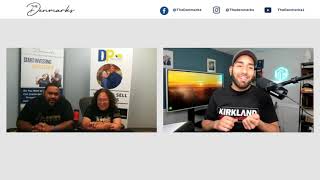
Real-estate investor Nathan Payne lost $200,000 flipping houses during the pandemic, which pushed him toward wholesaling instead. He started with a $5,000 first deal in 2018 after years in door-to-door sales, and now focuses on wholesaling because it's lower risk and faster. He manages ADHD through time-blocking and emphasizes building a small network of cash buyers and working with a mentor.
Chapters
How are you guys? What's up, Nathan? How are you today?
That was a sweet intro, everybody. That was sweet. I like that.
Let's go. How are things? Like, I'm on—
I'm like on a news— I feel like I'm on a news show or something, you know?
I got your heartbeat, right?
I'm a little nervous now. It's official. Wait a minute, wait a minute.
Don't be nervous, don't be nervous, don't be nervous. Oh my goodness. Well, I am— I'm super excited. Tony, are you ready to go?
I'm ready, but y'all, she messed up too, so don't tell—
don't tell my—
I'm trying to fix her next up.
Don't, don't tell my bitch.
It's okay, technology.
It's tech—
not—
look, so I can't share it.
Okay, well, I can share mine to the group. Yep.
Did you—
did you change?
Yes.
Okay, watch me work my magic.
All right, all right, all right. So we are live in color with the man, the myth, the legend, Mr. Nathan Payne. Tell us, who is Nathan?
Man, you— do you guys do that on everyone, or is that—
no, no, I'll check my question.
Don't worry about it. Beautiful. That was, that was nice. Okay, who am I? Well, um, I'm just a guy, you know. I'm, I'm just— nothing crazy about me. I just Um, I guess I'll let people know a little bit about how I got started in real estate. That's because that's why we're kind of here. So, uh, you know, I, I, I didn't really know I wanted to get into real estate. I didn't really know anything about real estate until after I graduated from, uh, college. I did door-to-door sales for about 6 years throughout college. Um, I did a mission for my church for 2 years before college, so I got kind of like into the sales background of like, you know, talking to people, like getting rejected a lot on my mission because people just didn't want to talk to me about uh, you know, the gospel about Jesus. And then I went to college and people didn't want to talk to me about, uh, Dish Network and DirecTV. And when I was knocking on their doors, so I was like, that's just how it was, you know. People don't like to get bothered. So that's how I got started. And then, um, my job in real estate— not in real estate, my job in door-to-door was very transient. Every summer or every fall, we'd go to a new market and we wouldn't go knock in an area. Like, I went to Dallas, Terre Haute, Indiana. I went to, um, you know, Lubbock, Texas. Just random places. And, uh, after I got married after college, um, I was like, man, I don't feel like I want to knock doors for the rest of my life. I was making good money, had teams, but I was like, what can I do where I can make good money and still use my ability to just talk with people and sales skills? And, uh, I remember my buddy in college did, uh, door— he did, um, wholesaling. He did lease options, and his dad was a wholesaler in Missouri. So I called him and I said, hey man, are you doing real estate right now? He's like, no, I do. I'm working at a tech company, but I want to get into real estate. I said, hey, look, I'm, I'm leaving door-to-door. Let's go, let's start a real estate company. I don't know anything about it, but let's do it. And he's like, okay, wait a minute, that's how I got started.
You knew nothing about it and you just decided, I'm just gonna do it?
Yeah, guys, that's just kind of like how I am. Like, you guys want to know who Nathan Payne is as a person? I just go for it. And most people, like, they'll study and they'll learn and they'll, like, you know, analysis paralysis. I'm the opposite. I'm like, let's freaking go, let's get smashed, and just let's do— let's get— let's fail, and then we'll figure it out as we go. That's my personality. And, uh, maybe that's not good. Maybe it's good to some because I don't wait, but it's also not good because I probably waste a lot of money.
Listen, it's gonna be one or the other, Nathan. I am I am so you. I go, go, go, go, go, and it takes Antonio a whole year to buy a TV. Like, yeah, I've already bought 365 TVs in his time.
Like, that's me. I can't, I can't take it. I can't wait. Like, the, the thing is, like, you could sit there and you could study it all out. You gotta just go for it. That's my opinion. And, um, you know, my philosophy, it gets you in a lot of trouble, I feel like, but you learn quick. But you also get smashed a lot.
And to my defense—
okay, come on, defend you.
I'm not gonna just say I don't— I don't mind making decisions. There's a level of information I gotta have to make a decision. Now once I get to that level, I'll make a decision. He's go, and I'm go, and I'm gonna go like next 3, 4 steps. But I ain't just gonna automatically go by the first one I see. I gotta do a little research. But I'm gonna take action.
I get it.
So that's good too. That's good.
I've already done it. I've already lived it through.
It's over with.
Like, so I, I want to dig into Nathan before college, Nathan before the mission, Nathan before door-to-door sales, Nathan as a boy, maybe Nathan growing up. Did you grow up a two-parent household?
Uh-huh.
Parents, entrepreneurs. Kind of give us a little background on that.
Oh, great. Yeah, we're going way back. We're taking it back. All right, you know, I was, uh, I was a kid. I had ADHD. All right, that's, that's where we'll go back. So I was, uh, hard to pay attention, uh, didn't— just went all out. Like, I would hyper— when I found something I really liked, I'd hyperfocus on it, you know, because that's a part of ADHD, is like when you find something you like, you that you freaking lock in. So, um, I played a lot of StarCraft when I was a kid. I don't know if you guys ever heard StarCraft. It's like a little video game. Age of Empires. I would— that's what I locked in on for like a long time. I would just play computer games as a kid. And, um, then I got into wrestling. Um, that was the sport I got into, uh, in high school. Uh, I did pretty much everything when I was younger. Like, I tried a bunch of sports and I played computer games, and then I got into wrestling. And I just dove in. I sucked. And then as I, like, hyper-focused on that, I got better and better and better. So I started freshman year, it was terrible, uh, practice. Second year, I got third in state in JV, which is like, okay, you got better. All right, good, good progress. And then junior year, I sucked. Well, I didn't suck, but I was in varsity. And then senior year, I placed third in state in the state of Georgia for, uh, wrestling. So My thing is like, you just go and you figure it out and you practice and you work hard and you stay diligent and you get good at anything. That's just been my philosophy. And same thing on my mission. I went on my mission and I went Spanish speaking. Now I'm Hispanic. I'm half Hispanic. I'm white and I'm Spanish. I'm Chilean. I didn't speak Spanish. So when I went to my mission, I speak— that was the language I was speaking is Spanish. So I had to learn Spanish at 19 years old. And again, got smashed and really know how to speak it. People were making fun of me because like, dude, why do you have a gringo accent? You sound like a white guy, but you're tan. You speak terrible Spanish. So smashed. And then I got better. So that's just like my life has just been go for it, get crushed, don't give up, you'll get better. And yeah, so it's just like the trajectory of my life.
Was your parents entrepreneurs or did they have 9 to 5?
Great, great question. Dad was— my dad worked for Delta Airlines in Atlanta, Georgia, where I grew up. And not an entrepreneur in that sense, just worked, you know, I think like 30, 40 years. He just retired a little bit ago. My mom from Chile, she actually was a little bit more entrepreneurial minded. She started a cleaning company called Celestial Cleaning. She started that when I was a kid and we would go help her clean offices. Like on the weekends, like take out the trash in the offices and wipe down the doors and windows. So you could say, yeah, she, she was entrepreneurial, entrepreneur in that sense because she had that. And yeah, so born in a, you know, a household that had two parents, had three older sisters. I'm the only boy, youngest.
The only boy. Okay.
Only boy. And yeah, and good, good family, good life. You know, I'm middle class, wasn't rich. And just felt like I could do anything, but, uh, was also scatterbrained, right? Like, I also thought the more you did, the better it was. Like, I'm learning now that you got the one thing, the focus— if you're locked in on one thing, that's how you become great. For me, I was always like trying to do a lot, right? Because that's just my ADHD.
Yeah. Okay, so there's a theme that we've come across when it comes to successful investors. Usually one of those parents had that entrepreneurial bug.
Yeah.
And it rubs off on them.
And if not their parent, it was a close auntie, uncle. It was someone close to them that they watched and really didn't realize that they were watching or that they aspired to even be what they are.
So, so when you told your dad that you was going to quit the door-to-door sales and go down this entrepreneur journey? What did he tell you? What was the advice from mom? What was the advice from dad?
You know, it's interesting talking about, um, parents and whether they're entrepreneurs or someone close to you. My parents just always made me feel like I could do anything I wanted. So it was, uh, I could go to them about anything and they would just be like, okay, you can do it if you want. Um, So I, I think when I told my parents, I told my wife, they were just like, okay, let's go for it, see how it goes. That was pretty much it. They also, they're very spiritual, so they're like, did you pray about it? How do you feel? Do you feel good about it? Okay, go for it. So that was the conversation.
That's important. That's important. One, one of our pillars to success is making sure that you got good people in your corner that's feeding you faith. And a lot of times our circles feed us fear. You can't do this, that can't be done, nobody in our family's ever did that. So it's good to hear that your parents were super supportive. They pointed you in a direction towards your faith and they encouraged you. They didn't necessarily knock you down, they lifted you up so that you could do it.
Yeah, 100%. You definitely need someone to support you, especially my wife, right? Like, she supported me in going doing something I've never done. Because she believed I could figure it out, right? So married someone that believed in me.
That's right, that's important. So, all right, so Mom, Mom was forefront, Mom was the entrepreneur. You started off right after college. Why, why real estate? Like, why did you just say, you know what, we're gonna do this real estate business out of every other thing you could have done? Like, why real estate?
It's actually pretty funny, you guys. Okay, I can go deep into the story. So while I was— after I, uh, graduated from college and I was like, I don't want to do door-to-door anymore, I actually like was asking around like to, to find out who was making a lot of money and what they were doing. And my dad knew this guy from church that lived in Bakersfield, California, who was in insurance. He did property, uh, insurance. I think that's what he would do, um, for like Property and Casualty. I can't remember exactly, but he, he made a ton of money, right? So when I was doing door-to-door sales, I actually had met him when I was in Bakersfield trying to sell Dish, and he sat me down and he told me how he made all his money, right? So after, after I talked to him like months previously, previous to that, and I decided I didn't want to do door-to-door, I called him. I said, hey, I was thinking about insurance, right?. And I was like, what do I got to do in order to get insurance? And he's like, all right, well, first you're going to have to, like, learn the skill sets of doing it. So go and apply for some jobs as an insurance agent at, like, either medical or what I do. So I started, like, applying for jobs, right? And I went to, like, 3, and I knew some people, so I got in on some, some interviews. And I, I, like, sat down and got interviewed. I got in a suit. And I was like talking to all these people, like I had 3 interviews. I talked to this one company, this insurance agent here in Utah that owned his own agency. And I was like, how much? Like, I just wanted to get down to the brass tacks. I was like, how much can I make? That was it, right? Because like I was making a lot at that time, guys. Door-to-door, you can make like 6 figures in like 3 months because it's just like you work really hard and you have teams, you make— it's a good business. So when I sat down with them, I was like, hey, like, what can I make? And they were like, $30,000, $40,000, $50,000 if you work really hard. And I was like, you know, I was like, you serious? That's it? And I was like, how much are you making?
I wasn't trying to be disrespectful to the guy, but you asked him that, Nathan?
Yeah. I was like, how much do you make? Interview? In the interview? Yeah. Because I wanted to know, like, how do I get to where you're at? He's like, well, that takes like 10, 15, 20 years of working really hard, and then you can make like $100K and $120K, whatever. And I was like, yeah, I don't think this is for me. Um, I'm not— I didn't say that to them, right? I wasn't— I'm not disrespectful, but in my mind I was like, that's not it. Um, that's not gonna work for me. So I was like, forget that. Then I went and interviewed at a medical— for medical insurance to sell that. Same thing, you can make like $40K, $50K, $60K, and then eventually you can get up. And it just looked like the trajectory to get to where I want to go is going to be like a long time, you know? And it was— and I didn't After like the second, third interview, I was like, I don't even like interviewing. I don't like, like, these people that are asking me questions. I wasn't— I don't think I'm prideful when I was saying this, but I was just like, I don't like telling them like why I think they should hire me. I, I— either you want to hire me or not. That was like my, my thought. And but they didn't see me like that. They didn't know who I was or what I've done, and they probably didn't see the value because they didn't really know a lot about my sales or the industry I came from. So I was like, forget that, I'm done interviewing, I'm just gonna do my own thing. And that's when I called my buddy and I said, let's, bro, let's just build this business up ourselves. And that, that's how I got started.
Okay, okay.
So what year is that?
Yeah, okay.
What year is it?
2018.
What—
this is the big question, all right, one of them anyway. What type of What fears did you have starting a brand new business with no experience? What kind of fears were they?
What fears did I have? Well, when it comes down to it, I would say zero, right? But that's not true. I remember when I was a brand new wholesaler, I was scared to lose every deal. I feel like when I had a deal under contract, someone, another buyer was going to snake it. I felt like there was a scarcity, like limited deals. I was scared that the seller would talk to the buyer at the walkthrough. There was a lot of fears I had because I didn't know like what to do. Like I didn't know if I locked up a property, if I could find a buyer and I would have to cancel and the seller be mad. On my first deal that I did, I did something you're not supposed to do. I took a deal, house under contract, and I sent out to every agent in the state of Utah. I just emailed every agent in the state of Utah, and they turned me into the Board of Realtors on my first deal. So I had to go sit down with the Board of Realtors in the state of Utah, and they were like, what are you doing, son? And I was like, I don't know, I'm just trying to wholesale this deal.
Great answer.
Yeah. And the guy in a suit, like, at the Board of Realtors, who probably was like the whatever, the officer there, He, uh, he like recorded the conversation. He's like, I'm gonna have to record this just to make sure. Is that okay? And I was like, bro, I don't even know if I'm in trouble or not. I don't know what you're talking— what's going on. So yeah, there's a lot that you could be scared of when you don't know what you're doing. But luckily I was, uh, I made it out alive.
Oh man, you— that's crazy on your first deal to go to the highest level like that.
That's not—
that would have spooked most people. Wait a minute, that would have scared most people out of the business.
Absolutely. But I know that you felt like, oh, this is going to be slam dunk. I'm going to email it to every realtor. So many people are going to— yes, so many people are going to love it. They're going to compete. I'm going to make $15,000, $20,000 over what I'm expecting. This is going to be a home run.
Yeah. And then I started— yeah, then I started getting calls and they're like, hey, can I bring my family through? They want to buy the house. And they didn't understand what a cash offer was. They were just thinking I was just selling a house like the traditional way. So I had to find out, like, tell them quickly, hey, this is, this is just cash. Like, you, you probably didn't see the email anyway. It was a huge mess.
Did you, did you sell that one though?
I made $5,000.
$5,000. Hey, that keeps the marketing going.
Yeah, it's crazy because that, that deal, that deal right now, we wholesaled it for $185,000. It's worth $550,000 now. Like 5 years later.
So, whoa, talk about appreciation.
Crazy.
Talk about appreciation.
Yeah, I wish I would have known. Like, so the home, uh, they— like, the property line was actually a lot bigger than what, uh, what the fence was at. So it actually gave him like almost like an extra like half acre back, which gives a lot, you know, a lot of value. But hey, You know, you're new, you learn, you learn.
So from a, from a financial standpoint, did you or your wife have a conversation about, hey, how long do you have to do this before you try something different? Did you kind of save for this moment? Did you have some residual income coming in? What was the finances like before you took that leap?
Great question. Uh, so me and my wife, we're lucky because, uh, we're very, very frugal. We, we, we live off of not a lot, right? And we bought a home and we made our home, our basement, a mother-in-law apartment. So we actually don't have a mortgage because we, we rent out our basement, right? So we've done a lot of things to make it so we— our expenses are extremely low. And so that's good, right? So very frugal. So finance is not really— it's not really that big of a burden because of the way we live and the way we've set ourselves up. But I also had saved up a considerable amount from 6, 7 years of doing door-to-door. So it wasn't really that big of a risk. We've saved quite a bit. And so we weren't— we didn't really say like, hey, you got to— you got this much time because it was more— I felt like that might have been a— put a limiting belief or like a— like something in the back of my head. So we just never had that discussion., and I got a deal with him doing, you know, doing what I was doing for like after 3 or 4 months. So luckily, luckily we were okay. And now, now, is that a discussion we've had over the 5 years? Of course, because things aren't always perfect. They go up and down, guys. I'll be honest with everyone here. Like, I'm always honest, but I'll just say not a lot of people like to disclose this, but I lost a ton of money flipping houses. I was flipping homes during you know, the pandemic and interest rates went up to like 8% and home values here went down. And I was flipping, I was buying homes like right before the interest rates went up. So I actually had to deed in lieu of property back to a hard money lender. I had to pay them. I think in total I lost like $200,000 and that sucks.
But hey, we're in that same, in that same category with you. COVID was here, it was real. Some people made money, some people lost money.
And there were some phases after COVID where I made a lot of money, but then afterwards I lost a lot of money during—
after COVID. Like, it's just kind of— it's the name of the game. Yeah, that's the name of the game. Exactly. So we've had discussions about finances.
Yeah, I know you— I know that you focus on wholesaling. But people, most of our audience are new to real estate. They've never done a deal. They don't understand real estate. They just know they want to potentially get into real estate. What is wholesale?
Yeah, what is wholesaling?
Good, good question. So all wholesaling is, and I'll give an example because I just had this happen yesterday with a brand new buddy, like a brand new friend. I don't want to say brand new friend. He's a friend that had an opportunity. This just happened. So he calls me and he says, hey, Nate, I sell roofs. I know you're in real estate. I think you do some like wholesale or cash. I don't know what it is, but I have a seller that wants to sell right now for her house. The house is probably worth, I think, around $1 million, $1.2 million. She says she'll take $800,000 for it right now. What do I do? So he has a— so let's— everybody that's new, he has a seller that's motivated. She does not want to list it. She just wants cash and she wants to be out of it quick. He knows that there's an opportunity there because there's a discounted property that needs to sell quickly. How does he make money on it? He calls me and I say, hey, okay, so she doesn't want to list it with an agent. She doesn't want to sell the traditional way. She wants to sell to an investor like me. She wants $800,000 and the house is worth $1.2 or $1 million, whatever. Can we take this property, put it under contract at $800,000 and sell it to someone else or assign our rights to the contract to buy it for a fee? Can we sign it for more? So I told them, hey, man, I actually think I know a couple of people that might be interested. We might be able to give her $800,000 and give it to someone for like $820,000 or $840,000, $850,000. Depends. So that's what wholesaling is. It's just taking an opportunity where you're going to the seller and you're saying, I can buy your house for— how much do you want? $800,000. Okay, you go, you go through the process of to buy it, but you don't actually even ever own it or buy it. You just sign the paperwork and assign your contract, your rights to someone, someone else for a fee, and you get paid out at closing. So, uh, is that— was that a decent explanation?
That was great. That was great. That was great. Okay, so I'm gonna get this question, you get the next question. Okay, give me the pluses to wholesaling and the minuses to wholesaling.
Good question. Okay. Pluses. Pluses is little risk, right? And everything has like an asterisk, right? Because it depends how you do it. So little risk because you don't ever own the real estate. When I was flipping, there was a lot of risk because, you know, you own it, you're paying monthly, you got to get insurance, and it depends what happens to the market 3 or 4 months. With wholesaling, it's like, okay, the house is worth $820,000. I have it for $800,000. $820,000. I can get rid of it in within 30 days. That there's no risk because if I don't have a buyer, I can cancel my contract or— right. So there's just little risk. But then depends. The con of wholesaling is to find out, to find that many opportunities or enough opportunities to make a business out of it. The con is marketing spend. You have to generate enough opportunities. So if you spend $30,000 or $10,000 a month to get those opportunities and you don't get a deal, that's your risk. You got $10,000, $20,000 that you haven't made. And that's what was in the beginning was tough. And it's always tough, right? You know, you spend money and then you either make it or you don't. So another pro to wholesaling it again with the— you don't have to be a real estate agent. I know a lot of states are trying to regulate that, but you don't need a license in most states and they're always going to be ways to get around it. You can do like double closing, you could do— you can buy get it in a trust and assign the trust to the other person, or do it through an LLC. You can always get paid directly from your buyer outside of close or through an invoice. There's so many different ways, but you do not have to be a real estate agent in most places. A lot of people, they advocate for that just because the agents, they— and the brokers, they all want their money. Um, and they say they're watching out for the seller, but you know, who knows? I think it's all money. Yeah. So that's, that's a pro, but then you could also say it's a con because you don't know what you're doing and you could mess with some people's lives. Everything has its pros and cons, right?
Um, if, if you, if you want to get into wholesaling, would you recommend somebody to go out there and just do it? What would you tell that person who's thinking about getting into wholesale?
They know that— what advice would you give?
But they just want to they just, they just want to jump out and do it. What would you tell them to do? This is what I teach. So I— what I teach is called painless flipping, right? My, my name is Nathan Payne and I make it painless for people. So what helped me to succeed in the beginning, eventually, like after I smashed my head and like trying to figure it out, right, trying to do it the wrong way, the painful way, is I realized that I was selling most of my deals to a certain amount of cash, like the cash buyers that I knew, right? And they would tell me what they would pay and I could go to them for advice because Real estate's really interesting. You can structure deals hundreds of different ways. So what I recommend is go get a local mentor, go get a local cash buyer, or get 5 or 10. You don't have to get 1,000, just get 5 or 10 people that when you run into opportunities that the seller wants to sell fast for cash, you can just reach out to your buyers and see where they would be, where would they— what would they pay. And that's what I do. That's what I do now, because I used to— this is the way I used to wholesale, and I think this is not done always the right way by people is they'll just lock up a seller and just say, hey, I can do $800,000, give me— I can close in 30 days and just give me 7 days to check. And then in their 7 days, they'll send buyers through. And then this is normally what happens. All the buyers go through and they're like, $800,000? That's what you're asking? This house is— this house is terrible. This thing needs to be at $600,000. And then you're like, oh, okay, I thought I had my numbers right. And then you got to go back to the seller. The seller's already— you already told them you would buy it for that much, you know. And so I don't like to just like commit unless it's a deal that's just like a guaranteed the best deal ever. And you're like, okay, this is a no-brainer. But unfortunately, that's not always how real estate works. So I like to find out what my buyers will pay and then add my fee on top of what they're able to be. So for example, on the $800,000, I call, I call John, say, John, seller wants $800,000. Can you do $820,000? Yeah, I would like to make a, you know, $20K on this. He's like, Nate, this house is worth— I'd pay $750,000 for this. Okay, so if I get you $750,000, you're good? He's like, yeah. I call back to the seller that wants $800,000, say, hey, look, you know what? Because of this and this and this and this, the house next door, I know you said it's $1.3 million, but that's brand new. That's a new build. Yours is built in the 1950s. I'm going to need to be at $720,000. Does that work for you? Then if she says yes, I already have someone at $750,000. I already made $30,000 and I'm good instead of having promised her $800,000 when I'm going to have to go back. So I love, love, love, love that. I recommend people to do is to actually know what your end buyer is going to pay versus locking stuff up and wasting people's time, because that's unfortunately, that's what like 99%, I think, of wholesalers do is they waste everybody's time.
Agree. You're going to ask Chris Terrell?
I'm going to ask Chris Terrell. But I think that's literally how my morning went out, went this morning. My first one was a close family friend. They were looking to sell their house and someone told them they could get $100,000 for it if they just put it on the market. And I pulled the comps and I'm like, Nothing sold at this. The highest something has sold that was renovated was $113,000. You're not going to get it.
All right.
When it hasn't been renovated since the 1960s, it's not. But you know what? Go ahead and try. And then the next one, I had a student, not a student, a close friend where she said, well, I got this investor that wants to sell. I need you to go look at it. And I said, okay, if I lock this up, she said, I'm gonna let you talk to the investor. No, ma'am, you're gonna get your cut. I need you to structure this deal. She said, I don't know how to do it. Don't worry, you got to get paid for this. You should be getting paid for those connections. Like, those connections are important. They're gonna feed you, they're gonna feed your family. I think we have a question in the chat that says, are you upfront with sellers about the wholesale process?
Yeah, yeah. So this is my process. This is how I work with sellers. All right, everybody, this is the pitch. Um, I actually can show people if you guys want to see like how I determine my numbers, but I can share my— anyway, we don't have to do that. Uh, maybe another time. So this is how it works. Hey, um, I know you're wanting $800,000, right? I totally get it. If you wanted to get something like that, you're going to get a number that like a price around that, uh, area if you list it, because listing it, you're going to get families, friends, you're going to get people that are actually going to live in it. I— if you want to sell for cash and quick, you know, obviously I can't pay retail. I can't get close to that. Where I would be— and this is not my final offer, right? But this is where I would be around— is I'd have to get it around like— don't, don't get shocked now— about $675,000 to $685,000 in that range. Okay. Does that sound like something you would be even open to considering? Oh, no way. That's, that's way too high. I mean, that's way too low. Right. So I know at this point I'm just stopping this role play. I know I can get this deal done and it's a for sure deal at that price. If they accept, then let's sign the contract because I'm buying it or I'm wholesaling it. I feel good about it. Now, we all know most of the time they're going to say no, right? Because the wholesale deal is so low. Right. So then I would say, look, I totally get it. My offer, like, is pretty low. Where would you see yourself being around. Um, maybe they say, maybe like, I wanted $800,000, but maybe I could go to $750,000. I'd say, you know, that's still a little too high for cash buyers, but this is what I can do if you're interested. I know a couple cash buyers that are able to pay more than me and my network. I could just run this by them and see what they'd be willing to pay, but all I need to do is I just need to get them, right? I just need to get them to see the property. So I'm gonna need some pictures. I'm going to need— so that's when I don't have it under contract. I just ask some people I know, and I'm not blasting this out to 1,000 people. I'm just sending this out to my top people. And then I get firm offers, and then I go back and I say, hey, you know what? Like, I know you want around $750,000. I'm getting offers around blah, blah, blah, blah, blah. And then I would just have my fee on top of that when I talk to them. So if I get an offer at $710,000, I would say, hey, look, the best offer I got, it was like $700,000. And then I would wholesale it right to my buyer for more. That's how I do it.
Now, if—
Oh, that's perfect.
That's game right there, Nathan. That was perfect.
That's game. That's how I do it. That's the transparency I do. Because you're just— you're basically saying, hey, I'm going to bring it to some people. That's what wholesaling is, right?
I love it.
I love it. That was wonderful. All right, so we're wholesaling. Can I say something really quick?
Go ahead, Nathan. Just super quick. Now, if the seller is like, I want $800,000 no matter what, then it's like, well, it's not even worth my time to bring this by, right? Bring my buyers because they're not realistic. Now, if they're super motivated, but they're like, no, I really need that, depending on how motivated they are, I might just still run it by some people. To see if I can get them closer to their asking, because I can usually tell if they're going to sell. This person's selling for cash all day. They just haven't gotten lowballed enough to come to the realization that they're not going to get their asking price. So it really just depends. You don't want to do that for everybody. You just do it for super motivated or if they're close and you know you can get someone around that price.
That's all I had to say.
Okay, great tips. All right, so you are— you're— let's walk back through the journey. You are doing it with the partner. Is this partner still here today?
Are you guys still wholesaling together? No longer with us. No, just kidding. He— no, we, we're, we're not partners anymore.
So what was your partner's fear versus your fear? Like, were you just too risk Were you just too risky?
You know what, my partner had zero fear. I'm telling you like that, nothing could— we— I used to call him The Rock because he would just like, he just couldn't be swayed or nothing, nothing would worry him at all. And it was crazy. Like, I would— I was the guy that was going all out, but I would worry more than he would. He, he didn't care. Like, for example, I'll give you an example. We had a— we bought a house in California And there was a— after we closed, we found out there was a squatter in there and we couldn't sell it because all the cash buyers were standing by. We're like, I'm not buying this house with a squatter. And I had actually bought the house with my own money. So I had out, you know, it wasn't that expensive. It was like a $90,000 house. It was pretty crappy. And but I had $90,000 that was just sitting there because I couldn't get it back because of the squatter. So I was like, do I have my money out there? Like, what are we going to do? He's like, bro, it's all good. Don't even worry about it. That was like his response. And he's like, we'll figure it out. That was always it. He's like, we'll figure it out. And I'm not okay with that response ever. Or like, we'll figure it out. I'm figuring it out right now. So I said, no, dude, I'm figuring out right now. So what I said to him, I said, bro, we're getting on a plane today. Or, well, it was at the end of the day when we found this. I said, we're getting on a plane tomorrow. We're gonna fly to California and kick this squatter out, me and you. He's like, all right. So we got on a plane the next day. And we got the squatter out. Police got involved. It was crazy. But, uh, yeah, he was not scared at all about anything.
So right now, if your ratio of deals, how many are wholesales? What percentage is flips? What does that ratio look like for you and your portfolio?
I would say right now it's 100% wholesale. After I got rocked by flipping, I'm like, I ain't flipping for a long time unless this thing is—
Pump the brakes just a little bit.
Okay, so go ahead.
I see this is, this is the question that we ask all of our guests, and this is going to— just before you answer, take a second. All right, so what do you feel like have been your number one obstacle thus far in your entire life? Not real estate related, not, not real estate, but just overall. What have Nathan had to overcome to reach success?
Oh, this is easy for me. It's, it's time. Knowing how to use my time. Um, like I told you guys, ADHD, trying to figure out, trying to do 10 things at once because I thought it was a superpower. I thought it was good to be— do multiple things. And now I've realized, bro, I got to do one thing. Like, for example, with content, I can do podcasts, I can do blah, blah, blah, all this. You got— you can only really do one really well. And it's the same thing with real estate. I've talked to too many people that are like, I've— they've gone to developments, fix and flips, lease options, all this stuff. And then they're like, dude, if I could go back, I would have just done one thing. So it's for me has been the time and the focus. That's it.
Absolutely.
That's—
I think the focus is, is definitely probably the hardest thing because we, we are taught that, you know, you should juggle things, you should balance a lot of things. But what are you really great at if you, if you're good at 120 things? Like, what are you really great at?
Yes, man, I, I think that that's so powerful to know that you can be diagnosed or you can grow up with ADHD and still be successful. Yeah, I think that's powerful, Nathan. Like, and I think you need to tell that more often because there are people that's going to watch this and they're going to have— if it's not ADHD, it's some form of a deficiency or a challenge. And to know that they can look at you and say, wow, I can overcome this. I can still be successful. I don't have to be stuck in my challenge. I can overcome it.
And let me, let me say absolutely, Zonya Payne. Nathan Payne, I don't know how you're able to focus like you focus. I don't know, because I don't think I know any ADHD person that can focus and go as hard as you go. Like I see you and when I see you go, you go. That's not ADHD for me.
Yeah, yeah. I'll tell you guys how I've been. It's, it's what I've learned is like the mind, it's like a muscle, right? And unfortunately, like because of the way I grew up in my mind or whatever you want to call it, disability that developed, it was harder for me to like focus and exercise that, that muscle of concentration. But it is something you can improve, just like you can improve a— your, like, uh, your muscle and your strength, your squat. It's the same thing with your mind. Like, so when I started, um, jiu-jitsu 2 years ago, I sucked, right? 2 years later practicing, I'm better, right? I'm going to tournaments, I'm winning, right? It's the same thing with the mind. Uh, like, I just read a book over here, uh, it's over— it's called Free to Focus. Um, a lot of people, they're, they're teaching that Well, the book talks about how people are developing that don't have ADHD. They're developing it like because the— with phones and notifications and lights and all these things, distractions, ads, uh, there's, there's companies that are trying to get everyone's, um, attention because attention is the new currency. It's, it's not gold. It's not like silver and all this stuff from back in the day. It's, it's what we focus on. So we're fighting against big corporations and people that make money off of distracting us. And if you can understand that, like, you just need to focus and like you can develop that skill set, that's— it'll get stronger. So just to answer how I got better at it is I'm very deliberate and intentional about how I use my time now. I have— I'm time blocking. When I read— when I first started reading, I could read for 5 or 10 minutes without being like, I gotta go do something else. Now I can read for hours because I sit down daily and, and I say, okay, let's get everything out of the way, let's focus. So it— that's the problem. The problem is people don't understand that it's something that they can build over time. And I didn't know that either as a kid. I just got distracted and that's just how it was. But you can all build your attention.
Let's go! That was exciting. Focus, focus. Is there any particular music that helps you focus?
Is there any—
sorry, is it any particular music that helps you focus? Like, what sets the focus?
Let me, let me grab this really quick. Okay. So if anybody wants to focus better, this is the book I just read. I read it in like 3 days, like, or a couple days, and I took like a ton of notes on it. Very— it's very good because it talks about music, talks about how to structure your days. Um, like, let me show you. Can I— let me show it to us. Let me, uh, let me show you my calendar. I know you guys might think this is crazy, but, um, like, I time block. Like, right now we're, we're right here on this call. I know right after the hour, um, sorry, I'm gonna have lunch and I'm gonna take an hour for lunch, and then I have an hour for, you know, that next thing I'm doing. And I'm gonna end my day, then I'm gonna have dinner with my wife, and then it's rejuvenation time and it's family time. So I know exactly what I'm gonna do because I've structured it, and I'm not gonna let things that aren't important get in my way because time is important.
It's all we have.
Absolutely. That's impressive, Nathan. That's, that's, that's impressive.
Can I bet— can I time block— can I time block you like I used to?
Yeah, guys, I didn't make it up. The, the time blocking I got from book. And I interviewed this guy on my podcast that he was like, hey, Nate, would you rather, you know, switch places with Warren Buffett? That's the richest guy, you know. Would you switch places with him right now? He's the richest dude in the world, but he's 82. Or would you rather stay with your, your life? You're 32. You're not rich like him. Like, what would you rather have? And I'm like, I'm cool with where I'm at because I have time. I don't think anyone would trade places, Warren, if you got— you had to be 82 and you could die the next day. Who cares about that money? Those guys all want something that we have that they don't, and that's more time. So yeah, just think of that, everybody. Like, time is really what's important, not, not money.
Absolutely.
Absolutely.
Oh man, I'm blocking you.
Don't time block me. I want to thank you for coming on here and giving us some nuggets, giving us a great book to read. Giving us some motivation that we can do anything we put our mind to. For the people that are watching that wants to reach out to Nathan, that want to get in contact with Nathan, what's the best way to get in contact with you?
Great question. You can DM me on Facebook, Nathan Payne. You can hit me up. I also, if you go to painlessflipping.com, P-A-Y-N-E, like my last name, painless flipping, you know, that's, you can enter into my newsletter where I send you free resources. I'm always doing something new. Like where I've given out what I can to help you guys succeed if you want to get into wholesaling. So anyway, those are the two ways. Just DM me or just subscribe to the newsletter and we'll get in touch somehow.
Let's go. First of all, that website was so— that was like genius.
Painless. Oh yeah, you like that? Painless Flipping?
Yes.
Well, how did you come up with the name? You know what? My first— my company is actually like The total company is called Investor Thrive, and that's like where I started at. But then I was like, look, Painless, just, it just sounds better, you know? So anyway, that's— well, okay, let me actually give you really where it came from. I, when I was doing a lot of stuff, like in the beginning, I was all over the place. Junk removal, when we were flipping houses, I was like, man, why don't I just start a junk removal company and call it Painless Junk Removal? And, and I was like, it's really painless because We'll take away all your junk. You don't have to do anything. So that's where the name Painless came from because I was like, junk removal. And then I remember, guys, I focused. So I got rid of that and now I'm like, well, the Painless was a good name. Why don't we just add it to flipping? So that's how the name really got started.
I love it.
I love it. I love it.
Absolutely. Keep going. Keep chopping.
Yeah.
Amazing things, Nathan.
Yes.
I want to make sure that we share this. Make sure you share it with your community because it's going to help them also.
Yeah, let's connect in the future.
Yes.
Thank you, Nathan. Any questions before we go from there? So I see one question. I don't know, it's a Nathan question, but we can definitely ask and see what his response is.
Can you have a former partner removed from your LLC?
That's a good question. So, um, I would just recommend starting a new LLC. Um, you could— that's kind of like what I did. I, my tax guy, like I had my company set up as a partnership and we filed taxes and then I was like, hey, this isn't a partnership anymore, I own it. And he was like, well, we'll file it as a sole proprietorship. So he just like was struggling to like know what to do as well, my tax guy. So I think if you can avoid it, just start a new LLC.
Okay, absolutely.
Absolutely.
Okay, get the book back. Yolanda said, what's the name of that book again?
Free to Focus. Guys, I love reading. Let me give you one more tip before I go. Reading— Tom, we know Tom Kroll. When I joined, uh, you know, Coaching Inc. and started learning more about like how to be a better entrepreneur coach, um, I didn't read at all. I was like, forget reading, I don't want to waste my time, rather watch a movie. And now he's like, read, read, read. So guys, I've been reading like crazy and it's, it's helped me out a ton. Like, there's a reason why most entrepreneurs entrepreneurs and successful people read. It's because you can— you like download everything. Like, you never forget anything that you learn. It's just back in your subconscious, right? So you can bring it back. So the more you read, oh my gosh, it's just like you're becoming a freaking supercomputer, and, and things can come back and help you. So read, read, read, everybody.
Absolutely, absolutely. Okay, I got another question. What's the best way you all are analyzing deals or what tools are you using?
Ooh. So this is— I love that question because at painlessflipping.com, for entering my newsletter, I actually give you all my painless flipping offer calculator, which actually determines what you should offer on a wholesale deal, what you should offer on a fix and flip, a BRRRR. It does everything, creative, novation. I use this to— this is what I've been using to do millions of dollars in wholesale fees. Um, that's how I analyze all my deals. So if you want that tool, go get it for free. I give it away. I used to charge for it, but I was like, you know what, everybody gets it for free. So go ahead.
All right, any more questions before we get out of here? Because y'all had some good ones, so, right, we want to make sure we take advantage of Nathan's time. Okay, yes, right, let's go. If you need that calculator, go check out the website. If you want to get with Nathan to learn how to wholesale or get some nuggets, yes, or just talk to him about potentially wholesaling and what it looks like, reach out to him. He is a go-giver. He's going to help you. He's going to provide you with as much information and access as he can so that you can start your journey.
Absolutely. Thanks, guys. I appreciate it. That's nice. That's a good endorsement. I appreciate it. No problem.
No problem. So Now we'll see y'all. What we got coming up, Ashley?
Too much.
Too much.
Yeah.
Uh, REI Live is April 16th. We'll be at REI Live, live at Vulcan. Um, next Tuesday we have a training.
Yeah, that's it.
Okay.
All right. Well, make sure y'all go join our REI Decoded Facebook group if you haven't already, so you can watch this replay and you can also watch some other training and some other podcasts that we did. So see y'all in the future, man.
Thank you again, Nathan. Thank you, Nathan. Love you guys.
Thank you.
More from Nathan





Why Traditional Wholesaling Keeps Failing You (Use This Pre-Flip Method Instead)





