How to Close 5+ Seller-Financed Deals Monthly 🚀
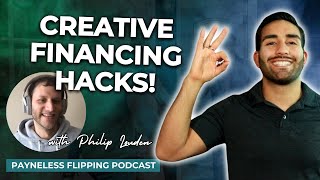
In this episode of the Painless Flipping Podcast, host Nathan Payne interviews real‑estate investor Phillip Loudon, who has built a business around "wrap" transactions—seller‑financed deals layered on top of underlying financing. Loudon explains that a wrap involves buying a property with a conventional or DSCR loan, then offering the buyer a seller‑financed note, typically at a premium, generating $400‑$900 cash flow per unit. He describes his evolution from wholesaling to a BRRRR‑style model, the use of DSCR (debt‑service‑coverage‑ratio) loans, and the shift from contract‑for‑deed to lease‑option structures to comply with Kansas law. The conversation covers sourcing strategies (wholesalers, niche agents who specialize in "dueño‑a‑dueño" deals), typical down‑payment expectations ($15‑$20k), eviction versus foreclosure processes, note‑selling, and scaling the model in Kansas City. Loudon also shares personal background, mentorship influences, reading habits, and introduces the Seller Finance Freedom Academy, an online community teaching purpose‑driven seller financing. The episode ends with philosophical reflections on persistence, progress, and a promotion for Nathan’s training bundle.
Chapters
Welcome to the Painless Flipping Podcast, where we talk about how to get into real estate investing the painless way. We want to take away all the pain, and we know that if you try to do anything in life when you first get started, there's some pain involved. So what we do is we bring on experts that can help you and give you all the information they've learned from their journeys so you can avoid the pain of trying to figure out everything on your own. So today we have an expert, Phillip Loudon. This man is the wrap master. He's wrapping all these properties, you know, he's He's crushing it. So we want to learn from him. First of all, what the heck is a wrap? Because I know a lot of people that are on here probably don't know what wraps are. It has to do with creative financing, but we're going to let the expert explain what it is. So Philip, thanks for coming on here. We're going to get into wraps, but tell us real quick in 60 seconds or less a little bit about who you are.
Yeah, for sure.
Yes.
So one, not an expert, constant student, always learning. We do around 5 wraps a month in Kansas City. And so what a wrap is, is A wrap is when you have a property with financing in place, you have underlying financing, and then you seller finance on top of that. So we were, we were wholesaling for a long time, and we basically built up a wholesaling operation doing 5 to 6 properties a month. Our overhead increased, and as our overhead increased, we realized we weren't holding on to any assets. It was just moving around larger and larger bundles of money, but we weren't actually creating long-term wealth. And then we discovered this method of creative financing where we can seller finance families that don't qualify with the banks. The majority of the families are first generation Americans. Most of them are Latino. They have access to money. A lot of them, they don't— it's not that they have bad credit, they just don't have credit. They're just not like tapped into the financial system in the United States. And they buy owner-to-owner seller financing in their home countries. And so we found this niche in real estate and we've really enjoyed it because one, it created assets, and another is the families that we were working with were extremely grateful. And it just— yeah, so we really fell in love with this model.
I love that. So let's dive right into it. So when you find the properties that you end up wrapping, kind of give me— tell me how you're finding 5 to 6 of those a month, because I know when I've been doing this business, it seems to be the least difficult for me to find those situations where people want to let— basically sell to you on terms.
Yeah. So when we first started, we were doing wholesaling and then all the properties that we would buy with seller financing or subject to, we would then wrap those. Eventually, we decided that we just want to wrap everything and we weren't able to get everyone to seller finance us and everyone to sell on subject-to. So what we do now is more of like a variation of the BRRRR method, buy, rehab, or buy, renovate, refinance. And then on the back end, we seller finance.
Love it. Okay. That makes complete sense. All right. So, because I was like, man, finding those many situations a month could be difficult, right? But if you're BRRRRing them and willing to sell them yourself on that wrap, then completely makes sense.
Okay. Yeah, exactly.
And then you're able to make it cash flow and make sense because you're selling to them at a higher interest rate, I'm assuming, than what you have. Is that what's happening?
Yeah. I mean, we have a buy box that we focus on, but typically we're cash flowing $400 to $900 per month per property. And it's not really the interest rate arbitrage. It's like usually where after we refinance, we're all in at a certain amount. And then we sell on a bit of a premium. So the families that we sell to, they pay us a fee for having that in-house financing.
Okay. So not so much the interest rates being higher, it's just the premium, the price is higher because you're selling it to them on that kind of financing. Is that right?
Yeah. Yeah. And when we were just getting started, it was more like we would get a subject to and the interest rates, 3 to 5%, and then we can sell our financing at 9%. So it creates like, it's really cool to learn this model because you're learning how banks work and you're learning how amortization schedules work on mortgages and just how you just see how the banks are constantly winning.
Always. Yeah.
Yeah. So it's a really cool model just to learn more about like the financial structurings as well.
Do you have any families that you've had to foreclose on? Or— Yeah. Is that right? Like you would foreclose if they stopped making the payments, you'd keep their down payment and foreclose?
Every state's different. There's different ways to structure it. And so for us, it's an eviction process.
Eviction.
Okay. Yeah. So, and we've, we have one property right now we're going through an eviction process on, um, but that's the only one we've had to do it on. And the, the, the family literally just like is not responding to us. So it's time to like get them out. Um, but we've, we have a really high percentage success rate. Um, cause most of these families, I mean, their house is their biggest asset and they're just not going to let it go. Um, it's very different than, um, you know, working with different demographics because most of these families are first-generation Americans. Um, and with that, you know, they just got citizenship to the United States and like, they don't want to go through a court setup and they're also bringing in significant down payments, money that they saved up. And by buying the house, they're now achieving levels of the American dream and they have— this is their biggest asset and it's their savings account. So they're really not going to let the properties go.
So when you say a substantial down payment, what are you guys usually trying to get?
Anywhere from $15,000 to $20,000 is what we do now. Back when we first started, when we were doing subject tos and we were wrapping those, we were getting anywhere from like $20,000 to— largest was $75,000 down. So you can get more money down. Everything's kind of playing around. It's like everything's based off of what is your main focus. If your main focus is to do one of these and get as much money back in your pocket as possible, then you can wait a little bit longer and ask for more down. For us, because we're doing volume, we ask for less down because we just want to have movement and go through and do more and more properties.
Awesome. So you say you're taking these down, you're burning these, right? And then you're— So aren't you only able to burn like a certain amount, like 10 in your own name, or how are you able to pull in so many?
No, there's tons of different lenders.
Okay.
Yeah, so we can— Yeah, yeah, there's a lot of different lenders that we've worked with.
Okay. So it's not just specifically like 10. What is that rule? I can't remember. It's like you can only have like 10 personal properties in your name and then you have to start— Do you know what I'm talking about or not really? I thought there was something like you can only have like 10, like through specific financing in your name, and then you have to start going out. And that's why a lot of people do subject to is because they can only hold so many properties in their name. Unless you're not getting like— what kind of financing are you using? Is it like hard money loan, private money lenders that are like financing, or are they like institutions like FHA? FHA, but—
Yes, this is great. Like for people who are first starting in real estate, one of our mentors, what he told us when we first started was like, call 3 hard money lenders and call 3 other lenders. And we never actually did it, but like we probably wholesale for longer than we needed to because like there's like this big jump between like actually being the buyer and just wholesaling. But in reality, like if you find a lender, like a hard money lender, like they're so easy to buy houses with, with hard money lenders. Um, and so we, we use a loan called a DSCR loan, just debt service cover ratio, which is big words for— but it's based off the rent rate and it's an asset-based loan.
So it's purely based on asset.
Got it.
I didn't know if you were getting conventional financing in that way, but you're doing the DSCR?
Okay. Yeah.
Sweet. So you can have as many as you want as long as it, you know, rents and the numbers check out, right?
Yeah. Our lender right now is saying that we are hitting a limit with them for me to be the guarantor. And then I have two business partners also. But like most of these lenders, they sell off notes. So like when they— all the banks, when they originate mortgages, they usually sell that paper. And that's the whole world that we're existing in here. We're existing in the world of paper. We are creating notes with these families and then there's so much you can do with that. You can sell those notes. There's tons of creative financing within just the note world. It's a really interesting world. A lot of the most successful people in real estate deal with paper. They're not actually dealing with the actual houses. They're dealing with the paper as well. There's a lot of people that really focus on that. It's a really interesting sector of real estate. Of real estate.
So that's a beautiful thing about what you're doing right now is you don't have to like clean the toilets or you're not like a landlord, right? So you're actually selling these properties and these people, um, they're— they bought the house, they have to take care of everything. It's interesting though, it is an eviction process versus a foreclosure. Is that— you said that's per state, right? Like, I think that might be a foreclosure in Utah, like if they don't—
yeah, it depends how you structure it. So like, and this is— that's a whole like— that's a more like complex rabbit hole that like it doesn't— like, I don't know if we need to go down, but like depending on how you structure because there's like there's the deed. Do you hold the deed? Do you give it away? And different people are going to tell you different things. Like there's tons of people that buy and sell paper, and for them, like, they want you to give the deed away. If you give the deed away, it's a foreclosure process. So there's like, there's like small technicalities, but, um, the model itself can be like very simple. Like the technicalities are stuff you get, you know, once you get into the weeds of things. Then there's, there's tons of ways to, you know, there's 100 different ways to skin a cat, and it's just about how you structure it, right?
Right. So I'm just curious, like, do you know— I'm assuming you know what a contract for deed is, right?
Yeah.
Is that what you're doing? Are you selling these on a contract for deed versus just— is that what you're doing?
That's what we were doing for a really long time. And then Kansas has laws where you can't really sell on contract for deed unless you inform the underlying finance person. So we have more of like a lease option type structure now.
Oh, okay. Yeah, because that's where the eviction process— that's why it's an eviction process, right? Because you're doing lease options. Okay.
Yeah. And contract for deed is also an eviction process.
Yeah, yeah, exactly. Because they don't actually like own the property until they, you know, they fulfill on the contract and own it outright. Yes. Because this is all like legal stuff and not legal stuff, but like it gets more in-depth in the weeds. But it is interesting that you've dived in and you're crushing it with this model. I love it. I love to hear this. So where are you able to find all these properties to buy on with these loans that we've talked about? Like, are you getting these from other wholesalers? Are you sourcing your own deals? How are you getting them?
Yeah. So we were doing the direct-to-seller marketing for a really long time. And then we eventually realized that like 80% of our energy was going to that and under 20% of our results was coming from it. And we found that we could just buy from wholesalers, that rather than going direct-to-seller, we could just nurture wholesaler relationships and also tap into on-market properties and so on. And that can allow for us to hit the number that we were going for.
I love that, man. Yeah, so because the thing is, like, if you're gonna wholesale for wholesale, right, like, that's, that's where you need to be at if that's like the kind of business you want. But you, you decided for yourself, like, hey, this is— I'm just moving around money and I have an active income business, let me go into more of, uh, you know, like you're saying, the wraps and the creative. Is that what happened?
I think that, like, yeah, I think when people get started, like, it's so easy to get shiny object syndrome. There's like transactional lending and gator lending and wholesaling and buy and hold and Airbnb and PadSplit. There's all these different ways to do it and every single thing works, but it's about the commitment to the action in one direction that's going to really yield results. It's that the Gary Keller philosophy of the one thing, focusing on if you chase two rabbits, you catch none. So it's like, what am I going to go in on? And then once wholesaling's happening or whatever that thing is that you go into and it's happening, it's working, then you can begin to think about, okay, I'm going to diversify my strategy. Even now we have a very specific buy box,. And then we only buy in Kansas City. We're not buying across the country. We can do these across the country if you want to, but for us, it's like we're in Kansas City, we have a specific buy box, we know the market there, and then we just buy, rehab, seller finance. I love it. It's one product. We're still hitting consistency. There's different stages of business and now we're just like, we're not growing, we're not increasing the number of deals that we're doing. We're hitting 5 a month consistently over the next several months. And then we'll analyze and see when we can slowly like add 6 and 7 and so on.
I love it, man. So let me ask you this. Is— are you sticking in the— are you see yourself sticking to focus to the single-family realm or are you thinking about maybe doing multifamily? I'm not even sure if you can seller finance some multifamily, can you?
I'm sure there's a way. There's always a way. I don't know anyone. Yeah, but I don't— we're just taking single-family. So right now, like, we Yeah. So we're teaching more and more people our model and how to do this. And then as we do that, more opportunities are going to open to work with operators from different cities and so on. So I think it's more about just get really good at this model and then we can expand it out to different cities and stuff as well.
Awesome. So I'm curious of, you talked about your first generation, those are the people that you're selling the properties to on these wraps and all that. How are you finding these first generation buyers?
Yeah. So there's a few different ways to do this. And so the easiest way is to find an agent in your market that specializes in selling houses on seller financing. So if you just go into Facebook Marketplace and you type in dueño a dueño, you're going to start seeing— dueño a dueño means owner to owner in Spanish. And what I've learned is in Mexico, it's very normal to buy and sell properties in this manner. One, because banks have really high interest rates, and two, because people don't trust the banks as much there, I guess. And so they sell properties dueño a dueño very normally. So it's not like you have to edge educate anyone about it. So that's like the phrase. If you just go into Marketplace in your market and type dueño a dueño, I guarantee you you'll find like 10 to 15 properties that people are selling in that manner. And so like, if I was doing— if we're just now bringing this in-house and training someone to do this like on our team, before we just use agents. There's 3 key agents in our market and we use all 3 of them at different times.
Wow. Okay, so to sell all your, your 5 properties that you've been getting consistently, you've just had just work with 3 agents and they've produced enough people.
Yeah. And these aren't like real estate agents. These are like agents that specialize in this type of buyer.
Really?
Wow.
Not even real estate agents. How do they get—
Well, some of them are real estate agents, but others are not. We pay them usually 15% of the down payment or $3,000 flat.
Wow. That's awesome, man. That's freaking sweet. Now you're in— you're saying Kansas City. Why Kansas City? Was it just a— where you guys decided to start doing this? Someone there?
What's the situation? I was a digital nomad in Southeast Asia for like 5 years. So I moved from Bali, Indonesia to Kansas. I think it's like the coolest thing ever. So my business partner, who I actually met in Thailand, I'm playing Ultimate Frisbee in Thailand, he was starting a business doing real estate during COVID And I just like ended my last business. I had an e-commerce brand. And so he invited me to join and I was like kind of ready to come back to the United States. And I didn't really have a home base in the US. I lived outside the country for most of my 20s. And so I just moved to Kansas City with the boys and we started the wholesaling business and it just works. Yeah, just waylaid on the way. I have mentors who are really successful and have masterminds of really successful entrepreneurs. And one of them, his mom wrote a book about some of the top performing entrepreneurs and she interviewed them and their families. And she said the one common thread is that if you stay in the industry for long enough, you'll start to see the cracks. You'll see areas where things can get improved. It's just like, that's why I say in real estate, just survive. Just keep surviving and you learn more and more. And it's just like in a video game. When you start a video game, you have none of the powers, you're level 1, you don't have the skills, you don't have any cool weapons. But as you progress, you get more weapons, you level up, you get those experience points, and then at a certain point it becomes easy. And that's my experience of business is just like, you just stay in for long enough.
Yeah, don't give up.
Don't, don't give up. Just keep going. And like the same mentor, like he told me, he's talked to like tons of like super successful people and he said like, what they don't tell you about entrepreneurship is like, most people think like you succeed in like, in like 1 year or 2 years. But like the reality is like to make $1 million, it usually takes about 10 years. But like what they don't tell you is once you get $1 million, it's so, so much easier to get to $10 million. Yeah. And that can happen. Like for him, he got to his first million, then he got to $10 million in the same year. So it's like going from zero to one, just like zero to your first deal, that's like the hardest point, but you push through that and then you have like, and everything else becomes available.
So this mentor you have, is he doing the same model that you're talking about or is he just a mentor just in general, an entrepreneur and just one?
Entrepreneur. He has a book called Make No Small Plans. I highly recommend it. How'd you find this guy? I found him through another, there's a book called The Third Door, which is by an author named Alex Banayan. Alex has a free event called Possibility Fest in different parts of the country. And so I attended that, I met Alex, um, and then Alex posted something on his Instagram about his mentor coming out with this book and the book's called Making Small Plans. And he said, whoever like gets the best comment here will get to be on a Zoom call with my, with this person. And so I started like spamming it. I got tons of people to be like, choose Phil, choose Phil, choose Phil. And then he made a, he made a group for like 10 of us and we met once a week for, it like a year and a half.
It was awesome. What? That's wild, man. So it sounds like you read a lot. Yeah, I like to read.
So, uh, you—
and the— in— so give me— do you have like maybe another 3 good books that you like that you can think of? Or— because I like to read a lot too.
Nice.
For, for what purpose? To education. I'm reading this one right now. It's, uh, I don't know if you've read a lot of Stephen R. Covey, but The 8th Habit. Um, I just like, you know, everything from like not good novels, you know, fiction, whatever. I'm a pretty religious person, so I read a lot of the scriptures too.
Oh, cool. Yeah, I love scripture. Okay, yeah. So one thing I was told before was that every one out of every like 4 books I read should be a fiction book. And like adding that back into my life, because I used to read nonfiction nonstop for years, and adding fiction back into my life was amazing. That was an absolute game changer.
So tell me about that. Yeah, tell me why would that be? I like to read fiction as well, but why would that be a game changer?
Because fiction is just so fun to read. It's just really nice to sit back with a really good fiction book and just get lost in fiction. That's such an enjoyable thing to do rather than always learning, learning, learning more education. It's nice to just sit back and enjoy really good literature. Wow.
I love it. Do you have a favorite fiction book or do you have a favorite author? What do you like reading in the fiction realm?
Yeah, so a few that I read in the past year or two. The first one was Ready Player One, which is like, I read that in like 24 hours. It's so good. And the movie's also amazing. Another one is Shantaram. It's, that's actually nonfiction, but it's written like fiction. It's like super big. And it's about this Australian guy that ends up living in India and living in like the, in like one of the biggest cities in India. And it's an amazing book. Some fantasy, Name of the Wind is a really good one. Yeah, those are some, those are some cool ones. For nonfiction and for especially combined with spirituality, there's a book called Redeeming Your Time by an author named Jordan Rayner. And Jordan is, It's about productivity tips based off the life of Jesus. And like that book is probably one of the most written-in books I've had in the past, like 2 years. That book introduced me to the practice of the Sabbath and a book called The Sabbath by a guy named Abraham Heschel. And then I started doing the Sabbath in my life, which the Sabbath is like, you know, every Sunday or Saturday, depending on your religion, you are fully offline. And like how they practice it traditionally is like there's no writing. There's no like talking about work, there's no thinking about work. It's a day to enjoy the glories of God. And I started adding, I started adding that into my practice about a year ago. And that's probably the most life-changing thing. Like, if you get anything from this podcast, like, like that's like the most life-changing thing I've added to my life. Because like they say that like the Sabbath is, you don't do the Sabbath for so that you have energy for the other 6 days. Like you work really hard on the 6 days so that you can like rest really well on the Sabbath and just enjoy the glories of God.
And I freaking love the Sabbath day, man. I'm the same way. Like, I used to not unplug, you know. I used to be like, oh, I'm not working, but I'll still check my social media, I'll still check my phone. It's like, no, man, if you completely unplug and you're present with like the day and your family or whoever you're with, like, it's a game changer. Like, 100%. That's awesome. I'm gonna definitely check out a lot of those books you read, uh, that you've read and you told me to check out. And the audience, everybody read. Read is— reading has been a game changer. I used to not like to read read until a couple years ago, and I'm just feasting on the words of just out there. There's too many good books out there and too much knowledge for you not to read. I'm curious, like, how much time— sounds like you've read a lot— like, how much time do you read? Like, would you say a day or every week? Like, do you have an idea?
I feel like there's seasons, you know, like there's seasons of life and seasons of— like, there's seasons where I'm just reading tons, and then the seasons where I don't read as much. Um, but I always try to have like, you know, like 20 minutes a day. I think 20 minutes a day, and if I can do that consistently, I feel really good. But it doesn't always happen. And sometimes I read like way more than that.
Yeah, I've been reading like crazy. I read for almost like 2 hours a day now. Like, it's insane. I wake up super early just to read. So, but yeah, no, love it, man. Now you get— it's so true. Like, you can just learn so much from history, from other people. Like, you don't have to figure out everything yourself. So it's really, really interesting.
Like, I believe— go ahead. What are some of your top— what are some of your top books or some of the topics you recommend recently?
Dude, I've just been studying the scriptures like a ton because the wisdom of the world is in there, and I believe in, you know, all that, uh, the Jesus Christ and all that stuff. That I, I read a lot. I read all of Fyodor Dostoevsky's books, if you know, like Fyodor— Fyodor, that's right. I read all his books. Yeah, those are good. I really like those. Um, I've been diving into like the classics, like Charles Dickens. You got the Harvard Classics. I've been reading like a ton of poetry. I just read like a 4,000 No, it wasn't 4,000. It was like 600-page poetry of just poetry because I've been trying to learn about a lot about like why poetry, people like it so much. I just don't get it. So I'm like, I'm going to read it and I get it now. It's like, it's beautiful. But anyway, just like a ton of classics and stuff like that.
That's awesome. Nice. You're getting deep. You're in the classics, the poetry.
I'm trying to because like I said, that's just like all people did back in the day. They would just like write. Everything was kind of written in poetry, like the Odyssey, all this stuff. Stuff. And so I'm like, why is it so good? So anyway, had to figure it out, man. And then I dived in and it's like, okay, it's kind of beautiful, you know, brings a tear to your eyes sometimes. It's good stuff. So we'll go bringing it back to real estate. But hey, just so everybody that's listening to this, this is important. I would say like diving into not only perfecting your real estate knowledge but also diving into your intellectual and like trying to just be the best version of yourself is how I believe you can become the best entrepreneur. Like, you know, that mentor you have, you know, that dude's well-learned, right? Like, I'm sure he's super educated and he like works hard at just his— how well-spoken he can be. Like, these— it's levels, right? Like, no one's going to follow somebody that has no idea what he's talking about, right? Like, and that's what I think I— what you mean is like, you stay in the game long enough, you learn a lot, you, uh, comprehend a lot, and then people start wanting to learn from you. And I mean, you have your, uh, your Seller Finance Academy, you wouldn't have that unless you knew what you're talking about. So let's talk about that. What is the Seller Finance Freedom Academy?
Yeah. So the Seller Finance Freedom Academy is just a school community. So if you guys know what SKOOL School is, it's like the next platform for education. Their vision is to disrupt the education industry and they have education available to more and more people. So the Seller Finance Freedom Academy is where we just teach people how to do Purposeful Real Estate Through Seller Financing Families. Because for myself, I was always purpose-driven first. I'm more impact-driven. And then the financial side of things was like, I want to figure out money so that I can continue living my life purpose. And the more and more real estate people I talk to, a lot of them have a very similar thing. It's like, I want to create financial freedom so that I can spend time with my family or so that I can do things I'm more passionate about. And Yeah. And so we found a way to do that while also creating value in the world. Because when I first started doing business, I was sacrificing the present for the future and I wasn't actually creating the impact I wanted to have in the world. I was dropshipping and doing e-commerce and selling sexy women's leggings and it wasn't my life purpose. Yeah. And so we're able to align purpose and commerce and do it in a way that just supports people. For all the wholesalers who are doing deals and you're like, now I want I want to buy and hold, and I want to do it in a way that doesn't fully disrupt my wholesaling business, this is the most passive strategy that we know in real estate, and it creates really nice cash flow.
I love it, man. Well, everybody, you heard it here first. If you want to learn about wraps and creative financing and getting into holding properties, Phillip is a good resource for you. So Phillip, before we wrap up, is there anything else you'd like to say or point people— well, you already pointed them to school, so definitely check it out. But is there anything else you want to say before we wrap up?
Up? Yeah. Um, I, I think the biggest thing is just, just keep going, like, and, and also, like, fall in love with the process because, like, it's, it's, it's an infinite game. It's not a finite game. There is no, like, there. Um, Ray Dalio has this amazing thing where he says, like, you know, business is like, it's like you're going up this, or life is like you're going up this mountain and you think you want to get to the top of this mountain. What they don't, what you don't realize is, like, 3/4 of the way up that mountain, you see the next mountain And that is like the game of life. And it's really easy to fall into the trap of like, oh, I'm going to get there. But in reality, there is no there. We're continuing to grow. The asset that we're actually building is ourselves and the capacity that we have as individuals, no one can ever take away. And that is the game. It's just like, keep playing, keep showing up, and just focus on, am I learning? Am I growing? Where am I learning? Where am I growing? And is that worth it? Am I still growing in the same area I want to grow in? Or is it time to like make some shifts and like grow?
And yeah, that's beautiful. Well said, man. I agree with you. Like, you got to enjoy the journey. I actually believe that's the purpose of life is progress. It's not necessarily the destination, because I even believe after we die we're still progressing. Like, I don't think there's ever a state where you won't progress in, in just in the eternities. That's my personal thought. So progression is the goal. It's not necessarily like, let me get there, because we all know we've And then, we've achieved our goals and then you realize like, "Man, I still feel like I gotta go do more," right? Like, it's— you never feel like you get there. So, you better enjoy the process, right? For sure. Cool, man. Well, I appreciate you and, uh, yeah, man. We'd love to stay in touch and, uh, this is our first time chatting in person. So, like, this is a great time to connect with you and we'll have to definitely have you back on the podcast.
Cool, man. Whenever you want.
Okay. Alright, man. Well, appreciate you and we'll see— everybody else that's watching this live or not live, but if anybody's watching this, uh, like, subscribe. Subscribe and hit the bell icon and hit up Phillip if you want to learn more about what he's got going on. Peace out, everybody. Hey everybody, what's up? It's Nathan Payne, and for the first time ever, we just released this insane training bundle that has literally everything that I've learned from doing a combined 4,000 deals in real estate, all from starting with absolutely no previous business background experience or any real estate experience. Plus, there's over $19,000 worth of free gifts that we're throwing in, all for an insanely low, low price. If you want to get your hands on this, be sure to click the first link on the description below right now.
More from Nathan





Why Traditional Wholesaling Keeps Failing You (Use This Pre-Flip Method Instead)





