How to pick a wholesaling real estate market to work in? | Real Deals In Real Life
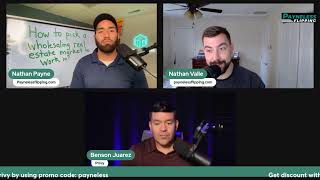
In this live YouTube session, Nathan Payne, seasoned wholesaler, and Benson Juarez, co‑owner of the real‑estate data platform Privy, walk viewers through a step‑by‑step framework for selecting the optimal market for real‑estate wholesaling. They stress that market choice is the foundational decision that determines whether marketing spend, sales skill, or disposition ability will translate into profit. The conversation covers the “end‑in‑mind” mindset, the importance of investor activity, how to use Privy’s heat‑map and neighborhood‑level data to locate fix‑and‑flip hotspots, and how to verify that sufficient recent comps exist within a half‑mile radius. They compare high‑price coastal markets versus lower‑price Midwest markets, discuss how price point affects required discount percentages and assignment fees, and note legal nuances such as title‑state vs. attorney‑state and disclosure vs. non‑disclosure states. Practical tips include focusing on a single market before expanding, leveraging on‑market MLS deals in high‑activity areas to reduce marketing costs, and exporting buyer lists to build relationships. The session concludes with a metaphor about a “starving crowd” of investors, reinforcing that a market with strong buyer demand is the only competitive advantage needed for wholesaling success.
Chapters
Fuck.
We are live. What is going on, guys? Nathan Payne, Benson, how you guys doing?
Doing fantastic, brother.
Hey guys, we got something really important to talk about. We got something to talk about. It's called how to pick wholesaling real estate in— oh my gosh, I read it wrong. I'm sorry. How to pick a wholesaling real estate market to work in. I freaking blew it, guys. I'm just that excited. It's this important that you have to pick the right wholesaling real estate market to work in. And we're going to break that down for you guys. Sorry for blowing it, guys.
So we did it live.
I did it live. All right. And this is live. This is real stuff. So anyway, if you've been having a question about, am I in the real— the right real estate market? Am I working in the right place? This is the video for you. We're going to show you live how to pick the right real estate market. Because if you're not seeing a lot of success, it's probably not your fault. So we're going to dive right into this, everybody. Just before we get into it, just so you know who we are, I'll start. My name is Nathan Payne. I've been wholesaling real estate investing for over 7 years and done hundreds of deals, millions of dollars in transactions. And my goal is to help more people do deals because I've been on the opposite end of not doing deals and it sucks. But it's, you know, if you don't have the right information, you can just spin your wheels thinking it's your fault. But again, maybe it's not. That's who I am.
Awesome. Yeah, guys, I'm Nathan Payne. Um, man, been wholesaling for about 5 years. I'm known for locking up over 100 contracts in a single year. Done a bunch of deals, a bunch of different places. Um, some of you might have seen a 30-day challenge I did a little while ago. It's where I picked a totally brand new market, right? Started with the market, and within 30 days I did a $20,000 wholesale deal without spending any money on marketing, and I only did it like 2 to 3 hours Monday through Friday each morning. So that was pretty cool. Benson, how about you, buddy?
Impressive.
Who are you, Benson?
Yeah, that is, that is awesome. Um, yeah, Benson Juarez, uh, one of the owners of Privy real estate investment software. Been doing real estate for over 20 years.
Love it. Well, we're excited to come to you guys again today. Sorry about that. Uh, yeah, we're excited to come and talk about this topic. So guys, why is it so important to pick the right wholesaling real estate market start working in, especially when you're brand new. Why is that important? Let's talk about it. Who wants to go first?
Well, should I introduce Dan?
Can't—
it was an inside joke from before, guys. Well, one thing I'll mention with the market. So this was in my first wholesaling company. I believe this was the biggest issue, the biggest kind of roadblock to our success. I know there's a lot of people that say, oh, you know, just start in your backyard, just start in your backyard. Depends on where your backyard is, guys. Market's really, really, really important. You might have a smoking deal on paper, but if you don't have anybody that's interested in it or anybody to sell it to, you don't make any money.
That's right.
So that's— yeah, that's just my, my first two cents. I got a lot of things to say, but I'll let you guys go.
That's good, man. Did great. And Vincent?
Oh man, I love being with the Nathans. It's always fun with you guys.
Thanks.
Um, so I would just say this, like, you guys ever read the book The 7 Habits of Highly Effective People?
Oh, I love it.
Love that. Yeah. So the second habit is begin with the end in mind, right? So with wholesaling, you want to think several steps ahead and think, okay, if I can find a lead, if I can get it under contract, if I can go and market it, is someone going to want this thing? Am I going to have the data that I need to be able to prove after repair value, right? Because ARV is king in this business of wholesale. If you don't have fix and flip properties in your data set as a comp for the property you're trying to sell, you won't be able to sell it. Okay, that's just flat out how it works. So you want to think, okay, if I find a deal in this neighborhood, are there fix and flips that I might be able to use as a comp to prove ARV to me so I don't even know what to offer? And then if I get under contract, is there going to be somebody in that market that wants this property? And I can prove to them that that property is worth what I say it is. And then putting yourself in the shoes of the flipper or the buyer, because they're thinking, is this thing going to appraise right? I'm going to— am I going to go and do a bunch of work on this house and then try to sell it, and then the appraiser for the FHA buyer is going to come in and they're going to be like, no, it's not worth that much, it's worth this much? Because all the comps are unrenovated. Yeah, it squashes your value. So the key is think several steps ahead and then reverse engineer it. And then if that market happens to have all those ingredients, then that's where you go look for deals.
Yeah, it's really funny, like, through— throughout working with people and clients, they've always, they've always asked me the question, like, what do I do if there's no comps in the area? How do I know what it's worth? And I'm usually like, if there's no comps in the area, you're in a bad area. You know what I mean? Like, you're in a bad market if there's not one single flip that's happened within the last 6 months, or are properties that are like that, yeah, it's probably— you get out there.
Yeah, just to add to that, guys, one— I mean, I talk about this a lot, um, and it may— I get really triggered. There's this, there's this saying that is— it's a really common saying in real estate, and it is the biggest lie ever told in real estate. You guys might have heard the saying before. It's, oh, if you find a good enough deal, the money or the buyer will just find you. Guys, when does anything in life work that way? It never does, right? Wholesaling is no different. You could find the best deal in the world, but if it's in the middle of nowhere and you can't find a buyer in time, or you can't find any buyers that would be interested because they're not interested in that area, you don't make any money. Which goes right back to what Benson, what you were saying with, guys, you gotta start with the end in mind, right? So we gotta start with, hey, who is the person that's going to be paying me money? It's going to be that cash buyer, that investor, that person that we're assigning it to. So I want to start in a market that they really want to do deals in, right?
Yeah, no, I like that a lot. And I think for people that are newer to this, if you're watching this and you're new and you're trying to find a market to work in, I would say start with one market, right? A lot of people want to go all nationwide and they want to just pull a bunch of leads and they'll go anywhere, uh, just one. Just pick one. Focus, right? Maybe you can do more, more markets later, but it's really important just to focus. Start with the end in mind, like we're saying. And a lot of people, they think they need to do multiple markets because there's not enough deals in that market they're choosing. That's not true. There's enough deals to go around. There's so many— there's so much opportunity out there. So without further ado, Benson, are you ready to show us how we can use the tool Privy, which we all love using, to find the best market?
Yeah, let's do it.
While, um, while you're bringing that up, one last thing I want to say, guys. The, the reason why this is so important is because it is the very first thing that you— this is the foundation that you build everything upon. If you get this part wrong, if you're in the wrong market, I don't care how much money you spend on marketing and lead generation, I don't care how great of a salesperson you are, I don't care how great you are at disposition, all of it is going to be an absolute waste of time, money, effort, and you're going to want to pull your hair out, you know. And you might not even realize— you might think it's, oh, it must be my marketing, or I'm not good enough. No, you, you might just be in the wrong market. So guys, please pay attention. This is so crucial.
It is.
Yeah. All right, Benson, take it away. Show us how it's done.
And what I'd also say too is that, like, could you stumble into a deal in like a kind of a crappy market. Yeah, you might be able to like force it, but especially when you're a beginner, you don't want to force anything. Like, you want to increase the chances that you're going to succeed. So choosing a good market that has high investor activity is one of the most important things. Now, you might be able to figure that out without data by just listening to somebody else. Maybe you know somebody who is already having success in a specific market. That's a good reason to do it. But don't just choose a market because you live there. Maybe you use some anecdotal information from people, you know, people talking about it. Maybe you hear it on a podcast. But the best way is to use data, right? And that's what Privy is all about. So, uh, right here on the screen is, is the Privy platform. Um, right over here on the left, we have this Investor Activity tab where we're tracking all this investor activity nationwide in real time. And if I click this button right here at the top, it says fix and flip. That's gonna plot on the map where all the fix and flip activity is happening nationwide. And it's a revolving 12 months. So the last 12 months, you wanna know like where are buyers buying? Where are they doing deals? So this is essentially a heat map and real easy for even a beginner to understand, right? You just go to where you have a lot of blue, right? Avoid these areas that don't have blue, where it's not some complicated chart or graph or a spreadsheet. That you have to try to interpret. It's like, okay, I don't want to be looking for deals in Hayes, Kansas, because no one's doing deals there. I won't have the comps, and there's no demand, there's no buyers. So then you start to go over here to the Midwest, right, which you see a lot of blue. Now then you're starting to think, okay, well, there's a lot of blue. Now what do I do? Well, you look for larger circles with higher numbers. This is the same thing that I did, you guys, 2 years ago when I was trying to find a new market outside of Colorado, and I chose St. Louis. Look at all the activity here in the St. Louis market. It's right, so let's drill down here.
Opportunity out there.
Yeah, there's all kinds of activity here. So if I drill down and then I look at the St. Louis market, it's not just going to be St. Louis the whole city, it's going to be specific neighborhoods. Because again, if you're thinking about beginning with the end in mind, you're thinking about, okay, if I find a house, will I have comps? Well, comps happen within a half a mile radius typically, so we have to be very laser targeted on specific neighborhoods not just, okay, I'm going to do greater St. Louis area. So, you know, this area over here is St. Louis, but look how, how much fewer data points there are here compared to right over here, right? So again, you need to think about, if I find a house, is there going to be a house within half a mile that I can use as a comp? And here are all those data points. So you can see really easily, like, what streets are the majority of deals being done on. Exactly how I would choose a market now.
And that helps with your marketing piece as well, right? Like, you, you're like, okay, I can actually target this specific area of St. Louis versus like, let me pull every absentee owner in the greater St. Louis area. You're pulling a giant list, you know, and that's a lot of money. So you can definitely be way targeted.
Yep. And then you can download this, right? So there's two steps to this. There's the market and then the demand. So the demand is caused by the buyers themselves. So we could actually export all of the buyers here into a CSV file. And we've got a good beginning of people we can start reaching out to, to start building rapport, talk to them, learn their buy box, and start to build those relationships who we can eventually disposition properties to once we find a deal here. But it's going to be way easier to do that when you know what they're looking for. And we know what they're looking for because each one of these properties were flipped. We know that the buyer that flipped this one will buy a 4-bedroom, 2-bath, 2,100-square-foot house in 63111 if we can find one. That's right.
And the nice thing, Ben, is on a lot of those, you can even see the prices that they paid for it. So guys, that's, that's one of my favorite parts with this is I like to keep things really simple. I don't— I personally, I'm not really big on, you know, getting things at a certain percentage of ARV or what I like to look at. Okay, this house, when he bought it, there's a before picture and it looked like this and he bought it at this number. Okay, I've got a deal that looks like it needs a relatively similar rehab. Okay, chances are he'll probably pay something around that same number, right? If it's a similar comp to the one that I'm looking at. And, you know, it doesn't have to be rocket science. And that's where, you know, guys, tools like this can be so helpful because it really, really, really helps with, you know, pretty much the most difficult questions in wholesaling, which is, oh man, what is this thing going to be worth? What, you know, all fixed up?
Right?
What's the ARV? What's the after repair value? And then also, uh, what would a buyer pay for it? I can pretty much get both of those answers really easily, you know, from what you're looking at right now, Benson.
Exactly. Yeah, yeah. I feel like that's the hardest question that people like have to face as wholesalers, real estate investors, is like, what, what is this worth? Or what could I sell this for? But this, this tool does helps out with that.
Yeah, one of the more difficult things to get a gauge on is like, how much of a discount do I have to negotiate for it to be a deal? And every market's different. So like in higher priced areas like the coasts or in some of these major cities, you can pay a higher percentage of after repair value and it'll still be a deal. If you're in a really low priced area, that percentage of ARV starts to get pushed down. Because the cost of drywall is the same whether you're building a million-dollar home or whether you're building a $100,000 house, right? And so the percentage of costs increase, which means you have to get it at a deeper discount. And so a lot of that understanding of the market, what's like the realities of a local market, you can gather from the data. Another thing that's really cool is that there's always that discussion about, well, Can you get on-market wholesale deals in an area or do you have to go off-market? Well, it's the, the St. Louis market is actually a mixed bag, but check this out. They got this property direct from seller, which means they had to market or they had to do some sort of lead generation to get it. They paid 65% of the ARV for this place. I promise you there are properties that people are finding here in this market that they got from the MLS at a way deeper discount than 65% with zero marketing.
Very interesting. Yeah, no, agreed. Definitely deals that can be done off of finding properties off the MLS for sure. Now, Benson, I want to ask you about this, and Nathan, I want to ask you about this as well. So when picking a market too, what I've found is on the West Coast, like California, Oregon, Washington, Utah, Arizona, the prices of real estate are more expensive right? The ARVs are higher, so the assignment fees are usually bigger than Midwest or South, uh, or East Coast. Not all, like, all East Coast, but you know that you can usually do maybe more deals in Midwest, but the assignment fees are smaller. As if you do a deal in California, you— it's probably gonna be a little bit less, less— the volume's gonna be less, but the, the assignment fees are gonna be bigger. Have you seen that, Benson? And would you agree? And Nathan, would you agree? What do you guys think?
Yeah, 100%. Yeah, the higher the prices are, then the larger the assignment fee can be. And you know, you, you vote— you see those buyers who are like, who get offended when, when wholesalers make money, right? So if you've got a really low price point and you got a large assignment fee, then that buyer's— he get— they get mad. I don't know why, that's just the way it is. But if you're in a high-priced area and that assignment fee is a smaller percentage of the total cost then they're not as offended when you make money. It's just kind of the way it goes.
Well, well, yeah, they did an $86K assignment fee a couple of weeks ago. The buyer didn't care. And it's because the price points were higher, right?
He texted me and congratulated. He was like, oh, man, you guys made out well on this one. I'm like, congrats.
Yeah, we're making $86K from the buyer.
That's—
but yeah, just to, just to add to that, I mean, so, so one of the first markets I was in Um, you know, again, market being the foundation of everything. I was in a market to where I had the opposite problem. You know, the price point was so low, I was picking up— we were getting deals in these areas to where ARVs were like, you know, maybe $110,000, $120,000. And the thing is, guys, is when you're dealing with that low of price point— and guys, some, some neighborhoods where it's even lower than that. The thing is, there's just— there's less meat on the bone. There's less to work with. You know, someone cares a lot about, you know, $1,000 when they've only got, you know, $40,000, $50,000, $60,000, whatever, to work with. Versus if I'm working with a $700,000, $800,000 home, it's a lot easier for me to carve out a fee. You know, some things when picking a marketplace, just kind of a few things need I don't consider any one of these necessarily a deal breaker. I will say there's, there's people that make money in, in, you know, all of these different types of markets. But these are questions that I ask and I take into consideration. Number one being price point, you know, is this a really, really high price point? Because the other, on the flip side, and the really, really high price point, you're likely to do much fewer deals if you're brand new. You know, you might get a lot fewer chances at bat than if you're at, you know, something a bit closer to the medium price point, right? And then at the same time, hey, I want to make sure I'm not in a market where the price point's so low I can't make any money on anything. So, you know, price point's something I take into consideration. Uh, the other thing I take into consideration, or that I want to know, is, is it a title state or an attorney state? Again, not a deal breaker one way or the other, but, you know, just know that If it's a title state, you know, I'm going to be able to move deals really quickly and, you know, should be pretty smooth. Attorney states, there's likely going to be some extra hurdles that I have to jump through because we're dealing with attorneys in every single one of those. I'm from New York State and, you know, then moved a few years ago to Connecticut. Lucky me, where they're both, you know, attorney states. It's not very easy to close deals quickly. Now you can find exceptions every rule, but you know, and then, um, thirdly is, is it a disclosure or non-disclosure state? How easy is it going to be for me to look up comps and find information? That's one of the really cool things I love about Privy is it helps, you know, get rid of that gap by providing that information in a lot of states to where most people normally the only way you'd be able to get to access to any of that information is if you were a realtor. But now you can use a tool, something as simple as Privy, and you get access to all that information. That's one, that's one of my favorite things about it.
Oh yeah, yeah, I like you brought up the non-disclosure state thing because there's like 11 or 12 states where that's a challenge, which means you won't see prices on the comps, which I don't know how you analyze a property, pull comps on it if you have no prices, right?
Right.
And a lot of those also don't have photos. So because Privy has that direct-to-MLS data, we can get around that non-disclosure state issue as well as show the photos. So you can see the before and after, and you can see like what's really driving value. Um, I wanted to— we don't have to go back to the, the screen share, but there was something I wanted to point out before we move on too much, is that that last property that I was looking at, you guys, Yeah, was purchased from the MLS. It was an MLS deal. It was got— it was purchased at 45% of the ARV from the MLS. Right. Again, zero marketing. And that one right before that we had looked at was at 65% of the ARV and it was direct to seller. Wow. So 20% less, 20% more of a discount on that house. And they got it from the MLS. So when you're in a high investor activity area, you can spend less money on marketing and do MLS deals while you're learning the business, maybe while you're learning your marketing skills as well, maybe building up a kitty to use for marketing costs if you decide you want to do that target. But if you, if you're in an area that's high investor activity, you're going to see way more on-market deals that are available, low-hanging fruit that you can cut your teeth with.
Agreed 100%. Like if you're in the Midwest, there's a ton of crap on the MLS. There is like, you're like, whoa, look at all these opportunities. Now, if you go to the high-end areas like Salt Lake City, Utah, or Denver, I'm assuming, like, um, you know, California, to find those really distressed properties, as soon as those hit, I feel like it's, it's like a bloodbath. That's just how it is. Like, everybody's making offers. But with so many bad, so many opportunities in the Midwest, I feel like that strategy makes sense. But then again, we have to— you got to look at what Nate said, right? The price point. You got to see, are you making enough? And I will throw this in there. We don't— you don't know— we're making this video right now, but if you watch this in the future, we don't know how the rules will change with the laws. Um, always consult with your title company and see how things are going. Obviously, you can do double closes. You can, uh, you know, sell properties through an LLC, through a trust. Um, so there's always going to be ways that we can work around that, but You also— that's something else to consider too, right, guys? How the states work.
100%. Yeah, there's a lot of rules. I mean, South Carolina just banned wholesaling right now. Again, there's ways around it, but the traditional assignment route where you put an assignment clause and to sign a contract isn't going to be doable in South Carolina unless maybe you're licensed.
That's right.
That's right. Well, guys, I think we crushed it, uh, at least like breaking down how to pick a wholesaling real estate market to work in. Uh, you even showed us how to find buyers that are flipping. And, you know, that goes into the next step where you can start reaching out, start building relationships. We don't have to dive into that yet, but, um, do you guys have anything else, anything else you want to say about wholesaling real estate in the right market?
Yeah, I would say that of all the things that you can't control in this business, there's so many things that are out of your, out of your control. And it can be overwhelming. This is one of the things that you can control that will have a direct impact on your ability to succeed in wholesaling is just choosing the right market. So don't get lazy with choosing a market because somebody told you you should operate in your own backyard. If you do that and you're in a crappy market, you just increase the chances that you're going to fail.
100%.
Yeah, I'll follow that up with a real, real brief story about a gentleman named— they've heard this story once before. So there's a gentleman named Dan Kennedy. He's the— he's known as like the godfather of direct response marketing. And he was giving a presentation on stage one time and asked everybody, hey, if you could open up a hot dog stand and have any competitive advantage, what would it be? People start yelling out answers. I'd want the nicest hot dog, uh, hot dog cart. I'd want the, uh, the best recipe for hot dogs. I'd want the best location. And he goes, you're all wrong. He said the The only competitive advantage that you need and the only one that matters is having a starving crowd. So guys, when you pick the right market, right, this is kind of the, the fundamental that we've been talking about this, uh, this whole time. You want to pick a market where there's a starving crowd of investors that are hungry for the deals you're bringing to the table. And we talked about a bunch of, a bunch of kind of tactics of how you can make sure you're in a good market. But that's the last thing I got for you guys.
I love it. I love it. Well, hey, Benson, thanks for joining us. Nathan Payne, always a pleasure. And guys, join us next week. We go live every week where we break down what you guys need to know in order to wholesale and be efficient and effective. All right. So we'll see you guys next time.
Later, guys.
See you.
More from Nathan





Why Traditional Wholesaling Keeps Failing You (Use This Pre-Flip Method Instead)





