How to plan your life to dominate real estate in 2024
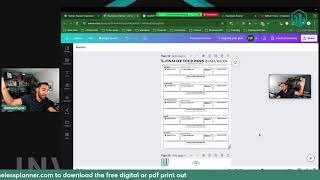
In this live, interactive masterclass Nathan Payne walks participants through a comprehensive, data‑driven framework for setting and achieving personal and real‑estate goals in 2024. He introduces the free "Painless Planner," a customizable digital planner built around the Objectives and Key Results (OKR) methodology used by Google and other large companies. Payne demonstrates how to start with a high‑level life vision, mission, core values, and strategy, then reverse‑engineer that vision into yearly, quarterly, monthly, weekly, and daily objectives. He shows how to translate each life‑category (spiritual, community, health, business, self‑development) into concrete OKRs, and how to use ChatGPT as a real‑time brainstorming assistant for crafting visions, missions, and key results. Throughout the session he engages the Zoom audience, gathers feedback, and emphasizes tracking metrics, daily reflection, and accountability. The session ends with a roadmap for the next two days of the three‑day masterclass, focusing on breaking yearly goals into 90‑day plans and daily disciplines.
Chapters
Let's see. I'm excited for everyone today because if you guys are trying to hit your goals, this is the place to be. I'm going to explain and break down exactly how you can achieve what you want in 2024. And this is not like a, like a rah-rah thing. This is more of like, hey, I'm going to show you like data that back data so you can actually go ahead and achieve what you want through tracking, through, uh, hitting specific metrics, and it's, it's going to be a game changer for all you guys. So give me, give me one second. I gotta enable everyone to chat. Welcome. If you're watching this live, make sure to go to the Facebook group where you can register for the Zoom so you can see everything we're looking at. Um, I can't promise if you're watching this on the live stream that you're going to be able to see everything. So let's see, attendees chat. Here it is. All right, you all should be able to chat inside the Zoom call now. Edwin, Tanya, what's going on? How you guys doing? How's it going? If you can, if you can type, go ahead and type, but if you can't, It's all good. I understand sometimes people are working during the day. Beth, how you doing? Good to see you. Good to see you. Okay, Tanya, doing really good. Happy New Year, everybody. I'm excited to have everybody here. And again, I'm really— I have a lot of passion for this topic. I'm going to get into why I'm so passionate about like setting goals. But yeah, welcome. Beth, doing good, thanks. Happy New Year, what's up? Awesome. Edwin, I see you're in here. All right, so let's get right into it, guys, because this is a 3-day event. Now, if you can't make all 3 days, if you join the masterclass through our Facebook group and you join the Zooms, you're going to get all the recordings, okay? So even if you're not able to make the whole thing, this is going to probably go 30-45 minutes. That will be my goal. But really excited and again if you guys want the recordings, join, go to the Facebook group and join it. So let me share my screen right now so you guys can all, we can all get ready for today. Let's see, what's up William? Good to see you as well. William on the live stream and we got Facebook user, awesome. Okay, so let's get rolling. All right, I want everyone to give me a thumbs up if, uh, they can see— not a thumbs up, press 1 in the chat if you can see my screen, because we're about to get into the, uh, the slides right here. Okay, all right, everyone can get it? Let me, let me get my little drink because I'm gonna, uh, I'm gonna get kind of thirsty from all the talking. So, uh, let's make sure everyone can, uh, see my screen. All right, we're getting some verification that everyone can see my screen. All right. And I'm going to interact with you guys in the, in the Zoom call because this is, this is to teach everyone here, not for me just to show, but I really want to interact. So just be ready because I'm going to ask you some questions about goal setting, how your goals have been and you know how you're doing and you know what you think. All right. So let's get right into it. We are at 2024. It's actually, it's absolutely incredible that we're at 2024. I feel like 2023 blew by. Okay. And this is the probably the first time in my life where the year has ended and I've been like, wow, I accomplished literally everything like that I set out to. And if I didn't accomplish it, I feel really good about where I'm at in my life. Like, I feel really good about the steps I took. I feel like I was in the right path and understood my vision, understood where I was going and what I did actually got me, you know, where I want to go. I'm curious for everybody that's in the Zoom chat, How do you guys feel? If you feel great, great. I'm so excited for you. But you can be honest. Like, if you feel like 2023, there are some things that you left on the table, maybe you didn't accomplish everything you wanted, just let me know. We can be vulnerable with each other. Obviously, I didn't accomplish everything. There's a lot of big goals I set, but I do feel good about the actions I took. So, Beth, Tanya, Edwin, everybody that's in there, how do you feel about 2023? Do you feel like you did well? Do you feel like you could have done better? Uh, obviously we all want to do better. That's just how we are as humans. But, uh, I'm curious, go ahead in the chat, go ahead and tell me what you guys are thinking. And if you're in the live, do the same. You know, how was 2023? How did that go for you? And, uh, I'm going to show you how you can use the, the planner and the method that I've learned through OKRs, which is Objectives and Key Results, to make— have a better 2024. Okay, that's, that's my goal for, for today is just to make sure everyone feels a little bit more confident and happy at the end of, of the year. Okay, so Beth, you— I understand you were feeling maybe a little disorganized, uh, need a better system in place. Um, okay. And Tanya, uh, could have done a little bit better, definitely could have done better. Good. Okay, so I'm so happy that you're like— I'm not happy that that happened, but I'm happy that I can provide some clarity because this has helped me out immensely. And I'm going to show you guys, like, this isn't something that I just read a book about and I'm teaching you something that I'm not applying. I've been planning since I was, uh, setting goals and planning since I was 19 years old. I went on a, uh, church mission, uh, a mission for my church to teach people about Jesus when I was 19 to 21 years old for 2 years. And our— what they taught us was goal planning. And I was like very new to that, didn't really know how to do it very well, but I tried my best. And since then I went to college, didn't really plan that much because college is more of like, hey, just do the classes and you're good. I didn't really have to plan plan. But after graduating from college, running a business, and being, uh, setting high goals and, and revenue and business and life, like, I really was feeling kind of the way you guys did. Like, oh man, I need a better, uh, organization. I need to hit goals. Like, it's kind of confusing. I don't know what to do. So I, through massive action— and I'm going to show you guys what I've done, you know, not that I've just read about it, but what I've done— I perfected what I believe is— and I continue to perfect because I'm always, I'm using it— perfected a way to set goals. And I've learned, if you haven't heard about the model Objectives and Key Results, it's the same model that Google and a lot of big, big companies use to organize their company. Batch Leads uses it. They use it to organize and set goals for large organizations. And I use this same model to organize not only my, my business but my personal life. And I'm going to show you guys how you can use this to organize your personal lives. And this is This is going to be actionable steps I need you to take, and I'm going to show you guys exactly how to do this by the end of the class today. Like I said, there's 3. It's today, Wednesday, and Thursday at 11 o'clock Mountain Standard Time. Eastern, if you're in Eastern, it's 1 PM. Um, but yeah, you're going to want to be on these. And again, if you don't have, uh, the ability to watch all these, the recordings will be provided to those that are in the Zoom call and register for the masterclass. Okay, so let's go, go right into it. Um, And by the way, if you guys haven't already, I want you to go to painlessplanner.com. This is where you can download the free digital version of the planner that we're going to be looking at today. It's very simple. All you do is you just go to click on the link of Painless Planner. It's going to send you a link and then you just make a copy of the planner. And then once it makes a copy, You can change it to whatever you want. We're going to talk about that. So this is no longer going to be Nathan Payne's Painless Planner. This is going to be Ben's Painless Planner, or whatever you want to call it. You can even change the name. You can change the name here. This is— I made it so everyone can just edit the planner however they want. Okay. And don't feel like you have to use the whole thing. You can use just parts of it. If you really like what I talk about today and you don't like anything else, that's That's totally fine. But that's how you do it and make a digital version. You just make a copy. And if you want to download it and make a PDF version and print it, which I print mine out— if you guys can see me, I actually have like a binder that has, has it with tabs and everything because I really like to write. I used to not like to write, but I learned that, you know, writing helps me remember way more. If you want to download it, all you got to do is go here, go to PDF print, and then you can download it. Now don't download it yet because I'm going to show you the right way to do it over the masterclass. But if you want, you can go ahead and download it. It's a big planner. This is like, again, this is serious. I think about maybe making like a serious book about it, not just like a printout version that you print yourself, but like a book that you use. So we will That's how you do it. Okay, so let's get right into, um, the presentation. Everybody ready to rock? Is everybody ready? Give me a 1 in the chat if you guys are, are ready to rock, okay? Because I want to make sure you're with me. All right, cool. Awesome. Love to have you in here, Joyce. Okay, so, um, today we're going to be laying the foundation of how to set goals the right way for 2024, okay? Using the Painless Planner. I just called the Painless Planner because I believe I've made it painless, uh, compared to like how I used to set goals and what I've learned from a lot of other people. So Nathan Payne's Painless Planners, right? So welcome today, everybody. Uh, this is the solution to 2024 and setting goals and how to reverse engineer your goals. Okay, so the, the problem that a lot of people face with goals is they— it's not really aligned with what they're trying to accomplish in their life, right? Like, for example, in real estate, if you want to own a million doors, or let's just say 500 doors, like apartments, like a doors in an apartment, that's multifamily talk. That's cool. But if that doesn't align with your goal of living in South Africa, South America, or South Africa and just, you know, living off the land, for example, I know it's a weird example I just thought of, but that's just like, why would you need 500 doors? Maybe you can just do off of 20 doors. Maybe you don't even need any doors and you can do some single family. So it's really important to align what you really want in life right? Like living in South America. I just bring that up again because my mom is from Chile. So maybe one day I want to live off the land in Chile. Not that I do, but if that was my goal, then I don't really need to set my goals and do all this stuff that's going— because it's not, it's not really motivating me or getting me where I eventually want to go, right? I don't need all that. Okay, it's not. So when times get tough, I might not want to do all that work. Okay, so it's really important to reverse engineer your goals and know exactly what you want in life and then set your goals, right? Reverse— start with the end in mind. And this planner that I just showed you, it's customizable. So the way I use it, the way you'll see it, is how I've customized it, but you can do it however you like. Okay, and I'm going to show you from start to finish. We're going to reverse the whole process. We're going to start with your life plan, your objective in life, what you really want in life, and then we're going to reverse engineer it back to your year, this year, 2024. Your quarter, because there's 4 quarters in a year. Okay, we're going to break it down in 90-day goals, 90-day journey, your month, your week, and then your day. And I can promise you right now, if you schedule your life by reverse engineering from your what you're trying to achieve in life all the way down to what am I going to do today that aligns with what I'm trying to accomplish in life, you're going to be so much more energetic. You're going to wake up every day and say, hey, I'm excited to cold call, or I'm excited to do this action that maybe isn't— I'm not seeing the results of right now because it aligns and it's going get me to where I want to go. And I didn't do this activity for a long time. I didn't really know what I wanted, okay, until I started planning this way, and it's changed everything. Okay, so for those of you that don't know me, I'm assuming most people have registered know me, but for those that will watch this in the future or that are on the live, my name is Nathan Payne Payne. I, I really love planning. I'm from Atlanta, Georgia. Now I live in Salt Lake City, Utah. I went to school at BYU-Idaho., and I own a company called Offer On Homes and Investor Thrive. We help people in real estate and Offer On Homes does, gets, does deals and fix and flips and does real estate transactions. Okay. And my goal in life is really to just help people succeed and achieve the attributes that are required of them to, to excel. Right. Because a lot of people put like money as their goal. They just want money. Money is not usually the goal for most people. It's usually something that's deeper. So I want to help people achieve what they really are trying to achieve. And, you know, get there through developing the attributes that are required, like kindness, love, service, all those things. So that's why I made the planner, okay? Because my goal is not only to, you know, help me succeed, but help others succeed in life, okay? So here's an overview of the planner. The planner is very big, and we're not going to go over like the whole thing, but if you, you download it, here the table of contents, it tells you exactly what the planner has. And this planner isn't just about planning your life, it also has like a bunch of cool activities that you can do, exercises that will help you, um, you know, like a yearly goal— this, it's called the yearly goal letters. I write a letter to myself a year in advance with what I believe happened, and then I read it a year down the line, and a lot of things have happened because yourself, you're manifesting that these things will happen. So it has a lot of cool exercises that not only will help you plan but also, um, help you improve your life. Okay, so that is a little bit of the overview of the planner. So I know this, I might be making a bold, big statement, but OKRs changed my life, okay? They literally changed my life. Objectives and key results. And you know, you're all probably like, what are you talking about, Nate? How did that change your life? The way that I used to set goals was I would just set the— and if you read a lot of books like Four Disciplines of Execution, it talks about like people usually set their goals like, with like, I wanna weigh 150 pounds, like I wanna lose 20 pounds. Like that's their goal. And that's how I used to set goals. So I would just set what I wanted, right? But I didn't know how to break it down. I didn't, and I also didn't know if my goal really aligned with what I wanted to achieve in life. So objectives and key results help me to align myself with what I really wanna achieve in life. And not only help me align, but help me break down the little incremental steps, the actions I need to take every day in order to achieve that objective. Okay, and, and I really— last year, 2023, um, I was able to really see the results from using this model. I started using this model maybe 6 months, um, into the year. I was kind of messing around with other tactics that I learned, but this one, the last 6 months, I hit on pretty much every goal I set. I never like to read, and I was able to read maybe 23 books, like, and they're all— a lot of them are up there, and I've never read, but I was able to do it because I was able to set the objective and the key results that were required for me to hit this. Okay, so the reason why I'm bringing that up is it has changed the way I've set goals, and I know it's helping me get to what I want. Okay, and, um, and I'll, I, I'll show you guys this because I think this is important to see. If you can all see my, like, my face, I stopped sharing my screen. But when I first started like my business in 2018, like Patrick Bet-David, if you guys know who that is, that was— I, I printed off like a PDF version of how he set goals. And in 2019, year of growth, and this is how I set goals. I would just break them down into different categories of— what do we got— financial, family, business, health. Um, and I would set look how many goals there were per, um, what's it called, per, per like section, right, category. I put a ton, a ton, a ton of goals, and I felt like if I achieved them at the end of the year, I got lucky. I was like, well, I set big goals, I wrote them down, but didn't really know how to do it, get, achieve it. And this is 2019, and you know, I kept on trying to improve it I, I even printed it out. I even made a vision board with my goals. And it's better than nothing, right? It's better to have this than nothing. But it didn't— I didn't really achieve a lot of the things I wanted to. And believe it or not, a lot of the same goals that I had in 2019, I had this year, but I actually was able to do them. I— they didn't really change. I wanted to continue to do the things that I had set like a couple years ago. But that's how most people set goals, right? They just write down like what they want is. And let me get some feedback from everybody that's in the, in the live— sorry, in the Zoom. Do you guys set goals like that sometimes where you just write down the end result? What do you want? You just like, hey, I want to lose weight. Let's— let me read some of these. Let me see. I want to— let's see, make— in 2019, I wanted to make $250,000. That was the goal. That's a terrible— well, I guess that's an okay objective if you use the objective and key results. But how am I going to do that? This didn't explain it, but that's all I had. Um, I want to, uh, no screens 2 hours before bed. That was, uh, what I wanted to do. Did I do it? Well, you know, I didn't really track. If I did, I don't know if I did it. It's what, 2024 now? I don't really know if I did it. I think I did it, um, but there's no way to, you know, see because I wasn't tracking my results. Um, so Beth, Joyce, uh, Raymond, so you're all kind of A lot of you know what I'm talking about. You would set goals like that. You just say, hey, this is what I want to accomplish. Okay, now I know this is crazy, but since 2019, I don't know why it's getting blurry. I've been keeping goals, right? I've been tracking and I've been changing the way I do it, right? I'm always looking to perfect it. So this is 2021, 2022, and I keep like all my— I like to print it out. Guys, this is 2023, okay? You're gonna be shocked. I can't even believe, like, I wrote that much, okay? It's kind of crazy. But again, this is, this is every day. This is 365 days, um, weekly planning, my life goal, everything. It's, it's nuts, uh, but again, it changed my life because I, I feel like I cracked the code on how to achieve what you want through doing it the right way, okay? So I speak from experience that I'm doing this and not just yapping because I read a book. Okay. All right. So let's go into, back into objectives and key results and see how we can help you guys start doing it. Okay. Now you know how it changed my life. This is a tool that is changing the— it's going to change. It's changing the world. It's changing everything. It's ChatGPT. ChatGPT helped me out a ton to make sure I understood how to set goals. And to, you know, do this the right way. Has anyone in here used ChatGPT before? Okay, give me a 1 if you've used ChatGPT before and give me a 2 if you have not used ChatGPT. I'm curious to see. Okay, Joyce, you haven't used it. Raymond, Raymond, you haven't. Yeah, but I suck at prompts. Check this out, everybody. Let me show you how you're going to use ChatGPT to plan out reverse engineer your life so you can hit your goals. And let's, let's, let me show you the power of this. So I'm talking about objectives and key results. Objectives are— look, I don't even need to explain it. Let me show you the power of how you're going to use it to improve your life. What are OKRs? Okay, so I'm talking, I've been talking about OKRs. Let, let's check out what ChatGPT has to say, say about it. What are OKRs. Okay, let's see, let me read it. Objectives and OKRs stand for objectives and key results. It's a— it is a framework used for setting and communicating goals and results, uh, results in organizations. Here's a breakdown. Objective: this is a clearly defined goal set by a company, team, or individual. It is qualitative and inspirational, designed to push employees to achieve a goal. Okay, so I've taken this model that most people use in business and applied it to my personal life. The— these are measurable. Okay, so you have your objective: I want to lose 20 pounds. That's the objective. That's what I'm trying to do. Okay, uh, or I'm trying to feel healthier. Key result: these are measurable outcomes that monitor the achievement of the objective. They are quantitative and should be easy to grade with a number or a yes or no. That is the main issue I had with goal setting, was I would set goals as the objective. I would say I want to lose weight, but I neglected to track, to understand, to modify the key results, the actions, the measurable things that get you to what you want to do. That's the main problem people have, whether it comes to succeeding as wholesalers, real estate investors, as succeeding as, you know, weightlifters, whatever, jiu-jitsu. Master practitioners, it doesn't matter. If you don't understand the key results, the measurable outcome that is required to help you achieve the goal, it's going to be really hard to hit your objective. So that's what I've— the problem again I had since 2019 to 2023 and a half, like in the half of the year. And then I was able to kind of figure out how to track and, uh, set this the right way. Um, so let's talk about really quick an objective. Again, losing— we'll use weight 'cause everybody— it's easy for everyone to relate to. So you wanna lose 20 pounds. How do you lose 20 pounds? Okay? You— the key results, uh, aligned with, uh, you know, losing 20 pounds would be keeping track of measurable outcomes like how many calories did you eat today? Okay? And keeping track of that. If you know you need to eat at a deficit, for example, a caloric deficit to lose weight, you would say, "I need to, uh, eat—" 200 calories less than my, uh, caloric maintenance level, right? Um, and then you're able to say, yes, I did that, yes, I did that, yes, I did that. And you know, if you do that for enough time, you're about to hit your objective. Or I want to be a black belt, right, if— and jiu-jitsu. If I want to be a black belt in jiu-jitsu, I know I need to go to practice every day. I need to practice for a long time. Bam, did I do it today? Did I go? So that's kind of how the objective and key result model is broken down. And you— and here it says, here's how, uh, OKRs typically work. Define 3 to 5 level objectives. These should be significant. Define key results. Um, these are indicators of the progress. Regular check-in. Okay, that's a big problem people have with goals is they don't really check in with themselves, right? They don't say, how's the progress going? Which the Painless Planner sets up so you can, uh, check your progress. And I barely reflect on how I'm doing on my goals before. Now I reflect on my goals every day. Every day I wake up, I'm like, okay, this is my goal. How am I doing towards hitting that? Okay, so that is why, um, chat, chat OKRs are great, but ChatGPT is amazing as well because guys, it can, it can tell you, you can ask questions and it can tell you exactly what you, um, what you need to know. And another thing, Let's go over here. What's the problem with traditional goal setting and the benefit, uh, the benefit difference of using OKRs? Okay, we've already kind of talked about that. I've already done this, but I wanted to show you guys, um, the power and how cool this thing is, uh, as it types it out. So you just ask your question. What's the problem with traditional goal setting and the benefits difference of using OKRs? Okay, so it goes and tells me the problems. Lack of alignment. Okay, again, the problem with goals is that I said before is they weren't aligning to what the end in mind, what I was really trying to go to. Inflexibility. OKRs are extremely flexible because you can change them over the course of, you know, as many times as you need to in order to hit your goal. Focus on outcomes. Yes, this is so much— OKRs focus on measurable results. Aspirational, measurable, engage, and accountability. Okay, and then, um, let's see. Additional notes: not one size fits all. While OKRs have many benefits, they might not suit every— so this is saying that it might not work for everyone. It's worked for me, um, but yes, it does require commitment. But anyway, guys, this is what we're going to be using ChatGPT to set your guys's, uh, your, your goals that we're going to do at the end of this. But it's just a powerful tool that, uh, it's really amazing. So that is what objectives and key results are. Now I want to check in with everybody because as I teach this, I want to make sure everyone's following. So, uh, everybody in the Zoom call, do you guys kind of understand now the, the difference between like normal goal setting of just having the objective as the end result and or what you're trying to achieve? And now this is saying, hey, you not only need the objective, but you need to break it down into measurable, measurable steps of how you're going to achieve that daily, and you need to be able to track that. Is everyone, is everyone with me? Give me a 1 if you're with me. Give me 2 if you're a little confused before we move on. This is because this isn't just to teach you. This is to make sure you like, we can apply it today. All right. All right. You guys are getting it. Does anyone, does anyone have any questions so far? Again, goal setting is not just about the outcome. It's about how you achieve that. Okay, now the cool thing about the Painless Planner is the way it's set up is it gives you the structure to build your life plan, your North Star, your goal, and it gives you the strategy to apply it and reapply it every quarter. So you're going to be able to set goals at the end of the quarter, you're going to see how I did, and you're going to be able to do it over and over and over again. Okay, and you're going to be able to grade yourself. This is the, uh, the wheel that enables you, like, shows you the strategy of behind it. Okay, and if we go here on this, in the planner, you actually have, um, like a cheat sheet that's going to show you how to set OKRs, objectives, um, which is really easy because it just tells you what do you want to do, like, what are you trying to accomplish? Well, I'm trying to get jacked. Okay, I'm trying to get yoked. That's one of my— that's my objective. Okay, well, what would a key result be of getting jacked or yoked? Well, it has to be results-based. It's how I do it, um, has to be directly measurable, has to be challenging. So now it's super easy. Okay, if I want to get jacked, I want to get super strong, I need to do an actionable, measurable result day— like daily, weekly, whatever— that's going to help me get jacked. Okay. And then we're going to go deeper into how you're going to use the planner to track that. But seems like everybody's on board. Everyone's understanding. Okay. So how do we start at the top with the end in mind? Okay. Because we get objectives and key results now. But before we dive into everyone here setting objectives and key results for the categories of their life, like family, business, um, you know, your community, faith. Before we get into that, because there's 5 categories which I break my life into, we want to make sure that we start with the life plan. Like, what are you guys really trying to accomplish? And this is what we're going to be spending the rest of the time on, is setting your guys's life plan, your life objective, okay? And this is what it looks like in the Painless Planner, uh, and all of you are able to go get this worksheet uh, be— if you, if you download it, it's just right here. Life plan. Okay, um, start with the end in mind. Okay, this is activity I want everyone to do. Whether you do it, you can type it out on your own, um, if you just do the digital version, or you can print it out. I, I printed mine out, so let's get, let's get right into it. So what— how do we get— how do we get started with this life plan and objective? Let's talk about the description. The section that I created is dedicated to defining your overarching life plan or objective. It's about identifying your long-term goals and aspirations that guide your life. Let me ask everybody that's in the Zoom, does everyone know— can everyone in here tell me? You don't have to tell me what it is, but just say yes. Like, give me a 1 if you all know. Your, um, your vision and your mission in life? Like your personal life, not business, but your own life. Like, do you know what you're trying to accomplish? Do you know your mission? Like, if you were to achieve it, you'd feel like amazing about your life. Like, does everyone know? Okay, Jessica does, Beth does. Well, this is perfect. This is perfect if you do know, because this is going to help you out. This is going to help you break it down. Okay, yes, amazing. I love it. Thank you so much, everybody. That— I'm glad you're all prepared. And if you don't know, it's okay, because my vision, my mission has kind of changed over time. It changes all the time. It's, it's not something that I would say is always like never going to change, because you might achieve it, right? Or you might want to get bigger, have bigger ideas or bigger goals with it. So this section, it's about identifying your long-term goals and your aspirations. What Why, why is it important? Having a clear life plan provides direction and purpose. It serves as your true north, inspiring and motivating you to strive towards your dreams, ensures that your daily actions— which again, daily is so important because if we're not taking those measurable actions daily, it's probably not going to achieve what we're trying to do, you know, to get ultimately in our lives if we're not able to know what that action is today that's going to get us there. So this is going to enable you to take the right actions. And I use ChatGPT again for inspiration. You don't have to use this exact wording, but I use it to, to let me know exactly how to get, uh, set this up. So here it is. We have our vision. I'm going to go to this one. We have our vision, which is the dream, your true north, meant to inspire and create a sense of purpose. You have your mission. It's your overreaching objective, what you wish to do. Should be measurable, achievable, and ideally inspirational. Your core values, the things that you believe in that, uh, are going to help you, the core principles that will guide you every day. Your strategy, it's a set of choices that explain— explains how you accomplish your mission and vision. And then I break my, uh, my life plan and my objectives into 5 categories. So I know these are the most important things to me in life, and I set goals or objectives in each category. So I got spiritual, uh, whether you're of faith or not, this is— that's what the category is. Uh, community involves friends, family, charity, service, self-development, like trying to make myself better, health, my body, and business work. Okay, so that's how it's set up. Now, when I first did this exercise, uh, a long time ago, I just, I didn't really know what to put. I was like, well, I, I want to be a good person. That's like, that would be my goal. If I die, I want to be remembered for what I gave and not what I received, right? I want to be remembered for those things. So it took me some time to do this. So when I got Chat— when I found out about ChatGPT, I was able to really like redefine and, and, um, like make my my plan, my life plan better, right? I was trying to— I was able to update it and revise and improve it. So we're gonna do this together, okay? We're gonna do one of these together. We're gonna set, uh, our life plan, then we're gonna get into our year plan, okay? So I already told you guys today, if you want to do this, whether you do it, um, uh, let's see, if whether you make a copy of this Sorry, press Home, not Home. If you want to make a copy of this— sorry, my wife's calling me— you just go here. Or if you, uh, want to download it, you can right here. You can download and print on a PDF. Okay, so that's— I want you all to do this today if you can, or this week. Hold on, my wife's calling me because— let's see, one second. Hey babe, what's up? I'm going to merge you to this IRS call. I'm on a call for work, I can't. Oh my gosh, guys, give me one second. I just— give me one second. Hello? Hello? Sorry, buddy. He made the first payment, so, um, can you tell him what information to look for? Um, uh, so when you made that payment, were you, um, were you given like a trace number, like a, um, confirmation number? It could say like, uh, trace number. I didn't— hey, I'm sorry, I'm at work and I didn't receive anything like that, so I, I— can you just deal with everything with my wife because I, I have to go? All right, see ya. Okay, okay, yeah, deal with everything with my wife. Thank you, guys. I'm sorry about that. Um, let's see. Yeah, sorry about that. Um, I paid taxes last year and they— they said they didn't get it, so now we're like trying to figure out like, hey, like we paid them out, like did they go to somebody else's Did I pay for someone else's taxes? What the heck's going on? So anyway, all right, let's go. Let's go back. We're about to plan. I'm going to walk you guys through how to plan your life objective. And sorry about that. I apologize, right? My wife just— I know she's been on the phone. The IRS takes literally like— it takes hours to get a hold of the IRS. So anyway, I just want to take care of that. Sorry about that. Apologies. Um, can we get a link to access the planner? Yeah, so if you didn't see— actually, I did say, um, you could go to Painless Planner. You should be getting an email about that, Edwin, but I'm just going to go ahead and share it with you right now so you can just have it in the Zoom link. Copy link. And again, you have to make a copy. You're not gonna be able to edit it because the one that I'm sharing with you, I've It's mine, right? It's the one that I update all the time. Okay. So give me a, give me a 1. I know I've been a little scattered today. Sorry about that. But is everybody— give me a 1 in the Zoom if you guys are ready for me to kind of walk you through how to set your life plan. Okay. All right. And apologies again, I feel terrible. I feel bad, but okay. All right. Everybody's all right. Beth, you're cool. Thank you, Beth. Appreciate it. I know everyone in here is super supportive, so thank you. All right, so let's get, let's get right into it. So I, I'm going to put myself in the position of one of you, uh, today, and let's just do it as if I were brand new. Okay, um, and actually, let me actually do this because I've done this in my personal life, but I want to do it for, uh, my business. Let me see if I can do it because you can use this whether it's for your business or it's for your personal life. But let's, let me see if I can whip it out for my, my business thoughts. Okay, so my vision, the tree, the dream, your true north star, meant to inspire and create a sense of purpose. Okay, so all I would do is I would, you could create a brand new chat thing right here. And let's see, I would go here to the planner. I'm going to copy this. Vision, the dream, your true North Star. And this is exactly what I would do. And by the way, I just found this out. You can just talk to your computer and you don't have to type, which is extremely cool. So I'm going to just talk and tell it what I want versus type because, you know, I don't want to just type this. So let's see. Help me create a vision that I want to accomplish for my business using this outline— dash. Okay, okay, you got to stop, then it stops listening. All right, so then all I did is that, and then I say the dream, your North Star, Creating a compelling vision for your business starts by focusing on your, on the dream of your true north. You aspire to find the purpose, begins with understanding your business exists beyond making money. Imagine the future, incorporate core values. Okay. So then the purpose of like my business, Investor Thrive and Offer On Homes, is aligned with my purpose of, um, like the vision of like what I'm trying to achieve in my life. And that's to serve people, to love people, and to leave people better off than when I met them. Right. That's like why I want to— I'm in business. That's why I'm doing this right now. It's not because, like, I care about any monetary things or money. Like, it's more of like, if I can help any of you to have a better 2024, that's the goal. So that's kind of the vision behind, like, the business. And I would say that to the chat. So, and let's see if it can help me. Like clarify that vision. My vision in my business is to help people succeed not only in their personal lives but in real estate as well. Period. I want everyone that interacts with my business to succeed and be better off than they were when they didn't know or work with me. Okay, so let's see. Let's see what it does with that. Okay, so again, this is still the vision. Let's see how chat can help. At Investor Thrive, we envision a world where everyone we touch is empowered to succeed in their personal and professional lives. We are dedicated to transforming lives through comprehensive support, education, resources that catalyze personal growth and real estate success. Our commitment is to guide each individual from potential to prosperity, ensuring— okay, that's a great vision, but, um, that's too long. So, uh, let's say— let's go right here. My business is called Investor Thrive, and please make this really short, like 2 to 3 sentences. All right. At Investor Thrive, we empower individuals to excel in their personal lives and real estate. Okay, great. So that's— again, this does not have to be like exactly like what you stick to for the rest of your life, but that would be an example of what you could do, right? And then you just go here at Investor Thrive. Okay, so there, there's, there's an idea. Oh, I was still talking, so it started. It was going. Okay, now it's mission time. So my next step would be, okay, now I have the vision, now make me a mission that aligns with my vision. So let's, let's tell that. It's getting in the way. Now that I understand what my vision is at my real estate company, comma, make me a mission that follows this format. Okay, then I just take— I copy and paste exactly what I had in the outline. Let's see what it does. To guide 1,000 individuals each year towards successful real estate investments and personal growth, providing the tools, education, support necessary to foster financial prosperity in life. Okay, so now it's been able to say— it's given me an actionable number. Remember what we talked about, objectives and key results? So the objective, the vision is to help people succeed. This one actually gave me like a number behind it, like what I'm actually— like something I can actually measure. Okay, um, and that's, that's, that was pretty cool. So does anyone, does anyone feel comfortable in, in the Zoom to give me what their, their vision, or is like what they're trying to achieve in life? Does anyone want to do it and I can throw it in here and we can see what it looks like? Um, if you don't feel comfortable, that's totally fine, but this might help you guys to do it. Yeah, whoever can just type in real quick their vision, I'll throw it in there. And then we'll kind of— we'll show you how to do it and we'll keep going. So while you're all typing that, I'm going to take this. And again, this is my mission for my real estate business. You can— this is— you can do this for your business or your life. Okay. All right, so now what you would do after you do your mission— your vision and your mission— you want to know what core values, what are the things that are going to drive you and guide you every day. Okay, so let's go to chat, and I'm waiting if anybody wants to throw that in the chat, like what their vision is, they can. If not, again, don't worry. I'm not trying to put anyone on the spot if you don't want to do it. So next thing we would do is we would go and put the core values. So now that I understand my vision and mission for Investor Thrive, help me develop the core or make the core values that will help me achieve the Mission and vision, period. Use this outline. Okay, so this is going to give me the core values that will drive me. Now, the, the core values in my personal life that I use are diligence, knowledge, and charity. Other ones I really like are humility, love, faith. Those— that's what, you know, the core values that are going to drive your, your everyday decision. Empowerment, integrity, innovation, collaboration, excellence. Um, self-improvement, financial freedom. That's right. Yeah. So you can take these and you can put them in as your core values. Okay, now you guys kind of feel— understand like why this is so important. Because if you know exactly where you're going, the decisions and the goals you're going to be making are going to be impacted and affect— it's going to affect everything if you really know where you're going. And this isn't something you do like once and you never look at it. I actually look at mine daily. Let's see. So then you would put your core values in there. And by the way, guys, a lot of you, um, I'm seeing in the chat, like, Raymond, yours is to lose weight and make, uh, my business goal. So that losing weight, that's a good Um, that's a good objective, that's a good goal for health, but that's not really like a life of a vision or a mission, uh, is to like lose weight. That would be like a part of your, your life plan, not, not the plan of your life. Um, and I'm not saying that maybe you weren't meaning that. And Tanya, I don't think you're meaning that your, your life plan and your vision is 3 to 5 deals a month. That would be a part of you trying to achieve your vision and your mission in life to help others succeed, right? Like, what if every day you woke up and you were excited to do real estate, right? You know, to talk to sellers because you knew, um, that you're doing 3 to 5 deals a month would help others improve their lives, save, you know, help people in tough situations. And you have that motivation behind everything you do because it aligns with your mission and your vision. Okay. Um, so you all understand the core values. We just did it. Now we're going to go strategy, is set, uh, the choices that will help you accomplish your mission and vision. Okay, so we're going to go to chat right now and we're going to say, help me make the strategy. Now that I know my vision, mission, and core values, help me develop the strategy behind getting what I want using this outline. Okay, now this is saying the things, the strategy, the activities I need to do throughout my life in order to achieve my vision and my mission of these things. Community building. Okay, now if none of you thought— if, if you're— my goal, my business is to help people grow. Obviously I want to build a community. You're all in here. I'm I'm trying to accomplish my vision and my mission in life, right? By building community, personalized service and support technology. This is giving me good ideas. So let's, let me think. Now let's bring it instead of business, let's bring it to personal life. So my mission is in life and my vision and mission is to love people. It's really like it's faith-based, but it's like to be like Jesus Christ, right? It's to love others, to treat others like he would. And so if that is my goal, then my strategy to get there would be to serve, to love, to help, to do all these things, right? That's the strategy behind it. So I'll give you an example. I have a new mission and I want you to make a strategy to achieve it. My mission in my personal life is to serve others and love others and help people and to be remembered as someone that always gave and was really kind, period. Make me a strategy to achieve that in my life, period. Okay, so that, that is my mission and my goal. Let's see what chat— what's the strategy that chat will give me, uh, for that? To achieve your personal mission of serving, loving, helping others. So daily acts of kindness. Okay, I gotta serve someone every day. Okay. It's given me a good strategy to do that. Um, let's see what else. Volunteering. Okay, so I have a calling. I volunteer at my church and I, uh, every like Tuesday we with the youth, like we do a church activity. So I'm hitting on that continuous learning and empathy building. I'm reading every day. That's helping me get there. Building relationships. I call my friends. I try to maintain relationships from long ago. Uh, self-care. I, I do yoga. I like doing jiu-jitsu. So I, I've taken— I know a lot of these things are suggesting are things that I do, um, but it is giving me the strategy behind it, right? So let's go back to here. So I could put the strategy here and, um, then I would know, okay, am I aligned with what I'm trying to do in my personal life to get there, right? And then it breaks it down into, you know, spiritual, community, self-development. Now the strategy is pretty similar to, uh, you know, these things, but you break it down into the category, um, so it gets there, it's easier to define. So, uh, let me show you guys how that works. So we're going to take this back to instead of business, we're going to take it back to personal, personal, um, like setting goals. So we're going to go here to the category part, okay? But before I get into that, I, I got to check in with everybody because again, I don't want to be doing this and it's, it's not making sense. Does everyone in here— I want your guys' opinion and your feedback— do you see the value behind, um, knowing what's your vision, your mission, you your core values that are going to drive your every decision to, uh, throughout the day and, uh, daily, and your strategy. Does everyone see the value in doing that? So, you know, as you— we get deeper into the year goals and your daily actions and your weekly goals, it, it all helps you, drives you when things get tough. Let's see. Yes. Okay, Tanya. Yes. Okay, you guys are all— you guys are all vibing it. Okay, because again, it's so important. And this— hopefully this just makes sense, and this is all I got to say about, um, like why it's so important that we're doing this. It's not easy to hit goals. It's not easy to take action and be consistent. I know throughout my whole life I've tried to do things and I haven't, I haven't been consistent with it. It's been hard, or I've not wanted to do it. And when you can break it down and say, hey, the reason why I'm doing this is because it's getting me to where I want to go in life. It— you're— the drive, the motivation, everything that, like, that wants you to not do it, like, it goes away, right? Like, if I'm— for example, I don't want to wake up at 5 in the morning, for example. But if I know if I wake up at 5 in the morning, it's going to help me to achieve all the things that are going to in the end help me achieve my mission, I'm more motivated daily to do it than if I didn't really know, you know, maybe I set a goal and I was like, let's do it in here and there. And, you know, I forget doing it. Does everybody know, like, have you guys felt like a loss of motivation sometimes when you set a goal and you're like, I don't really want to do it anymore? Just— I know that's happened to everybody, but you guys know what I'm talking about. Joyce, you're there with me. Like, and I know it comes a lot down to real estate. A lot of the time, guys, I don't want to call a seller. I don't want to go on an appointment. I don't want to— I don't cold call, right? But if I, if I was brand new and I was cold calling or texting or knocking doors, nobody really wants to do that. It's hard. It's not easy. It's not easy to call agents and, and make offers all the time and get rejected. But if you knew it helps you accomplish your overarching mission to serve people, to accomplish the greater good, the, the higher end the end in mind, you're going to do it, okay? It's going to push you. Now, it's not— it can't make you take the action, but it will definitely help you if you know that it's, it's getting you closer to where you want to be, okay? Um, so we're gonna break this down now that everyone's kind of vibing with me. We're, we're almost done with the life plan. We want to break this down into the categories, okay? So everybody knows the goal that they need to set, the objective they want to accomplish that's going to help them and align them to reach their mission and vision. So I'm going to show you guys how to do this. So right here, so I want to break down my goals slash objectives into 5 categories of what I'm trying to achieve my— in my life personally. Period. Help me create an objective for my life for each of these categories according to the mission that I put above of trying to serve and love others. Period. The category I need you to break these down into Is spiritual, comma, community, comma, health, comma, business, comma, and self-development, period. Again, make specific objectives for this— these categories that will help me accomplish my mission and vision if I accomplish these things in these categories. I— that was a, that was a jumble of words, but let's see what it does. Okay, so spiritual objective for my life. Okay, what I'm trying to accomplish my life: cultivate a daily spiritual practice that centers around gratitude. Community: become an active contributing member of your local community. Okay, um, health: obtain, maintain, and improve your physical and mental well-being. Business: integrate your mission of service and love into your business, which we— I have, guys. That's, that's my personal mission, is to love and serve and help others, and I've integrated into my business so I can also provide as much value as I can to people in the business space and serve. Self-development. Dedicate time each week to personal growth, which I do every morning. I read and study. Okay, so you can take all these and you can make them as short as you want. You can say, can you make— can you make these shorter? If, if I didn't have this, it would take me forever to write all this. But thank goodness for chat. You can just tell it what do you want, and like I said, with the chat, the, the speaking feature, it's really fast. Dedicate 10 minutes, look, blah blah blah blah blah blah. Um, okay, so now I can go in here and I can say, okay, all these align with my mission and vision to, you know, serve people in business and in my personal life. So you go ahead and you'd write these things down. Now you have your life plan, you got your objective, you got exactly what you need to do in order to accomplish what you want in life. So for any of you that said, yes, I do have my mission in life, I know what I want to achieve, all you'd have to do again is follow this process and it would outline this all for you. Now, cool, cool activity, Nate, right? You might be like, that's really interesting, but how does that help me to achieve my goal? Okay, that— this is where we're gonna break it down to, and then we're gonna go into tomorrow. We're gonna continue tomorrow, um, and, and break this down into your quarter, your, uh, month, week, and day. Okay, we're gonna break it down to what you need to do daily. But let's take this. So once you have your life plan and your objective, you want to go in and you want to say, what do I got to do in 2024 in order to achieve these things? Let's do it, guys. Let's see what chat has to say. So it is 2024 right now, and I want to break down each of these objectives that I want to achieve in my life into yearly goals per category. Period. Help me set 10x yearly objectives for each category so I know exactly what I'm trying to accomplish this year that will align with my mission and vision and core values and strategy. Okay, so what is it going to tell us this year that we need to do in order to achieve our goals? Here. Okay, wow, it's, it's, it whipped out a lot, right? And that's the thing, this is another thing, you might have all these objectives that you want to achieve. Good luck, you can't achieve them all, right? You have to narrow down exactly what you want. So let's kind of, we'll go through that. Attend a spiritual retreat, complete a dedicated study, join community, organize a lead, an event. So this has given you like a bunch of things to do. Complete and challenging. So this— these are too many. You'd have to narrow them down. Complete a professional or personal development course. Okay, let's narrow it down. Narrow these down to one thing per category that is an overarching goal per category that, if achieved, will help me accomplish my mission. Envision. Okay, let's see. Deepen your spiritual practice and impact by attending a spiritual retreat, subsequently leading community spiritual blah blah blah. Um, organize and lead a major community service project that addresses a local need. Commit a year of holistic health improvement including Physical fitness, uh, implement. Okay, so it's giving me objectives of things that I want to accomplish, not, not telling me how I'm going to do them, like with the, the key results that we've discussed and like exactly the actions you need to take, but like what, what you want to achieve. And we can actually have it refine it a little bit more. Make these objectives for the year 2024 more about what I want to do and not so much about how I'm going to do it. It. Lead a community, spiritual. Okay, so again, I'm more concerned about the what, not the how yet. So let's see, self-development, complete a structured personal growth program focusing on empathy, leadership, and service. Okay, so now we can go here and say 2010, my goal in the year 2010 for myself and Uh, personal development, self-development is to complete a structured personal growth program. Now, I don't know exactly, like you'd have to, uh, find one, right? Um, let's see, launch a significant initiative or service-focused product integrating your mission or service of service. So we're all in real estate here, and if you're not, that's fine, but let's see what it could, what it would say for real estate. So I'm a real estate wholesaler and I look to fix and flip properties or wholesale real estate to cash buyers, period. What would be a good objective this year that would align with my mission and objective vision? Okay, let's see. Successfully wholesale or flip a target number of properties, um, let's see, with implementing a give-back initiative where a portion of each transaction profit is dedicated to supporting local housing charities. Wow, that's cool. So it's like, hey, if I flip a certain amount of houses, maybe I can, you know, give a portion back, or like, you know, set aside 10% or 15%. Obviously, I think you should tithe. I tithe 10%, you could give— that's, that's good. But you could also be like, oh, set aside a certain percentage to the people, um, that, you know, in your, your community that need help, right? That's, that's an idea. Um, but that is how today, everybody, we were able to— I was able to show you how you're supposed to take your life plan, exactly what you're trying to achieve, and then you can break it down into your yearly objective And the cool thing about the yearly objective is once you have that defined, you're able to break this down even further into quarter, week, day. Okay, now we're going to get into that a little bit deeper tomorrow, but I'll just do it super quick so you guys can see how cool this is. So I want to break down my yearly goals into quarterly goals monthly goals, weekly, and daily activities, period. Using the OKR model, break down each of these goals I have into actionable steps so I know exactly what I need to do daily in order to achieve what I want to accomplish in my life. So again, we'll go deeper into this tomorrow, but I'm just showing you exactly like— just, I'm just whipping this out just right here live with you. And in an hour, we're able to kind of backtrack all this, uh, and see what it breaks down to. Now, you don't have to believe everything that says— this is not always going to give you exactly the key to doing it, but it will— it gives you— it's like a good brainstorming activity. It's a good, you know, placement place in order to help you like know what you got to do. So establish a foundation and begin, begin transactions, accelerate transactions, blah, blah, blah. Month 1 through 3, secure initial properties, finalize charity partnership. Week 1, daily activities, market research. Okay, now this is not perfect. I wouldn't say like this is exactly what you need to do, but again, it does kind of give you a framework, which we'll dive deeper into tomorrow. But, um, yeah, guys, it's coming up on the hour. Well, it's already been an hour. I wanted to get back and check in with everyone here. How does everybody feel? I know it might have been a little overwhelming today, uh, teaching this in like an hour. That's why I have it 3 days where we're gonna just overview it. We're gonna go over how, you know, quarter, month, week day. And then on, um, you know, on Thursday, I'll answer any questions. We'll go deeper if we need to. Um, yeah, yeah, it's already been an hour. I want some feedback, guys, because this is really the first time that I've actually ever done this where I've broken it down step by step like this. Uh, and it is overwhelming, I'm assuming. Uh, but I really want feedback to see if any of you really feel like this is impactful. Is this powerful? Like, do you feel like this— you're gonna actually use this? You're gonna go and plan your life and set your goals in reverse order, or is this all just good information? It's like, whatever, dude, I'm just— 2024, I'm just gonna kind of wake up every morning and just— I'll figure it out. Um, give me your feedback. What are you guys thinking? Because again, I used to do that. I used to just— my, my motto was go with the flow. That's, that's how I just was like, oh, I'll just wake up, whatever happens happens. But I've changed the way I've thought, and now every action I take, I know exactly if it's worth my time. I know if it's not worth my time. That's why I'm doing this as well, guys, is because it aligns with my objective to serve and help others and help people put their priorities in order. There's no, um, I wouldn't be doing this if, if it wasn't aligning with how I'm trying to help others succeed. So that everything I do is, like I said, it's driven by my mission and vision. Uh, let's, let's see what you guys said. And by the way, you guys have to try this. This is really cool, the fact that you can talk and you don't have to just type everything out. That's really cool. All right, we got Marcella saying this is very good, inspiring info. I love it. I am really liking this and we'll be doing what we learned today and have it done so I can follow along tomorrow. Beth, amazing, amazing. Yes, I joined to do. Thank goodness. That's right. I think the structure is very manageable and well done. Thank you. When will the recording be up? So at the end of the week, we'll have all these recordings. And by the way, I did stream this on my YouTube channel. So what I'm going to try to do, everybody, is I'm going to edit these and take out a lot of the 'ands' and 'ums' and like the, you know, the call with my wife. So you're all going to be able to like have a better version down the line. But if you want to just watch it again now, if you just go to my YouTube channel and go under lives, we're live right now and you can watch this. But again, like maybe a week or two or so, uh, it'll be like a better, better recording of it. But I just sent the link in the Zoom so you guys can watch it if you, if you're wanting to watch it live. So what are— what again, what are we going to be going over tomorrow? So we went over today the Life Vision, uh, the Life and the Yearly. Okay, I want everybody to go in here and either download and print it or just make a copy and fill it out. And then tomorrow we're going to be going over how we're able to break down the, the life plan, the, the, the life plan, the 10x, uh, yearly goal into your objectives for the quarter. What are we going to do in the next 90 days? And I want everyone to do this because 90 days, the first quarter, what are we going to do in order to get to what we want? Okay, and we'll probably focus more on the business side since we're all trying to do real estate. We'll focus on what are we going to do this quarter in the next 90-day journey in order to achieve our goals, okay, that align with our vision and mission that you've all created, okay? Uh, we're going to be going over that, and the cool thing is at the end of the quarter we can actually do another, you know, webinar and just say, hey, how'd everybody do? How's it going? But that's what we're going to be going over is the quarter, then, um, the weekly review, how you set your weekly goals, and your daily disciplines, the things that you got to do every day. Okay, so that's it, everybody. I hope that was helpful. Um, and if you have any questions, you know, just, just come on the call tomorrow. It's going to be on the same link that you hopped on today. If you watching this live and you want to come in and participate, then all you got to do is go to our Facebook group, and, uh, I'll show you guys where you can do it right now. So if you go to the Facebook group— actually, my computer for some reason won't let me get on Facebook. But anyway, you go to our Facebook group, Painless Flipping, you'll be able to get a link, or just DM me and I'll send you a link to register if you're watching this live and you want to be a part of it. Yeah, anytime. Hope that was helpful, everybody. Let's set some goals. Let's start with the end in mind. Life vision, life and then year, and then we're gonna break it down. Okay, we'll see you tomorrow. Yes? Oh, I don't work here. I just— this is for, uh, I just rent the room. No, they, they just come by appointments. Here, give them a call. Yeah, give them a call. Give, uh, either one of these a call and they'll let you know. Oh, okay. Thank you. Oh no, do you speak Spanish? Okay, okay. Yeah, yeah, yeah. Okay, okay. Muchas gracias. Oh, no se preocupe. Ciao. Dang, I didn't know we were still live. What's up everybody? Yeah, so come tomorrow if, uh, you, you're watching this, um, and you want to plan, go check it out. What we got? Um, love this, awesome. What's it? I have— let's see, I've tried to get it a few times but it never shows up in my email. Dang it. Okay, William, if you're— I'm gonna have to send this one to you directly. Okay, Nathan Payne, I downloaded it from your email but it brings me to Canva and it goes in, goes in my Canva. Hmm, you know, with the link that we send, it should, it should enable you just to get it. And, um, yeah, I don't know what to tell you, but hey everybody, Nathan Payne: Nathan, I downloaded it from your email, but it brings me to Canva. Oh, that's the same message. Okay. All right, everybody, go get, go get that calendar downloaded, and we'll see you tomorrow.
More from Nathan





Why Traditional Wholesaling Keeps Failing You (Use This Pre-Flip Method Instead)





