Inventor & fighter teaches keys to success in business & in the ring
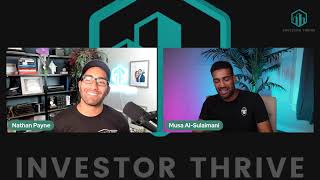
Boxer and inventor Musa Al-Sulaimani talks about building products from scratch using 3D printing and injection molding, then selling them on Amazon. He explains how to protect designs with patents, why delegating matters, and how the discipline from fighting translates to business.
Chapters
Rotating.
Okay, here it is. Hey, we are live right now with the Painless Flipping Podcast. What's up, Invest Thrive Nation? I got my man right here, Musa Al-Sulaimani. Oh shoot, I practiced it. Musa Al-Salami? Al-Sulaimani? Al-Sulaimani. I tried, man. I tried, but it's close enough. I'm curious real quick, what nationality are you, man? I'm curious.
Yeah, I'm a mix. I get that question a lot. Middle Eastern name, actually. My dad traveled to the Middle East when we were young, but I'm actually mixed with a few things on my dad's side. Eastern, a little Eastern European, Russian, Italian. And then my mother is Indian, but, you know, Indian, and she's Israeli as well. But, but she's from— her ethnicity is Indian. So pretty much mixed with a lot, but Indian, Russian, Italian, mixed with a few different things.
You know, the reason why I asked you that, bro, is because I get that asked all the time to me. And, you know, when, when you're brown like us, people just like they don't even know. They're like, Mexican, you know. And then you just kind of told me and you're like, no one's ever guessing that, right? Like, that's just, you know, it's hard to guess what people are. Like, for me, I'm half Chilean, half white, like straight American.
Oh, wow.
So, and I look, depending on how big my beard is, you know, I'll get, uh, you know, like Muslim, right? I'll get Middle Eastern, and then I get it short and then people are like Hispanic. I, you know how it is.
What, man? Yeah, mine's the same way, but it's a blessing though, you know. You can, you can you can turn, you know, you can go whatever way you want to go, you know. No matter where you're at, fit in a little bit. So yeah, I think it's a blessing.
No, it is, man. It's a blessing. I honestly think as like time goes on, everyone— I mean, everybody's mixed. It doesn't matter how you break down, you look at the DNA, everyone's, you know, mixed. And unless it's just, you know, some person that's just pure— actually, one of my neighbors is, uh, I think I'm saying this right, she's 99% Ashkenazi Jew. Just 99%, like no, no, no mixtures, I guess, all through her DNA, which I thought was amazing. But anyway, hey, man, really happy to have you on here. For everybody's watching, you know, I brought Moose on here because he was referred to me by Anthony Kassar. And, you know, I always love getting in front of winners, getting in front of people that we can learn from. And, you know, as you know, the Painless Flipping Podcast is about real estate, about entrepreneurs, about the winner mentality. And Musa, this guy's a winner, you know, he's got, he's got a business, he's got, he's, he's up boxing people, he's a fighter. And I love learning from people like this and I think everyone can. So today we're going to dive into what he's about, what he's doing right now, his journey, and a little bit about his business too, right? Because you're an inventor, right?
Yeah. So yeah, I'm an inventor. I have a ton of different products. This logo here, Amazon FBA Gorillas. I have a course, uh, teaching others how to, um, you know, do product development, launch product from scratch, invent products, come up with creative ideas for products, um, you know, come up with solutions for problems that exist in the market, uh, how to develop it, how to manufacture, how to find those manufacturers, um, just really, you know, from ground up on how to, um, not only choose the right product to sell on Amazon, but how to actually invent and design and manufacture products as well. So that's from the business side. We can dive into that, but, um, no, we definitely have to—
yeah, we definitely have to dive into the business and the fighting aspect. That's amazing. Um, so let's kind of start. I got so many questions about the business because I'm in the real estate world, bro. I've never honestly even heard about like inventor— well, I've heard of about inventors, but I didn't know about courses, about— I don't even know the first thing you would do to to like if you had an idea how to develop that product. No idea. So I'm going to ask you a lot of questions, and I'm sure a lot of people watching this will definitely be interested in reaching out. And I have in the description, everybody, I have his Instagram. It's Moose_777.
Is that right? That's right, Moose_777. Moose like the animal. That's it.
That's it. Is that like your nickname or something? Does everyone call you that, or—
Yeah, everyone asks, you know, how I got that name. It's just my name's Musa, so just naturally people call me Moose, like, you know, When people hear like, yo, Moose is coming and they haven't met me, they think it's this big guy coming. And I'm not small, but, you know, they're thinking like a big fat dude coming through. Yeah, that's awesome. But just Moose. Moose. Yeah.
Okay, well, hey, everybody hit him up, but let's kind of dive into the nitty-gritty of it. So before we even get into like your business, I want to get to know a little bit about your background and how you even got into, product development and fighting? Like, I know the boxing— you, you probably have been doing that for a while before you even went to college or got into your business, is that right?
Yeah, definitely. I've been boxing all my life. I've been boxing since I was a little kid. My dad was a boxer and kind of, you know, taught me. I grew up in Philadelphia, um, and boxing is, is kind of the sport in Philadelphia. So I grew up boxing in Philadelphia. My dad was a boxer, and, um, just from a young age, being in the boxing gyms, training, fighting, And then I got to a point where I had a lot of success as a kid. It got to a point where, you know, I started playing football in high school and I wanted to play football in college as well. I had a few injuries and things like that. And then coming to Penn State, I wound up boxing at Penn State and kind of fell back in love with the sport from, you know, my childhood and things like that. And just, you know, boxed, boxed throughout college. And, you know, won a national title while at Penn State. And that's what you want, a national title boxing, bro?
Yes, sir.
That's sick.
That's awesome, man.
Thank you.
Dang. Okay, well, for everybody that's watching this, you got— you got a boxing champion right over here. That's sick. Okay. Sorry to hit your— interrupt your flow, man, but I didn't know that.
That's cool. No. Yeah. So then, you know, that's kind of where I ran it, you know, met Bo, Bo Nickel and Anthony Kazar. And, um, I've, I, you know, Philadelphia where I'm from, they don't really— wrestling is not a big sport. So I never really heard, or I've heard of it, uh, you know, you hear like WWE and things like that, but, and there's a distinction between real wrestling and fake wrestling. But, you know, we didn't have it in high school. Um, so coming to college and meeting those guys, this was where I started really getting exposed to to wrestling. And when I kind of saw it, I kind of saw it live, I was like, dang, this is, this is cool. Like, this is real, um, competitive and, and tough, and it reminded me a lot of boxing. Um, so then that's when I started getting with them, and we talked about this kind of MMA, uh, dream and kind of transition them from wrestling to MMA, and then me from boxing into MMA. Um, and MMA is really on the rise now, so it's on the on the climb. So it's just something that, you know, I got interested in. And then, uh, Bo opened up the gym here in Happy Valley in State College, um, just right next to the Penn State facility, and it was just a perfect situation. So, you know, from then for, you know, about 2 years now, we've just been training full-time, uh, to make this MMA run, and it's been like an, you know, an awesome experience.
Wow, that's amazing. Is, is the gym pretty, pretty busy? They got like quite a few people that go out there and train?
Over there? Oh yeah, it's a, it's an awesome gym. Like, if you're in State College, uh, Happy Valley, or, you know, around Penn State, uh, this is definitely the gym to pull up. We have, uh, a world-class, um, a 5th-degree black belt, uh, teaching the jiu-jitsu class. Um, we have another guy, he's coming back in, he's like a 4-time, 4 or 5-time world Muay Thai, uh, champion. And obviously a lot of those guys. So it's, it's a, it's a really good gym. It's open to the public as well for for, um, you know, open classes and things like that, uh, jiu-jitsu, kickboxing. And then we also have our pro class that we, um, you know, we train in the morning, the guys that are, are looking to compete and fight professionally. So yeah, it's definitely busy, popping off. And it's a young gym, it's only been around for a couple years, so, you know, we're only growing.
That's amazing, dude. So I got a question for you about fighting in the gym. If you were to like, uh, just pick one skill set You might be biased to boxing, but with just one skill set out of, let's just say wrestling, jiu-jitsu, Muay Thai, boxing, like let's just say those four, which one would you want to be the best in the world at when it comes to fighting in the ring?
Because I don't know, I thought you were gonna hit me with the Bradley Martin question.
Is that, is that the same? Did he ask the same thing?
Oh, he goes, uh, he's like, yes, I'm 260, I'm 260. I just want to ask you, he has like a professional fighter, he's like Can you beat me? I'm 260. It's like, it's fun. It's a clip that's been going viral, but I'll have to check that out. Yeah, I guess for me it's, uh, I mean, I'm biased, but I would say, uh, I would say boxing is a great base. I think, you know, I've learned respect and everything else, but for me, boxing is just a great base, especially just to, um, just learn the basics, uh, learn that footwork. A lot of people think boxing is all about your hands, but it's— I would say about— it's about 70%, you know, footwork and, uh, your mind. It's a bit— it's a chess match. So if you, if you understand really good positioning and footwork and everything like that, I think a lot, a lot of it translates. So, um, it's kind of a funny, like, like, debate people like to have, like, which one's the best in the street. And yeah, yeah, I think there's, there's no— there's no good, good fight in the street, you know, with this nowadays, you know, obviously people have weapons and things like that. So for me, it's good to have your hands, you know, let a couple, let a couple go and then get out of there. You don't want to be tussling with anyone on the ground and, uh, somebody's always come up, you know. So just be able to land a couple shots, be able to throw your hands and get out of there. And also, you know, teaches you a ton of confidence and a touch of discipline. The same thing with wrestling, uh, just being up here and wrestling with these guys is wrestling is a, is a sport that I've grown to respect. And it's, it's tough. Like, you know, you get in there and you're there to work. There's guys that are been doing it for a long time, and right, uh, if you're not coming prepared and ready, you're gonna, you're gonna pay. So, well, yeah, all the missions are the— all the martial arts, you gotta— once you, once you really get in there and do it, you, you grow to respect and have a natural respect for it.
Um, so Definitely. No, I love that. And I love the fact that you brought up that it's a chess game, right? Because like whether it's wrestling, jiu-jitsu, boxing, it's all like a chess match, right? Like countering, you know, trying to figure out what, what, what strategy to use. So let's go back to, you know, growing up as a boxer and then obviously you, you won the championship in Penn State. But how did that— your mindset, like how did being a boxer growing up, how did that affect your mindset like throughout your life? Like were you always motivated to do whatever, whatever you went out? Were you ready to crush it? Like, just kind of curious, like, how, you know, being in boxing helped you out.
Yeah, I think, um, it's one of those things that, you know, I think as a man, every— everybody should challenge themselves, you know. You know, man, woman, whatever, you should— you should definitely challenge yourself. And, and for me, stepping in like a ring, stepping in a cage is probably one of the most challenging things, you know, mentally, physically. It's not just, you know, what everybody sees on the night of the fight. Obviously, you got a ton of preparation, you have a ton of hard work, and it's also a mind game. So you're fighting with yourself. It's not just a battle with the guy in front of you. A lot of times, the guy that's going to step in that ring, he's the least of your worries, right? The least of your worries is yourself. So, you know, for me, it's like those months leading up to the fight, you're dealing with you know, the mind tricks that your brain plays on you. You know, you're about to get in the ring with this guy that's, you know, wants to kill you, you know, wants to knock you out in front of everyone. So, um, yeah, and you have to, you have to know, understand that, you have to live with that, and you have to control that in your head. Um, so you have to be able to control your emotions, you have to be able to prepare in the right way. Um, so yeah, all these things kind of just teach you like, um, just a baseline, you know, how to be disciplined, how to prepare for something, uh, not just because, you know, in fighting, boxing, whatever it is, it's not like, uh, I don't know, getting ready for chess or something. Like, you can seriously get hurt, you know. You can, you can walk in and then walk out a different person, you know. You can seriously get damaged, and it's, it's not a joke. So you have to be prepared. There's no like, I'm gonna kind of half-ass this camp, or, or half-ass training, or maybe my cardio isn't right. You have to make sure you're, you're fully fully prepared. And a lot of people, they don't have that consequence going into like business, you know, until it really sets in. Like, I'm dead broke, and the consequence now is like, if I'm not successful, I'm not gonna eat. And so, you know, just having that consequence at the end of the tunnel, like, I'm gonna be in there and forcing yourself to do it. Like, a lot of people, they maybe they say they're going to go and do a fight, but it never happens because it's like when it really sets in, that's when it becomes different, you know, that, that consequence becomes real. And, and so that's kind of translated, you know, over into business where it's like, you know, maybe the consequence— maybe I don't need the money right away, but I've already instilled in myself that preparation, uh, for something that can be, um, a big consequence at the end. So it's really taught me how to prepare for things, um, how to mentally be disciplined and how to instill that hard work and dedication and everything like that. And also confidence. A sport like boxing or wrestling or jiu-jitsu, whatever, it instills confidence to where you know you can handle your stuff wherever you go. I think that just translates over in life.
No, that's interesting because I also have like the extreme confidence in myself to the point where like There was this guy at my gym who, you know, I looked at him, I was like, I'm a great wrestler in my opinion. I think I'm good. And I went and he creamed me, bro. And I was like, later found out that, you know, he was, he was in the MMA for like 10 years, an older guy, right? But, you know, he was MMA fighter. But like in my mind, I was so confident, bro. I was like, I can do this. But it's interesting how like getting into sports, doing what you did, like, yeah, you pretty much probably go into pretty, I would say anything with confidence, right? Because you're like, hey, I'll figure it out. I'm gonna work hard.
I'm assuming you'll figure it out, or it's not that bad. Like, it's that, you know, it's not— this guy's not gonna be punching me in my face, you know, like doing, like, doing a podcast with you. It's like, yeah, yeah, you're not swinging on me right now, so—
not swinging on you. This is better than, uh, you know— yeah, you can handle this.
That's so cool. Like, obviously, yeah, you can get like, uh, worked up. So we get psyched up, but for me, I'm like Oh, like, I just, I just walked out and, you know, front X amount of people and got locked in a cage and we went at it. So now it's like, all right, let's go do this podcast.
All right, no big deal, bro. Podcasts are probably the easiest thing that fighters deal with, right? They're like, oh, I gotta talk for a couple, you know, a little bit, no problem.
Yeah, it's interesting though, but, uh, you know, sometimes it's not that way because, you know, a lot of fighters, they deal with just the fighting aspect and they don't, um, they they don't branch out into, you know, academics or, or communication or anything like that. So, um, sometimes it can be, you know, they can find themselves in deep waters, uh, just like the other way around, where if a podcast host maybe steps in the ring or something— I'm not saying you, you've got some experience, but you know, whatever— like some guys just don't, don't prepare for that, and, and it's tough.
But do you know what kind of— I, I didn't watch this fight because I don't really get into this, but I look like I saw like highlights, Nate Diaz versus that Jake Paul guy. Looked like Nate didn't even train, bro. I don't know if you saw any of that. I don't know if you're cool with Nate Diaz, but yeah, I watched it actually. Did it look like Nate was like— I don't know, I just saw highlights. I was like, man, it looked like Nate's just like not really even trying that hard. I don't know.
What's your opinion? I think he definitely tried. I think he's an MMA guy, you know, he's— boxing is a different sport. There's different rule sets. There's a different cardio. Um, so when you have a guy like Jake Paul, he's taking it serious. He's, he's training every day with the, with the best, uh, the best trainers, best, you know, athletic trainers, best training with you guys too, right?
Doesn't he train with you guys? Right, sometimes.
Yeah, exactly. Like our guys, like, you know, Bo go up there and, and train and things like that. So he's, he's doing all the right things. And, um, he's, he's not, he's not a slouch. He has a lot of power.
He—
and, and the way he's moving around the ring, you could tell that he He's been getting the right advice and things like that.
But anything people just take them— do you think people just take them like they don't take them serious, or do you think they do?
Well, I think people take them serious now. I think they see what— I think they see the way he— because, you know, in the beginning he just had a lot of power. You know, anybody can just naturally have power. And, you know, he's a YouTube guy with some power and he went in and knocked a couple of guys out. But now you could see the progression to where he's not just throwing power, he's setting the guys up. He's moving his feet, he's throwing a jab to the body, you know, he's setting the guy up for the overhand. I mean, he's doing a lot of the right things, he's rolling with the punches. So he's doing a lot of, a lot of things that, you know, high-level boxers, you know, high-level, um, it takes a long time to master. But the thing is, he's kind of, um, fast-tracked because he has, number one, he had the, the, the best trainers, you know, the best sparring partners, the best facility. People don't understand how how powerful that can be. And he also, he's in a situation where he has the money to invest in that and not worry about a paycheck or not worry about how he's going to pay the bills. He can do all that and also just focus full time on training. So I've been doing MMA now for a while and I just went back to Philly and just got pure boxing work and I almost forgot the intensity, the level of detail that a boxing trainer will point out versus like an MMA, because it's more to it, right? You can't focus on boxing the whole camp, or you can't focus on boxing, but when you're specifically focused on boxing, every little detail matters. Uh, every little detail is crucial. And if, you know, you let your guard down for a second or you start biting on a feint like that, you know, you can get caught. And that's just something that a guy like, uh, uh, Nate Diaz. He's, he's just probably not training specifically boxing for that long a period of time. And, and I think he actually looked a lot better because he probably been training boxing for a little bit now for the fight. But, uh, mainly all his life, you know, he's just focused on, on like jiu-jitsu, boxing, uh, and that's a sport in itself.
Yeah, that mixed martial arts. Well, maybe, bro, maybe I should watch it, man. Maybe I'm just, uh, one of those guys that's just talking before he's even seen it. But, um, I have one of the comments that just came through is, do you think the fights are fixed? I personally just gonna say I don't think so, just because you can tell that he's far superior, right? And I would say fixed is like they don't try. But yeah, you probably heard that too, right? Like, hey, these, these fights are fixed.
Yeah, no, they're not fixed. I mean, even like earlier in Jake Paul's career when he knocked— I think he knocked out, um, is it Woodley? Tyrone Woodley. Yeah, there's no way you're fixing that. I mean, you, you I like, I can guarantee, I can bet someone right now to put your arms on your side and fall face down on like you're on like a mat, on a hard mat, uh, for, for $1,000 or $10,000, you probably will naturally flinch. And if you watch him on the camera, he, he fell straight down and landed on his face. Like, there's some things that you can't really— yeah, there's obviously on the back, there's stuff, there's stuff on the back end that you can do to make things, you know, go in your favor. And I definitely think that happens, like, in terms of just the the clauses and the, the time the fight take place, the amount of rounds. There's all types of things that you can kind of coordinate, but at the end of the day, the rule set is the same for both fighters. So, and they both agree to it, so nothing is fixed there. And you got to be both to, to coordinate both fighters to fix a fight like that. It's gonna be very tough.
Uh, no, I agree.
I don't— I agree with you. Yeah. So let me ask you a question. Takes a fall, you know, if a guy takes a fall, and obviously Jake Paul's not taking a fall or anything like that.
Nah, man, no, no, you're right, bro. And like you said, he's in, he's all in, you know, you, you see it. And, uh, looks like he's, he's straight, like he's bought in, he's focused. So that's sick. So let me ask you a question about business and fighting. Do you think, because I've been reading a ton of business books and pretty much all the masterminds I go to, they're always like, focus on one thing. Do you think, like, just kind of curious to be honest, like is it going to be difficult for you to run your, your business, your courses, and your inventions and be a top-level fighter? Do you feel like you're gonna have to choose between one? Tell me what your thoughts on that are.
Yeah, I think, uh, it's definitely tough, especially in the beginning when, when, you know, you're not established. But I've been doing, uh, the— this business thing since I was in college, and I've, I've done a lot of the hard work, you know, when I was in college and when I was doing all the product development myself and and things like that, the manufacturing myself. But now I got to a point now where I think at a certain point to be successful in business, you have to, you have to understand how to delegate. And I think somebody said, you know, you have to learn how to work on your business, not in your business. And a lot of times people get caught up with, with an ego or, you know, thinking that they're the only ones that are— they're going to do the best job at everything.. So like in my business, there's a ton of different tasks that I can of course do myself and I feel very confident doing myself, or I can outsource, I can hire, I can do all these different things and trust that, you know what, maybe this guy isn't running a full-blown business, but maybe he's really good at, um, you know, 3D design, or maybe he's really good at PPC campaigns on Amazon, or maybe he's really good at XYZ. So, just understanding how to delegate in your business, especially as a young business owner, just having that mindset. And obviously in the beginning, maybe you don't have the money to outsource everything. You have to kind of do some of the heavy lifting yourself. Right. But as you know, you have to understand how to delegate and how to use other people's time, you know, to your advantage.
Now, great answer. Leverage. Leverage is the key to wealth, right? I think I was watching an Alex Hormozi video. I don't know if you watch him, but he was just talking about leverage. You know, you want to make more money, you need to leverage more, more things, leverage time, leverage people. And you're exactly right. Like the E-Myth, you know, you can't do it all. You can't in the beginning. You're almost got to, right? And then you can start delegating. Sounds like you've been doing it long enough that you're starting to delegate. So let's go back to how you even got into this industry, because to be real, bro, when I was a kid, I was like, man, I want to, I want to invent stuff. And I was like, I don't even know if that exists. I don't even know if that's a career. So I'd never really thought of it past 8 years old or 10 years old. How did you know about this path? Did you find it in college? Tell, tell, tell us about— you went down that, that road.
Yeah, it definitely wasn't in college. They, you know, I think they don't really— the college is not really meant for to teach, you know, entrepreneurship or, or things like that. Obviously they have some classes like that, but I think, you know, We all know that the big businesses and things like that, they invest in the colleges to breed workers, right? So you kind of have to look outside of colleges in some degree, but you can, for me, you can really use college as a resource, but you kind of have to do a lot of the heavy lifting outside of college. But for me, where I got started was actually in college. I was, and I've always had like an entrepreneurial mindset, you know, always thought about different products and things like that, but I never really, I guess, devoted myself to making a product, you know, a reality until I was in college. And at the time I was boxing and a problem that I came across was a lot of guys start to drop their hands, you know, in training. And so I started working on this product to where it's a proximity sensor on a headband. And when you raise your hand and you start to drop your hands, it gives you just like a quick alert. So you're able to pick your hands up and things like that. And it was just a training aid. So I just kind of dived into it not knowing anything, right? Just kind of researching different things. Again, seeking knowledge from from other people who are, you know, this, this guy was an electrical engineer. I seek some of his knowledge and things like that. And then it took a while, and then finally I hit a point where I guess I realized all the, the, the, the hiccups in terms of developing a tech product. So I had to get all these certifications, and obviously you're putting a product with a battery on top of people's heads, so there can be some liabilities and things like that. But that's where I kind of hit the ground running. And, and starting with the product, right? I just kind of, um, just started messing around with it.
And then, uh, yeah, you got it, bro.
Let's see this thing. Yeah, well, this is actually another product. So, um, you know, while I was boxing, a big headache a lot of people, they have, um, they have these hand wraps, right? You have the hand wraps to, to wrap your hands up when, when you're, when you're boxing and whatnot. And so, you know, this product here, simply put, you put the hand wraps in where you put the hook in, you close it, and you, you roll up the, uh, you roll up your hand wrap, uh, really quick, and then it's for your hand wraps. Uh, so this— so, you know, going back to the other product, it took me a while, and then, um, I started working on this product, started diving into, um, product design, and I didn't know anything. I'm talking like I knew nothing, but I was just— I was just determined again, like, just like in boxing, to determine the learning, determine, you know, to learn about product development, things like that. So I just started learning about injection molding. And even, um, a lot of people take for granted some, some design or some engineering that comes with some of these products. Like a ketchup bottle, they have this little hinge here, and it's basically just a plastic piece, okay, that's connected, but it's called a living hinge. And I had to do a ton of research on living hinges and understanding how they open and close and understanding the the mechanism, hooking or hook and groove mechanism, on how to close and how to snap these, these things closed. So there's a ton of research learning from the ground up, you know, plastic injection molding, how our products develop, how to, how to design a plastic product. And so these were just one of— I guess these were just one of the first products that I've developed.
And that's a solid product, bro. That's a sub product right there. I just got to stop because I box too. Growing up, not like you, but I would— the hand wraps, man, you got to wrap them back up, you know, they get unraveled. That's a great invention, dude.
Amazing. Thank you. Yeah. And, you know, first, and I guess the first product that— and so I was working on this product and then I started branching out into some other sports. So I branched out into basketball and I came out with a product here. It's called the Flick Glove. And basically this product, you put it around your wrist in your hand and force a follow-through when you shoot the basketball.
So you're a hooper too, bro?
You're a hooper too? I just play for fun. But I knew a lot of guys who played at Penn State and things like that, and I kind of sought out their expertise and some of the issues that they would have. And I see a lot of young basketball players, they push the ball instead of flicking the ball, and that flick forces a backspin on the ball. Yeah. I kind of have a funny story with this, with this product. It was one of the first products that I, that I actually launched on Amazon. And so I didn't— I basically didn't have any money at the time. And I was like, you know what, like, I want to make this product. I know it's going to be a silicone product. It goes around my wrist. So I taught myself SolidWorks. I taught myself 3D design and I designed this product. And at that point I knew nothing about, you know, manufacturing. But I did a little research, learned about injection molding. And things like that. And so what I did was I just 3D printed the mold. So I 3D printed the negative of this product and then I had a bunch of silicone and I would pour the silicone into this mold like in my dorm room and I would squeegee the silicone off between classes and pull them out in between classes and package them up. And little by little I started, I started and little by little I got to a point where I had to decide where am I going to sell this product? Am I going to sell it retail, online? And that's where Amazon FBA, um, that's where I got to know Amazon FBA. And, you know, Amazon, a lot of people know Amazon for just buying products, but there's a ton of small businesses that, uh, they make a living selling products on Amazon. So I got into that, I launched the product on Amazon, and literally within weeks I started selling hundreds and hundreds and hundreds of units. Um, Yeah, to a point, to a point where I was like, you know what, I can't, I can't manufacture this product in my dorm anymore. Like, this is, this is getting crazy. So then I 3D printed like 6, 7 molds. I had buddies helping me like pull them out and package them and ship them to Amazon. And, you know, and then that's when—
I'm curious real quick, like, did you do marketing or did you just launch it and put it on Amazon? All of a sudden people are buying it.
Like, how does that work? Yeah. And at the time, this was 8 years ago, 8 years ago, 9 years ago. I didn't really know much about Amazon FBA on, you know, the SEO, the keyword research, all the different things, the perfect listing, you know, things like that. I just knew that I got to take a few pictures. I got to whatever. It just kind of did the, the just a rough launch. And so, yeah, it was really nothing like I launched a product and I put the keywords and then people were just searching up like basketball training aids or shooting. Just finding the product. That's cool. And, uh, yeah, so at a certain point I got to the point where I was manufacturing so many or selling so many that I had to seek a manufacturer, um, overseas. And they, you know, had— they did the injection molding. And that's where I have this, uh, this more professional version now that I sell online, and it sells really well. So, um, wow.
It's just one of the— what's the margins on that, man? I'm sure it's not Yeah, what would the margin be like? What you sell for and what it costs to make and get it out?
Um, yeah, so, uh, I think right now we've kind of got it down with the— it just depends on the bulk, the, the number of units you buy. Obviously the more units you buy, uh, the lower your, your cost is going to be, your landed cost. Uh, so a product like this, it really— it also depends, like for this is a little more expensive because we have these, um, uh, these rivets here and these snap buttons, and it takes a little bit more technology to get these snap buttons in each one and then the amount of snap buttons it is. So it's a little more expensive product, but you can get it if it's just all silicone, um, you know, it's just an injection molding. You have the, uh, the fixed cost of the injection molding, uh, mold, and then after that, I mean, you can get, uh, silicone products like this for, I would say, less than a dollar and, you know, sell them for $20, $15. $25, whatever it may be. So the margins are really good. Amazon takes a little cut for fulfilling it, but it's really competitive. And yeah, so it's good, really good margin at the end of the day.
That's awesome, bro. Do you ever have anyone come to you and say, hey man, I got an idea, will you make it and sell it on your thing, give me a cut?
Or has that happened? Oh yeah, yeah, I actually have a buddy of mine, he he had an idea and I told him, um, anybody else I would, I would just say like, I would just say like buy my course and it'll walk you through A to Z on how to do it yourself because I have a ton of different products and I've, I've, I have like, uh, I have the course and I have fighting and everything like that. I don't have too much time, but there's a buddy of mine and I wanted to do business with him, so I said, all right, well let's go in this together. And it's actually one of my, one of my best-selling products. So I have a few products like that. Um, and do you have it with you? Yeah, well, I have a— so here's one of the products called the Drip Pad, and this is actually a refrigerator drip catcher. So you put it in the fridge, um, the water dispenser, and it absorbs all the extra drips so you don't have that calcium buildup and things like that in your drip tray. Crazy, man. This product, uh, we got a design patent on it, and, and there's a ton of knockoffs that came on Amazon after us. And, uh, we're waiting on this design patent, and then we'll be, we'll be set. But it sells really good.
And, uh, so what is the design patent? How does that work? Is that like the knockoffs?
The knockoffs like get you paid? Uh, well, I guess the design patent just protects the design. The utility patent detects, uh, protects the utility of it. And anybody else that kind of see the product and try to knock it off, you can we can get rid of them off of Amazon and kind of control the market. But, um, in the beginning— yeah, just like a tip, like, uh, in the beginning when we have these knockoffs, we, we actually like to leave them up, uh, we— even if we have a patent. So I have this product here, um, this is actually one of my other products. It's in a, uh, it's a— it's called a vent cover and it's a baby accessory, uh, product. So I just recently had a kid, I actually have two kids now, but kids like to stick their fingers in the vent. You know, they can stick their fingers in the vent, get their toe caught in the vent, and they can get, you know, badly injured or cut themselves on the side of the vent. So all these are is just protective, uh, covers. That way you can baby-proof the vent cover and protect the baby. So we launched this product, we got the patent on it, design patent and utility patent. But there's a ton of knockoffs that came into the market, and in the course we talk about, you know, how to prevent how to prevent that and prolong that. But there's a ton of knockoffs that came onto Amazon, and in the beginning we're like, yo, let's just get rid of them, we have the patent. Um, but we decided to let them stay because it's a new product. And in the beginning, when you have a new product, you have to educate the market on the product. Like, you may— maybe you didn't know that it could be dangerous, right? Maybe someone doesn't know that a vent could be a hazard, or maybe someone doesn't know that this product exist. So a ton of these sellers that are knocking off the product, they're actually going out there and they're educating the market for me. They're paying that ad spend, they're paying the, the, the ad spend on Amazon to expand the markets, to advertise niches such as baby safety, or maybe advertise, uh, on other listings such as maybe like an outlet cover and things like that. So they're spending a lot of the AdSense, and all we do is advertise on their listing. Because we have the most established listing and things like that. Yeah, yeah, the reviews and all that. Yeah, we have a ton of reviews and it's a— we make sure that ours is quality and we have the branding and everything behind it. So, and then eventually once the market gets big, then we'll, we'll get, we'll get rid of them, come after them.
But so let's talk about your course really quick. So if someone was like, man, I want to invent something And they buy your course, so there's the investment right there. Is there any other investment that they need, uh, to, to build a product? Like, do they need— do they need to like research the product they're wanting to make before they even make it to make sure even someone will buy it? Like, how much money would someone need in order— do you want to talk about how expensive your course is and the investment they would need to make, or do you want them to kind of reach out to you?
Yeah, right now the course is, uh, $2,000, but Um, right now we— it's not open to the public. We have it for like a small group right now because we're, um, we call it the Founders Program. And basically we're going to use— it's a small group of basically friends and family that want to launch products that have sought out my expertise and things like that. So we're launching, we're, we're making the products now, we're launching the products, and soon they're going to have products and numbers to show for everything that I'm talking about and and how successful these products can, can, can be. And then we have that, we're working on the website and everything right now, and it'll become available. But there are also other courses out there, other FBA courses specifically, that you can purchase just to understand how to sell on Amazon. And then there's probably also other product development courses that teach how to develop products. But, you know, my, my course is specifically, to sell products on Amazon, but to gain, uh, an advantage over the, over the competitors. Because right now Amazon is really saturated, but they have the markets like social media. There's everyone's just going on Amazon going on. So you definitely want to get a product on Amazon for that passive income, but you don't want to compete against all the other sellers. So you have to find a way to differentiate yourself. And, um, just from me being creative and launching these different, uh, strategies and creating these different products, I've been able to come up with these unique strategies that I haven't seen before. I've seen versions, uh, here and there, but, um, obviously you have like a new product strategy. We have 3 other— we call it guerrilla strategies because FBA gorillas. We call it guerrilla strategy on how to choose the perfect product or how to make an adjustment, or just different strategies like we talked about before and how they can get an edge over the competition. And also understand the manufacturing side, how to manufacture a product. Like you said, if you have an idea or if you don't even have an idea, how to come up with an idea, right? Because there's a science for everything. We all have a niche in our life that we have expertise on. We know, like, like I just had a kid, so I understand the market, right? So I understand like what are some of the problems that arise within my daily life watching my kid or seeing them move throughout the day. So then you can start, using those problems to then tie it back into Amazon, tie it back into a solution, tie it back into the manufacturing, tie it back into all these different strategies. Before you know it, you'll have a successful product like this, this vent cover product here. The product here that, um, it's a baby— another baby product, uh, you know, whether it's a sports niche like something I'm familiar with like boxing, uh, basketball. I have a ton of basketball products. Kitchen accessory products. So, you know, a lot of people, they teach, they teach this stuff, but they've never really launched a product from scratch, or they're just reselling products that already exist. So that's what, what differentiates our course. And I'm fully confident that anyone that purchases the course, or anyone that wants more information, I think if they make that investment, um, they'll, they'll never regret it. Like, for me, You know, I made an initial investment in some of these products and it's now peanuts, you know, compared to what I make now. And yeah, yeah, it said in the beginning, the initial investment, it really depends on the product you're trying to launch. Obviously you, uh, you don't have to buy any course. You can just kind of do it yourself, but then your time is your investment and that's the biggest investment you can, you can, you can make. So if you're going to want to invest like I did 10, 10 years where you can just piggyback off of everything I learned in those— yeah, of course, that, that's going to be super beneficial. So you obviously, it depends on what, where you're at. If you're young, if you're only 15, you have no money, you have nothing but time, then just, you know, start learning, start, start, uh, researching on, on YouTube and everything. If you have a little bit more money, like you're in college and you got maybe a couple thousand dollars that you want to just put, put aside, or if you don't even have that, maybe invest, maybe partner with someone else who has some some more money, but you have a little more time to take a course. So maybe they buy the course for you, you learn everything, you launch the products, run it, and then you, you know, profit share like that. There's a ton of different opportunities that you can, um, you can, you can leverage and take advantage of depending on where you're at. Um, obviously the more money you have, the bigger the investment. But for me, like this product here, the Flick Glove, I had, I had close to no money. I started off with about, uh, like $60 for silicone and packaging and things like that. So $60. And I think, um, just, uh, just alone last year, this product did over $350,000, just this one product.
Wow.
Started from $60, huh? Starting $60. Literally $60. I made these, and I wish I had the original one here. It was just a silicone. There was no, uh, there was no buttons or anything. It was just— it went around your hand and it went around your fingers. I sold those. I started selling those. And then once I launched this one 2, 3 years later. The first year we did maybe like $65,000, $65,000 in the first year, but with a combination of the product that I was manufacturing in my dorm and then the professional product. But then after that, um, you know, everything was kind of streamlined. So, wow, bro, you definitely have to take a little risk in the beginning, but again, it depends on the amount of time you want to spend on it versus the amount of money amount of money. But again, you can, uh, with the strategies, if you have the knowledge, then it really won't cost that much. Because I think knowledge is one of the most, uh, I guess costly things, right? If I'm going to hire an engineer for him— yeah, if I'm going to hire an engineer to design me a product, they're going to charge me $10,000. If you, if you take the course and you're— and you know, that's a little middle ground. So now you're doing the work yourself. So it just depends on how much you have to invest and your goals.
Dang, well, you heard it here first, everybody. If you want to build a product, Moose is your guy. You got to hit him up on Instagram, go to his website once it's ready. He'll help you out. Wow, that's amazing, bro. I've friggin learned a lot from you. I'd like to keep on talking, but, you know, maybe we got to have you back on here, bro. Maybe we got to have you back on in the future because I think I want to follow your journey, bro. You're boxing, you're fighting, you're building products. Dang, like, I think you got a bright future ahead of you, man. There's a lot going on. I do have one last thing to say. So I'm really into personal development. I actually built my— created my own planner, um, that like kind of takes people through planning out their life. Then it reverse engineers anything from their life to a yearly goal to a quarterly goal to their weekly planning to their daily. So I have everything built out and I give away the PDF for free to my students and stuff and just anybody that wants it. I'm curious, is that like, would that also be a product? Like if it was, or is that like a book? Is a planner, would, if I printed that out, got that all set up on Amazon, just curious, would that be like more on Amazon Books or would that be a product that you could sell as a planner and like on Amazon kind of like how you do it?
No, it's a great product. It wouldn't be on Books. You'd launch it as a product because it's not, it's not like a set. It's not like a, you know, text or you don't have to have it No, yeah, it's, it's, it's a product. It would be a plan. Yeah, I think it would be a perfect product.
And bro, I have to, I'll have to send you the PDF and you can check it out. Maybe we can, uh, you know, I can take your course or we can figure something out because I'd love to get this thing out. I don't know who would buy it, but I think it's dope.
I use it. Yeah, there's a ton of different— so Amazon has the, Amazon has the market. So if you understand how to do the PPC campaigns, you understand how to do keyword optimization and, uh, people are going to be searching for planners and things like that, yours is right here, bro.
So I print mine out like I have— this is my life goal, like the life plan and objective. And then I bring it down into like, what are my quarterly goals? And then it goes into my weekly planning. So it's all built out and I just have tabs. But I feel like if I put this into like actual, like a, like some, someone could buy and it's just ready to go.
I feel like someone would buy it, bro. I can put you in touch with some manufacturers that can manufacture that in a really cool looking book and have it packaged up really nice. And I think that would be awesome. I think that would do really well on Amazon. Yeah, I love it. Again, there's something sold, man. I'm sold. Find an angle.
Yeah, cool. Well, hey, let's wrap up because I feel like we got some good stuff. Anybody, again, if you You learned. I learned a ton. I asked questions I was interested in. I hope you guys, if you want to ask more questions, hit up Musa on @mus_777 on Instagram. Hit him up. You know, definitely got a lot to teach you. You can learn a lot from Musa. I'm glad that you came on here today, man. Let me— before we wrap up, I want to ask you one last question. Is there anything you want to leave our listeners with? You know, that like a gold nugget, anything you want to say before we end tonight or today?
Yeah, well, somebody said y'all both cute, so I appreciate that.
Yes, yes, Jacqueline. Um, yeah, yeah, Jacqueline. He's married, you know, he's got a kid, he's got kids.
But hey, we appreciate you, that's off the table. But, uh, yeah, I think just, uh, you know, in anything, just, uh, life's a balance, you know. You got to be able to balance your— balance everything., but then again, you know, find something that you really, really enjoy and try to make that your income. You know, I think, you know, whether it's fighting, product development or anything like that, um, like my wife, she, she was a stay-at-home mom for a while, but then she had a little more time and she used to do ballet and, um, you know, she came or she wanted to kind of find some stuff to do and I was like, I was like, why don't you go teach ballet? Like, why don't you, you know, she's like, oh, that's not really like, she didn't have the mindset to think like that's a real possibility. And I'm like, why not?
Why not?
It's something you love to do, something you're gonna be passionate about. That's something that you're gonna grow in. You're not just gonna go work somewhere and not have any stake in that. And so she started working there and she loves it. So, and then she's growing within there and like gonna help maybe start her own thing and start her own podcast. And you know, so I would say just, you know, try to find what you love to do and try to find a way that that's going to make you money. You know, with social media and, uh, with even Amazon— like, with Amazon, social media, just, uh, the communication that we have, uh, the— how we're connected— you can turn anything into income. You can turn anything into cash. So, um, just find that niche that you're passionate about and then start thinking about different ways that you can, um, you can, uh, capitalize on it.
Bro, I'm passionate about this planner, bro. Like, I teach people how to, uh, you know, get into real estate, but I love planning out my life. I love being like having a direction or you're going. I think, I think that's what, you know, I'd love to do something like that.
But anyway, I'll give you one more thing. Like, with the planner is like, you know, learn— like, you have to— like, you don't want to sell the benefits of the— or you don't want to sell the features of the planner. So a lot of people get caught up, they're selling the features. All this planner has this section, this section has this, this, this. All right, well, there's 100 other planners that probably have that. Well, you have to sell the benefits. What is the benefits that this planner is going to give you? You have to sell, you know, you have to sell to the customer that they need this planner. What is this planner going to give you? It's going to give you X amount more time throughout the day. It's going to give you, uh, peace of mind. It's going to make you more money. All these things are the benefits that the planner is going to, uh, are going to, going to gift you. So you don't want to be selling, like, whether it's advertising or social media or or Amazon, you don't want to be selling the features of your product or whatever you're selling.
You want to be telling the benefits to the customer, how it's going to improve their life.
Yeah, the problem it'll solve, correct?
That's right. Yep. Yeah, I mean, you know all about that, man. You're solving problems all day. I love it. All right, man, balance is the key. Like J. Cole says, life is a balance. Lose your grip. If you don't, you could lose your grip and slip. That's like one of the lyrics I like from J. Cole. But anyway, All right, man.
Later. Appreciate it. See you. Thanks for having me.
Of course.
Take care.
More from Nathan





Why Traditional Wholesaling Keeps Failing You (Use This Pre-Flip Method Instead)





