LIVE Real Estate Rookie Meetup: Hosted by Nathan Payne
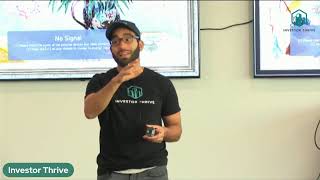
The livestream begins with Nathan Payne opening a small, intimate networking session for rookie real‑estate investors. After brief introductions, licensed broker and property‑management instructor David Gallant delivers a comprehensive presentation aimed at new landlords and self‑managing owners. Gallant walks the audience through a step‑by‑step framework: defining short‑ and long‑term rental goals, preparing and marketing a vacant unit, setting responsive communication standards, and navigating Utah‑specific legal obligations (Fair Housing exemptions, the Utah Fit Premises Act maintenance response windows, and lease‑addendum fee disclosures). He then shifts to revenue‑generation tactics, outlining a menu of add‑on fees (application, pet, washer/dryer, storage, accent‑wall, late‑fee, lease‑renewal, violation, reschedule, month‑to‑month premium) and explains how to price them without over‑charging the market. Gallant stresses the importance of reputation, customer‑service mindset, and systematic processes (regular inspections, maintenance calendars, automated software). He recommends practical tools and resources: Buildium (or DoorLoop/Yardi Breeze) for property‑management software, NARPM and IREM for trade‑group networking, the Good Landlord certification, Utah Rental Housing Association, Jeremy Schwartz’s eviction forms, and Rentometer for rent comps. The session ends with a Q&A, additional tips on renting out garages, and a casual wrap‑up with lunch plans. Throughout, the tone is instructional and supportive, encouraging attendees to adopt professional standards early to build sustainable, profitable rental portfolios.
Chapters
I pretty much took the deal.
The other one, he was approved, but yeah.
Really? Not really looking to network?
Well, that's what they see in the pre— right, right.
Okay, because you got to make sure wherever you're putting stuff Yeah, yeah, that's why I focus on those 3 counties. Those are like the counties with the largest population.
Yeah, yeah.
And Atlanta is up and about. Love it.
Yeah, let me—
Do you want to start?
Yeah, we're going to get started and we can chat. But yeah, if you want, when I bring up Pam's Wholesaling, just share, just put that on the stream and then you can take it out.
Yeah, of course.
This is what we're here for, right?
All right, guys, this is— let's get rocking and rolling. I think it's a good intimate group.
That's what it's all about, right?
I don't—
you know, honestly, when there's like 100 people in a group, I feel like it's even hard to even connect with like anybody, right? So let's get—
let's get cool.
All right. Well, so I will give a little intro and we'll let you go. Get you— get you going for like 10, 15, and then we can, we can get some lunch or we can do whatever, guys. And we're honestly here to, uh, you know, see how we can provide value to each other.
That's pretty much it.
The goal would be to do deals with everyone in here. That's, that's, that would be my goal. Can you hear me? We good? Okay, so, um, let me actually, uh, do you mind if I use your laptop just to pull up something? Okay, let's see. All right, let's see if I can share some. You actually got it. You need a pin. You got a pin on it, I think. So how's everybody doing today? Pretty good. Let's freaking go. I'd like to hear it. So I'm just curious how— because I want to be able to get this in front of as many people as possible, because the more people— well, I'd say not the more people, but, um, we want to do more deals. So how did you guys hear about this? How did you, uh— just curious, we can start here. How did you hear about the event?
Uh, through one of your videos. Okay, I, I got— I think I received another invite or something right underneath the YouTube channel.
Okay, invite there.
Okay, the RIA. Okay, and you've been—
okay, Patrick.
Patrick, awesome.
Love Patrick. Uh, Facebook and the RIA.
Facebook and the RIA. All right, let's, let's, let's go. Um, Let's see, this should be connecting to, uh, show that.
Let's see why it's not.
Do you have multiples? Oh, do I need— do I need to, um, just pull?
Let's see. That's weird.
Yeah, it is kind of weird. So while we're, uh, trying to figure that out, um, How about we just go around and kind of introduce ourselves so everybody can get to know each other? Um, Joe, it's right— Joe, right? Joe, how about you get started? Tell us a little bit about, um, you know, yourself and what you're looking to get out of being here.
San Francisco corporate sales for 30-some years and, uh, looking to basically retire shortly. Need some extra activity to keep me busy.
I love it.
And real estate, of course, has always been I think on everybody's mind, you know, bought my first home seller financing back in San Francisco back in late, late '80s.
Okay.
And never thought about it since then. The focus, corporate America. And then started watching videos and stuff too, and your face came up on the channel.
Let's go! Thank goodness for YouTube. Love it. Okay, and what can we do to help you out while you're here?
So right now I'm just trying to learn lingo, what you're doing.
Okay.
I'm currently tied in connected with a Texas group and do some outreach for the local Utah markets.
Okay.
And so I'm actually finding leads now that are not completely focused towards sub-2. A lot of them are mainly seller financing because there's equity.
Okay.
A little equity here. Um, it's— I mean, homes are being sold with zero to no equity. Okay, I get it. But it's the education to the agent that I'm working win. So right now I'm doing agent outreach, uh, also doing some direct-to-seller outreach.
Cool. So you're just trying to get some deals? I love it.
And after that, find somebody to help me take it to the next level.
Love it, love it. Okay, what about you and what, what can we do to help you out here?
Uh, yeah, so that's my business partner Ryan. You're gonna hear probably very similar stuff from both of us.
Okay.
We just like to get out, I mean, different REIA events, local events to get different people. We do a lot of, uh, hard money brokering, some hard money lending if it's local areas, and then a little bit of our own stuff. I mean, Ryan will cover some of the stuff he's up to right now, but I think the idea behind this is just to meet people and try to be able to pass deals back and forth. We can hide deal flow to pay the advertising. So it's, uh, just looking to create more relationships and try to create more deal flow in Utah because we have a lot of going outside of the state. But sick.
So you guys are looking to lend money? Uh, mainly, right?
A little bit of that.
Do deals, lend money.
Okay. In Utah, or— yeah, okay. That's where we're prepping. I mean, that's why we're here. We're trying to get more deals in Utah.
But it seems like the wholesalers, or whoever today, is, uh, they're sleeping. They ain't out here working today.
Yeah.
Uh, Ryan Dewey's, um, I've been investing for quite a while. Um, Brad's my business partner, as you know. So we're looking more for Private hard money stuff, just in general. So if someone's looking for funds, looking to get creative, we do real estate consulting too for equity deals. I'm happy to help people out and kind of see ways that we can help them progress too.
Sweet, sweet. All right, and well, I guess we'll introduce you in a little bit. Did you get the computer figured out or?
Yeah, what do you need?
I was gonna just pull up painlessflipping.com just for anybody in here that's, especially for Joe, I think you guys know what I do, but I have a free masterclass that I do, um, where I teach people how to get their first or next deal with like no money, no marketing spend, kind of like Henry, how Henry got his first deal. Um, so if anybody's interested in, um, it's P-A-Y-N-E. Uh, no worries. But yeah, so I do the free masterclass and that's kind of like my goal is for everyone to get more deals. And then again, if we can do deals together, everybody wins, right? So, uh, that's why I have this event. And, uh, yeah, I think it's awesome whether we have 100 people or 5 people or 20 people, it's good to connect. And, you know, it's really cool because you can really do deals with people you connect with. Like this, I can think of so many people I've done deals with, or something's been, you know, like I've either used a hard money lender, they give me a connection to someone that can flip the property for me. So networking is huge. I think it's amazing. So anyway, we got— I wouldn't even worry about it, you're good. But we got a man right here, he's gonna give us a a little spiel into what you do. Um, oh, is it, is it working? Let's get that internet, dude. My internet before I came here, my office was tripping, so I don't know if it's, uh, all going all over. But anyway, no, I, I work over in Sandy. Um, but no, here it is, everybody. Reserve your seat for free if you wanna, if you want to go do it.
Okay.
So yeah, come on, come on up. Introduce yourself and use your slides. And guys, the goal here is not to, you know, take everybody's time where we're just listening to one person speak. We want to connect and then grab some lunch if you guys want to grab some. That's why we do the event. So here you go. Awesome. Here's your little mic.
Appreciate it.
You can hold it or put it in your pocket.
All right, so pleasure to meet everyone. I wanted to extend a thank you to Nathan for having us out, nice small intimate group, and for everyone online who's gonna see this video. I think what he's doing is amazing. Anyone who's promoting real estate and pushing it out there to the masses to educate people and allow them to access the ability to like obtain housing and participate in the housing industry and market, it's invaluable. So thank you for for that. Thank you everyone for your time. I'll try to be efficient, provide some, some value. So awesome. All right, shout out to everyone on live. So thanks for cruising out. Am I okay as far as like visually? I'm not— you guys are good? Cool. All right, very good. So we're gonna— so I, I'm a licensed broker in the state of Utah and California. My name's David Gallant. I've been in property management for about 14 years. I've done it for all types of properties, office, warehouse, industrial, HOAs, small unit management apartments. So I've learned a lot. I'm still always learning. I'm a student of the game. I'm also licensed as a continuing education instructor. By the Utah Division of Real Estate. So what I like to do is go to the different brokerage houses and help the agents out by getting them a couple hours towards their license renewals. So I'm really passionate about property management and leasing. It's a very, I'm very focused on that. It's just something I enjoy, I'm drawn to, and I think it's an important thing that is good for just society in general, providing good housing and maintaining it. So my company's Pathway Properties. Again, property management, leasing. We actually work well with realtors and multifamily brokers because what we do is if they refer us a client, they can rest assured knowing that their client's going to get— come back to them when they're ready to sell or buy another property. And we want to be experts in our little niche right there. So, and so we play well with others and we like our little position in the real estate great ecosystem. I got 4 kids, so, and my wife and my interests align with theirs on a personal level. Whatever they do, I'm doing. My time is pretty much well spoken for besides that, my business. And I'm a youth wrestling coach. Nathan was an awesome wrestler and does jiu-jitsu. So, those people that don't pay him back on the hard money loans, I'm just kidding. But it's just, yeah, yeah, yeah. But it's just good. It's just cool to give back and help a little bit too. That's one of my hobbies. So, all right. Well, let's get into it. It's a long agenda. We're gonna kind of breeze through it a little bit, and then you guys have questions, throw up hands. I don't want to bore you because property management can get a little dry. You know, it's very systematic, you know, so, but hopefully these tips will help a little bit. So here's the agenda. We'll just jump right into it. So the perspective of this presentation, this is for the new rental owner. Like if you own one unit or a couple small units or a duplex, this is catered towards you. There's There's some parallels with large operators of multifamily. Even if people have office or retail, there's some things that kind of parallel, but this is focused for the rookie investor meetup, right? So that's the sort of focus. And we're focusing on, you know, someone who wants to do a longer-term hold, long-term rental. We're not talking about like Airbnb management. And we're talking about people that want to self-manage. I'm not here to solicit property management clients. Quite the contrary. I'd like to encourage people to self-manage so that way they can get their hands dirty, know what it means, and then when they get to the point they want a manager, they can manage their manager more effectively. Okay, so getting into the theory of managing a rental, property management, leasing, it's important to know when you get into it, what's your goal, right? How are you going to define your first-year goal? Your 3-year goal, I call it your 5-year vision. To get to the point where you're able to buy a property, it probably took focus, goal setting, planning, right? That's important. So it should be the same thing after you have your home or your property or duplex or whatever. So what do you want to see in a year? You know, do you want a cash flow? Do you want to like have enough money for capital improvements? How does that look in 3 years? Are you planning on contingencies of like, okay, we have a vacancy or if there's a unit turnover or there's problems. So, in 5 years, what do you want to do? Are you, hey, this landlording stuff's for the birds. I'm better at flipping deals, wholesaling, lending. I'm just going to get out of it. I'm selling. I got my 5 years of appreciation. Hopefully, you got a pretty good return. You get out of it. Or are you going to follow the Burr house hack type scenario? Where you're going in and you're, you know, you're going to refi, buy something else, you know, that type of thing. So, or are you going to do— you say, hey, I like landlording, I like having passive income, I want to do a 1031, a tax-deferred exchange where you're trading into more doors, higher door count. So it's good just to have a map, a vision of where you want to be. All right. Your approach. So you got a vacant home. Right? You're going to turn— it's your rental now. What are you going to do? How are you approaching this? What's the theory behind this? What's the physical presentation of the property? Is the yard kept up? Is it— do you have the right, you know, paint colors in there? Do you have like hard flooring, carpet? Does it smell good? Does it look good? Um, how are you advertising it? Do you have like the right photos up? Is it like how it looks up to date? Um, how are you phrasing it? All these are important. Pricing is important. Very, very, very simple basic stuff, but these are things you really need to consider. And when you— and also responsiveness too. Like, are you responding to inquiries? Are people interested? If they are, how fast are you responding? How are you responding to them? And your approach is important because you're gonna attract what you put out, right? So if you put the right pricing, you advertise correctly, the property looks good, and you're responsive, you're setting a standard. You're saying, hey, I'm organized, the house is neat, it's priced fair. So you're going to likely get a good tenant and have a long-term relationship. And I'll get into why that's more profitable than chasing top dollar. So, and something to keep in mind is you want to make sure that when you have this property and I call it underwriting, but you're just kind of running the numbers, what's my income, what's my projected income, and what's my expenses? Go light on what you think the rent's going to be and a little heavier on the expenses. So underwrite conservatively. Real simple concept, but people get emotional. I got a rental, this is great. You know, you, you want to have a level head about it because you can get caught in a trap. So very important. We'll get into the science now. I'm going to bust through this quick, okay? Because this is— you're just going to glaze over. But, you know, licensees, as you know, are very well trained in fair housing. A lot of— every, every year you're taking fair housing classes, or every couple of years. So to just real high-level overview, keep it objective, keep your biases and your opinions out of it. When you have a person— this is more for the leasing— when you have a prospective tenant in place, all right, you have— you need to have a criteria. So as an example, you want to have gross income, maybe 2.5 to 3 times the monthly rent. Can their income support the rent you're asking, right? Credit. Credit's important. You want to have a certain FICO score is fine, credit in good standing. And then you want to verify their jobs with verifiable documented income to show that they have a job, they can, they can pay it. So a class I took a while ago, the guy had a great saying, is all the only color that matters in real estate is green. Green, the color of money. And I know we're going to digital currency and Bitcoin, so I don't know if that applies anymore, but it's important. You want to be objective. Can they afford it? Do they have a history of paying rent on time and good references? And keep it simple. Keep it simple. And, you know, it makes it easy. For fair housing, there is a little exemption for the Utah Fair Housing Act. Essentially, if you own 3 doors or 3 units or less and it's owned as an individual, not an LLC, there you can get away with some fair housing stuff where they can't peg you and be as strict. I don't want to get into it, but I can tell you this: ignore it. You know, make sure you're objective in your approach. It's better to operate with an abundance of caution versus trying to kind of skirt it because you have an opinion about someone or you don't like someone. It's just, even if you win in court, it could be a loss in the public eye, especially in this day and age with technology and things like that. And you'll hurt yourself, you hurt your brand, and, you know, people won't want to rent from you. So Utah Fit Premises Act, this is a good one. If you have a rental, get up to speed on this. It's real simple, just keep your rental up. That's, that's what it comes down to. You need to respond timely to your maintenance requests and communicate. So there's, there's 3 categories of maintenance requests when someone calls in based on the Utah Fit Premises Act. And if it's something that's tied to the rental agreement, like a contingency of what your lease states— as an example, they have a dishwasher, dishwasher is not working, in the lease you guarantee the dishwasher— you got to take action within 10 days. If it's something that's a habitability issue, right, so let's say like an air conditioner, especially during the hot summer months, then you need to take action within 3 days. Okay, if you're dealing with like something very dangerous, here's an extreme example that probably you probably move out anyway, but if there's like a part of the roof falling in, and it can result in imminent bodily harm or death, that's like 24 hours action. You need to take action. It doesn't mean it needs to be repaired, but you just got to take action and show substantial action is the term they use. So something to note, respond timely, communicate. It doesn't mean that if the tenant causes the issue that you're responsible for covering the cost. You still charge them back. But just, just something to keep in mind. And then if you don't follow up in a timely fashion, if the tenant writes you a request, a written request in a certain way, they have to phrase it a certain way, then they can repair and deduct the rent. And it just creates bad will between you and your tenant. So it hurts your business, right? You're running a small business when you're running a rental. So something to keep in mind, that's a good one, is you get into rentals, it's easy to read through. And when you talk to your tenants and they push, well, I'm holding— you'll get a lot of, I'm holding the rent back because this isn't repaired. And you just quote this, say, hey, look, this is what it says. I understand you're frustrated, we're gonna work with you, but you're not holding back anything. So yeah, yeah. All right, let's— and let's— again, systems. Because I operate a third-party property management company, I do have a rental as well, my own. I I like to have systems in place. And as we progress with the development of AI and technology integrates itself more into the real estate industry, there's going to be a lot of stuff that smaller landlords can use to make running their small business easier. So you're a business owner when you have a rental property. You have to understand that you're running a business. You're taxed as a business owner depending on what type of entity you put it into. Keep it simple, standardize it. Okay, if it's something rote, repeatable, then try to find a way to automate it. And you want to be consistent. So a couple examples, right? When a tenant has a request for maintenance or communication, you let them know, hey, I respond within 24 hours, 24 business hours, or I'm sorry, 21 business days. Thank you. So I'll respond to you within one business day, as an example. If it's an emergency, call this line. Have inspections, like in the beginning when you're self-managing. Hey, I'm coming by 4 times a year in year 1 to see how you're holding up the place, right? And then after that, if you find that they're holding it in good repair, then back it off to maybe like one time a year. But make that consistent. Put it on your Outlook calendar, your Google calendar. Let the tenant know it's coming and standardize it. Be consistent. Your something simple is like your furnace filter. I'm changing that quarterly. That's a system, right? You're just going to do it. You're going to protect the furnace. Real simple stuff, but a lot of people, they just, it gets lost in the chaos and they don't systematize it. And as you scale and grow and your portfolio gets bigger, you'll be able to put more, I guess, intricate systems in place, or you'll be able to know if your property manager is doing a good job or not because you'll know, hey, I systematize this. You're just kind of flying by the seat of your pants. So, this is an example.
Good fit.
So, all right, so I call this driving revenue and cost recovery. There's a really good book out there called The Fee Bible, and there's not— it's a short read. And a lot— some of this is just from industry, kind of like learning it over the years and industry norms. So these are, these are what we call— some of them are add-ons, some of them aren't. If you're gonna have someone apply for your rental, make sure you're screening them, make sure you're running their credit. There's a cost associated with screening and your time, so make sure you're getting paid for your application fees. This is a cool one. I've not used it, but it's a newer one. So if someone wants a, like, a washer and dryer, as an example, you have a spare one or you can buy one for cheap, you can say, hey, you want a washer and dryer? It's gonna cost you, you know, $50 a month. You don't have to buy it. We'll maintain it, and you need to make sure the numbers, you know, add up. That's another way to boost revenue. If you have storage closets on-site, you know, you can say if you want those, there's an additional fee, right? So another way to drive revenue. Some people in this market, they're saying, hey, we'll paint an accent wall of your choice for a fee. Make sure your late fees are there, you— if it's cost you time and money to like chase down rent, so make sure you're recovering those costs for your time and money. They're not paying on time, they're going to have to pay extra. And there's different ways to do that.
All right.
Lease renewal fees. I think that's a very fair one. So when someone's ready, if you're, if you're comfortable having 12-month leases or 6-month leases, put it in your lease. Every time we got to do a lease renewal, it's going to be an additional, you know, I've seen anywhere from $75 to $150. It takes you time to call them, takes you time to drop an addendum and deal with it. Again, you're not— it's not being greedy, it's just being fair, right? You got to, you got to recover your expenses. So lease violation charges, pretty simple. If you have a maintenance or appointment and they're not there, there's a reschedule fee. Again, cost recovery. If they want to stay on month to month and not commit to a lease term, then there's nothing. It's very common practice to charge a higher rent.
Right?
So you can, you can put it at the beginning of the lease. If you go on month to month, there's an extra 15% per month. Okay, very common. And the reason for that is, is you put yourself in a higher risk position if they decide to give you notice like in October. You got November's Thanksgiving, December's Christmas, and January's New Year's. So you got 3 months of probably some of the slowest time in the rental season where— and since demand's low your rent amount that you likely get will be lower than it will be in the summer months. Okay, so that's managing your risk, and it also encourages people to commit to longer-term leases. If you want to go in and earn some revenue, you buy your filters, you go in quarterly and change them yourself, and then you say, hey, every month, because we're doing your filter changes and inspections, we're charging X amount of dollars, you know, like an extra $20 a month That's common for large property management operators because, and there's actually companies, and I did a podcast with one of them, that that's their whole business where they start off with that business model. They call it like a resident benefits package. So kind of a cool way to turn revenue. Pet rent's common. If you got to serve a notice, charge for it. And then another newer one that I like is if someone has issues with, with cash flow, and they want to pay weekly, let's say it's $1,000 a month, they want to pay $250 a month, you can accommodate them. Again, that's costing you time and money having to like process that payment 4 times instead of once and dealing with them. So you can add a little bit on there for your time and effort. Yeah, go ahead.
Are there any legal requirements on the max that you can charge on each one of these?
No, there's really not. You want to make sure that you're not pricing yourself out of the market, if that makes sense. So there's nothing that comes to mind. I'm not saying 100%, there could always be something. Nothing that jumps— yeah, they don't. Yeah, they don't. Yeah, and you're right. Yeah, there's really no maximums. And there's a new statute out— it's not that new, it's a couple years old— but there's an addendum addendum that you want to put at the beginning of your lease that outlines every fee. And it's like a little summary. If you put it at the front, I like it because it's like, hey, there's no question. There's no like, you know, there's always going to be complaints, but it kind of minimizes a little bit. You can say, hey, this was explained at the onset. It's summarized on the first page of your lease. So, and I could, if you want to email me, I can get you like a copy of what that addendum looks like. So, but yeah, no real maximums. It's good to like understand. You can look at like rental ads on Rentler. Zillow and see what they have listed. You can even call— I call when I'm managing for other people, I'll call other landlords in that market or property managers like, hey, what's going on with this? Probably how you guys do it with like, you know, realty work or, you know, hard money lending or mortgages and things like that. So it's good to call them and say, hey, you know, even if you're looking for like you're trying to rent the property and figure out like demand and price points, you can say, are you getting a lot of hits? No. And you can know they're overpriced. And you can run those questions by them and see what their norms are. But after doing it a bit, you'll kind of understand. Cool. All right. So now we— I guess we can call this like the art, the soft part of having a rental and property management. Keeping it cool, right? So I think the big— the ideology behind real estate and a rental is that you have— you're providing shelter. And I think there's like Maslow's hierarchy of human needs. So I think one of it— so there's water, there's food, a sense of belonging to a tribe, and then shelter, right? So shelter is a human need. We need that. It's one of our survival, you know, requirements. So you're dealing with something that's pretty critical. You're not just selling someone a car or something like that. And you're also dealing with someone moving, right? So, when someone moves, that's one of the higher stress events in their life. There's divorce, there's death, and there's moving, right? There's different studies or articles that talk about that. So, you got an essential human need and one of the highest stress events in their life, right? So, you're gonna— you're already entering into a powder keg with someone. And no matter how calm and cool and collected they are, I've seen the best, the sharpest, and it's just, you gotta keep it cool. They're gonna, if their anxiety level raises, it's your job as an operator of a rental property to bring them down to earth, all right? You stay objective, you don't get too emotional about it, and you try to, hey, I'm gonna guide you on this journey here to get you in the place. It's gonna be fine. You know, I get it, you're stressed. And that's where in the beginning, we were talking about responsiveness. If you're responding promptly, you set a standard, you let them know if you say what you're gonna do and do what you're gonna say, it totally just cools them out and they start feeling better. So, and you're also dealing with the mentality, and this isn't for everyone, and I think times and the way society is is changing, but traditionally when someone's renting, not for everyone, but they probably don't feel as good as putting money towards a mortgage or towards your rent versus like paying a mortgage. Right. So think about how you're in their shoes. I know a lot of people, most probably most people in this room is like, whether it's an investment or your own property, you want to get to owning real estate. And when you're paying rent, it's kind of like, I'm paying, I'm paying someone else. Right. So they have that sort of mentality. And you just, just, I guess the whole point of this is put yourself in their shoes. They're, they're probably going to be a little stressed. And you want to do what you can to help make it a smooth situation for them. So standing out, this is kind of like another thing that I would, I would term art, right? So you're a business owner, you're a rental home operator, take pride in what you do, do it right. You just, I mean, you want to, you want to do it good. And what you're going to do, like I said, you're going to build your reputation, you're going to build your network. If someone says, hey, this, I rented from this guy and he, He did a pretty good job. And all of a sudden, you don't know who his uncle is. Maybe his uncle's like, hey, I need to get rid of this house. And, or maybe, you know, who knows? Like, and especially in Utah, like in along the Wasatch Front, everyone knows everyone. And, you know, you keep your reputation intact. And I think there's a saying, right? Like, if you make one person upset, they're going to tell like 10 people, right? Versus if you make someone happy, they may tell like 1 or 2 people. It's a lot less, and like, it hurts a lot less if they're like telling everyone, hey, this guy's a slumlord and not responsive, pain in my butt. So, all right, and customer service first. Think almost like you're running a hotel in a sense. Customer service is important. If you're just gonna blow them off, collect the rent, and ignore their requests, that's the old way. That's the old-school way. That you do that now, it's just a matter of time. And then what will happen is is you'll continue to attract bad tenants. And occupancy is king when you have rentals. You want it— you start pushing for the high dollar and you have a longer vacancy period. I mean, what's that going to cost you? One month of lost rent. I mean, you know, let's say you got a $2,000 a month home, right? You got to do a $3,000 turnover to paint it, clean it up. You got a month lost rent. Was that about 20% of your gross income for the year? Just because you're being a little greedy, you want the thing to sit on the market a little bit longer. So be smart about that. All right, and then we'll wrap it up here. These are really good resources for self-landlording. So this is the Good Landlord Program. I have a Good Landlord certification. It's easy to get. I really recommend that even if you're not an active rental property owner, it's, it's like a, like a 2 or 3 hour time investment. It's great knowledge to have. It'll help you kind of look at real estate from an investment standpoint and how Utah looks at it. It's real low cost too. And one other thing with that, when you do have a rental property, you're required by certain municipalities to get a business license, a rental property business license. So I think in the city of Ogden, as an example, for like a house, it's like maybe $150, give or take.. But if you have your good landlord certificate, it's like, I don't know, like $9 or $10. So it's a huge savings. So Utah Rental Housing Association, great resource, low cost forms, classes, everything you need to run your own landlording, you know, your own rental property. Okay, great thing. Jeremy Schwartz out of down south there, and I think he's in Lehigh, Utah, Eviction Service Center. He's done a few evictions for me. He has a lot of free forms and he's a great resource. So if you have the unfortunate luck of having an eviction, and you will if you're in the rental property, it'll happen eventually, you know, very few people go through that cycle and then not have it. He's a good resource, good read. He has a newsletter too, so I recommend subscribing to his newsletter. There's really good stuff in there. And then Rentometer. Rentometer is a good way to comp your rentals. So good resources. There's a lot of stuff out there, guys. I mean, you can, you can do this on your own. It's just, I read a white paper this morning. It's like good landlording or property management is just doing the basics, doing them right, and doing them well consistently. And you got it, and you're making money. You got an occupied property, your mortgage is covered, you're benefiting from property appreciation. You're helping someone else out. They got shelter, they're happy. Like, hey, I got a place to live. This guy's not a scumbag, or this girl, or whoever, right? They're like, they're taking care of it, and it's just, it's good. It's a win-win all around if you do it the right way. So yeah, go ahead. Yeah, yeah, Q&A. Sorry, I was yapping. I had a Celsius, so that— yeah, yeah, go ahead. Yeah. Sure.
Yeah. What would you recommend sources-wise when it comes to property management in a rural area? When there's not like a whole bundle of single-family homes?
You know, it's all very market-specific. So there's a couple of trade groups. There's one called NARPM, N-A-R-P-M, and there's another one called IREM, I-R-E-M. And I can— if you email me, I can get them over to you. Those are good trade groups that a lot of reputable property management companies will, will be a part of. They're very property management specific also. And you'd probably notice even with your local board of realtors and sometimes in those rural areas because of the, the lack of heat or the lack of business, they're cross-pollinating into I do realty, I do property management, I do whatever, I do leasing. So you might find a good resource there. So it's a lot of it depends on the market. Phone call, door knocking, and, you know, even looking through social media and stuff. You know, you might find someone out there. You know, if there's like maybe like a Kansas, you know, real estate investors group or something like that, you might be able to pull information out there. So a little bit of study and checking in, and then once you find someone, ask them, hey, can I have a couple references or some pictures of some properties you manage? Always, always do your due diligence. When people come to me, I say, here's a couple other companies to look at. I want to make sure the right fit because I started my own business because I want to work with people I want to work with. And if I don't want to work with you, we're not working together. It's just not a fit. Doesn't mean they're bad or I'm better. It's just, it's not a good fit. It's bad chemistry.
So what about software to use? Like, because I'm considering just hiring an individual to do it. Yeah, sure. Is there a good software that you've used in the past?
Yeah, I think for what you're doing, Buildium would be a good one. B-I-L-D-I-U-M. There's, there's a few of them out there. A lot of people, man, they're using like Yardie Breeze, but I think Buildium is a good one. I use that for my company because you can go with maybe like one or all the way, all the way up, and I found it's easy to use. It's been— yeah, they have good, good support, price pretty well. So I would, I would look at Buildium, but there's others out there like DoorLoop and some others. There's, there's a lot. That's its own little like fintech or real estate tech's its own little booming, burgeoning little industry. So there's some good stuff out there. So, and yeah, no worries. Yeah, of course. Let me go back one more. There you go. Yeah, absolutely. And I'll send this out to Nathan Payne for distribution, and you guys are welcome to contact me. And again, I I like talking about this stuff. I'm— I think the more information we share— I think I'm from the same school as Nathan Payne and probably a lot of y'all— is that if we put good information out there and we share, like, we're not looking for the quick pop or the quick deal, but it's gonna just— it's gonna benefit everyone. It's like you put goodwill out, we're dealing with housing people, it just makes it better. I don't want to work with someone that's like, their place is falling apart, they're not taking care of their tenants, they're all angry, rents are late and stuff like that. Because that costs me time and money. I have to deal with like chasing people down for rent, and property managers don't get paid until the rent comes in. You get a portion of the fee, right? So I want it done right, and I want to see— I don't want to deal with pissed-off people. Like, that's, that's horrible. Like, can you imagine? Like, I've seen it. I've done HUD housing before. I go in and the places are thrashed, and they're just living in these conditions, and it breaks— it really breaks my heart, you know? It's just like, this is, this is sad, you know? So So yeah.
All right, any other questions?
I have a comment. So like one thing that I've learned with adding fees and things like that, yeah, like best use of the property, it's like a lot of people don't realize you can actually rent out a garage separately. Yeah, the actual property, and then make an extra $500 a month.
Yeah, well stated. That's, that's a good way to do it. Make sure that you're contract is real tight with the person who's running or renting the garage. You want to make sure they're not putting anything like flammable, combustible, and you also want to make sure if it's real close to the, the dwelling that there's an understanding of, you know, reasonable access hours and, and how long they could be there pulling stuff in and out. I know it gets kind of into the minutiae, but then what happens is if you don't put those boundaries up and let the person occupying the dwelling know, you're going to get— it's just going to create, you know, make them upset and eventually lead to increased vacancy. So cool, thanks. All right, thanks. Thank you. Thanks everyone, appreciate it. Do you want to leave the computer up for you?
Yeah, you're good. So, um, I'll just grab that.
Yes sir, thank you.
Wrap up. Yeah, that was awesome. No, I learned a ton, guys. I mean, I have a couple rentals and I didn't know about all those fees there. That's freaking— that's Yeah, have you? Yeah, I've never heard of it. Never heard of the Fee Bible. You know, it's— I actually have a rental in Glendale, like South Salt Lake, and, you know, the renter wanted a cat. And so we were like, okay, $30 a month. And they're like, okay. So like, and I think they just got another one. So it's, you know, $60. So any cats are pretty simple unless they're peeing everywhere. I honestly don't check the— I should. I'm kind of lazy in the sense I don't go to my rentals.
That's—
I could see that being a big issue if you're self-landlording. You're not trying to go. And even if it's like super close, I'm not trying to go.
I would on the cats because you probably flip and then put them in it. Yeah, I had one where I flipped it, put them in it, and then immediately they— oh gosh, I didn't end up replacing— I washed it like a billion times.
But so good luck with that, right? Like getting that out. So anyway, thank you so much, and definitely a great resource to have, especially if you guys are picking up rentals and, uh, you know, doing the— especially if you do like seller finance or whatever. But anyway, hey, thanks for coming, guys. Like, we're just gonna kick it here And, uh, if you're good, we can go get lunch.
Or so, uh, Pathway Properties is buying, uh, lunch.
I think we're talking Costco.
Yeah, if you guys are cool with that.
Yeah, I mean, we're happy to like, you know, take you out, just chit-chat, keep it casual. Um, buy you guys, you know, a pop and a hot dog or a couple.
Yes sir.
What else do they have?
The chicken, chicken bake. They got a little sundae. I don't know what, like, if you're gonna let them splurge on the sundae, you know, but If you guys are, if you guys are cool with that, that's like kind of what we do is just instead of like buying it and not knowing how many people are gonna show up, you never know with these events, uh, we just go head over there. It's just right across, um, the way. Is there— is everybody down? Let's go get some food and let's kick it. So, all right, peace out. Thanks. Well, peace out, livestream. You should be here because we're about to get some food. So, all right, see ya.
More from Nathan





Why Traditional Wholesaling Keeps Failing You (Use This Pre-Flip Method Instead)





