Make Big Profits Nationwide: Wholetailing Fire-Damaged Properties Inspired by Our Strategies!
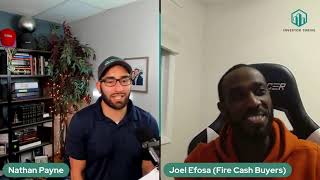
Joel built a six-figure wholesaling business buying fire-damaged properties across the US using SEO and public records. He negotiates with distressed sellers, vets buyers systematically, and now uses wholetailing as an exit strategy. The key: focus on one problem instead of chasing every distressed-property niche.
Chapters
What is going on, everybody? We are live with the Painless Flipping Podcast right now where we talk about how to get into real estate And our goal is to explain to you guys how you can get in real estate and avoid all the pain. But you can't obviously avoid all of it, right, Joel? There's some pain involved, but our goal is to give you as much information as we can from experts in the industry of how to avoid the, the pain and all the things that you don't need to, I guess, face yourself and learn from others' experiences. So we got an awesome guest on here. Um, he reached out to me on Instagram, and now we're on here. So Joel, what's up, man?
How you doing? I'm good. And I think, I think you probably have to reemphasize that there's a lot of pain in wholesaling. There's a lot of pain in real estate. Yes. Part of the game. Um, so I love, I love the painless wholesaling. I love that. I love that. I love that. So, um, so yeah, yeah, yeah. I've, I met, uh, well, I heard of you first initially through Jerry Norton. And someone sent him— sent me a video with you just discussing things. And I, I noticed a pattern. I think Jerry Norton brought you on again and again, uh, and I was like, okay, if Jerry's mentioning this guy and it's a— he's a young dude, kind of like reminds me of myself, right? Maybe what he's talking about like actually works. Like, he's taking these— this risk, you know, real estate's risk. So it is, you know Um, I think, um, what really resonated with me is just like your character, super mature. And I was just watching the videos and the way you break things down makes sense. So I'd recommend anyone that's just starting out, if you don't have a mentor, honestly, honestly, I, I would highly recommend Nathan Payne. Um, dude, honestly, we might do things together in the future. You never know.
Always. Oh yeah, there's— that's the beautiful thing about this game is the more people you know I feel like the more deals you can do, right? Like, that's your network is your net worth. So now I appreciate you reaching out, and it makes— means a lot to me that, you know, what I was able to show and talk about with Jerry and what we've been— we're going to be able to do is helping you out. So, so glad. So tell everyone how you're able to take kind of what you learned and what you saw and applied it, because it sounds like you went out and watched some of that, that information, and you went out and you're crushing it right now, right?
So, so I started about 2 years ago Where I was, I was just starting wholesaling. I had sold the company, so I had about $20,000 to invest. I was thinking, how do I want to market? I know cold calling is a big push, but I come from an SEO background. So I went ahead, did my own SEO, $20,000. It took about 3 months before I got my first lead. That first lead was a fire damage lead. How this happened was, Um, she was searching on Google, found my site, and one of the pages was we buy fire damage houses, for example. And, um, it was in Indiana. So I, you know, I'm still learning real estate, so, right, like, I'll just tell you right now, there's certain markets where real estate is super strong, and then there's certain markets where real estate isn't as strong for certain niches, right? So because I'm doing fire damage, there needs to be enough spread for the rehab, for the investor, for the seller and for the wholesaler, right? So on this first, very first deal, I was watching a lot of like motive— not motivational, but like content. Like seeing you and Jerry talking about deal breakdowns really helped me get through those painful days. Really painful days, right? There's no leads, or some of these sellers want market value for these like toasted houses, even fire damage houses. Crazy.
Yeah.
So, um, I locked that property up with Jerry Norton's contract. So I got a shout out to Jerry. He's— of course, he's helping me make a million bucks with his contract. It's free, right? So amazing. I, I locked it up, and I didn't really know what I was doing, but I talked to the seller. I told her, this is my first, like, real estate deal.
So just told her that.
That's awesome. I did, I did, I did. And she, um, she was on board. I mean, uh, so with fire damage, you gotta kind of it's a little more of a process. You got to talk them through their feelings, kind of, right? Because you start crying on the phone and—
oh yeah, they're— something really important just burnt down.
100%, right? Like, this is their biggest investment. This was an investment property which, uh, she said like her family left it for her, her mother left it for her, um, and the tenant— it caught fire but the tenant disappeared, right? And she trusted the tenant, so it was like all this like kind of onion peel I had to unravel to get to the number. You know, what do you want for this property? Right? Because I believe trying to make it a win-win is always asking the seller what they want for the property versus shooting a number and treating it like a transaction, right? They want to kind of feel like you're on their team.
So yeah, you're already ahead of the game as a negotiator in your first deal. You were just talking through it.
Good job. 100%. And then I locked it up, but she had some back taxes. Long story short, went through the whole disposal process. It was very painful. No one wanted it for more than the contract value. They all wanted it for less. And I was like, how am I going to go back and renegotiate with her? And I know it's still live. Nathan, I think I lost you.
Don't know what happened, but keep it going.
There we go. We're back in business. Yes, sir. So yeah, this is a very, very interesting story for me because I made no money on this deal. And I know I got right to the end of how much I made, but the proof was someone— this seller I never met on the internet— she trusted me with her property, right? Um, I got it done. I sold it to a lawn care neighbor, someone down the street. He found the deal on Marketplace.
So wow, you put, you put the deal on Marketplace?
I did, I did, I did. So Marketplace, you you'll get a lot of tire kickers, but I'll tell you, like lower end properties, let's say like properties that sell between $10K to $20K, $30K, you'll find people that have this cash on Marketplace. You just got to put in the grunt work, the painful work, sift through all the tire kickers and get to the buyer. So we solved that problem and I was like, okay, I'm never doing fire damage again, right? I made no money. This is the worst. And then a few months go by, I get a sub-2 deal. I had no idea how to deal with it. I'm still watching this content from Jerry, Brent Daniels, watching you. I think you started your channel a little later, but I was watching.
Yeah, yeah, yeah, I started later.
And, um, I got a sub-2 deal that fell through, didn't know what to do. And then I got another fire damage deal, and this time we were able to work numbers, and this was in Alabama, and finally made some money. Um, I actually made money with the guy who sent me, or sent you my way, right? And it was pretty cool because I was like, wait, this is crazy. Like, this is actually— like, even a burnt property is like, someone else sees it as gold. Like, yes, I want that deal. And, um, our buyer went on to make, I think it was like $90K or something like that. So we made on the assignment, I think we made like $14K. Yeah, which was great at the time because, right, right, you know, I invested the seed money, I needed a return. It's been like 7 months and I haven't made any money. Um, but I knew it worked, right? So I kept going. And then we started getting more fire damage leads, and for some reason we— there was just so much synergy with me and the sellers because I really care. So I'm more, you know, I'll sit there and talk to them about their feelings before we talk about the property. I think that's what wins in real estate.
That's, that's what people want to know, that you care, you know. They want to know that they're, they're taken care of They don't want to get just swindled and, all right, this is my offer, and then they don't even know.
Yeah, exactly. And honestly, I think that's the secret. It's just like, how much effort are you trying to put in to get to know this person before you think about yourself, right? Um, so fast forward about a year and a half later to today, we're doing another— right now we're doing wholesaling, right? So we do wholesale and we wholesale. Um, So, wholetail, you were the first one I've ever heard to mention that. And I was like, what is that? So I did so much more research on it. And I was like, that's kind of crazy, but it makes sense. But how am I going to get the money to like— what if this doesn't work? What if I put it on the market and no one wants it? It's fire damage, right? But I was like, I got to take a risk, right? I got all this cash from wholetailing. I got to step it up. I see these guys like— you mentioned wholetailing over and over as like another exit. And I was like, I need another exit in my toolbox. Right now I only have wholesale, and not everyone wants that lowest offer. I can offer more because I'm actually going to buy it. So today, right now, we're wholesaling a fire damage property. It's set to make over 6 figures on it, but we only wholesale fire damage properties that we know we're going to make 6 figures plus. The reason why we know this is because we're in the niche day in and day out, right? So I get some other like leads, like probate, uh, tired landlords, but I do— like my team, we only stay focused on our niche. That's so important too. 100%. 100%.
Wow, that's amazing. So, so when you say you stay focused, does that mean you're not taking down the ones that don't make you— you're not wholesaling ones that you don't make over $650? At least 6 figures, is that what you're saying?
Yeah.
Yeah.
So we wholesale those, right? Wholesale. Okay. Yeah. Yeah. We built systems to find fire damage buyers and we really vet them, right? Because we don't want a wholesaler to lock up our contract. So the way we take wholesaling very, very seriously, we treat it like a business, right? So we want the buyer to win on the back end. So we typically ask them for, show us some of your flips, right? You're a buyer, right? You're saying you're a cash buyer, so show us a flip. And they show us, And we really try to curate that partnership and really make it a win-win. So even on the wholesale side, we made probably the biggest wholesale assignment fee has been $85K, right? But the flipper went on to make probably, I don't know, it was probably $900K. $900K? Yeah, man. It was a mansion in Tampa. That's where it was. It was a mansion in a gated community. Some NFL athletes lived in the community. And that's the thing with fire damage. We come across these unique situations in real estate where we never really knew a property could be in this area where we can actually get an opportunity to kind of make some money on and get an experience out of it.
That's amazing. Let me ask you this. What made you choose fire damage as the problem you were going to solve?
Like that's your niche. I think it was the way the seller and I connected on the phone. I would sit there and talk through their pain, and I actually cared. I wasn't even thinking about the property. I feel bad. I tend to feel— I wouldn't say I feel bad for people, but I'm someone who always likes to step in and like, "How can I help? How can I help? What can I do?" Empathy, bro.
You got a lot of empathy.
Right, right, right. So I think this space is good, but hey, it could work big time in probate, right? Because I know people make a lot of money in probate. Um, and, you know, so I started a YouTube channel now, 2 years later, that's called Niche Wholesaling, because you can apply these principles in any— in really any space. Even a tired landlord, there's some reason they're selling, right? So if you want to sit through and, like, put them first before you kind of, like, put your gain, um, in place of that, uh, I think you're gonna win. I think so.
No, that's so true. I love what you're saying. So, um, so you sound like you're pretty marketing, like you're pretty marketing oriented, like, right? You can see like how you can, uh, you know, market the right people, the right niche, the right, the right opportunity. So, um, you, your SEO is only when you put out, it's only, uh, for fire damage stuff, is that right?
Yeah, now it is. Now it is. So back then it was all like, it was for everything. Okay. And I just thought, like, you know, I would kind of like watch these big deals on YouTube. I'm like, oh, I got to go there. I got to go too much. It was like too much because I didn't, I didn't know how to— because I wholesale nationwide, I didn't know like the market well enough. Yeah. And how to really talk to the sellers that have like 4 siblings and it's a probate situation. And, and then I get like a tired landlord situation. It was, it was a lot. So With fire damage, there was more urgency, just like pre-foreclosure, stuff like that. And the urgency and the willingness to sit through and listen to the seller really, really helped.
That's amazing. Yeah, I've done a— I've wholesaled one fire damage property. This was in Memphis, Tennessee. I didn't really know much about it other than the guy's like, "I got to sell it." And I was like, "Okay, I got to find someone." So there is urgency. It was like $7,000.
It wasn't that much because we have a super strong buyer in Memphis.
This was like 2 years ago. It was the— I got the house for $25,000 and the houses were selling in that area for like $90,000 to $110,000. And so the spread, like, it wasn't like crazy, right? Right. But it was interesting because it was really easy to show it too because it was fire damage. So we're just like, go look at it.
See, okay, and that's, and that's another secret why this niche like made super sense, right? Because when we were, you know, we locked up all the properties through the journey the first year, but there was always like a tenant or the, the owner was there, and it's like they're like, why are you sending all these people? You know, because we're starting and we kind of— I know some people, um, some people love to do it like have the buyer set like know your buyer's buy box, but I did the other way around. I wanted the deal so I can add value to the buyer. Like, I'm not wasting your time asking you, you know, to be added to my list, right? Um, so yeah, no, it's fake. It's always— it's always— well, I won't say it's always vacant. This property we just bought, they decided to live in it. And Louis, we're gonna make a video about this soon on the YouTube. They decided to live in it. There's no electricity, there's no water, there's nothing. But they lived in it for months, right? And so we would send contractors there and they would lock the door, take off the keypad. They wouldn't let them in. And we're just like, you know, sometimes we don't understand people, but at the end of the day, we made the deal happen. Um, wow. And we're here.
So when you're wholesaling it and you're listing it, who do you usually find buying these properties? Are they investors? Who do you see like a common, uh, commonality?
Um, not really, not really. Like, honestly, like, so we, we go off market for a week before we list on the MLS, uh, because when we know when we get on the MLS, we try to avoid paying realtor commissions. And I know they got to make money because they're bringing the client, and I know all the lawsuits, everything happening right now, it's like, it's like a weird time because it's like, well, you're not showing your buyer because you, you're not making as much as you want, like it becomes a losing situation. So what we've seen is like, we've seen construction company owners, we've seen a lot of investors, um, and we've seen a lot of like big investors, investors that like do a lot of like, let's say 20 deals in a month in their area. Like they have a whole system. We see those kind of buyers are the ones that buy the fire damage properties, probably because they have like a— they really have a solid construction team to get this done.
Wow, that's amazing. Let me see if I got any other questions. This is interesting because I don't know this niche very well other than the house is destroyed, right?
So you got—
yeah, yeah, yeah, it's burnt. So you have some issues sometimes with— well, you just said someone's squatting in it.
Oh yeah.
Oh yeah. But that's only one. And then showing it is extremely easy. How would you recommend someone to get into this niche? It sounds like you got a leg up.
Because free, correct? Uh, it's not free. It costs a lot of money.
Oh, SEO. Oh, are you doing paid ads or are you doing—
I'm— yeah, I'm doing PPC and I'm also doing SEO. SEO costs money. If you like, if you know what you're— if you know what you're doing, you're gonna have to do a bunch of stuff. It costs money. But, um, but this is not the only way. There's, there's a lot of other ways. Like, for example, following the local news. Um, you can also go on Facebook, follow the fire station. Or you could just call the city, uh, and make a public records request for a fire damage list, and most cities will give it to you. If they give it to you, you can use True People Search because the list is not typically long. You could just call or text some people. Sometimes what we do, what we're— what we've done for the channel is like drive for dollars. So we have the address, we know where we're going, and we just go to area, leave a, a sticky note or something like that.
So do you find that there's enough fire damage? Well, you do nationwide, correct?
Yeah, yeah, yeah.
Because my thing would be like in Salt Lake City, for example, if I'm specifically targeting this area, I don't know how many opportunities I would get if I was only doing fire damage. So would you— it almost seems like you'd have to do a couple of different metros, right?
I'm all over. That's why. Right. But at the same time, you have to understand, like, when a fire happens, typically the homeowner's not thinking of selling as like that way out. They're thinking of insurance, like, kind of like your car. If something, a major accident, you, you won't really think of selling it. But there are people who buy damaged cars as is. But you wouldn't think of that. You would think of insurance, total it, get rid of it, I don't know what to do. Um, so my thing is there's a lot of homeowners who just have no idea they could sell, so they just typically go the insurance route because they feel that's what they have to do. Um, the insurance company knows they can sell it, but they would never they typically never mention this, like, hey, you could collect the insurance and sell it as is. They never mention it.
So when someone collects the insurance, let's say they, they're like, yes, I'll take it. Are they supposed to take that money and rebuild the house? Like, or do they— can you say they can take it and sell it as is?
Right. So it depends on their policy. So some policies, the insurance money, the insurance company will hold the funds back and say, hey, go hire the contractor. Send us the invoice, we'll pay it. Other insurance companies will say, okay, here's this big check based on your value, either actual cash value or replacement cost. Replacement cost just means that they're going to replace whatever's damaged at the cost it costs today. Okay, so if you get actual cash value, typically your policy is cheaper. People like to go the cheap route and they get screwed when a fire happens. Regardless of that, they'll give you the check or they'll hold the check back.
Okay. So are most of the people you're dealing with, do they get the check and then they sell as is to you and then that's when you take over and then you wholesale it?
So how are some of them? So I'll tell you this. Most of the fire— most of the fire damage leads are just— there's just nothing we can do. But like, think of like Indiana, Ohio. The values are just way too tight to like rehab it, make us profitable. So there's a lot— majority of the leads we have to just let it go because there's absolutely none we could do.
Totally get it. Because, you know, if it's in, let's say, Texas or Salt Lake City or Florida, it's like, yes, there's the spread. But Indiana, where the value is probably $40,000, the house burns, it's like, right, you can't even do it.
Even in Florida and Texas, some of these big, like, popular states, we find that majority of these leads, it's just too tight. It's too tight to do anything. It's too tight.
That makes sense. Yeah. When it's kind of too tight and when you wholesale, like traditionally when the house isn't destroyed, but they don't have a lot of equity and you don't have enough, it's the same thing. There's not enough spread for you to do anything on that side.
Right.
Interesting.
Wow.
Well, we got a lot of comments coming through on the Facebook and the YouTube. Do you want to go through some of those and you can ask those questions?
For sure, you can shoot any questions my way.
Yeah, so we got— and by the way, everyone that's watching this that's intrigued, definitely go hit up, uh, Joel, right?
Joel?
Yes, sir. Um, hit up you. Where do you want people to hit you up? Is it your YouTube or your Instagram?
Yeah, I, I think, I think YouTube is probably best because we're— we, we have a ton of videos. We're just setting up the scheduling and everything. We're gonna start launching videos next week.
Amazing.
So the YouTube is Niche Wholesaling -fire damage edition. They'll find it if they search News Wholesale. Love it.
I love it. All right. So we got, how do I start new to all this? Lopez wants to know, I got time but little to no money. Well, you gave out some great tips on how to find some fire damage properties. You want to repeat that?
Yeah, for sure. For sure. So if I had little to no money, how I would start is I would call the city or the county you're in, call them, right? So just work in your backyard. If you got like $5, $10 for gas, you're going to drive for dollars, right? So call, make a public records request, ask them if you can get a fire damage list, a list of recent house fires in the last 90 days, and then just plug those addresses into True People Search if you want to just text them through Google Voice and just grind, like put in the work. I promise you, like, you know, there's people that need help. Who have no idea they could sell, they'll be happy to like do a deal, you know, make something happen.
Love it.
I love it.
We got a Facebook user saying good stuff. They're loving it. And then another guy, someone else says Nathan or Joel, I have a property that needs to sell.
Well, is it fire damage?
Is it fire damage? Yes. If it is, text, you know, hit up Joel on Instagram or how do you want them to reach out to you if they want to talk to you?
If they want to talk, go on Google, search Fire Cash Buyers. That's the brand. That's the, that's the company. Company that does these deals. Great name.
I like that name. That's dope.
That's catchy, right?
Yeah, it's catchy. All right, next question. How do you think of rehab and comping? Are you doing any teaching?
Yeah, literally, we have some videos coming up. Oh, that's funny. That's a good question. We have some videos coming up on the, on the channel. Um, we're going to teach you how to rehab, like how we like assess it and then comping it. And I, I think we're gonna make this a little more entertaining, so I think everyone's gonna like it for sure. It's gonna have a lot of value.
And by the way, everyone that's watching this, if you could at this moment just give us a like wherever you're watching this, because as you like the video while we're going live, it will actually— the algorithm will say, hey, this is— people are watching this and they like it, and then more people will be able to see it. So do me a favor right now, wherever you're watching— Facebook, YouTube, whatever, Instagram— just like this so we can get this for more people, because this is great stuff, man.
Appreciate you guys.
And I think, uh, we can definitely get this. Um, as soon as I asked, a bunch of people dropped off.
They're like, forget you.
That's just how it is. Like, hey, I'm asking you to do something, they're like, I'm out of the speed.
People are lazy.
So what is the average cost to demolish a fire damage property? Do you know that by chance?
Yeah, I mean, it's going to depend on like where you're located. So like a good example, Indiana is going to be cheap. You could find, you could find like a contractor to do it for like 5K. It depends on the size of the property, right? If it's a big, like, 3,000— a 3,000-square-foot property, it could cost like 20K, it could cost like 30K. It just depends where you are.
Yeah, yeah, it really depends. I, I mainly hear average is like 20K. Yeah, demolish a home. Yeah. All right, we have, um, here we are, follow us. So he just commented on this live feed, Mitch Niche. I say niche, but it's all good. Uh, Niche Niche. Um, go right there, guys. Hit click there if you're watching this on YouTube and go ahead and give them a follow, uh, right now because that, um, that's what's up.
You guys appreciate you for sure, for sure.
All right, man, well, it's been a pleasure to have you on here. I'd love to follow your journey. And, um, what is the rest of the year looking like? What are projections like? What are your goals? I want to know, uh, what, what's your goal this year is For sure.
For sure. So, so over the last 12 months, we've hit $1 million wholesaling just fire— well, wholesaling and wholesaling fire damage properties. Amazing. Um, so this year what we're looking to do is like teach, right? We're, we're going to teach people how to do their own deals. If they want to JV with us, more than welcome to, right? But we do believe there's more than enough like fire properties homeowner has no idea they could sell. They need help, they just want to exit. Um, so yeah, if you got any deals, send them, you you know, our way, follow the journey to learn. Um, and then, yeah, yeah, so we just projected 2x to exit this year.
I love it, I love it. And you're gonna get into teaching, is that what you're saying? Yeah, coaching. So just some advice on coaching, just make sure, um, it's, it's a, it's a grind right now. You're making the videos, it's just like wholesaling. So just make sure that you don't, um, leave your business that's already doing great, right?
Wayside.
Yep, 100%. Because it takes quite a bit. But no, I love what you're doing. I think you have a great niche to teach as well because I tell people like, hey, if you're going to go direct to seller, the old traditional way of like pulling, you know, just any list you want and then shotgunning it is going to blow— you're going to blow all your money. It's not very good. And what I like what you're doing and what I tell people to do is if you are going to go direct to seller market, you have to focus on a specific problem to solve. You're solving fire damage. If you're going to solve probates, that's a problem. If you're going to solve NODs, notice of defaults, those are problems. But if you're just going to just go out there and be like, well, let me solve all these problems and you're not an expert at any of them, it's going to be very difficult to make a name for yourself and build something.
You can't compete with the bigger companies. Yeah.
So I love, I love what you're doing and I recommend anyone that is going direct to seller to hit up Joel and to learn from him. If you want to get into fire damage. And if you are going to go direct to seller, pick a problem to solve it. Pick a problem and solve it.
Yeah, 100%. Thank you, Nathan Payne Payne Payne.
Yeah, of course. Is there anything else you'd like to share before we wrap up today?
Um, I think that's it. FireCash Buyers. Google us, FireCash Buyers.
FireCash Buyers. And hey, man, you want me to put in a good word with Jerry Norton, see if we can get you on his, uh, him to talk with you?
It was his contract we used. We made a million dollars with his contract.
I owe him, brother. All right, well, just make sure if I connect you, just say— well, he's gonna know I connected you.
All right, 100%.
All right, bro. Oh, look, look, someone's saying fire.
Let's go!
All right, see you guys later, man, and have a good one. Peace out, everybody.
More from Nathan





Why Traditional Wholesaling Keeps Failing You (Use This Pre-Flip Method Instead)





