Master Self-Storage Deals with Seller Financing 🏢
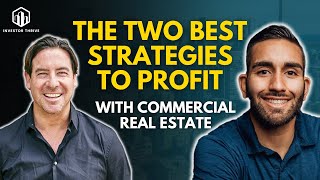
In this Investor Thrive Live episode, host Nathan Payne interviews veteran commercial real‑estate investor and coach Terry Hale. Hale explains how he transitioned from construction to commercial real‑estate, focusing on self‑storage and multifamily assets that offer repositioning upside. He emphasizes seller financing as the primary engine for acquiring distressed or under‑performing properties, detailing typical down‑payment ranges (3‑20%), earnest‑money strategies (unilateral clause), and flexible note structures (interest‑only periods, escalation clauses, 10‑ to 30‑year amortizations). Hale outlines the self‑storage market: over 50,000 independent facilities, 95% owned by mom‑and‑pop operators, and the generational shift toward third‑generation, location‑focused sites. Deal sourcing methods include direct‑mail, off‑market outreach, and commercial platforms such as Reonomy and CREXi Intelligence, with a focus on properties lingering beyond 100 days on market. He differentiates two core investment strategies: wholesale (minimum $100k profit) and value‑add repositioning (automation, third‑party management, stabilization, then sale at low cap rates). Hale shares his team model—remote acquisition and due‑diligence teams, a wholesale call‑center in Vegas, and a Malibu‑based office—allowing him to manage assets nationwide without travel. He attributes his success to a mindset of listening, understanding seller motivations, and targeting emerging markets (e.g., Montgomery, AL infrastructure spend). Finally, he advises beginners that seller‑financed deals with mom‑and‑pop owners are accessible, provided they are teachable and willing to follow structured financing and negotiation tactics. Contact information (TerryHale.com, support@TerryHale.com) is provided for listeners.
Chapters
What is going on everybody? This is Investor Thrive Live, the painless wholesaling podcast. I have Terry Hale on here. He is the man, the myth, the legend. He knows all about commercial real estate. He was just telling me he's moving millions of dollars in self-storage. Is that correct, Terry?
Yep, self-storage, multifam.
Well, listen everybody, we want to dive deep. We don't want to waste anybody's time. So we're going to dive in and find out what the heck is self-storage, how he's doing it, and we're going to dissect as much as we can get. And I'm obviously, I'm going to connect you with Terry so you can reach out to him if you love his message and you want to reach out, you know, hang out, whatever, you know, learn from him. So Terry, I just met you and I already like you. Tell us, tell the listeners 30 seconds real quick, a little bit about yourself, and then we'll go into what you do for business.
Yeah, yeah, for sure. So I'm a veteran in this space. I've been at commercial real estate for a little over 25 years. I've been teaching and training as a mentor, coach, speaker, author, guru for about 15 years or so. And the way I move forward with commercial real estate is I move on properties that have repositioning opportunity, property that have vacancy or a situation with the property, and then we can create that lift create the value in the property. And so I came from a construction background and quickly realized I didn't want to do that trade. And I went on the other side where I can actually move the paper, where the real money is.
Man, I love that. So I've been reading a book called 10x Is Easier Than 2x. So it sounds like you're 10x-ing, that you're going for the big, the big money right now. Like you're not messing around with single-family, right? You don't really do that. Was that a conscious play that you made where you're like, okay, I don't want to do construction, I'm not really messing around with the single-family, let's go into the bit where the big money is. Is that— did that act— is that conscious?
Yeah, yeah, totally, 100%. You know, I never got into the house buying business. I don't have a problem with someone if that's your bread and butter, great. Commercial actually complements the house buying business 100%. And what I realized is that, you know, most people gravitate towards the house buying business when they start off in real estate because they understand the concept. They grew up in a house. For the most part, it's houses that are a box, right? You got one family. What I realized is that one family, one check, what I can get into is multifamily. So when I did my first 20+ unit apartment, I realized that, hey, this is where the big money is. And then when I started dealing with self-storage, it's like apartments without the people. So which is much better. Very lucrative business.
Yeah, that's amazing. So when did you start getting into self-storage versus in transition from multifamily?
So I did multifamily for about the first 5 years in the actual transition of investing in commercial. But, you know, I started out as well, Nathan, I did the business wrong. You know, I'll go ahead and humble myself here. I learned the game not from another, you know, coach or guru or speaker. I actually learned it from someone who was doing the actual business of commercial estate investing, and they're extremely wealthy. So unfortunately, my career was tainted from the start because I was learning the rich man, rich woman's game. And how that worked was I got, you know, my financial legs, right? I was making money, I understood the ins and the outs of how to go through the process of purchasing the property, utilizing a cap rate, playing the appreciation, depreciation, and cash flow hustle. But when I went out to go get my third loan, I got refused from the banks. Everyone said, we like you, but we can't do business with you because you guarantee too much debt. So I had to reverse engineer my thinking and start looking at distressed assets, properties that I could buy on the as-is value and that there was vacancy so I can create that lift, create that actual upside. So, it changed everything. And then, I started utilizing these non-conventional methodologies of seller financing. And once I leveraged with seller financing, it was like the key that unlocked the vault.
So, seller financing, that's a great way to get into these. Is that the key? Is that the goal? Like when you talk to a seller of an off-market property, it's like to get that every time?
Yeah, pretty much. And it's easily justifiable too, Nathan, because nowadays with interest rates up, inflation, all this crazy stuff happening, the talk on the street of the sky's falling in real estate. I don't know, man. I don't have a crystal ball, as they say. I know it's a cheesy saying, but it's the truth. I can't predict the future. We just all have assumptions. But the fact is the fact, and interest rates are up. We're again looking at those properties that have a situation with them where they're not operating at their highest and best. So actually, they don't qualify for bank financing regardless of the interest rate. So we can justify either making two, two types of offers. Either a lowball offer like a lot of people do in the house buying business, you get in there and you lowball them, or we can pay more but you need to carry the paper. And I found nowadays that with the capital gains situation and people holding the property for a while, they've created so much value even selling it distressed that they have to pay a ton of money in taxes. So we play on the whole approach of, hey, avoid having to pay capital gains. Seller finance is the best. Yeah.
Is there a certain amount of units, self-storage units in the United States where you're limited on how many people you can call through? You've already called through all of them. I'm not even sure what the inventory looks like or how many there are out there.
Well, there's, there's first generation, second generation, and third. So obviously the first of the barn doors was old school, built in like the '70s and '80s. Then you have the second gen, which are the roll-top doors, which we see a lot of. And then there's the third gen, which actually is not a, uh, it's not a destination, it's a location, right? So when storage was starting to be built way back, you know, beginning of time, right, the, uh, they were just making it a destination because it's an industrial zone property type, so it's off the beaten path, right? And now the third generation, they're building them in actual locations like corners, hard corners for commercial, just like McDonald's would put them, right? And you see the third gen of climate-controlled you know, multi-level deals. But to be transparent, as far as inventory, uh, Storage Brokers of America has posted, um, just this last quarter that there's over 50,000 self-storage facilities around the nation that are not the corporate conglomerates. And over 95% of those are actually owned by mom-and-pop.
That's who you're targeting?
Yeah.
Are the corporate conglomerates— are they trying to take over the, the mom-and-pas as well, or are they staying in their lane?
No, they stay in their lane, man. They don't want to take over something that's already built off the beaten path because they want to actually go vertical. They want to go vertical on their development.
Interesting. So I think it's a very awesome thing. Are you still even doing multifamily, or is it just completely self-storage now?
No, I still do multifamily, and I also do light industrial, which I have a property not too far from you. It's, it's out in Phoenix. And I got it with seller financing. I bought it at $2.2 million. There's 12 bays and I have 5 total tenants in those 12 bays. The guy built it in 2014. He had his dollar per square foot of what it cost him to build it. And when I offered him, you know, a fair price at $2.2 million, he took it. What he didn't realize was that the property could be enhanced with gross tenants. So, I ended up taking his handshake agreements, put industrial car forms, which are real contracts in play. For the 5 tenants. I got them all personal guaranteed at 5-year leases with 4% yearly increase, stabilized the rents, and I'm going back to market with that property. Now my debt structure, I put down $440,000 down, which was 20%. My debt structure right now is, uh, $1,760,000, and I'm selling the property for $3,450,000. So that's a pretty good spread.
Yeah. And you only had— and you said you just came in with 20%, uh, down for him, right? Down. So yeah, let me Let me ask you this on the mom and pops. Do they usually own them outright or do they have paper? Like, do they have the loans that they're still paying as well?
Yeah, a little bit of both. So, you know, just depending on how they, how they bought them or if they actually built them ground up, if they had construction financing on it. Right. So it's all over the board. Sometimes we find them free and clear. Sometimes it's a little debt. But even if there's debt in first position, meaning the senior debt and it's a bank loan, Yeah, there's some provisions in there that say they can call the loan due, but just like a lot of the people that take over property on seller finance and subject to, you know, I've never seen anyone ever call the loan due. Banks are in the business of, uh, of creating, creating income, right? Not owning real estate, right?
Isn't there something that you can do is if, if they call it due, can't you deed it back over to them and then they do a contract for deed? Or is it like, is there something that, um, that if that does happen, you do, you Do you know how to play that?
Yeah, well, typically we just go ahead and, you know, buy it outright if that would ever occur, but I've never seen it. There is another workaround as well. Most of these properties are purchased in companies, right? And they're rarely cross-collateralized or commingled, and they're just single LLCs, and we can just buy the LLC which inherits the debt.
There you go, there you go. Okay, that's awesome. So if that happens, you just say, hey, let me just buy this LLC. Okay. 'Cause there's probably not a lot of people, like you said, that buy in their own name with a self-storage unit, right?
No, it's not. It's like, we just never hear it. It's always in a company. I mean, you know, or it's owned free and clear and it's just an inheritance property. And if that be the case and they carry paper, it, it really doesn't matter, right? If it's free and clear, it's free and clear.
Is it more important to reach out to the sellers off market and, and get deals that way? Or, or is it, can you do a lot of deals through relationships with brokers and agents?
Good, good, great question, Nathan Payne. So there's multiple ways we do it. We do both online, offline. You can create a simple direct mail campaign. You can also obtain a list that's got direct numbers to sellers. There's another platform in commercial called Reonomy. It's a little sticky, it's a little difficult to work, but there's a lot of people on that platform. And then CREXi, which is a website solely for self-storage, came out with their own platform called CREXi Intelligence. That's another way. But the standard websites that are out there that a lot of people cruise through, there's tons and tons of property. Yeah, I always say that properties aren't found, properties are created, right? These deals, right? People are like, how do you find deals? It's like, no, we create opportunity. We look at key identifiers like days on market. You know, the average broker, you know, listing agreement's 180 days. So if it's over 100 days, they've dealt with so many tire kickers, these brokers are spent, they're gassed, right? You know, they want to make a deal, they're about to lose their listing. The average seller is not going to relist another 6-month deal with a broker that can't sell it in the first 6 months.
Right. They're out. They're going to go somewhere else.
Yeah.
Is the strategy to work with that agent and be like, hey, let's make sure you get paid? Or is the strategy just wait till they lose the listing and go direct to seller?
We don't mind paying these brokers because, you know, 4 or 5, 6% commission, it's nothing when we're dealing with the numbers that we work with in commercial. So I gladly take care of them and we can dangle the carrot of future business and say, look, if you go pitch our deal and we can buy it on the as-is value for like an 8, 9, or 10 cap with seller financing, You're going to get, you know, your commission regardless of the terms. And we are going to reposition the property and take it from its current occupancy level and stabilize it at market rents, at market cap, and trade it back. And we'll use you when we sell it in the future. And we find that when we actually have that broker become an ally, they'll go and pitch it for us pretty good.
Gotcha. Do they— do you usually try to keep these for a while? Are you trying to just, you know, improve it and then sell it?
I always say everything's for sale, right? But the wife, the dog, and the kid. Dog's optional. I actually authored this book called "The Two Best Strategies to Profit with Commercial Real Estate." So the two strategies are number one, wholesale. So just like, you know, you tie it up and/or signs, you take the paper from one side of the table to the next and you go ahead and sell it and you squeeze yourself in there for your payday. We're not touching a wholesale project unless we can make a minimum of six figures, $100,000 minimum. We just turned one out in Montgomery, Alabama. And we ended up bringing in $455,000 on that deal, which is an amazing opportunity, right?
For wholesale, that's amazing. Yeah.
Yeah. Yeah. So as far as the second strategy, that's the reposition strategy. So you're absolutely right. We actually close it in an entity. We put the time and energy into automation, modernization, regardless of the property type. We bring in third-party marketing management, collections. We run it as a business. As a business should be ran. Uh, we go ahead and get it operating at its highest and best use, and then once it's stabilized, we'll go back to market and trade it at the lowest cap rate possible to maximize our return on investment.
That's amazing. Uh, so I've actually had some other people that have done this on the podcast. What makes you successful at this versus someone who is not successful?
Good question. Well, I'm not sure where their successes are, and I try not to gauge my success on anyone else, but how I'm definitely different is I take a streamlined, no BS approach. You know, I've got a lot into something called mindset transformation. And when I start thinking about psychology of the way that people work, the different energy that they have, their needs, their wants, their desires, it's more important for me to listen to the story and to understand what that individual needs so I can solve that problem. And so, we hone in on the skill set of the problem. And that's how I feel I'm different. I'm not just throwing deals up against the wall to see what sticks. I'm ahead of the game because I take the time to understand where emerging markets are and areas that people would want to be. So, why would I ever go into Montgomery, Alabama? Well, if you Google it, Montgomery, Alabama slated for over $280 million in infrastructure development. That means that I'm ahead of the game because not a lot of people know about that. And I've already been into Montgomery. I've turned 4 projects and I got out of Montgomery.
If there was a better opportunity out there, would you do it in real estate?
You mean like a different play than what I'm currently doing?
Yeah. If you, you notice that maybe I can make more money and doing less work with bigger projects, would you do it? Or do you just like this and you're like, hey, I know there's better opportunities or other opportunities. I just, I like this. Yeah.
I said this phrase earlier today. Ironically, I said the day I stopped learning is the day I die. And it's really funny because I was on a call with, uh, some individuals, um, right outside of, uh, Scottsdale. Uh, I have a 5-acre track of dirt that we're going through a rezone on, and we're doing light industrial for 120,000 net rentable square feet of development. It's a longer play, but that is there. And what happened was the city came back to us and said, "Hey, you need to get these other people on board. You need more egress, you need more road frontage. We're not going to allow you to go through the rezone." We ended up skip tracing and finding out who the owners were, got in touch with them, We had our Zoom call with them today. It's been about a week since we connected with them. And one of the things that they said was, hey, we're gonna take our track and we're gonna go ahead and land bank 1 acre on the hard corner for a future build-out where we'll do a build-to-suit for like a 7-Eleven or something like that. So it right away clicked. And I said, you know what? Instead of taking and just doing 120,000 net rentable square feet in light industrial, big box development. Let's go ahead and just do 4 acres and carve off our hard corner for a land bank for 10 years and do the same play. So, I'm always intuitive because I'm open to listening and I'm opening to learning and opening even in my career of over 25 years of commercial investing. You know, there's always going to be somebody out there just doing something a little bit different. So, absolutely, I'm currently doing that right now, Nathan. And, you know, the syndication game and moving forward on the big plays and And offering people these small returns to have them park their money for 5 years is something that I've done in the past and something that I plan to do in the future. I just see that it's not ready just yet. I think a lot of people are, are out there begging for money, and that's not my style. So I'll wait until the money flows right to me.
Now, some— another thing that just popped in my head is when you do the down payment with seller financing, what are they usually looking for? Is it usually like you have people are like, give me 50% down, or are they reasonable and they're like 20, 15? You— can you get away with like 5? Where are you getting—
yeah, so there's two types of— there's two ways that we'll do it, right, from the two best strategies. So if we're gonna do strategy one and we know we're gonna be wholesaling it, then we want to make sure we get the down payment obviously as low as possible if we're going to be getting seller financing, right? So that way when we turn the paper, it's going to be good enough terms for somebody, right? Um, but then the earnest money deposits, I've orchestrated a way to allow myself and my company to put down very low EMD, which stands for earnest money deposits. I'll give you an example. The last one that we tied up was out in Tennessee for $2,250,000, and I put down $2,000 earnest. And we use something called a unilateral clause, uh, for all your listeners. And the unilateral clause means that it only requires our signature to get our money back. So if we have a 45-day due diligence and a 30-day close, And on day 44, we decide that, hey, you know what, we can't move this deal. Let's pull the plug. We don't want to piss the seller off and have them tie up our earnest money deposit. We want to stay in control of the capital. So we use that unilateral clause. But as far as down payments are concerned, we've got in as low as 3% down. Average is around 10%, and we want to keep it at 10% or less. But sometimes we'll go up to 20%, like the one in Phoenix, just because that deal was cash flowing like $6,800 at closing. Because the way I orchestrated the finance structure.
That's awesome. I really like all this because I, again, I've been like really focused on what's the best use of my time, and I've been doing a lot of, um, I'm venturing more into the multifamily space, right? I did single family, now it's multifamily. But I do believe that, you know, the best way to use your time is to go for the biggest plays, right? The biggest return. So I am curious about your time. Are you busier doing this than multifamily? Are you Do you barely work? I'm curious, like, what your life looks like as you do this.
Yeah, man. So I, I'm really blessed. Um, I live out here in Malibu, uh, California, and so, um, I have my property over here on the point, which is great. And, uh, I do have a home office, but I also have my office here that's in Malibu, and I have my team that works with me. And then I also have my wholesale team and another set of guys and gals that are in Vegas that actually smile and dial and cold call sellers. So I've always said that I hire the professionals and let them do what they do best so I focus on what I do best. I mentioned several areas here on this call of portfolios that I have in Mississippi and Alabama and, you know, outside of Phoenix. And I've been to Scottsdale like half a dozen times and I never go to my property. I've never even been to the state of Alabama and I've never even been to the state of Mississippi. So I don't have to go and travel to these places. Or actually put my set of eyes on it. I bring in the professionals and let them conduct their due diligence and they report back to me. And, you know, for me, I wear two hats. I teach and then I also do the business. So I spend the majority of my time, I'd say 80%, actually doing the business and 20% mentoring people.
Gotcha. Is there an end goal in mind where you're trying to get a certain amount of property or doing certain deals and then you're going to move on to something else? Or is this, is this what you love doing and you're just going to keep doing it because It's a game.
Yeah, it's definitely the art of the deal. I retired once in my mid-30s and the wife wanted to have a baby, so I ended up getting back to work once I had my son. My son, his name's Cash. Of course his name's Cash. What else would I name him, right? He's actually turning 10 at the end of June. So yeah, yeah. So it's a real, a real good life accomplishment. And I hit the big 5-0 last year. So I told myself, you know what, I love this business. I was always in my head that, hey, work is only work when you don't like what you're doing. So yes, I'm building something called generational wealth, and that's why I'm doing this. I'm not doing it for myself. And I vow that I'll do it for another 10 years. When my son is 18 and he's ready to obviously venture out on his own and do his thing, I will be in the lap of luxury, just chilling.
Just chilling. I love it. Well, it sounds like you're enjoying the journey. I've learned a lot from you today. Uh, one last question about wholesaling is, do you find more success wholesaling deals that you have on terms, or, uh, does it not necessarily need to be on terms and you just get at the right price and that, you know, whoever takes it on?
Always terms, Nathan. Terms is where it's at, man, because you know what, people can leverage and that's what everybody wants to do. And, and if you can, the few things that real quick, a few things, uh, that you need to know before you want to know anything else is the existing debt that's on the property and the timeline of that debt. And if you can orchestrate it where you're covering their debt, putting in a low down payment and justifying that, because you can't double dip on a 1031, so they're not going to claim— you know, they have to claim their taxes, so they want to take in less money up front. And then you can create a longer term of seller financing. You can play appreciation in that regard., and you can acquire these properties and supply that to someone else, being able to move it after you create a little bit of lift. So seller financing is— in terms are always the best.
What's the longest term that you've given yourself? Um, I usually— I would think in like 30 years, right? You'd have it paid off in 30 years. Are you doing— trying to get more than that somehow?
I've only got one project on a 29-year seller finance note, only one in my entire career. On average, we're doing a minimum of 24 months, and on average, I just did a deal, um, yesterday, uh, it was a 10-year seller finance note.
Okay, so is it amortized over 30 and then you just balloon them out in 10 years? Is that which— how you're doing it?
There's a few different ways to do it, and that's a really good finance question. So just depending on the seller's needs and desires, of course, right? But The best way to do it is on a 30-year amortization. You can do it 25, but when you get less than a 25, it's really pumping your payment up. You know, it's hard to cash flow. Exactly. So we play the game. Everyone loves money. You know, people are naturally greedy. That's just how people are, right? I mean, they don't like the word greed, but people like money, you know, and why not? You want to maximize your return, right? Maximize your efforts. So we do something called an escalation of interest clause. And we want to start off because the property that we're purchasing is not operating at its highest and best. And because of that, we want to structure it on an interest-only for several years. So if we can do a 2 to 3-year interest-only, it keeps our payments super low. There isn't any principal reduction, but if you look at a long-term note anyway, the first couple years— yeah, first couple years you're not really paying any debt down anyway. It's true. Keep your, keep your interest-only for the first couple years, then you can escalate it. And what we do is we do play on the greed of the seller, and we'll run a full, uh, interest schedule And we'll say, look, if you carried 15 years and we'll escalate it, start off the first 2 years at very low, at say 4% interest only, and then the next 5 years at say 5%, and the next 5 years thereafter at 8%. When you run that schedule, it comes out to be a big old number. And they look at that and focus on that and they forget about the fact they're even seller financing, right? Because they're just looking at making money.
Yeah, no, I love it. I love everything you said because I think these are the plays that you need to go to as you level up. But so last question before we let you go is, is this something this something you would recommend for someone who is brand new, doesn't know anything about financing, wholesaling? Is this something someone can do if they're brand new?
Yes. And the only reason why I say that is because of the people that we're dealing direct with. We're not dealing with highly sophisticated individuals for the most part. We're dealing with mom-and-pop people that you run into at grocery stores and at the bank, and people you sit across from at a restaurant every day. Mom-and-pop. And these are the people that have owned the properties for quite some time. And again, they're just out of gas. They're just done a lot of times with the business. And I had a guy not too long ago tell me, "Hey, I'd love to sell you the property, but I can't because I talked to my CPA, my accountant. My accountant said I'm going to be paying too much money in taxes and it's better for me to just keep it." And I said, "What about if I could take the burden off of ownership and you become a bank? Haven't you ever wanted to own a bank?" And we started laughing together and we orchestrated that deal to fruition.
Yeah.
So, it's a matter of just, again, honing in on the skillset of the story and being a good listener and understanding the ins and the outs of the business. And if you can grasp the concept and if you're teachable and you can learn it, then you can apply it. And yeah, man, applied knowledge is so much power in that, you know? Yeah.
I love it because this is everything you're saying we do, but just with single-family homes. Yeah, it's just having different conversations with people that you're saying that are— don't seem— I thought they'd be like super, super sophisticated and, you know, but yeah, that's, that's interesting. Well, Terry, that was a— I had a great time chatting with you. I hope my listeners that maybe they're going to get the, the not the balls, but, you know, the courage to say, hey, I don't even need single family. Let's go right into commercial. I would recommend, hey, if you, if you believe in yourself, I wouldn't— I would say go for it. So Terry, if we have some of those listeners that want to do that, how do they reach out to you?
So the easiest way to reach out to me is just hit my website. It's my name, which is Terry Hale, right? TerryHale.com. And for your listeners, if anybody wants to get a copy of this in a digital form, um, all they have to do is just reach out. They can, uh, contact me at any time at support, because I'm huge on support, at support@TerryHale.com. And if somebody wants to have a strategy session with me, I'm open to that as well. And we can see if we're a fit because I do bring people on for partnership consideration. And yeah, it's a wonderful opportunity to learn this business and be able to have somebody that's got all the cuts, bumps, and bruises to show you the right path of least resistance. You can get in there and make yourself 6, 7 figures or even more.
Hey, that sounds good to me. I love it. Well, thank you, Terry. I appreciate you coming on. And listeners, go check him out. He told you how to reach out to him. So we'll catch you on the next one. Have to have you— we'll have to have you back, Terry.
Absolutely, anytime, man. Let me know. Thanks so much, Nathan.
Appreciate it. Of course. Yep.
More from Nathan





Why Traditional Wholesaling Keeps Failing You (Use This Pre-Flip Method Instead)





