Real Estate Ring - Calling Leads Live
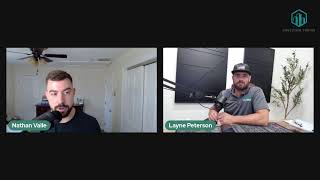
In this live episode of The Real Estate Ring, hosts Nathan Payne and Lane Peterson walk viewers through real‑time phone calls with prospective sellers, wholesalers, and inbound leads. The session begins with a brief intro and a discussion of the importance of systematic follow‑up, emphasizing that most deals are closed after multiple contacts rather than the first call. Nathan shares his 30‑day challenge experience and stresses that consistency beats perfect messaging. Lane reinforces the need to stay top‑of‑mind and avoid emotional reactions to no‑shows. The hosts then demonstrate several calls: a voicemail/text follow‑up with Vera, a multi‑unit wholesale lead from Brandon (Pompano Beach) where they clarify contract ownership, property details, occupancy, and pricing; and a probate/55‑plus community lead with Judith, where they probe HOA fees, community restrictions, seller motivation, and timeline. Throughout, they model rapport‑building techniques such as mirroring tone, asking if it’s a good time, and offering price ranges instead of firm offers to keep negotiations open. The episode concludes with reflections on clarifying wholesaler vs seller roles, using market comps to estimate offers, and a reminder that their business (123 Close) buys distressed contracts nationwide. The content serves as a practical masterclass on lead follow‑up, qualification, underwriting multi‑family and probate deals, and effective phone communication in real‑estate wholesaling.
Chapters
What is going on, guys? Welcome to The Real Estate Ring with myself and Lane and Payne. Nathan Payne is not able to be here with us today, but guys, this is the call to where we show you the business. So we, we get on the phone, we talk with real sellers, talk about real deals. You guys get to see what it looks like in real time. Lane, how you doing, brother?
Hello, hello, I'm good, I'm good. Hope everyone's doing well today. My name is Lane Peterson. I'm excited to do this once again. Let's start calling some sellers, have good conversations, and solve some problems.
Love it, man. And for those of you that don't know, my name is Nathan Payne. Um, I've been in wholesaling for about 4, 4 or 5 years now. Um, I personally have locked up over 100 contracts in a single year. You guys might have seen a 30-day challenge I did a little while ago to where I chose totally brand new market, no resources, no contacts, nothing, and did a deal in 30 days without spending any money on marketing. And it was a $20,000 deal, so that was cool. Uh, Lane, how about you, brother?
Yeah, appreciate it. I feel like I could be your grandpa. I've been doing this for the last 15 years, um, doing a lot of direct-to-seller. I've, I've kind of done it all. I have done— broke, you know, cut my teeth at the courthouse steps buying trustee sales when the market crashed, rolled into doing direct-to-seller. And been doing that ever since, uh, reaching out, finding sellers that are in distress that need help solving their problems and getting them out of their situations that there is that they're in. I love this business. I love helping people. I've done thousands of transactions, and I've done it all across the United States.
Love that, man. Dude, been, been at it for a minute.
A little bit. I'm still young though. I'm still young.
Oh man, absolutely. I, um, one quick update I want to— and you know, this might be good for you, Lane. So last— I believe it was last week— you— I believe you weren't with us last week.
Uh, correct.
And we'd called a couple leads, and one of them I called was, uh, Latricia. And so for anybody that watched that, if you haven't, go back, watch it. Had a really good call with Latricia. And so in case you guys wondering, like, hey, you know, What happens after, right? So Latricia, perfect example for anybody that saw that, or if you do watch it, had a really good conversation with her. Um, she didn't have enough time to kind of go through the full process, so I set an appointment for her Saturday, Saturday morning. Well guys, welcome to wholesaling and talking with sellers. Well, sure enough, right, despite all of our efforts of nailing down Saturday at 10 AM and despite the texts the text messages that I sent her as the reminder, hey, we've got an upcoming call. Well, lo and behold, she doesn't show up, right? And so what does this game really look like? What's been happening since? She's been getting 2 calls, voicemail, text message, and she gets that 2 to 3 times a day every single day until I hear back from her. So, and guys, that's, that's follow-up. I mean, Lane, how, how often do you think something like that happens with—
oh, follow-up is key. You can't get offended, you can't get emotional about it. You just gotta— it's just gotta be systematic. You gotta make sure that follow-up, follow-up. I mean, I mean, what would you say, 80% of your, of your, of your properties, maybe 70, 70, 80% are bought on follow-up? Not on your first phone call, not on your first appointment, not on your first conversation. It is follow-up, building the relationship, and really timing Timing is, is everything in, in this business.
Yeah. And one thing with follow-up, just because this was something that like in early on in my career I was like, oh man, follow-up, like, well, what do I say? How we like— do I keep just saying the same thing? One thing, guys, and, and well, Lane, let me know if you agree or disagree. I, and I love— I'm all about what's— how do I be the most effective you know, what can I do that's really high quality? But when it comes to follow-up, I believe it is more important that you do it than how you do it. So it's more important that you reach out to her every single day for the next 5, 10, whatever days, or that you are doing it on a consistent basis, rather than, well, do I have the perfect message, or do I know like the perfect thing to say? Would you, would you agree with that?
At the end of the day, just be you. Be genuine. Just be like, hey, haven't gotten a hold of you yet, so I'm still here. Give me a call when you get a chance. I mean, don't try and play any mind games. Don't try and manipulate anybody. Just be genuine. Be yourself. Be you. And just— but make sure and stay in front of them. The biggest thing is you want to stay top of mind, you know? So when they're like, okay, I'm ready, Lane's been calling me, Lane's been texting me, Lane's been emailing me, and I know exactly where his phone number is, and then boom, you get the call. It's just You got to stay top of mind.
Love it, love it.
That's the thing, like, there's, there's people in our industry— RJ Bates, Brent Daniels— they say it all the time, you know, we are deal finders, we're not deal manufacturers, right? You're not going to try and manufacture a deal if it's not there. You don't try and play these tricky mind games and trick somebody into doing something they don't want to do. No, if there's a deal there, then you genuinely help that individual any way that possible. You don't try and manufacture the deal or create something out of nothing.
Yeah. Oh my gosh. I like your— I couldn't agree more with you. That's something again. That was a lesson. Took me a little while to learn. I thought when I first got started in wholesaling, I was not— I never thought I was a salesperson. I thought like sales and negotiating, oh, you're like, you're just born with the skill. And, you know, spoiler alert, that's not the case, guys. It absolutely is a skill that anybody can develop. Um, but at the same time also learning that, guys, I don't care if you're the best salesman in the world, if you're the best negotiator, the best with influence, guys, you can't make somebody do something that they don't want to do, right? And if you try, it's just going to make it worse. Exactly. And that's why we, we do these calls live so that you guys can see, you know, even someone like Lane or myself to where we've we've got hundreds and thousands of hours of talking to sellers, guys. There's people that— there's a lot of people that, that we don't do the deal with because we can't convince somebody to do something that they can't. So if you guys are having a hard time, guys, don't sweat it. It might just be someone who's not interested in selling their house, or they don't have a problem that we can solve, and that's okay. I'm gonna move on and find the next person that I can help.
So even though they did reach out to you, however your marketing channel is, they might, they might not be ready. They might just be curious. And so that follow-up sequence system that is put in place is very crucial, you know, because I have a follow-up, uh, an automation that lasts, you know, over a year. It really lasts until they opt out, if they say, yeah, no, remove, I'm done. So they'll still— they'll keep hearing from me for, you know, a year or two. It doesn't matter. They— at one point they reached out for a reason, you know. Maybe they weren't ready at that time, but when they are, I'm hoping that they will think of me, right?
I mean, same thing with like, guys, have you ever went on like a car lot and looked at a car that you wanted, but then you get berated by the sales guy and you're like, dude, oh my God, like, I'm just looking at it, like, I'm, I'm looking to buy in the next couple months, but oh my God, not today, right? Same thing, guys. Don't, don't, don't crush the person. They don't have to buy day one. Might take a week or a month or two months, you know, who knows. But follow-up is key. So with that, we want to, we want to segue in, start calling some of these sellers.
Yes, yes, let's do it.
Also, um, I don't know if you got a hold of her, but Vera was one of the people you had mentioned last week. She actually just texted me yesterday and responded to my text from a week ago.
Oh, is that right?
She's, she's, uh, so she responded and she's interested in, in having a conversation. So I don't know if you've got that lead info in front of you, but she might be— she might pick up, she might not.
Yeah, I can find her, that's for sure.
Vera, Vera, Vera, right?
Yeah, V-E-R-A. Do you wanna— do you wanna go ahead and call her again since you called her already?
Oh sure, yeah, let me— okay, now I gotta find— now I have— this is one of the ones where, where I wasn't able to find the lead, so I have no information on this. Um, okay, just where, uh, are you able to— in the, in the— our chat, are you able to send me the address?
Yes, I can do this.
And then, uh, one last question: what's, what's the company that she's entering the information, like the name of the 123 closed.
123 closed.
All right, let's call her up.
123. Your call has been forwarded to voicemail.
That was aggressive sounding voicemail.
Your call has been forwarded to voicemail. The person you're trying to reach is not available. At the tone, please record your message. When you have finished recording, you may hang up.
Hey Vera, it's Nathan Payne Payne Payne. Uh, give me a call back when you get the chance. Talk to you soon. Thanks. Bye-bye. All right, and I'm gonna send a text message.
Yeah, that voice mail is pretty aggressive.
I know, dude. It's like they, I, they had like G.I. Jane do that recording.
That's what I was gonna say. It sounds like the CEO of the cell phone company.
All right, um, so guys, my, my text message is, uh, hey Vera, I keep pretty simple. Hey Vera, it's Nathan Payne. I just left you a voicemail. Are you available to chat? And we'll see if she gets back to us. You around to chat?
Cool.
And so guys, the reason why I do those back to back to back is, right, we called twice, okay, for this one voicemail. Sorry, I lagged out a little bit there. Called twice, left a voicemail, text message. That's 4 touches, right? So on her phone, she's gonna see 4 notifications. She's gonna be like, dude, who is this? She's gonna look out at least one of them, most likely. All right, Lane, you up?
What do you got? Yep, I'm gonna call your Lucretia before I— I'm just getting her information pulled up here.
Oh yeah, I could, I could try her too. She probably won't pick up.
Let's try her from a different number this time.
Yeah, she didn't respond to any text messages either.
This property's in Cali. Hello, is this Lucretia? Yes, Patricia, this is Lane. I was calling from 123 Close. You had reached out a little while ago about selling your property on Myrtle Avenue. Did I catch you at a good time?
Uh, no, I'm at work.
Oh, okay. When would be a good time to call you back?
Maybe after 4 today.
Okay, Pacific Standard Time?
Pacific, yes.
Awesome. Okay, I will. Talk to you then. Thanks. Okay, bye. Well, she is at work, she can't talk. If you could hear her.
So, um, so that one, that's good. Well, I'm glad she picked up for you. So, and guys, that's, that's a perfect example. Don't take it personal. Like, when you're following up with a lead and they haven't gotten back to you, it doesn't mean like, oh, why can't they just say they're not interested? Or this, guys, Sometimes, like, people just don't pick up or they don't respond. Or what it is is after they miss that first appointment or that whatever, they kind of keep waiting because they're like, oh, I feel so bad, like, I missed that call and now it's kind of awkward. But if you keep following up, eventually they will respond because they're like, oh my gosh, okay, this person's not leaving me alone. And what you can do is pick up right where you left off. Pretend as if you had not been calling them 3 times a day for like the last 4 weeks, right? You just pick off right where they left off. Don't make them feel bad or anything, right? Make it very easy and convenient for them to have a conversation with you. And so like, that was—
yeah, and one thing that, one thing that we learned live on, on one of these, uh, calls that we did like right at the very beginning was you really want to make sure that is a good time to talk with them. Like, I could have just rolled right into my conversation right there, and I would not have had her attention, and she probably would have got really annoyed with me. So it's really important, like, right out of the— like, first thing is ask them, hey, is now a good time?
Love it. And sometimes— and this, this is preference too, and this is also very different because they're inbound leads. For— and again, my, my background, a lot of background with cold calling and cold calling leads. Cold call leads, if I get somebody on the phone, even if they're busy, right, and it sounds like they're in the middle of something, I try to just initially get that qualifier of like, hey, are they even somewhat interested? If yes, great, hey, let's pick another time where you're not in the middle of something. But if they're like, no, I'm not even interested to begin with, you know, then okay, great, I can kind of cross this person off the list. I don't need to follow up with them. But these, again, these are inbound leads, right? So different process for how you kind of want to handle them versus an outbound lead. Love it. Awesome job.
Yeah, 100%, because you have to have their attention. You know, you could just roll in your conversation, not even know that they're, you know, trying to back up a trailer and not even listening to you.
Yeah, well, it's actually funny because when I spoke with her last week Um, it's actually funny. Yeah, I didn't ask her. And we spoke for about, I don't know, maybe 10 minutes, and then she's like, hey, you know what, I've got like a graduation that— and she sounded like she wasn't like driving or in the middle of something. And, you know, and that's when we scheduled the appointment for Saturday. Um, yeah, so see, I forgot too. Happens to the best of us, guys.
I'm gonna call Brandon. He sent me a property in Pomona Beach, Florida. I've not been able to make contact with him yet. See if we can get a hold of Brandon.
Hello?
Hello, is this Brandon?
Yeah, this is Brandon.
Brandon, hi, my name is Lane. Hey, I was calling you about the property you sent over to us on in Pomona Beach on 6th Avenue, right?
Pompano Beach?
Yes.
Pompano. Yeah, sorry, I think Pomona is in California. So sorry about that. Hey, is now a good time? Is now a good time to chat? I just want to get some more information about the property from you.
Yeah, yeah, now is a great time to chat.
Okay, perfect. What can you tell me about it? What do you got going on there, Brandon?
So I got quite a few, uh, places that are on sale.
Right?
Um, I can assign them to you. However, uh, they're, uh, they're doing gentrification in these, uh, in this city, Pompano Beach. And, you know, uh, right now the properties are very, very cheap. However, the CRA is willing to work with newcomers that come in and help build, uh, Probably a little paint, a little something.
Okay.
Uh, but, but it— you, you could possibly run in the rent at what it's at. It's about like $1,500, let's say $1,500 for a triplex.
Okay, so let's back up a little bit. Um, you, you're, you're wholesaling the property, is that correct?
Yes.
Okay, do you, do you have the contract signed? Like, you have the contract in hand direct? Are you direct with seller?
Yes.
Okay, perfect. That's— I don't like doing the day whole daisy chain thing and the people that don't control the contract. So if you are direct to seller, I'd love to, I'd love to try and do some business with you. Is this, is this property a triplex?
Yeah, so I have, I have, I have, uh, let's say 4, 5, 6, 7. I have like 7 triplexes, and then I have 4 quads, and then I have a 10-unit. And I could send you all the numbers on them. I could email it to you if you send me your email address. Yeah, each unit right now is renting for about $1,500. However, if you go up in rent, you can rent it for like $1,850 if you put a Section 8 tenant in it. If you redo it, you can go from $1,800 to $2,200 a month. They need a little bit of renovation, so I made them obviously keep a little space in there. They're about $660,000, you know, that's the value of them, right?
Okay, you're talking about the whole package of all the doors that you have?
No, no, no. Each, each triplex is $660,000. That's how much the property value is valued at, $660,000. So each triplex, but I'm selling it to you for about $435,000.
Okay. And tell me, is— are these triplexes, are they occupied? Are they vacant?
All 100% occupied.
All one. Okay. And you said, and you said, how much are they getting in rent?
$1,500.
Each door is getting $1,500?
Yes. And they can clear out the tenants for you. I can, I can, you know, work it, uh, get you tenants. I'm a licensed real estate agent, uh, Section 8. I can Section 8 it for you if you need to. I could do whatever you need me to do. Um, yeah.
So tell, tell me a little bit about where you got these properties. Is it all one seller? Yes. Okay, and is it, is it a private seller? Is it, uh, an institution? Is it the municipality? Private seller. Okay, so it's just an individual wanting to liquidate his entire portfolio?
Yes.
Okay, yeah, I'm gonna need, I'm gonna need quite a bit of more information. If you do have it packaged up, and do you have any sort of marketing material put together on it?
Yeah, yeah, yeah, I have all of it. So send me, send me your email address and I can send it over to you. And send me— is— can I text this phone or no?
For sure. Yeah, this is my direct, this is my direct number. I can text you my email address and I would love to look at it to be able to, yeah, underwrite it properly. Um, how many doors total did you say there was?
So total Total, there's, uh, 6 times 26. 26. I'll do 3 times— do 3 times 2, 3, 4. 3 times 4 is 12. So 20, that's 20, that's, that's, uh, 30. That's 38. Uh, there's about 38 doors.
Okay, and how many different, uh, build— like, how many different addresses, how many different buildings is that?
One second.
And my next question is, are they all spread out over different locations, or are they kind of all in the same area?
Same, same area. So what, so it's about 10, 10, 10, uh, 10 buildings.
Okay, so they're not all triplexes? There's other— there's more units in one or two of the buildings?
Yeah, there's like 4— there's 4 quadplexes. That's in the 26 units. Like, there's a— there's a 10-unit— there's a 10-unit and a— and the quads are put together. That's why it's a 20— it's a 26-unit, uh, all together.
Okay.
And that's 4 quads, that's 4 quads, and that's, uh, and that's a 110 unit.
So that's 26. Yeah, so you're at 26 units. And, and how much were you saying you wanted per each fourplex?
So fourplex, right now we're letting them go for $465,000.
Okay, if you make—
let's say you make $1,500 per door, that's about $6,000.
Yeah, it's just all— it's a lot of it's going to depend on, you know, the condition of these things. Um, if it's 100% occupied, that's great. Um, you know, just kind of what, what condition is— are these properties in and and whatnot. So if you could— I'm gonna text you right now. And part of your marketing— yeah, part of your marketing package, you have pictures of everything? Brandon, you there?
Oh, picture.
Okay. Yeah, no, perfect. I lost you there for a second, but I'm here.
No, I have pictures of everything.
Awesome. When is close of escrow?
June 21st.
Oh wow. Yeah, that's in 7 days, bro. Yeah, I don't know if I can underwrite 26 doors and be able to close. Is title work already being done? Title escrow's open?
Yeah.
Okay. Well, let's get to work on it. I'm going to text you my email right now and, uh, and, and we'll get working on it right away. Have you got— how long have you had— how long have you been marketing it, just out of curiosity?
2 weeks.
Okay. All right, I'm gonna text you my email right now, Brandon, and let's see what we can do.
All right, perfect. Let's get it done.
All right, bud. Hey, good talking. What's that?
Send me the full name as well so I can save it into my phone.
Will do.
Thank you.
All right, Brandon. All right, okay. All right, bud. Talk to you soon. Bye-bye, man. What? 26 doors needs to close in 7 days?
That one's a can of worms.
That's a lot to unpack.
So this is, this is really good. There's so many good lessons out of this one. Um, so one, right, we think we're calling a seller, turns out to be a wholesaler. First thing, man, I love, love, love, love, love what you did is clarify, right? You clarify, you're like, wait, what? And, and guys, it's whenever you have a conversation with a seller or an agent or wholesale, whoever, if there's something to where you're moving past it and you're further along in the conversation, you're like, wait, but I think he meant this, but I'm not sure. Guys, take the assumptions out of it. Go back and clarify. And you, Lane, you did that like 2 or 3 times, which I thought was amazing, right? You clarified. Wait, so you are the wholesaler, right? You are. And guys, like, break it down in very clear, specific English, right? Hey, you are the wholesaler. You do have the contract direct to seller. You're not daisy chaining it, right? These are all details that, that are really important that you want to have.
And then, I mean, it's very important to know that because, I mean, I get a lot of wholesalers that call, and it's just the nature of the business, you know, people that are just getting— and I don't, I don't frown upon it at all because I have wholesaled other people's wholesale deals hundreds of times. I've, I've done it, uh, very early on. It's, it's a, it's a great way to to do business and get started. Um, but you really want to know that up front because you could just be spinning your wheels on somebody that maybe just found it on a website and is just going to try and get an offer from somebody and they don't even control the deal. It could already be sold to somebody else for all we know. So I immediately want to know, okay, I'm totally fine that you're a wholesaler. I enjoy working with wholesalers. I'm a wholesaler myself. But do you control that deal? You know, are you direct to seller? So do you have the contract directly from the seller to you? That's the AB, right? The AB contract. And so you want to know that because— and the term daisy chain is when there's other wholesalers involved, right? Let's say he's not direct to seller and it's some other guy that has it. Well, that guy's shopping it to everybody in town. And he's just one of them that doesn't have anything signed. And so it's just kind of daisy-chained from the guy that actually controls the contract. And you could go spend— I could go spend 6 hours underwriting this thing, doing all the rent rolls, doing all the expenses, pulling all the property taxes, you know, trying to figure everything out. And then I come back to him and say, hey, I'm good. Oh, sorry, he sold it to somebody else. Or I— it's— and to come to find out, he didn't even control it from the beginning.
Yeah, 100%. Yeah. And guys, again, there's nothing wrong, right, with wholesaling another wholesaler's deal so long as everybody knows what's going on, right? Again, if you have a whole, you know, if you're looking to wholesale another wholesaler's deal, nothing wrong with that. But again, you want to disclose that upfront, and that wholesaler should also know that that's what you're doing, and they should have given you the green light and been okay with it. We've wholesaled a ton of other wholesalers' deals, but only because the wholesalers knew exactly what we were doing, who we were, and same thing with the buyers. They knew what role we were playing and all of that. So when everything's above board, it's great. Awesome, man. And so the other thing I love about this one is it's— well, I think they were all residential units.
Yes. Yeah, 5— I mean, 5 and under is still considered residential. You can get an FHA loan. The 10-plex, he claims there's a 10-plex, that is a commercial. You can't get a residential loan on that. That's considered a commercial building. But everything else, if it's, if it's a 4-plex or triplex or duplex, that is a— that's still considered residential.
And with, with these types of deals, when it comes to rent, especially when we're talking, you know, bunch of different units. And again, it's, it's when it's not— when it's a bunch of units and it's not one commercial property and it's a bunch of different residential ones, guys, that's the underwriting and analysis. That's a lot of hours and a lot of time that can go into it. And so for me personally, the way I like to do things is for wholesaling, right? And I strictly wholesale. So for me, I don't make money unless I've got a buyer that's ready, able, and willing to pay me for a deal. So, and especially if it's in a market or an area that I'm unfamiliar with, at the end of the day, I'm like, dude, I could spend a whole day, 2 days trying to underwrite, look at rent comps, look at this, look at that, look at the other thing, try to walk the property, get pictures. But at the end of the day, I don't know, right? So the number 1 question is like, okay, well, who, Who am I even going to sell this to? And what I like to do is I like to try to find them and get some feedback from them of like, dude, is this even in the, like, the ballpark of something you'd be interested in before I do any of the underwriting? Because I could be wasting— like, now people have different strategies and different processes. Lane, I know you got a— you've got, you know, a great team, great dispo team, so your process might be a little bit different than, you know, for me, who typically does it as like a one-man show.
Yeah, so this one is— it's, it's, it's definitely different than your residential home, right? Because when you're dealing with a multi-family unit, it is its own comp, right? Like that, that 10-plex that he's talking about, it's all based on ROI. What's the cap rate, right? So if you don't know what a cap rate— cap rate is basically your return on investment. If I'm buying the property for $500,000, I got to figure out what's it bringing in rent, what are all my expenses, what's— so what's that net number? And then I divide that by $500,000 and that's going to give me what the return on my money is. And that's the comp, right? What is the industry paying for 10-plexes right now? Are they buying it at a 5 cap, which is a 5% return on your money? Are they buying it at a 7 cap right now because of interest rates? You don't have to go out and find other 10-plexes that have sold around that neighborhood because you're probably not going to find them. It's all based on that unit, right? And so if you can buy a commercial or multi-family property and you buy it and it's making a 7% return after all expenses, and then you do stuff to that property and all of a sudden you bumped rents and now you're getting a 10% return, Well, the value of that property you just made extremely more, you know, go up because you raised that, that cap rate. You were able to now get a better return on your money, and now you can sell it for exponentially more than what you bought it for because you brought value to it.
Yeah, 100%. And then also, you know, with, um, with it being a commercial deal, one of the things that that I'd love to ask him is just a simple question. You know, he was like, oh yeah, I'm an agent on this, on that. Cool, man. Hey, you know, you're, you're licensed agent. Why, why not just list it on the MLS? You know what? Why doesn't the seller want to just go that route? And then also on top of that, I love that you asked when's close of escrow, right? And what do you say, in 7 days? You know, basically like in a week, June 21st. Yeah, guys. Single family, different story, right? Very doable. You know, if it's a deal, that's that. There's a number of people that can work in that quick of a time frame. But again, this isn't just a single family house. There's a lot more that goes into the underwriting and the analysis. So, for example, it was a total of 26 units, I think he was saying, or something like that.
Yeah.
Yeah. Most people, if they're— unless it's an absolute steal of a deal, which just at face value, it did not seem like that. It might be a deal, but it, it doesn't seem like, oh my gosh, take my money right now kind of deal, right? And so on a deal that's at a decent price, maybe most investors, they're going to want to walk every single one of those units, right? Or as close as they can to every single one of those 26 units.
You have 4 of them and he wants $450,000 you know, for the fourplexes, you know, that's $1.8 million. You're not going to close a $1.8 million multifamily deal in 7 days. It's not happening, right?
Unless it's worth like—
unless I can get it like 30 cents on the dollar, then somebody might roll the dice.
So that's good. And I love how this, this perfectly comes back to kind of what we were talking about at the beginning of this call is where do I put my focus and my time? You know, and, and where, what do we spend our time on, right? And guys, this is one of those things to where we're not dealmakers, we're deal finders. And what we're trying to do is we're trying to clarify, you know, with some information from the wholesaler and with looking at a little bit more information on the property, we're trying to clarify, did we find a deal? Did we find an opportunity? If not, that's okay. We're not going to spend, you know, 2 weeks to try to make one happen. Or the next 7 days, you know, to try to make one happen. It's either find a deal or we don't. Yeah, that was a good one.
Yep, that's exactly right. I mean, I'm just poking around here and I can see, you know, realtor.com's got this property worth $685,000.
I'm just talking about one of them, one of the addresses he gave me.
Um, $685,000. Redfin's got it worth $415,000. You know, so it's really going to take some digging into and running the expenses of the property, you know, because even though you buy a property and it's fully occupied, right, he says it's fully occupied, they're getting $1,500 a door, you still need to know what the condition of that property is because those tenants are going to move out. And so part of your underwriting on these multifamily, or even if you're buying a home just to keep as a rental, you want to know what you are going to have to put into it here in the next year or two or three, because that's still going to be money you're putting into it and that's going to affect your cash flow. So yeah, it's great that it's fully occupied, but I still have to include repairs in my underwriting because the roof might, may need to be, you know, replaced in the next, you know, 2 or 3 years. These tenants move out, I'm gonna have to rehab the entire place. That all has to be part of your initial underwriting going into it. You can't just base, you know, on zero rehab because it's fully occupied.
Yeah. And, and there's even more to it than that with— if that wasn't enough, like, and, and this is where, you know, just experience, right? You know, with commercial properties and rentals, I mean, fully occupied, guys, it might not actually be fully occupied, right? The rent roll, it might— oh, they're all current. They're all paying $1,500. They might— you might look and these are things that you want to know. Okay, great. It's fully occupied. Everyone's paying $1,500. Are these month-to-month people and you filled 30% of these units like 1, 2 months ago? And is it actually coming from— like, are they making the deposits into your account from theirs? Because guys, when we— again, when, when you're working with bigger numbers, there's— there tends to be craftier people. Well, craftier in the sense of, you know, you really gotta you know, dot your i's and cross your t's, and you really got to know how to do your homework because people will— they'll fill the units, right, with really low-grade tenants, and they'll be paying the on-time rent out of their own accounts, right? So that you can look at a rental, and so that on face value, oh, it looks like it's performing really well, looks like it's a great deal. But when you start to dig deeper you realize, oh wait, no, this is, this is a piece of garbage that somebody threw together and they're trying to hand off really quick to somebody that doesn't look deep enough. So a lot of stuff can go into it, but, uh, no, that's a good one. Do, um, do you have maybe one, one more to call?
Sure do. All right, this one's local here to Arizona. Actually, no, that one said we need to call her back tomorrow, so— but we got more. Let's see here. It's called Stacy. Disconnected. Hold on a second.
Come on, Stacy.
Well, that number is not working. Let's try the next one.
And you're trying to reach is not available at this time. Please record your—
okay, let's call back to back, Miss Judith.
Hello?
Hello, is this Judith?
Who's calling?
Judith, my name is Lane. Sorry to bother you. I was calling, um, it was actually— I was following up because you had sent over a property that you were looking to sell, um, and it was on Summer— on 178th Lane in Summerfield, Florida.
Yes.
You still looking to sell that property?
Yes.
Okay, great. Did I catch you at a good time?
I can speak for a few minutes.
Okay, Judith, um, well, I appreciate you taking them— taking a moment here. Um, can you tell me a little bit about what you got going on there?
Uh, it was in, uh It's part of an estate and it's just gone through probate recently, and my daughter is, uh, she inherited the property.
Gotcha.
Okay, Florida, and she wants me to take care of it for her.
Oh, okay, that makes sense. So is it still going through probate or is that all done?
Because The, um, about a week ago.
Okay, so now you guys are able to sell it since that's all done and taken care of? And your, your daughter is the executor of the estate?
Yes, but the estate will be closed, uh, and the property will be just, I believe, deeded to her.
Gotcha. Okay, so she will have control and be able to sell it.
Yes, she has control and is able to sell it.
Okay, that makes sense. I follow you. Is there any other decision makers besides her that will—
actually, she runs a construction business in South Dakota and is just moving herself, so she wanted me to take care of it for her.
Okay, that makes sense. Yeah, she sounds busy. So she's good, she's the only decision maker on, on the property?
Yes.
Okay, can you tell me anything about the property? Do you know what kind of condition it is in?
I'm living in it right now.
Oh, you're in the property? Okay.
Yeah, I was here taking care of her father.
Gotcha. Okay, well, what can you tell me about the overall condition of it?
It's in good condition. It's got a new roof that was put on last year, and, uh, the air conditioning was replaced since I've been here.
Oh great, how long ago was that?
Uh, it's probably a little over a year.
Oh yeah, so it's brand new heating and air conditioning.
Well, they're all Everything I'm telling you has just been put in, in the last— within the last 2 years.
Okay.
The garage door and the garage door opener, and I think they're the hurricane kind. And the, uh, everything was all replaced throughout the house because it was a mess from, uh, Greg's wife who was in the home.
Okay.
Unable to take care of herself before he— before he was put in the nursing home.
Gotcha.
The, uh, most of the major stuff is fine. You know, it has a new hot water heater, one of the kind that, uh, it's a tankless.
Oh, nice. Okay, I love tankless. Got one in my house, and I've got kids, so we always got hot water with one of those.
I think you save a lot on them too.
Yeah, yeah, you do.
The home itself, not updated a lot as far as like the bathrooms. They have the elongated stools and everything on them, but, uh, that was I think all that was replaced.
Okay.
They have the kitchen, these are, you know, nice tile, um, they're white, and, uh, like I said, the carpet is new. But the kitchen could use some updating.
Okay. Kitchen.
Do that themselves anyway.
Yeah. Kitchen.
Selling a house myself. Yeah. Everything. And it was a mistake because they were busy tearing it out when I went to visit.
Oh, wow.
I spent a lot of money. Nothing.
Yeah. Well, yeah, you never know. That's— that is— that is true. Their taste was not the same as mine. So you would say the kitchen Kitchen is just dated. I mean, there's no damage, it's just, it just, it needs some updating.
Yeah.
So the home, the home was built in 1993, so it's just original from then, right?
Yeah.
Gotcha. Okay. That makes sense. Okay. That's, that's good to know. How much, how much you guys looking Oh, it wasn't? That's the data that I'm looking at.
Oh, that could be right then. Okay, I was, I was thinking of something else.
Yeah, I'm just looking at, at our, our software that pulls from county records, and it says that it was built in 1993. Yeah, uh, one of the—
replace the front window. I don't think the windows have been replaced, but they're all functional.
Okay.
I don't have any problem with them.
I show that the HOA is $135—
I can't think of anything other than— Pardon?
I show that the HOA is $135 a month. Is that accurate?
No, it's $160-something.
$160-something a month?
Yes.
Okay, and what does the HOA include?
But it has, it has, uh, it, it includes the, uh, what has a very nice swimming pool. Okay, uh, it's got, uh, tennis courts, you know, a community center.
Oh, great.
Is the general maintenance through the property? It's very good. I mean, all of the, all of the roads with, um, oh, I don't know, it has a, uh, a boulevard and it's very nicely maintained. It's gated. We have a, uh, a gate tender all the time.
Okay, so it's guard-gated. Yeah, yeah, that was going to be my next— they're not— that was going to be my next question is if it is. Okay, is it?
That's probably the biggest Somebody here 24/7 at the gate.
Is, is there any restrictions in the neighborhood, like, like age restriction, 55 plus?
It is a 55 plus. Uh, if you're married to someone younger, that's fine. Uh, I think the state has to make exceptions if you're disabled, I was told, but I'm— don't, don't quote me on that, you know. The, uh, you can rent your property out, so there's no restriction.
There's no— they just have— they just have to be 55 or older.
There's no restrictions to having a rental in here. Uh, I know there's a lot of communities that are going so that you— in fact, I'm moving to one right now, which I didn't really like, but I liked everything else, and it was in my price range. Oh good, you, you cannot rent it out.
Yeah, a lot of those community— a lot of those gated 55-plus communities, they do have that restriction. So the only restriction on this one is they would need to be 55 if they wanted to rent, right? At least. Yeah, yeah, that, that makes sense. Yeah. When—
what's your guys's, you know, if somebody If somebody lives here, you know, seasonally, if you want to live here in the wintertime and rent it out the rest of the year, or vice versa, you can do that too.
What is your guys's time frame? When are you wanting to sell?
No restriction. Well, my daughter would like to get out as soon as possible, really.
Okay. Have you already started moving?
No, within a month. I have started doing some, uh packing. In fact, I was packing today.
Okay, great. So 30 days is, is enough for you?
30 days would be workable.
Okay. All right. Yeah, that's what we would prefer, um, if, if we were to come to an agreement. Um, have you guys discussed price? What are you guys looking to get out of it?
Well, we had— when we had talked about selling it, we wanted to, uh, we had talked to a couple realtors and, and some were higher and some were lower, but we were thinking about the ones that seemed to agree on it were like $230,000 to $240,000.
And that's what they would list it for, right? They weren't making you offers?
No, they were, they were listing it at that.
Yeah, yeah. Okay, if you guys— so the way we work, Judith, is, um, you know, we are a cash buyer. We buy the home as is. It's very straightforward. We're really, um, we really offer a very convenient process of selling it. You don't got to deal with home inspections, home appraisals, anything like that. It's very straightforward. There's not going to be any real estate commissions.
And, and it would pass an inspection.
Yeah, no doubt, no doubt. But I don't— you know how home inspectors are though, they always find something somewhere that then a buyer asks the seller to repair or ask for a credit in the price. And, you know, we, we don't do any of that. We buy it as is. There's— and like I said, we'll pay all the closing costs with the title company, to close it. So really, the price that, that we come up with would be a net number to you. And have you guys considered an offer like that? What kind of price would you be able to do for us?
I don't know, you'd have to— you'd have to shoot it to me because, uh, it's easy to calculate what our real estate commission would be.
Yeah, yeah, that is the—
what closing costs are.
Yeah, the, the unknowns are just, you know, how long is it going to take to sell, uh, what are they going to ask me to do in repairs, how much are they going to ask me to credit back because of what they find or what they don't, whatever. That's kind of the unknown. You know what we usually— go ahead.
The one next door to me sold in less than a week.
And it was a similar home to yours? Yes. Okay. And how much did they sell for?
Pardon?
And how much did they sell for, do you know?
No, I don't know anything about, you know, the finances on it, but it sold very quickly.
Gotcha.
Okay. And it's a well-kept house.
Yeah. So kind of tell me what the decision process is. If I were to make you an offer, are you the one that's going to make the decision, or do you need to talk with your daughter about it and discuss, or what does that look like?
My daughter and I would definitely discuss it. I'm the one that's been here.
Okay. Well, I, I'm just kind of looking around based off of kind of the condition that you're telling me. Um, I think that we would be— we'd probably be, you know, anywhere in the, the range of 165 to 175. And I don't know if that's kind of in the ballpark that you guys are thinking, or what are your thoughts?
I think a little bit low.
Okay, well, I'll tell you what, I can, I can do, you know, I can dig further and look more into comps. Again, this is just our initial conversation, and I'm just kind of, you know, giving you a rough estimate of where I think we may end up. But I do need to dig a little bit deeper. But if you'd like, I can call you back tomorrow, give you a chance to talk to your daughter kind of like about that price range, and then we can kind of touch base tomorrow. Would that be okay? Okay. What time would be good to call you? Yeah, what time would be good to call you back tomorrow?
I'm not sure because I'm hauling a load over to Dunellen tomorrow.
Oh, okay. Hey, if I was there close, I'd come help you.
The stuff I don't want anybody else moving.
Oh, okay, gotcha. And, uh, well, why don't I, why don't I, uh, why don't I check back with you tomorrow afternoon? Is that okay? Will that give you enough time?
Uh, well, Dunellen is an hour, about an hour from here. A little over an hour, an hour to get back. No, um, it would probably be that— be better in the evening. Okay, if you can do that.
Yeah, no, that's not a problem.
That'll give you enough time.
That'll give you enough time to talk with your daughter, do your run, um, and that's totally fine with me. I can give you a call tomorrow evening. All righty. Okay, Judith, I really appreciate you taking my call and we'll talk to you tomorrow. All right. Okay. Thank you.
Bye. Crushed it, man. Love it.
We're going to get that house. We are going to get that house.
Love it, dude. That was good, man.
So we're going to get that one. Yeah. You know, you got to really— I could tell just by the way she was talking and what she was explaining to me that that was a 55-plus community. That would be a big miss if you don't know that.
Yeah, yeah. And man, guys, again, asking the questions and clarifying, right? Um, so good, dude. There's so many, so many good things you did on that call. I'm gonna— I'll try to speed run through a few of them. Um, first thing, you did the same thing with Brandon on the last one. Did you guys notice when he spoke with Brandon and when he spoke with her, after the first sentence out of the person's mouth Lane matches their tone. If you notice with Brandon, right, the guy's like, oh yeah, hey, this is Brandon, what's up, man? Right? He's like, oh hey, yeah, yeah, what's going on? Right? And kind of matches his tone, his language. Same thing with this. She's like, oh hi, hello. It's like, oh hey, how you doing? Right? Softens the tone, matches her pacing. So really, really important with, with creating rapport with the seller. Also kind of jumping towards the end was setting the appointment. It wasn't, hey, when's a good time this week or next week? Like, when, when can you reconnect with me? It's like, no, can I call you tomorrow? Right? It's one day. Wait, and it got— guys, time kills all deals. Time kills all deals. So we want to kind of compress that time as much as possible. And then also setting clear expectations. Great, You know, um, who's it? You know, sounds like you'll need to chat with your daughter about it. She's like, yeah, cool. Well, let's— can I— I'll call you tomorrow. That'll give you time to chat with your daughter about it tonight, and then we can see if we can come to an agreement tomorrow, right? Clear expectations as far as, hey, telling her what her next steps are. Hey, this is what you need to do. Get off the phone, go talk to your daughter, have a conversation about it, and then we're going to chat again tomorrow and see if we can make something work. Love that, man.
So, so good. Yeah, one thing that I also like to do when I know I'm not going to have a decision right there on the phone— people do get annoyed when you will hold back from giving them a price, right? They'll just be like, all right, what— so what's your number? What's your number? Even though she wasn't being— she wasn't being pressing on that so much, but what am I gonna— what are her and her daughter gonna talk about tonight when she calls if I don't give her some sort of a price? Like, what's, what's even the point? So when I do do that, I, I like to give a range, right? I like to give a range so it sounds like a little bit better. And then when we have discussions, you know, I might end up on the lower end of that range. But, you know, I, I don't— I know that she has to go talk to her daughter. I know that they have to have a discussion. This is an inherited property. This Judith is already moving out. It's a lot of this is about price, you know. You can, you can really sense it's not so much about timing, it's not so much about really anything else other than how much are they going to get. And so, and that's why I wanted to leave her with some sort of a price range, because what else are they going to discuss, you know, when they get on the phone? Uh, daughter, I don't know if you heard, she lives in San Diego running a construction company. And she doesn't want to deal with it, so she's just like, tell me how much it is and then I can make a decision.
Yeah, I love it. And, and man, that's— I'm so glad you mentioned that because that was the other point I wanted to bring up. Price. You didn't make a firm offer, guys. I like to use if, use the word probably, same concept, right? We're not making a firm offer, right? We're just saying, wow, we'd probably be in this price range. You know, or Mr. and Ms. Seller, you know, in a perfect world, we'd probably be around here. If we were able to be in this price range, is that something that you'd consider? Right. Saying if, probably, maybe. What it is is you're able to throw out a number without having to make a firm commitment and you're able to see how do they respond to it. But you have an easy out. So if she responded with like, oh my gosh, never in a million years, what, $165,000? We can hang up the phone right now. 'Then you can easily be like, whoa, hey, no, totally get it. I mean, I'm not saying that's what our offer was. I'm just, you know, that's probably what they would say, but we can look more into it and see where we need to be at, right?' And then you, you're not kind of throwing yourself out of the game versus, you know, calling, just saying, 'Yeah, we could, we could do an offer of, of $150,000 or $160,000,' right? Sometimes you'll lose them right then. And the other thing is we still have the carrot to dangle, right? How do we get that person to show up for that call tomorrow? Well, it's because they, they still don't know what our offer is yet, and that's what they want. They want to know, hey, what's the concrete number? What is the best offer that you can make? And they don't know that. All they have is a, hey, we're probably around here. So they still want to know that piece of information. So that was good, man. Awesome, awesome call. What a great—
yeah, just, just real quick, you know, this is a, uh This is a Florida market. Let's see, where are we? Where are the— Summerfield, Florida. Um, you know, I was doing some poking around. I know you guys can't see my screen, but you know, I like— when I, when I make these calls, I like to have Zillow, realtor.com, and Redfin. I also have batch leads. You know, a lot of people don't know what that is, but I have all these pulled up in front of me as I'm talking and trying to like comp the house, get my my, my brain around the value of it. Um, and if it's a strong market, like I felt like this one's— it's a pretty active market. So what I did is I think the home's— by the way, this is kind of like northwest of Orlando, so Orlando's a very, very strong market. Um, I thought it was worth around $265,000, $270,000. And so in a stronger market, I will take 80 to 85% of that value, I will minus out repairs. That's what I know I can sell it to a fix and flipper. So then I just minus out my wholesale fee, and that's kind of how I came up with that rough number of $165,000 to $175,000 range.
Dude, that's awesome, man. And definitely, definitely strong market. Orlando was my, my old stomping grounds. Well, at least that's where I did my 30-day challenge. Oh yeah, man, wonderful. Yeah, great, great market, great place to get a deal. Um, yeah, and it sounds like a really good one too.
Yeah, but well, so stay tuned. I will give you an update. I'll talk to her tomorrow, tomorrow evening.
Yeah, yeah, I'd love to hear how this one plays out for you. Yeah, keep us posted and then we'll, we'll update all you guys when we come back next week, same place, same time. Lane, if any of you guys, if you're like Brandon and you've got a deal that, you know, you want Lane to help you guys out with— Lane, how do they get in touch with you? How do they find you? What does that look like?
H-O-V Lane. I am the H-O-V Lane, but my name is spelled L-A-Y-N-E. So I'll just put it in the comments there. You can find me on Instagram, Facebook, social media. Drop me a DM if you have if you do have a, a deal or a lead that you need help getting past the finish line, or maybe you already have a deal and you need help selling that deal, that is what we do every single day. That's why my company's called 123 Close. It's that simple. Find a distressed seller, write a contract on it, sell that contract.
And Lane, you guys are nationwide, right?
Nationwide, any market. As long as we buy that deal right, I can sell it, dude. Awesome.
Well, guys, you heard it. If you got a deal, reach out to Lane. Don't wait. Guy— definitely the guy you want to chat with. And if you guys are looking for more help, uh, what we do is we provide— myself, Nathan Valley, Nathan Payne— done-for-you wholesaling service. If you guys are like, hey, I'd love to just have the hardest parts of wholesaling just done for me, Guys, there should be a link somewhere down below. Go to painlessflipping.com, check it out, learn more about it, chat with you guys. Until next time, guys, thanks for tuning in. We'll see y'all next week. Take care, guys.
More from Nathan





Why Traditional Wholesaling Keeps Failing You (Use This Pre-Flip Method Instead)





