Sneaky Sellers? This Hack Saves Your Deals! 🏡
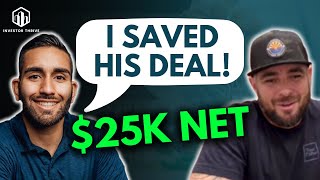
Nathan Payne and Lane Peterson discuss a Jacksonville wholesale deal where the seller tried to back out. Lane filed a memorandum of contract through Deeds.com to cloud the title and protect his interest, forcing the seller to negotiate. The tactic costs around $25 and can secure deals when sellers get squirrely.
Chapters
What is going on everybody? We are live right now on the Painless Flipping Podcast where we're going to break down how my buddy right here, Lane Peterson, crushed it on a deal and how he was able to use a YouTube video that I made to, uh, stop the deal from not happening, right? Or stop the seller from not working with them. Is that kind of what happened? Like, in a nutshell?
Exactly what— that's exactly what happened. You saved my deal. Let's go!
Yeah, look, we met— we just like met on the phone yesterday, right? Like, we've never talked before, is that correct?
Yeah, no, never had. Just kind of seen each other through mutual social media friends and videos and things like that. But no, I don't think we'd ever connected, bro.
That is honestly crazy. It's such a small world that we're— especially in the investing world where we live in, right? You know, so, so basically Everybody, if you don't know, I, I have a YouTube channel. I've had it for about a year and a half, and I, I make content, especially stuff where like I'll be doing something for a training, or I'll do something on my screen, I'll record it, and then I'll just make a video explaining it. So what happened in this scenario is we had a deal where a seller, uh, we had signed everything, we actually even gave them earnest money. Uh, I think we, we didn't give them earnest money, but I think the seller at the time, we had given them a little bit of money to, um, help them out because they were in a really tough situation and we were going to close on the deal and then they ghosted us. So we're like, hey, we got to file a memorandum of contract to protect our deal. And it ended up they were trying to sell to someone else anyway. Filing a memorandum of contract is important. Affidavit, memorandum, you can call them whatever you want, but protecting your deal is important, especially if you are agreeing to buy the deal and you know they're getting kind of shady, they're going to go with someone else. I do not recommend filing one unless you are going to buy the house or you have a buyer lined up. Do not just file these just because you want to stop every deal deal or anyone leaving you, especially if you have no means of buying it. But anyway, you watched this video and you told me the other day what happened. So let's kind of talk about it. What's up, Lane? Tell everybody what happened.
Yeah, 100%. I totally agree with you. I don't make it part of my standard business practice, you know. And also, it was very— it was very good of me to hear your video because I know how to file memorandums in my local market. I'm in Phoenix, Arizona. I know how to do that here. It's pretty easy. But on a nationwide level, you know, on a nationwide platform, trying to find the county, find how to record it, you know, the right paperwork, record it properly. I mean, that's a very— that's a high task. It is pretty difficult to find out all that information. And so what I do, I just jumped on YouTube and I typed in file memorandum, and boom, Nathan Payne jumped on, watched your video, and saved my deal.
Dude, I love to hear it. So what's Yeah, go ahead.
I had this deal tied up in Jacksonville, Florida, Duval County. You know, we've been buying quite a few properties there, wholesaling quite a bit. And this one was actually, it was a creative deal. We do a little bit of creative. We don't do a ton of it, but it was a creative deal. This guy leaving his mortgage in place, um, doing it subject to. The payment was, and he had a solar panel on it. So that kind of muddied the water a little bit.
That gets a little funky too. Yeah.
Yeah, but total all in, it was like $1,000, like $1,050 total payment with his $800 mortgage plus the, the $250 solar panel. Nothing rented for $2,100. I mean, it was a great little cash flow, cash flow property, and we already had it assigned to one of, one of our buyers. And then the guy kind of is slow to respond to me. We had everything signed every— all the contract, even my assignment was already signed.
Wow.
And then he starts kind of ghosting me a little bit, and then I finally get him on the phone and he straight up told me, he's like, yeah, I don't want to sell it to you anymore. Yeah, it's like, whoa, whoa, buddy, I've got a contract with you. That means I'm obligated to buy this house just as much as you're obligated to sell this house. That's what the contract does. That's the purpose of a contract. Exactly. So just going through it with him, he's just like, nope, sorry, I'm not selling. I said, hey, you know what, I am totally fine if somebody changes their mind or has something come up in their family, I get it.
I just—
let me know. And no, come to find out, he found someone that was going to pay him more. Yeah, I know, my neighbor, he said, paid me more money. And I said, listen, it doesn't work that way, bud. I mean, so he— his wife got on the phone, he's just like, hey, I'm sorry, I don't know what to tell you, but we're not— we're not selling it to you. So that's what I'm like, I gotta— I gotta file my memorandum, right?
Yeah. And I think in that situation, completely makes sense. I've, you know, I've just heard some, uh, some stories where people will file them just like as a part of their procedure, which I don't think makes sense, right?
I don't, I don't do that.
No, that's a complete waste of time. But yeah, with this video I showed you, and this is something I learned that I thought was amazing, is at deeds.com, such an easy process. They do, they take care of everything. You just have to send the contract, take a picture or PDF scan. Super easy, right?
Yeah, and super cheap. I mean, it was like $30, $35 for the year or something like that.
So cheap. Yeah, yeah.
And so literally, I, I I fill out my memorandum, I notarized it. I uploaded it at deeds.com. You upload it, they record it for you, and then send you the confirmation and send you the recording number from the county. And I kid you not, a week and a half later, I got a call from another title company that said, hey, uh, calling you about this property. You know, you have a cloud on title. What's it going to take to, you know, to clear this title up? Right. Well, I'm in contract to buy the property, so I want to buy it. If not, I mean, to clear up title, you know, it would, it would take $25,000.
Wow.
That's what my assignment was.
So instead of them, you just fulfilling and just him working with you, they just paid you out to really—
No, they didn't end up doing that, but that's what I told them it would take.
Okay.
For me to clear title and, and remove my memorandum. Okay. So no, he came back to me and ended up selling me the property, but as As we're contractually obligated.
Well, it's interesting because, you know, they're— if you're in the reverse situation, you're not trying to buy it and you try to back out, they're going to try and take your earnest money. They're going to try to get you to buy it. So it's the same thing, right?
That's what I do. A lot of times these sellers don't understand. I mean, what's the point of a contract? You know, I am obligated to buy this house just like you are obligated to sell it. That's right, we have a contract.
Well, also, like I agree with you all the time with what you said, like all the time. If a seller is— something happens in their family or they don't want to sell now, I say, hey, completely understand, but I'm going to exercise my rights to buy this. So I'm going to cloud title just when— and when you do want to sell or when you are ready to sell, I'll be there. Right. And that's exactly what you said. Hey, that's totally fine if you don't want to sell, something happened. I don't— in this situation, you didn't tell them you'd cloud it, right? You just did it.
I just did it. I had the conversation with him and told him, I said, "Hey, listen, you signed a contract with me, and so I can come after you for damages." I did tell him that because you hold equitable title. So you can go if he goes and does that, but then you got to go through the court. If you don't file the memorandum, you got to go through the court, and nobody wants to do that.
No, no, no, definitely not. No, I think the memorandum is the key. So that's what I say when sellers, I'm like, "Hey, totally get it." Trying to like come off like I'm the nice guy, but I'm just saying, hey, it's totally fine. You don't have to go, but this is what I'm going to do, so I'll be ready. And then when you say that, they're usually like, well, actually, you know, then they start, you know, telling you more of the truth of what's going on, right? Because nobody is exactly— in my opinion, from what my experience with sellers is like, nobody wants to sell like ASAP or super quick. And then all of a sudden, like a couple of days before, they're like, I decided not to sell. It's like, That doesn't really add up. It doesn't really make sense.
Right.
No. Yeah.
And if you could, if you can have a good conversation with them and if, if you know what you're talking about, if you understand the contractual agreement, contract law, you know, you can have an educated conversation with them and let them know. It's just like, hey, you know, how, how mad are you going to be if I don't come to the signing table? How mad are you going to be if I don't come to the closing table?
Right.
You know, you are expecting me to do this just as much as I'm expecting you to do it. And if you don't do it, I do have a case. That I can come after you because I hold equitable title. When you hold that contract, you hold equitable title of the home.
And you ended up making $25K on assigning it. Is that what you ended up doing?
I ended up assigning that one.
So zero down, but you were able to find an investor to sign it in for $25K down. Is that what happened?
Yeah. So he came, he actually came in with the total amount was $50K. He came in with $50K, paid us our assignment fee, and then gave the $25,000 proceeds to the seller.
Oh, wow. So you're able to get the seller $25K.
Yeah.
Wow.
Yeah, he was, he was making some money.
Good.
But it was a great deal. I mean, the thing cash flowed $1,000 a month and for my investor, only $50,000 out of pocket.
Wow. Yeah, that's amazing. That's amazing. I'm sure it's appreciated since then as well.
Yeah.
Since you've done it. So I don't know about you, but I have several deals where this has happened. Has this happened to you a lot in your, in your market or?
It's happened several times. Yeah, I don't have to do the memorandum that often, but, you know, it's a tool that you just always have to have in your belt because it does happen and it happens quite often.
When I was new, I didn't know this happened that often. So when sellers tried to back out, I just— I thought I couldn't do anything. I was like, 'Oh, okay.' So I had this deal once in— where was it? Del— no, it wasn't Del Rio. It was It was in California, right? So I can't remember exactly in California, but the seller, the day before we had agreed to $80,000, no, $60,000 to buy her house the day before close, or I think it was the day of, she said, I don't want to sell you guys the house at $60,000. I want $80,000 or I'm going to walk. And we didn't know. We were new investors. So we're like, and we had, we had it assigned at like $120,000. We were making a big fee. But so we were like, okay, we were like, okay. And we just gave her extra money. So it was interesting because I didn't know. I could have just been like, hey, look, the day before, you can't just say I want more. Everybody's ready to go. But I didn't know that. So we just did that. But you need to know your rights.
Flip the script, right? I mean, ask the seller, hey, would you appreciate if I came to the closing table and said, hey, I need a $30,000 price reduction the day of close?
Yeah, exactly.
It's the same thing. Flip the script and it doesn't feel good to them, just like it doesn't feel good to us as buyers.
Yeah. And it's interesting because, again, when you're new, you don't really know that. I had another experience where I was— this is all— a lot of this happened when I was new. I was— I went to this guy's house. We signed an agreement for $215,000. He was good to go. No, no issues or anything. I, as I'm driving away, like 30, 30 minutes later, I get to my office. He calls. He says, hey, I've decided not to sell. And for me, just being a trusting person in the beginning, I trust everybody. And now I'm a little reluctant to trust everybody. But I was like, hmm, Okay, that's fine. If you don't want to sell, that's fine. A couple of weeks later, I found out that, you know, it was wholesaled and flipped and not flipped at the time, and I'm like, what?
Yeah, those are the worst.
Because I was just like, I just was letting anybody out. So eventually I got to understand what this memorandum was and what a memorandum was. It's just you should have this verbiage in your contract, by the way, if you guys don't. But your contract should say something like, hey, you have the right to file a notice of interest. If the seller signs this, whatever, you're able to file a notice of interest showing that you have equitable title on the property. I don't know the exact verbiage, but it basically says they are agreeing and you're agreeing that you can do that if, you know, by signing the contract. And now when sellers do it, I had a guy in Florida like a while ago that the day of closing, he says, "Hey, me and my mom, we decided we don't want to sell. We just decided." I said, "Okay, so the day of, just you had all these issues where you need to sell, but today you just decided you don't need to. And he's like, yeah, it's okay, don't worry, like nothing happened. I'll just give you your $500 of earnest money that you put. And I was like, look, we've done all this work. That's totally fine if you decide you don't want to sell, but just know that if you're trying to sell to anyone else or try to sell in the future, I have, you know, the cloud on title now and we're going to be there ready to buy it. So it's okay if you don't want to sell. And he was like, uh, uh, uh. And then we found out he was trying to sell to someone else and we ended up— when he knew I kind of pushed on him, he ended up We ended up closing on them the next day. So crazy. It's crazy that sellers try to do that.
And yeah, like I said, if you know how to have that conversation and you know contract law, you'll be okay. I had a deal just the other day, um, one of— it was actually one of my, uh, one of my clients, and it was on a, on a land deal, just a raw land deal that we had tied up— he had tied up. I was helping him structure the deal and, and get it to the closing table, but he had the same situation happen. This was literally last week. And it was a half a million dollar piece of dirt, and the seller just had gone dark on him. And then— and not just for like a day or two, but it was like 2 weeks. And then he calls me and he's just like, hey man, this is what's going on. I'm like, bro, we gotta file that memorandum tomorrow. He's like, well, let's get him through the holiday, you know. I'm like, no, if you wait a week or two, I mean, he could sell to somebody else. Yeah, title can get cleared.
If you—
if you expedite title, it can get cleared in a week, and he could close it and sell to somebody else. And now you got to take him to court. And who wants to do that, right?
No.
So we ended up, we ended up filling out the memorandum, but then the seller called and we didn't end up having to file it.
Okay, well, that's good. So, you know what's interesting? I've actually filed some memorandums and they haven't either got recorded in time or some of the title companies just don't even care and they'll do it anyway and they'll leave it up to like for you to deal with the buyer or the property, right? So I don't know if that's happened to you, But that's happened to me too, where I filed some and the title companies, like, either they don't see it or they turn a blind eye and they just do it anyway because they're rogues and they don't care. They're just being rebellious.
In that situation, couldn't you go after the title insurance?
So in the situation where I did do that, like, this happened, I tried to go for the title company and they're tough, dude. Like, title insurance, all that stuff, like, good luck getting title, like, money from title companies, in my opinion. I think they got a lot of money, they got a lot of lawyers, and I think they're not really— they're hard to get.
They don't want to pay out on those policies, just like your normal—
no, no, definitely do not.
Everything they can to not pay out on that policy.
I've actually haven't heard of many situations where title companies actually pay out on their title insurance when they make a big mistake, because they can make some big mistakes, bro. And I think sometimes they're just like, do something about it, dude.
I had one that did. I had a guy that wholesaled me a house in Scottsdale here in Arizona, wholesaled me a house He made $30 grand on it. Right. So I funded the deal for $230,000. He had tied it up for $200,000. My title company, when I closed it, they insured it for his purchase price. So $200 grand, right. And I was kind of new. This was years and years ago.
Right.
I didn't even, I didn't even say anything. I didn't even look at that. Two weeks later, I get a lawsuit delivered to my office because the woman that sold it to him was— did it fraudulently. She was actually appearing to be the sister. There was a death in the family, dad left it to the two sisters. Two sisters like didn't get along. One sister fraudulently signed for the other sister, notary stamped it, everything. And then so they went back to the title company, the title company's like, all right, yeah, we'll pay you the $200,000 owner's policy. But I'm like, well, where's my— I paid $230,000. Yeah, it's only insured for $200,000, so I lost $30,000.
Well, you know, that sucks, but I feel like there's some, some title companies that are like hole in the walls that probably wouldn't even— they'd just disappear or something.
Oh dude, no, well, that's how a company— it was Fidelity. They're, they're one of the biggest in the nation. And so ever since then, I learned to— whenever I get somebody that I buy a home from, if they're making a $30,000 wholesale fee I'm insuring it for the entire amount. Good. Because I even went back to my— the guy that sold me the deal because I had a good, good relationship with them, and he wouldn't budge. I had to send a letter from a lawyer, and then now I don't have a relationship with him because he wouldn't— he wouldn't give me my assignment fee back.
So you're telling me he made $30K on something that you lost $200K? You lost— well, you lost out on— like, he just wouldn't give you the money back?
No, he— and literally he had made it like 2 and a half weeks before. He made $30 grand on an assignment. And all I said was, hey dude, they took the house back, give me my assignment back. And he was like, no.
Wow, that's whack in my opinion. Like if that happened to— oh my gosh, bro, I'm sorry to hear that.
It wasn't pretty, but you live and learn. And I always insure my properties for the entire amount.
Well, you do live and learn, and it's kind of crazy how like you, you would never probably even know— known that until— because that happened to you. Like, that's not something I've ever thought of, bro. Now that you've told me that, I've learned from you.
So most people don't even look at that, right? You figure that the title company would just insure it for the entire amount, but most of them are insuring it for the contract amount.
Yeah.
So you go type a property for $500 grand, wholesale to me for $550,000. A lot of times the title company is just insuring it for that contract amount.
That's a good point. So everybody that's watching this or will watch this, definitely check, uh, if you're buying a property, make sure— and you do title insurance on it— that, um, and I do recommend that you do, uh, that it's insured for the, the amount that you're buying it for. Is that right, Lane?
For sure.
Well, hey man, this— it's, it's crazy again that, you know, this, this happens, but this is definitely a good, a good strategy— or not even good strategy, but something to do when this happens, because it's going to happen. It's, it's, it's bound to happen, especially like if you're doing pay-per-click, uh, mail text, whatever. Like, they're not just dealing with you, I would say, most of the time. Most of the time, even if after you get under contract, they're gonna sometimes have someone chirping in their ear. And if you start feeling something getting fishy, you, you just want to call it out, be like, hey, you know, everything good? And, uh, yeah, you just—
yeah, it happened, it happened. It's happened to me multiple times. Um, you know, I have— I still have a lot of— I don't even know how many— but memorandums filed out there that I haven't heard anything about. Maybe they did sell it. I didn't know. I mean, after you said that, maybe I got to go back and check. But I, I think so. Sometimes I buy a lot of houses in Atlanta, and, and when we were buying a lot a couple years ago, you know, it would just happen. Someone would call me and be like, hey man, I'm not selling, and give me some reason. And I'd be like, hey, I get it. You know, they gave me some family reason, but I'd still go file the memorandum because, like you said, All sellers are liars. I mean, you don't know if they're telling you the truth and they're really just turning it around and selling it to another guy for $20,000 more.
Oh, you don't know. No.
So if one comes back around a couple years later and I do realize that, hey, he was telling me the truth, I'll probably just release it.
Yeah, yeah. Or, or rework it, right? Or be like, yeah, no, um, it's been a while, but let's, let's see what we can do.
Yeah. Oh, you're selling it? What are you selling it for? Maybe Maybe I want to buy it, right?
Yeah. So the one that was really funky for me was I was talking to this guy in Atlanta. He owned a property in, I think it was Huntsville, Alabama. He sold to me for like $170,000. We had everything ready to get it assigned and we had opened up title, put down the earnest money there. And then like when we went to go close it, it was already sold. So somehow like he sold it out from under us. So then we filed— I think we like reached out to the seller like, hey, actually this wasn't a memorandum situation because we He sold it once we had everything assigned. So I don't— there's not really much you can do in that situation. Like if everything is going according to plan and then all of a sudden you're ready to close and he snaked and someone else took action first, that kind of sucks. But I don't think that happens that much. But that happened in my situation.
Well, dude, and one thing to always remember is when you get your contract signed, make sure it's dated and timestamped, right? Because I've run into the situation where they signed a contract with another buyer the same day. Oh, and then they try and ghost me. And so then you go file that memorandum and then it comes down to the title company. The title company's like, hey, you guys got to figure it out. And so when you compare contracts, you're like, hey, I got mine signed at 10 AM, you didn't get yours signed till 5 PM, so my contract's the one that's valid. So it's very important.
And just so— this is how PandaDoc, I think DocuSign works as well, but they— if you dive into the, uh, like the date, the details of the remote signature, electronic signature, it does show you the time. Um, did you know that?
Yeah.
Okay. Yeah, so exactly. And unfortunately, with the deal we had, was, was like a $20,000 assignment fee. Like, there was really not much we could do because he had already sold it. And then we had talked to the, the buyer, and the buyer's like, well, hey, look, like, I didn't even know about you guys. And then the seller, like, was an old guy and was like, you know, there's only so much you can do. What are you going to do, like, take it to court, you know?
So yeah, yeah, I had, I had a situation where it literally came down to closing and they had two contracts and it just so happened I knew the other guy. It was here in Phoenix and, you know, I know a lot of the guys that are buying here, right? And it was a guy that I knew. And so my title company was like, well, hey, they filed their memorandum. And I saw that they filed their contract with their memorandum. And so I saw what time they signed it.
That's amazing.
I'm like, I had mine signed first. So I call the guy and I'm like, hey, This is what's going on. And, you know, can you just tell title to clear it up? And he's like, well, how much you're gonna give me? I'm like, I'm not gonna give you anything. I had my contract signed first. Title is gonna insure over you. It's just gonna take them a day or two longer because it's gonna take more work. Can you just call and release it so that I can get a close anyways?
Savage.
Yeah, I mean, you gotta know, I mean, the guy, he didn't have a leg to stand on. And title— no, he didn't.
Not at all.
But he's just, you know, trying to get a handout.
It's like, what are you going to give me? Absolutely nothing. It obviously—
yeah, yeah, I'm just asking you, he's just asking you as a, you know, as an associate, the right thing to do is release your memorandum because it's not legit.
It's cutthroat in Phoenix, brother.
No, like you wouldn't believe, man.
We got some questions coming from the live. So this says, what can you do after they sell the property and the memorandum wasn't called? So that's kind of the situation I was talking about with you guys, like there's really— you can obviously escalate it, but like, how much time and effort do you want to put into something like this that could basically be a time suck? In my opinion, for me, my thought process is protect the deal unless it's like some crazy deal where you spent all this time and energy and effort for years and months, then obviously I'd pursue it. But if it's something like a wholesale deal or something where you're going to make, let's just say, $10,000 or $20,000, is that really worth it for you to pursue? And kind of— it does suck your energy, bro, because I was talking to— on one of the deals, I was talking to an attorney. I was sending and information. And I was like, man, this isn't even worth it.
So your only leg to stand on is go after the title company and see if they'll pay out of that insurance policy that they got.
Yeah.
And, you know, I would, I would make a little bit of effort there. And if you're going to have to lawyer up and go sue the title company to get them to pay out of that insurance policy, it's probably not worth it.
Yeah, agreed.
But, you know, maybe send a demand, an email, be like, hey, you guys insured over this, you owe me.
Yeah, I love it. Yeah, we're agreement there. Let's see if this is— I think this might be some of the same thing. What is the biggest windfall you have made after filing memorandum and how long after was the property sold? Do you know what that means? Windfall? Big— I'm not sure what that means. Pitfall? Windfall? Do you know what that means?
I'm not sure what they mean by that, but yeah, not sure. Most of mine, if I file a memorandum, they come to fruition pretty soon after because that means they were trying to sell it to somebody else. Like I said, I have some memorandums out there that have been on there for years, and if they do call me, I'll probably just end up releasing it because it was a family issue that they Yeah, that they ended up because so it will stay there forever until they go and sell them. It should stay there forever unless the title company misses it.
Yeah. And I think that, I think with some of the ones that we had where they sold over it, I think there's some smaller title companies that just want to get deals done. They don't even care and they're like, go ahead, do something. So I really, I think it depends, but when you're dealing with the bigger ones, like you said, Fidelity, I don't think they're trying to play around. Let's see, how do I find out which title company they used? So I don't think it's necessary. Well, that's actually a really good question. How would you find out which title company they closed at?
You don't need to find out. You can file your memorandum with any title company.
Well, I guess what they're referring to is if we try to go after the title company and do a demanding letter for the title insurance, how would you know? It's a good question. I'm trying to think of what happened to the one that I did. Well, usually I find out because the title company calls me or lets me know. So if they don't, You got me stuck there.
That's a good question because you can look up the recorded deed, but I don't think the deed says anything on the title about the title company unless it's like—
I don't think so—
their notary. But it's still— that's a good question. I'm not sure because that's not a recorded document on the title company that did it. Now you can get another title company to go and find out who insured it. You can find out who insured it. Okay, just use whoever, whatever title company you use, and they can go and look up who insured that property because they can find the policy.
So maybe that's it, you look at who insured the, the, the, the sale of the home, right?
Yeah, because then you're filing a claim technically against the new owner. It's not against them personally, but it's against their property. And so whatever title insurance they bought is protecting them, right? So if somebody has a claim against their policy— so any, any title company that you have a relationship can find out who has the policy on that house. And file a claim against that policy.
Love it. No, man, thanks for answering a lot of these questions. I think we're getting some good interactions. Can you file memorandum with the county directly instead of filing it through a title company? Of course, yeah. You can do it on deeds.com. That's how we originally met, Dallin, is I made a video on YouTube called How to File Memorandum of Contract, and he was able to use it to save that deal that he had in Jacksonville. So you could check that one out. But you can do it directly to the county. You can do it online, um, or through the title company. They all pretty much will help you get it done.
So something to note though, Dallin, a lot of title companies won't do it. So that's why deeds.com is so awesome because whatever the county is and wherever the United States, they'll do it for you. And a lot of times when you go to a title company, they say, hey, I can't do it unless I'm issuing a title insurance policy. Because they're basically, they're recording something that they're not insuring. So Deeds.com is a great way around that. I have found that a lot of title companies won't do it.
That's, that's a good point. That's a good point. Cool. Any other questions? Anybody on that's watching this on live? These are great questions to ask because it seems like this is something that a lot of investors face or they're worried about, right? So again, just to reiterate, we're not saying this should be a part of your process to do on every deal. I would say it's on ones where it's starting to get a little fishy. You're ready, it's assigned, or you're going to buy it and, you know, they start ghosting you or they try to just back out the day of. Just have that conversation. Just say, hey, look, that's okay. If you don't want to sell it right now, if something happens, but we will be ready to buy it when, when, when you do sell. So if you're selling to someone in a week, for example, we're going to come up and, you know, it's not going to work out. Oh yeah. When I go talk to sellers and I go through my contract, I actually read not word for word the contract with my sellers that I work with, but I just kind of go over and explain. And I say this as part of my process. I just say, hey, by the way, you know, by signing this, this just enables us to, you know, protect ourselves if we agree and we go through this process and you try to back out, we're able to file a notice of interest. And nobody ever, when you're reading that, like, has anything bad or negative to say about that. Like, okay, I totally get that. So this is not something that's weird for someone that you're agreeing to buy their house. They're actually glad that you're willing to do this. But then obviously later down the line, you know, it will bite them in the butt if they try to get sneaky. Yeah.
At the time of signing, they're like, oh no, I'd never do that.
Yeah, for real. Well, Lane, um, do you have anything you would like to add for our guests? We've had a good conversation. Anything you want to let them know before we wrap up, or how they can find you and work with you, you know, since you're doing deals?
Yeah, all my, uh, all my— I call myself HOV Lane. Um, my name is spelled L-A-Y-N-E, um, but that's all my social media because I love sharing. I love carpooling. We're all in this, you know. It's, it's so great to work together, collaborate, share best business practices. And like you said, Nathan, this isn't like a standard practice. Every time I get a contract, oh, we gotta go file a memorandum, right? But if you sense that something's getting a little squirrely, something's not right, just go ahead and do it. Maybe they did have a death in the family and they do need to back out. And that is at any given time, I say, hey, I get it. And so, but a lot of times they're lying. Majority of sellers are liars.
Yeah, and that's great, great having this in the tool belt Knowing that you can protect yourself because there'd be nothing— it's not fun to work all that time and work hard. And then, you know, someone just snake it because they've seen your mailer, they saw your blast, and then they just go in and make a little higher offer, which unfortunately people do that, you know, and that's—
they do. There's people that take that, that have a business practice of taking people's earnest money or snaking deals from other people. It always amazes me because those kind of people, if they would just focus on doing what's right and good, they would kill it.
You would kill it. Yeah, it takes a lot of work. I'm assuming it takes a lot of work. Too much work to do it. All right, everybody. Well, this has been the Painless Living Podcast, and it's been fun having you on here, Lane. We'll definitely have to have you back and talk a little bit more about what you're doing in the industry and see how people connect with you. But thanks. And last thing I wanted to say is it's kind of crazy because we both know Jerry Norton. I sometimes— Jerry, you know, through his videos, people are like, oh, I did this. Now that, you know, you told me. I had no idea. I've never had anyone say, hey, because of your video that you had, I was able to do this. No one said that. So it's a pretty cool experience for me.
I love being the only one so far. Everybody says it about Jerry. Let's get Nathan to win.
Yeah, man. Every Jerry, I watched your video and did this, and I'm like, man, one day, right? Yeah. All right, yep, yep. All right, everybody, we'll catch you on the next one. Peace out.
Mm-hmm.
More from Nathan





Why Traditional Wholesaling Keeps Failing You (Use This Pre-Flip Method Instead)





