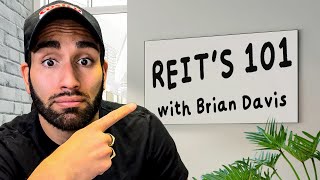
In this episode of the Painless Flipping Podcast, host Nathan Payne interviews G. Brian Davis about "small‑dollar" real estate investing – ways for average, middle‑class investors to add real estate to their portfolios without needing $50‑$100k upfront. They first outline the barrier: traditional REITs, syndications, and private equity funds typically require large minimums. They then explore low‑cost entry points: publicly traded REITs (buyable by the share for as little as $20) and real‑estate crowdfunding platforms that offer fractional ownership of rental properties with minimums as low as $10 (e.g., Fundrise, Groundfloor) or $50‑$100 (Arrived, Lofty, Arc7). The conversation explains the trade‑offs of public REITs – high liquidity but also higher volatility and strong correlation to the stock market – and why many investors seek non‑public, private‑equity‑style deals for diversification. The core of the interview focuses on Spark Rental’s Co‑Investing Club, a membership‑based investment club that vets passive real‑estate deals (syndications, private partnerships, private notes, equity funds) on behalf of its members. The club charges $59 per month or $497 per year, takes no commission on investments, and aligns interests by investing its own capital alongside members. The minimum investment per vetted deal is $5,000, substantially lower than the $50‑$100k typical for direct private‑equity participation. Brian explains the club’s process: monthly meetings, rigorous due‑diligence with external operators, and a variety of deal structures (equity, debt, JV, land‑flipping funds) aimed at asymmetric, high‑return, low‑risk opportunities. He also clarifies that the club does not buy deeds directly but invests passively, receiving equity or debt positions and the associated tax benefits. The episode wraps with a brief promotional plug from Nathan about a training bundle that compiles his real‑estate experience and includes $19k of free gifts, encouraging listeners to click the link in the description.
Chapters
Welcome to the Painless Flipping Podcast, where we talk about how to get into real estate the painless way. It can be hard getting into real estate investing if you try to do everything yourself, so I bring on experts to talk about their experiences so you guys can learn from them. So today I got Brian Davis, but he goes— you put a little G because there's a lot of Brian Davises there. So G. Brian Davis. And hey, by the way, today we're gonna be talking about small-dollar real estate investing. He's gonna tell us exactly what that is because Personally, I don't know what you mean by small dollar real estate investing. So let's dive right in. What do you mean by that, Brian?
Well, that's a great question. And it depends on the investment. So here's the big problem that the average person has when they go to add real estate to their portfolio. You know, most of us, you know, if you ask someone, hey, would you love to have some real estate in your investment portfolio? They say, yeah, sure.
Great.
Uh, and then you ask them, do you have $50,000 or $100,000, you know, for either putting down as a down payment and closing costs and initial repairs and cash reserves? And they say, well, And then the same question, if someone is even aware of real estate syndications, it's the same problem, same minimum investment, $50,000 to $100,000 typically. So that makes it really hard for the average person, middle-class person to invest in real estate and add that to their portfolio. So you have a lot of options for— well, not a lot, but you do have some options for small-dollar real estate investing. And the way that people classically address this problem was by buying shares in REITs. Real estate investment trusts. So yeah, so a lot of people are familiar with these. I'm not going to spend too much time on them, but typical REITs are publicly traded. So you can log into your brokerage account like Charles Schwab and buy a single share of a REIT if you want to. And a share might only cost $20, right?
What does that stand for? REIT.
Real estate investment trust.
Okay.
Got it. And there are certain rules that a company must adhere to, certain SEC rules that they have to adhere to in order to be classified as a REIT. And one of those rules is that they have to pass along at least 90% of their profits every year to shareholders in the form of dividends.
Oh wow.
So, so they tend to be—
sorry, quick question about a REIT. Is that, is that the same thing as, is that like what people are trying to do when they get a fund? They're trying to get all this money in so they can put it in and then give their investors, um, like dividends. Is that the same thing or is that completely, is that different?
Well, the answer to that question is not quite as clear as you might think. So there are real estate crowdfunding platforms out there that have what they call eREITs or private REITs. And in many cases, these operate very similar to a fund. They own properties or they own debts that are secured by properties similar to a REIT. So you've got— and then you also— this exists on the private equity side as well. We have private equity real estate funds, private debt funds where the debts are secured by real property. So, you know, the line can get a little bit blurry there with real estate crowdfunding. You know, there's sort of this spectrum from publicly traded REITs on the one side to private equity funds on the other side of that spectrum. Got it.
Okay, I got you. Yeah.
So a lot of real estate crowdfunding platforms can kind of blur those lines in the middle of the spectrum. But to be a publicly traded REIT, yeah, you have to adhere to certain SEC rules. 75% of your income has to come from real estate. And anyway, we don't need to get in the weeds of all that.
Yeah. It sounds a little safer to go with the publicly traded versus like your buddy who has a private equity fund, right? That's just trying to get everybody's— gather money. Would you agree? Or is that not true?
Not necessarily. So publicly traded REITs, they've got some pros and cons. One of the big advantages is liquidity. You can go out and sell your shares at any time. It's just like a stock or an ETF or any publicly traded asset. You can buy and sell with a click of a button at any time, at least during the day when markets are open. So that liquidity is nice, but the liquidity comes with a flip side, and that is volatility. So the more liquid an investment is, the more volatile it is because it can bounce around based on minute-to-minute supply and demand. And sellers looking to sell and buyers looking to buy. So that's one of the big problems with publicly traded REITs is not only are they super volatile, but they're also uncomfortably correlated to public stock markets. So for example, there was a 20-year study done not long ago by Morningstar and they found, I think it was a point— it's around 0.6 as the correlation between US REITs and the S&P 500, which is a somewhat high correlation. That's similar to just other segments of the economy, right? So, you know, uh, consumer staples or, um, you know, technology, you know, you've got all these different segments of, of the, uh, of the market, uh, and that basically just makes REITs one more segment of the public stock market. Got it. And that kind of defeats the purpose, at least for someone like me.
Yeah, yeah. You can just go into other stocks or the S&P 500 if it's, you know, that makes sense.
Yeah, exactly. I mean, I invest in real estate for a lot of reasons, but one of those reasons is diversification, you know, from my stock investments. You know, I don't want a stock market crash to send me into a panic because all of my other investments are also crashing, right? I mean, you know, if I've got real estate that's not publicly traded REITs, that's not crashing alongside stock markets, then maybe that real estate's doing totally fine. So, you know, stock market goes up, it goes down, you know, I can sleep at night knowing that my real estate investments are not bouncing around with my stock investments. Uh, so that diversification is— that component is really important. Anyway, to come full circle here, so publicly traded REITs, you can invest with the cost of a single share. Real estate crowdfunding platforms, they vary by platform what the minimum investment is. Some of them are as little as $10, such as Fundrise and Groundfloor. Some of them are more like $50 or $100, excuse me, such as Arrived or Lofty or Arc7. And these are platforms that you buy fractional shares of rental properties. Some of them require $500 or $1,000 as a minimum investment. And these can make kind of an entry-level passive real estate investment on your way to the bigger and I would argue better private equity investments and private debt investments. In real estate, such as real estate syndications or private equity funds or debt funds or private notes or private partnerships like JV partnerships, those require more money. So that's what we do as a business. We have an investment club. It's a flat fee investment club membership model where every month we meet as a club and we vet different passive real estate investments that we have no affiliation with. I mean, we'll bring in an outside operator and say, okay, We like this investment that you're raising money for right now. Tell us more about it. We're going to grill you with questions. We're going to try to poke holes in this investment from 50 different angles. We're going to put 50 different eyeballs on it. And then at the end of that, any of our members who want to invest in that investment can do so with $5,000 or more instead of the typical $50 grand, $100 grand, sometimes even $250,000 that's required typically for those private equity investments or private debt. Investments.
Got it. Wow. So that's your business that gets together and has this club? Is that what Spark Rental is?
Yeah. So we call it our Co-Investing Club by Spark Rental. So it's a group, it's a classical investment club. The twist is that instead of looking at stocks, we look at passive real estate investments.
And is there a monthly fee to join Spark Rental?
There is, yeah. Our co-investing club has a $59 a month fee or $497 a year if you prefer. And that is our form of compensation for organizing the club. We don't get a cut of any of the money that's invested. We're not getting kickbacks or anything like that from the operators. In fact, quite the opposite. We invest our personal money in every one of these deals as just one more member of the investment club. So our interests are 100% aligned with our members.
That's awesome. So that's, uh, is that— what would you say the smallest dollar amount that you can invest once you get into Spark Rental is?
So it's $5,000 per investment is the minimum amount. Every investment is optional. I mean, we've got members who will go 6 months without investing in something, and then they'll invest in the next 4 that we do. Um, so yeah, it's $5,000 is the minimum investment. For an investment. And I realized that for a lot of people, that seems like a lot of money, but it's way less than the $50 grand or $100 grand that you would need if you were to invest by yourself in one of these investments, or to go out and buy a rental property or flip a house by yourself.
Is that a REIT? Is that what you're doing, or crowdfunding? Or what is— what would you say what you're doing is in Spark Rental?
What would you call it? Neither. So there are specific SEC rules for what counts as a REIT. And then there's also a set of regulations. Reg CF is the type of security that you file with the SEC for a crowdfunding investment. Neither one is what we invest in, for the most part anyway. We invest in syndications, which are basically just big group investments where people get together and they buy a big project.
So this is a syndication, that's what you're doing?
Well, it's not just syndications. We also do private partnerships with investors where, for example, we'll go in with a house flipper on a series of house flips. Or, you know, recently we went in with a developer on a series of single-family home construction projects. We also have invested in private notes before where we just, we get paid a monthly interest amount. We've invested in equity funds, real estate equity funds. For example, there was a land flipper that we invested with his fund. That fund pays 16% distributions on a quarterly basis. So yeah, I mean, our mission is really to find those asymmetric returns, try to find high potential returns with very low potential risk, and try to exploit those and do it through the power of combining a lot of smaller individual investors' capital into a much larger investment that we're making.
Do you buy deeds?
We don't buy anything directly. We solely invest passively in other people's projects, other people's investments. So we do partnerships with people on individual properties sometimes. So they buy a deed and we get some kind of security to that deed, whether it's being listed as a partial owner or signing a JV agreement or having a lien against that property, whatever it is. So we're usually not the owner on record on the deed. The operator is typically, they'll create an LLC and that LLC will be the owner on record. But we are invested as equity partners typically, or sometimes debt investments, but usually equity partners in that deal.
Okay.
So we do get all the tax benefits of owning real estate, you know, the cash flow, the appreciation, the depreciation, or yeah, the write-offs. We get all that stuff.
I love that. Well, hey, you crushed that right there. What small dollar real estate investing is, you really took that and nailed it. So I appreciate that. And thanks for being on here. And people can reach out to you at Spark Rental. Is that Spark Rental, sparkrental.com, or how do they get to you?
Yeah, sparkrental.com is the best place to find us. You can also find us on all the major social platforms at just @SparkRental. And yeah, reach out. We're, we're a very small mom-and-pop company. We love to hear from you, so reach out anytime.
Well, thanks so much for being on here, and I am excited to kind of dive in deeper. I'd like to learn more, a little bit about what you do. So thanks for coming on, Nathan.
Thank you so much for having me. You got it.
Hey everybody, what's up? It's Nathan Payne, and for the first time ever, we just released this insane training bundle that has literally everything that I've learned from doing a combined 4 $100,000 in real estate, all from starting with absolutely no previous business background experience or any real estate experience. Plus, there's over $19,000 worth of free gifts that we're throwing in, all for an insanely low, low price. If you want to get your hands on this, be sure to click the first link on the description below right now.