Unlock Radio Ads for 10x Real Estate ROI 🚀
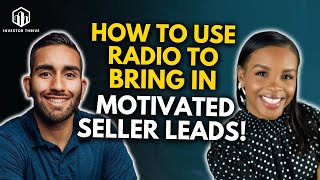
Grace Mills, founder of REI Radio, explains how real-estate investors use terrestrial radio for lead generation. Radio typically delivers 3-4x return on ad spend, with some achieving 10x. Her done-for-you program costs $7,500 over four months and recommends $1,500-$4,500 monthly ad spend depending on deal volume.
Chapters
All right, welcome everyone. This is Nathan Payne with Investor Thrive, and we are live at the podcast, the Painless Wholesaling Podcast. And I have an amazing guest with us today. We got Grace Mills at REI Radio, where she's going to tell us all about how amazing the radio is. Now, who, who would have thought people still listen to radio, right?
A lot of people, right? Well, hello, hello everyone, and thank you so much, Nathan, for having me on today. Any chance I get to add value to you and your audience considering all the value that you share. I'm happy to do so, more than happy.
No, yes. So let's get started. I have a lot of questions about the radio as a lead gen service, a lot of questions about, you know, where— how you got your start. So let's just dive right into it. Um, tell us, tell the audience really quick, like in 30 seconds, like a little bit about yourself, and then we can dive into, you know, your— how you got started into real estate and all that.
Sure, absolutely. I've always been in love with lead gen and marketing. I studied that actually in college before I quit. It just got too expensive. I like making money. I do not like collecting debt.
Where did you go to school, by the way?
I went to school in— it's a very small school in Bridgeport, Connecticut. Really cold blizzards. It was terrible. We went to class in heavy blizzards on top of just collecting a ton of debt. So I've always loved marketing and lead gen. Um, I ended up working as like a, an assistant for like a virtual real estate, you know, kind of network that I really, really clicked with and went to work with him directly. And that being Chris Arnold. Um, and at the time there was no one controlling the marketing, not a single person. Um, it was very like, just throw some stuff on the wall, see if it sticks. Um, so I jumped in and we started looking at, well, okay, how do we get motivated sellers in here? So, That's genuinely how I got my start about 9 or 10 years ago almost. I started doing the marketing for an actual real estate investment company, and that is how we discovered radio. And I have tinkered and played with every little element of it since then.
So Chris Arnold, that sounds familiar. Is that a bigger, bigger investor out there? It sounds familiar.
Yeah, in DFW, 100%. He ended up branching, you know, he had a brokerage at the time as well. So there was the retail side and there was the investment side as well. And then Chris Chris actually ended up just launching like his own mastermind.
What's his mastermind called?
Multipliers was the mastermind he launched.
Okay. Yeah. I'll have to look that up anyway. So are you still with Chris or?
No. Now I run REI Radio 100%. It is my full attention to genuinely at this point help everyone else realize that there's a marketing channel that everyone knows about, but no one is using. It is underutilized on the real estate investment side 100%.
What would you say the return on investment is on radio? Like, what's the return?
Yeah, that is a great question. And I get that a lot. A lot of people are really, really concerned about that. I would tell you that one, it starts with a mindset shift. Radio is quality, not quantity. And sometimes people are trying to take their numbers and your KPIs and what you're used to, maybe from direct mail and cold calling and going, hey, okay, well, I should be looking for this on radio as well. Radio filters itself out. Literally, there's no need for a tire kicker to call you, right? Like on direct mail, you get those people who are like, hey, I got your card in the mail, can you give me a ballpark? And they're not really being serious. Radio to listeners sounds like it's so difficult to get on that they take you more seriously. And so their brain isn't thinking, well, hey, let me just kind of call and tire kick this around or kind of waste their time. When they call you, they're really sure about it because radio gives you so much more credibility than some of these. Absolutely. That they filter themselves out in terms of motivation. In terms of numbers, though, at an absolute minimum, it is a $3 to $4 return. I've had students that blow that completely out of the water, like 10x their business on a radio deal. But if you're tracking radio, it is at least $3 to $4. If it falls beneath that, there's a big, big, big problem. I mean, it's probably a bad station.
Have you found that specific markets do better with radio? Like, for example, like a really smaller market, like 40,000, 50,000 people, they really crush it because those people maybe don't have that many options, or versus like San Antonio or Salt Lake City, Utah?
That's another really great question. I would tell you that there's about 230 radio markets and they all can work just with a couple of different strategies in place. So if you're in a larger market, you probably really only need to pick up one station, right? Like if you're in Salt Lake City, if you're in Miami, Dallas, something like that, you can literally pick up about one station at a time, and you're going to do perfectly fine. In a market that's a little bit smaller, you know, something like Lubbock, Texas, what I usually do there is we use like a stacking method. So we pick up maybe 2 to 3 at a time to reach the same amount of people that you would in the larger market, because I go by size of an audience. That's how I believe in buying a station. That's how I believe in filtering it out. It is all about the size of the actual audience so that you know that there's an actual return there. But if your target audience is there, It's game in any of those markets, large or small. It just maybe you play with a slightly different strategy in terms of how many you pick up at a time.
Yeah, because I have one of my friends, his name is William Tingle. He runs a subject-to coaching company. He's been doing subject-to for like 20 years. He's awesome. But he just said he moved to Arkansas and he heard about radio, so he just tried it out because someone, one of his students, went to like a seminar and figured out how to do it. So he just tried it and he said he got like an $80,000 deal within like his first week or two. Because someone just called and was like ready to go and he got it done. So I believe it works. I've heard it works. I guess where I would stop or where most people would stop is they don't know how to start, right?
Mm-hmm. 100%. I would probably nail it down this way in the most simplest terms. And I like— I'm a big person. If it's not free, I look for cheap options. So the best free way to really truly just get started is by looking at your market. So I'll just use Google. For example, right? You like, you can go to Google and type in radio stations in your market. Let's say it's Salt Lake City, so I'd go radio station Salt Lake City. Google will drop down an entire list of all the stations that's available, roughly, at least so you can get a couple of contacts. I, I would tell people pick about maybe 2, and I mean like 2 different stations. So, um, you could see, and I'm making this up, but it could be like WXYZ owned by iHeart, like, right? I would take that contact number down and then I'd find someone that's non-iHeart, Maybe you have a mom-and-pop, or, um, there could be like a Beasley Media Group or Intercom or CBS Radio, like in terms of ownership. And I would literally just take down their phone numbers and give them a quick call. Why I say a quick call is, um, you are calling a seasoned radio rep. Um, they are really, really good at talking, um, and sometimes talking you into something that was not going to serve you whatsoever. So in a quick call, I would keep it under 15 minutes, and I would roughly say, hey, I'm looking to pick up maybe 2 3 stations. I just wanted to get an idea of your stations or your listeners. Can you send me any data that you have on it? What you're looking for is to make sure that that station is actually hitting your target audience. If you are running a wholesaling company, you need to make sure that you're in front of homeowners. All stations aren't even, and I mean that truly. I'll use an example. I have some students that will come in and say, hey, well, I know my audience is very blue-collar. So I need to pick up maybe a country station. Country stations aren't even. There could be a very affluent, right? Like they're highly educated and financially well off on one country station. And then another that's a little bit low, medium income, maybe a little bit more blue collar. But you won't know that just by looking at a station. You absolutely have to collect at least some information on that. So yeah, I would say that is the best start is just do a quick Google search for free just to get an idea and then take that data that they send you and really just make sure, hey, is this my actual target audience? Are there homeowners here? And are these the actual homeowners I typically would service, especially in terms of age? And then go from there. That is the best way to start.
That's really cool. How does— how would the radio station know who's listening to it if they just flip on the radio? And how do they know the demographic and like blue collar or not? How does that work?
Yeah, every station tracks its own audience because everyone wants to be able to promote it. If I had a dollar for everyone that said we've got the number one audience for— or we're the number one country station, every country station in your area is going to say they're the number one country station. Of course they're not. But yes, they all track it to some degree. And there's even some third-party companies that will come in and literally just track the entire area and all the stations. I mean, some stations will pay to access that information. So if you request some data from them, they're going to send you a mixture of maybe what the third party pulled, and then also their particular stats as well, just what they've been tracking in-house in terms of their audience.
That's interesting. I wonder how they track if I turn on the radio right now and listen to country, like, am I a listener, even though I never listened to the radio? Like, I don't know how they would do that.
But yeah, there's a ton of software, honestly, which is its own conversation. But in markets there, and you probably have seen it while you're sitting in traffic, there's like a giant truck with like a weird thing hanging off the side of it. And that is surveying the radio stations as people are kind of driving around. And it has the ability to track the number of people that are listening, but also differentiate, or at least be able to tell what's unique and what's a returning listener. And that's a really, really, really important stat you want to pay attention to because Sales reps, you know, when you call them, they're going to try and pull the beefiest number they possibly can. You do want to make sure that that is a unique number or at least a unique listener count, not a duplicate, because they will definitely include duplicate listeners just to beef up the number.
Do you think radio will die eventually with the way like there's Spotify and all these other radio apps and stuff? What's your opinion on that?
If radio was going to die, I think it would have died when print died. 'Cause it's been around forever. Print, TV, and radio have been around forever. So when print died out, I think everyone was expecting radio and even possibly TV to kind of go with it. No, I actually don't. There are so many different types of people and what draws them to listen to stations. There is a, especially if you're looking at like a mature-aged audience, as much as technology is available, they are very much still comfortable doing their regular activities. And that is getting inside of their car and turning back on their typical stations. They're very loyal listeners in that way where they're not going to change that. If anyone is streaming, they're typically young. You know, I get that question a lot. You know, hey, like if I'm looking at radio, should I probably look into streaming? If your audience or who you typically work with in terms of sellers are like 45 and up, I would tell you no. That audience that's streaming radio is going to be much younger. 45 and plus and up, they're not going to start streaming their usual radio stations. It's like an extra effort for them that doesn't really make any sense.
Interesting. So I'm curious, I'm pretty adept, or I feel like I know what a lot of the coaches or people are talking about. I don't hear radio a lot. Is there any reason?
It's underutilized. Yeah, in terms of real estate investors, 100%. You'll find realtors maybe in your market that'll probably pick it up first because their brokerages kind of introduced that topic of using more traditional marketing like radio. But in terms of investors, it's It is always there. It's the marketing channel that everyone knows about, but next to no one is using. And it's not because it doesn't work. It's just like a mindset shift. It's like your brain isn't thinking, oh, well, really? Radio? And then there's the thought that maybe radio is a little bit difficult to set up and that it's incredibly expensive. It's expensive if you don't know how to buy, 100%. The process will feel a lot tougher and it'll feel really drawn out, or you'll get backed into really bad deals because you're taking, you know, and sales reps can be really useful. They know their stations very well. They don't understand real estate. They're not real estate experts. They will tell you that, well, hey, you work in real estate, I know a thing or two. They don't. They 100% don't. And so yeah, on twofolds. One, it's like mentally people think that it's a little bit difficult, it's a little bit more expensive. And secondly, those who have tried it previously more than likely had a bad station, they overpaid for it, and were pushed just completely into a bad deal that, that burned out their, their taste on it.
Yeah. So you negotiate specific slots and buy in bulk or something like that? Is that kind of how you do the deal? Like, you try to negotiate, obviously, with them?
And REI Radio is a done-for-you system now. It used to be like a do-it-yourself and just walk through every single step that you needed to take. I don't believe in buying in bulk. What I teach students to do is buy it based on the size of the audience, and that way you're actually buying it below retail. If you were to purchase a station right now, they're going to hit you with retail and then some, because they are trying to sell you on not only the size of the station, but, oh, look, look at how popular we are. You can't buy popularity. Popularity doesn't mean that you're going to make any money, right? That's not going to work with you. So depending on the person and what they're trying to achieve, I play with a unique strategy for each. Just like I said, I really want to maximize what's best for that person. Everyone's a little different in terms of what type of real estate business that they're running. And so we don't buy in bulk, but there are better timeframes to advertise than others. And that's, and that's what I actually negotiate for, those specific timeframes.
I find this very interesting because I tried TV. So I set up a— got set up. It was either a done-for-you approach or you did it ourselves. So we did ourselves and we didn't— we spent like $5,000 or $10,000 and we didn't get a return. We did barely got any leads out of it. Salt Lake City is an extremely competitive market when it comes to real estate. We know that, but it didn't work out. So what would the investment be on something for the listeners that are here or will watch this? Like, what would an investment be for like starting radio and like How many leads could you expect? I know you're not going to overpromise, right? I don't think that's the right way to do it, but just kind of give me an idea if someone came to you or if I came to you and said, what could I expect for this investment?
Yeah. And that's a really solid question. I would tell you that volume in terms of leads can vary. I have seen students pull in 10, 20 leads a week, and then I've seen students only pull in 5 leads a week, but they both still convert roughly the same. It just depends. If you are looking at solid at least 2 deals a month, I would roughly tell you my— most of my students are spending anywhere between $1,500 to $2,000 a month. If you are looking at 4 deals a month and plus, especially if you have a team that you need to feed, you're probably looking about $3,000— I'd probably say about $3,000 to $4,500 a month on radio. But a lot of students start about $1,500 to $2,000.
Is that through your service or is that an addition— there's an additional fee I'm assuming on top of the ad spend of $1,500 to $2,000?
Yes. So that's just the ad spend in terms of deals. But yeah, if you were to sign up for my my particular program, it is $7,500 total from, you know, for the entire service. Of course, that can be split into monthly payments, but in terms of ad spend, yeah, you would— most of my students are probably starting anywhere between $1,500 to $2,000. If you're looking at 4 deals plus a month, you're probably pushing about $3,000 a month.
Cool, cool. So, so $7,500 is just a fee, not even a fee, it's just like what your service costs to do it, and then you run their ads for them. They spend it, but you set it all up for— is this for unlimited forever, for just a year? How does that work?
Yeah, so the program itself is about 4 months. It doesn't take us 4 months to get you on radio at all. Like I said, we've already got best strategies in terms of getting the best deal, but we do want to make sure that we get you the best setup possible. I'm evaluating everything that could be a potential option in your market to play with. I want to play with it. There are large players like iHeart, like I said, but then you also have mom-and-pops, which a lot of people ignore. They're kind of hard to find, but if they're— your target audience is there and there's a chance for you to make money, I I want to take full advantage of it. So we literally start by looking at the entire landscape and going, okay, what can we play with? What can we take advantage of? And then the funnest part is negotiating for the lowest price possible to get the best deal. No one on my team wants you to spend more money than necessarily. It's more exciting to actually pull discounts out of a sales rep than it is to just agree to whatever high price that they tell you once or twice. So yeah, we'll negotiate everything and then manage and maintain it, help you with actual scripts, because your ad message, once you get on a station, is just as important as picking the right station is getting the messaging correct. Because you can get on the right station, but if your message is off, it won't convert well at all. If you're, if you're saying it the wrong way to this group of people.
Do you usually have the person that's paying for the ads or your service do the voice, or do you have like a voice person, a coach or someone? Yeah. Do you have someone that does it?
That is another really great question. I get that a lot as well. Some people are kind of nervous about that. They're like, well, hey, I'm not super well spoken. I have an accent, I have a lisp, maybe I don't think that my voice belongs on radio. And that's where you're actually wrong. 9 times out of 10, I will tell you, you want to put your own voice on there, especially post-COVID. People need to hear from who they believe is the business owner, or at least a decision maker. It builds a lot more credibility. On top of building that credibility, your voice will also allow you to be almost like a local celebrity. I have people all the time going, hey, you know, I was out in public and this person kept staring at me and going, well, where did I hear your voice from? I think I've heard that from somewhere. What is it? And they're like, oh, I heard you on radio. That's what it— so there's the option to honestly grow yourself as a local celebrity there that I want everyone to take full advantage of. But I would definitely tell you to really build rapport with the audience. You really do want to use your actual voice. Even you don't have to be well-spoken. I don't care if you have an accent. I actually will tell you that most people that do really, really well on radio are actually not well spoken and they do have an accent because people click with it. Yes. You know, if you come across so professional and everything sounds so clean and cookie cutter, it's like you're going to scare people with problems away and you want people with problems to feel comfortable calling you. So put your voice on there 1000%. I like that.
So how do people get a hold of you if they want to try this? Uh, for my, my, my listeners, for the Painless Nation, Investor Thive Nation, how do they get a hold of you?
Yeah, so you can hop over to the website. It's www.reiradio.com/investor. reiradio.com/investor.
I love it. And then I also do have a link that I can send out to people as well. Is that correct?
Correct? Yes.
I love it. All right, and I can do that for anybody that's interested. Hit me up, um, I can send you the link to sign up as well. And then they— how does that work? Do they just talk directly to you? Do you have a sales rep? How does that process work?
You're going to talk to me because I love talking to people. I'm super honest. If there's anything in that sounds like this may not be up your alley and there might be something a little bit better for you, I'm going to tell you that. Otherwise, if I'm like, "Hey, this is a great opportunity. I really think you should take advantage of this," I'm going to be honest and tell you that either way. I do not believe in encouraging people to spend money if I don't see you potentially making a return. So you 100%, once you go to that link, you're just going to sign up and then we'll book a call that's a little bit convenient for you on a calendar. And then we'll talk about what that looks like and how we can get you set up and rolling.
So from the numbers that you told me, $1,500 to $2,000 on average for 1 to 2 deals a month, is that correct? Is that what you said?
1500 to 2000 is more or less 1 to 2 solid deals a month. Now, again, like I said, I've had students that are probably like 1 to 3, just depends on the market. But if I'm playing it safe, those are the safest numbers. Um, 4+, I would probably be pushing you $3,000 and up. And that's again because we're looking at buying it by the, the size of the audience. Um, and so just the larger the station that you're on, obviously the more opportunities that you're going to get. But that doesn't mean we have to spend it all. If there's an opportunity to find something cheaper, um, that's similar, not as competitive and not as expensive, I'm 100% then going to go after that as well if it's still the best deal.
You know, that's an amazing— that's amazing return on your investment because if most deals are like $15,000, and yes, I honestly, I'll be real, like most— I haven't really heard of that kind of marketing that exists. Like even cold calling, texting, pay-per-click, those all are ranging anywhere from like sometimes like $3,000 to $6,000 right now. So that's That's amazing.
Yeah. Honestly, I have not. I've never had a student pull in anything less than $15,000 on a deal. I mean, I've had people, and that's the interesting thing about radio is that it really challenges business owners to expand what they thought they were going to be in business servicing. What I mean by that is I have people that are like, "Well, hey, I'm only doing this for wholesaling." I mean, the longer that you advertise, people assume you can solve all of their real estate problems. So you can get land deals, someone will call you with a mobile home. People are like, well, hey, do you know, you know, where I can find a new rental property? And so it ends up forcing you to really go, hey, like, I'm generating all of these leads, like, what else can I do with them? So I highly encourage people to, like, if you don't handle your real— your rental leads, sell them to a property manager or property management company in your area. There's always someone looking to buy mobile homes, even if you don't want to. If you don't want to deal with land, there are plenty of people, I'm sure, in a Facebook group that would be happy to take it off your hands, and you can sell it to them JV it. So 100%, there's a ton of opportunity there.
Have you ever tried to sell your REI Radio on the radio?
On radio? Most of the people that I need to get in front of are not actually thinking that they want to use this as a marketing channel. So no, in most cases, I highly believe in going to where I meet people kind of where they're at, and then taking them to where they need to be. And so for most people that this would work wonders for in their business, I actually meet them them at other marketing channels, and they're like, oh, duh, of course that would work. Because most of the people that, that are running real estate businesses, they're more likely to be listening to maybe like talk stations if they are listening to radio. I'm kind of getting a grasp on what they can do for their future investments, and so they're not thinking the sellers that I need to get in front of are also potentially listening to radio.
Is there a way to target a specific county, city, area with radio, or is it kind of difficult since anyone can tune in in like a radius? Like, can you just have listeners listen, like, if I Do you want a specific zip code?
No, it's not that tight in terms of zip code, but every single station does track its own signal lines to show you where and how far a signal actually goes out. And that's one of the biggest things that we check for is are you going to be in a station where you're hitting the area that you actually service or the bulk of this station actually going out of your way? If it's out of your way, that's a waste of money. I don't care how great of a deal we get it from. So yeah, it can be a couple of things. Some stations can stretch across an entire county, maybe only a piece of a county, or stretch across an entire city, or maybe a city and a half. It just depends, but you won't get it as tightly in terms of a zip code.
Got it. Because a lot of the strategy I teach is to target areas, specific areas for buyers that you have, so it's easy to just target. But it sounds like you could do that in the sense of what you're saying with the radiuses of the station. So this is honestly something I'd be interested in trying. We should talk further. But this is interesting. This is the cool thing about podcasts, and for everyone listening, is I'm asking questions I'm generally interested in learning about, which service everyone here that listens because these are probably questions they'd have. So podcasts are awesome for connecting, learning, and I'm glad I could have you on here because I was really interested in learning about this. Do you have anything else you'd like to leave the listeners with before we wrap up today's, you know, episode?
Yeah, it's a phrase that I've been throwing around lately, and especially dealing with radio, if I can just leave this lastly. You can't hire a the fox to guard your henhouse. And what I mean by that is sales reps, like I mentioned earlier, are really great talkers, but they are very limited in what they're going to understand in terms of real estate. So you have to be very careful to take what they tell you in kind of a grain of salt. You can't hire a fox to protect the henhouse. Your money isn't— they're not like looking at you spending money and going, oh wow, like you worked really hard for that, let me make sure I get the best deal. They'll— some of them will take that into consideration, but they're still protecting their bottom line. It's a sales rep, you know, they're their sales representative for that particular reason. So you have to be very careful. One of their favorite phrases is, um, this is the best deal that we have, or this is the lowest price that we have available. It's never the lowest and it's never the best. There's always something better. So I'll leave that you guys with there. Just keep that in mind. Can't ever hire a fox to protect your hen house. You have to be very careful there.
I love it. He's trying to get paid. All right, everybody, thanks for tuning in, and we will see you on the next one. Later.
Thank you again for having me. Of course.
More from Nathan





Why Traditional Wholesaling Keeps Failing You (Use This Pre-Flip Method Instead)





