Unlock the Secret to Mastering Life Like a Black Belt! 🥋From a Jiu Jitsu Pro to Real Estate Mogul!
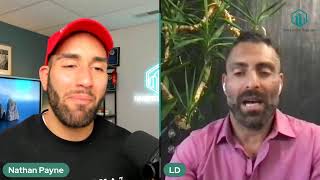
In this episode of the Painless Flipping Podcast, host Nathan Payne interviews Lawrence Nunning, a former pit trader, professional MMA fighter, marathon runner, and now a real‑estate broker, developer, and author of the upcoming book The Forgotten Asset Class. Lawrence shares his unconventional career path: early success in finance, a five‑year sabbatical filled with travel, fighting, and personal growth, followed by a pivot to real‑estate after a health scare and a financial downturn in trading. He emphasizes financial literacy, arguing that real‑estate is the “forgotten” asset class omitted from traditional MBA curricula despite its tax advantages, cash‑flow potential, and long‑term appreciation. Lawrence outlines his daily non‑negotiables—undistracted family time, a hard physical workout, cold‑plunge, and mindful nutrition—and explains how these anchor his productivity and prevent the distraction overload common to entrepreneurs. He discusses the importance of balance, contrasting the “jack‑of‑all‑trades” versus the single‑focus mindset, and advocates for deliberate time‑blocking and prioritization. Lawrence’s investment preference leans toward 2‑4 unit multifamily properties, citing leverage, ease of financing, and superior risk‑adjusted returns. He critiques the myth of quick wins in real‑estate, sharing a story of a friend who burned out after early success. The conversation also covers reading habits and book recommendations that shaped his philosophy: Ayn Rand’s The Fountainhead, Gary Keller’s The One Thing, Stoic works (Marcus Aurelius, Ryan Holiday), James Clear’s Atomic Habits, and classic Russian literature. Lawrence stresses continuous improvement over static achievement, using personal anecdotes (e.g., a near‑fatal blood infection, the loss of a beloved dog) to illustrate the fleeting nature of time. He concludes with practical advice for aspiring investors: start buying, accept imperfection, track progress, and stay present with family. Contact information (Instagram, LinkedIn) is provided for listeners seeking mentorship.
Chapters
We are live right now. What is going on, Lawrence? How are you feeling today?
Fantastic, my brother.
I'm feeling good too. Welcome to the Painless Flipping Podcast, everyone that's watching. Today we're going to be talking to Lawrence, who is not only a black belt, a marathon runner, real estate guru, he's going to teach us how to be a black belt in life. And he came out with a book, but if you're not, if this is the first time you're tuning into the Painless Flipping Podcast, our goal here, our only goal is to make your journey in real estate and as an entrepreneur less painful. That's why it's called the Painless Flipping Podcast, because it can be painful if you try to figure this all yourself. And my man right here, Lawrence, you know all about pain because you used to get beat up, right? That's what you used to do in MMA.
Well, the idea was not to get hit too much, but yes, unfortunately it's a part of the game, I guess.
It's part of the game, right? So we— what we do is we bring on experts in their fields and people that are real estate investors so they can tell us about the pain they went through. So you potentially don't have to face this as a listener. You can learn from our experiences and, you know, go through the learning curve faster. So without further ado, Lawrence, how you doing? Can you give the audience a quick 60-second intro to who you are? And then we're going to be diving into your journey and your life and where you're at right now.
So I was someone who was always interested in the ability to create a life I wanted. So out of college, I got into finance, I made a lot of money, and then I took a 5-year sabbatical. I was traveling the world, I was fighting, I was following all my dreams, and then I made every financial mistake you can make. And then I turned 35, I retired from fighting, and I was like, man, I've got to do something to get my wealth back. And I started investing and I bought one investment property, and I saw the business model, and I decided this is the direction I want to go in. I want to work for myself. I really believe in real estate as a tool, and I went all in. That was 10 years ago, and since then it's been a fantastic journey. I've met so many awesome people, including yourself and our mutual friend— shout out Nick LaMagna— but, um, it's just been a great journey. So right now I'm a broker, I'm a developer, I work with a lot of investors from out of state, from in-state. I just try and spread the message of financial literacy on why real estate is such a great tool and I'm actually just doing the final edits on a book on real estate investing because I come from a background in finance and I have an MBA in finance. And when you do, when you get a traditional financial education, they don't talk about real estate because real estate is too specific. They talk about the traditional model is just stocks, bonds, cash, and this real estate is not really talked about. I read so many books on famous biographies and on finance and real estate's glossed over. It's barely discussed because it's just too local. But if you talk to the uber wealthy, the one thing they all have is vast real estate holdings, right? Because it's got so many tax write-offs, it's got— it just over time, it always appreciates, it's got cash flow, it's got all these— when you look at it as a business model, it ticks all the boxes. So that's the message I'm trying to spread. It's just, it's financial literacy and using real estate as a tool.
And you're saying, I think we were talking about this a little bit before, you feel like there's a lot of people that you run into that are good at specific things, but the financial part, maybe they lack that. Is that kind of like what your message is about?
Yeah, I mean, I've been in 3 worlds in my life, right? I was, when I was young, I was in the financial world, then I was in the combat sports world, and now I'm in the real estate world. And I'm trying to, I want to be a black bottom life. Maybe it's greedy, but I want to have everything. I want to be wealthy, but I also want to be healthy and in good shape. I also want to be, you know, I want to work on my personal development so my mind is calm., and I also wanna have a good relationship with my wife, my son. I wanna have a rich social circle. So too many people I've just seen in my various careers, too many people can be experts at one thing, but it's at the expense of the others. And like we all know that, you know, multimillionaire who's very successful, but he's, you know, heavily obese and he's probably gonna die of a heart attack in a few years, or the person who's just in great shape, but they're behind in their credit card payments and they're just, you know, mired in debt or, you know, so it, it's just trying to get that balance in life because I, you know, life is, life is such a gift and I'm a little bit older than you, Nathan, and it's crazy in your mid-forties. Yeah. You see people, people dying around you. You're like, Jesus, life is short. You know, I, I really wanna take advantage. And my wife actually, my wife's 39 and healthy. Mm-hmm. And she had this crazy thing that happened. We went to Mexico, she got a little bit sick, she came home, she's in bed for a few days. We think it's, you know, the flu, COVID, something from traveling. And then eventually, her friend called me and said, Lawrence, you got to take your wife to hospital. This is bad. I think she's got some type of blood infection. So we went to the ER and they said, you have, you have blood poisoning that's causing organ damage and you're about 2 days away from dying of liver failure. And I'm thinking, Jesus Christ, like you just, something you wouldn't even think about, you know, someone's healthy, you just think they're sick, they're going to, they're going to rest and they get better. So it's just given me, it's given me so much appreciation for life. Life is precious. So I just want to maximize my human experience. And that the life of an entrepreneur is wonderful. You know, it ticks so many boxes, but you've just, you've gotta have balance because it's so easy. We all know so many entrepreneurs that are so successful, but it's at the expense of personal relationships, romantic relationships, their health, you know, all those things. But for me, gosh, yeah, necessary, but it's a tool to make your life better. So if you, if you give up all these other good aspects of your life just to chasing money, then that kind of defeats the whole purpose of it.
Beautifully said. And, and, but I have a question for you because I feel like there's like, there's like two different worlds or two camps. You got the people that do everything, they're trying to master everything, right? They're like, you know, multitasking and they're not good at anything, right? They're— because they're all over the place. And then you got the people that focus on one thing, like we've discussed, who are good, but usually at that one thing at the expense of others. And I've been reading a book called Free to Focus. It basically, um, like outlines how to be able to focus better on the things you want to pursue and get rid of the stuff you don't. So how, how would you say, how do you do that balance? Because some people can't, maybe they haven't been taught, but how are you able to have that balance to be free? I mean, you, what are you, marathon, MMA fighter, uh, real estate mogul? You got it all. So what, how are you able to balance all that?
That's, that's such a great question because we live in a world of distraction and so many people are just sleepwalking through their days, distracted by so many things. And so I think the idea of just knowing what you want to do every day. So for instance, I know every day that I'm going to have a couple hours of undistracted time with my wife and son. That's a non-negotiable. I also know that I'm going to get between 30 minutes to 2 hours, there's going to be some type of hard physical workout in that day. That's a non-negotiable. I'm also going to spend a few minutes in my cold plunge in the morning to get my mind ready. So, and I'm also going to try to eat pretty healthily. So they're my non-negotiables., and then in the gaps around that is when I'm gonna fit in my work, my personal development. I'm gonna force myself to have time for those things. But at the same time, the biggest struggle for entrepreneurs is most of us have our own schedule, right? We, so it's very easy for you to have a late night getting addicted to some fantastic series on Netflix, and then you wake up the next day feeling shitty and sluggish, and then your whole day kind of goes to shit. Part of my language. But so it's very important just to have those non-negotiables. And I'm a big believer in I want to have a great life. And for me, a great life is maximizing the number of great days. But it's this balance between is it a great day because it's a hedonistic great day where you're out with your buddies, you have a great dinner, and then you have a bunch of drinks, then you party all night. That's not really the kind of great days I'm looking for. I'm looking for— I want to have a rich social component, but it's not so much at the expense it's going to take me out for 2 days. So it's definitely difficult. I just think you need to prioritize your time.. And so many people, and especially young people that might be watching this or listening to this, they don't really appreciate time. They say there's that lovely phrase, youth is wasted on the young. And it's only when you get a bit older and you start seeing people pass around you, pass away, and you realize that we only get one shot at this. And that's why it's just the human experience is such an incredible, it's such an incredible thing. I want to appreciate it and I want to maximize my time here. So if you want to maximize your time here, you want to be undistracted. You want to be, you want to be focused on the things that matter to you. And so for me, all those things we were talking about, they're what matters to me.
I love it. So let me ask you this. Did you at one point in time, um, at what point in time did you start using time more wisely, uh, to, to, to, to start using the, doing the non-negotiables and pursuing those things? Or were you like that your whole life?
Man, I remember when I was 16 in England and at 16 you have mandatory exams up to 16 and then Some people get jobs, other people stay to 18, and then you can either get a job or you go to college. They're kind of the big educational milestones. And I remember the first exams I took at 16, and I just had no motivation. I knew I had to study, I knew I had exams, and I just remember my parents were very much laissez-faire parents. They kind of just let me be. I think my mom was out of town at the time. It was kind of warm weather, and my dad was like doing some stuff in the yard. And I remember like just kind of hanging out in the yard, and my dad was right there and I was kind of waiting for him to say, get your ass inside, like you gotta study. And he didn't 'cause my dad was very much like he wanted me to figure it out. And I remember having that feeling like, man, I really don't have motivation. And then I did really badly. And I remember being very, having that feeling like, man, I kind of let myself down. And ever since then I just didn't wanna let myself down anymore. And it's just been, it's been slow and steady. It's not like I was 15 years old and I walked into a hardcore MMA gym and became a pro fighter at 18. I slow and steady, I just pushed myself a little bit harder, a little bit harder. I tried to be a little bit more disciplined, a little bit more disciplined, and just by slowly tweaking my habits and making it every day bit better than the last, over the years you achieve great things. And I think that's the best message that I want to really spread is one thing I've realized is I had so much monetary success in my 20s that I had a bit of a letdown in my mid-30s when I kind of had to change careers and I kind of rebuilt myself. And I almost wish I used to have friends tell me like, yeah, but Lawrence, you were so lucky. You were a millionaire before you were 30 and you traveled the world and you had all these romantic relationships and just great times, trips with different girls, everything. Like you had this amazing experience. You should be so thankful. But here's the thing, Nathan, once you've had it, it's gone. Humans are happiest when they're improving. So you tell me who's happier right now, the guy who has the number 3 podcast in the world,, but last year he was number 2, or the guy that has the 747th podcast, but last year he was 2,500. You know, it's obviously the guy that's objectively worse, but he's doing better than last year. So I realized that life, like happiness is really about improvement and progression. And so I don't want the best results tomorrow. I don't want to get, have every one of my dreams met tomorrow. Humans are naturally very impatient. And one thing I've realized, this is only the last 6 months, is I want to stretch all the good things in my life out. I want to just stretch out these things. So I want to be continually growing and improving and challenging myself and pushing myself and spending time with good people. I want to spread it out as much as I can because it's too often in human psychology, we want things quickly. And then I don't know if you've felt this, but I felt everything I've accomplished that I'm proud of, there was always some type of letdown afterwards. Mm-hmm.
Yeah. No, it's just so interesting because I feel like my journey has never been the immediate success, but my journey has always been the progression. Like, like behind me, I have some awards. Mostly every award that I got, like in wrestling or, or like schooling, was like most improved because I always sucked. I was always the worst. And then I just kept going. So I progressed over time. And there's people that, like, in this industry, for example, real estate, they'll go in and they'll do their first deal within like 7, 14 days, the wholesale, and it'll be a giant deal, like $200,000, $100,000 for someone that's brand new. They're like, this is great, but it's actually a curse because they think it's that easy to be doing it consistently when to build a business that's sustainable, it takes a lot of work and effort. And those people fly by night, right? They're in, they're out. And is that— do you agree? Kind of like it's if it's too easy, easy come, easy go.
100%. And I was just on the phone with a really good friend of mine who works in real estate, and he kind of came out the— came onto the scene straight away with— he got all these listings. He was very postable. So he just had all this business straight away and he was killing it. And now this was 7 years ago. He's calling me today, like, ranting about how tough times are. So yeah, you definitely— it's actually a really refreshing thing because anyone watching this or listening to this, If you're not where you want to be in life, it's okay. And if you want to get to great places, you don't have to push. You don't have to be frustrated on your timeline. Give it some time. And I think you and I, we both come, you have the wrestling too. When you come from combat sports or martial arts and you know that it takes a lot of hard work to achieve good things, then it makes you a bit more patient. And I think that's a really wonderful thing that I've got. I wish I had this when I was young, where I just had a bit more patience because I was always very impatient. I wanted to, I had my goals and I wanted to push, push, push and get to them as opposed to really what is life about? Life is about enjoying the journey because when you like, we use jiu-jitsu as an example. When you, when you get your black belt, I remember the day I got my black belt, number one, I thought, man, there's still so much I still want to work on. I don't feel like I deserve this. And the second thing was, um, damn, what's next? You know, this was such a big goal. It was like, looking in the distance like, oh, that would be cool. I'll get my purple eventually and then I'll get my brown belt eventually and win some tournaments and eventually I get my black belt. It's kind of nice to have those things to look forward to. Whereas imagine a world in which you've read every single good book, you've watched every single good movie, you've traveled to every single wonderful location around the world. That'd be awful. So that's one of the reasons that the Greek gods were jealous of humans is that because they were immortal and and we had these short timelines, you know, these short lives, life, um, that the shortness of our lives gave everything more meaning and more richness. Um, so it's just a really good philosophy, I think, to live life.
That's interesting. I like what you're saying. I didn't— I haven't tied that to the Greek gods, but you're right, you know, they were, they were jealous of the humans. So, um, let's take it back because this is awesome. I, I— about the financial, um, success you have You, you crushed it and then you exited it, right? You exited. Did you think about going back into that because you did so well in the beginning, or what? Why real estate when you did so well in the other one?
Exactly, great question, Nathan. So I was, I was a pit trader. I was trading, um, bond options at the Chicago Board of Trade. I was on the trading floor and I made all this money. And I remember when I turned 30, I had— I realized I didn't— I was making money but my lifestyle was the same. I remember I got my first bonus at 24. I bought a beautiful condo in a high-rise $330,000. At the time, I didn't have a car. I would drive my ex-girlfriend's car. I was, I had a very low standard of living, but like I kept making money. So my trading account just kept going up and up and up. My wealth kept going up. And then I suddenly realized, I was like, man, I'm 30 years old. I'd won the Chicago Golden Gloves in boxing. I think I was just about to get my purple in jiu-jitsu. I was like, I have a small window now before I'm too old if I want to pursue these dreams about fighting. And I wanted to just push myself and face my fears and and have a bunch of MMA fights and run marathons around the world and just do cool active adventures while I was still young enough. And at the back of my mind, I really thought either if I invest the money well, or when I'm done, I'll just go back on the trading floor and I'll stand in exactly the same spot in my pit and keep printing crazy amounts of money. So I was very good at what I did. But what I didn't realize is when I was away, my whole business model basically went. The high-frequency traders came in, these big companies took over, and there was no edge left anymore for small trading groups. I had a small trading group at the time. And so I didn't, but that, it's like the one thing that I'm very aware of now I'm older and wiser is I know, I'm, I know what I don't know. And back then I didn't know what I don't know. I assumed if I was very good at something and I had this amazing tool to make all this money, if I stepped away for a few years and I came back, it would still be there. And I didn't appreciate that there's different, you know, nothing is, is the same. Like we were talking before we started recording, you were showing me about how much you use ChatGPT.
GTP.
That's it. Jesus. Nailed it. I've gotta start. I've gotta start. You, you, you, you have to keep evolving with the times. You never know. You, you, you, you, we think that, um, some people think they're gonna figure it out and then they're gonna be okay for the rest of their life. Whereas for me now I'm older and wiser. I realize that I don't know what the future holds. I'm gonna have to keep learning, growing, evolving, and that's okay. I'm okay with that. So that was a really, really good lesson. And the reason that I chose real estate is because it was just good luck. My really good friend in my building, we both had dogs and we used to walk our dogs outside the building and I'd bump into him, we'd be chatting. He was very charismatic and he was an attorney and he said, Lawrence, I hate law. Law is so boring. He's like, I think I'm going to start a real estate group. And he's like, you know what? You'd kill it in real estate with your accent, everything. You could be a broker. You could start, we could start doing developments. We can use your background in finance. And he basically talked me into it. So we started working together. I remember we did our first flip together and we invested with some developers. They rehabbed a 3-unit, we sold it, we made a bunch of money. And then he, so he kind of opened my eyes to this whole other world. And that's one of the reasons I'm so passionate about, when I wrote my book, it's called The Forgotten Asset Class. And the reason that it's called forgotten is because it's not taught in a traditional MBA program. So I want to spread the message that there's so much wealth in real estate. But the thing with real estate as opposed to stocks is it's pretty easy for someone to open up an online account and put $5,000 in Apple stock or buy, you know, Nvidia stock. It's easy, right? So it doesn't really take a lot of knowledge. Whereas for real estate, there's so many questions. Well, how do I get pre-approved? How much do I have to put down? Should I invest in the state I live in or should I invest out of state? Should I buy a commercial building? Should I buy a single family home? Should I do Section 8? Should I do market tenants? You've got infinite amount of questions. So if someone doesn't have someone like you or I to kind of lead them, lead them on the right path, it can be a bit overwhelming.
Of course. So let me ask you this, uh, what is the asset class that you like to invest in with real estate? Is there one, or do you do many?
So I mean, I, I personally have a few different things. Um, I have a commercial property, I have a couple of condos, I have multi-units. I really like multi-units. I like 3 flats. I think the lending is preferable. I really like, um, I think the numbers work best. And I think they're just easy. They're easier to buy, they're easier to rent, they're easier to sell. So I'm a big fan of like 2 to 4 unit buildings. I think they're really, really great tools. And if you don't have a home, if you're a first-time buyer, they have this amazing 5% down product. You can buy a million-dollar building, put 5% down. You can even get credits from the seller. You live in the unit for 1 year, then you move out, you have a million-dollar asset. You know, it goes up 5% in one year, you've made 100% because you only put down 5%. So there's just so many— it's, it's that financial leverage. It's using what the market's giving you. It's using— right now interest rates suck, they're kind of a little bit higher than they were two years ago, but there's still options to make a lot of money by, by just having the knowledge to know what loans to use and, you know, where to invest.
Yeah. And do you feel like that, that knowledge that you take from the financial background that you have, um, a lot of people in the real estate industry don't have that and they're just like No, maybe they're playing with their hands behind their backs, you know?
100%. Yeah. That's the thing is, um, it's very rare. I think there's 3 things that I really personally like. I really like Bitcoin. I really like real estate and I really like, um, uh, you know, investing in equities. I think all 3, there's, there's people that are really, really great with crypto, but they don't know anything else. There's people that are incredible about real estate, but they've never owned a stock in their life. I think the idea of financial literacy is every asset you invest in has pros and cons. There's that statistic, I think investing in precious art has outperformed the S&P the last two decades, but I don't know anything about precious art. So you need to find what works for you and also what works for your personality. Some people are very, what's the word? Risk averse. Risk averse. Well, yeah, it's like, and for them, like they ask 100 questions. What happens if a tenant moves out? What do I do? What happens if something happens to the building? Vandalism in the building? There's all these questions. It's like, well, you know, you get a property manager, he'll take care of it. You know, but also you get rewarded for risk. You know, you can double your money in a shitcoin, but also it could go to zero because, you know, it's that, that's where you have the upside, right? You have the upside because of the volatility. So I think that's something we all have to find investment vehicles that work for you. And I've got friends that now interest rates for bonds are in the 5s. They're like, listen, I'm happy with 5% 'cause that works for me. And I have very low risk tolerance. So that works for them. So I think it's up to us to figure, to kind of, that comes back to know yourself. Like when you're young, the best advice I'd give somebody is read a lot. And it's incredibly hard now because we live in such an attention deficit world where everything is, you know, 30-second clips and short videos and, Everything's vying for your attention. But if you can stay away from technology and try to read good books and just really try and think about things and know yourself, and that doesn't just apply to trying to figure out which investment vehicle's good for you, but it also applies to trying to figure out the way you want to craft your life, right?
Because we have all these choices. Amazing. So what books would you recommend? I'll be honest, my financial literacy is pretty low. I think I've never read a single book about financial literacy.
Well, I mean, but you know, you know how to make money through real estate. And so that, that is your— you don't have to know the theory. You're, you're doing it in practice, right?
So, but I would— the reason I bring that up is I would love to learn, know how to approach that, right? Where— what books should I read? Or what— because I, I'm the kind of guy who just goes out when I— my whole life I just go for it, go for it. And almost like, don't even, um, just cut, like, close your eyes and just do your best. And that's been like my strategy. But with, as I've gotten older, it's like, man, imagine what I could learn from you, from, from books. And now I'm bringing that in, I'm like, wow, I've been playing with like a handicap, right?
So yeah, what books would you recommend? I want to say this, I, I love the fact you said that because I think that's the biggest problem is I think they call it over-analysis paralysis or paralysis by over-analysis. And I see that time and time again. I've got this one guy who's been bugging me about, you know, helping him buy an investment property. And he's doing all these YouTube videos on like things he's thinking about and problems. And I told him, I said, brother, you've been doing this for 6 months. You got to buy something and you're going to learn as you go. Like you basically, you're trying to look at every, how you can mitigate every problem, but it depends. You don't even know what the problems are going to be. You don't even know what building you're going to buy. You know, it's a, So I think that your approach is so good and that's why you're a great role model for anyone who follows you and listens to you because you need doers. Like theory is great, but it's just theory. Like life is won in practice, it's in the arena. You're in the arena. So your personality is incredible and you're a great person to coach people because like you said, you've jumped in there. So I'm sure you've learned things the hard way as opposed to, you know, oh, these are the pitfalls that I've read in a book, but I've never actually done it. And that's, yeah. And that's one thing we see a lot, Nathan. We see a lot of people who, that one of the, one of my impetuses for writing the book is because I realized that there wasn't, I used to have people tell me like, hey, what's a great tool? Like what's a great book you'd recommend? I want to learn more about real estate investing. And there was a couple of books that kind of mentioned some things I like, but there wasn't really one good book that I'd recommend. So I was like, you know what, if there isn't one, I'm just going to write it. But it's the same, like when, when someone says like, I've read on average, I try and read a book a week and I've done that for about 25 years. So I've read a lot and certain books have changed my life, but it wouldn't be the kind of book that you're thinking. So for instance, this wouldn't be my first recommendation 'cause it's like 700 pages and it's kind of a bit of a slow start. But Ayn Rand's The Fountainhead is a philosophical novel about following your dreams. And I read that at 24 and that convinced me to leave my trading company, start my own trading company, become a multi-millionaire before I was 30, and quit and follow my dreams. So like, that book was the most influential book I read, but it was because it was a philosophical novel about, about do you want to listen to society and do what society expects you to do, or do you want to branch out and do what you, what you want to do? So I had to— that was the perfect time to read that book, you know. There's another book by Gary Keller who's written a lot of books on real estate. He wrote a book called The One Thing. And that's talking about like trying to focus on what's important to you. Kind of when we started this conversation, you were saying like, how do you structure your day to focus on what's most important to you? So that's a really, really good book. And I was recommended to that by an attorney friend of mine. And it's funny because I'd read Gary Keller's books on real estate. He's written some books on real estate. I'd read them, but I'd never even heard of this book. And he knew nothing about real estate. He was an attorney, but he just read the book and it was really, really great. I love reading about Stoic philosophy for mindset, you know, like Meditations by Marcus Aurelius and There's a whole bunch of great Stoic books by Ryan Holiday about Stoic philosophy because that's a great mindset to be happy and to accept the chaos of life, especially in investing in real estate. So that's a great example. Atomic Habits is a great book where talking about habits as opposed to goals. Goals are great, but it's the daily habits that win the day. So I mean, yeah, exactly. So there are a few that come to mind, but there's so many great books out there. But it's just, it's almost like I want to also, I'll give you an example. If I have a guy call me and he says, Lawrence, like, I want to buy an investment property. I've got a building that was pre-sold 6 months before it was finished. Then the guy got it rented for a long story, but the buyer couldn't close and it just happened a couple days ago. If I tell him, hey, listen, this is probably your best option on the market. If he doesn't have anything to judge it against, he's probably going to be like, well, why is it like,. But if the same guy has seen 15 other buildings and the numbers were all kind of crappy and the work wasn't great, then he'll be like, yeah, he really appreciated it because he's got something to compare it to. So I think that's what I'd recommend anyone that's young or, and like if you're in a job that you don't know what, you don't know what to do, but you know you hate what you're doing, well, the best thing you can do is just kind of spend some time investing yourself and reading a lot and thinking a lot, thinking about other things you can do. Maybe life of an entrepreneur is a good option, but you don't know how to get started. So the more you can just invest in yourself, the better it's gonna be. And to bring this conversation back to the beginning, it's like, it's okay if you don't know what you wanna do today and it's okay if you don't know what you wanna do in 18 months. You know, just keep working and the answers will come, but just be patient. And I think one of my favorite things about my own life, and I never planned it this way, is my father's a retired pilot and he got outta college and he got this great opportunity to be, he always wanted to fly and he got an opportunity to British Airways. He joined, he became a pilot and he had a wonderful career. He spent 25 years, he traveled around the world. He loved to travel. He would do water sports. So he'd travel in the Caribbean for a week. He would windsurf all day and then he would fly home and hang out with his family for a week. I mean, it was an incredible life he had, but it was one decision he made and then his career was set. Whereas for me, I've had many different lives. You know, I worked for a company, I had a bunch of crappy jobs when I was young, but when I graduated college, I worked for a trading company. I realized that this was something I really liked, but I wanted to do it myself and I want to have all the risk and all the reward. So I did that. Then I spent some time as a professional fighter trying to push my limits and face my fears and have personal growth that way. And then I realized that actually I'd been foolish with the money I made. I had to pivot. And I, so I became a real estate broker to start and I had a few investment properties. And then as my real estate brokerage progressed, I decided that actually now I want to do more, um, you know, I want to do more development, I want to do more rehabbing, I want to write a book, I want to talk about these things because my passion is like, is spreading knowledge and giving back. So it's like, it's what I want to do has changed many times. Oh yes. And, and I hope in 10 years it's going to keep changing, right? I hope in 10 years I'm doing other things, um, in a good way. So I think that's, that's a great thing that people people who don't know, 'cause I know a lot of people that are a little bit stuck and they don't quite know what they wanna do. And here's the thing, even if you know what you wanna do and you're killing it right now, it's very possible in 3 years that artificial intelligence is gonna make your job, you know, no longer around anymore. So we have to just have that mindset of it's wonderful.
Nathan, do you have any kids? I just had a baby. I just had a baby. Oh, congratulations. Let me see, I'll show you right here.
Oh, my little girl.
Vera. Vera. How old is Vera? 8 months. My wife, my wife just sent me this picture.
So anyway, oh, congratulations. Well, let me ask you this. Has your life philosophy changed a little bit in the last 8 months?
Like, how have you changed the way I use time, the way I spend my time? I don't watch TV anymore, uh, when I'm with my baby. I don't get distracted like I used to. I put phone away. It's her time. It's family time.
Uh, yeah, it's amazing how much more time I have now because I'm more, uh, using it wisely. Yeah. Yes. Beautiful. Well, one thing that I, I was really thinking about, um, with my son, he's 3, is I can't teach him to be prepared for the world ahead because I don't know what it's going to be like when he's 20, you know, like how different it's going to be, right? But one thing I can teach him is I can teach him to be strong and resilient and he'll be able to overcome and adapt to the world that's going to be there in the future. And so I think that's really great philosophy for anyone who's not where they want to be in life is it's okay because a lot of people that are in the right spot are going to be lost in 5 years anyway. So it's just, it's, it's, you can either be paralyzed by it and be frustrated and scared, or you can have that kind of stoic mindset where I think Marcus Aurelius had this lovely saying where he said every day when he was Roman emperor, Every day he would wake up and he would know that he would have criminals and thieves and shady politicians and all these people vying for his energy and time and trying to steal money and this and that. And he said, because I know that's gonna happen every day, I'm not gonna let it bother me. I know it's part of being the leader of the greatest empire on Earth.
It comes with the territory.
He's ready for it every day. He's ready. Exactly. So I think life of an entrepreneur, you have to have that mindset. But one thing you said that I really liked just now is it's what I'm— what my biggest struggle is. It's trying to balance my attention. When in real estate, when you're successful and you have a bunch of things going on at the same time, you just get an in— you're always dealing with a bunch of brokers and attorneys and investors and buyers and sellers and all this stuff. You have all this noise in your head, and then you got a million— you got buddies sending you nonsense, and you're on group text threads with all these other besties, and it's just this inundation with things. And that's why what you said is so beautiful, because that's the biggest struggle for a lot of people, and myself included, is when it's family time, it's family time. And there's so many times I'll be finishing some work and my son will come up to me and he's like, "Dad, let's do something." And I'm like, "Oh, give me a second. I just gotta send an email." As I'm sending the email, 3 other things pop up. "Oh, let me just do these 3 things." And he's sitting waiting. And that kid has, if I say 5 minutes and it's 10 minutes, he's pissed. He knows the minutes now. So that's why he knows. He knows. So like now the weather's a bit nicer and the days are longer. We've got a thing where when I get home, I take him and my dogs to this park and it's just our time undistracted, phone's off. And so you've gotta be so ruthless with your time. And it's so wonderful that you and I both had to have a kid to realize that. But we are spreading the message that don't wait to have kids if you're younger, your time is precious. Like, you know, that I think I just said it, but I'll say it again. Youth is wasted on the young, you know, like enjoy what you have, you know, because time is so precious. When you're young, it's the time to take great risks because you have time to recover from them. It's to invest in yourself. It's to spend a lot of time learning things, thinking about things, figuring things out, because that's going to benefit you for the rest of your life.
Yeah. And you're 100% correct. Like, attention is the new currency, right? Everybody wants— every platform, every app is trying to get your attention because that's how they make their money now, right? It's not so much— that's why data is so like, uh, the data company. So valuable. Yeah. So, man, we've gone over so many good things. I want to ask you a couple more questions and I'll let you go because it is family time, baby. That's about it. Hang out with family. So, um, uh, one of the questions I have about reading a book a week— is that something you said you've been doing since, uh, what, 10 years ago?
So what, for like since 35, every week you've been consistent, or Probably about, yeah, probably about since I was 22, actually. Yeah. I've been a big reader when I was fighting the years I was fighting. I probably read 2 books a week. So I was so worried about losing brain cells from head trauma that I was forcing myself to read and learn because I wanted to kind of counteract some of the damage to my neurons. But yeah, that's been, that's a habit. I remember when I first got into real estate about 9 years ago and I was really hustling, I was trying to reinvent myself in this new career and I was working so hard and I would take all this crappy business because I was trying to just learn the business. And there was a period where probably for about a year where I probably read a little bit less than that. And I realized very quickly that it wasn't— when you read that the benefits is wisdom and figuring things out and learning and being exposed to new ideas and inspirational figures, but that wasn't what gave me the most happiness. It was me time. And I realized that it wasn't what I got from reading that I missed the most. It was the natural curiosity that I had. And that's, there's a test you can take, a signature strengths test by a positive psychologist called Martin Seligman. And when I took it in my early 20s, one of the, one of my top signature strengths was curiosity and love of learning. And so I'm coming back to knowing yourself. I know myself that I'm happiest when I'm putting the time in and it's really hard to do it. So you have to just be creative. You know, sometimes I'll go for a 5-mile run, and I'll listen to an audiobook on 1.5 speed and I get through half an audiobook. You know, it's like that there's ways you can do it. You know, like I commute a lot, I'm in the car a lot. I listen to a lot of audiobooks in the car, you know, so it's not all physical books.
Okay. That's what I wanted to ask you about too, is it all physical?
But you're saying— No, it's a mixture of exactly everything. But there's, I mean, listen, my wife's awesome. We have a very good relationship. There's times where I've had a long day and she knows I just need some me time and then she'll just, you know, she'll take over the, the duties of everything, and she'll just— I'll take an hour, half an hour, an hour, sit somewhere and just read, because that's very rejuvenating for me.
Wow, brother. I see. Look, uh, a couple— 2 years ago, um, one of my mentors was like, read, read, read, read, read. And I was like, all right, finally it got stuck, and I finally started taking it like really seriously. And I've been reading like a machine, and it's like the greatest thing I've ever done. My mind has like expanded. I'm learning. I feel— I just feel better, right? I just feel like I can And I actually even got it. I actually got an app called Bookly. I don't know if you've ever heard of it, but it actually— yeah, it tracks all the books you're reading. And then it, um, because I like to see the stats too. I like to see how I'm doing. So I'm actually— I can see, like, I don't know if you can see very well, but you can see like how many hours you're reading, how many hours, how many, how many pages you've done in the year. So it's really cool because it's like a game too.
It's like, oh, exactly. Yeah. So, and there's some, there's some, there's a, there's a, a well-known thing in, in social sciences where whenever you track something, you are more motivated to do it. So if you, if you have some tracker with how many steps you do, you're gonna make the effort to put more steps in. If you have a little, when I started training, when I was a professional athlete, I had a little, little, little notebook and I would just keep track of everything. Things like my weight, my, my workouts every day. And just by doing that, I would never wanna miss a, a scheduled day because I'm gonna have a blank thing in, in the page. And same thing with, with tracking reading. So kudos to you for figuring that out.
Yeah, that's a, that's a really good life hack.
Yeah.
And I'm gonna, I'll try to get down to 2 books or 1 book a week. I, I, I must be a lot slower than you cuz I, I read a lot, but I can't, I, are you, I'm just curious about the reading aspect. Are you fast?
Like, are you skimming fast or do you really dive in and read every word? No, I mean, listen, there's certain books, like I'm trying to, what I'm trying to do now is that as I get older, there's certain things that I want to revisit. So I've been rereading a lot of books that really influenced me when I was young, and especially if I read something 15 years ago, I'm a different person to who I was 15 years ago. And I take something, if it was very impactful then, it's been wonderful rereading them. But yeah, I'm naturally a pretty quick reader, so I guess I do have that going for me. But there's one thing that I want to say is because you kind of mentioned it, which was really interesting. You said you always kind of struggle with reading, and then this mentor inspired you to, and now you're really enjoying it. And it's what I'll say to anyone is it's so difficult to get started. If you have a cell phone next to you with all these red lights blinking and you're trying to read a book, it's going to be very difficult. So I leave my phone in the other room or I leave it downstairs in my basement or something. I really try and have no distractions. And it's the same thing with traveling. A lot of people, if you haven't ever seen the world, you're not going to have much curiosity., but some of the people that I know that travel the most and they enjoy seeing new places are actually my best travel friends because the more they've traveled, the more it's inside of their curiosity. And I think it's the same with reading. The more you read, the more you realize there's so much fascinating things out there, um, that it makes you more curious. But one thing I'd recommend for everyone is if you start reading something or listening to an audiobook and it doesn't resonate with you, drop it straight away because there's so many other things out there. Don't waste your time on something that isn't resonating with you. So I think that's important too, is quit quickly and try and find something else.
Don't force yourself to slog through a book and say, reading sucks, this is miserable. Yeah, no, and that was exactly my problem when I first started. The attention was so limited that I was so— but once I was able to get through that, then my attention— now I can read for hours, right?
If I have something I want, but it takes time. It took time, right? And I'm so glad you said that because Attention is a muscle. And shout out to Nick again. Nick Lomania, he bought me a book called Brainwash, and it's by two doctors, a father and son, and they're talking about how important it is to treat your brain like the muscle it is. So for instance, if you're constantly distracted all day with, you know, you're playing with your phone while you've got the Netflix on behind you while you're playing a video game or something at the same time, you're just going to become more and more distracted and less and less able to focus. Whereas if you nurture the ability to focus and you're very deliberate with putting the phone in the other room, it's going to get easier. And I think that's very important. That's one of the reasons I love doing things like this is my phone is next to me, but it's off and I'm not even thinking about it. I'm completely present. And when I take my dog to take my son and my dog to the dog park later and we walk around, I'm going to be completely focused and I'm used to it. I'm not going to be like, oh, I got to check my phone for this and that. And it's something you have to train your mind to do it. And it's not easy, especially I know, trust me, I know because when I'm working, my phone is getting a million notifications more than almost anyone I know. And I've even been with friends where they've, I've been driving with them and they've just seen all the incoming messages that I deal with and they say, Lawrence, like, how do you do it? How do you do it? And you have to be very deliberate. And I'm so glad you said that. It really is. It's something that, and it's worth investing the time because how do you want to go through life? Do you want to go through life constantly distracted with a diffracted attention? Or do you want to go through life much more deliberate? And I think that's something that again, I realized very recently I had a dog who passed away and he was 14 years, traveled all over the country. He was with me when I was in Utah, when I was fighting. There's so many great memories. And there was a few times I just remember recently when I was—
Sorry about that, by the way. Sad.
Thank you. I know that it's hard. Thank you. No, it is. It's really hard. My wife's still healing. She took it even harder than me. But it's one of those things where I realized when I would come in sometimes, I'd be on an annoying work call and I'm dealing with some problems and I'd be on a headset talking on the phone and he would run to greet me with a shoe and I would just be like, hey buddy. And I would just like not even give him a few seconds of undivided attention. And it just, I've really been thinking about that. So it was about 6 weeks ago when he passed is I want to be more present. This was a good reminder for, I don't want to have a regret when I'm 80 and I'm hopefully I live a long life and I'm on my deathbed like, fuck, you know, I really wasn't, I was so distracted all the time. So it's something that I really want to focus on now. I don't want to miss any years of my son's life because I'm distracted or I'm chasing some arbitrary financial number for prestige and recognition from friends who I don't even know very well or something like that. I just want to focus on what is the most important. So I like you, Nathan, but I like you even more now. I know that you're so you're so present with your, with your daughter.
I think that's beautiful. Yeah, it's the most important thing, right? You're talking about finances, right? And it— in, in the end, that doesn't matter. Uh, it won't matter. That's the relationships. And like, I don't know if you're spiritual or you believe in God, but I believe that after this life, what we take with us is the knowledge, everything we learn, right? In the relationships, right? So that's what actually matters. Obviously, the things in the, uh, the material things they stay here. You can't take those, they're in the ground, right? But, but the relationships and the knowledge and the progress— and that's my— I believe the purpose of life is progress.
That's it.
We're trying to become, uh, we're trying to become, I believe, like God. That's what we're trying to become. So we got to become better, and that's what life is about, is improvement.
100%. Yeah. And I, I give an analogy for people. Warren Buffett is the most famous investor in the world and he has one of the richest people in the world. But Nathan Payne, would you trade your life to be him right now? I love my life. So no, I wouldn't. Exactly. But he's also 92 and who knows how many days he's got left, but you're in your early 30s. So it's like, it's not, it's the most important thing we have is time. And if you are young, you're broke and you're lost, it's okay because you have something that old billionaires don't have. You have time, and that is so precious. And you said that earlier, and I couldn't agree more.
You know, attention is the ultimate currency, and time is the most important thing we have. I love it. Well, I know this, uh, this podcast will change some lives, you know, because it's helped me out. And I'm gonna even go deeper into reading. I'm gonna start reading more because you've inspired me to read more. Now, uh, I— we could talk for hours. I know I, I got a bunch of stuff we could talk about. We're gonna wrap it up, and we're probably gonna have to have have you coming back when the book is launched so we can, we can tell— say, everybody go get the dang book. Can you—
would you be willing to come back when the book is ready? It'll be a— it'll be an honor, Nathan, really. You're such a great guy, and, um, you've got me motivated too to be more present. And for me, that's the biggest thing that resonated is you, you said how deliberate you are with your attention with your daughter, because that's what life's about, is being really deliberate with our intention. That's something that I've just been thinking about the last 6 weeks, but it's really true and it's becoming harder and harder. And it's for people that are so distracted right now, don't be hard on yourself because you are fighting, you know, corporations, billion dollar industries. Exactly.
Yeah.
You're fighting, yeah. You know, the, yeah, Apple and Google and Facebook and, you know, Meta. And it's just, it's really tough the battle we're facing. So give yourself some grace. Don't be hard on yourself and just remember what's important and we're trying to do better. So, That's a beautiful message. You know what I love about these conversations is we came to talk about real estate and we end up talking about being better in life. And that's always beautiful because I leave here more motivated to be better. And I really love what you said. What is the goal of life?
The goal of life is progression and just being better. Yeah. And you know, it's interesting when you pursue that, when you make that your end goal, you get better in business because you spend your time on what really matters and the highest level priorities and you get rid of the crap. So it does, it correlates, right? Awesome. We're gonna get you back. Where can people reach out to you, Lawrence, if they want to be— they like, man, I love this guy, I want to learn more from him? I'm sure, I'm sure with all the notifications you're getting, you don't want more, but it's gonna happen.
I'm easy to find. My name, Lawrence Nunning, on Instagram or LinkedIn.
I'm easy to find. Okay. All right, you heard it here first. And if you guys are watching this on the YouTube or the podcast and you want, uh, to connect, you know, we can put his, uh, his Instagram information on there. And, uh, yeah, feel inspired. That was awesome, man. I appreciate you, Lawrence, and I want you to have a great weekend. You know, um, it's Easter weekend and we're, you know, go spend time with the family, the dogs. Uh, you said you— I'm sorry, did I bring up the— do you still have a dog or did the dog—
oh no, yeah, yeah, I, I have 2 left. I had 3.
Okay.
Yeah, I'm sorry, I didn't mean—
no, I was like, oh no, it's okay. I actually had a dog that passed away too. Uh, it was a Brittany. I don't know if you've You know what Brittany dogs are? Bird dogs. Beautiful. And it passed away, but we have one left. And you're right, man, when she comes up, she's so excited when I get home. And sometimes I'm not in the right zone and I don't even pay attention. Now I'm gonna go home and give me a hug, little girl, you know.
I'm this— exactly. Because it's that lovely phrase, Nathan, um, a dog is part of your life, but for them, you're their whole life. And I love that. It's just, it's really good to remember. So Yeah, my two girls, my two girl dogs, they remind me just to be more present and just take a step back. Because I don't know if you have this with your girl, but with my boy, sometimes if I have a frustrating day, I come home and he runs in my arms and I'm like, none of that, none of that stuff matters. If you're healthy, that's all that matters. You know, you got people around you you love, that's the most important thing. I think it's just, these are such good reminders because it's so easy to get caught up in the hustle and bustle of work and life and status and you see people on Instagram, they seem like they're doing so well, but it's like, yeah, they probably just paid $75 to take that photo in front of a plane and they're not going anywhere, but they're pretending to be someone they're not. And that we live in a world like that, right? Where everyone's pretending to be someone they're not. So you have what's most important. And I love that. Like that's inspired me is just be more present and be grateful with what you got. And it's great to have goals and dreams and aims to shoot for things to strive towards, but you, we've gotta be happy with what we have too.
100%. And right before we end, I just have a question. Have you read any books by Fyodor Dostoevsky?
I know you like to read a lot. Do you like him? I read— a huge fan. Him and Tolstoy. I read a lot of Russian literature when I was young and they're dense books. They're hard to get into, but there's so much wisdom and philosophy in his books. They're novels, but they're basically philosophical novels and they're very inspiring. Yeah. They're not the easiest reads, but I remember I actually taught English in Moscow when I was young, and I read— I remember reading Crime and Punishment in Moscow on the subway, and it was awesome just reading Russian literature in Russia.
Yeah, I just finished reading pretty much all of Dostoevsky's books, and then I got into Charles Dickens because that was one of Fedor's favorite authors. So I was like, okay, let's give him a shot.
So anyway, I figured with all the books I've read, Nathan, you're hardcore. I'm impressed. Dickens and Dostoevsky, that's, that's some serious classic literature.
So kudos to you, brother. That's really impressive. Hey man, there's— they say they're one of the greatest.
I got to learn from the greatest.
I love that. All right, all right, we'll wrap it up, guys.
I appreciate you, Lawrence, and, uh, we'll see everybody on the Painless Flipping Podcast next time.
It was an honor. Thank you, brother. Okay, all right, we're good, man.
More from Nathan





Why Traditional Wholesaling Keeps Failing You (Use This Pre-Flip Method Instead)





