Using Batch and Negotiating with Sellers!
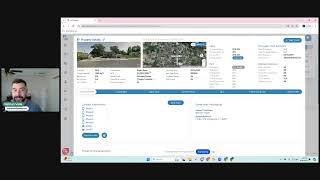
Nathan Payne shows how to use Batch to find off-market properties and call sellers. He uses four qualification questions about timeline, condition, value-add, and motivation, then four disqualifying questions to filter out unsuitable deals. The core rule: care more about the seller's outcome than your own.
Chapters
What is going on, guys? It is yours truly, Nathan Payne, here. And today, guys, we are talking about Batch, and we're talking about what to say when talking to a seller, right? So Batch, Batch is one of my favorite tools. Uh, we love to use that, especially when it comes to finding off-market deals, right? So I love using Batch when it comes to either pulling a list and we're looking to go direct to seller and we're looking to either call them, text them, send them mail, go knock on the door, whatever the case may be. Right. You can do any one of those things. Right. And there's a lot of different ways you can get creative with it. But we're looking to get them to raise their hand and just respond or pick up the phone. But that's when the scary part happens, right? Oh, they pick up the phone. What do I say now? Right. And I'm gonna— that's what I'm gonna go over with you guys is what do we say to a seller? How do we negotiate with a seller? And how do we do it in a way without being pushy and kind of that cringy, kind of, uh, sleazy salesman? And how do we do it without making a bunch of lowball offers to where people just get really upset and hang up the phone on us? So that's what we're going to be going over today, guys. So first, let me kind of share my screen with you real quick. Um, let me present, right? We're just gonna look at a property. So we're in Batch here, just clicked on a random, random property, no specific reason. We're just gonna use, uh, the owner name here, Bryant, right? So if I'm using Batch and I'm reaching out to sellers, again, I could be cold calling them, I could be texting them, I could be sending them mail, right? Whatever the case may be, at some point Brian, Brian here picks up the phone. What do I do from there? So guys, the first thing we're going to want to do is when Brian picks up that phone is we're going to want to set expectations. Okay, what does that mean, right? Someone picks up the phone, we're a stranger, or they get a piece of mail, they read, you know, who are you? What do you guys do? What is this all about? What does this process look like, right? They typically will have no clue as to, hey, what does this really look like? Right? And so what we want to do is we want to relieve that pressure, right? We want to lower that pressure and make them feel comfortable. And one of the simplest ways to do that is by just, hey, here's what you can expect on this call. Here's what we do. Here's what this process is going to look like, right? And so when setting the expectations, there's 3 things we want to take into account. Time, right? How, how long is this going to take? Is Is this going to take 10 hours? Am I going to be here on the phone with you all night? Right? So time. We also want to go over, uh, um, agenda, right? What, what are we going to be talking about? And then last but not least, outcome. Hey, what are the things we're going to talk about? And then, okay, great. What's, what's happening at the end of this call? You know, one way or the other. So that's what we want to do for the seller. And what, what would that look like? If Brian here were to pick up the phone and say hello, say, hey Brian, you know, this is Nathan Payne. I saw you owned a property here on, on, you know, West Center Street and was wondering if you'd consider an offer on it. And he's like, okay, yeah, maybe. All right. And it's like, yeah, well, Brian, hey, really simple, easy conversation, takes 10, maybe 15 minutes. Um, just ask some real simple questions, you know, age of the roof, uh, condition of the property, things like that, you know, nothing crazy. It's okay if you don't know, you know, the exact answers. And then from there, you know, Bryant, if it sounds like something to where we might be a good fit for you, you know, great, we can chat a little bit more as to what those next steps would look like. But if not, that's totally okay too. Either way, Bryant, at the end of this call, I've been doing this for a little while, worst case scenario, I can probably at least point you in the right direction. Boom. So that's how we set the expectations, right? Really low pressure. I'm not saying, hey, what's the lowest you'll take for the property, you know, or anything? Hey, what, you know, if I could give you a cash offer and close in 30 days and do this and that and you didn't have to pay any fees, what's the lowest you would take or what offer would you accept? We're not doing any of that. That is a real quick way to have a bad conversation, get cursed out and hung up on. Speaking from experience, all right, I've done it many times. So from there, right, we set the expectations and now we get into kind of the real meat and potatoes of the conversation, right? And so when we're, when we're talking to a lead, right, when they pick up the phone or when they call us from that piece of direct mail, we're looking for the 4 pillars of qualification, right? We're looking for timeline, condition, right? Timeline as in how soon are they looking to sell, right? If they're not looking to sell until 5 years from now, okay, well, we can get off the phone pretty quick, right? Condition, I want to know a bit more about the condition of the property, right? Because typically I'm looking for a qualified lead, and for me, qualified leads, there needs to be something that I can add value to in the property, right? Even if there's creative finance and all these things, you know, there are ways you can add value to the situation. But in my personal experience, I've found 9 times out of 10, I'm only working with sellers to where there's some type of value I can also add to the house, to the actual property itself, whether it's updating it, whether, you know, and it could be, you know, converting it into something. There's a lot of different ways you can do that. But is there an opportunity for us to add value to this property? All right. So timeline, condition, Right. Can we add value to it? Motivation, right? Do they have a reason for selling? Right. Do they— are they actually motivated? Is there some type of distress here with the seller? And then lastly, and the least important one, which might come as a surprise, is price. I actually don't even really consider that to be one of the pillars. I throw it up there. But, you know, because we do want to have a general idea But price, the reason why I say it's the least important is because it's the one that can change the most drastic. Guys, I've had— I, I can't tell you how many times I've talked to a seller and they'll start at one price and then after, you know, 30, 40 minutes of chatting with the seller, guys, that, that can change by like $100 grand, right? I've seen it happen with sellers. I've seen it happen with agents, right? You'll be surprised. So those are the 4 core things we're looking to get out of the conversation. Right, to qualify this lead. Are they looking to sell in the timeline that we're looking to sell it, right? Are they looking to sell fast? Are they looking to sell now? Condition— is there value we can add to this property, right? Is there updates? Is there something we can do to it? Motivation— is there some form of distress? Is there some way we can add value to that seller and their situation? And then price, right? Are we able to get it in, in a price that, um, that's able to work for us? But again, that's the least important one in the beginning. Now we have 4 pieces that we're looking to get to qualify a lead, but in this kind of middle part of the conversation, there's also 4 separate things that I'm looking to do to disqualify the lead. And normally we're able to get kind of all 8 at the same time. And so, right, we set the expectations. One of the things is I might ask early in the conversation, is, hey, did you have an idea, Brian? Right, Mr. Seller here. Hey, did you have an idea, Brian, if, if you were to sell the home, did you have an idea as to what kind of price you'd like to get for it? All right. So if Batch is kind of throwing an ARV or excuse me, an estimated value of about $180,000. Right. Most sellers we talk to, if the estimated value is $180,000, Brian's probably going to tell me, yeah, I want $200,000. $200,000 cash, right? And when he says that, my response to me, okay, got it. Now tell me a little bit about, about the house. What's it like? Right? So when I ask about price, I want to just kind of get an idea, hey, what does he want for the home? But we're not doing anything with it, right? We're taking it, we're putting that on the shelf. We're going to come back to it later. All right. This is not where we go back and forth and, well, how did you get to that number? And did you see these? We're not doing any of that. Right. Okay, got it. $200,000. Hey, now tell me a little bit about it. You know, do you know how the roof is? Right. And then we're going to ask about condition. As we're asking about condition, we're going to sprinkle in the 4 disqualifying questions. Those 4 disqualifying questions are— I'm going to ask, you know, hey, Brian, you know, tell me how old is the roof? He's like, oh, it's about, you know, 10 years. It's in good shape. Nothing wrong. Okay, got it. Hey, let me ask you, Have you considered maybe just listing the house with, with an agent and sort of going that route? Well, I don't want to do that because X, Y, and Z. Okay, got it. Well, why is that, right? Oh, well, you know, we had, um, we had listed it with an agent once before and it didn't go well and blah blah blah. Or we don't want to pay agent fees, blah, blah, blah. Okay, got it. So now tell me a little bit. So inside the house, what's, what's the kitchen like? What's the bathroom? Oh, needs this, needs that. Okay, got it. Hey, let me ask you, Brian, have you considered maybe just kind of doing the updates and fixing it up yourself and, and then, you know, selling the property? Well, no, we, we don't really want to do that. Okay, got it. Well, what's— Brian, what's— what's— I guess what's holding you back from just kind of doing that and moving forward with that option, right? Okay, right. He gives the answer, we move on. Okay, got it, Brian. Um, great. Now tell me a little bit, what's— what's the yard like? What's it— you know, how's the electrical? How's the plumbing? Right. He answers some more questions. Okay, great. Hey, you know, have you guys considered renting it out and go, right? And normally when you bring up renting, most people, they'll cut you off before you even finish the question. Oh my gosh, we do not want to rent it out. We don't want to deal with tenants and all those headaches. Or we tried renting out years, years before and it was a nightmare. And most people are not interested in renting, right? I said, okay, got it, got it. No, that definitely makes sense, but figured I'd ask. And then the fourth disqualifying question The fourth and last question we want to ask, and again, you guys got to have a little bit of emotional intelligence, right? When we're having this conversation, they might have already answered this, and if so, I might not necessarily want to ask this question, right? And the last question is to be like, hey, Brian, you know, is just staying in the home and hanging on to it an option for you? Or, I don't know, you know, do you have kids or family members that you could maybe just kind of pass it on down to? Well, that's not really something we, we, we want to do. Okay, got it. Well, why is that? What's holding you back from, from just doing that, right? We don't just want a yes or no answer for each of these questions. We want to know the why behind it, right? And, and I gave the example, hey, if Brian here said no, but what if he says yes? Hey Brian, have you thought about listing it with an agent? Yeah, we have. Okay, got it. Well, I guess, Brian, what, what's holding you back from just moving forward and listing it with an agent? I mean, that'll probably be your best bet for getting the most money for it. And if Brian goes, well, we were meeting with an agent on Friday and we're planning to list it. Oh, okay. Well, I guess what's holding you back from just doing that on, on Friday? Is there any reason you wouldn't just list it with the agent on Friday and go that route? Well, I figured, you know, we're going to list it for $200,000 on Friday. But, you know, you gave me a call and, hey, if you're able to pay me $200,000 cash and I don't have to pay realtor fees or any of that and it's quicker and easier, I mean, sure. Yeah, I'd do that instead. Okay. Got— yeah, but unfortunately, I'm probably not going to be the right buyer for you. Right. And then we can get off the phone and we don't have to have an hour-long conversation and then spend all this time following up with somebody that we're not the right buyer for. Again, guys, something really important is we're not looking to sell every single seller, right? Every single person that owns a property and they're looking to sell does not mean they're the right customer for you. We work with a very specific niche group of customers, right? Distressed sellers, right? Sellers to where there are unique problems, there's unique situations, there's unique issues that only we can solve or that we are best equipped to solve. That is who I'm looking for. So I might ask a couple more questions for Brian's situation, right, if he's going to list it, just to make sure that, okay, 100%, it sounds like listing it with an agent would be his best route. And guys, here's the thing: if during that conversation one of the options, right, listing it or fixing it up or whatnot, if those sound like those would be the best option for him I tell him that and I'll even help him with the next step. Hey, do you need help finding an agent? I can refer someone to you or whatnot, right? Guys, really stand by what you say in the beginning when you set those expectations, right? Go in there. The number one rule to keep in mind when we're with sales, it's the golden rule. I got this from Alex Hormozi, so thank you, right? And that golden rule is genuinely care more about the other person's outcome than they do. Because when I go into this call with Brian, right, and I know what it's like, especially if you're new or just getting started, guys, it's nervous getting on the phone, right? It's scary, right? Especially, you know, depending on what your method is, a lot of people teach, oh, you know, pretend to be a cash buyer and pretend like you're this massive company in an ivory tower. One, you don't need to do that. There's much better ways. But two, it feels really awkward, right? We feel like we're, you know, not really being fully honest. And so So it's really nervous to get on that phone with that seller and chat with them. And but when you make Bryant— the seller here— when you make Bryant's outcome more important than, than it is to himself, right, it's not about us anymore. So it takes away all that pressure, right? So make it about the seller, make it about trying to do what's best for them. And the funny thing, guys, is the disqualifying questions, if you notice We're just bringing up all the other options that they have available to them, right? And the thing is, might be, Nate, why on earth would we ever bring that stuff up? We're going to lose them to those other options. No, no, you're not. You're not bringing up anything that the sellers don't already know about, right? Hey, Brian, have you ever thought listing it with an agent? It's not like he's going to go, oh my gosh, I never, I never realized listing it with an agent was a thing. Yeah, I got to go. Bye. You know, No, it doesn't. They know they can list it with an agent. They already know they could fix it up themselves. They already know they could rent it out, right? They already know they could just stay there. There's a reason why they can't, or they're going to tell you the reason why they are going with one of those options. Either way, you get the result you're looking for, which is, is this a lead for me or is it not? Either one is okay, but not knowing or a maybe That's the only unacceptable answer, right? So we're trying to find out, hey, is Brian the type of person that we work with? And then lastly, did you guys notice I haven't mentioned price at all yet except for in that very early part? We're just like, hey, did you, did you have an idea as to what, if you were to sell the property, what you'd want for it, right? And we've got, you know, a ballpark ARV of say $180,000 and Brian's telling me he wants $200,000. I haven't mentioned price at all yet, because if he meets those 4 pillars, well, minus price, right? If he meets the 3 main pillars of a qualified lead, and if I ask all my disqualifying questions, if he checks all of those boxes, price is irrelevant because price can change so drastically. It might not be on this call. It might be on, on the next call I have with him. It might be at the very end of this call. Because if he checks all of those boxes, what's the most important thing? The most important thing is we now know that Bryant here, he has to work with us. We are the best option for— I know he wants $200 grand, and he, you know, I don't know, maybe he'd get lucky listing on that, but because of all the boxes he checked, that's not an option for him. From everything that we talked about, all the boxes that we checked, I am the only option, the only right fit for Bryant. And it makes your job so much easier. And so then I'll kind of give you guys, um, one of my favorite parts about price. There's a lot more that kind of goes into all this, but I'm giving you guys kind of the, the rough, the rough outline here where it's like, okay, well, Nate, how do we get to the price? One of the ways I bring up price— I, and again, I am not a fan of let me just tell, uh, Brian, ah, you know, I can maybe do Um, you know, I, I, I can maybe do, you know, $60,000. I don't like just throwing out a lowball number that's gonna upset the sellers and then make them hang up the phone and never want to talk to me again. And even if they do sell at that low price, they're going to want to do it with somebody else. I don't like going about things that way. There's a way that you can still do it. You can still put out those really low numbers, but doing it in a way that's a lot more empathetic, and doesn't break rapport or hurt that relationship. So I'll give you kind of one of my favorite one-liners, and I got this from Cody Hoffine, actually. I don't think he knows that. I'll have to tell him next time I see him. But the line is, um, right, so we've disqualified the lead, right? We've gotten the, the 3 pillars of, um, of the qualified lead. We know that we're the perfect fit for them. They want to sell, you know, they need to sell in 30 days. The cash offer is the best fit for them. And let's say, you know, Brian said he wanted $200,000, and I know I got to be way lower than that, right? I know I got to be probably at like $80,000. So if I know my offer needs to be around, let's say, $80,000, I'll go, hey, Brian, um, okay, got it. So, you know, we talked about a bunch of stuff. I know you've got this going on, um, this is important to you. We've got all of this stuff here and whatnot. I know you need to sell in this timeline. I think that's something that we can probably do. I know you said you wanted $200,000 for the house. I'll be honest, I don't think I'd be able to get all the way up to that number. And I'm, yeah, I'm really afraid to kind of even say where I think I would need to be at just because I would never want to make an offer that would insult you. All right. And so Brian's like, well, what's your offer, man? I'm like, I mean, Brian, really, it's pretty far off and I really, I'm not here to upset you. That's not my goal. You know, Brian's like, dude, I mean, hey, worst thing I could say is no. I'm like, well, to be honest, in a perfect world, right? And again, my offer, I want it to be around $80,000, the accepted, right, signed contract. Brian, in a perfect world, I'd probably want to be around like $40,000. Oh my gosh, $40,000, right? And that's what he's getting. He's going to cut you off and be like, oh my God, hey, we can hang up the phone. And you're going to have to kind of quickly come back and cut them off and be like, hey, no, totally understand. I, I get it. I do. I really do. And again, that's, that's in a perfect world. Um, and I'm not saying that's my offer, but you know, I still got to kind of look at things and crunch numbers on my end. But I guess Bryant, my question to you is, how close do you think you can get to that? Guys, guys, if this is your first time watching this video, rewind and watch it again, okay? You will be shocked when you ask the question and you had a good conversation and you disqualified them and, and got all, you know, uncovered all the important pieces of information. When you get to this point, you will be shocked how much they come down on price. You will be absolutely shocked. You will have sellers that, that were firm, hey, I won't accept a penny less than $200K, and they'll drop $30K, $50K, $100K. Guys, it happens all the time, all the time. And guys, the reason why I'm saying this is this isn't like, oh, based on theory. This is from— I didn't get to mention a little bit about what I've done, but I used to— I had 20 to 30 qualified leads a day that I had to work through. I've contracted over 100 properties in a single year. I got a lot of practice talking to a lot of sellers. And so this isn't just the like, oh, here's, you know, the sales backed by science. No, this is what works in the real world. I promise you, because I've done it hundreds and hundreds and hundreds of times. Right. And guys, just, just kind of listen to that, right? It's a much more natural conversation. Right. And it's a much more empathetic one. Right. It allows you to serve that seller at a higher level. Right. Without just being like, ah, you know, you want $200,000? I'm going to have to be lower than that. You know? Yeah. Well, did you see the comp over here? This one sold for you know, whatever, and this one sold for this, right? We're, we're not doing that here, right? So again, there's a lot more pieces, but I hope this gives you a rough outline, a rough guideline of the steps you can kind of go through with that seller and doing it in a way that, one, guys, it's not scary, right? You can have a really comfortable, easy conversation with the seller, right? And two, it allows you to serve them at a higher level. And three, it takes all the pressure off you. Right? And 4, and most importantly, because it's really effective. This stuff works. So I hope that was helpful. Um, yeah, let me know in, in the comments and whatnot. I love to hear from you guys. Be like, Nate, oh my gosh, I tried it, it works, it was great conversation, all this stuff. Love hearing, uh, feedback from you guys on how it's going and if there's any missing pieces or if you have additional questions. Let me know in the comments. And if you guys want to know a little bit more about what we do, or if you're like, Nate, this sounds great, like I love everything you said, but I, I don't know, I still have a really hard time with it, feel free to go to painlessflipping.com. We do the hardest parts of wholesaling for you. We don't just coach you on it, we actually do it for you. So feel free to go to painlessflipping.com, check that out. And guys, the only way it's possible is you first got to get the seller on the phone, right? And the best tool to use that is Batch. So check out Batch, a bunch of great stuff there. And until next time, guys, thanks for tuning in. See y'all soon. Later, guys.
More from Nathan





Why Traditional Wholesaling Keeps Failing You (Use This Pre-Flip Method Instead)





